This post took a long time to complete. I'll be honest, I don't have anything important to say about it. I am not exactly depressed about this, or about my lack of comradeship/fellow feeling with other book people, or even my increasing day to day indifference about most of life. I am a little bored perhaps, and lacking in purpose, perhaps, but I am not depressed. I need to slim down by about 5-10 more pounds to begin my need mission to appear more professional class and induce people to like me, but I think I can do that. I still enjoy the books. I enjoyed this book, it is great. But my ability to think about anything has gone completely to rot.
This is another of the great signpost books, obviously, all the big readers and even most of the serious intellectuals tackle it, and almost all still seem to find it up to their exacting standards even in our time. I took a little more time with it and tried to let the impressions really wash over me on this occasion, as I thought it might be, probably will be, the last time I read it.

My old copy, that I have had since I was in college at least, and maybe before, you see was really falling apart, so I ordered a replacement to finish up the last 700 pages or so. I got the same old Modern Library edition, though the Constance Garnett translation is considered, by the most generous assessment, to be inferior to others. However I have a prejudice against modern translations by scholars, who I find interject too much of themselves and their particular readings into the books, which affects my enjoyment of them; and besides, I tell myself, this is the version that Joyce and Woolf and Hemingway and Orwell and Faulkner and all of those people would have read (maybe Joyce read the French version) and to whatever degree they understood the book would be more than adequate for my purposes.
We had a lot of books in my house as child but not much in the category of classic or even modern imaginative literature. My father, who was the reader in the family, was primarily interested in history, especially American history, and his library contained hundreds of books about the Civil War, World War II, and the colonial and Revolutionary era. Such novels as he owned (and read) tended to be historical novels, frequently of the doorstop variety that were popular in the 1950s and 1960s (The Winds of War and Shogun I remember being two of his particular favorites). He frequently expressed the desire to be better versed in the classics--Jefferson and Madison and others of the founders being his role models in this aspiration--but for whatever reason, perhaps he found them difficult to take up and get into as an adult, I'm really not sure, I never saw him reading any of those types of books. Perhaps he got around to them later in life, I don't know, I have seen him only a handful of times in the last thirty years. Anyway, this wish to be well-read like Jefferson he talked about enough that it made an impression on me that being familiar with the great literature of the world was a desirable pursuit, and while I never exactly set out with that aim in mind--even in my choice of a college I ended up picking a Great Books school mainly because I thought the people there would be social misfits enough that I would have a prayer of being able to participate in such social life as existed there--I have usually fallen back on that as something I could do whenever I have been at an especial loss for what to do with myself.

This new copy I bought included one of the most alluring Modern Library dust jackets of them all, which is probably fated once I finish this report to go into the cabinet with only the spine visible, never to be seen again, or not very much.
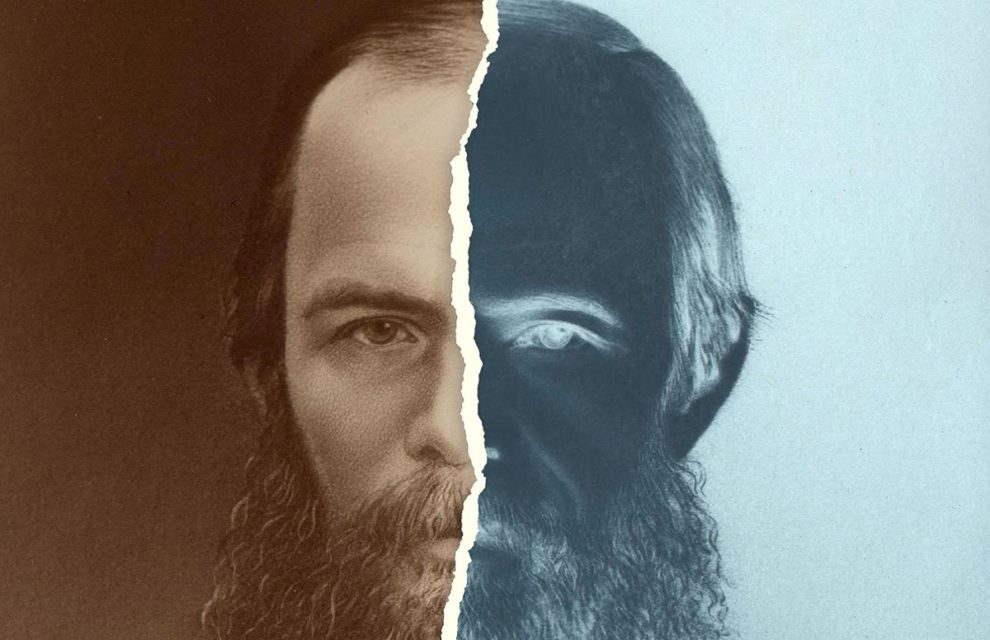
The great 19th century Russian authors did not, as far as I can remember, hold much of a place in my father's consciousness of the greater world. The Founders hadn't read them, nor probably had Lincoln even, and I don't recollect him ever bringing them up in his discourses on learned subjects. Certainly he didn't own any of the books. On one of the few occasions that I saw him after I had finished college I suggested to him that I thought he would probably like War and Peace, but he didn't seem very excited about it. Maybe he had already read it and hadn't liked it, but he never indicated that he had one way or the other. I'm pretty sure my first awareness of Dostoevsky came from the IWE encyclopedia. I remember thinking then--I would have been about 14--that his name was the strangest and ugliest of all the Russian writers. Ivan Bunin or Nikolai Gogol could be modern Olympic athletes or ballet stars or Politburo members but even in the Soviet Union no one had to carry around so unwieldy a name as Fyodor Dostoevsky. My next encounter with this author was in the12th grade, when my teacher in a class called "The Great Documents"--this was a prestigious course at my school--happened to mention in passing that he considered The Brothers Karamazov to be the best novel he had read, at least in whatever phase of his life he was in at that point (he seemed to me to be around age 40-45, though perhaps he was older). This struck me because I was familiar with the title of the book from the encyclopedia, though I didn't know much more about it at that time, and I had never heard anybody else bring it up. Also I had the sense that this teacher was at a somewhat higher level of cultivation, if not necessarily raw intellect, than most of the other faculty at the school. He had a PhD, for one thing, though I don't know what schools he went to. He also dressed better and in general gave the impression of having his life more in order than his colleagues, he was neither slovenly nor overwhelmed by his job or his personal affairs. He may have been married, though I don't think he had any children. He didn't appear to watch television or read inferior books or publications, and one never ran into him at the mall as one frequently did other teachers. In short he seemed fairly serious, and was sparing in expressing enthusiasm for anything; so when he made a point of sharing with us that he considered The Brothers Karamazov to be a great book, it stuck with me.

Then I went to St. John's, which naturally is home to many serious students and champions of Dostoevsky. I had one friend especially who identified strongly with Dmitri (he was a very entertaining person to go out with, up to a point). The Brothers itself is even on the reading program, though it doesn't come up until the return from spring break senior year, when then are only about six weeks of college left, many people emotionally already have one foot out the door, and almost everyone has long wearied of most of their classmates. As it is a book that a lot of people in the earlier days of school look forward to getting to, I feel that the overall mood when you come to those seminars inevitably makes them somewhat anticlimactic. However I may be mistaken in this, as I gave myself too little time to read the book on this occasion and only got as far as page 300, which is around the section containing the episode of the Grand Inquisitor. St. John's type people naturally gravitate toward the Grand Inquisitor part, and I'm sure they talked about that the most in the seminar, along with exploring the questions of who killed Karamazov, who Smerdyakov really was, why any of it mattered, etc. I'm sure someone made a genius point that went over everybody else's head, and that that person still thinks of this with bitterness from time to time. I admit that every time I read this book I gear up to concentrate super hard on the Grand Inquisitor part, like it's an amusement park ride with a jarring climax that cannot be missed, but every time, while I am attentive to it and follow the arguments and all, I find myself coming out at the other end of the tunnel without feeling particularly struck, and within a day or two I can never really remember what exactly it was about. I suppose if it were meant to be really important in my life it would have happened by now. I read it later on in my 40s when I was distracted and evidently going through some kind of phase where I believed technology or advancements in science or the overall spirit of the modern age had perhaps exposed Dostoevsky as perhaps less insightful and important than he had formerly appeared. This time however, only a few years on in time, but on the other side of some significant life shifts, I was more moved by it, I found the characters to be as alive and interesting as one wants literary classics to be, and the story to be telling something of significance, it brought me back somewhat to the way I thought and felt when I was young, which had a much greater clarity and cohesiveness and beauty than the way I have mentally experienced life in many years.
I didn't make any notes until page 407, but then, as often happens, the closer I got to the end of the book, the more I anticipated leaving it and the sentimental need to procure souvenirs of the experience propelled me to take quite a few.
p. 407 "But in some it is really more creditable to be carried away by an emotion, however unreasonable, which springs from a great love, than to be unmoved. And this is even truer in youth, for a young man who is always sensible is to be suspected and is of little worth-"
The image of arriving in Mokroe, in the dark, the town rising out of the plain. I liked that. Reminded me of the autumns of my youth, for some reason. Very intense, dramatic, and beautiful.
p. 605 "It was a wretched morning, the whole sky was over-cast, and the rain streamed down in bucketfuls."
p. 668-9 "The study of the classics, if you ask my opinion, is simply a police measure, that's simply why it has been introduced into our schools...Latin and Greek were introduced because they are a bore and because they stupefy the intellect. It was dull before, so what could they do to make things duller? It was senseless enough before, so what could they do to make it more senseless? So they thought of Greek and Latin."
This was spoken by Kolya, the liveliest and most dominant personality among the boys. I don't pretend to know what the appropriate amount of Greek and Latin study should be in a formal education. Perhaps it isn't very useful for geniuses, though one would expect them to progress in those subjects quickly. My two oldest sons took five years of Latin, and the elder did especially well in it. I was pleased with it, as the teacher was good, and seemed to me easily one of the more intelligent people in the school, and it is important at that age to be exposed to intelligent and serious adults if you can.
p. 718 "'When I get hold of the silly woman's fortune, I can be of great social utility.' They have this social justification for every nasty thing they do!"
p. 723 "They are ready to flay you alive, I tell you, every one of them, all these angels without whom we cannot live!" Mitya on women.
p. 752 Dmitri is so vital, I wrote.
p. 755 I made a note that reads "Incident of knocking over peasant like my screaming "no!" at homeless guy yesterday. Dostoevskian response." I had forgotten about this. At one point on his way to his final interview with Smerdyakov, Ivan pushes a drunken peasant who approaches him onto the frozen ground and leaves him lying there. My incident was not quite this dramatic, but I was on Main Street in Concord the day before I read this passage evidently, and I was fairly tense about something which I don't even remember now. I wanted to take out some money from my bank's ATM machine but someone else was in the booth and I had to wait outside. While I was thus waiting an able-bodied-looking man of about 30 with, I thought, a middle class bearing, came up to me and began a spiel about being homeless and asked me for money, to which I replied "No!" in a sharp and fairly loud voice which was not polite and was intended to say, "Get away from me!" and indeed he did get away from me. But this is not characteristic behavior for me and I wish I had not gotten so agitated.
p. 780 "For all their indisputable intelligence, men take this farce as something serious, and that is their tragedy...suffering is life. Without suffering what would be the pleasure of it? It would be transformed into an endless church service; it would be holy, but tedious." This seems like a loose distillation of some of the more interesting underlying themes of the book.
p. 784 Smerdyakov assures Ivan, "You'll dine on locusts." Reminiscent of climate religion and their seeming fondness for promoting the eating of bugs?
p. 803 "All the four officials in the jury were, in fact, men of no consequence and of low rank. Except one who was rather younger, they were grey-headed men, little known in society, who had vegetated on a pitiful salary, and who probably had elderly, unpresentable wives and crowds of children, perhaps even without shoes and stockings." Why make a point of this? (I forget whether I was asking this question of myself or of Dostoevsky). Because it's important.
Dostoevsky's talent for psychological insight well-suited to writing about a trial. If that were not obvious.
p. 817 On Herzenstube, the German doctor. "...it had always been a weakness of his to believe that he spoke Russian perfectly, better indeed than Russians." Dostoevsky has the Germans' number. The part where the doctor can't remember basic words like "nuts" at the trial is good too.
Closing with a few passages that are comic in their deadpan absurdity.
p. 842 "He was certainly not in a normal state of mind: he told me himself that he saw visions when he was awake, that he met several persons in the street, who were dead, and that Satan visited him every evening', said the doctor."
p. 908 "The weak-minded idiot, Smerdyakov, transformed into a Byronic hero, avenging society for his illegitimate birth--isn't this a romance in the Byronic style?"
p. 913 "The devil's bound to have a hand in it. Where should he be if not here?"
The IWE introduction is more verbose than usual and not one of their more memorable commentaries, but I will include most of it to give the post that extra flavor that it brings (with some interspersed comments by me).

"Several of Dostoevski's (sic) novels have been nominated as his greatest (ed--I feel like this question has been settled in my lifetime), but despite its defects in novel-construction and literary finesse The Brothers Karamazov, his last work, should have unchallenged position also as his best. Neither Dostoevski nor any other novelist ever explored the souls of his characters so completely as Dostoevski did in this novel, traveling the full range from the depths of depravity to the heights of exaltation, from the meanness to the nobility of which the ambivalent human spirit is capable. The characters are Russian and their emotions may seem unreal or exaggerated to English-language readers, but these readers would be better advised to accept the characters as the novelist portrays them (ed--The English language reader has had to grow accustomed to a great deal more than the exaggerated emotions of Russians in the intervening decades). The Brothers is a long novel, overlong in fact; it is one of those Somerset Maugham named as the world's greatest but said were candidates for 'artful skipping' (ed--I find it hard not to be nostalgic sometimes for the days when Somerset Maugham could be unironically invoked as a literary authority of sorts). Also enjoyment of The Brothers in English is lessened by the fact that there is only one translation and it is a very poorly written one..."
I stand by my position that the Garnett translation is adequately readable and enjoyable. I suppose I should give one of the modern, more scholarly ones a try, but my prejudices against them are really strong. It is almost a rebellious instinct. Oh, I am sure all of these contemporary people, even those in the academy, understand literature perfectly well, infinitely more than I do, but I like to believe--perhaps have to believe--that they don't, because otherwise how else could I go on?
The Bourgeois Surrender Challenge
This was a large one, with an unusually high qualifying threshold.
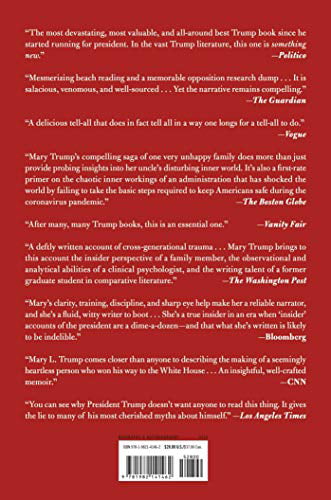
1. Mary L. Trump--Too Much and Never Enough.......................................................................98,568
2. Margaret Mitchell--Gone With the Wind.................................................................................21,109
3. Antoine de Saint-Exupery--The Little Prince............................................................................5,683
4. Chris Colfer--The Land of Stories: The Wishing Spell..............................................................3,685
5. Fyodor Dostoevsky--Notes From the Underground..................................................................2,054
6. Philippa Gregory--The Boleyn Inheritance................................................................................1,761
7. Lauren Fox--Send For Me..........................................................................................................1,703
8. Kiera Cass--The Betrothed........................................................................................................1,632
9. Ariana Neumann--When Time Stopped.....................................................................................1,214
10. Julian Barnes--The Noise of Time..............................................................................................777
11. Monk (TV S4 E12)......................................................................................................................731
12. Cristi Caldwell--Forever Betrothed, never the Bride..................................................................668
13. Yongey Mingyur Rinpoche--In Love With the World..................................................................508
14. Forrest Fenn--The Thrill of the Chase.........................................................................................409
15. James Agee--A Death in the Family............................................................................................316
16. James H. Cone--Black Theology, Black Power..........................................................................306
Round of 16
#1 Trump over #16 Cone
This may be the highest qualifying number in the history of the tournament, a testimony to the staggering level of interest in all things Trump-related, it dwarfs everything else. James H. Cone is a name of sorts. His book goes all the way back to 1969, which I had not realized. I am not particularly amped to read either of these books, but the Trump title has a few shiny extra features which make it a little more enticing in the first round.
#15 Agee over #2 Mitchell
Gone With the Wind is a recent champion, so recent that I haven't gotten around to reading it yet. Agee is a celebrated older writer in his own right, and I did like his books of film criticism, which is all that I have read by him. He has a big edge in this matchup.
#3 Saint-Exupery over #14 Fenn
I had never heard of Forrest Fenn, who was evidently a colorful figure who gained some notoriety during the last decade by claiming to have hidden a treasure chest somewhere in the Rocky Mountains north of Santa Fe, New Mexico. Five people died looking for the treasure, and there were numerous other incidents related to the search. Fenn stated shortly before he died in September 2020 (at age 90) that the treasure had been found, it was later revealed by a student from Michigan.
#4 Colfer over #13 Rinpoche
I'm not really sure why, the Colfer books (there is a series of them) seem to be pretty famous, though I suppose I could stand to read something by a Buddhist monk.
#5 Dostoevsky over #12 Caldwell
#6 Gregory over #11 Monk
#10 Barnes over #7 Fox
I don't know, Barnes is shorter and it sounds like the sort of thing I would like better.
#9 Neumann over #8 Cass
Rare 1st round matchup of 1,000+ review books, Neumann gets the nod on the basis of appearing to be the more serious book.
Quarterfinals
#1 Trump over #15 Agee
The Trump book comes with upsets to play.
#10 Barnes over #3 Saint-Exupery
#9 Neumann over #4 Colfer
#5 Dostoevsky over #6 Gregory
Semifinals
#1 Trump over #10 Barnes
#5 Dostoevsky over #9 Neumann
Championship
#1 Trump over #5 Dostoevsky
A very improbable run to the championship for Mary Trump, taking out a number of heavyweights. She won according to the rules of the game, however, given the nature of her qualifying.









/cloudfront-us-east-1.images.arcpublishing.com/tronc/X7KCGSLYYJDU3FW5DTGV5SMAPQ.jpg)