A List: Robert Byron--
The Station: Athos: Treasures and Men...51/256
B List: Kantor--
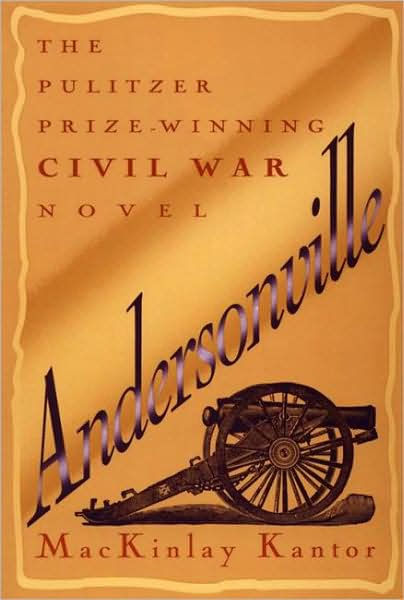
Andersonville...671/760
C List: Atul Gawande--
Being Mortal: Medicine and What Matters in the End...223/402
The Byron book is not really a classic, though it is a curiosity of sorts, and is periodically reprinted in modern editions. It has made its way onto the list by being one of a group of four books reviewed by D.H. Lawrence in a 1928 article that has itself attained list status. I am going to attempt to read as many of these four books as I can get my hands on. Byron's book, his second, concerning a year he and three Oxford friends spent at the now somewhat celebrated but then remote and little--known Byzantine monastery in Greece, was published when he was 22 years old. He was a cheeky, cocky sort of youth, upper class, successfully classically educated (i.e., could actually read Greek and Latin and retained the content of his learning the whole of his life), fond of contention, iconoclastic after the manner of his generation. I used to like these kinds of guys when I could sort of imagine myself as being after the same type, but I really don't know how to take them now that it is so obvious that I do not have this sort of mind at all. I becomes tiresome to be forever reading things that one is never going to have a part in, and are not doing one any good. The style of the book is also overwrought and ordinary situations and observations are presented more opaquely than they need to be. Byron wrote nine books by age 31 and then went into politics. He was killed in war action in 1941 at the age of 35.
The Kantor I will be doing a longer essay on. I have mostly enjoyed it but it is laboring to get to the end of the story and has completely lost any sort of tightness it had going over its first half.
We went over Gawande's incredible resume and accomplishments in a previous post. His book (which is not as long as it looks here--the Large Print edition was the only one that came available at my library), despite its apparent popularity, is not particularly compelling. It is an information book rather than a story book--though there are stories in it, they are not really interesting or humorous, and the salient facts that Gawande tends to notice about people, as well as the way that he relates them, have the effect of being depressing more than anything else. The subject of the book is very, very old people, as in, over age 85, and the various ways in which they become impaired and the various ways in which they are cared for at this stage of life, in the end mainly by being put into nursing homes, where people tend to be miserable due to the institutional nature and lack of any personal autonomy which becomes one's fate once you enter one. My impression is that people have very unrealistic ideas about the kind of life you can reasonably expect to have when you are in your 90s, and the baby boomers, who are going to be the worst of all, have not even begun to enter serious old age yet. It is scary, and I would not be looking forward to it if I thought I was going to live that long (people my size rarely seem to make it much past the early 80s at the utmost), and I suppose there are improvements that could be made to nursing home care, make it less impersonal and so on, but of course that would cost even more money than is already spent on elders, at a time when as a society we are doing terribly at developing young people into adults who can govern themselves or contribute meaningfully in any way...
As an honorable mention I got as a kind of stocking stuffer a little volume called
The Film Snob's Dictionary. I don't know whether some kind of statement about me was intended but it is a quite funny little book. It was published in 2006 so it is slightly dated--certain notoriously pretentious video stores in places like Los Angeles and Chicago were referenced which I suspect are no longer particularly important for example, but otherwise it makes for good reading. Of the genres which feature most prominently, the only one with which I have any familiarity is that of the self-consciously and usually pretentious art films. Horror/slasher movies, the ultraviolent Asian films much loved by Quentin Tarantino, and sex films attempting to pass themselves off as artistic meditations make up much of the (often hilarious) content. Obvious entries such as Ingmar Bergman and Federico Fellini are omitted because they are "mere name-drops for bourgeois losers wishing to seem cultured. Watching a Bergman movie is so PBS tote-bag, so Mom-and-dad-on-a-date-in-college, so baguettes and Chardonnay." (Of course some of us can only aspire to have moms and dads who went on a date to a Bergman movie in college). From the entry on 1960s Japanese B movie director Seijun Suzuki: '...(his) violent CinemaScope action pictures grew increasingly eccentric as time went on, culminating in 1967's
Branded to Kill, about a Yakuza hitman with a fetish for sniffing freshly steamed rice. Fired by his studio, Nikkatsu, for making 'incomprehensible films' (a not entirely unfair charge), Suzuki spent years in the wilderness before being lionized by his burgeoning Snob constituency (which includes Quentin Tarantino and Jim Jarmusch)." There is lots of this throughout. While I mostly agree with their assessments of various movies and the cults that have come to surround I do think
L'
Atalante, which the authors (David Kamp and Lawrence Levi) single out for ridicule on several occasions, really is a deep and very sad and moving picture.
Picture Gallery
Athos
Memorial at Andersonville
The book
Some art
The closest thing to a hot babe picture that came up. The girl on the left is pretty cute at least.