Showing posts with label 1880s. Show all posts

Friday, June 25, 2021

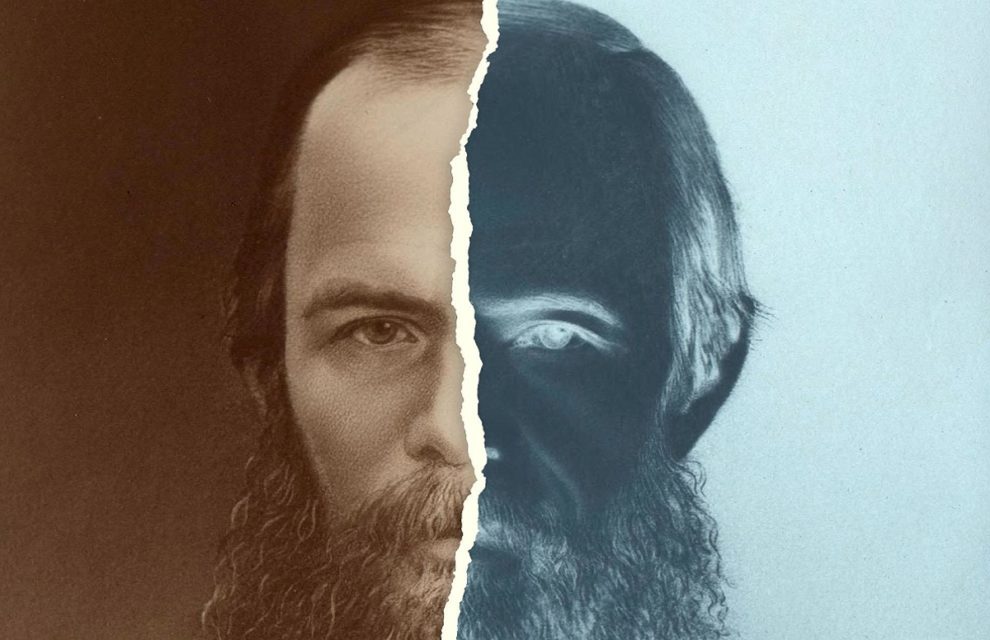
Dostoevsky--The Brothers Karamazov (1880)

This post took a long time to complete. I'll be honest, I don't have anything important to say about it. I am not exactly depressed about this, or about my lack of comradeship/fellow feeling with other book people, or even my increasing day to day indifference about most of life. I am a little bored perhaps, and lacking in purpose, perhaps, but I am not depressed. I need to slim down by about 5-10 more pounds to begin my need mission to appear more professional class and induce people to like me, but I think I can do that. I still enjoy the books. I enjoyed this book, it is great. But my ability to think about anything has gone completely to rot.  

This is another of the great signpost books, obviously, all the big readers and even most of the serious intellectuals tackle it, and almost all still seem to find it up to their exacting standards even in our time. I took a little more time with it and tried to let the impressions really wash over me on this occasion, as I thought it might be, probably will be, the last time I read it.  


My old copy, that I have had since I was in college at least, and maybe before, you see was really falling apart, so I ordered a replacement to finish up the last 700 pages or so. I got the same old Modern Library edition, though the Constance Garnett translation is considered, by the most generous assessment, to be inferior to others. However I have a prejudice against modern translations by scholars, who I find interject too much of themselves and their particular readings into the books, which affects my enjoyment of them; and besides, I tell myself, this is the version that Joyce and Woolf and Hemingway and Orwell and Faulkner and all of those people would have read (maybe Joyce read the French version) and to whatever degree they understood the book would be more than adequate for my purposes.

We had a lot of books in my house as child but not much in the category of classic or even modern imaginative literature. My father, who was the reader in the family, was primarily interested in history, especially American history, and his library contained hundreds of books about the Civil War, World War II, and the colonial and Revolutionary era. Such novels as he owned (and read) tended to be historical novels, frequently of the doorstop variety that were popular in the 1950s and 1960s (The Winds of War and Shogun I remember being two of his particular favorites). He frequently expressed the desire to be better versed in the classics--Jefferson and Madison and others of the founders being his role models in this aspiration--but for whatever reason, perhaps he found them difficult to take up and get into as an adult, I'm really not sure, I never saw him reading any of those types of books. Perhaps he got around to them later in life, I don't know, I have seen him only a handful of times in the last thirty years. Anyway, this wish to be well-read like Jefferson he talked about enough that it made an impression on me that being familiar with the great literature of the world was a desirable pursuit, and while I never exactly set out with that aim in mind--even in my choice of a college I ended up picking a Great Books school mainly because I thought the people there would be social misfits enough that I would have a prayer of being able to participate in such social life as existed there--I have usually fallen back on that as something I could do whenever I have been at an especial loss for what to do with myself.  


This new copy I bought included one of the most alluring Modern Library dust jackets of them all, which is probably fated once I finish this report to go into the cabinet with only the spine visible, never to be seen again, or not very much.

The great 19th century Russian authors did not, as far as I can remember, hold much of a place in my father's consciousness of the greater world. The Founders hadn't read them, nor probably had Lincoln even, and I don't recollect him ever bringing them up in his discourses on learned subjects. Certainly he didn't own any of the books. On one of the few occasions that I saw him after I had finished college I suggested to him that I thought he would probably like War and Peace, but he didn't seem very excited about it. Maybe he had already read it and hadn't liked it, but he never indicated that he had one way or the other. I'm pretty sure my first awareness of Dostoevsky came from the IWE encyclopedia. I remember thinking then--I would have been about 14--that his name was the strangest and ugliest of all the Russian writers. Ivan Bunin or Nikolai Gogol could be modern Olympic athletes or ballet stars or Politburo members but even in the Soviet Union no one had to carry around so unwieldy a name as Fyodor Dostoevsky. My next encounter with this author was in the12th grade, when my teacher in a class called "The Great Documents"--this was a prestigious course at my school--happened to mention in passing that he considered The Brothers Karamazov to be the best novel he had read, at least in whatever phase of his life he was in at that point (he seemed to me to be around age 40-45, though perhaps he was older). This struck me because I was familiar with the title of the book from the encyclopedia, though I didn't know much more about it at that time, and I had never heard anybody else bring it up. Also I had the sense that this teacher was at a somewhat higher level of cultivation, if not necessarily raw intellect, than most of the other faculty at the school. He had a PhD, for one thing, though I don't know what schools he went to. He also dressed better and in general gave the impression of having his life more in order than his colleagues, he was neither slovenly nor overwhelmed by his job or his personal affairs. He may have been married, though I don't think he had any children. He didn't appear to watch television or read inferior books or publications, and one never ran into him at the mall as one frequently did other teachers. In short he seemed fairly serious, and was sparing in expressing enthusiasm for anything; so when he made a point of sharing with us that he considered The Brothers Karamazov to be a great book, it stuck with me.  


Then I went to St. John's, which naturally is home to many serious students and champions of Dostoevsky. I had one friend especially who identified strongly with Dmitri (he was a very entertaining person to go out with, up to a point). The Brothers itself is even on the reading program, though it doesn't come up until the return from spring break senior year, when then are only about six weeks of college left, many people emotionally already have one foot out the door, and almost everyone has long wearied of most of their classmates. As it is a book that a lot of people in the earlier days of school look forward to getting to, I feel that the overall mood when you come to those seminars inevitably makes them somewhat anticlimactic. However I may be mistaken in this, as I gave myself too little time to read the book on this occasion and only got as far as page 300, which is around the section containing the episode of the Grand Inquisitor. St. John's type people naturally gravitate toward the Grand Inquisitor part, and I'm sure they talked about that the most in the seminar, along with exploring the questions of who killed Karamazov, who Smerdyakov really was, why any of it mattered, etc. I'm sure someone made a genius point that went over everybody else's head, and that that person still thinks of this with bitterness from time to time. I admit that every time I read this book I gear up to concentrate super hard on the Grand Inquisitor part, like it's an amusement park ride with a jarring climax that cannot be missed, but every time, while I am attentive to it and follow the arguments and all, I find myself coming out at the other end of the tunnel without feeling particularly struck, and within a day or two I can never really remember what exactly it was about. I suppose if it were meant to be really important in my life it would have happened by now. I read it later on in my 40s when I was distracted and evidently going through some kind of phase where I believed technology or advancements in science or the overall spirit of the modern age had perhaps exposed Dostoevsky as perhaps less insightful and important than he had formerly appeared. This time however, only a few years on in time, but on the other side of some significant life shifts, I was more moved by it, I found the characters to be as alive and interesting as one wants literary classics to be, and the story to be telling something of significance, it brought me back somewhat to the way I thought and felt when I was young, which had a much greater clarity and cohesiveness and beauty than the way I have mentally experienced life in many years. 

I didn't make any notes until page 407, but then, as often happens, the closer I got to the end of the book, the more I anticipated leaving it and the sentimental need to procure souvenirs of the experience propelled me to take quite a few. 

p. 407 "But in some it is really more creditable to be carried away by an emotion, however unreasonable, which springs from a great love, than to be unmoved. And this is even truer in youth, for a young man who is always sensible is to be suspected and is of little worth-"

The image of arriving in Mokroe, in the dark, the town rising out of the plain. I liked that. Reminded me of the autumns of my youth, for some reason. Very intense, dramatic, and beautiful.
p. 605 "It was a wretched morning, the whole sky was over-cast, and the rain streamed down in bucketfuls."

p. 668-9 "The study of the classics, if you ask my opinion, is simply a police measure, that's simply why it has been introduced into our schools...Latin and Greek were introduced because they are a bore and because they stupefy the intellect. It was dull before, so what could they do to make things duller? It was senseless enough before, so what could they do to make it more senseless? So they thought of Greek and Latin."

This was spoken by Kolya, the liveliest and most dominant personality among the boys. I don't pretend to know what the appropriate amount of Greek and Latin study should be in a formal education. Perhaps it isn't very useful for geniuses, though one would expect them to progress in those subjects quickly. My two oldest sons took five years of Latin, and the elder did especially well in it. I was pleased with it, as the teacher was good, and seemed to me easily one of the more intelligent people in the school, and it is important at that age to be exposed to intelligent and serious adults if you can. 

p. 718 "'When I get hold of the silly woman's fortune, I can be of great social utility.' They have this social justification for every nasty thing they do!"  

p. 723 "They are ready to flay you alive, I tell you, every one of them, all these angels without whom we cannot live!" Mitya on women.

p. 752 Dmitri is so vital, I wrote.

p. 755 I made a note that reads "Incident of knocking over peasant like my screaming "no!" at homeless guy yesterday. Dostoevskian response." I had forgotten about this. At one point on his way to his final interview with Smerdyakov, Ivan pushes a drunken peasant who approaches him onto the frozen ground and leaves him lying there. My incident was not quite this dramatic, but I was on Main Street in Concord the day before I read this passage evidently, and I was fairly tense about something which I don't even remember now. I wanted to take out some money from my bank's ATM machine but someone else was in the booth and I had to wait outside. While I was thus waiting an able-bodied-looking man of about 30 with, I thought, a middle class bearing, came up to me and began a spiel about being homeless and asked me for money, to which I replied "No!" in a sharp and fairly loud voice which was not polite and was intended to say, "Get away from me!" and indeed he did get away from me. But this is not characteristic behavior for me and I wish I had not gotten so agitated. 

p. 780 "For all their indisputable intelligence, men take this farce as something serious, and that is their tragedy...suffering is life. Without suffering what would be the pleasure of it? It would be transformed into an endless church service; it would be holy, but tedious." This seems like a loose distillation of some of the more interesting underlying themes of the book. 
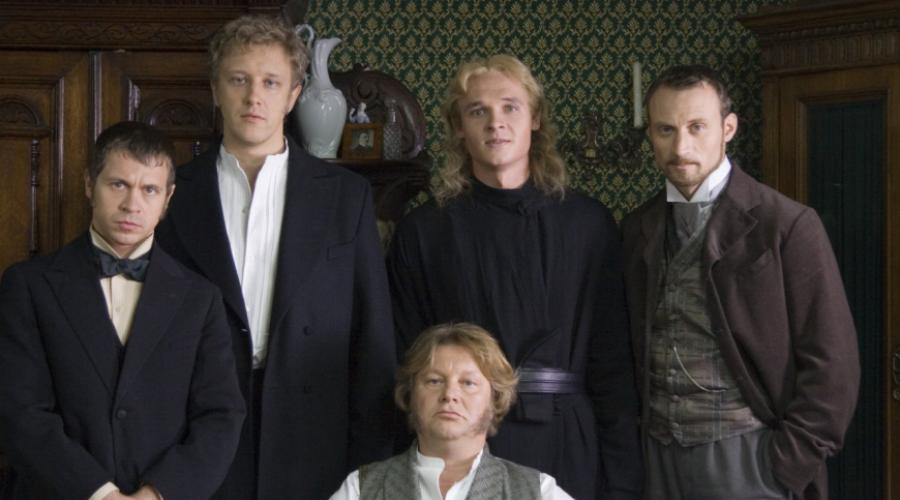
p. 784 Smerdyakov assures Ivan, "You'll dine on locusts." Reminiscent of climate religion and their seeming fondness for promoting the eating of bugs? 

p. 803 "All the four officials in the jury were, in fact, men of no consequence and of low rank. Except one who was rather younger, they were grey-headed men, little known in society, who had vegetated on a pitiful salary, and who probably had elderly, unpresentable wives and crowds of children, perhaps even without shoes and stockings." Why make a point of this? (I forget whether I was asking this question of myself or of Dostoevsky). Because it's important.

Dostoevsky's talent for psychological insight well-suited to writing about a trial. If that were not obvious. 

p. 817 On Herzenstube, the German doctor. "...it had always been a weakness of his to believe that he spoke Russian perfectly, better indeed than Russians." Dostoevsky has the Germans' number. The part where the doctor can't remember basic words like "nuts" at the trial is good too.

Closing with a few passages that are comic in their deadpan absurdity.

p. 842 "He was certainly not in a normal state of mind: he told me himself that he saw visions when he was awake, that he met several persons in the street, who were dead, and that Satan visited him every evening', said the doctor."

p. 908 "The weak-minded idiot, Smerdyakov, transformed into a Byronic hero, avenging society for his illegitimate birth--isn't this a romance in the Byronic style?"

p. 913 "The devil's bound to have a hand in it. Where should he be if not here?"

The IWE introduction is more verbose than usual and not one of their more memorable commentaries, but I will include most of it to give the post that extra flavor that it brings (with some interspersed comments by me).

"Several of Dostoevski's (sic) novels have been nominated as his greatest (ed--I feel like this question has been settled in my lifetime), but despite its defects in novel-construction and literary finesse The Brothers Karamazov, his last work, should have unchallenged position also as his best. Neither Dostoevski nor any other novelist ever explored the souls of his characters so completely as Dostoevski did in this novel, traveling the full range from the depths of depravity to the heights of exaltation, from the meanness to the nobility of which the ambivalent human spirit is capable. The characters are Russian and their emotions may seem unreal or exaggerated to English-language readers, but these readers would be better advised to accept the characters as the novelist portrays them (ed--The English language reader has had to grow accustomed to a great deal more than the exaggerated emotions of Russians in the intervening decades). The Brothers is a long novel, overlong in fact; it is one of those Somerset Maugham named as the world's greatest but said were candidates for 'artful skipping' (ed--I find it hard not to be nostalgic sometimes for the days when Somerset Maugham could be unironically invoked as a literary authority of sorts). Also enjoyment of The Brothers in English is lessened by the fact that there is only one translation and it is a very poorly written one..."

I stand by my position that the Garnett translation is adequately readable and enjoyable. I suppose I should give one of the modern, more scholarly ones a try, but my prejudices against them are really strong. It is almost a rebellious instinct. Oh, I am sure all of these contemporary people, even those in the academy, understand literature perfectly well, infinitely more than I do, but I like to believe--perhaps have to believe--that they don't, because otherwise how else could I go on?   

The Bourgeois Surrender Challenge

This was a large one, with an unusually high qualifying threshold.

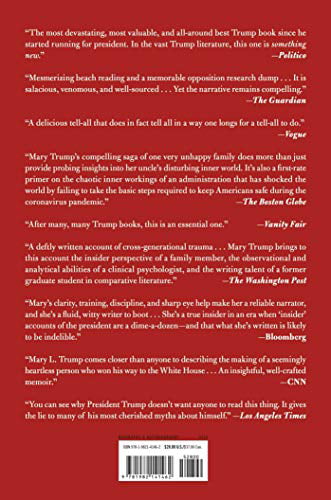
1. Mary L. Trump--Too Much and Never Enough.......................................................................98,568

2. Margaret Mitchell--Gone With the Wind.................................................................................21,109

3. Antoine de Saint-Exupery--The Little Prince............................................................................5,683

4. Chris Colfer--The Land of Stories: The Wishing Spell..............................................................3,685

5. Fyodor Dostoevsky--Notes From the Underground..................................................................2,054

6. Philippa Gregory--The Boleyn Inheritance................................................................................1,761

7. Lauren Fox--Send For Me..........................................................................................................1,703

8. Kiera Cass--The Betrothed........................................................................................................1,632

9. Ariana Neumann--When Time Stopped.....................................................................................1,214

10. Julian Barnes--The Noise of Time..............................................................................................777

11. Monk (TV S4 E12)......................................................................................................................731

12. Cristi Caldwell--Forever Betrothed, never the Bride..................................................................668

13. Yongey Mingyur Rinpoche--In Love With the World..................................................................508

14. Forrest Fenn--The Thrill of the Chase.........................................................................................409

15. James Agee--A Death in the Family............................................................................................316

16. James H. Cone--Black Theology, Black  Power..........................................................................306

Round of 16

#1 Trump over #16 Cone

This may be the highest qualifying number in the history of the tournament, a testimony to the staggering level of interest in all things Trump-related, it dwarfs everything else. James H. Cone is a name of sorts. His book goes all the way back to 1969, which I had not realized. I am not particularly amped to read either of these books, but the Trump title has a few shiny extra features which make it a little more enticing in the first round. 

#15 Agee over #2 Mitchell

Gone With the Wind is a recent champion, so recent that I haven't gotten around to reading it yet. Agee is a celebrated older writer in his own right, and I did like his books of film criticism, which is all that I have read by him. He has a big edge in this matchup. 

#3 Saint-Exupery over #14 Fenn

I had never heard of Forrest Fenn, who was evidently a colorful figure who gained some notoriety during the last decade by claiming to have hidden a treasure chest somewhere in the Rocky Mountains north of Santa Fe, New Mexico. Five people died looking for the treasure, and there were numerous other incidents related to the search. Fenn stated shortly before he died in September 2020 (at age 90) that the treasure had been found, it was later revealed by a student from Michigan. 

#4 Colfer over #13 Rinpoche

I'm not really sure why, the Colfer books (there is a series of them) seem to be pretty famous, though I suppose I could stand to read something by a Buddhist monk. 

#5 Dostoevsky over #12 Caldwell

#6 Gregory over #11 Monk

#10 Barnes over #7 Fox

I don't know, Barnes is shorter and it sounds like the sort of thing I would like better.   

#9 Neumann over #8 Cass

Rare 1st round matchup of 1,000+ review books, Neumann gets the nod on the basis of appearing to be the more serious book. 

Quarterfinals

#1 Trump over #15 Agee

The Trump book comes with upsets to play.

#10 Barnes over #3 Saint-Exupery 

#9 Neumann over #4 Colfer

#5 Dostoevsky over #6 Gregory

Semifinals

#1 Trump over #10 Barnes

#5 Dostoevsky over #9 Neumann

Championship

#1 Trump over #5 Dostoevsky

A very improbable run to the championship for Mary Trump, taking out a number of heavyweights. She won according to the rules of the game, however, given the nature of her qualifying. 

Thursday, October 15, 2020

Hank James--The Bostonians (1886)

This is, in my opinion, one of the better Henry James books. It is not the only one that I have thought especially well-done, or been able, at least in my own mind, to follow, but it is one of the few that I can honestly say I have enjoyed and really looked forward to reading the next chapter every morning (the others that come to mind being the early The American and the much shorter Turn of the Screw and Aspern Papers). This middle period book has some of his clearest and best sentences in describing thoughts and motivations--not as exquisitely subtle, I suppose, as in the later masterpieces, but as I have not to this point really been able to follow the thought processes in those later books the full glory of their subtleties have been kind of lost on me. The IWE introduction notes that:

"The Bostonians is a novel of James's 'middle period.' He was in the realm of high society as usual, this time in the very starched Boston of the late 19th century. The novel was not successful when published and James was very unhappy. Among other things, it was considered wicked. Perhaps it was and still is, but it is among his most important works."


Here is my book, accompanied by some seasonal spirit. It is the Modern Library edition with one of their especially attractive jackets. I got it at a library book sale in 1986. 


The 'wickedness' I assume refers to the numerous blatantly lesbian characters and their implied domestic arrangements, though how x-rated in the physical sense matters really got between Verena and Olive (or even, for that matter, Dr Prance and Miss Birdseye), I don't have a great sense of. Also, on the overall Henry James starchiness scale, I would rate this one as being on the lower end. It's set entirely in America. One of the main characters is from Mississippi. The crowd in New York is rich and given to sumptuous dining and so on, but I don't remember encountering anyone there whose breeding would be considered by James or anyone else to meet the highest standard compared to the French aristocrats and the like who populate his other novels. Olive is perhaps the starchiest character in the book, and she is designated on multiple occasions as a "provincial." 

p. 18 "...the Back Bay (don't you hate the name?)" I've always kind of found the name unsatisfying too, for various reasons. When I used to take Amtrak in the 80s and 90s, the train always stopped at the Back Bay Station (I don't know whether it still does), which was modern and ugly, and no one ever got on or off, and I am still kind of vague as to what it is, or is supposed to signify (I know it was an actual bay that was filled in and made into a somewhat fashionable neighborhood around the time this novel was written, but I don't have much of a sense of what it is now).

p. 21 "'In sympathy with what, dear madam?' Basil Ransom asked, failing still, to her perception, to catch the tone of real seriousness. 'If, as you say, there is to be a discussion, there will be different sides, and of course one can't sympathize with both."

p. 31 "They sat there as if they were waiting for something; they looked obliquely and silently at Mrs. Farrinder, and were plainly under the impression that, fortunately, they were not there to amuse themselves."

I mark down these early quotations as a way of building up to anything it might occur to me to say later on. 

p. 43 "...the time hadn't come when a lady-doctor was sent for by a gentleman, and she hoped it never would, though some people seemed to think that this was what lady-doctors were working for."

(handwritten note I can't read--There are a lot of little (somethings?) of interest here).   

p. 46 "I am only myself, I only rise to the occasion, when I see prejudice, when I see bigotry, when I see injustice, when I see conservatism, massed before me like an army...I must have unfriendly elements..."

p. 50 "He had a passionate tenderness for his own country, and a sense of intimate connection with it which would have made it as impossible for him to take a roomful of Northern fanatics into his confidence as to read aloud his mother's or his mistress's letters."


p. 76 "But except when her mother made her slightly dizzy by a resentment of some slight that she herself had never perceived, or a flutter over some opportunity that appeared already to have passed...Verena had no vivid sense that she was not as good as any one else, for no authority appealing really to her imagination had fixed the place of mesmeric healers in the scale of fashion." I have met a few people in the course of my life of this genuine democratic mindset, mostly in northern New England. 

p. 116 "There was nothing in the house to speak of; nothing, to Olive's sense, but a smell of kerosene; though she had a consciousness of sitting down somewhere--the object creaked and rocked beneath her--and of the table at tea being covered with a cloth stamped in bright colors." The snobbery is really brutal whenever Verena's parents come into the story.

It is odd how reading these 100 year old books seems so outdated to me now in a way that it did not even in 1990. The world (social, institutional) of the past still seemed basically relatable then in a way that it doesn't now. So many things--the racial and cultural makeup of society, particularly with regard to peoples who were virtually unknown in Western countries even 30-40 years ago, male social roles, educational structures, in addition to the obvious technological changes with regard to consuming books and newspapers, have perhaps changed more in the last 30 years than they did in the previous 100, as far as the pursuit of literary engagement goes. 

p. 152 "She went so far as to ask Olive whether taste and art were not something...Miss Chancellor, of course, had her answer ready. Taste and art were good when they enlarged the mind, not when they narrowed it."

p. 248 On the Memorial Hall at Harvard, which you can still wander into today, or at least could 15 or 20 years ago: "The effect of the place is singularly noble and solemn, and it is impossible to feel it without a lifting of the heart. It stands there for duty and honor, it speaks of sacrifice and example, seems a kind of temple to youth, manhood, generosity. Most of them were young, all were in their prime, and all of them had fallen..." It is a rather beautiful place. I should make a point of going down and visiting it if it ever opens to the public again. I have frequently of late been afflicted with a more than usual longing to travel as a result of my reading--with The Betrothed, it was Milan, with Bonjour Tristesse it was Nice and the Riviera, with Boris Godunov it was Moscow. But I could actually go to Boston. Olive lived on Charles Street, which has a lot of upscale shops and the like now, but the nineteenth century buildings and atmosphere are pretty well-preserved.


Memorial Hall, Harvard University

James, who went to Harvard, saw it as decidedly inferior at that time to the European Universities, and perhaps it was, though the rise of American power and influence over the ensuing century have allowed many of its students and faculty members of this general period to remain well-known names.

p. 246 While touring one of the Harvard Libraries, there is a mention of the card catalogue. A system still current 100 years on, in 1986, when I acquired my copy of this book, but now of course antiquated.

The depiction of Verena's simplicity but "preternatural candor" is good. It is difficult to write a character like that. In fact I think all of the characters in this are quite well-done and multi-dimensional. It's one of his best books for that.

p. 280 "...he wanted to see her alone, not in a supper-room crowded with millionaires." Don't we all, pal.

In the present social environment, it is clear which characters we should sympathize with (not Ransom!), but H.J. is a little more ambiguous. I think he is more sympathetic to the claims of women than was usual in that era--he must have had something of a curious and open mind, if the ideas were presented in a guise adequate to his perceptiveness--but I do not think he saw how realistically these were supposed to come off on a societally broad scale. 

p. 343 "I am so far from thinking, as you set forth the other night, that there is not enough woman in our general life, that it has long been pressed home to me that there is a great deal too much. The whole generation is womanized; the masculine tone is passing out of the world; it's a feminine, a nervous, a hysterical, chattering, canting age, an age of hollow phrases and false delicacy and exaggerated solicitudes and coddled sensibilities, which, if we don't look out, will usher in the reign of mediocrity, of the feeblest and flattest and the most pretentious that has ever been." Dull-witted men never learn. 

p. 348 "...the beer-saloons, with exposed shoulders and sides, which in New York do a good deal toward representing the picturesque, the 'bit' appreciated by painters, announced themselves in signs of large lettering to the sky." The days when German and Irish immigrants (my people, or 3/4 of them) teemed in New York.

Is Verena, the "daughter of New England", the most appealing H.J. heroine? I think so, though most modern readers must be disappointed by her submission to such a distastefully anti-feminist man. I am not being sarcastic either, even I find it difficult to take the smug superiority of Ransom, who is the prototype of the mansplaining, mediocre, worthless white guy we have all come to know and hate. Unfortunately in 1880 there is no one who can really put him in his place.


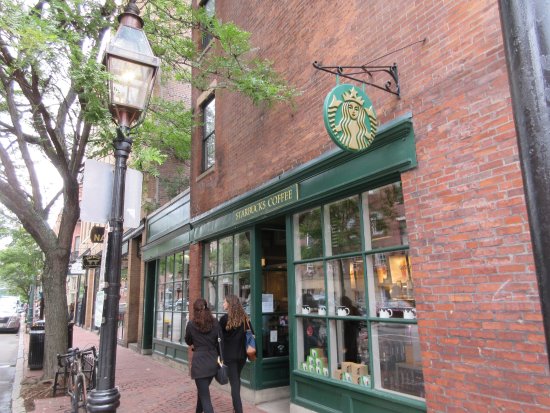
Starbucks on Charles Street, Boston, MA

I did write this on Twitter as well, and it didn't get a bug response, but Henry James didn't like beer, I don't think. Whenever a character is drinking it, usually in a German tavern or beer-garden, we can take it as a fair sign that he is down on his luck.

This is, incredibly, the end of Henry James on the IWE list. We do not see him again. One could almost think (if they hadn't left out The Ambassadors) that they just took the first three of his books alphabetically and said, we've reached our quota of Henry James, we'll stop now. This was a decent sample--The American and this book, as noted above, are two of my favorites of his, though I would have chosen something else in place of The Awkward Age, which I made a fairly strenuous effort to get into but just could not. The choices do feel rather random. While the final three extremely difficult novels, along with Portrait of a Lady and maybe Turn of the Screw (?) seem to be the most highly regarded of his books now, what were the most celebrated ones in 1960? Portrait still, and perhaps Daisy Miller, neither of which were chosen for this list. I don't know. But it is nonetheless farewell to Henry James, unless we have the good fortune to encounter him sometime in our Challenge.   

The Challenge

1. Pride and Prejudice (movie-2005).....................................................................................14,920

2. Min Jin Lee--Pachinko.........................................................................................................6,426

3. Margaret Mitchell--Gone With the Wind..............................................................................4,674

4. Raina Telgemeier--Drama....................................................................................................4,427

5. Gregory Maguire--Wicked....................................................................................................3,475

6. Narrative of the Life of Frederick Douglass........................................................................2,216

7. Philadelphia (movie-1993)..................................................................................................2,195

8. Nancy Isenberg--White Trash...............................................................................................1,849

9. Sharon Kay Penman--A King's Ransom..................................................................................450

10. Kira Jane Buxton--Hollow Kingdom.....................................................................................437

11. Chris Ware--Rusty Brown......................................................................................................303

12. Robyn Carr--The Wedding Party...........................................................................................282

13. Aiden Thomas--Cemetery Boys............................................................................................220

14. Arthur Conan Doyle--The Return of Sherlock Holmes.........................................................140

15. Gus Pelagatti--Wicked Wives.................................................................................................106

16. Tillie Walden--Are You Listening?..........................................................................................80

1st Round

A high qualifying threshold for this tournament, leaving out some books I have heard of. 

#16 Walden over #1 Pride and Prejudice

#15 Pelagatti over #2 Lee

Pelagatti had an upset.

#3 Mitchell over #14 Conan Doyle

IWE authors generally get an immunity through the first two rounds, unless they come up against a book with an upset, which is the case here.

#4 Telgemeier over #13 Thomas

Cartoon/graphic novel over a Young Adult novel featuring a trans protaganist. 

#5 Maguire over #12 Carr

Carr is a romance novel. I need to figure out a way to minimize their qualifying for the tournament, since when they come up they always have a lot of reviews, much more than popular history or science books.


#6 Douglass over #11 Ware

Ware is another comic book. I hope these aren't going to start qualifying in large numbers (though the acclaimed Persepolis is a past winner of this tournament, and I did read it).

#10 Buxton over #7 Philadelphia

The 1984 Merchant Ivory adaptation of the Bostonians did come up as an entrant for this tournament, but with only 69 reviews, it was the 17th place finisher and didn't qualify. I am putting it on my to-watch list anyway, although I suspect I am not going to like it that much.

#8 Isenberg over #9 Penman

As you know I am generally down on genre books as far as this competition goes unless they are regarded as classics of a kind.

Quarterfinals

#3 Mitchell over #16 Walden

Walden is another graphic novel.

#15 Pelagatti over #4 Telgemeier

Pelagatti is a novel based on the seventeen murders of husbands by their wives in Philadelphia in 1938, which I had never heard of, though apparently it really happened.

#5 Maguire over #10 Buxton

The Maguire book is highly celebrated. Buxton's is science fiction set in a post-apocalyptic Seattle.

#6 Douglass over #8 Isenberg

The white trash book got some positive press, but I am not that hyped to read it. 

Semifinals

#3 Mitchell over #15 Pelagatti

#6 Douglass over #5 Maguire

Championship

#3 Mitchell over #6 Douglass

Both of these books have appeared in this tournament before, both are of course very famous--there is some dispute over whether Gone With the Wind is worthy of being considered a classic, but it is at the very least iconic and has been well-loved by a certain class of reader. I have only avoided reading myself to this point because of its enormous length. It does have another upset to use here--it would be hard to justify passing over Douglass otherwise--and I think it is time to have a go at it.


Thursday, June 13, 2019

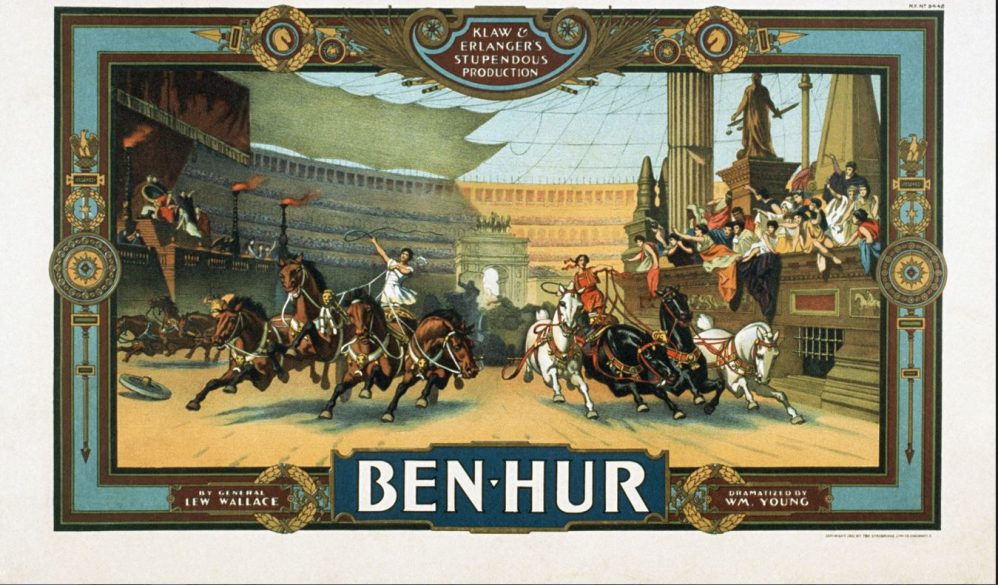
Lew Wallace--Ben-Hur (1880)

So we come to Ben-Hur, a book that I bought a copy of (part of the green and gold spined 20 volume 1930s era "World's Greatest Literature" Series) at a barn sale in 1986 and, especially after I went to college, did not think for a long time that I would ever actually read. But having come to the point a few year's back where I had lost much of my enthusiasm for developing any further in a higher or more future-oriented direction, I came back to some of the unfinished business of childhood years which set me on the road, five and a half years later, to today's post.

As I mentioned in one of my monthly reports, even though I had owned this book for thirty years I had not really noticed how long it was, and if I ever had, I probably wondered if my edition was not abridged, because I always imagined it to be a doorstop type of book. But my edition was only 488 pages, and contained the whole book. The IWE introduction avows that "It is not great literature", but also asserts that "it would be hard to imagine anyone's packing more action into a single volume" The first statement is certainly true, the second is misleading, as if the book were fighting and other forms of physical exertion and struggle from one end to the other, when in fact there are long stretches of wandering and searching and decidedly non-violent episodes from the Bible. It does have a manly energy and thrust to it that compensates for some of its deficiencies, its author having been a general in the Civil War and President Arthur's ambassador to Turkey (joining Hawthorne and Irving, at least, as American authors who served as foreign ambassadors). The IWE, in its upbeat postwar way, refers to Wallace as "a successful Union general", which seems to be putting an extremely positive spin on the matter as he was accused of committing a major blunder at Shiloh, the most significant battle in which he took part, which resulted in a high number of casualties, the castigation of Ulysses S. Grant himself, and the removal from command for almost two years. And even when he returned to active command in 1864, his troops were defeated in the main battle (Monocacy) in which he took part, though he was credited with delaying the rebel force enough to prevent it from attacking Washington.

The book is written in a heavy 19th century style that is difficult to read if one's body has any inclination to go to sleep. Nonetheless I am so far gone in my nostalgic fantasies about the blue skies and epic vistas alike about the ancient world and pre-1960 literature and my own youthful ideas that when I can stay awake and concentrate for any amount of time I really do enjoy it. Manly contention as well as camaraderie among equals, or near enough equals, in strength and spirit, especially against the backdrop of great historical scenes, cities, empires, etc, is always inspiring or is at least a reminder of that feeling when one could believe in it.

As is often the case, I did not take any notes until page 377, then took quite a few over the last 100 or so pages. Sometimes it takes going through almost the whole book to figure out what the questions raised are.

1st note, p.337 "To the purely Christian nature the presentation would have brought the weakness of remorse. Not so with Ben-Hur; his spirit had its emotions from the teachings of the first law-giver, not the last and greatest one. He had dealt punishment, not wrong, to Messala."

p. 351 "As the mind is made intelligent, the capacity of the soul for pure enjoyment is proportionally increased...Wherefore repentance must be something more than mere remorse for sins; it comprehends a change of nature befitting heaven."

If a living priest or some other person in real life were to say these things to me in 90% or more of any such instances I would despise them, I have no doubt. Yet coming across them in the dead pages of a book they, and the belief system that they evidently represent, are soothing.

p. 361 "A country of hills changes but little; where the hills are of rock, it changes not at all."

p. 418 "The Egyptian has him in her net...She has the cunning of her race, with beauty to help her--much beauty, great cunning; but, like her race again, no heart. The daughter who despises her father will bring her husband to grief."

The despised father to boot is Balthasar, of the famous group The Magi. Wallace is an extremely pro-Jewish writer, especially in the religious sense, vis-à-vis almost all of the other nationalities that appear in this book.   

p. 419 "A man drowning may be saved; not so a man in love."

p. 424 "In his eyes there were tears which he would not have them see, because he was a man."
 
Maybe my favorite sentence in the book. Upon Ben-Hur's accepting that his mother and sister are dead, though actually they aren't.

p. 442 "He persisted as men do yet every day in measuring the Christ by himself. How much better if we measured ourselves by the Christ!"
The chariot race is the big action scene in the book as well.

I am about to speak heresy (it is a wicked and godless age), but why do we so easily excuse God/Christ for not immediately overthrowing the Roman power? Modern analytics/efficient practices would suggest that, in the absence of any proof of heaven that would be accepted on Twitter, that would have been a more optimal outcome for humans, though I suppose a worse story. Despite all of the forceful arguments asserting that Jesus Christ, if he ever existed, was the biggest phony in the annals of human history, that belief in supernatural religion is a joke, that spirituality is an invention of the human imagination and has no basis in science and so on, and that this is essentially what almost all genuinely intelligent people in today's world understand to be true, I have never been able to come around to ridiculing the pointless and misguided march of religious, and especially Christian history, which seems to me too important and powerful an--often for good--influence in human culture and psychological makeup to treat so callously. In fact I am admiring and often envious of the truly seriously religious, who seem to me to have a surer sense of who they are than all but the most intellectually invulnerable materialists, whose conception of the nature of the world within which they have found satisfaction is as yet too intricate for me to follow.

According to Wallace's autobiography, he was raised in the Christian tradition but wasn't a devout follower, and he does not appear to have been a member of any church. There are claims on the internet that he was an atheist who wrote Ben-Hur to disprove Christianity, which does not appear to be true, and which I do not believe anyway. Ben-Hur did almost to the last hour cling to the belief that Christ would either lead or inspire in the Jewish people a successful earthly rebellion against the Roman Empire, and he expressed more disappointment about this even after he realized to some extent what Jesus was doing than I would have expected, but the point was not to illustrate that Christianity was wrong so much as that it was difficult to comprehend and to live by.

p. 447 "The idea, old as the oldest of peoples, that beauty is the reward of the hero had never such  realism as she contrived for his pleasure..." The evil, tempting, exotic "other" Egyptian again.

To further comment on my thought above, I wrote "the humbling of Ben-Hur's worldly ambitions something of a surprise ending to me. It is more emphasized than in the film.

p. 477 "The sun was rising rapidly to noon; the hills bared their brown breasts lovingly to it..." At the crucifixion, which I thought was effectively described as a physical ordeal. Perhaps the soldier's sense at work?

The final paragraph of the book is a brief personal note from the author which I found warming. Most of these writers never address the reader so directly.

"If any of my readers visiting Rome, will make the short journey to the Catacomb of San Calixto, which is more ancient than that of San Sebastiano, he will see what became of the fortune of Ben-Hur, and give him thanks. Out of that vast tomb Christianity issued to supersede the Caesars."   


The Challenge

1. David Mitchell--Cloud Atlas..................................................................…..2,317
2. Edward Gibbon--Decline and Fall of the Roman Empire........................…..746
3. Simon Sebag Montefiore--Jerusalem: The Biography...……..................…..422
4. John Julius Norwich--Sicily: An Island at the Crossroads of History...…….111
5. David Graeber--Bullshit Jobs........................................................................…71
6. Margot Lee Shetterly--Hidden Figures (children's book edition)......….……..66
7. Bodie & Brock Thoene--Eighth Shepherd........................................................64
8. Robert Audi--Cambridge Dictionary of Philosophy....................................….36
9. Bill Myers--Devoted Heart...........................................................................….20
10. Teyla Branton--Insight.................................................................................…17
11. G. J. Whyte-Melville--The Gladiators............................................................10
12. Monica Selveira Cyreno--Big Screen Rome...………………………………...7
13. Matthew S. Hedstrom--The Rise of Liberal Religions.................................….5
14. Alexa Person--The Zero Point.....................................................................….5
15. Georg Ebers--Serapis...……………………………………………………….2
16. Works of Lucian of Samosata...……………………………………………….2

Round of 16

#1 Mitchell over #16 Lucian

Lucian is worthy of some respect, his works being part of the Loeb classical series in eight volumes. Eight volumes is lot to overcome against any literary competition in this game, however.

#2 Gibbon over #15 Ebers

Gibbon is one of the last of the inner circle pre-1900 English language classics that I have never read. Its massive length is going to work against it in this format also. I know that I am going to get to it on my "A"-list at some point in the next 10-20 years, so I don't feel the pressure to read it sooner rather than later tightening around me yet.

#3 Montefiore over #14 Person
#4 Norwich over #13 Hedstrom

Hedstrom has no library presence, cannot compete.

#5 Graeber over #12 Cyreno

Big Screen Rome sounds like it might be an interesting book, but no one has it, and the Graeber book, despite its ungenteel and mildly abrasive title, is not one I can eliminate immediately on the basis of near certain dislike.

#6 Shetterly over #11 Whyte-Melville

The Shetterly is a children's picture book edition of the recent adult best-seller and mild sensation--perhaps that would have been a better entry in the tournament, but it was not the one that made it. Whyte-Melville's book, not available in any libraries, looks like another densely written, highly moralized triple decker Victorian novel with a Roman setting, just like Ben-Hur. While I don't mind one of these kinds of books on occasion, there are enough of them sitting on the IWE list that I don't need to add any additional ones for my "free reading".

#7 Thoene over #10 Branton
#8 Audi over #9 Myers

There is not much use for dictionaries on this kind of list, but the Myers book is, for the purposes of this list, a meatball, not being in libraries, being a genre book that does not appear to be published by an outlet with any stature, and thus cannot realistically defeat anything with the Cambridge imprimatur.

All the higher seeds win in the 1st round. The field was lopsided.

Elite 8

#1 Mitchell over #8 Audi
#2 Gibbon over #7 Thoene

If Gibbon keeps drawing red state American Christian novelists, he may triumph in this contest after all.

#3 Montefiore over #6 Shetterly
#4 Norwich over #5 Graeber

Norwich's Sicily book is reasonable in length, and its 29 extra pages over Graeber's are not enough to make us consider the upset.

Final Four

#1 Mitchell over #4 Norwich

Norwich would actually have won this based on shorter length, but Mitchell has the only upset to play in this entire tournament.

#3 Montefiore over #2 Gibbon

Even the Montefiore book is 650 pages. Gibbon proves a tough out in his 1st Challenge appearance.

Championship

#1 Mitchell over #3 Montefiore

Another pretty long book (509 pages) added to the wait list, but the shorter entries need to come through quality-wise. Also Mitchell is about my age and enjoyed the kind of literary success and critical adulation, at that time anyway--maybe he still does, or does any novelist really have that kind of status for life anymore?-- that I used to imagine must be my eventual lot, so looking into his book will be a kind of reckoning for me.


Monday, March 18, 2019

Gerhart Hauptmann--Before Dawn (1889)

So it did not take long to get to another Hauptmann play--apart from Shakespeare with his series of Henry and Richard-titled plays, I believe this is the only time we get standalone works back to back by the same author in the entire IWE list. This was Hauptmann's debut, it premiered when he was 27, which is around the typical age when most of these big time writers achieved their first breakthroughs into the public consciousness. I believed myself to have enjoyed reading it more than The Beaver Coat, though it was a more sprawling, less-tightly constructed play. It was also however less opaque, more indulgent of emotion, and more concerned with the travails of younger people, which in general I guess interest me more even now unless the older protagonist is extremely interesting or amusing. When reading these things, especially if I am under the impression that they are supposed to be good, I mostly concern myself with seeking and trying to understand wherein the quality lies, and do not always (though not never either) trust myself to identify the flaws and failures in such works and declare them as such. I had not read the IWE's introduction to this before reading it and was therefore given something of a jolt when I looked it up after finishing it:


"The reception of Hauptmann's first produced play was 'tumultuous', according to Lewisohn; literary historians agree that it was 'sensational'. Today the play reads like an adolescent effort to be impressive by being shockingly different. It protests a bit too much the grievances of labor, the perils of alcohol, and the righteousness of the Icarians (one of a spate of Utopian colonies in America during the mid-19th century). But it was written by Hauptmann and Hauptmann could already write."


Obviously the IWE editor is revealing some of his own biases here, but his criticisms are all, or mostly, things that did mildly occur to me in the course of reading the play, but that I let pass, and did not put together at all to inform my view of the whole. It was all a little over the top, but Hauptmann was something of a genius, and a German genius to boot, so it must have been in the service of a much grander point. Such was my thought process anyway. I do wonder why the IWE people included this on the program while leaving off The Weavers, which today at least seems to be considered Hauptmann's best and most important play (and also, as it is about textile workers made obsolete by industrial technology, topical). I am pretty sure we are done with him altogether after this.


After being too uncertain of my steps to make any notes on The Beaver Coat, I took a few this time.


Dr. Schimmelpfennig, in Act V, perhaps an early example of what continues to be a defining theme of our own age:


"...humankind is in agony and our sort with our narcotics manage to make things more tolerable."


Both the drunken, newly prosperous peasant woman Frau Krause and the anti-establishment Loth character take swipes at Goethe and Schiller, traditionally thought of by me as the unassailable quasi-divinities of German literature. "Schiller an' Goethe (wildly mispronouncing these names)--a couple of useless ninnies if there ever were away," opined the lady, while later on Loth proclaims to the somewhat dim but nice and earthily alluring farmer's daughter that Werther is "a stupid book...it's a book for weak people." With regard to Zola and Ibsen (whom I said Hauptmann reminded me of in the last post), Loth says "They are not writers but necessary evils...I'm not sick, and what Zola and Ibsen offer is medicine."


The insistent belief in the hereditary nature of alcoholism struck me as strange, not because there is not any truth to it, but because it was presented as an inevitable doom for the inheritor. Thinking back to the introduction, the postwar period out of which this list originated was probably the time, certainly in recent history, when skepticism about anti-alcohol crusaders was at its height, the memory of Prohibition being well within the lifetimes of many adults. I do see signs that these kinds of attitudes may be returning, in tandem with the increase as a percentage of the population of people who come from cultures with strong biases or even prohibitions against drinking.


I thought this was leading to a revelation of some kind of rape which word I cannot make out now (paternal?), incest, or secret pregnancies, and the IWE summary does indicate that we are to understand that Helene was "seduced" by her brother-in-law, but the translation I have (in a 1963 Penguin paperback published in England only of "Three German Plays", including The Threepenny Opera and Woyzeck by Georg Buchner) is unclear to me on this point where Dr Schimmelpfennig says that "Things aren't so far gone that he has actually ruined her, but he has certainly ruined her name by now." I could look up the original online if I wanted to and see if I could make more sense of that statement. I don't know German particularly well, but I know it somewhat, and I had gotten to a point in my 20s where I could read some of Kafka's stories only having to look up a handful of words on the page. But I don't have time to do that now. I barely have any time even to read these books.


Hauptmann died in 1946 at the age of 83, remaining in Germany throughout the Nazi period, so I suppose it is worth looking into how he spent those years. He of course would have been an old man then, and in the introduction to the book in which The Beaver Coat was included, it was claimed that he was "too old" to have relocated to another country. According to Wikipedia he signed a loyalty oath of the German Academy of Literature and applied for membership in the Nazi party (and was rejected). This was not mentioned in the other book. Film versions were made, albeit allegedly heavily censored, of the two plays I have written about here. I put a clip from The Beaver Coat on that post and will see if I can find one for this one. He had a novel rejected for publication during the war on the grounds that it depicted a black character, though a 17 volume edition of his works was printed in 1942 and a tetralogy of novels in 1944, which would seem to indicate that he was in fairly good stead with the regime. He was in Dresden during the firebombing of that city, when he was past 80, and wrote that "I stand at the end of my life and envy my dead comrades, who were spared this experience", which I can certainly believe was a sincere statement. This was noted in the 1950 introduction. He lived in Silesia, the southeastern part of Germany that was incorporated into Poland at the end of World War II. In May of 1946, he was informed that all Germans were to be expelled from Poland, without exception. At this point, he finally became very sick and died on June 6, 1946, before being expelled. The 1950 essay (by a German--I don't have that book in front of me so I cannot remember whether he was personally acquainted with Hauptmann himself) referenced some writings published after the war that were anti-Nazis and everything that happened during these last years, though Wikipedia doesn't list or refer to them. On the whole, one could get the idea that Hauptmann would not have missed much if he had died at age 70, though I don't know whether there is considered to be anything of great value in his later writings. While not as infamous perhaps as Knut Hamsun or Marshal Petain in his end of life Nazi associations, he doesn't appear to have covered himself in much glory, either. Not that I would have either, most likely, if I had been there, but everyone who found himself in that situation is held accountable to some degree, especially if he was a prominent figure such as Hauptmann certainly was.


The Challenge


This draw produced a rather wild Challenge. Matchups will be decisive
.
1. Narrative of the Life of Frederick Douglass...............................................................3,116
2. Howard Zinn--A People's History of the United States..............................................3,019
3. Alice Hoffman--The Marriage of Opposites...............................................................2,115
4. Alice Hoffman--The Dovekeepers: A Novel................................................................1,969
5. Karyl McBride--Will I Ever Be Good Enough............................................................1,042
6. Charles Dickens--Little Dorrit........................................................................................328
7. Michael C. Ruppert--Crossing the Rubicon....................................................................281
8. Karl Rove--Courage & Consequence.............................................................................255
9. Roger Kerin--Marketing, 12th Edition............................................................................177
10. Dr. Joanna McMillan--Get Lean, Stay Lean.....................................................................2
11. Marx & Engels--Collected Works, Vol. 38: Letters 1844-51............................................1
12. Highlights: The Tonight Show Starring Jimmy Kimmel, Season 4 (TV Show)................1
13. Alcoholism: Analysis of a Worldwide Problem (ed. Golding)...........................................0
14. Richard Chizmar--The Girl on the Porch..........................................................................0
15. Susan Chair Imbarro (?)--Declarations of Independency..................................................0


1st Round


Frederick Douglass gets to sit this one out with a much-coveted bye.


#2 Zinn over # 15 Imbarro
#3 Hoffman over #14 Chizmar
#4 Hoffman over #13 Alcoholism
#5 McBride over #12 Kimmel
#6 Dickens over #11 Marx/Engels


Little Dorrit is not one of the nine Dickens books selected for the IWE list, so it is eligible for the Challenge.


#7 Ruppert over #10 McMillan
#9 Kerin over #8 Rove


Kerin is a textbook in a subject I have a limited interest in studying, but he has an upset card to play.


Round of 8
#9 Kerin over #1 Douglass


Kerin had an allotment of 2 upsets in this tournament.


#2 Zinn over #7 Ruppert


A battle of 600+ page books. My library has Zinn, it does not have Ruppert, which is the decisive factor in the contest.


#3 Hoffman over #6 Dickens


Dickens too falls victim to an upset.


#4 Hoffman over #5 McBride


A mild upset. McBride was a shorter book, but Hoffman had upset in hand for this book too.


Final 4
#2 Zinn over #9 Kerin
#3 Hoffman over #4 Hoffman


Championship
#3 Hoffman over #2 Zinn


This Hoffman, whom I've never heard of, appears to be an extremely popular writer of some approximately mid-list fiction. I have dipped into Zinn before and I cannot say that I am a fan. His approach struck me as disingenuous and not respectful of any accomplishment in our national history that could not be attributed to some oppressed party resisting or overcoming the rapacity of the devils making up the dominant elements of society. Perhaps there are truths in his version of events, and if you are familiar with the opposing narratives perhaps there is good to be gotten out of reading Zinn, though I am not wholly persuaded of this. If he is your introduction to or main lens through which to understand American history, I feel sorry for you.