Showing posts with label Pulitzer prize (drama). Show all posts

Wednesday, October 9, 2019

Eugene O'Neill--Beyond the Horizon (1920)


This is the fourth Eugene O'Neill play to come up, and I am still only in volume 3 (of the IWE list). However there are only four more over the last seventeen volumes, so I am halfway through with him already. Beyond the Horizon is the one of earliest date among these works, all of which were produced between 1920 and 1933. The IWE introduction is animated, so I'll print it in more or less its entirety.


"This was O'Neill's first big success. It won the Pulitzer Prize in the year it was produced. O'Neill was never more effective dramatically; his scenes rise to breathtaking peaks, fall into breathing-spell valleys, and finally, almost imperceptibly, lead into the subdued tone of an ending that is the more effective by its contrast."


I am assuming that this play, perhaps more than others on this program, needs to be seen performed. Reading it is fine in its way, it generates plenty of nostalgic feeling for me, especially as the geographical and cultural world that O'Neill inhabits is as close to that of my own as almost any of the writers on this list, though I do not experience the emotional swings as violently as the playgoer who wrote this summary seems to have. The plot has a lot in common with the famous movie It's a Wonderful Life, if every turn in the story had resulted in complete disaster--the main character forgoes an opportunity to go on a voyage to stay home and get married and the wife ends up detesting him; the brother does leave the farm for a promising opportunity, has a massive fight with the father and ends up never speaking to him again; the father dies and the son that stayed behind runs the family concern into the ground, with the accompanying poverty and bankruptcy; the doomed couple has a child and the child dies; and on and on. It's relentlessly grim, to be truthful, though I can believe that nothing quite like it had been seen on the American stage when it first appeared.


Act I, Scene II: Robert's uncle, the ship captain, when Robert tells him he won't be going on the journey:


"I'm ashamed of you, Robert, to go lettin' a little huggin' and kissin' in the dark spile your chances to  make a man out o' yourself."


Once people in a Eugene O'Neill play start being negative (which usually happens in the first few pages) you know things are not going to turn out happily.


Act II, Scene I, stage directions--things have already gone severely downhill:


"MRS ATKINS is in her wheel chair. She is a thin, pale-faced, unintelligent-looking woman of about forty-eight, with hard, bright eyes. A victim of partial paralysis for many years, condemned to be pushed from day to day of her life in a wheel chair, she has developed the selfish, irritable nature of the chronic invalid."


She is of course younger than I am now, though people got old, or were old, early back then. In the literary worlds of the past, fifty is a venerable age at the very least. There aren't many people at all hanging around who are much older than that.


Later in the same scene, Ruth the disappointed wife unloads on Robert:


"...living with a man like you--having to suffer all the time because you've never been man enough to work and do things like other people. But no! You never own up to that. You think you're so much better than other folks, with your college education, where you never learned a thing, and always reading your stupid books instead of working...If I could have seen how you were in your true self--like you are now--I'd have killed myself before I'd have married you! I was sorry for it before we'd been together a month. I knew what you were really like--when it was too late."


My wife could talk to me like this, but, thankfully, she does not.


While I grasp that there is an element of theatrical effect involved, the extreme aging and complete physical decline of the young couple in Act III--by which time they would have been 31 and 28 or so at the most--strikes a 21st century sensibility as almost too exaggerated. Though these kinds of bad marriages, especially among the non-privileged classes who largely eschew them now, really did seem to kill people at this time.



It is worth noting (again) that many O'Neill characters are not terribly intelligent or sophisticated in comparison with their fellows in the literary canon. The characters in this play are not the outright inarticulate brutes that populate some of this author's other work, but Ruth and her mother at least seem kind of dull-minded. My impression is that women in general are not depicted as terribly dynamic, intellectually or otherwise, across all of the O'Neill plays, which would not be uncharacteristic of the male writers of his generation. His dialogue is a mix of outbursts of raw emotion with elaborate speeches articulating the characters' sense of their own doom. I suspect that because of the influence of this style on subsequent generations of American film and theatrical writing, it does not always occur to us that it is kind of strange.


This was the 3rd play, along with Ah Wilderness! and All God's Chillun Got Wings, in volume 342 of the Modern Library, and I have now done all three of them for this program, the whole book. It will sit up on the shelf now until the end of my days, perhaps never to be pulled down again. It isn't in very good shape. The cover is still attached in both the front and back, but not by much. It came from the Library of Trenton High School in Trenton, Michigan. Judging by the penciled in notes in the margins, it was once in the possession of someone who played Mrs Miller in a production of Ah Wilderness!. Now I am wallowing in nostalgia for the half-baked mental universe of my youth. The season contributes to that, evoking as it does fall afternoons in the library and the hopefulness of the new school that not only has not yet died in October, but seems to be just on the point of ripening..But I will stop.


The Challenge


A pretty lousy one.


1. Donald McCaig--Ruth's Journey...…………………………………….311
2. Robyn Carr--The Best of Us...…………………………………………283
3. Daylight (movie--1996)………………………………………………..207
4. Robert Marasco--Burnt Offerings...…………………………………….94
5. Kendall Taylor--Sometimes Madness is Wisdom...……………………..11
6. John Chamberlain--The Roots of Capitalism...…………………………..1
7. Patricia D'Antonio--Nursing With a Message...………………………….1
8. Sebastian Howley--Deathbed...…………………………………………..1
9. S. D. Lowendowski--Snapped...………………………………………….1
10. Louis Boudin--A Socialist Empire: The Incas of Peru...………………..0


Sparsely Attended Wednesday Night Games


#7 D'Antonio over #10 Boudin


The second straight Challenge for which Boudin has qualified. It makes me feel like my wholly innocuous searches are being tampered with.


#8 Howley over #9 Lowendowski


The Thursday Quadruple Header


Noon Tip-Off


#7 D'Antonio over #2 Carr


The D'Antonio book is extremely short.


2:30 pm


#6 Chamberlain over #3 Daylight


Evening Session 7 pm


#8 Howley over #1 McCaig


Upset


9:30 pm Nightcap


#4 Marasco over #5 Taylor


The Taylor book is about F Scott Fitzgerald's marriage, and is the only entry in this group that is the kind of book I would normally be interested in. But I am so far behind on this list that I am going to be looking for shorter books for a few sessions here if it can be helped.


Friday Prime Time Doubleheader


7pm


#4 Marasco over #8 Howley


No prayer for Howley. The Marasco book appears to be a genre novel, but it was published in 1973, at least, which might make it of interest to me.


9pm


#7 D'Antonio over #6 Chamberlain


Championship Saturday Night


#7 D'Antonio over #4 Marasco


The D'Antonio book is only 145 pages, so even if it is terrible, the agony won't last long.

Monday, April 25, 2016

Eugene O'Neill--Anna Christie (1921)

This is the third Eugene O'Neill play thus far in the IWE list, and there are many more to come, I think there are around ten altogether. It is also another American play of the 20s and 30s, another Pulitzer Prize winner--the third so far in the drama alone!--and of course O'Neill was a Nobel Laureate as well, all of which is in keeping with some of the already established themes running through this great list. I had had for some reason the impression that Anna Christie had been his breakout play, but in fact he had already won another Pulitzer Prize two years earlier for Beyond the Horizon and that was followed up by The Emperor Jones before Anna was produced as well. This play struck me in reading as generally less interesting and more dated, in a negative sense, than the two O'Neill plays I have previously read for this project, with which I was impressed. This is one of the works of his that features a more brutish and not especially appealing class of character in whom it is difficult for the earnest, well-meaning, socially aspirant reader of the modern day to find much hope of development. Still, I did not dislike the experience of going through it. O'Neill does give a certain quality of darkness and heaviness of detail to the atmosphere of this older America that has a ring of authenticity in it to me and that other authors do not hit at in quite the same way.


It is strange to me for some reason to imagine an America where heavily accented Swedish and other Scandinavian immigrants make up a not inconsiderable segment of the society, yet many books from this 1880-1930 period attest that this was a vivid part of the national scene in those years. No doubt one of the reasons that this literary era does appeal to me so much, even down to its secondary works, is that it is when people of my general ethnic type, Irish/German/Baltic Sea area, were most ascendant and more culturally vital than they seem to be at present. A lot of characters in books from this time, perhaps because their physical characteristics and responses to various stimuli are simply described better than they are by modern writers, seem much more akin to me than most contemporary people, let alone literary characters, do. It is not a major consideration, and it not something I really picked up on until I started reading more of these books again over the past couple of years. I was often struck by how many characters had blue eyes. I have seen it put forth that around 50% of Americans were blue eyed in 1900 as opposed to only 16% today. This is the kind of fact that one isn't supposed to find interest or meaningful, I guess, though I think it is interesting at least. The circumstance that I think it interesting implies that I probably find it meaningful too, but I am not going to begin to speculate on the form that might take here, because I have not really thought about it very much. Perhaps one of these books will prod me to have some further thought about this later on.


While the plots are not exactly identical, some of the similarities between Anna Christie and the 1928 Josef Von Sternberg silent film The Docks of New York seem too striking to be coincidental. Both feature a fallen blonde and a ship's stoker of almost inhuman physical strength who get involved with each other. Both have as a major setting a rough seaman's bar on the New York waterfront. One has a bartender named Johnny-the-Priest, the other has a preacher type among the bar's cast of characters named Hymn-Book-Harry. Docks of New York is officially an adaptation of a short story by another writer named John Monk Saunders. There is not a lot of biographical information on Saunders, though he was married for eleven years to King Kong star Fay Wray (!--she played the girl--writers, how you have fallen!), and hanged himself at age 42. He sounds to me like he has alcoholic written all over him, though I cannot find confirmation of this, which would have made channeling the literary spirit, as well as output, of Eugene O'Neill somewhat easier.


Greta Garbo (who played in a lot of the film versions of the books on this list that have become somewhat obscure)

For the execution of this reading, I turn to a trusty old 1950 Modern Library edition of three of Eugene O'Neill's plays, with an introduction by Lionel Trilling. Unlike modern introductions by scholarly editors that batter the reader's will to live under an assault of critical theory and erudition of obscure books and characters and movements (real erudition is simply knowing everything, or nearly everything, central to the varied subjects that the ideal university graduate is supposed to know but most never get around to actually learning; obscurities are by definition not essential, and therefore do not display erudition, unless they can be demonstrated to somehow be essential), Trilling in a few broad sentences acknowledges what difficulties the general reader of 1950 (i.e., me) will find in a conventional reading of the play as play ("...its central incident--the regeneration of a cynical prostitute--is now timeworn and not especially interesting in itself, and the virtues of its poetic language are surely questionable"), and explains in clear and simple language why the show was important in its time, in a way that enhances at least my active interest in reading it ("(O'Neill's) Style, indeed, was sufficient content...all constituted a denial of the neat proprieties, all spoke of a life more colorful and terrible than the American theatre had ever thought of representing." Speaking of the zeitgeist of the 1920s: "It was a movement of cultural protest, against the business civilization of America, against philistinism, puritanism and vulgarity... Essentially a revolt of the conscious middle class against its own sterile complacency, it offered the promise of a regenerative cultural life.")


Long (9 minute) clip from the 1923 film version of Anna Christie, starring Blanche Sweet.

The Challenge

Another challenge that is all over the place and produces very few 'real' books.

1. Safe Haven (movie)............................................................1,454
2. Patrick Leigh Farmer--A Time of Gifts..................................190
3. Salman Rushdie--The Ground Beneath Her Feet.................142
4. Samanthe Beck--Best Man With Benefits..............................133
5. Berenstain Bears--God Bless Our Country.............................54
6. Jasper Ridley--Brief History of the Tudor Age........................23
7. ed. Peter Haining--The Mammoth Book of True Hauntings....14
8. C. Lee McKenzie--Sudden Secrets..........................................13
9. Jan Wahl--Humphrey's Bear......................................................7
10. Sam Llewellyn--Clawhammer.................................................1
11. Nicholas Karolides--Literature Suppressed on Political Grou.1
12. Anastasia--Master of the Universe: Memoirs Book 1..............1
13. Eugene O'Neill--The First Man................................................0
14. Mary Ellen Snodgrass--Encyclopedia of Gothic Literature.....0
15. Victoria Tan--So This is Death.................................................0
16. The Hopeline--Understanding Self-Worth...............................0

Round of 16

#1 Safe Haven over #16 Hopeline.

I am not sure that the Hopeline book actually exists.

#2 Farmer over #15 Tan.

Tan may not be an actual book either. The Farmer meanwhile seem to be something of a minor classic.

#3 Rushdie over #14 Snodgrass.

I have never read anything by Rushdie. He should be able to comfortably advance over an obscure academic exercise, especially in the first round.

#13 O'Neill over #4 Beck

One of O'Neill's lesser remembered plays evidently, though it is probably possible to find a copy of it. I may even have a copy of it in one of my various collections.

#5 Berenstain Bears over #12 Anastasia

The Berenstain Bears are players in the publishing world. They'll beat anything the relationship of which to a traditional book is foggy to me.

#6 Ridley over #11 Karolides

Based on nothing, other than that it sounds more interesting.

#10 Llewellyn over #7 Mammoth Book of Hauntings.

#8 McKenzie over #9 Wahl.

Teen trash over blah-looking children's book.


Performance of Anna Christie in what I imagine to be modern dress.

Round of 8

#13 O'Neill over #1 Safe Haven

#2 Farmer over #10 Llewellyn

#3 Rushdie over #8 McKenzie

#6 Ridley over #5 Berenstain Bears

This round was pretty clear cut. The Llewellyn book might be good, but my curiosity is aroused too greatly by the Farmer.

Final 4

#13 O'Neill over #2 Farmer

There is not a copy of the Farmer book anywhere in a library in the State of New Hampshire, even though it has received the what I thought to be imprimatur of the New York Review of Books reprint series.

#3 Rushdie over #6 Ridley

No one is holding the Ridley book either. A disappointing Final Four.

Championship

#3 Rushdie over #13 O'Neill

At 575 pages the Rushdie book is a little long, and by the ordinary rules of the challenge would not win here. However, he has appeared in the Challenge several times already without winning, and we read so much O'Neill in this program--nine or ten plays I am guessing--that while I am curious to read one of his lesser known works, I feel an obligation to take on some modern novels from time to time in the course of this game.


Friday, December 5, 2014

Susan Glaspell--Alison's House (1930)

Four of the next five works on the IWE list are plays, along with one short novel. So I should continue to make a rapid progression through it for a while longer.

Alison's House won the Pulitzer Prize for drama in 1930. Even though its author is a woman, writing in an era when women were supposed to be underrepresented among playwrights, and its namesake subject a genius female poet who has some similarities to Emily Dickinson, it has fallen into obscurity. It has been out of print for years, there are very few copies of it available on the internet, and most of those are over $100. As I want to collect at least some edition of all the books on this list--and most are either available very cheaply or I have them already--I was hard put to find anything available for under $50, let alone 15, which is at the outer edge of what I usually consider resonable. I finally came across a volume of Six Plays published in London in 1930, which looked to be a compendium of that year's major dramas on both sides of the Atlantic--in addition to Alison's House, it also included Marc Connelly's Green Pastures, which is also on the IWE list, as well as something by Elmer Rice (Street Scene)*--for eight bucks, though unfortunately as it had to be sent from New Zealand the shipping and handling was an additional twelve. But I was able to get my book, and not suffer an interruption in the program.


As I think this play is not widely known, I will briefly recapitulate its story, setting, and character. It is set on December 31, 1899, which everyone in the play considers to be the last day of the 19th century, and that there is significance in the fact. Alison, the titular poetess, has actually already been dead for twenty years, but her elderly sister has continued to live in the family house they shared, which is substantial and cultivated, and is situated along the Mississippi river in Iowa (Glaspell was a native of Davenport, Iowa, presumably the unidentified nearby city where Alison's brother, a lawyer, and his children live). They are not the Vanderbilts as far as wealth goes, but all of the men in the family either are attending or seem to have attended Harvard, which in 1899 indicates a pretty rarified status, especially in Iowa. As the elderly sister is becoming too infirm to live by herself in the old house anymore, the family has decided to sell it off and bring auntie to live with them in town. As the transfer is to take place the next day, the first day of the 1900s, they are spending the new century's eve cleaning the old place out. In addition to Alison's brother and sister, there are the brother's three children: the frustrated, dutiful older son and his even more rigidly correct wife, whom he does not love; the younger son, who is verge of flunking out of Harvard and is trying to save his skin by getting some gossip about his famous but mysterious dead aunt to feed his voracious English professor; and the wayward daughter who ran off with the husband of one of her friends and had been in effect banished from the family before turning up on the occasion of the house closing. There is also a reporter from a Chicago newspaper who has gotten wind of the house being sold and is sniffing around for a possible story, and the attorney's 'secretary', whose mother was the woman he really loved and whom it is strongly hinted is really his daughter. While there was a literary group interested in buying the house and preserving it as a museum, it appears as if the house is going to be sold to some vulgar townspeople who plan to turn it into a summer tourist resort. This all unfolds very compactly and neatly in the course of the play, which has an excellent construction. In reading it has a considerable amount of atmosphere also, with the imminent change of century and departure from the house and the sense that a comfortable familiar is about to be gone. It is also of course written in the language and style of its time, which has a cleanness and honesty and--awareness (?) of the essential details of its world, and their significance--that I do not find to my satisfaction in own writing at least, and not much in that of contemporary writers.


So as a means of amusing myself and escaping into the past I rather liked this, and again congratulated myself on finally allowing myself to take up this antiquated, and heavily middlebrow (though with a lot of real literature on it) list, which really does give me a pleasure that my life had come to lack through my years of unsuccessfully striving to become someone other people would approve as intelligent. If you were to ask me "How good is it?" and "What are its insights?" and insist on my defending such positions as I took, I would say 1) It is overall quite good, it is the work of an intelligent person, it evokes mood and feeling, pays tasteful homage to a period, a class of characters, and a somewhat iconic personage in our history without being overbearing about it; and 2) That is more difficult. However, the theme of elusive love, or loving an inappropriate person and being unable to find a love that is more acceptable, is a dominant one in the play, effecting at least five of the characters, including Alison, and seems to have been the wellspring of her celebrated poems. We are also reminded of the inevitability of death, not only of individuals but of generations, and cultures, etc, but with the suggestion at least of continual rejuvenation and the possibility of art to transcend the strictures of normal human time. So there is that. The play is not an absolute joke intellectually, at least not to people in the 85th-95th percentile range of intelligence or so. This group could get something out of the exercise of reading it.

It happens that I recently (late October) saw another play that was explicitly about Emily Dickinson, The Belle of Amherst, a one woman show written by William Luce, first produced in 1976. I went to this because my sister-in-law was the actress. The play was staged in a circa 1903 stone library that has been converted into a kind of community function hall. It was great to be out and to see a live performance with that degree of intimacy. The material was engaging, and the effect was probably greatly aided by seeing this particular story in New England the week before Halloween, which is an especially New England-y (in the Emily Dickinson sense) week. I don't know if it would be the same seeing it in Miami, which is where my sister-in-law currently works. It was really good to get out of the house, and they even had a little wine and cheese reception afterwards. You may laugh, but I never get to go to things like this. I almost felt like a real adult.


The Bourgeois Surrender Challenge

The challenge is dying. Another lackluster selection of titles and another murder/detective novel as a winner. Who reads all these detective novels? I know some of them are literature but the vast majority of them are exactly alike. The detective is always supposed to be some kind of superior super-intellect with a deep understanding of men and the organization of society, yet the books are always stupendously boring. I am going to have to revamp the system again to try to produce results more in line with what I am looking for.

1. The Beautiful Mystery--Louise Penny.......................................................................................1,111
2. Chance of a Ghost--E. J. Copperman...........................................................................................62
3. With Our Eyes Wide Open: Poems of the New American Century (ed. Douglas Valentine)............2
4. Lost Libraries: The Destruction of Great Book Collections Since Antiquity (ed. James Raven).....1
    The FSG Book of 20th Century Italian Poetry...............................................................................1
6. Cambridge Companion to 20th Century English Poetry (ed. Neil Corcoran).................................0
    Earth-Moon--Ted Hughes.................................................................................................................0

*The remaining plays in this collection are Badger's Green by R.C. Sherriff, Down Our Street by Ernest George, and the intriguing sounding Socrates by Clifford Bax. 

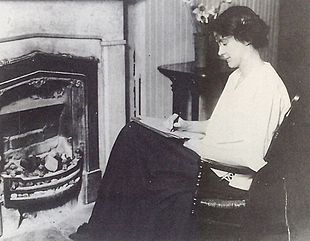
"Her brown hair is parted in the middle, and held loosely at the neck. She is looking straight ahead, as if into something. But she is really waiting for the right word to come. They came, you can tell that. They were willing visitors. She didn't have to go out and pull them in. There is a knock at the door. It's me. I am crying. She makes a funny little face. She says, 'Tell Alison.' I tell her Jimmy Miles has knocked over my mud house. She says, 'You can build a fort, and put him in it.' She tells me the story of the bumble-bee that got drunk on larkspur and set out to see how drunk you could get in heaven. And what became of her thoughts--the thought I interrupted?"

--Sample from Alison's House


This plaque is in Iowa City?

Monday, September 30, 2013

Abe Lincoln In Illinois (1938)--Robert Sherwood

I've finally decided to start reading (or in many instances, re-reading) through the books on this ancient list. It is obvious as I get older that the spirit that came up with this list was more attuned with what is likely to bring me a few moments' of pleasant reprieve every day than what I will be able to find in the present times. This will be exceptionally slow going reading, for I will be continuing to read my main list that I have been working on since 1994 and have not attained the halfway point of yet. This Illustrated Encyclopedia list is something I will probably read 10-15 pages of a night before I go to bed, to put myself in a tranquil mood, regardless of the darkness of the story, because I associate it with a time in my life when I was optimistic.

I have always been perplexed about what order to read these books in, but I have finally decided that it is all right to just read them alphabetically, as they are listed, which is the easiest way to approach it. Also most of the really important books I have read once either for my primary reading list or at school. I do plan to read them again as they come up, and look forward in most instances for the excuse to do so, but if I should die before I get back to War and Peace I do have the consolation that I have read it twice already.

The first two selections on the list are short 20th century plays about Abraham Lincoln, which is good for jumping in and feeling one can make some headway through the list right away.

Abe Lincoln in Illinois is the perfect introduction to the worldview embodied in this list, at least for me. It is entertaining and well-written, it is simple and clear, it is optimistic--about America, about democracy, about human freedom, about the potential of the common person to live as a decent and contributing citizen. This optimism is probably rooted in symbols and ideals of men--of Lincoln mainly--rather than actual men, or even actual Lincoln, but it seems genuine to me, in the sense of being motivated by goodwill rather than being platitudes disguising baser instincts. Sherwood appears to have been something of an east coast Brahmin, New York money and connections, all the best schools, Harvard, etc, and he is under no delusions about there being a real hierarchy among men with regard to character, moral sense, mind, power of action and so on, and that the ability of these superior men to rise to their proper station is the most important task that a society faces in organizing itself. It is also suggested, of course, that the United States has known some fortune in this regard.


Sherwood wrote some notes that were appended to the end of the play in which he explained his sources for certain incidents and reasons for taking liberties in some of them or wholly inventing others. He wrote with high praise of Sandburg's once-celebrated biography, though only The Prairie Years (the first volume) had been published at that point. It was noted the The War Years was currently in preparation. I would guess Sherwood was looking forward to it:

"The Prairie Years is an incomparable portrait of Lincoln and of the young, boisterous America in which he grew up."

In another place he refers to a quote about Lincoln about his having a kind of poetry in his nature, and stating that this was why Sandburg was the perfect biographer.    

To give a taste of Sherwood's judgement where personal Greatness was not attained, however, I will quote his summation of the life and character of Lincoln's poor surviving son, Robert, who, to be honest, sounds like he could have been a lot worse. People nowadays would be in awe of his resume:

"Robert justified his name (after his maternal grandfather), by following in the dainty footsteps of the Todds rather than the huge ones of the Lincolns. He was educated at Exeter and Harvard, served as Secretary of War under President Garfield, as Minister to London under President Harrison, became a successful corporation lawyer and president of the Pullman Company--in which capacity his hostility to the interests of labor indicated that he had not paid strict attention to the opinions of his father. He spent the last fifteen years of his life in retirement at his New Hampshire home (sic--I believe Sherwood must be referring here to Hildene, which is actually in Manchester, Vermont, and remains open to the public to this day), playing golf and saying "No" to all who begged him for access to the private papers which had come to him with his father's meager estate. Indeed, he decided to burn these papers and was restrained from doing so only by the timely intervention of Nicholas Murray Butler, who persuaded him at least to place them under seal in the Library of Congress. Robert Lincoln left orders that they shall not be opened until 1976, when a new series of biographies and plays about Abraham Lincoln may be written."

I don't remember reading about anything spectacular being revealed about Lincoln in the 1976 unsealing of these papers. I suppose I ought to look it up.

The Bourgeois Surrender Challenge

Because there is a danger of my never reading anything published after 1960 again other than the occasional topical book that happens to pique my interest I have devised a Challenge in which using keywords culled from the archaic reading I come up with a list of books from internet searches and score them based on their Amazon ratings (This is exactly what Jonathan Franzen--whose assumption as the person in charge of contemporary literature is the sort of thing that is driving people like me into the arms of the past--does not want us to do, but as I am using this system--really a game--to generate at most 15% of my actual reading, and which I will tweak over time if it fails to produce the desired results, I think it is not going to be do damaging).Here are the results for Abe Lincoln in Illinois:


1. Wagner As I Knew Him--Ferdinand Praeger..................................................5.00
2. Team of Rivals--Doris Kearns Goodwin.........................................................4.71
3.Sailing Alone Around the Room--Billy Collins.................................................4.51
4. Children's Stories in American Literature 1660-1860--Henrietta C Wright...4.40
5. Abraham Lincoln & Coles County, Illinois--Charles H Coleman...................4.00
    The Good Doctors--John Dittmer...................................................................4.00
7. The Wrongs of Women: or, Maria--Mary Wollstonecraft...............................3.83
8. Areopagitica--John Milton..............................................................................3.73
9. The Story of Young Abraham Lincoln--Wayne Whipple................................3.50
10. The Rip Torn Handbook--Emily Smith..................................Received no reviews

The Wagner book vote is based on just one review, but based on the current rules of the Challenge it is our winner (and didn't I dodge that Doris Kearns Goodwin bullet?). Do I accept the Challenge? I would if the book were easily and cheaply obtained. However there is not a single library in the state of New Hampshire that owns the book, and the cheapest paper copy available online is $9, which in this instance is too much. So I will pass on this Challenge and move on to the 2nd book in the Encyclopedia series, John Drinkwater's play of Abraham Lincoln. 

This process turned up three Challengers that were musical recordings.Their tallies:

1. Rodrigo Costa Felix--Fados de Amor..........................................................5.00
    Dick Diver--New Start Again.....................................................................5.00
 3. Peter, Paul & Mary--Songs of Consciousness & Concern........................4.72

I haven't had time to explore these possibilities, though again both winners achieved their perfect scores on the strength of a single review.