Showing posts with label French revolution. Show all posts

Friday, May 6, 2016

May Update

A List: Hank James--The Aspern Papers....72/87

B List: Anna Karenina...179/950

C List: R.R. Palmer--Age of the Democratic Revolution, Vol 2: The Struggle...512/578

I am rather enjoying The Aspern Papers, a book about which I knew nothing beforehand. I would say it was a good introduction to Henry James, akin to The American, but I am not sure anything qualifies as a good introduction to Henry James (though I don't think I would recommend starting out with Wings of a Dove). Most people who had an interest in what the fuss was about would probably just have to jump in somewhere. This is one of his sparer efforts, set in a decaying palace in Venice where an ancient lady and her niece have been living in seclusion for many years, scarcely ever even leaving the grounds. Obviously their food is either delivered to the house or their servants go to the market for them, though Henry James never concerns himself with these kinds of practical details. The old aunt was in her faraway youth a celebrated beauty and the lover/muse of Aspern, a Byron-like poet, and is believed to still possess letters and other mementos of the great man, which are coveted by literary scholars. The attempt of one of these latter to infiltrate the house and gain access to/possession of the papers forms the plot of the story. I am guessing the book is a meditation on the futility of trying to experience/gain possession of an atmosphere of artistic genius from outside, or at second hand/distance in time. Anyway I am finding it interesting, and while many would probably find the pace and claustrophobic life depicted in it excruciating, it suits my own present mood.

The book is a little longer than the 87 pages I record it as being would suggest. The copy I am reading it out of is in an old Norton Anthology, which like to fit a lot of text on a single page.

Anna Karenina we will get to later. I read it once sometime in my early-mid 30s when I was going through my mid-life crisis and literature was not working for me as it had in much of my life up to that point, and the book did not leave much of an impression on me; indeed, I had mostly forgotten it. So it is almost like reading something for the first time now.

I am finally winding down with the Palmer. The C-list I only read a short snippet of each day, which is why I generally favor shorter titles for it. I just finished the section on how the British ruling class managed to contain and suppress revolutionary movements or even expressions of discontent in that country, and especially in Ireland, during the upheavals of the 1790s. While I have not traced his family history, Palmer comes off as belonging to the Wasp-y professor/historian class of men that historically predominated in the Ivy League and other of the more venerable northeastern colleges. He betrays an admiration, as if out of personal identification, for the manner and ease with which the British elite handled their unrulier elements, though most of these latter seem to have been concentrated among semi-educated workingmen rather than disaffected aspiring bourgeois, the more of able of whom I suppose have been traditionally co-opted enough into the rituals and institutions of the top people to limit the fervency of their unhappiness. If anything these books have given me a stronger realization of how heavy-handed and brutal the policies of the British ruling class often were during the heyday of their national power even compared with other European countries traditionally regarded as less progressive and more vicious, which truths, while they have been more emphasized in recent years, are usually done so in a provocative and confrontational manner that practically begs one to be suspicious of the author or speaker's motivation in bringing them up. In such instances a relatively dispassionate record of the facts by a writer who is if anything favorably inclined towards the people in question is more likely to have an effect on me.

Picture Gallery


  An adaptation in which some liberties were obviously taken.


Wednesday, April 6, 2016

April Update

A List: Between books currently.

B List: Anna and the King of Siam--Margaret Landon 360/391

C List: The Age of the Democratic Revolution: The Struggle--R. R. Palmer 136/578

The last thing I read for the "A" list was the poem, or collection of poems, known as "The Passionate Pilgrim", attributed on the original title page to Shakespeare, but which is in fact a compilation of a number of poets of the time, including Shakespeare, and also including some unknown authors. It has the famous lines "Were kisses all the joys of bed/one woman would another wed" which it seems cannot be positively attributed to Shakespeare, but still usually is by the general public. I read it in my clunky Rockwell Kent-illustrated complete Shakespeare, which is the only book I own that contains it. It is printed there as if it were a regular part of the Shakespeare canon, though without any introduction or notes. I was a little confused in reading it by the incoherence between various parts of the poem and the lack of continuation of various characters and motifs throughout the work, as well as the inclusion of some lines that were obviously from Marlowe's "Passionate Shepard to his Love", so I was glad to have some explanation for this.

The Landon book I am almost finished with and will be doing a full report on soon.

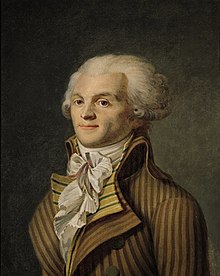
The Palmer, subtitled A Political History of Europe and America, 1760-1800, is the second, and last, volume of the Challenge-winning book I was reading last month. So far I am actually liking this second volume more than the first, in part I suspect because I am used to the style now, and also because the second volume deals directly with the events of the French Revolution and the general European war that accompanied it, which is of course a very dramatic episode of history that I have somewhat shamefully never read even a general history of. Robespierre is best remembered now for overseeing the reign of terror, but he was a compelling political animal, perhaps a genius of that art in some ways, who made some great and memorable speeches. More than a few of his bons mots have a startling resonance today, not least because they are more lucid and succinctly expressed than most prominent contemporary thinkers have been able to manage on similar topics. "Equality of wealth is a chimera...necessary neither to private happiness nor to the public welfare". But "the world hardly needed a revolution to learn that extreme disproportion of wealth is the source of many evils." More: "We want an order of things...in which the arts are an adornment to the liberty that ennobles them, and commerce the source of wealth for the public and not of monstrous opulence for a few families...In our country we desire morality instead of selfishness...the sway of reason rather than the tyranny of fashion, a scorn for vice and not a contempt for the unfortunate...good men instead of good company, merit in place of intrigue, talent in place of mere cleverness...the charm of happiness and not the boredom of pleasure...in short the virtues and miracles of a republic and not the vices and absurdities of a monarchy."

He rather humorously dismissed the spectacle of the Worship of Reason held in the desacralized Notre-Dame Cathedral in 1793 as "a philosophical masquerade".

He also famously said that "Revolutionary government owes good citizens the whole protection of the nation. To enemies of the people it owes nothing but death."

Palmer theorizes that Europe became afflicted with revolutionary fervor at the end of the 1700s rather than at an earlier time because too many people of some degree of capability had come to feel personally humiliated by existing political and social arrangements. I do believe that something like that is occurring now throughout the Western World, where the middle classes, at least, are not suffering from material deprivation or physical insecurity, yet there is a great amount of anxiety and dissatisfaction that I think is rooted in greater-than-ordinary (compared to, for example, 1964 when this book was published) feelings of humiliation, inferiority and powerlessness among the populace. Of course if I continue to believe this to be the case I will eventually have to make a stronger argument for it...

Picture Gallery


Monday, March 7, 2016

March Update

A List: Somerset Maugham--Ashenden, or the British Agent..............................282/304

B List: Currently between books.

C List: R. R. Palmer--The Age of the Democratic Revolution: The Challenge...333/528

Late this month. The 6th fell on a Sunday, which is a bad day for me to get any computer time. Obviously any writing time is hard to come by at this point.

The Maugham book is a readable product, ideally consumed, as Ashenden himself would do so, in first class railway carriages and sitting in one's robe and slippers with a glass of sherry by the fire in a Swiss hotel. He (Maugham) does have some literary skills, notably in the area of dialogue that moves the particular episode forward and is somewhat satisfying to the brain at the same time. He is mostly a reassuring kind of writer, the reassurance being that if you are a socially unsophisticated and only modestly smart reader, but find those qualities at a slightly higher, but not dangerous, stage of development attractive in others, he is there for you. As far as this book is concerned, Ashenden is involved in espionage, but it is really more of a travelogue and study of broad and recognizable types than a spy book, Ashenden is never in any physical danger nor is he required to outwit any particularly formidable opponent. The American character is an ignoramus and a bore who is enamored of the sound of his own voice, the Russian ones are fiercely serious and tormented and intellectual. It's that kind of book.

R. R. Palmer (1909-2002) was a historian and college professor, mainly at Princeton, from 1936 to 1977. Several of his publications are considered distinguished, and the two-part Age of the Democratic Revolution is considered his masterpiece. How I came to be reading this large work I will go into more in my next book report when I get around to it. It is a departure from the kind of thing I usually read, which is good, but some sections in it come more alive to me for whatever reason than others. To my surprise, for example, I am finding the account of the anti-aristocratic movement in the Netherlands in the 1780s to be quite interesting. As a smaller country without an internationally famous literature or, in this era, any other art, the texture of its history is not very well understood, by me at least. At the same time I was not as enthralled by the chapter dealing with a similar movement in Ireland during the same period, mainly because the main actors were almost exclusively Anglo-Irish, Catholics being entirely forbidden from the Irish parliament and other offices at that time, which dynamic--the Catholics being as it were on the sideline in the politics of the time--I had a hard time getting a clear vision of. Palmer was a man of his time and his own sympathies and principles seem to be against oligarchy and too great social and economic inequality, for wide participation (by way of voting and representation) in government and so on. His summation of the mood in Europe at the outbreak of the French Revolution resonates a little too closely to that of our own time:

"By a revolutionary situation is here meant one in which confidence in the justice or reasonableness of existing authority is undermined; where old loyalties fade, obligations are felt as impositions, law seems arbitrary, and respect for superiors is felt as a form of humiliation; where existing sources of prestige seem undeserved, hitherto accepted forms of wealth and income seem ill-gained, and government is sensed as distant, apart from the governed and not really 'representing' them. In such a situation the sense of community is lost, and the bond between social classes turns to jealousy and frustration. People of a kind formerly integrated begin to feel as outsiders, or those who have never been integrated begin to feel left out."

He had a good quote on how too extreme inequality really was bad for societies but I can't find it now.

Picture Gallery