Showing posts with label bookstore reminiscences. Show all posts

Friday, July 24, 2020

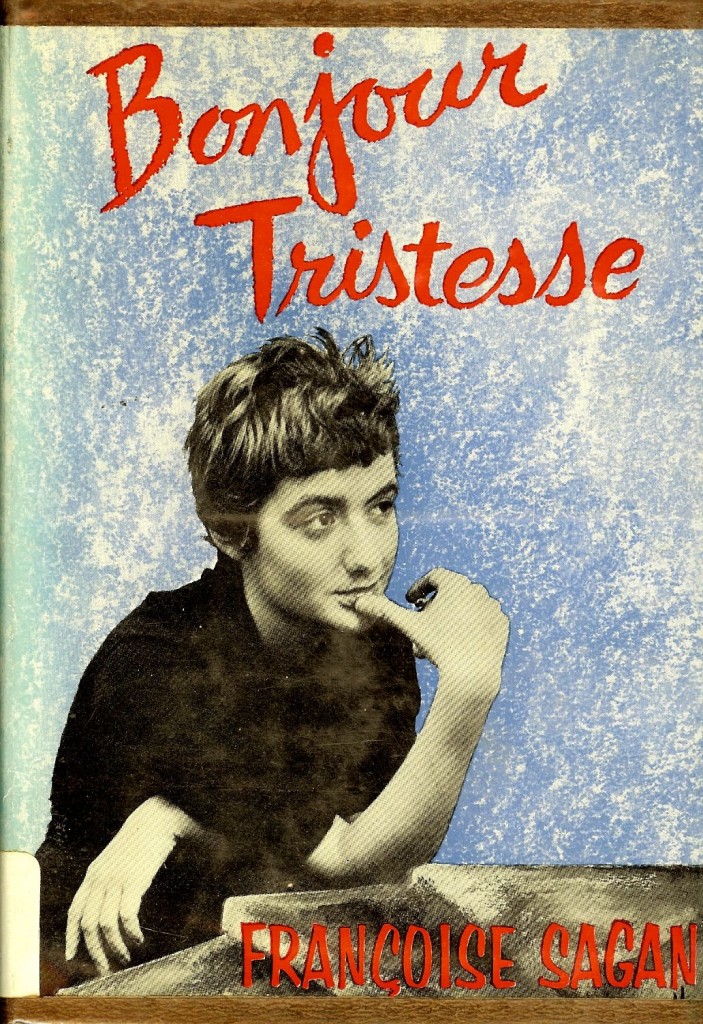
Francoise Sagan--Bonjour Tristesse (1955)

"The tremendous interest aroused by this very short novel, and its big sale, can perhaps be attributed chiefly to the interest in its youthful author, who was 16 (ed--most sources say 18, but still precocious) when she wrote it. Mlle. Sagan is the contemporary and authentic voice of the "beat generation", in her native France affected by existentialism and living in shameless pursuit of thrills, speed in sport cars and rhythm in music. Nevertheless Mlle. Sagan has undoubted genius as a writer. She became the idol of teenage Paris and fulfilled her promise by almost killing herself in a motor accident. John Steinbeck satirized her in passing in his novel The Short Reign of Pippin IV."--IWE


Francoise Sagan was the latest born (1935) of all the writers on this circa 1960-composed list. She died in 2004, the author of many books and plays, though none of her later works equaled the success and influence of this, her first novel (she remained a colorful and adventurous figure throughout her career, being convicted for cocaine possession as late as the 1990s). In retrospect it is a little difficult to appreciate what the big deal was. At the time the book was considered something of a French (and female) counterpart to Catcher in the Rye in its depiction of stylishly jaded affluent young people, but the writing isn't on that level. Even though it is only 128 pages the plot moves along rather slowly and in truth not a great deal happens--it probably could have been even shorter than it was without any sacrifice of quality. By current standards the famously scandalous parts of it are not all that alarming--even the (largely blase) parts where the 17 year old Cecile goes to bed with her 25 year old boyfriend, while they might officially be met with distaste and disapproval in the present environment, are obviously neither dark nor dangerous in the way that one would expect such an "inappropriate" relationship to be. Escapism for repressed (really repressed) women perhaps? This doesn't seem like a book that men at that time, especially older men, would have been that interested in, though obviously someone was buying all of those little red printings of the book during its initial success that I have come across dozens of copies of in used book stores over the years.


Having said all of this, I still liked it and am glad to have finally read it, as it was something of a cultural touchstone during the 50s and even long afterwards, when it would be referred to mockingly in association with wide-eyed American tourists, especially women, with silly or exaggerated romantic notions of France. If it were 400 pages I don't think there would be much justification for still reading it, but at the length it is, and as it does partake of the attractive spare, pointed French literary style that was prevalent in the 40s and 50s, I think it is worthwhile. I know that others are, supposedly, engaging with books more pertinent to the present hour, about critical race theory and structural injustices and the like, while I am hiding out on summer vacation on the Riviera in the 1950s, towards the end of which my sentiment was, "more of this candy, please."


Just a few short quotes, as always for the sake of my own remembrance.


pp.9-10 "Although I did not share my father's intense aversion to ugliness--which often led us to associate with stupid people--I did feel vaguely uncomfortable in the presence of anyone completely devoid of physical charm. Their resignation to the fact that they were unattractive  seemed to me somehow indecent."


p. 13 "He refused categorically all ideas of fidelity or serious commitments. He explained that they were arbitrary and sterile."


p. 19 "'What you call types of mind are only mental ages.' I was delighted with her remark. Certain phrases fascinate me with their subtle implications, even though I may not altogether understand their meaning. I told Anne that I wanted to write her comment in my notebook."


p. 54 "They had a night of love to look forward to; I had Bergson."


I just recently acquired some writings by Bergson. He was one of the three writers included in the edition of the Nobel Prize Library I got in order to read the last selection for this list (Benavente).


p. 64 "She brought with her the aura of a kept woman, of bars, of gay evenings, which reminded me of happier days."


p. 97 "At six o'clock we drove off in Ann's car. It was a huge American convertible, which she kept more for publicity than to suit her own taste, but it suited mine down to the ground, with all its shiny gadgets."


p. 104 "It amused me to think that if one told the truth when drunk, nobody believed it."


I seriously would have bought this if I could have found any that were currently for sale.


p. 105 "Already I almost shared Anne's condescending attitude toward our friends; it was catching."


p. 114 "How difficult she made life for us through her dignity and self-respect." 


The Competition


1. Jodi Picoult--Small Great Things...……………………………………..11,183
2. Mary Ann Shaffer--The Guernsey Literary & Potato Peel Pie Society.....7,452
3. Ann Patchett--The Dutch House...…………………………………………….3,215
4. An Affair to Remember (movie-1957)……………………………………2,338
5. Ernest Hemingway--A Moveable Feast...………………………………...1,325
6. Sebastian Barry--Days Without End...……………………………………...803
7. Matthew Quick--Forgive Me, Leonard Peacock...…………………………334
8. Daniel Mendelsohn--An Odyssey: A Father, a Son, and an Epic...………...205
9. The Affair (TV--Season 5, Episode 4)……………………………………...203
10. Brenda J. Webb--Mr Darcy's Forbidden Love...…………..……………...141
11. Willow Aster--Downfall...………………………………………………...131
12. Jane Porter--The Good Wife...……………………………………………...85
13. Cyril C. Richardson--Early Christian Fathers.............................................64
14. L'Hotel de la Plage (movie--1978)...............................................................53
15. James Martin SJ--A Jesuit Off-Broadway.....................................................37
16. Marlene Riggs--Love Me Best.......................................................................16


Round of 16


#1 Picoult over #16 Riggs


I'm not going to read a Jodi Picoult book if I can help it (I actually started one once back when she was really popular and had to give up pretty quickly) but she can still beat a standard order romance novel.


#2 Shaffer over #15 Martin


This was an extremely close game as the books were nearly identical in length and apparent quality. I gave the nod to Shaffer as this is the second time recently--perhaps the second time in a row--that this book has qualified for the tournament, and that experience begins to count for something in the early rounds.


#3 Patchett over #14 L'Hotel de la Plage


Patchett is a former champion of this tournament, for the somewhat acclaimed novel Bel Canto, which I however did not like very much. This movie, a 1970s French beach flick, though necessarily defeated here, looks interesting.


#13 Richardson over #4 An Affair to Remember
#5 Hemingway over #12 Porter
#11 Aster over #6 Barry


The Barry book received some acclaim, but it was fated to be the victim of an upset here.


#7 Quick over #10 Webb
#8 Mendelsohn over #9 The Affair


There is a decent selection of books here which for the most part did not have to face each other in the first round.


Elite 8


#13 Richardson over #1 Picoult
#2 Shaffer over #11 Aster
#8 Mendelsohn over #3 Patchett


This was another tightly contested matchup. Patchett's book was even a finalist for the Pulitzer Prize. I was swayed in the end by the lingering memory that I found her other book to be quite overrated.


#7 Quick over #5 Hemingway


Upset special. I haven't looked at the Peacock book to this point, so I don't know yet how formidable it may or may not be, but Hemingway was the heavy favorite to win the championship here, obviously, and he is knocked out.


Final Four


#2 Shaffer over #13 Richardson
#8 Mendelsohn over #7 Peacock


The Peacock book seems to fall into the Young Adult category, which puts it at a disadvantage.


Championship


#8 Mendelsohn over #2 Shaffer


This Mendelsohn is just too heavy-hitting of a guy to go against in this spot. He is one of those resume monsters, of exalted American birth and exquisite upbringing and education. He has been eating, breathing and sleeping culture and learning at pretty much the highest levels this society has to offer for a long time. Better luck next time, Shaffer, if we see you again.


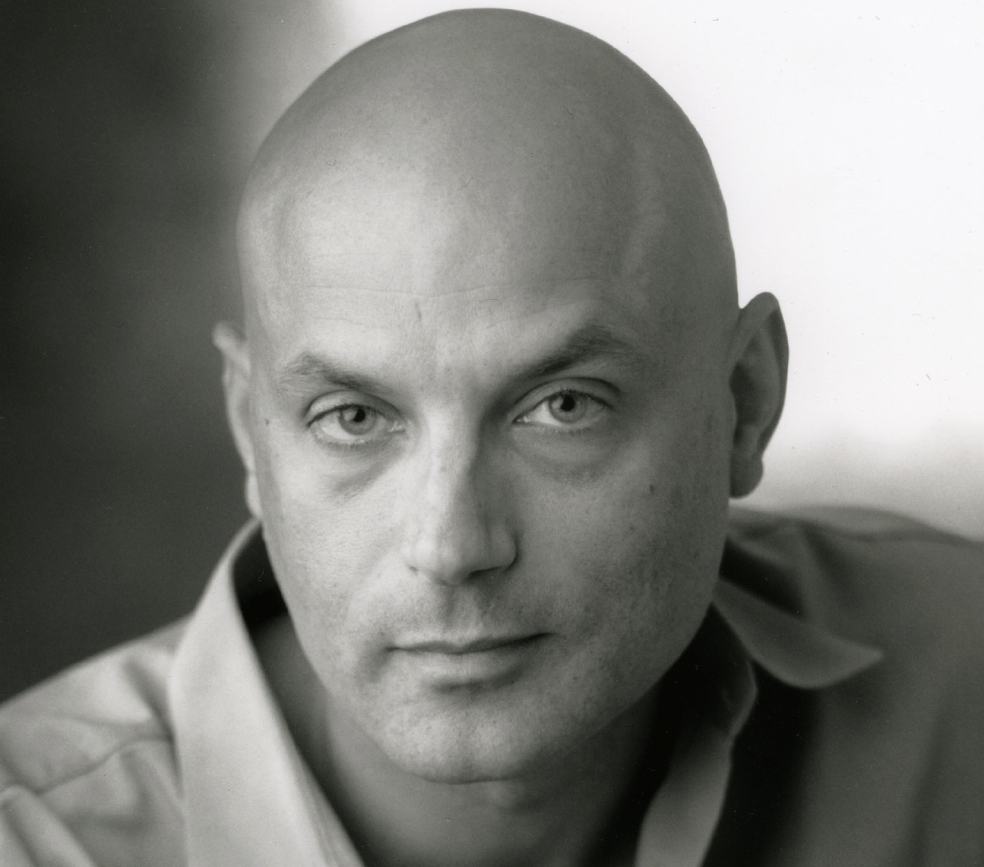
That skull!

Thursday, February 20, 2020

Gertrude Atherton--Black Oxen (1923)


Uploading pictures from the phone. I'm not expert at it yet.

This is, I'm thinking, one of the more currently obscure titles we've had come up on this list to date. It's yet another in the parade of American novels of the (19)20s, but it belongs to that part of the 20s that is perhaps especially forgotten now. Gertrude Atherton seems to have been a pretty popular author at the time, but she pre-dated the Lost Generation with whom that decade is largely associated now by 30-40 years. She was the same age as Theodore Roosevelt, four years older than Edith Wharton (whose old New York aristocrats appear to be the same crowd Atherton is writing about at an even later point of their development), she had thirteen years on Theodore Dreiser, who was practically considered a fossil himself at the time, 27 on Sinclair Lewis, and 41 on Hemingway. While I found a lot in this worth taking notes/commenting on, it's probably one of my least favorite so far of these IWE books. I didn't dislike it, but the main characters, who are supposed to be so brilliant, as well as the more distinguished of their companions, I found rather flat, and their dialogue tedious, which brought down the book as a whole. The IWE intro states that it "is no work of art but its characters are interesting." The premise of the story is that a 58 year old woman who had been a great beauty in her youth as well as one of the most sophisticated women in Europe gets some kind of endocrine treatment which rejuvenates her and makes her physically 28 years old again (though she is sterile), but still with her 58 year old mind, and what results when this circumstance is discovered by the New York society that she has returned to for a brief sojourn to attend to some financial interests. The idea is kind of clever but as often happens the execution does not follow through on the potential with equal cleverness.

I took so many notes on this that I'll need to prune some, but some of the passages from this seemingly lost world, once so prominent in the cultural imagination, are fascinating to me.

p.7 "All New York men of the old regime, no matter what their individuality may have been twenty years earlier, look so much alike as they approach sixty, and more particularly after they have passed it...Their moustaches and what little hair they have left turns the same shade of well-bred white. Their fine old Nordic faces are generally lean and flat of cheek, their expression calm, assured, not always smug."

This author employs the kind of extensive physiological and sartorial description, with very specific class or racial connotations (people have Norman or Saxon or Tyrolean, etc, characteristics rather than "English" or "German") that modern authors have largely dispensed with.

p. 37 "My one temptation to enter Society here would be the hope of forming a relief organization--drive, do you call it?--for the starving children of Austria. Russian children are not the only pitiable objects in Europe, and after all, the children of civilized countries are of more value to the future of the world."

This is not the last direct assertion assuming the superiority of the peoples of Northern European descent.

p. 44 "The whole country has gone crazy over youth. The most astonishingly bad books create a furore because from end-to-end they glorify post-war youth at its worst, and the stage is almost as bad"..."Yes, but they are still behind the European novelists, who find women interesting at any  age, and their intelligent readers agree with them." Clavering, the 34 year old newspaper critic/budding playwright, is supposed to be the bright coming man, most eligible bachelor in New York Society character. He is in fact more than a bit of a stuffed shirt.

One does get a nice dose of the charm of old New York, especially early in the book, such as the Madison Square scene (pp. 31-33), the leafy, lamplit, almost clean (by the standards of my lifetime) streets. "A light fall of snow lay on the grass and benches, the statues and trees of the Square. Motors were flashing and honking below and over on Fifth Avenue...Black masses were pouring toward the subways. Life!...The arcade of Madison Square Garden was already packed with men and he knew that a triple line reached down  Twenty-Sixth Street to Fourth Avenue. There was to be a prize fight tonight and the men had stood there since noon, buying apples and peanuts from peddlers." and etc.
   
Antique book barns and large multilevel stores that didn't do a lot of curating used to have walls of forgotten books from the 20s with covers like these. I think this is the first one of the type I have actually owned and read.

p. 65 Still rattling on about the rival post World War I/Lost Generation novels. "More clichés. The world was rotten to the core and the human race so filthy the wonder was that any writer would handle it with tongs. But they plunged to their necks...There had been reactions after the Civil war, but on a higher plane. The population had not been maculated by inferior races."

p.78 "After all, it had been a middle-aged man's war. Not a single military reputation had been made by any one of the millions of young fighters, despite promotions, citations, and medals. Statesmen and military men long past their youth would alone be mentioned in history."

p. 89 "Otherwise he was one of the 'black Claverings.' Northumbrian in origin and claiming descent from the Bretwaldes, overlords of Britain, the Claverings were almost as fair as their Anglian ancestors, but once in every two or three generations a completely dark member appeared, resurgence of the ancient Briton; sometimes associated with the high stature of the stronger Nordic race, occasionally--particularly among the women--almost squat." OK. Do the most respectable kinds of white Americans, especially women, still have this mentality for fine, esoteric racial consciousness? I feel like we are supposed to think there is at least some important class of them who do, but if that is the case, it seems like they would find modern society to be completely unendurable, and there is no evidence that this is a common complaint among anyone respectable or well-bred.

p. 91 "Do you think that romance is impossible in New York?' she asked irresistibly." New York has always seemed to me to be one of the few places left where romance is possible at all.

The style of writing is antiquated for its time, and does not feel "of" it. This is a problem that I think has always afflicted me as well. But since the better exemplars of the modernist style have proven so enduring, it was especially noticeable in a writer of the 1920s.

p. 124 "If the flapper should adopt a coat of arms no doubt it would be a cocktail rampant with three cigarettes argent on a field de rouge."

The flapper character is supposed to be a satire and is presented as ridiculous, but the most bearable interludes of the story were when she showed up. I thought the plot was being set up for her to marry the stiff Clavering at the end, or at least clean up her behavior a little, but after one last naughty appearance with about 100 pages left in the book, she never came back.

p. 128 Talking about the "Sophisticates" now--I'm not sure if they are supposed to be based on the Algonquin Round Table crowd or not, but I liked them too. "But their most solemn causeries were upon the vital theme of The American Reputation in Letters." I feel like this was still a big deal in my youth in the 80s. I have the sense that most of the younger generation, not having been brought up or persuaded by anyone to treat the great literatures of Europe with the degree of reverence that once prevailed here, do not view this as a pressing question in the same manner.

p. 132 Comparison of c.1920 New York with, of all places, Vienna. "...this marvelously wealthy and prosperous city where the poor were kept out of sight, at least, where all the men were whole and where one never saw a gaunt woman's appealing eyes, or emaciated ragged children." Really? What would Howard Zinn and his acolytes say to this?

I truly was not anticipating the twist explaining the mystery of the Madame Zattiany character (that she had undergone rejuvenation).


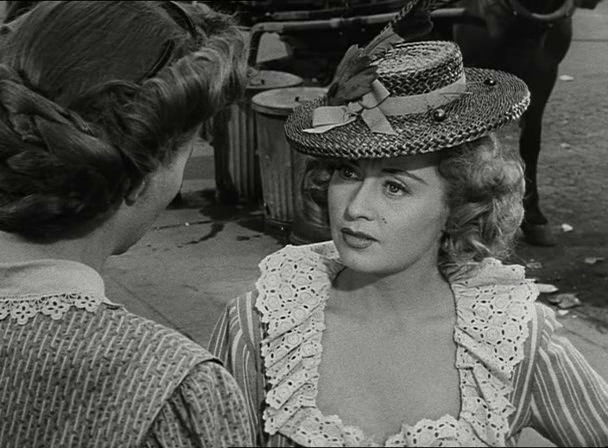
These illustrations are stills from the 1924 silent film of the book, about which I will write more later.

Chapter 28, New York intellectual/arts/theater party, circa 1920. Pretty ridiculous--a lot of self-conscious eccentricity and zany antics, though the women I found kind of appealing. Suzan Forbes?

"Miss Forbes was a tiny creature, wholly feminine in appearance...her really brilliant and initiative mind...Miss Forbes was not pretty, but she had an expressive original little face and her manners were charming...It was doubtful if she had ever been aggressive in manner or rude in her life; although she never hesitated to give utterance to the extremest of her opinions or to maintain them to the bitter end...She lit a cigarette as the music finished and pinched it into a holder nearly as long as her face. But even smoking never interfered with her pleasant, rather deprecatory, smile"...etc.

This arts scene of course is entirely white, but it's also (seemingly) entirely gentile white, which besides being unfathomable in any era pretty much after this one probably accounts for the un-self-conscious goofiness, which I don't think characters in circles like this have anymore.

p. 167 "I was very beautiful, I entertained magnificently, I was called the best-dressed woman in Paris, I was besieged by men--men who were a good deal more difficult to manage than chivalrous Americans, particularly as I was now married and the natural prey of the hunter...I learned to play the subtle and absorbing game of men and women as it is played to perfection in the older civilizations." Madame Zattiany. I admit I find people like this a little hard to take.

p. 174 Madame Zattiany again: "I thought that...I had lived too much and too hard, that my memory was overburdened and my sense of the futility and meaninglessness of life too overwhelming. (LOL emoji here)

p. 180 If rejuvenation such as Madame Zattiany's were to become widespread: "The threat of overpopulation--for man's architectonic powers were restored if not women's; to say nothing of his prolonged sojourn--would at last rouse the law-makers to the imperious necessity of eugenics, birth control, sterilization of the unfit, and the expulsion of undesirable races." The thought of eugenics frequently burst through the surface of many an WASP upper class mind in this era.

p. 213 "...he wondered if any woman, save in brief moments, could rival the ecstasy of mental creation. That rotten spot in the brain, dislocation of particles, whatever it was that enabled a few men to do what the countless millions never dreamed of attempting, or attempt only to fail, was, through its very abnormality, productive of a higher and more sustained delight, a more complete annihilation of prosaic life, than any mere function bestowed on all men alike." My God Clavering. What a stiff you are.

The literary world as depicted in this book would indicate that women were quite prominent in it at this time as writers, as I have noted before on this site, looking at the awarding of major prizes, best-seller lists and the like. There was a major shift in the 1940s and 1950s coinciding, in my opinion, with the arrival in the United States from Europe of so many deeply, almost severely learned intellectual refugees who exerted such a great influence, particularly through the universities, over what was to be considered worthwhile literature over the ensuing half-century, that had as one effect the downgrading or sidelining of much of the kind of women's writing that had garnered some recognition in the 20s. Having read some of those books for this list I wouldn't say that in most instances this downgrading or forgetting was not to some extent merited in individual cases, but I think a lot of people have the idea that women were entirely excluded from major writing and publishing opportunities before very recent times, and that does not appear to be quite true, especially during the 1910-1940 or so period, at least in the United States.

p. 230 "The world is equally astonished--and resentful--at every new discovery, but in a short time accepts it as a commonplace. The layman resents all new ideas, but the adjustment of the human mind to the inevitable is common even among savages." Is it so? I have the impression that many primitive (so-called) societies withered and died when exposed to modernity.


p. 299 "...I am not a victim of that ancient myth that two people who love each other can be happy anywhere. Environment is half the battle--for the super-civilized, at all events."

p. 301 "And there was no doubt that if you were on top, a personality, New York was the most enchanting place in the world to live in, just as it must be the most unsatisfactory for the poor and insignificant." L.O.L.

p. 315 Prince Hohenhauer, Madame Zattiany's longtime old lover, turns up in America. "He was as straight and thin as ever, his fine head erect, without haughtiness; his dark eyes under their heavy lids had the same eagle glance. he was still, she concluded dispassionately, the handsomest man she had ever seen, even for an Austrian, the handsomest race on earth..." I went on a bit of a rant as this point--I've had enough of this superior prince who is going to rule Austria, save it, make it a great and powerful republic, etc. Hasn't this guy's class just overseen the most disastrous war in human history that killed millions and brought down most of the ancient governments and ruling families in Europe? It was when they started complaining about/ridiculing the décor in a hotel in a small town in the Adirondacks that I lost it.

p. 346 "If we had met in Vienna it would never have claimed me at all. In New York one may be serious in the romantic manner when one is temporarily free from care, but seriousness is of another and a portentous quality over there." O.K., but we can concede that New York is in fact a highly romantic city after all. It is one tangible regret of mine to have never had a New York romance. I can imagine it so vividly. 


As noted above, this book almost immediately inspired a movie version, 58 minutes of which can be seen on various channels on YouTube, the Eastman restoration (which is only the first 22 minutes though) being the highest quality one I have found. The final reel of the movie is apparently missing, and no one alive that we know of--not Martin Scorcese, not Peter Bogdanovich, not anyone--has seen it. The most recognizable star of this movie to most people today would be, I assume, Clara Bow, who played Janet the flapper--like me, the filmmakers recognized that this was the liveliest character in the story, and she really is pretty sexy, her eyes especially are more than usually expressive and kind of mesmerizing. Madame Zattiany was played by Corinne Griffith, whom I had never heard of, though she was really beautiful and had a substantial career in the silent era, though only around 10 of the 58 films she made have survived--she strikes me as having been somewhat comparable to Gene Tierney in the way she is written about. She was later married to Washington Redskins owner George Preston Marshall, now notorious for his racism, and is credited with writing the lyrics to the team's celebrated fight song, "Hail to the Redskins" which is still played by the team band after every touchdown. Conway Tearle is an appropriately stiff Clavering. Alan Hale, Sr, who played Little John in the 1938 classic Robin Hood (and was the father of the skipper on Gilligan's Island) played Hohenhauer, but I assume most of his screen time comes in the lost final reel, for in the extant part he is only shown for about 5 seconds embarking from his ship onto American soil. The photo at the top of the page as well as the one directly above this paragraph at Dinwiddie's mountain lodge also evidently depict some of the lost parts of the movie, since I did not see these in the sections available online. The part of the film that I could see I thought was pretty good, even though it is difficult to watch a silent movie without music and the quality of the non-restored portion was not great. I'm always quite fascinated by film versions of books I have read that came out almost contemporaneously with the books (though this one was never remade later), I feel that they are always much closer to the spirit of the original story. The sets in this were not as lavish as I imagined the rooms and houses in the book to be, but we are still in the infancy of film history.    


The New and Improved Bourgeois Surrender Challenge

I did finally those long-contemplated tweaks to the system, and they did produce quite a few more competitors that are somewhat mass market, though the quality of the finalists does not look incredible. We will see how the tournament plays out however.

1. Robert Munsch--I Love You Forever.....................................................................10,060
2. The Ghost & Mrs Muir (movie-1947)...............................................................…..1,916
3. Philippa Gregory--The Last Tudor..........................................................................1,222
4. Dream Theater--The Astonishing (music album)................................................….1,221
5. Bill Bryson--The Body.............................................................................................1,184
6. Yangsze Choo--The Ghost Bride...........................................................................….798
7. Danielle Steel--A Good Woman...........................................................................…...633
8. Dream Theater--Distance Over Time (music album)..........................................…...620
9. Elizabeth Lev--The Tigress of Forli...........................................................................286
10. W. Michael Gear--People of the Wolf..................................................................….244
11. Linda Yellin--What Nora Knew............................................................................…130
12. W. Michael & Kathleen Gear--Sun Born...............................................................….93
13. Joanna Shupe--The Harlot Countess.....................................................................…..93
14. Maroon 5--"Memories" (song)...........................................................................…….65
15. Catherine the Great (TV-2019)..............................................................................….64
16. Catherine Chung--The Tenth Muse.....................................................................…….51
17. Lauren Slater--Lying: A Metaphorical Memoir...........................................................51

Play-in game still needed with the tie for 16th place.

#17 Slater over #16 Chung

Probably would have chosen Slater here anyway, but she is a bonus competitor here.

1st Round

#17 Slater over #1 Munsch

The Munsch book is a children's book.

#2 Ghost & Mrs Muir over #15 Catherine the Great
#3 Gregory over #14 Maroon 5
#13 Shupe over #4 Dream Theater
#5 Bryson over #12 Gears
Bryson is a past winner of the contest and while the extent of his success is puzzling to me, he is tolerably light reading late at night. Also I really do not like modern genre books at all.
#11 Yellin over #6 Choo
A tight call. Yellin is listed in the category of "Women's Divorce Fiction", which still appeal to me more than "Ghost Fiction", all else being equal.
#10 Gear over #7 Steele
#9 Lev over #8 Dream Theater
Clara Bow, you are a fox.


Quarterfinals
#17 Slater over #2 Ghost & Mrs Muir
Because books have to win. I am going to watch this movie though.
#13 Shupe over #3 Gregory
Shupe has an upset to use.
#11 Yellin over #5 Bryson
So does Yellin.
#10 Gear over #9 Lev
All of the upsets have been used up. But are there any decent books left?

Semifinals
#17 Slater over #10 Gear
It's a lot shorter.
#11 Yellin over #13 Shupe
Shupe looks basically to be almost a Harlequin romance.

Championship
#17 Slater over #11 Yellin
Either would have been OK I guess. Slater's book has the Penguin imprimatur, which makes it look more serious, though the Yellin looks a little more fun. I'm so far behind on the Challenge books, who knows when I will get there anyway.
Gertrude Atherton in her younger days.

Tuesday, March 7, 2017

The Rest of the Arms and the Man Post

I haven't been able to get to it until now. As I noted before in the earlier posting, I like Shaw. He seems harmless enough to me in 2017, but that obviously cannot be true, since all authors worth reading must be dangerous in some way. Arms and the Man spoofs romanticism, or the romantic mindset, but in a fun rather than seething or contemptuous way, I think. Here is a note I wrote about it in 2001, Lincoln's birthday to be precise, which was a later reading after my initial one, dated March 5, 1999:


--Much more impressed with the play the second time around, the conflict between ideality and "reality" is quite clear really, I'm not sure why I wasn't "struck" by it before. I think it seems apparent that Shaw is skeptical of the idealists, though I think he understands the need for these feelings--in his society I believe he felt their aims--and people's energies--were often misplaced.--


That doesn't say much. One ought to be able to say something intelligent about a work one likes--the point of the exercise is otherwise lost. I like that all of the characters in this, as well as in other Shaw plays, are willful and individualized protagonists whose personas impose upon each other (with the possible exception of the servile Nicola, who is however so aggressively dedicated to his servility that it achieves a kind of force in itself).


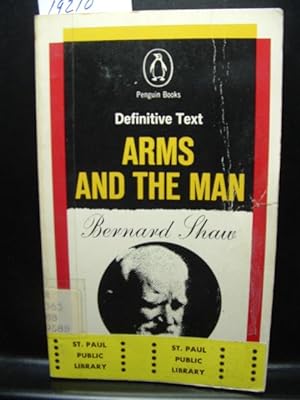
My edition is a Penguin paperback proclaiming itself "the Definitive Text". It contains just the single play though it seems to belong to a broader set of "The Penguin Shaw". The last copyright date is 1958, but it looks to be of a much later date than that, 80s or even possibly early 90s. The publisher's price was $3.50. Probably not the 90s then. I noted that I bought it in Concord. The used book store we used to have in town must still have been open then, though it did not last much longer.


This is my edition, but not my book. Someday soon I hope to have the technological capacity to take and post my own photos again.


A few favorite quotes to mark the occasion:


RAINA: ...But they don't know that it was in this house you took refuge. If Sergius knew, he would challenge you and kill you in a duel.
BLUNTSCHLI: Bless me! then don't tell him.


SERGIUS: You have deceived me. You are my rival. I brook no rivals. At six o'clock I shall be in the drilling-ground on the Klissoura Road, alone, on horseback, with my sabre. Do you understand?
BLUNTSCHLI: ...Oh, thank you: that's a cavalry man's proposal. I'm in the artillery; and I have the choice of weapons. If I go, I shall take a machine gun.


PETKOFF: We should be most happy, Bluntschli, if it were only a question of your position; but hang it, you know, Raina is accustomed to a very comfortable establishment. Sergius keeps twenty horses.
BLUNTSCHLI: But who wants twenty horses? We're not going to keep a circus.


Bluntschli is obviously, like Caesar in Caesar and Cleopatra, the Shavian alter ego in this play.


Wednesday, April 13, 2016

Margaret Landon--Anna and the King of Siam (1944)

Probably best known today as the source material for the famous musical The King and I, Anna and the King of Siam would I suppose belong to the genre of historical fiction, as Anna Leonowens was an actual person who was employed at the court of the King of Siam in the 1860s, and the novel was largely based on her memoirs of that experience. The book was surprising to me, in a positive sense, in a number of ways. Though I had always seen it on the list and knew it was coming I had not paid close attention to it. It was published much later, for example, than I imagined it was. While I knew it was set roughly around the time that it is, I had thought the publication dated from the late Victorian era to 1910 or so at the latest. This is probably on account of the musical; I tend not to think of musicals in general as based on particularly fresh material. though most of the Rogers and Hammerstein shows were actually based on sources, or events, that were only a few years old. I also, again probably because of the musical, which I in fact have never seen, as well as its inclusion in the family-friendly IWE list and the circumstance of its general lack of consideration as serious literature, imagined the book as more oriented towards children, or at least adolescents, with considerable sugar-coating or romantic treatment of its subject, but in fact the routinely sadistic abuses and executions that are inflicted on members of the royal harem and other slaves are depicted quite graphically, to the point really that you find yourself asking, "Why is this English woman staying here and continuing to work in this environment anyway?" The book is genuinely interesting, for the most part--it may be slightly too long in the sense that a couple of episodes perhaps could have been left out. It is in the main episodic, without a tight thread of a central plot or action driving the characters forward and together, which style I don't mind, only that some episodes are more compelling than others. Many of the minor characters, both Siamese and European, will crop up again in a later episode a hundred pages or more after they had previously appeared, and whether this is due to advancing age and declining memory or not I have trouble remembering them when they reappear. I could use one of those lists of characters that often appear after the table of contents in Dickens or Tolstoy novels, in which books, ironically perhaps, I never have trouble keeping the characters straight or remembering who they are.


Not knowing anything about Siam in this time period, even its relation to European colonial aggression, I thought Landon did a good job in sketching a general outline of this through the character of the king's correspondence with Western governments, the introduction to the very small expatriate communities centered around the British and American and French consulates, and the handful of highlighted instances and crises of mainly French agitation against Siamese territory. It attests to some skill in the author that after witnessing King Mongkut having people burned to death and tortured and thrown into dark dungeons for interminable periods of time for trifles mostly related to a lapse of absolute self-effacement in deference to his Majesty that this reader was able to feel sympathy for him when the French representatives are applying pressure to him to accede to various outrageous demands. I am reminded, as I often am in old books written by English speakers, of the brusque arrogance of the French ruling classes in the days when that country was a world power. Of course the French have retained a reputation for hauteur and snootiness into our own time, but it lacks something of the force, as well as the seething visciousness, that this characteristic is depicted as possessing in these old books. I have no doubt that the British in their heyday were no less obnoxious and condescending after their own fashion, though the effect on reading about it is usually not so pronounced, even in the most nationalistic of the Irish writers; and on the whole they don't seem to have inspired quite the thorough degree of visceral hatred in the people they have formerly abused or made to feel inferior as the French (this is not to say that a visceral hatred does not exist, I merely postulate that it does not attain the same intensity as that directed towards the French).


Given that this book is 1) written by a woman; 2) is about a woman, and one who actually existed and was independent and seems to have been possessed of considerable pluck; 3) takes place in a non-Western country and seems to attempt to give an accurate presentation of the nature of life there; and 4) has at the very least some claim to literary distinction as much I think as other books that are considered to be important, my impression is that it is not widely read or remembered today. Is it somehow too racially offensive or insensitive or otherwise politically problematic? Landon, presumably writing through, or guided by the spirit of Anna Leonowens, was at least on the right side of history in thoroughly denouncing slavery and European colonialism, though by the end of World War II when the book was published these views were not terribly out of the mainstream. The Siamese or Thai people are treated I think with seriousness, though the repressive, authoritarian society that predominated in the palace does not show the country in a flattering light; I have no reason however to suspect it was not broadly accurate. Students of White Privilege would have a field day with Anna Leonowens, as she wields this status or aura throughout her stay in Thailand like one of the European gunboat cannons that so terrifies King Mongkut. All of the Siamese people have to spend half their lives in various forms of simpering prostration and submission to the wills of whoever ranks above them and can be tortured or killed on a whim, but Anna is perfectly confident to walk into this brutal environment and declare that none of these customs apply to her (which, as it turns out, is largely correct). Anna also has in her a considerable amount in her of the now notorious but at that time largely unconscious White Woman Savior complex when placed among people whose culture and enlightenment have not yet attained to the level favored by the European upper middle classes. Much is made in the book of her determination, through her teaching the future princes and other ministers of the Siamese state, to impress upon them certain European humanistic ideals the lack of which were especially offensive to her in the Siamese court, which had the result, according to the book, that when her pupil Prince Chulalangkorn ascended the throne, he abolished slavery and the more outrageous customs of prostration throughout his domains, this being credited to the influence of Anna. So this might be too much European righteousness for modern readers to take.


I found a very nice wartime copy of the book, with its lighter paper and increased words per page per the restrictions of that period, at my nearby used book barn. It has charming illustrations at the beginning of each of the forty chapters, as well as a quaint map of Bangkok in the 1860s. This edition must have been the one that sold the most copies, since I see on the internet that this is the one that most of the people who read the book have.


Example (sort of) of the illustrations in the book. I assume there must be a Blogger app I can put on to post pictures from my phone, since I have a phone now. I need to figure out how to do this so I can just out on my own pictures from now on. 

Strictly as a point of curiosity to me, Margaret Landon lived to the age of 90, dying on December 4, 1993 in Alexandria, Virginia (this, incidentally, was the same day that Frank Zappa died). It's curious to me because I would have been a senior at college at that time in Annapolis, only about 40 miles away. This day was a Saturday near the beginning of the Christmas holidays, so it possible that I played a basketball game that afternoon and I almost certainly went to a party that evening. I don't remember exactly what happened on that day but I can surmise that it was probably a pretty good one as far as days in my life go. It's one I would be willing to live over again.


Rex Harrison rocks the role of the king in the 1st film version of Anna.

The Challenge

Among the magic words in the synopsis of Anna and the King of Siam were frequent repetitions of "slave", "ransom" and similarly grim terms, which led to a rather lackluster field for the tournament this time.

1. Exodus: Gods and Kings (movie)........................................................2,837
2. Her (movie)..........................................................................................1,569
3. Anna and the King (movie).....................................................................363
4. Marylu Tyndal--The Ransom..................................................................244
5. Sharon Penman--A King's Ransom.........................................................215
6. Travels of Marco Polo.............................................................................150
7. Shakespeare's Sonnets (Arden Edition, ed. Katherine Duncan-Jones).....86
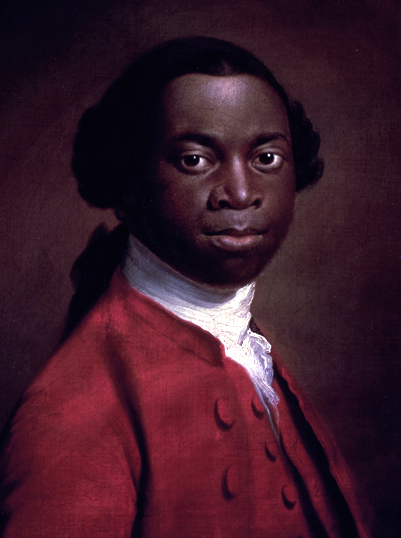
8. The Interesting Narrative of the Life of Olaudah Equiano.......................55
9. People's Almanac #2.................................................................................15
10. Edward D. Johnson--The Handbook of Good English............................13
11. Complete Works of Lord Byron...............................................................11
12. Frances Calderon de la Barca--Life in Mexico.........................................8
13. Grand Funk Hits (record).........................................................................6
14. Sword and Sorcery: The Divine and the Defeated...................................5
15. Deidre Knight--Parallel Fire....................................................................5
16. Evelyn Anthony--The Cardinal and the Queen........................................3

Michael Millner's Fever Reading procured no points and thus failed to qualify for the championship. However it did have a naked woman overwrought from her reading on the cover, so it gets an honorable mention here. 


1st Round

#16 Anthony over #1 Exodus
#15 Knight over #2 Her
#3 Anna and the King over #14 Sword and Sorcery

Breaking my usual rule about movies not being able to beat books because I am not counting the Sword and Sorcery thing as a real book.

#4 Tyndal over #13 Grand Funk

I don't really like any Grand Funk songs.

#5 Penman over #12 Calderon.

Calderon should have won in a cakewalk over this genre book. but Penman had an upset in reserve.

#6 Polo over #11 Byron.

Complete works of poets don't really fit in with the Challenge in the way that I read these books, in Byron's case especially, as a couple of his longer poems are on the regular list in their own right. The Polo book interests me somewhat.

#10 Johnson over #7 Shakespeare.

I am giving it to Johnson by a hair, as my library does not have the Arden edition of the Shakespeare.

#8 Equiano over #9 People's Almanac #2.

Final 8

#16 Anthony over #3 Anna and the King
#4 Tyndal over #15 Knight.

Neither of these books registers anywhere in the New Hampshire State Library database.

#10 Johnson over #5 Penman.
#8 Equiano over #6 Polo.

The Equiano book, which appears to be a slave narrative, is almost 200 pages shorter than the edition of Polo that is available to me.

Final 4

#16 Anthony over #4 Tyndal
#8 Equiano over #10 Johnson

Championship

#8 Equiano over #16 Anthony.


Thursday, March 5, 2015

Robert Penn Warren--All the King's Men (1946)

This was a real book, of the old school. Winner of the Pulitzer Prize in 1946, the film version garnered the Oscar for best picture three years later, indicating that the story was seen in this country at least as one of the seminal works of the immediate postwar years. While there are a lot of things in and about this that I like I was really impressed with the beginning of the book, the first 100-150 pages or so. A lot of the books on this list, even when they are great literature, are books that are thought to hold some appeal for teenagers and lesser experienced readers. But the beginning of All the King's Men, I thought, was something even a real man might want to read. There were political machinations, graft, corruption, personal and sexual power and domination, the interaction of highly skilled professionals in various fields in various arenas where power, money and women are contended for.  As the book went on however (my edition had 464 pages), it took the course of being less and less constantly centered on Willie Stark, the Huey Long stand-in who was by far the most compelling character in the book, and more on the narrator, Jack Burden, who though a little more hard-bitten than the usual examples of the type, is more of a traditional writerly character. The amount of space devoted to recollecting his long and not especially eventful romantic history with his adolescent girlfriend I think was especially unfortunate. I don't mind a little of that sort of thing, especially when it can serve to set a certain nostalgic atmosphere or mood, but this went way beyond that. A lot of modern readers find fault as well with the fairly lengthy Cass Mastern interlude, which is about the journal and romantic intrigues of one of Burden's Civil War era relatives, but I actually liked it. Flashbacks to the Civil War in southern novels, especially of this period, where the connection was still so palpable and personal, are usually pretty interesting.

The style of this book, which is highly descriptive and tends somewhat towards what would now be considered the wordy side, is very reminiscent of much masculine American literary writing in that era from around the mid-30s to the mid-60s, which is what I largely grew up on, but which I had not revisited in some years. I can still re-adapt to the style fairly easily, though it takes a couple of paragraphs for me to get back in the particular frame of mind needed to consume information in this form. I bought my copy of the book at a library sale in 1986, and have been lugging it around all this time, though I had not read it until now. The title page says it is a first edition, though it had already long been re-bound in orange library binding (which I kind of love anyway, by the way). The pages were yellowed and the book looked and felt like an antique to me even at that time, though the novel itself would only have been forty years old.


I am trying to convey what I most like about this book, for it has some very fine and powerful qualities. Since I am not being paid to produce polished essays, I am going to try to list some things that come to my mind bullet-point style:

1. The parts about driving on the old, (though at the time of the book's setting, they were new) lonely highways through the rural country and small towns and even the modest cities of Louisiana, which seems to have been still very much a quasi-feudal place in 1930 are very evocative.

2. There is often a sinister sense in books set in the 1930s in places outside the direct cultural authority of New York, London, Paris, Hollywood, and certain kinds of windblown midwestern American towns, and the character of Willie Stark especially gives this book a little bit of that, as if there is something bad in this environment that would crush any weaker person and that cannot be avoided or escaped from even by a stronger one. All of the indoor scenes feel to me to be taking place under dim institutional lighting, and the outdoor ones to carry some aura of geographical oppression in them.

3. I would not have wanted to live there, but I admit to having a fascination for certain aspects and relics of the Old South, particularly the era from 1910-1950 or so. When I am in that part of the world as a tourist I find I experience a certain sensation, almost like a thrill of danger, if I come upon old building or monument or even a tree that appears to have been overlooked in the process of modernization and preserved something of the old sinister but also in a way organic and vital aura that is usually lacking in the modern landscape. This is certainly not a romantic impulse, and a lot of these instances evoke a sense of horror or repulsion in its associations, but there is an attraction to it at the same time because of the darkness and reality that has been so well preserved in these kinds of books. There is some of that in here.

4. Another of my little tourism hobby horses is visiting state houses, which are usually old, attractive, uncrowded places, with a sense of drama and grandeur in understated ways. They often have old and somewhat grand bathrooms, for example, or staircases, or elevators, or light fixtures, or trees on the grounds, that have not been substantially modernized since the end of World War II. So it was enjoyable for me that much of the book took place in one of these buildings.


Most of the other things that come to mind are repititions of things I have already touched upon.

The New and Improved Bourgeois Surrender Challenge

I had written last time of changing the challenge to a tournament format. My initial plan had been to include every book (or movie, or record album) that came up in one giant tournament, but the magic words for All the King's Men produced around 70 competitors, most of which, as you can get a hint of in the list below, consisted of prestige books, which was a departure from the last Challenges under the old system. I decided to limit the field to the top sixteen contenders and see how that worked out:

1. Hunger Games: Catching Fire (movie).....................8,580
2. Secret Life of Walter Mitty (movie-2012)..................2,392
3. Carlos Ruiz Zafon--Shadow of the Wind....................1,633
4. Betty Smith--A Tree Grows in Brooklyn....................1,475
5. Salmon Fishing in the Yemen (movie)........................1,278
6. Donna Tartt--The Little Friend......................................924
7. David Foster Wallace--Infinite Jest...............................792
8. Night of the Living Dead (movie)..................................699
9. Nicole Krauss--The History of Love..............................599
10. Elizabeth Gaskell--North and South............................598
11. Jonathan Safran Foer--Everything is Illuminated........584
12. Charade (movie)..........................................................583
13. Don Delillo--Underworld.............................................397
14. Cecilia Ahern--P.S. I Love You.....................................396
15. Salman Rushdie--Midnight's Children.........................346
16. Virginia Woolf--To the Lighthouse..............................308

First, or Sweet Sixteen Round

#16 Virginia Woolf over #1 the Hunger Games.

Any good book will always have the preference over any movie in these tournaments, with the exception of one circumstance that I will reveal if the case ever arises.

#15 Salman Rushdie over #2 Walter Mitty

#3 Carlos Ruiz Zafon over #14 Cecilia Ahern

I don't know anything yet about Carlos Ruiz Zafon but the Ahern book appears to be a cookie-cutter genre/romance novel for the wine-drinking, shoe-shopping Sex in the City crowd, and I had marked it for automatic elimination against any 'real' book.

#4 Betty Smith over #13 Don Delillo

Besides being the higher seed, Betty Smith's book is shorter, older, and is more in the range of what I feel like reading at this time.

#12 Charade over #5 Salmon Fishing in the Yemen

Any movie with some claim to classic status that I have not seen will almost always have the preference over a more modern movie.

#11 Jonathan Safran Foer over #6 Donna Tartt

An extremely tight battle between two books that came out in the same year (2002), neither of which I am especially interested in reading. Foer wins because it's 300 pages shorter.

#10 Elizabeth Gaskell over #7 David Foster Wallace

Though I am not dying to read him either, I would give David Foster Wallace the win over markedly inferior competition. However Mrs Gaskell is good competition, she is older, and even at 521 pages her book is half the length of Wallace's.

#9 Nicole Krauss over #8 Night of the Living Dead.

Nicole Krauss has come up on the challenge twice now. I am mildly interested in her.

Elite 8

#3 Carlos Ruiz Zafon over #16 Virginia Woolf

Virginia Woolf loses here because I have already read To the Lighthouse. It is of course a great book, or at least I thought it was at the time that I read it, but I am curious enough about the highly seeded Zafon to be comfortable pressing forward with him.

#4 Betty Smith over #15 Salman Rushdie

Another grinder for Betty Smith over a powerful modern brand. However, her book was still shorter as well as older, and she was the higher seed as well. Those are deciding factors in this tournament.

#9 Nicole Krauss over #12 Charade

I have not read enough of the new young literary people to be be desirous of dismissing them out of hand against movies. Yet

#11 Jonathan Safran Foer over #10 Elizabeth Gaskell

Foer probably would have won here anyway due to his book's being 300 pages shorter. However a third criterion I am using is local library availability, and North and South does not seem to be in the collection of either of the libraries I can go to.

Final Four

#11 Jonathan Safron Foer Over #3 Carlos Ruiz Zafon

Availability and publication date were a wash here. Zafon got extra consideration because his book is a translation and we get so few books not written in English on the Challenge. Foer again wins by a nose because his book is 200 pages shorter. I don't mean to emphasize length so much, but I already have two literary lists I read off of, and this challenge is intended to be a means for me to find some fun reads that did not quite qualify for either of my lists and to keep in contact what is going on in contemporary life without excessive tension and anxiety.

#4 Betty Smith over #9 Nicole Krauss

Along with Foer, Betty Smith had the toughest draw in the tournament, Krauss's book is considerably shorter, but Smith wins on age and for being the higher seed.

The championship

#4 Betty Smith over #11 Jonahan Safron Foer.

Similar set-up to the Krauss win. A Tree Grows in Brooklyn is clearly the kind of book that I like, and I am looking forward to reading it.