Showing posts with label sir walter scott. Show all posts

Tuesday, August 10, 2021

August 2021

A List: City of God (Augustine)..............................................................................541/867

B List: Between books    

C List: Sir Walter Scott--Rob Roy................................................................................7/501

Bonus: Zena Hitz--Lost in Thought.........................................................................126/210

I finally finished Buddenbrooks on 8/4, so I will eventually get up a report on that, though probably not before the last part of August, as there is probably no way I can get it done this week, and next week I am going to be on vacation. The next book on that list is another long one, which will probably take me through all of the rest of August and September, if it ever arrives, which it hasn't yet. So activity on this blog will continue to be light for a while. As to my other one, which I haven't updated since May, I am hoping that when school starts up again, in addition to being able to read a little more, I can get back into something of a more regular writing routine, even if it is just the blogs to start. I want to get in some exercising too, not because I am getting fat, but because I would like to maintain a somewhat healthy look, and as I am getting bored with my social life I would like to keep my options open for having a better one as much as possible--at this point of my life I have to concede that my brains are not enough to get me there on their own. We'll see what happens. 

This was not a productive month of reading. My mother came to visit for two weeks in July, and she is even harder to escape from than my regular family. Augustine is coming along slowly. His theme of the two cities (That of Man and that of God) is starting to come into clearer focus. This book is kind of an encyclopedic inventory of such religion and history as was known, or at least regarded as important, up to that point, and I like reading books of that sort from time to time. But I can't read that much of it in any given day.

For the C-List I spent most of the month finishing up Madeline L'Engle's short story collection The Moment of Tenderness. It got mixed reviews but other than one story about the devil which I didn't quite understand I thought it was really good. I guess I don't read that many stories. Maybe they all seem good when a real professional writes them, though I think I have some discernment in these matters. I just started Rob Roy today. It is pretty long for a C-list book, but my discovery of what a good novelist Scott is after not having read him my entire life is one of the modest joys I have had in the past two or three years. The first few pages of Rob Roy possess the same inimitable authorly charm that infused The Heart of Midlothian and especially The Bride of Lammermoor, the two books by this author that I have read in the last year or two.

I am working my way leisurely through my old classmate Zena Hitz's book. She draws on a wide array of liberal learning, much of which, even if I cannot claim to have been already possessed of, is accessible enough to me that I can usually make sense of it. The book has an underlying current (though don't all philosophical books to some extent?) of dismay at the current state of universities and intellectual culture, with the obscene lust for social status and material luxury that has permeated and influenced even the way these realms operate beyond what appeared to be the case in much of the known past, even that known to our generation personally ca. 1990. I feel much of the same general dissatisfaction with the state of public discourse and thinking in comparison with the form I thought, or hoped, these things would take in my mature years back then, so I am receptive to the message of the book.


Pictures. I took shockingly few pictures this month, given that it is summer. The above is obviously Boston. We walked the Freedom Trail, where it is kind of difficult to whip out the phone and take a lot of pictures on the interesting parts, at least if you have children. It had been three or four years since we've walked it, so it was new to the younger ones.


This is a pretty wooded trail in southern New Hampshire, I forget what town. It was near Milford. As you can see we got a lot of rain in July. 


This is in Vermont.


Lost tooth.


Maine

Saturday, February 6, 2021

Sir Walter Scott--The Bride of Lammermoor (1819)

One Sunday a few weeks back, one of those gray, cold, muddy, flurrying sorts of afternoons that are common in January, a group of us took a drive over to Vermont, stopping en route at an antique market near Keene that is a collection of what look like disused long dairy barns crammed full of stalls. The primary object of this stop was for my wife to hunt for various of her current obsessions, among them doorknobs, lamps and light fixtures, and blue willow china (she did find an old doorknob to her taste). I mostly looked through the books and postcards and old sports and college memorabilia, though as is usually the case I didn't buy anything. I did remark, as I went around the various stalls, five or six copies, all in different editions, several of them rather handsomely bound or parts of smart looking collectible sets, of Ivanhoe by today's author, Sir Walter Scott, a book that no one I have ever met, that I am aware of, has ever read through to the end, or at least has ever found the experience worth mentioning or making reference to; yet at one time it was clearly believed to be a book to push on people aspiring to be well read, especially boys in whom one wanted to cultivate that enthusiasm. I remember, due in part to copies of it being ubiquitous even in the environment in which I moved, trying to read it myself once as a teenager. But I didn't get very far in it at that time, as I am pretty sure whatever was going on in the plot was unintelligible, and the manner of writing was one in which I did not have as yet enough practice in reading to appreciate, nor did the early chapters of the book generate enough immediate interest in me to begin trying to cultivate such an appreciation. So like pretty much everyone else has done for the past hundred years, I put it aside and thought little of Scott's works, apart from the occasional references to them that I would come across in other 19th century writers, for more than three decades.
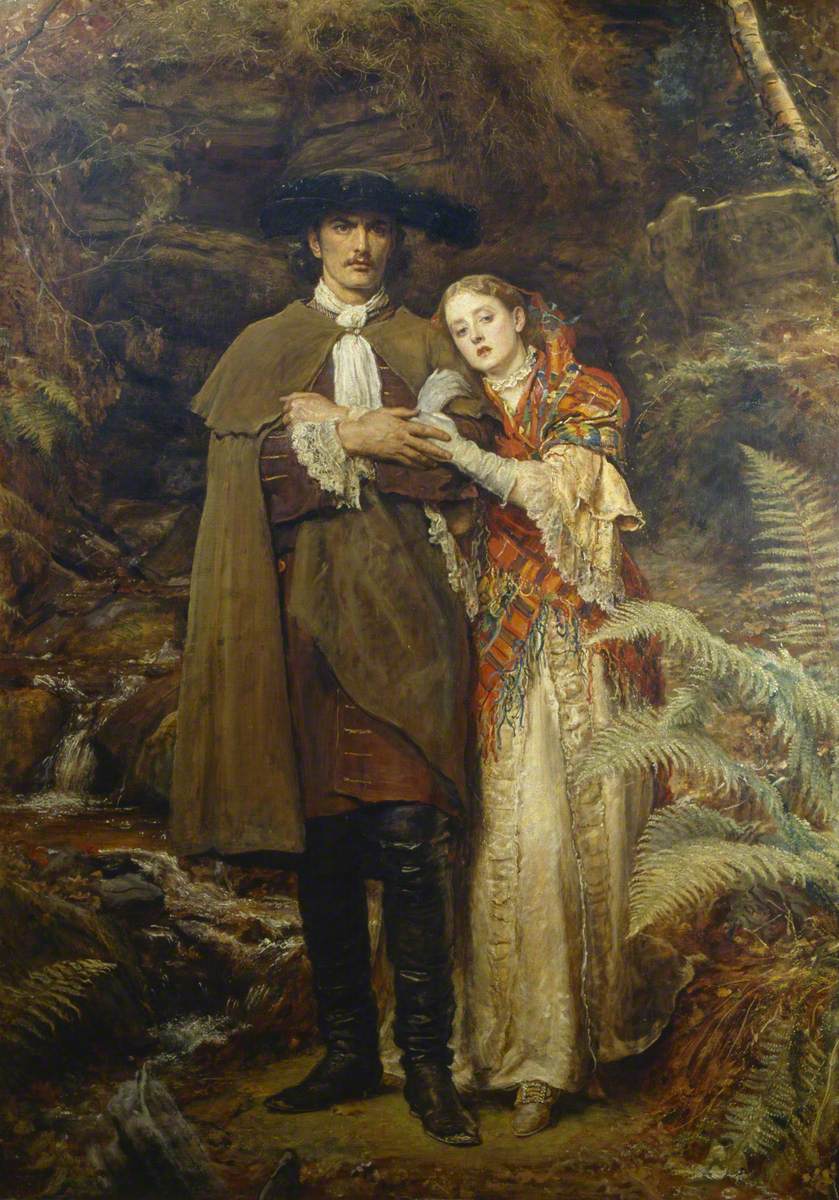
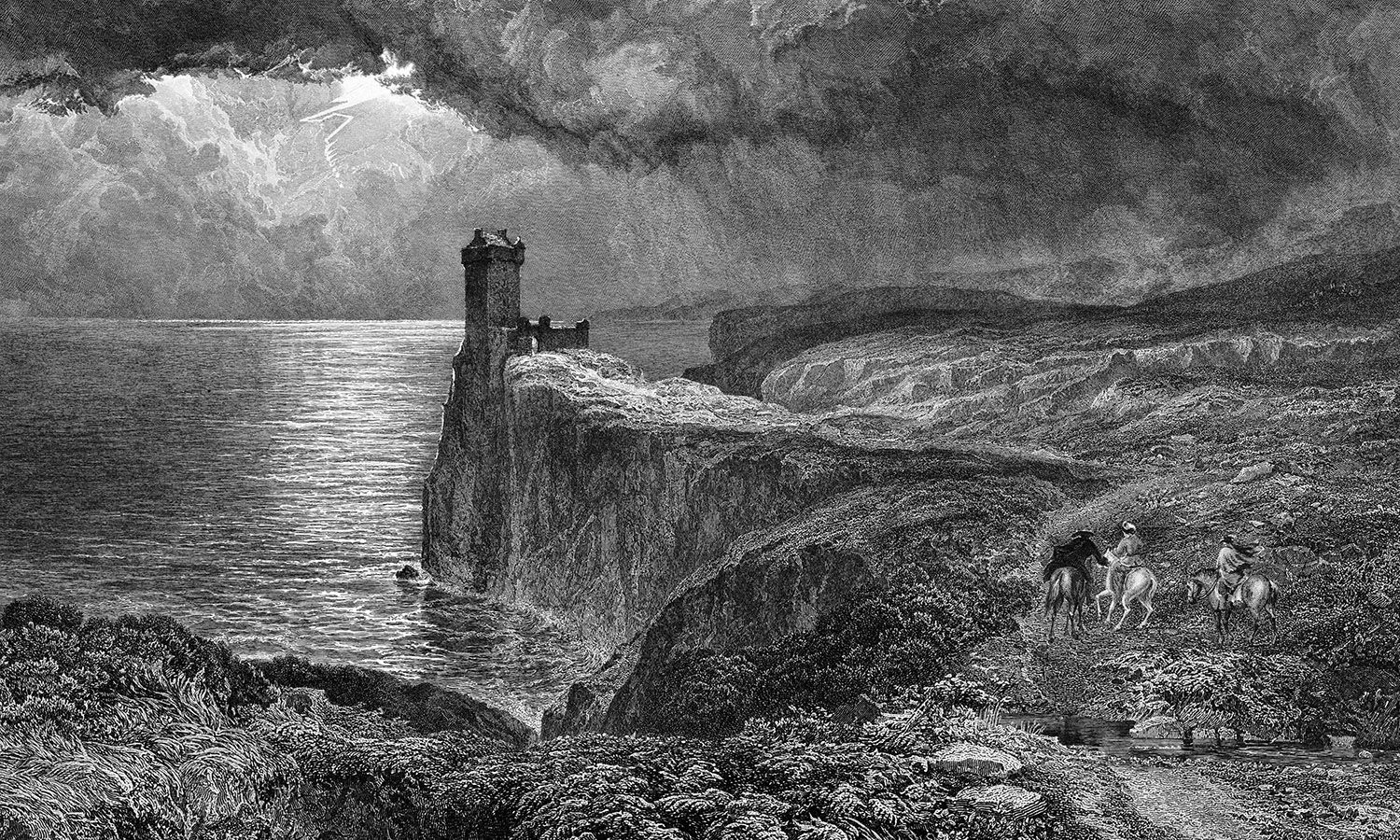
Last year, when I was fifty, one of my lists that I pretty slavishly follow--I do keep three of them in an attempt to disperse the totality of the slavishness at any given moment by allowing for some possibility of variety to creep into my routine--finally brought me face to face with a Scott book, The Heart of Midlothian. While this book was somewhat overlong, the discovery that Walter Scott was a real writer with real big league talent was a revelation to me in my middle age. The Bride of Lammermoor, a shorter, tighter, broodier, more fantastical novel, is even better. The Romantic gothic novel has been done to death, but to read these books is really to drink from the original source. The clouds enshrouding the castle tower, the ancient servant with his candle opening the enormous heavy door on a stormy night, the melancholy of the impoverished Master of Ravenswood gazing on the fox hunt from afar, everything about the mood, the details, the emotions evoked, is just right. Though the descriptions and dialogue are in some degree purposely affected and exaggerated, compared with Scott's many later imitators, they seem unaffected and natural-sounding; as can be said of Flannery O'Connor, who may not seem at first blush to be an obvious comparison, our experience of life would be elevated greatly if people really did always act and talk, and the world always appeared to us, as they do in these books.

The Bride of Lammermoor is somewhat celebrated for its plot construction, which is good without for the most part ever forcing itself on your attention. It builds up leisurely, with the aforementioned hunts, dinners, visits, a few capers, some brooding, some backstory, and then when we get to the last 50-75 pages everything is set up and we are off to the perhaps inevitable but still dramatic and heavy conclusion. 

From the preface: "When the finished (i.e printed) novel was first put into Scott's hands, he assured (John Ballantyne) that he did not remember one incident, character, or conversation in it." It took Scott around eight months to write the book, from September 1818 until May 1819, during most of which period he was evidently wracked by violent pain. In other words, he was not your stereotypical tortured soul type of writer agonizing over every sentence. One wonders how that model of an artist ever gained such influence with us. Most of these really famous guys were prolific, highly focused professional writing and art-making machines. Yes occasionally an interesting and witty debauched poet will make fun of them, and make a few fair points as well, but in the end the prolific producers of copy seem to hold up generation after generation, and are certainly more widely read by every demographic outside of the Cool/Artsy and Wannabe Cool/Artsy 18-35 cohorts. Scott's output it seems to me was especially worthy of note. He started relatively slowly, writing poems at first, publishing his first volume at age 25, and adding eight more before the first of his novels appeared when he was 43. Between this date and the end of his life a mere eighteen years later, 31 more would follow, most of them full length novels (min. 300 pages) or even longer, around half of which are titles immediately recognizable today to anyone with a passing familiarity with 19th century English language literature. This was in addition to 8 more books of poems and 28 volumes worth of miscellaneous prose works, including a nine volume Life of Napoleon and a Lives of the Novelists, which used to be included in the Everyman's Library, from which series I got my reading copy of The Bride of Lammermoor as well. 

The story, which is set in the late 1600s, is introduced by way of some old manuscripts and bits of doggerel poetry from that former age, I assume fictional, though I am not absolutely certain, which Scott claims to have come across in his researches. I had written some lines down which I found humorous at the time, but they don't have the same impact out of context. He followed this up by telling a story of a painter who had been a youthful friend who failed to achieve success and died the premature lonely impoverished death of such characters. "So ended Dick Tinto! a lamentable proof of the great truth, that in the fine arts mediocrity is not permitted, and that he who cannot ascend to the very top of the ladder, will do well not to put his foot upon it at all." Tinto has been introduced into this story because he once executed a sketch of the fatal climactic scene which inspired the novel, though the painting was never completed. This is all done much more amusingly and skillfully in the book than I am conveying here, Scott does not actually get to Ravenswood Castle and Edgar and Lucy Ashton and all of their friends and antagonists themselves until page 27, but I at least did not mind the delay, I rather enjoyed the roundabout means of getting there, which we did do in time. 

p. 42 The ferocious Lady Ashton, married to a wealthy lawyer and government official, but not a man of feudal warrior lineage such as Lord Ravenswood, contemplating the family's position and her daughter's meeker spirit: "Before ancient authorities, men bend, from customary and hereditary deference; in our presence, they will stand erect, unless they are compelled to prostrate themselves. A daughter fit for sheep-fold or cloister, is ill-qualified to exact respect where it is yielded with reluctance."         

There is a jolly ale story contained in a footnote that, in the mood one enters into while reading the book, seemed full of a conviviality and bonhomie of the sort that is so elusive in actual life, and which indeed does not exactly carry over in the same spirit to my copying it here. But I am going to do it anyway.

"It is a current story in Teviotdale, that in the house of an ancient family of distinction, much addicted to the Presbyterian cause, a Bible was always put into the sleeping apartment of the guests, along with a bottle of strong ale. On some occasion there was a meeting of clergymen in the vicinity of the castle, all of whom were invited to dinner by the worthy Baronet, and several abode all night. According to the fashion of the times, seven of the reverend guests were allotted to one large barrack-room, which was used on such occasions of extended hospitality. The butler took care that the divines were presented, according to custom, each with a Bible and a bottle of ale. But after a little consultation among themselves, they are said to have recalled the domestic as he was leaving the apartment. 'My friend,' said one of the venerable guests, 'you must know, when we meet together as brethren, the youngest minister reads aloud a portion of Scripture to the rest;--only one Bible, therefore, is necessary; take away the other six, and in their place bring six more bottles of ale.'  

This synod would have suited the 'hermit sage' of Johnson, who answered a pupil who enquired for the real road to happiness, with the celebrated line, 'Come, my lad, and drink some beer!'"

Prophecies operate as truths in books like this. I can never disbelieve in them though they have no part in real life.

p. 278 "He flourished much on generosity and forgiveness of mutual injuries, and hinted at the mutability of human affairs, always favourite topics with the weaker party in politics."

I should see what the overwhelmingly great white male hopes at the IWE have to say about it. "When Scott wrote this novel he was still using the pseudonym Waverley; and his creation 'Waverley' had become the world's most popular novelist. The Bride of Lammermoor is typical of the Waverley novels, neither better nor worse than the others. Its more lasting fame is due to the Donizetti opera Lucia di Lammermoor, based on it." Not the most ringing endorsement for a book on their own handpicked reading list, but that is one of the charms of the list. It is not always clear why any particular book has made it rather than some other one. Scott was evidently still considered important enough in 1960 that they felt they had to put three of his books on the list, the other two being the aforementioned Ivanhoe, and Kenilworth, which I think also reaches back to the middle ages and the era of knights, and was thought for that reason to be of interest to boys. This one (Lammermoor) is good though. It has real feeling, one feels a connection to the material, and to the author as a kind of clever and entertaining host at a dinner one attends, and wonders why he does not frequent such company more regularly. 

The Bourgeois Surrender Challenge

The notes on this generated an enormous field of which the qualifying group is pretty strong. Contenders with 600+ points have to go on the road in the first round.

1. Jamie Glowacki--Oh, Crap! Potty Training............................................................6,715

2. Pay It Forward (movie--2000)................................................................................3,203

3. Ann Patchett--Bel Canto..........................................................................................3,113

4. Lynn Toler--Dear Sonali: Letters to the Daughter I Never Had.............................1,603

5. J. Edgar (movie--2011)............................................................................................1,559

6. Thomas Hardy--The Mayor of Casterbridge..............................................................876

7. The Duellists (movie--1977).......................................................................................659

8. The Office, Season 3, Episode 1 (TV).........................................................................620

9. Talia Hibbert--A Girl Like Her....................................................................................609

10. Lyndsey Faye--The Gods of Gotham........................................................................609

11. Edward Fitzgerald--The Rubaiyait of Omar Khayyim..............................................499

12. Gabriel Garcia Marquez--Of Love and Other Demons.............................................415

13. My Life is Murder, Season 1 (TV).............................................................................325

14. John Webster--The Duchess of Malfi........................................................................240

15. Nella Larsen--Quicksand..........................................................................................218

16. Arthur Conan Doyle--The Return of Sherlock Holmes.............................................190

1st Round

Mostly clearing out the movies.

#16 Conan Doyle over #1 Glowacki

Sorry Jamie Glowacki.

#15 Larsen over #2 Pay It Forward

#14 Webster over #3 Patchett

Bel Canto is a former winner of this competition that I thought was only so-so at best. Such books are eligible to enter the tournament and try to win again, though none have. Webster's classic Elizabethan era revenge tragedy probably just missed being on the actual IWE list itself, which would have made it ineligible. But it did not make it.

#4 Toler over #13 My Life is Murder


#12 Garcia Marquez over #12 J. Edgar

#6 Hardy over #11 Fitzgerald

This matchup between a pair of late Victorian heavyweights was the marquee attraction of the 1st round. I long thought that The Mayor of Casterbridge was an IWE selection as well and that that listed included 4 Hardy novels, but my memory deceived me, there are only three on it, and this one was the phantom.

#10 Fayes over #7 The Duellists

#9 Hibbert over #8 The Office

Elite 8

#16 Conan Doyle over #4 Toler

#6 Hardy over #15 Larsen

Quicksand is a 1928 novel by a black, or half-black (her mother was Danish) American woman who was part of the Harlem Renaissance. Naturally, not having much contact, even online, with the most attuned literary people, I had never heard of it, but it is available in a Penguin Classics edition, and it's probably decent. I went to Barnes and Noble last Sunday when it was too cold to do anything outside and while they did not have this book, they did have a copy of Nella Larsen's other novel, Passing, which I leafed through, and while you cannot tell whether a novel especially is any good or not by that means, the writing was not obviously weak in any way. That said, given that it is so new to me and I have not come across any reference to it in any other writing at all, let alone in such a manner as to pique my interest in reading it, it would not be quite consistent with my game for it to beat Thomas Hardy in the second round. So it was a hard fought game with some questionable refereeing and perhaps some bitter feelings as the combatants and their fan bases departed the arena. Nella Larsen has entered my consciousness at least, however.

#14 Webster over #9 Hibbert

#12 Garcia Marquez over #10 Faye

Final Four

#6 Hardy over #16 Conan Doyle

A pretty even matchup for these almost exact contemporaries (Hardy was about 20 years older but their careers overlapped). The books are even about the same length. Hardy gets the nod on seeding.

#14 Webster over #12 Garcia Marquez

Even though he tends to be read and gushed over by a lot of people I find annoying, I acknowledge that Garcia Marquez is a great modern writer and I enjoy all of his books. He would gotten the nod over Webster in a straight up game here, especially as I have not read this particular book. But Webster has an upset to knock out the only interloper from a non-British conference (Conan Doyle was from Edinburgh, and had Irish Catholic parents).

Championship

#14 Webster over #6 Hardy

Hardy had a brutal road to the final, Webster had upsets to spring, I need some shorter things on that c-list, so the stars were aligned for The Duchess of Malfi to prevail here.  


Monday, May 25, 2020

Robert Browning--A Blot in the 'Scutcheon (1843)

One of the recurring themes/patterns in the IWE list is that, in the place of recommending individual short poems, the most celebrated poets in the tradition, with a couple of notable exceptions--Shelley and Wordsworth come immediately to mind--are represented by one somewhat longer work. Unfortunately my attention span for focusing on and absorbing long form 19th century poetry, as I have noted here before, has not been good for the past several years (though it was a little better when the other people in my house had to go out to work/school for at least part of the day). In the course of this program already I found Swinburne and Elizabeth Barrett Browning to be fairly tough going; Arnold's Balder Dead was much better, some of which I attributed to that author's already being one of my favorite poets of that era anyway. The to my mind relatively obscure dramatic play A Blot in the 'Scutcheon is the selection they chose for Robert Browning. Like Arnold, I think of Browning as another of my favorite 19th century poets, and have even felt at times that I had attained something of a breakthrough with regard to how to read him properly. However, while this work was not particularly difficult, I nonetheless felt "off" and distracted each of the three times (once for each "act") that I set aside to read it.


For starters, I suspect that following up Bleak House, an enormous book that absorbed my attention for a couple of months, with a very short and somewhat mock opera-ish poem-play that I am at least trying to regard as a more or less equal literary undertaking, was bound to put the latter book at a disadvantage given my general reading habits, which have never been especially poetry-oriented, and have grown less so over the past twenty years. It is also not uncommon, especially in older poems, for an expression or grammatical sentence to carry on for a very long while, ten lines, or more, of pentameter, which length does seem to inflict more of a strain on my concentration than it used to. I could never get comfortable with the flow of the language from one speech or scene to the next,  and while I could follow the basic outline of what was going on, it was all happening at arm's length. I never became emotionally engaged with the writing, the sentiments, the ecstasy of creation, etc. Everyone's being at home on account of the pandemic doubtless effects me as well; while I can sometimes slip away for a half hour to try to read, anything beyond that someone will inevitably come and interrupt me. If I am ever going to get back into the mode of being able to read these kinds of poetic works--and there are plenty more of them to get through on this list--I am going to have to figure out how to adjust/slow down/expand the capacity of my mind to be able to take in the rhythms of the 19th century again.


Compared to its rather lackluster enthusiasm for Bleak House, the IWE was gushing over this. "As 'theater' at least, this was the most successful of Browning's plays and justly so. It has the best plot and the best dramatic structure and in it Browning best resisted the urge to divagate into poetical passages that do not advance the plot. All the characters are really wonderful. A modern version or an operatic version might be a great success.


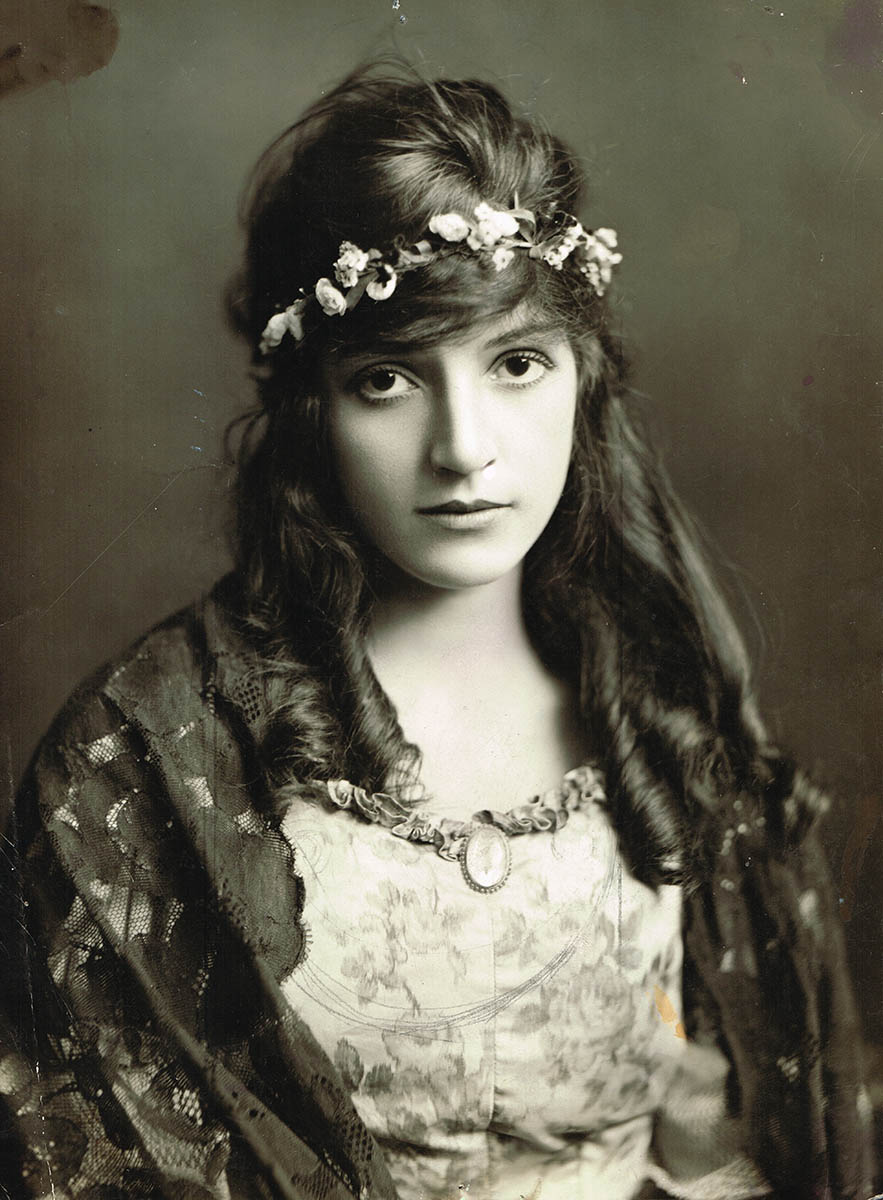
Miriam Cooper. Later a silent film star, made her debut playing a scullery maid in a 1912 movie titled 'A Blot on the 'Scutcheon',


"The play is a tragedy, the principal characters dying at the end. It has been compared to the far greater tragedy Romeo and Juliet, but the only real similarity is in the fact that Browning's heroine Mildred was 14 years old, only a few months older than Shakespeare's Juliet.


"As for the title: The scutcheon or escutcheon was the coat of arms...By a blot in or on it is meant a disgrace in the family history, a skeleton in the closet."


There was at least one of the outrageous authors of the Restoration/early 18th century period, specifically which one I cannot recall, who pretty clearly used "escutcheon" as a slang term for the female pubic area. I don't recall seeing it used thus even indirectly after that period, but in this instance it would certainly fit, because even though Mildred is just fourteen she confesses that she has been getting plowed repeatedly by the gentleman seen climbing on her balcony and gaining entrance to her room every evening at midnight.


Even compared to Romeo and Juliet, which I always took as being one of the lightest of Shakespeare's non-comedies, this is awfully thin as drama. I suppose I should try to say something about why the poetry itself, aside from any consideration of characterization, etc, didn't pop for me, but nothing particular comes to mind, it's more one of those books that you read through waiting for some kind of payoff or a-ha! moment, and then it ends and you are like "that was it?" I probably should have read it a second time, especially as it has taken me several weeks to get to this report.


I read this in the Modern Library Giant edition of The Poems and Plays of Robert Browning. While I have often written, and believed, that Browning is among my favorite English poets, particularly of his era, totaling up what I have actually read of him, which is about eight poems (granted, they are his most famous ones) plus this play, comes to around 44 pages of the 1,223 that make up this book. If I ever have to read The Ring and the Book, which I might for one of my lists, that would get me about 250 more pages. Though I like owning volumes of collected poems, they strike me as likely being among the more unread books, certainly in anything approaching totality, that most people would have had even 70 years ago. I suppose I can leave the book out on my desk for a while and try once a day at least to read "Cristina" or "A Death in the Desert" or others of the hundreds of lesser-known poems in it.


The Challenge
1. Mary Ann Shaffer--Guernsey Literary & Potato Pie Society...…...5,792
2. Jane Austen--Sense and Sensibility...……………………………...2,155
3. Romeo & Juliet (movie-1968)……………………………………..1,218
4. John Grisham--The Chamber...……………………………………...719
5. Melanie Hudson--The Last Letter From Juliet...…………………….577
6. Susan Vreeland--Lisette's List...……………………………………...362
7. John Foxe--The Book of Martyrs: Pagan & Popish Persecution...….347
8. Agatha Christie--Poirot Investigates...……………………………….287
9. David Nicholls--Sweet Sorrow...……………………………………..263
10. Deanna Raybourn--A Murderous Relation...…………………………99
11. Adele Nozedar--Element Encyclopedia of Secret Signs & Symbols....97
12. Walter Scott--Rob Roy...……………………………………………...87
13. Frank Tallis--Vienna Secrets: A Max Liebermann Mystery...………..82
14. Laura Lee Guhrke--The Trouble With True Love...…………………..58
15. Ovidia Yu--The Frangipani Tree Mystery...………………………….52
16. Mary Balogh--More Than a Mistress & No Man's Mistress...……….46


Round of 16
#16 Balogh over #1 Shaffer
I probably would have had Shaffer win in a straight match-up but this was an upset game.
#2 Austen over #15 Yu
#14 Guhrke over #3 Romeo and Juliet
#4 Grisham over #13 Tallis
I don't if this is exactly a upset (though I don't want to read Grisham), but he has one to use.
#12 Scott over #5 Hudson
#6 Vreeland over #11 Nozedar
On length.
#10 Raybourn over #7 Foxe
Upset.
#9 Nicholls over #8 Christie
Another upset. I have never read Christie, and would definitely have advanced her here.


Round of 8
#2 Austen over #16 Balogh
#14 Guhrke over #4 Grisham
#12 Scott over #6 Vreeland
#10 Raybourn over #9 Nicholls


Final 4
#14 Guhrke over #2 Austen
Because Sense and Sensibility is pretty long, and I have also already read it.
#12 Scott over #10 Raybourn
The Heart of Midlothian just won the Challenge pretty recently, but Rob Roy is not very long, and it is not matched up against very appealing competition.


Championship
#12 Scott over #14 Guhrke
I think Sir Walter is the first two-time winner of the Challenge that we have had.


Friday, December 6, 2019

December 2019

The last check-in of this decade.


A List: Hardy--Return of the Native...…………………………….494/507
B List: Anna Sewell--Black Beauty...………………………………84/315
C List: Scott--The Heart of Midlothian...………………………....457/508


I am slowly getting through those 19th century novels. I have read quite a lot of Hardy now, and while I usually find them worthwhile most of the later books (in the order of my reading them) I haven't read them as closely as they ultimately require, so superficially they start to resemble each other in my memory. Death always outweighs life in them, nature is a force that thwarts rather than complements civilization, the more vital the characters the more they are brought into confrontation with and crushed by these superior opposing forces to the human dream. It's not untrue, but it is not what I love best either.


The B list, as noted before, includes a good number of what are thought of as classic children's books, one or two a volume. The other ones I have had come up so far, Bambi, Andersen's fairy tales, and of course the Alice books, had a lot in them that could be of interest to adults, or at least to me. This is the first one that really is almost exclusively a book for children. It is not uncharming--I would like to read it to my daughters, aged 8 and 4, after I get through with it--and having been published in England one year prior to the publication of The Return of the Native, it certainly provides a sunny contrast with the doomed characters who inhabit that novel.


After starting on this list in the fall of 2013, I was able to finish the books from Volume I of my encyclopedia by the end of 2015, and those from Volume II by the end of 2017. My pace has dropped off a little as my life has grown increasingly busy, and I am not going to get through all of the titles from Volume III by the end of this year. There are not too many left to get through, but at least one of them is quite long, so it may take me until the spring to move on to Vol. IV. Even at the two years per volume pace I was on schedule to finish when I was 83 so I'm going to have to make up/pick up some ground somewhere down the line.


This is about the fourth month I have been working on the Scott. I do like him, which is why I haven't given up on the book, since the C-list pile-in-waiting has grown to 7 or 8 books. It is dense and requires a lot of concentration, and this is the list of books I am supposed to be able to read quickly and breezily, which my competition has not been giving me lately. I was thinking I would have enjoyed (savored?) Scott more if I had taken him up at a more leisurely period in my life, but I think he would have been too difficult for me as a teenager, and in my 20s the influence of the St John's experience, which didn't substantially begin to relax until I was past 35 at least,  would probably have prejudiced me against being able to appreciate his most admirable qualities.


Friday, September 6, 2019

September 2019

A List: R.W. Southern--The Making of the Middle Ages...……………...95/265
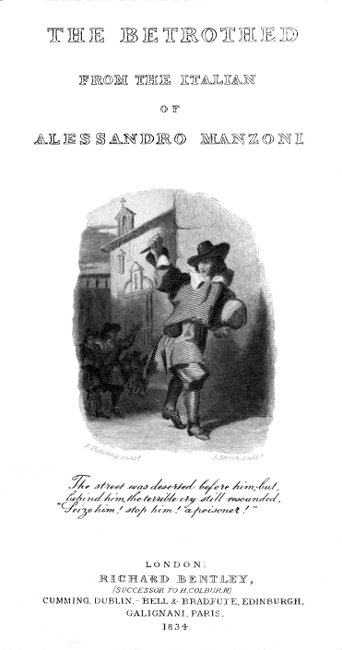
B List: Manzoni--I Promessi Sposi……………………………………..652/668
C List: Walter Scott--The Heart of Midlothian...………………………..38/540


So I wasn't quite able to finish Manzoni in time for this month's report. I have been very busy, especially in the weeks leading up to the beginning of school there were several days where I wasn't able to read it at all. But I am getting back on more of a regular schedule now.


Taking up Scott at the same time one is reading Manzoni is not ideal, as they are kind of similar books, long, romantic, set in the past, and they even were written around the same time. However, I can see already why Scott was popular in his day even if he is a bit long-winded by our standards (as is Manzoni). He is lively, he has more humor thus far than I was expecting, and he seems to know how to roll out a story. I should be able to plow through a decent amount of it during the 1-2 week interval when I am working on the report for the Betrothed.


R.W. Southern (1912-2001), who sounds like an American (perhaps I was getting him confused with the 1970s Texas-raised songwriter J. D. Sothern), was an Oxford institution, and The Making of the Middle Ages is one of the most respected humanities books to emerge from the heady days, such a contrast with the present, of the postwar research university. It is the kind of book that is good for me, because while I have some familiarity with many of the names, places, and events that populate its pages, I didn't have a terribly coherent picture of how they fit both in relation to each other and to other parts of history, and this should at least move me a further along in the formation of one. For a guy writing in the supposedly unenlightened 1950s, Southern frequently could pass for a modern professor. His attitude toward the Islamic world (or at least the medieval Islamic world) is highly respectful, and he is not in thrall to any kind of jingoistic view of Anglo-Saxon or Western European superiority that I can see. Reading him on the Crusades, I am struck by the juvenility with which people in our times will casually cite them as some kind of example of toxic masculinity or Western arrogance or privilege that has some kind of relation to people's behavior in the present. "The First Crusade burst on a world which had long been preparing for it in the recesses of its being, but there had been few outward signs of the work of preparation...The passionate acceptance of the Crusade as an established aim of Latin Christendom, which characterizes the twelfth century, did not come to birth without a struggle, and it is not irrelevant to note that the Eastern Church remained permanently antipathetic to the ideal. The monastic ideals of the eleventh century were in the main hostile to the idea of the Crusade. To a St. Anselm, for instance, or a St. Peter Damian, the Crusade made no appeal. There could be no place for it in the world which St. Anselm pictured as a vast, turbulent, impure river, carrying off to destruction those who became immersed in it: against this destructive flood there stood only one safe refuge with peace within its walls--the Monastery." (p.50)


I hadn't known that the "Heart of Midlothian" was, in one sense anyway, an actual "thing".


Kate gives the dish on the hurricane, the remains of which are coming my way tomorrow.

Friday, March 29, 2019

John Gay--The Beggar's Opera (1728)


The last of the set of four consecutive plays at this part of the list, and a bookend with its fellow early 18th century English play (The Beaux' Stratagem) around the two Hauptmann dramas. The Beggar's Opera is one of the all time biggest hits in the long and illustrious history of the English stage, veritably the Cats of its century. The Modern Library collection of Twelve Famous Plays of the Restoration and Eighteenth Centuries in which I read it includes 20 pages of musical scores covering 68 "airs". I was not quite organized enough to seek out and have the songs to hand ready to play when they came up in the reading, which I assume can be done via the internet, but as literature alone it is quite funny, moreso than I remember from the time I read it many years ago, and much moreso than The Threepenny Opera, which of course is the Weimar era update of the story. The appeal of this was much clearer to me on this occasion. Evidently I was less distracted and I did read it at a leisurely, even languid pace (it is very short) and was somehow more open to the cleverness and wit that is in it.


Gay is an unusual figure in English literature, which does not have a lot of similar one-hit wonders where the one hit is as big and central to the character of its era as his is. Since I first came across it I've always been more amused than I should be by the joke concerning Gay and his producer Mr. Rich, that the success of the play "made Gay rich and Rich gay." Gay only lived to enjoy this wealth for four years, dying at age 47. I cannot find the cause of his death in a quick internet search, though one article claims that he lost most of his money in bad South Sea investments which hastened the decline in his health. If I were at home I would check my copy of the Lives of the Poets, in which I think he has an entry, to see if Johnson says anything about it. Internet explanations of this play note that the depredations exhibited by the lower ranks of the society in it were intended to serve as a mirror for the more upscale audience of the day, which being fairly well-read in the literature of this time I am sure I took as assumed. Other explanations connect the various characters with famous, or once-famous, real life criminals or prominent British politicians of the period, which is not something I would have picked up on.


Some favorite quotations. A brief selection:


Act I, Scene IX: "A Fox may steal your Hens, Sir/A Whore your Health and Pence, Sir/Your Daughters rob your Chest, Sir/Your Wife may steal your Rest, Sir/A Thief your Goods and Plate.
But this is all but picking/With Rest, Pence, Chest and Chicken/It ever was decreed, Sir/If Lawyer's Hand is fee'd, Sir/He steals your whole Estate."


"The Lawyers are bitter enemies to those in our Way. They don't care that any Body should get a Clandestine Livelihood but themselves."


I, X: "And how do you propose to live, Child?" "Like other Women, Sir, upon the Industry of my Husband." "What, is the Wench turn'd fool? A Highwayman's Wife, like a Soldier's, hath as little of his Pay, as of his Company."


I, XIII MacHeath: "Is there any Power, any Force that could tear me from thee? You might sooner tear a Pension out of the Hands of a Courtier, a Fee from a Lawyer, a pretty Woman from a Looking-glass, or any Woman from Quadrille.--But to tear me from thee is impossible!"


III, III Filch: "One had need have the Constitution of a Horse to go through the Business.--Since the favourite Child-getter was disabled by a Mis-hap, I have pick'd up a little Money by helping the Ladies to Pregnancy against their being call'd down to Sentence.--But if a Man cannot get an honest Livelyhood any easier way, I am sure, 'tis what I can't undertake for another Session."


I, VI "Fill it up.--I take as large Draughts of Liquor, as I did of Love.--I hate a Flincher in either."


MacHeath is one of the sexiest characters in terms of raw animal appeal and vigor in the history of English literature. In the course of this brief play alone he is revealed to have impregnated 5 women, and lain with 2 others. One of his lovers, the hormonally overwhelmed Lucy Lockit, attempts to poison her identified rival Polly Peachum. Her reminiscence of their love is titillating for such as will never be thought of in such terms: "But his Kiss was so sweet, and so closely he prest/That I languish'd and pin'd till I granted the rest."


Only nine years until the 300th anniversary. If I were more organized and more in control of my time and finances I might think it worthwhile to make the trip to England to catch a commemorative performance--doubtless there will be one somewhere, I would think. But it is unlikely I will be set up well enough to do this even by 2028.


Challenge


1. Richard Powers--The Overstory...................................................455
2. Dear Zachary: A Letter to a Son About His Father (movie).......402
3. Kate Atkinson--Transcription......................................................305
4. Robert Heinlein--Podkayne of Mars............................................216
5. Mat Johnson--Loving Day............................................................158
6. Sally Rooney--Conversations With Friends.................................127
7. Terese Marie Mailhot--Heart Berries...........................................106
8. Lisa Miller--The Spiritual Child.....................................................80
9. Nana Kwame Adjei-Brenyah--Friday Black..................................57
10. Etaf Rum--A Woman is No Man...................................................28
11. Elizabeth McCracken--Bowlaway.................................................26
12. Walter Scott--Heart of Midlothian................................................19
13. Wilkie Collins--Hide and Seek.......................................................9
14. Judith Thurman--Cleopatra's Nose.................................................8
15. George Meredith--Celt & Saxon.....................................................6
16. Eric Puchner--Last Day on Earth....................................................5


This looks to be one of our better tournaments. Enough entries were produced that qualification was necessary, albeit at a fairly low level. Some big names mixing it up with modern novels.


Round of 16.


#16 Puchner over #1 Powers


I remember 15 or 20 years ago Richard Powers being promoted as a genius, or at least a budding genius, in the Pynchon-David Foster Wallace vein. His star seems to have faded a little in the intervening years, or else I just don't follow the literary reviews, or whatever has taken the place of them, as closely these days. His #1 seeded book is over 500 pages, and the Puchner book is just 226 and is not clearly bad, so applying my usual metrics he has to get the victory.


#15 Meredith over #2 Dear Zachary


#3 Atkinson over #14 Thurman


I don't know anything about either of these writers. Since they are similar in length I will award Atkinson the win as the higher seed.


#4 Heinlein over #13 Collins


Collins' Moonstone is on the IWE list and as one of that select group of authors generally would have priority when one of his other books made the contest. But Heinlein, the postwar sci-fi writer beloved by high IQ internet commentators (whose Moon is a Harsh Mistress is a former Challenge winner that I found myself unable to get through) has an upset to play.


#12 Scott over #5 Johnson


Johnson has no such talisman against IWE certification, and goes down to Sir Walter Scott.


#6 Rooney over #11 McCracken


Similar to the 3-14 contest a battle of women authors with books of similar length goes to the higher seed.


#7 Mailhot over #10 Rum


A battle of multicultural writers, apparently. Mailhot would appear to be an American Indian while Rum is identified as a Palestinian-American. At 142 thin pages, Mailhot is going to be tough to beat on length.


#9 Adjei-Brenyah over #8 Miller


Quite a contrast in names in this contest between the emergent and exciting and the stale and fading. Adjei-Brenyah's collection of stories clocks in at under 200 pages, shorter enough than its opponent to guarantee the win. The library catalogue lists it under the category of "Fiction--Racism" so I'm going to guess that the author is black.


Elite 8


#16 Puchner over #3 Atkinson


Puchner prevails again by virtue of his brevity.


#4 Heinlein over #15 Meredith


Heinlein pulls out another upset to get by Meredith, who has no less than three novels on the IWE list. I am rather terrified of his eventual approach on the list, since from what I can make out of his work, he is something like a mid-Victorian proto-Henry James kind of writer, only worse. We'll have plenty of occasion to deal with him without delving into his lesser works.


#12 Scott over #6 Rooney


Scott's immunity carries him through.


#7 Mailhot over #9 Adjei-Brenyah


Adjei-Brenyah's book was short enough to have a chance, but in these cases where what I know of the books and authors is about identical, the higher seed wins.


Final 4


#4 Heinlein over #16 Puchner


Heinlein, whose book is pretty short, is able to prevail here on his own.


#12 Scott over #7 Mailhot


The honored Scott, with no upsets to bar him, can cruise unopposed into the final.


Championship


#12 Scott over #4 Heinlein


Midlothian is about 566 pages long, and I was tempted to give Heinlein the victory in the final, but I decided to give it to Scott, whom I have never read, in a thrilling championship between two distinguished figures.


Thursday, October 17, 2013

Checking In

Finished City of Thieves today. Over the last few days I thought that the extreme implausibility of the climactic scenes detracted from the overall book, but then I considered that maybe the character of the book is in the same tradition as the implausible romances of Scott or Cooper or the tales of the medieval knights, with the bonus that the narrative is more modern and interesting than these other books. All the same, the last third of it was a drop off from the earlier parts, which I was impressed by, and I am pretty good at resisting writers, especially when I have been told in advance how smart they are. It is one of the hard and last tests of literature, for a writer to carry a book all the way through and bring it to a satisfying, conclusive end, but of course if you want to be great you must be able to do it.


I don't know if this is considered a trend yet, or if it was considered a trend but has already come and gone, or if people like Woody Allen and Mel Brooks and Philip Roth are already long considered to have broached the subject, but this story seems to share with the Quentin Tarantino movie Inglorious Basterds which also came out a few years ago (and which I haven't seen) the character of having Jewish characters in World War II stories possessed of agency to combat successfully and heroically against Nazis. I think I have read of other books and stories that have taken this tack as well. It is being largely driven by people, mainly, as far as I can tell, men, from my generation, who were born 20-30 years after the war ended and grew up during a period when sober dramatizations of the Holocaust were a central component of and influence on the culture, popular and otherwise. The, to this point, mild reaction against this represented by the stories referred to here, makes a certain amount of sense when one considers it, but I do not think most observers would have predicted it in the 1970s or 80s. Nonetheless, even though it occurred in a modern age of hyper-documentation and historiography and voice recordings and film footage--I just saw a clip of some of the footage from Buchenwald the other day, mounds of corpses being bulldozed into pits and so on--in modern American life anyway it seems inevitable as time goes on and the world in which these atrocities took place and the commentaries and interpretations that were made of them grows every day less immediate, less remembered, less real by the living, that people will not regard or relate to it in the same way either.

Update 10/21/2021: I had not at the time I wrote this post read any Scott, and I was basing my opinion of him on what I took to be the common contemporary judgment. I underestimated him, he is a great novelist and should still be held in the high regard he was formerly. 

I did like the Benioff book (City of Thieves) at the time, I thought it was skillfully written, though I haven't thought about it very much in the years since. I don't know that my commentary in the second paragraph has either aged terribly or proved especially prescient or insightful, but I don't think there is nothing to it. This trend seems to have faded, at least among reasonably serious or intellectual artists, though I do not pay as much attention to current trends as I used to.