Showing posts with label don marquis. Show all posts

Thursday, February 16, 2017

Don Marquis--archy and mehitabel (1927-34)

This may be the closest thing to a comic book on the IWE list. archy was a cockroach who in a previous life had been a free verse human poet. He banged out poems, all in lower case letters due to his not being able to reach the shift key, at night on a typewriter in what I took to be a newspaper office in New York City, though evidently it was in an apartment. mehitabel was a street cat of shockingly loose morals by the standard of literary anthropomorphized animals who appeared to live in the apartment in the earlier poems though after the beginning she was out living the hardscrabble city life most of the time. The poems originally appeared in The New York Sun newspaper, often famously accompanied by illustrations by Krazy Kat cartoonist George Herriman. These stories were immensely popular in their day. The himself once much more famous writer Christopher Morley, as recounted on the dust jacket of my edition, called the stories "the wisest collection of American irreverence written in our time" and that "the grandest of all times to have been young and excitable...about 1916 when Don Marquis invented his Vermin Voltaire, archy the roach". Three books were made out of this material, archy and mehitabel, archy's life of mehitabel, and archy does his part, which in turn were collected into the one volume the lives and times of archy and mehitabel in 1934. This was the book that I read, though looking over the summary in the IWE, it stopped at the first volume, which was by far the best, and in truth, I found the second and third books to be disappointments that added little to the first. It became a little repetitious after a while. The first book, however, I did like. Its charms lie in its mixture of absurdity and matter of fact, even blunt concerns about eating and scrapping and other facets of the life of a small urban animal who possesses the instincts of said animal along with a humanlike consciousness and language. archy offers more direct social commentary in the later poems, some of which hits its mark as far as it goes, but it tends to lack the playful anarchic quality of the earlier stories.


I was very lazy about making notes for this book, so I do not have many examples to comment on.
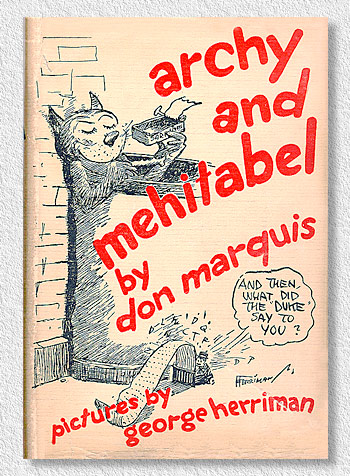


From "quote and only man is vile quote":


"humanitys culture consists
in sitting down in circles
and passing the word around
about how darned smart humanity is
i wish you would tell
the furnace man at your house
to put out some new brand
of roach paste I do not get
any kick any more out of the brand
he has been using the last year"


An 'archygram' about living in a museum


"but it is dull associating
with mummies no
matter how royal their
blood used to be when
they had blood
it is like living in
philadelphia"


From "archy visits washington"


"it is so hot that you can
fry fish on the
sidewalk in any part of
town and many people
are here with fish to fry"


From "the league"--archy seems to have been in the main a liberal, and supportive of the idea at least of organizations dedicated to the promotion of peace, though he was doubtful about their effectiveness.


"incidentally I wonder why europe of today
is always referred to by highbrow writers
as post war europe
they seem to think that the war
which started in nineteen fourteen
is over with whereas there have been
merely a few brief truces"


From 'statesmanship"


"why in the world
says this
insect do you not
go to the country and become
grasshoppers if
living in town and being
cockroaches is getting
too difficult for you...
how i asked him are
cockroaches to become
grasshoppers
that is a mere
detail he said which i
leave to you for
solution i have outlined
the general scheme for your
salvation so do not ask
me to settle the mere
details i trust to you for
that you must do
something for yourself
we philosophers cannot do it all
for you unaided you
must learn self help
but alas i fear that
your inherent stupidity will
balk all efforts
to improve your condition"


Eddie Bracken and Carol Channing made a recording of the 'archy' material, subtitled "a back-alley opera" in 1954.


From "what the ants are saying"


"what man calls civilization
always results in deserts
man is never on the square
he uses up the fat and greenery of the earth
each generation wastes a little more
of the future with greed and lust for riches"


He was quite prescient as far as anticipating some of the attitudes of modern progressives and other cynics of the American system in particular.


mehitabel the cat was a well-conceived and very lively creation, who plays well off of archy's somewhat more constrained and frustrated persona.


The Challenge


1. Ben-Hur (movie).........................................................................................1,918
2. Emma Cline--The Girls...............................................................................1,466
3. Ben Mezrich--Bringing Down the House.......................................................571
4. Mark Helprin--A Soldier of the Great War.....................................................448
5. Thomas Pynchon--Against the Day................................................................111
6. Ray Bradbury--Golden Apples of the Sun.........................................................47
7. Randy Olson--Houston, We Have a Narrative.................................................46
8. Lake/Simmons--Bazaar Style...........................................................................22
9. Lisa Leavitt-Smith--Paris Interiors...................................................................15
10. Rico Austin--In the Shadow of Elvis...............................................................14
11. Mark Thomas--Belching Out the Devil: Global Adventures with Coca-Cola..7
12. Jen George--The Babysitter at Rest...................................................................7
13. Conan/Sorrell--At Home With Pattern..............................................................3
14. Nathalie Leger--Suite For Barbara Loden........................................................2
15. Annette Messager--Word For Word..................................................................1
16. Raymond Carroll--Only Raising Dust on the Road, Part 1...............................0
17. A Series of Unfortunate Events (TV).................................................................0


Play-In Round


#16 Carroll over #17 Unfortunate Events


This version of the Lemony Snicket stories is a streaming-only TV series.


The Sweet Sixteen


#1 Ben-Hur over #16 Carroll


I break my rule of never allowing a book to beat a film when no library has a copy of the book.


#2 Cline over #15 Messager


Cline is shorter and more readily available, and looks as if it might be a real book.


#3 Mezrich over #14 Leger
#4 Helprin over #13 Conan/Sorrell


These two are walkovers.


#5 Pynchon over #12 George


I'm not really ready at this time to read a 1,085 page Pynchon novel (though I know I should be), however I have to retain some integrity for the Challenge and I can't let him be beaten by a babysitter book.


#6 Bradbury over #11 Thomas


I was actually interested in the Coca-Cola book, but it drew a tough matchup here.


#7 Olson over #10 Austin


Despite a combined 60 Amazon reviews for their books, neither author has had a work make its way into a library in the state of New Hampshire.


#8 Lake/Simmons over #9 Leavitt-Smith


Same story here. I believe this is the first time we have ever had chalk in the round of 16.


Elite Eight


#1 Ben-Hur over #8 Lake/Simmons


Ben-Hur will fall when he runs up against a vetted book.


#2 Cline over #7 Olson
#6 Bradbury over #3 Mezrich


Finally, the first lower seed to win.


#4 Helprin over #5 Pynchon


Titanic matchup, obviously. Helprin's book, at 792 pages, is the short one by far here.


Final Four


#6 Bradbury over #1 Ben-Hur
#2 Cline over #4 Helprin


The Cline book is not obviously unserious enough to lose here.


Championship


#6 Bradbury over #2 Cline


Bradbury, along with Thomas, his first opponent, were designated for upsets, but Bradbury never really needed to rely on one as he cruised to the title.







Monday, February 6, 2017

February Update

A List: H. L. Mencken--The American Language......................................62/697


B List: Don Marquis--The Lives and Times of Archy and Mehitabel.......396/477


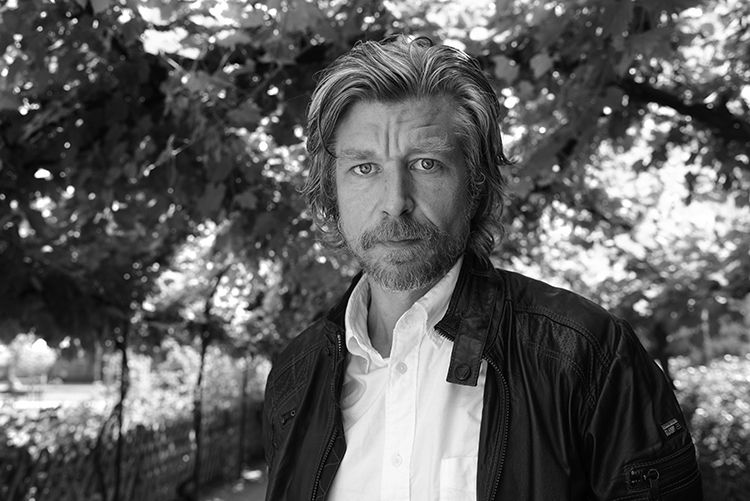
C List: Karl Ove Knausgaard--My Struggle: Volume 2..............................55/592


I suspect that what is considered valuable in the Mencken book could be acceptably covered by the modern reader through pertinent excerpts. Many of the controversies and premises it addresses have been long superseded, or are long lost causes, such as the contention among the British educated classes and their American admirers that American speech was even in its highest forms a brutal degradation of the mother tongue, and the alarm in England in the 1930s when the book was written that the introduction of talking Hollywood movies would sow and spread the linguistic rot among the population there. I was also reminded of the obsession that raged among American educators throughout the first half of the last century with eradicating the word "ain't" and the abominable habits of dropping one's g's from the national vernacular. He has referred in recent pages to a study of local accents in New England that I am hoping he will go back to, as I might find that personally interesting. New England had at this time apparently the greatest diversity of local speech patterns in the United States. I am guessing this is not the case anymore. Even twenty years ago there were still a decent number of older people around with very distinct and unusual, archaic accents, as well as a surprising number of people who spoke (Canadian) French as their first language. But I guess those people must all have died off, since I don't remember encountering anyone fitting these descriptions for some years now.


Having fallen behind on my "C" List, I arranged for a string of very short titles to win my legendary Challenges, and having finished all of them in relatively short order, I decided to take up the second volume (and the longest, seemingly) of Knausgaard. So far Knausgaard has been at the same pre-school birthday party for the entire book. I do like him, and I do look forward to reading my little segment of him each day, but that is because he is like the literary-minded friend of my own generation, which I do not actually have, who is smart but not forbiddingly or inaccessibly so--in the birthday party scene he is a little befuddled by the kinds of parents who have the kinds of awesome 21st century careers that require them to go to Malaysia for conferences on a regular basis. This is about what I get from him.


Before Knausgaard, I read Jesus's Son, the Carveresque short story collection by Denis Johnson that is much praised. It was published in 1992, though most of the stories seem to be set in the 70s. The stories are set primarily in the great expanse between Chicago and Seattle, and feature characters who have a lot of problems with things like drugs, violence, employment, health, the inability to form stable or even functioning relationships with other people. You know, I was going to say something how the country has changed, that people like this used to be seen as having a kind of rawness or authenticity about them, whereas now they seem kind of pathetic. You would have to be a very strong writer to write as if you identified with them without coming off as more than a bit of a fool. I didn't think the author accomplished that here, though that is just my impression as someone who reads a fair amount of books. I would like to think that someone out there trusted my opinion, but I can't expect it. I could go more into this book if anyone was interested, but I need to get my post up for tonight.