Showing posts with label theater--u.s (1920s). Show all posts

Wednesday, October 9, 2019

Eugene O'Neill--Beyond the Horizon (1920)


This is the fourth Eugene O'Neill play to come up, and I am still only in volume 3 (of the IWE list). However there are only four more over the last seventeen volumes, so I am halfway through with him already. Beyond the Horizon is the one of earliest date among these works, all of which were produced between 1920 and 1933. The IWE introduction is animated, so I'll print it in more or less its entirety.


"This was O'Neill's first big success. It won the Pulitzer Prize in the year it was produced. O'Neill was never more effective dramatically; his scenes rise to breathtaking peaks, fall into breathing-spell valleys, and finally, almost imperceptibly, lead into the subdued tone of an ending that is the more effective by its contrast."


I am assuming that this play, perhaps more than others on this program, needs to be seen performed. Reading it is fine in its way, it generates plenty of nostalgic feeling for me, especially as the geographical and cultural world that O'Neill inhabits is as close to that of my own as almost any of the writers on this list, though I do not experience the emotional swings as violently as the playgoer who wrote this summary seems to have. The plot has a lot in common with the famous movie It's a Wonderful Life, if every turn in the story had resulted in complete disaster--the main character forgoes an opportunity to go on a voyage to stay home and get married and the wife ends up detesting him; the brother does leave the farm for a promising opportunity, has a massive fight with the father and ends up never speaking to him again; the father dies and the son that stayed behind runs the family concern into the ground, with the accompanying poverty and bankruptcy; the doomed couple has a child and the child dies; and on and on. It's relentlessly grim, to be truthful, though I can believe that nothing quite like it had been seen on the American stage when it first appeared.


Act I, Scene II: Robert's uncle, the ship captain, when Robert tells him he won't be going on the journey:


"I'm ashamed of you, Robert, to go lettin' a little huggin' and kissin' in the dark spile your chances to  make a man out o' yourself."


Once people in a Eugene O'Neill play start being negative (which usually happens in the first few pages) you know things are not going to turn out happily.


Act II, Scene I, stage directions--things have already gone severely downhill:


"MRS ATKINS is in her wheel chair. She is a thin, pale-faced, unintelligent-looking woman of about forty-eight, with hard, bright eyes. A victim of partial paralysis for many years, condemned to be pushed from day to day of her life in a wheel chair, she has developed the selfish, irritable nature of the chronic invalid."


She is of course younger than I am now, though people got old, or were old, early back then. In the literary worlds of the past, fifty is a venerable age at the very least. There aren't many people at all hanging around who are much older than that.


Later in the same scene, Ruth the disappointed wife unloads on Robert:


"...living with a man like you--having to suffer all the time because you've never been man enough to work and do things like other people. But no! You never own up to that. You think you're so much better than other folks, with your college education, where you never learned a thing, and always reading your stupid books instead of working...If I could have seen how you were in your true self--like you are now--I'd have killed myself before I'd have married you! I was sorry for it before we'd been together a month. I knew what you were really like--when it was too late."


My wife could talk to me like this, but, thankfully, she does not.


While I grasp that there is an element of theatrical effect involved, the extreme aging and complete physical decline of the young couple in Act III--by which time they would have been 31 and 28 or so at the most--strikes a 21st century sensibility as almost too exaggerated. Though these kinds of bad marriages, especially among the non-privileged classes who largely eschew them now, really did seem to kill people at this time.



It is worth noting (again) that many O'Neill characters are not terribly intelligent or sophisticated in comparison with their fellows in the literary canon. The characters in this play are not the outright inarticulate brutes that populate some of this author's other work, but Ruth and her mother at least seem kind of dull-minded. My impression is that women in general are not depicted as terribly dynamic, intellectually or otherwise, across all of the O'Neill plays, which would not be uncharacteristic of the male writers of his generation. His dialogue is a mix of outbursts of raw emotion with elaborate speeches articulating the characters' sense of their own doom. I suspect that because of the influence of this style on subsequent generations of American film and theatrical writing, it does not always occur to us that it is kind of strange.


This was the 3rd play, along with Ah Wilderness! and All God's Chillun Got Wings, in volume 342 of the Modern Library, and I have now done all three of them for this program, the whole book. It will sit up on the shelf now until the end of my days, perhaps never to be pulled down again. It isn't in very good shape. The cover is still attached in both the front and back, but not by much. It came from the Library of Trenton High School in Trenton, Michigan. Judging by the penciled in notes in the margins, it was once in the possession of someone who played Mrs Miller in a production of Ah Wilderness!. Now I am wallowing in nostalgia for the half-baked mental universe of my youth. The season contributes to that, evoking as it does fall afternoons in the library and the hopefulness of the new school that not only has not yet died in October, but seems to be just on the point of ripening..But I will stop.


The Challenge


A pretty lousy one.


1. Donald McCaig--Ruth's Journey...…………………………………….311
2. Robyn Carr--The Best of Us...…………………………………………283
3. Daylight (movie--1996)………………………………………………..207
4. Robert Marasco--Burnt Offerings...…………………………………….94
5. Kendall Taylor--Sometimes Madness is Wisdom...……………………..11
6. John Chamberlain--The Roots of Capitalism...…………………………..1
7. Patricia D'Antonio--Nursing With a Message...………………………….1
8. Sebastian Howley--Deathbed...…………………………………………..1
9. S. D. Lowendowski--Snapped...………………………………………….1
10. Louis Boudin--A Socialist Empire: The Incas of Peru...………………..0


Sparsely Attended Wednesday Night Games


#7 D'Antonio over #10 Boudin


The second straight Challenge for which Boudin has qualified. It makes me feel like my wholly innocuous searches are being tampered with.


#8 Howley over #9 Lowendowski


The Thursday Quadruple Header


Noon Tip-Off


#7 D'Antonio over #2 Carr


The D'Antonio book is extremely short.


2:30 pm


#6 Chamberlain over #3 Daylight


Evening Session 7 pm


#8 Howley over #1 McCaig


Upset


9:30 pm Nightcap


#4 Marasco over #5 Taylor


The Taylor book is about F Scott Fitzgerald's marriage, and is the only entry in this group that is the kind of book I would normally be interested in. But I am so far behind on this list that I am going to be looking for shorter books for a few sessions here if it can be helped.


Friday Prime Time Doubleheader


7pm


#4 Marasco over #8 Howley


No prayer for Howley. The Marasco book appears to be a genre novel, but it was published in 1973, at least, which might make it of interest to me.


9pm


#7 D'Antonio over #6 Chamberlain


Championship Saturday Night


#7 D'Antonio over #4 Marasco


The D'Antonio book is only 145 pages, so even if it is terrible, the agony won't last long.

Monday, April 25, 2016

Eugene O'Neill--Anna Christie (1921)

This is the third Eugene O'Neill play thus far in the IWE list, and there are many more to come, I think there are around ten altogether. It is also another American play of the 20s and 30s, another Pulitzer Prize winner--the third so far in the drama alone!--and of course O'Neill was a Nobel Laureate as well, all of which is in keeping with some of the already established themes running through this great list. I had had for some reason the impression that Anna Christie had been his breakout play, but in fact he had already won another Pulitzer Prize two years earlier for Beyond the Horizon and that was followed up by The Emperor Jones before Anna was produced as well. This play struck me in reading as generally less interesting and more dated, in a negative sense, than the two O'Neill plays I have previously read for this project, with which I was impressed. This is one of the works of his that features a more brutish and not especially appealing class of character in whom it is difficult for the earnest, well-meaning, socially aspirant reader of the modern day to find much hope of development. Still, I did not dislike the experience of going through it. O'Neill does give a certain quality of darkness and heaviness of detail to the atmosphere of this older America that has a ring of authenticity in it to me and that other authors do not hit at in quite the same way.


It is strange to me for some reason to imagine an America where heavily accented Swedish and other Scandinavian immigrants make up a not inconsiderable segment of the society, yet many books from this 1880-1930 period attest that this was a vivid part of the national scene in those years. No doubt one of the reasons that this literary era does appeal to me so much, even down to its secondary works, is that it is when people of my general ethnic type, Irish/German/Baltic Sea area, were most ascendant and more culturally vital than they seem to be at present. A lot of characters in books from this time, perhaps because their physical characteristics and responses to various stimuli are simply described better than they are by modern writers, seem much more akin to me than most contemporary people, let alone literary characters, do. It is not a major consideration, and it not something I really picked up on until I started reading more of these books again over the past couple of years. I was often struck by how many characters had blue eyes. I have seen it put forth that around 50% of Americans were blue eyed in 1900 as opposed to only 16% today. This is the kind of fact that one isn't supposed to find interest or meaningful, I guess, though I think it is interesting at least. The circumstance that I think it interesting implies that I probably find it meaningful too, but I am not going to begin to speculate on the form that might take here, because I have not really thought about it very much. Perhaps one of these books will prod me to have some further thought about this later on.


While the plots are not exactly identical, some of the similarities between Anna Christie and the 1928 Josef Von Sternberg silent film The Docks of New York seem too striking to be coincidental. Both feature a fallen blonde and a ship's stoker of almost inhuman physical strength who get involved with each other. Both have as a major setting a rough seaman's bar on the New York waterfront. One has a bartender named Johnny-the-Priest, the other has a preacher type among the bar's cast of characters named Hymn-Book-Harry. Docks of New York is officially an adaptation of a short story by another writer named John Monk Saunders. There is not a lot of biographical information on Saunders, though he was married for eleven years to King Kong star Fay Wray (!--she played the girl--writers, how you have fallen!), and hanged himself at age 42. He sounds to me like he has alcoholic written all over him, though I cannot find confirmation of this, which would have made channeling the literary spirit, as well as output, of Eugene O'Neill somewhat easier.


Greta Garbo (who played in a lot of the film versions of the books on this list that have become somewhat obscure)

For the execution of this reading, I turn to a trusty old 1950 Modern Library edition of three of Eugene O'Neill's plays, with an introduction by Lionel Trilling. Unlike modern introductions by scholarly editors that batter the reader's will to live under an assault of critical theory and erudition of obscure books and characters and movements (real erudition is simply knowing everything, or nearly everything, central to the varied subjects that the ideal university graduate is supposed to know but most never get around to actually learning; obscurities are by definition not essential, and therefore do not display erudition, unless they can be demonstrated to somehow be essential), Trilling in a few broad sentences acknowledges what difficulties the general reader of 1950 (i.e., me) will find in a conventional reading of the play as play ("...its central incident--the regeneration of a cynical prostitute--is now timeworn and not especially interesting in itself, and the virtues of its poetic language are surely questionable"), and explains in clear and simple language why the show was important in its time, in a way that enhances at least my active interest in reading it ("(O'Neill's) Style, indeed, was sufficient content...all constituted a denial of the neat proprieties, all spoke of a life more colorful and terrible than the American theatre had ever thought of representing." Speaking of the zeitgeist of the 1920s: "It was a movement of cultural protest, against the business civilization of America, against philistinism, puritanism and vulgarity... Essentially a revolt of the conscious middle class against its own sterile complacency, it offered the promise of a regenerative cultural life.")


Long (9 minute) clip from the 1923 film version of Anna Christie, starring Blanche Sweet.

The Challenge

Another challenge that is all over the place and produces very few 'real' books.

1. Safe Haven (movie)............................................................1,454
2. Patrick Leigh Farmer--A Time of Gifts..................................190
3. Salman Rushdie--The Ground Beneath Her Feet.................142
4. Samanthe Beck--Best Man With Benefits..............................133
5. Berenstain Bears--God Bless Our Country.............................54
6. Jasper Ridley--Brief History of the Tudor Age........................23
7. ed. Peter Haining--The Mammoth Book of True Hauntings....14
8. C. Lee McKenzie--Sudden Secrets..........................................13
9. Jan Wahl--Humphrey's Bear......................................................7
10. Sam Llewellyn--Clawhammer.................................................1
11. Nicholas Karolides--Literature Suppressed on Political Grou.1
12. Anastasia--Master of the Universe: Memoirs Book 1..............1
13. Eugene O'Neill--The First Man................................................0
14. Mary Ellen Snodgrass--Encyclopedia of Gothic Literature.....0
15. Victoria Tan--So This is Death.................................................0
16. The Hopeline--Understanding Self-Worth...............................0

Round of 16

#1 Safe Haven over #16 Hopeline.

I am not sure that the Hopeline book actually exists.

#2 Farmer over #15 Tan.

Tan may not be an actual book either. The Farmer meanwhile seem to be something of a minor classic.

#3 Rushdie over #14 Snodgrass.

I have never read anything by Rushdie. He should be able to comfortably advance over an obscure academic exercise, especially in the first round.

#13 O'Neill over #4 Beck

One of O'Neill's lesser remembered plays evidently, though it is probably possible to find a copy of it. I may even have a copy of it in one of my various collections.

#5 Berenstain Bears over #12 Anastasia

The Berenstain Bears are players in the publishing world. They'll beat anything the relationship of which to a traditional book is foggy to me.

#6 Ridley over #11 Karolides

Based on nothing, other than that it sounds more interesting.

#10 Llewellyn over #7 Mammoth Book of Hauntings.

#8 McKenzie over #9 Wahl.

Teen trash over blah-looking children's book.


Performance of Anna Christie in what I imagine to be modern dress.

Round of 8

#13 O'Neill over #1 Safe Haven

#2 Farmer over #10 Llewellyn

#3 Rushdie over #8 McKenzie

#6 Ridley over #5 Berenstain Bears

This round was pretty clear cut. The Llewellyn book might be good, but my curiosity is aroused too greatly by the Farmer.

Final 4

#13 O'Neill over #2 Farmer

There is not a copy of the Farmer book anywhere in a library in the State of New Hampshire, even though it has received the what I thought to be imprimatur of the New York Review of Books reprint series.

#3 Rushdie over #6 Ridley

No one is holding the Ridley book either. A disappointing Final Four.

Championship

#3 Rushdie over #13 O'Neill

At 575 pages the Rushdie book is a little long, and by the ordinary rules of the challenge would not win here. However, he has appeared in the Challenge several times already without winning, and we read so much O'Neill in this program--nine or ten plays I am guessing--that while I am curious to read one of his lesser known works, I feel an obligation to take on some modern novels from time to time in the course of this game.


Wednesday, December 24, 2014

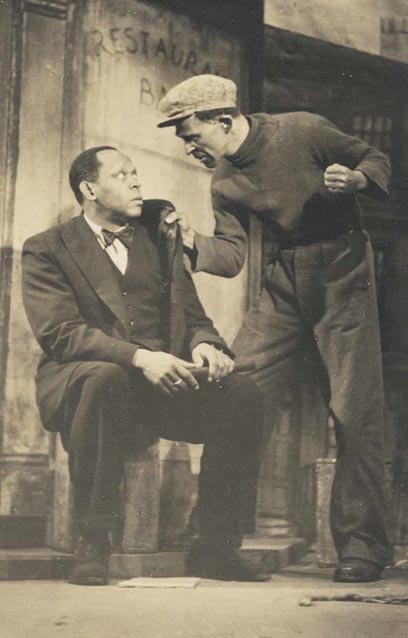
Eugene O'Neill--All God's Chillun Got Wings (1924)

Our first repeat author. There is a lot of O'Neill on this list. Shakespeare turns up the most, and I am pretty sure Dickens is second, but O'Neill may be the third most represented author in this program.


I knew almost nothing about this play going into the reading. It seems to have been relegated to the national literary attic for most of the past forty years or so, probably until people can figure out how to pull it out and handle it safely. It is about racial division, and really is a pretty daring and pretty strong take on the subject for the mainstream theater in 1924. O'Neill obviously was a white male, and perhaps no one is interested anymore in what he would have had to say about the American racial situation, but I am interested in it, especially since it is a significant departure from the way most other white guy American writers of the time (i.e. Booth Tarkington, F Scott Fitzgerald, even T S Eliot) seemed to regard it. O'Neill was immersed pretty seriously in the cultural and artistic life of this period, and he must have felt that the race issue impacted him in some way and that he had something to say about it. <I only wish I were so impacted and engaged in life>.

The 1960s introduction to the play in the IWE is truly a missive from a foreign country. Fifty years on, it defies contemporary intellectual propriety in about every way, though its intentions are clearly good and liberal in the context of its own time. I will reproduce it in its entirety:

This is a penetrating study of a controversial subject. A white girl, Ella, marries a Negro man, Jim, and she loses her mental balance. It is a foreseeable consequence in psychology and is not subject to controversy. On the message of the play, however, the United States divides on sectional lines. Generations of Northern students have been taught that the play is a protest against our culture, in its implanting of ineradicable prejudices. Southerners rather see in it a warning against the natural perils of miscegenation; and of course the warning is there, protest or no. The title is from a Negro spiritual.


The famous actor Paul Robeson was the original Jim on the stage.

I am a northern student (as was O'Neill himself, at one time), so I suppose it is natural that I am inclined to assume that the first interpretation is closer to the intention of the author than that it is a warning against miscegenation.

The sets and stage directions in this, particularly in the first act, have a bold, modernist character about them that strikes one. The first three scenes of the first act are set on 'a corner in lower New York' where two streets converge, with intervals of some years between them. Tenements stretch away down each of the streets, one of which is populated exclusively by white people, the other exclusively by black people. Popular songs of the various eras depicted are heard--different ones on each of the streets--and as the years progess the streets are emptier and the noises 'more rhythmically mechanical, electricity having taken the place of horse and steam'. The fourth scene, in some ways the central and most jolting one in the play, takes place 'in front of an old brick church...people--men, women, children--pour from the two tenements (on each side of the yard), whites from the tenement to the left, blacks from the one to the right. They hurry to form into two racial lines on each side of the gate, rigid and unyielding, staring across at each other with bitter hostile eyes'. In truth I admit that if somebody--whether an angry female (whether of color or not), a pouty, sarcastic gay, or maybe even a straight white guy who suspiciously managed to stay in everyone's good graces--were to write something like this into a contemporary play, I might not trust the accuracy of the vision or find the same level of attraction to it that I have done here. Age also has a way of clarifying what in at attitude or vision is solid or deep and what wasn't that I have a hard time delineating in the present.


From a British production.

I also can't repeat enough how much I love the American language and literary consciousness of the 1920s and 30s. Every time I come back to this period it really hits me. Unfortunately I am very much in many of my habits and worldviews stuck in this period and cannot relate very well to people who are alive now and the things they care about.

The second act, with its scenes in the apartment, struck me as very reminiscent, in its mood, setting, and sense of frustrated male hopelessness, of A Raisin in the Sun. In a broad sense, of course.


Oona (1925-1991), Eugene O'Neill's extremely attractive daughter, who at age eighteen married Charlie Chaplin, who was fifty-four at the time, and went on to have eight children with him. The playwright did not approve of the marriage, after which his relationship with his daughter was severed.

The Challenge

1. Sam Harris--Waking Up......................................550
2. Daniel E. Dennett--Consciousness Explained.....144
3. Dan Smith--The Child Thief................................110
4. Julie Cross--Whatever Life Throws at You............71
5. Eva Stachniak--Empress of the Night....................68
6. Ezra Pound--Cantos...............................................39
7. Leann Harris--Second Chance Ranch......................8

The winner this time is subtitled A Guide to Spirituality Without Religion, which is something I might read, though the concept is not one that obsesses me. However, my local library does not have a copy of it, and I am not inclined to seek it out. There were some promising contestants this time, though. The Dennett book I think is supposed to be for an intelligence level above the general level, and the Ezra Pound, though finishing weakly in 6th place, was the result of a small alteration I have made in the process to try to get more serious books into the contest. I am betting the next Challenge gives us something we can actually read.


Paul Robeson sings the title song. It's a very good song. Obviously no one needs my pronouncement on the matter, but as a person who I am sure most knowing people would agree has and knows nothing of soul or anything in that way, the fact that I still like the song might be of interest to people who are in the same boat. 

O'Neill referenced a number of old songs, some of which I was familiar with, some of which I was not (but all of which I want and think I should be) into the stage directions. There was "Only a Bird in a Gilded Cage":


"Little Annie Rooney", here in one of the better efforts of the Lennon Sisters:


"I Wish I Had a Girl"


"When I Lost You"


"Waiting For the Robert E Lee"


"Frankie and Johnny"


"Annie Laurie"


"Old Black Joe"


Merry Christmas.