Showing posts with label 1840s. Show all posts

Friday, November 6, 2020

John Maddison Morton--Box and Cox (1847)

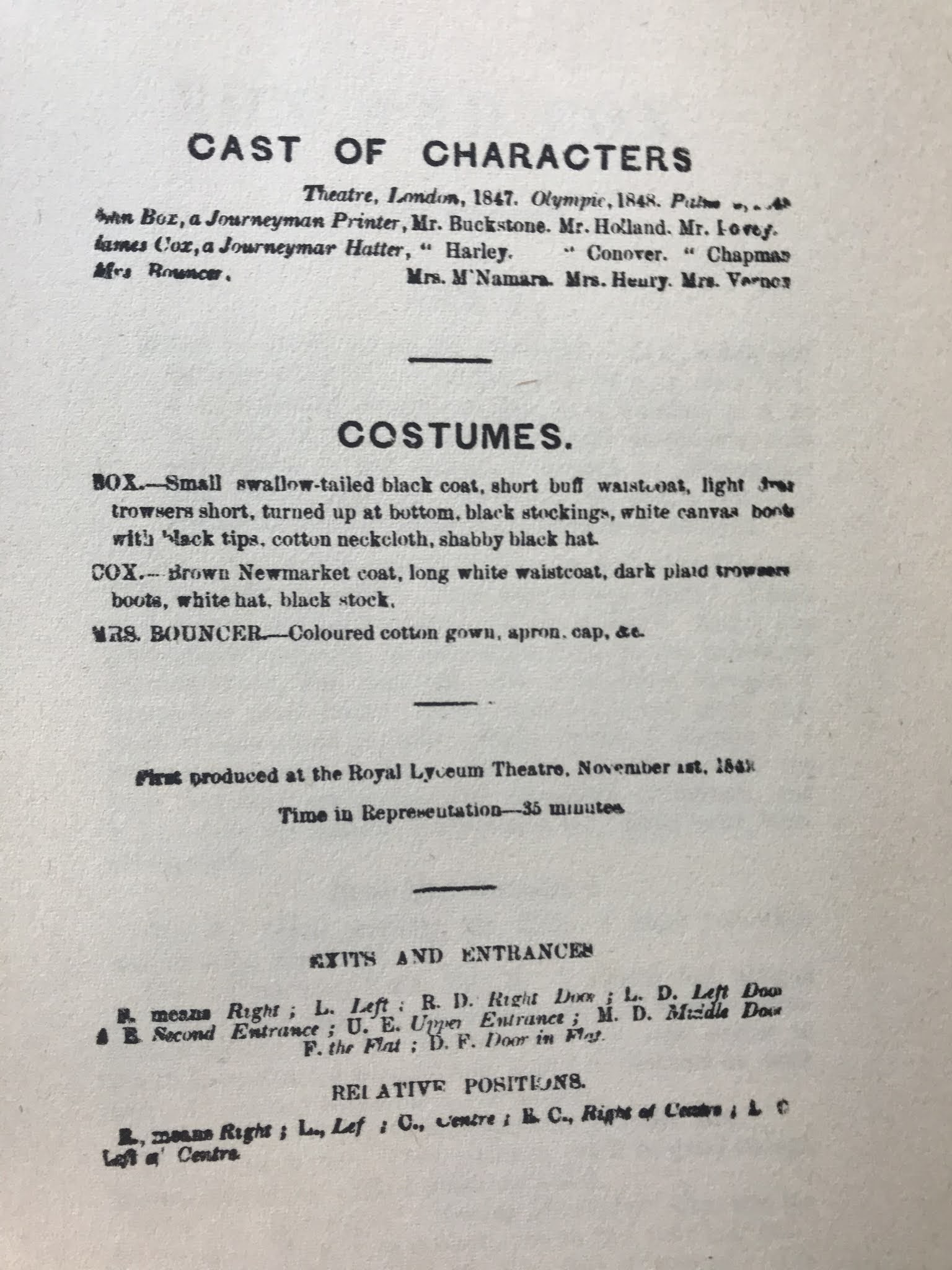
This one act play--almost a skit, really--has to be one of the more obscure titles I am going to get to read on the IWE list. Back in the 80s when I first contemplated reading this list, and went to the trouble at least of beginning to collect many of the titles when I came across them cheaply at library book sales and the like, I never once saw a copy of this anywhere, in any anthology or collection, and in those times before the internet, I thought it would be a serious obstacle to my ability to complete the program if I were to try to undertake it. 30+ years on I have still never encountered this play in a "natural" setting, but I was able to find a printed copy from the "French's Minor Drama" series, which according to the internet dates from the later 1800s, but which is in such good condition that I have to believe it is from later than that. I will put up some pictures of it. 

As I say, considered as a work of literature, this is rather slight--the most ready comparison that comes to mind is the old play/movie/TV series The Odd Couple--though I can see the conception and some of the gags being funny on stage. The premise is that Box, who works the night shift, and Cox, who works the day shift, rent out the same room in a boarding house, but each without being aware of the other's existence, while the landlady double dips on the rent. Among other things, this suggests that both Box and Cox work seven days a week and never have a day off, but I get that such nit-picking misses the point of the comedy. I didn't mind reading it--it is interesting to me as a period piece, especially in its contrast to the rather grander and much more elaborate literature we are accustomed to reading from England in this time period--and it has moments of being humorous, though a lot of it is goofy, and there are numerous stretches where the dialogue runs like this:

Box: Now then, sir!

Cox: I'm ready, sir! (They seat themselves at opposite ends of the table.) Will you lead off, sir?

Box: As you please, sir. The lowest throw, of course, wins Penelope Ann?

Cox: Of course, sir.

Box: Very well, sir!

Cox: Very well, sir!

Box: (Rattling dice and throwing.) Sixes!


Cox: That's not a bad throw of yours, sir. (Rattling dice--throws.) Sixes!

Box: That's a pretty good throw of yours, sir. (Throws.) Sixes!

Cox: (Throws.) Sixes!

Box: Sixes!

Cox: Sixes!

Box: Sixes!

Cox: Sixes!

Box: Those are not bad dice of yours, sir.

Cox: Yours seem pretty good ones, sir.

Box: Suppose we change?

Cox: Very well sir. (They change dice.)

Box: (Throwing) Sixes!

Cox: Sixes!

Box: Sixes!

Cox: Sixes!

Perhaps you get the idea. 

The IWE introduction has this to say about it:

"Chiefly, this farce deserves its immortality (?) because it is a classic idea. It is not, however, merely a dramatic idea. Lodging houses in industrial cities--in the U.S., notably Pittsburgh (?)--used to rent rooms in sleeping shifts, two or three each twenty-four hours, when the steel mills were busy. The idea made a musical show for Sir Arthur Sullivan in 1867; there the title was Cox and Box. The librettist was not Gilbert but Francis Burnand. It is very short and is usually produced in a double bill with a short Gilbert and Sullivan operetta."
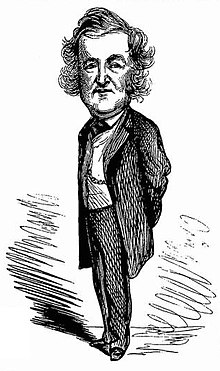


John Maddison Morton lived from 1811-1891. He was English, and hailed from Pangbourne in Berkshire, near Reading. In his heyday he was a pretty successful playwright. Box and Cox earned him 7,000 pounds according to Wikipedia, which also notes that the New York Times in 1891 called the play "the best farce of the nineteenth century", which however would seem to say more about the comparatively moribund state of the English theater in the 19th century than anything else. He is revived very rarely in our day by major professional companies.

I've dragged out this review about as long as I can. You can read the entire play in about half an hour, if you want, and if you have any interest in this type of literature it is probably worth the time, even if just as a brief escape from election news and all of the other contemporary political and social problems. 

The BS Challenge

1. Supernatural (Season 10, Episode 24 "Brother's Keeper, TV--2015............................2,476

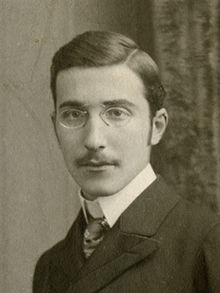
2. Stefan Zweig--The World of Yesterday.............................................................................466

3. Brothers and Sisters (Season 5, Episode 9 "Get a Room", TV--2010..............................419

4. William Faulkner--Light in August..................................................................................359

5. Room Service (movie-1938)...............................................................................................69

6. Gilbert & Sullivan--The Yeoman of the Guard (opera)......................................................21

7. Walshin & Leal--Rhode Island Recipes...............................................................................9

8. Andrew Goliszek--In the Name of Science..........................................................................8

9. Stan Cox--The Green New Deal and Beyond......................................................................8

10. Francis W. Shepardson--Beta Lore....................................................................................1

11. John Maddison Morton--Comediettas and Farces............................................................0

12. Walter Hamilton--Parodies................................................................................................0

A small field for a small book whose words do not produce a wealth of other associations. 


I like how Box has his gridiron here.

1st Round

The top four seeds receive byes.

#12 Hamilton over #5 Room Service

#11 Morton over #6 Gilbert & Sullivan

#10 Shepardson over #7 Walshin & Leal

#9 Cox over #8 Goliszek

Cox is 500 pages shorter. 

Quarterfinals

#12 Hamilton over #1 Supernatural

#2 Zweig over #11 Morton

Zweig has seen a big revival of his once dormant popularity among the serious reading public in the last few years, as evidenced by the large number of reviews for this book, even outpointing a major Faulkner novel in the seedings. In theory I should go with Morton here because according to my system he is an IWE author in an early round game, and Zweig is not. However, this particular Morton title is a photocopied and bound volume of a book printed in 1886 and out of print since then, and I am rather interested in not passing up the chance to read the Zweig book, or at least have it compete deep into the tournament.

#10 Shepardson over #3 Brothers and Sisters

#4 Faulkner over #9 Cox

Final Four

#2 Zweig over #12 Hamilton

#4 Faulkner over #10 Shepardson

Two routs against books which didn't belong in the Final Four

Championship

#2 Zweig over #4 Faulkner

In addition to Zweig being about 170 pages shorter, I thought it likelier that this Faulkner book, which despite being famous does not appear to have made it onto either of my other lists, would qualify for the tournament again, where it would always stand a decent chance of winning depending on the field. The World of Yesterday has made inroads among a contemporary English-speaking, largely male audience somewhat given to Europhilia and nostalgia, which, even though I could be said to be part of this crowd, is also a reason, perhaps the only reason, that I am a little wary of it. But I am sure I will like it. 


Friday, August 14, 2020

William Makepeace Thackeray--The Book of Snobs (1846-7)

This was a bit of a strange choice for the list. While Thackeray was, and still is to some extent, one of the most prominent Victorian novelists (two of his other books are also on this program), this book, a collection of comic pieces written for the legendary Punch magazine, has not, judging by what is available for sale on the used book websites, been reprinted much going back to about 1900. My copy of the book is a 1999 edition put out (in English) by a German publishing house, Konemann, based out of Cologne. The IWE, in its characteristic enigmatic fashion, promotes the selection by observing that "Thackeray enjoyed writing humor and fancied himself as a humorist but was not so good in the field as he supposed. The Book of Snobs is his best humorous writing but is not in a class with his novels." There is some truth in this critique--Thackeray did not have the extreme natural talent for humor of a Dickens or a Fielding and at times he is noticeably straining for an effect more than would be evident in those other writers--but this book really is quite funny, if somewhat repetitive, it has considerable value as an unusually informal portrait by a top rank writer of the society of the time, and it has the benefit as well of being relatively unknown and not beaten to death through being manhandled by everybody in the Western world with a humanities degree. It also calls to mind the great periodical writings of the 18th century, The Spectator (which for better or worse was the impetus for me to start blogging), The Tatler, The Rambler, and so on, which rank among the most enjoyable things I have ever read. So I liked this a lot, though it is not without some problems which must be acknowledged.


Even though he denounces American slavery several times, he uses the "n"-word every time he refers to people who are dark-skinned, whether they are American slaves, or Othello. It's his default word for black people. Perhaps this is one of the reasons why the book is generally always out of print. There is also a brief reference to Disraeli and Sir Robert Peel, the Prime Minister at the time who was of the opposite party, which is innocuous enough to read if you are not aware of the house politics of Punch, but there is a footnote which explains that "there were campaigns at the time to remove disabilities on Jews, but Punch was far from sharing this liberal opinion..." It should also be noted that this book contains illustrations drawn by Thackeray himself, and in the same footnote regarding this Disraeli item, it states that "Thackeray added one of his more regrettable illustrations to this item (not reproduced in the present edition)."

p. 86 One more rather insensitive section to take note of (it is The Book of Snobs after all). From the chapter 'A Little About Irish Snobs": "I think the shams of Ireland are more outrageous than those of any country. A fellow shows you a hill and says, 'That's the highest mountain in all Ireland;" or a gentleman tells you he is descended from Brian Boroo, and has his five-and-thirty hundred a year...or ould Dan rises and says the Irish women are the loveliest (ed--there is a case to be made that this is true), the Irish men the bravest, the Irish land the most fertile in the world: and nobody believes anybody." The shots at Ireland seem a little cruel considering that the country was enduring mass starvation and depopulation at the very time this was being written. But I have noted a similar indifference to this crisis in other famous English writers of this period, Ruskin, etc. 


p. 150 On visiting the country: "Do you suppose that an agreeable young dog, who shall be nameless (ed--he is peaking of himself), would not be made welcome? Don't you know that people are too glad to see anybody in the country?"

p. 155-6 In an interlude characteristic of the Spectator, the author publishes a charming letter which he claims came from a girl in the north of England asking him whether she might be a snob or not. It contains a number of nice details about how the family always got the magazine on Sunday and would tear it open in the carriage on the way home from church and that sort of thing.

p. 162 Referring to an episode in a popular society novel of the era called Ten Thousand a Year, about a gentleman who has experienced a decline in his fortunes: "It is about seven o'clock, carriages are rattling about, knockers are thundering, and tears bedim the fine eyes of Kate and Mrs Aubrey as they think that in happier times at this hour--their Aubrey used formerly to go out to dinner to the houses of the aristocracy his friends. This is the gist of the passage...What can be more sublime than the notion of a great man's relatives in tears about his dinner?"  

p. 163 The great Mr Goldmore, the East India Director, on hearing that a friend had had dinner at the house of a lawyer acquaintance of theirs who was known to have no practice: "'What! Do they give dinners?' He seemed to think it a crime and a wonder that such people should dine at all, and that it was their custom to huddle round their kitchen-fire over a bone and a crust."

"Snob" by the way is not exclusively used in the book in the manner in which we use it, but it refers to everyone who buys into any of these absurd value systems and social customs, even if one is himself is not in a position where he is benefiting from them. 

p. 202 On poor Mr Sackville Maine, who sounds like me: "He agreed in everything everybody said, altering his opinions without the slightest reservation upon the slightest possible contradiction."


Belonging to a "club", is something that, whenever I read anything about them, I always feel like I ought to do. I lack gravity (gravitas?), somehow, which I feel like is one of the things holding me back from qualifying for admittance to a club, but there is no reason why I should to such a socially crippling extent. At the same time the country clubs seem to be begging for members now, so maybe I could get in, but would the quality of the bar and the lounge or the library (assuming they have one?) really be the same (once they started letting people like me in)?

p. 207 "What a deal of vanity that club mirror has reflected, to be sure!" 

The Bourgeois Surrender Challenge

There are a lot of upsets available in the qualifying for this one, so matchups will be everything in the early rounds. 

1. Donna Tartt--The Secret History............................................................................3,592

2. Anthony Bourdain--Kitchen Confidential..............................................................2,952

3. Julia Child--Mastering the Art of French Cooking................................................1,265

4. Phillipa Gregory-Tidelands.......................................................................................883

5. MacColl & Wallace--To Marry an English Lord......................................................687

6. Julian Fellowes--Snobs.............................................................................................653

7. M. C. Beaton--Snobbery With Violence....................................................................208

8. M. C. Beaton--Minerva: The Six Sisters Book I........................................................142

9. Elizabeth Hayley--Sex Snob.......................................................................................120

10. Marion Chesney--Hasty Death..................................................................................81

11. Garry Wills--The Future of the Catholic Church With Pope Francis........................69

12. Jeffrey Steingarten--It Must Have Been Something I Ate...........................................45

13. A. O. Scott--Better Living Through Criticism............................................................37

14. Stephen T. Um--Why Cities Matter.............................................................................35

15. Julian Fellowes--Society Rules: Two Novels: Snobs and Past Imperfect....................24

16. Aeschylus--Four Plays................................................................................................24


Round of 16

#16 Aeschylus over #1 Tartt

Here we go right off the bat with an almost impossible match-up between one of the more acclaimed books of the last thirty years having to square off against, well, Aeschylus. As an IWE author Aeschylus gets a more or less free passage into the semifinals under the rules of this game unless he encounters a book which has any immunity of its own, but Tartt, making her first appearance in the tournament, did not have that here.

#2 Bourdain over #15 Fellowes

The late Bourdain, besides being a celebrity author, also comes in armed with an upset. However, Fellowes is only half-eliminated, since the first volume of the book eliminated here also qualified in its stand-alone version.

#14 Um over #3 Child

Child is a classic as well but I'm probably not going to read a two volume cookbook as part of my program here.

#13 Scott over #4 Gregory

I eliminate genre books, which qualify for this game a lot, whenever I can. Do you what kind of books almost never qualify for this? Popular history and other non-fiction titles from the 1945-1990 era, which is a class of books I am partial to. 

#5 MacColl & Wallace over #12 Steingarten

Obviously this is the result of having an upset card. 

#6 Fellowes over #11 Wills

I am a little concerned that I have too many novels winning in this contest lately (though looking over the recent winners I would say that only about half of them actually are novels), but my interest is piqued by this Snobs book, which is also fairly short.

#10 Chesney over #7 Beaton

So now I am finding out that Marion Chesney and M.C. Beaton are the same person, or rather were, as this author of many names passed on last December 30th at the age of 83. Both of the books in this contest are part of a series of "Edwardian Murder Mysteries". 

#8 Beaton over #9 Hayley

Beaton had a upset to deploy here, maintaining her formidable presence in the tournament.

Super 8

#2 Bourdain over #16 Aeschylus

Bourdain has a second upset to carry him past the goliath Aeschylus into the Final Four. But he has spent them all now.

#5 MacColl & Wallace over #14 Um

To Marry an English Lord came in armed with a double-barrel of upsets as well. Do you think I really want to read this? 

#6 Fellowes over #13 Scott

I was interested in the Scott book--I like the short introductory videos on classic films he used to do on the New York Times website--but Fellowes looks to be the better received book.

#8 Beaton over #10 Chesney

It's a toss-up. Minerva has the better cover.

Final Four

#2 Bourdain over #8 Beaton

Bourdain doesn't need an upset to finally oust the pesky Beaton/Chesney from the tournament.

#6 Fellowes over #5 MacColl & Wallace

Championship

#6 Fellowes over #2 Bourdain

Bourdain triumphed over Fellowes in the first round, but he is not able to overcome him twice and falls in a very competitive final. 


Monday, May 25, 2020

Robert Browning--A Blot in the 'Scutcheon (1843)

One of the recurring themes/patterns in the IWE list is that, in the place of recommending individual short poems, the most celebrated poets in the tradition, with a couple of notable exceptions--Shelley and Wordsworth come immediately to mind--are represented by one somewhat longer work. Unfortunately my attention span for focusing on and absorbing long form 19th century poetry, as I have noted here before, has not been good for the past several years (though it was a little better when the other people in my house had to go out to work/school for at least part of the day). In the course of this program already I found Swinburne and Elizabeth Barrett Browning to be fairly tough going; Arnold's Balder Dead was much better, some of which I attributed to that author's already being one of my favorite poets of that era anyway. The to my mind relatively obscure dramatic play A Blot in the 'Scutcheon is the selection they chose for Robert Browning. Like Arnold, I think of Browning as another of my favorite 19th century poets, and have even felt at times that I had attained something of a breakthrough with regard to how to read him properly. However, while this work was not particularly difficult, I nonetheless felt "off" and distracted each of the three times (once for each "act") that I set aside to read it.


For starters, I suspect that following up Bleak House, an enormous book that absorbed my attention for a couple of months, with a very short and somewhat mock opera-ish poem-play that I am at least trying to regard as a more or less equal literary undertaking, was bound to put the latter book at a disadvantage given my general reading habits, which have never been especially poetry-oriented, and have grown less so over the past twenty years. It is also not uncommon, especially in older poems, for an expression or grammatical sentence to carry on for a very long while, ten lines, or more, of pentameter, which length does seem to inflict more of a strain on my concentration than it used to. I could never get comfortable with the flow of the language from one speech or scene to the next,  and while I could follow the basic outline of what was going on, it was all happening at arm's length. I never became emotionally engaged with the writing, the sentiments, the ecstasy of creation, etc. Everyone's being at home on account of the pandemic doubtless effects me as well; while I can sometimes slip away for a half hour to try to read, anything beyond that someone will inevitably come and interrupt me. If I am ever going to get back into the mode of being able to read these kinds of poetic works--and there are plenty more of them to get through on this list--I am going to have to figure out how to adjust/slow down/expand the capacity of my mind to be able to take in the rhythms of the 19th century again.


Compared to its rather lackluster enthusiasm for Bleak House, the IWE was gushing over this. "As 'theater' at least, this was the most successful of Browning's plays and justly so. It has the best plot and the best dramatic structure and in it Browning best resisted the urge to divagate into poetical passages that do not advance the plot. All the characters are really wonderful. A modern version or an operatic version might be a great success.


Miriam Cooper. Later a silent film star, made her debut playing a scullery maid in a 1912 movie titled 'A Blot on the 'Scutcheon',


"The play is a tragedy, the principal characters dying at the end. It has been compared to the far greater tragedy Romeo and Juliet, but the only real similarity is in the fact that Browning's heroine Mildred was 14 years old, only a few months older than Shakespeare's Juliet.


"As for the title: The scutcheon or escutcheon was the coat of arms...By a blot in or on it is meant a disgrace in the family history, a skeleton in the closet."


There was at least one of the outrageous authors of the Restoration/early 18th century period, specifically which one I cannot recall, who pretty clearly used "escutcheon" as a slang term for the female pubic area. I don't recall seeing it used thus even indirectly after that period, but in this instance it would certainly fit, because even though Mildred is just fourteen she confesses that she has been getting plowed repeatedly by the gentleman seen climbing on her balcony and gaining entrance to her room every evening at midnight.


Even compared to Romeo and Juliet, which I always took as being one of the lightest of Shakespeare's non-comedies, this is awfully thin as drama. I suppose I should try to say something about why the poetry itself, aside from any consideration of characterization, etc, didn't pop for me, but nothing particular comes to mind, it's more one of those books that you read through waiting for some kind of payoff or a-ha! moment, and then it ends and you are like "that was it?" I probably should have read it a second time, especially as it has taken me several weeks to get to this report.


I read this in the Modern Library Giant edition of The Poems and Plays of Robert Browning. While I have often written, and believed, that Browning is among my favorite English poets, particularly of his era, totaling up what I have actually read of him, which is about eight poems (granted, they are his most famous ones) plus this play, comes to around 44 pages of the 1,223 that make up this book. If I ever have to read The Ring and the Book, which I might for one of my lists, that would get me about 250 more pages. Though I like owning volumes of collected poems, they strike me as likely being among the more unread books, certainly in anything approaching totality, that most people would have had even 70 years ago. I suppose I can leave the book out on my desk for a while and try once a day at least to read "Cristina" or "A Death in the Desert" or others of the hundreds of lesser-known poems in it.


The Challenge
1. Mary Ann Shaffer--Guernsey Literary & Potato Pie Society...…...5,792
2. Jane Austen--Sense and Sensibility...……………………………...2,155
3. Romeo & Juliet (movie-1968)……………………………………..1,218
4. John Grisham--The Chamber...……………………………………...719
5. Melanie Hudson--The Last Letter From Juliet...…………………….577
6. Susan Vreeland--Lisette's List...……………………………………...362
7. John Foxe--The Book of Martyrs: Pagan & Popish Persecution...….347
8. Agatha Christie--Poirot Investigates...……………………………….287
9. David Nicholls--Sweet Sorrow...……………………………………..263
10. Deanna Raybourn--A Murderous Relation...…………………………99
11. Adele Nozedar--Element Encyclopedia of Secret Signs & Symbols....97
12. Walter Scott--Rob Roy...……………………………………………...87
13. Frank Tallis--Vienna Secrets: A Max Liebermann Mystery...………..82
14. Laura Lee Guhrke--The Trouble With True Love...…………………..58
15. Ovidia Yu--The Frangipani Tree Mystery...………………………….52
16. Mary Balogh--More Than a Mistress & No Man's Mistress...……….46


Round of 16
#16 Balogh over #1 Shaffer
I probably would have had Shaffer win in a straight match-up but this was an upset game.
#2 Austen over #15 Yu
#14 Guhrke over #3 Romeo and Juliet
#4 Grisham over #13 Tallis
I don't if this is exactly a upset (though I don't want to read Grisham), but he has one to use.
#12 Scott over #5 Hudson
#6 Vreeland over #11 Nozedar
On length.
#10 Raybourn over #7 Foxe
Upset.
#9 Nicholls over #8 Christie
Another upset. I have never read Christie, and would definitely have advanced her here.


Round of 8
#2 Austen over #16 Balogh
#14 Guhrke over #4 Grisham
#12 Scott over #6 Vreeland
#10 Raybourn over #9 Nicholls


Final 4
#14 Guhrke over #2 Austen
Because Sense and Sensibility is pretty long, and I have also already read it.
#12 Scott over #10 Raybourn
The Heart of Midlothian just won the Challenge pretty recently, but Rob Roy is not very long, and it is not matched up against very appealing competition.


Championship
#12 Scott over #14 Guhrke
I think Sir Walter is the first two-time winner of the Challenge that we have had.


Thursday, August 23, 2018

Charles Dickens--Barnaby Rudge (1841)

First Dickens on the list, of the nine I think that are on it. This was a good one to start with, as it is one of his celebrated efforts, and I had not read it before either. It is evidently not thought highly of by many readers, especially on the internet, but I liked it, as I tend to do with most Dickens books. I had thought that A Tale of Two Cities was his only book with a historical setting, but this one goes back to an even earlier event, the anti-Catholic riots that took place in London in 1780, which episode of history I must cop to being unfamiliar with. I don't even recall its coming up in the life of Johnson, though maybe it did. It's one of the early books, and the beginning especially I found to be very funny, reminiscent of the Pickwick Papers. The later parts were not as consistently humorous, but the accounts of the riots and their aftermath were compelling and full of interest enough, and while the story is not the smoothest flowing and the characters are not among his most renowned (though I thought John Willett and his cronies, Sir John Chester, Grip the Raven, the Maypole Inn, Mrs. Varden in the earlier parts of the book when she was relentlessly contentious, and even the ridiculous servant Miggs to some extent were skillful creations),  the whole was still enviably lively and profuse compared to almost anything else.


The three main complaints about Dickens that I encounter online are that he was paid by the word (which encouraged a general overindulgence in his compositions), that too many plot points are resolved by coincidences, and that his depiction of women is simplistic and generally terrible. I have never found any of these objections to have a marked effect on my ability to enjoy the books, with the possible exception of the last one, as there are times, especially in the earlier books, where even I could wish for the female characters to be a little less insipid and have a more defined character. Barnaby Rudge is not one of his better efforts in this regard, the beautiful romantic interests Dolly Varden and Emma Haredale being little better than mannequins and ciphers, though the Dolly character was apparently very popular with readers at the time. I consider that he improved in this later on--Dora and Agnes in David Copperfield and Esther Summerson in Bleak House have a certain vividness to me years after reading those books. Dora is usually dismissed as being another insipid manic pixie dream girl type, but she was not stupid, only spoiled and overindulged, very much a type one encounters in real life, which cannot be said of most of the young women characters in the earlier books. As to the other criticisms, it appears that the oft-hurled epithet that Dickens was "paid by the word" is not technically true. He was paid to produce a certain amount of copy for the installments of his books, which is what the public in his time was buying, and presumably wanted. As I find his writing and personality amiable for the most part, and am used to the form of the Victorian novel, his alleged wordiness, which is often deployed in the service of some clever or ingenious observation or another, does not put me off. On the matter of his overuse of coincidences, this is a fairly ubiquitous device in literary productions before 1900, and even afterwards, and Dickens seems to me less egregious about it than other older writers, who depend upon it more for their grand effects. Their occurrence in him is usually an afterthought for me.


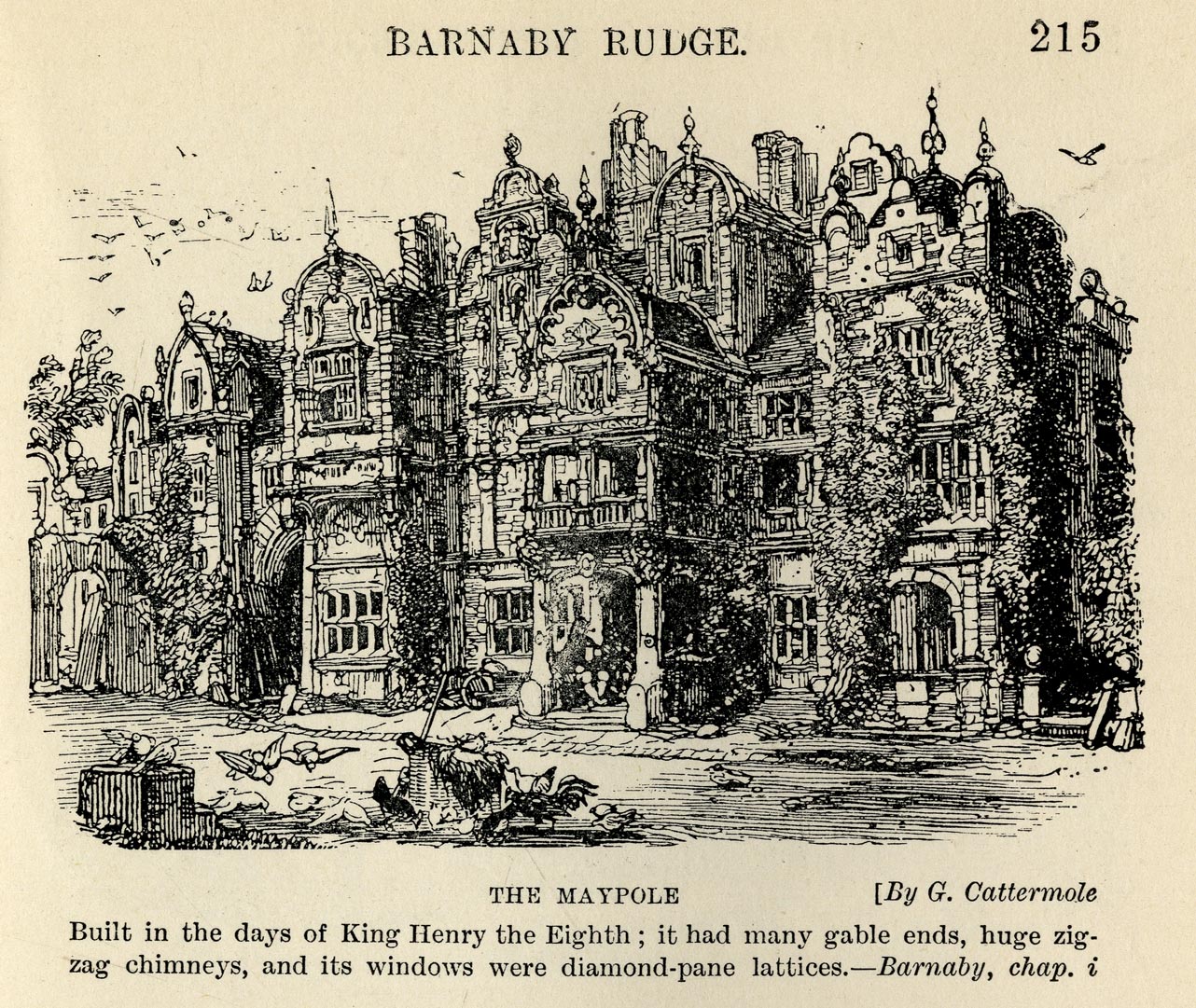
The Maypole was an inspired invention.


The first 200 pages or so of this were, as noted above, extremely funny. Sadly I neglected to take note of any specific examples for my report, though I suspect a good part of the humorous effect comes from having been set up beforehand in the overall flow of the book, episodes such as Sir John Chester's alighting from his coach after much over the top but entertaining demonstration of his gentility and paying the coachmen "something less than they expected from a fare of such gentle speech."


There is an elaborate and fine description in Chapter LI, too long to reproduce in full here, of the hapless Miggs's desperate efforts to stay awake while accompanying her mistress in sitting up late that is precise, funny, absurd, and mildly uncomfortable in its accuracy. A pointed example of the man's gifts as a writer.


Another one (example) is the depiction of the rioters as viewed from the rooftops in Chapter LXVII.
"...the crowd, gathering and clustering round the house: some of the armed men pressing to the front to break down the doors and windows, some bringing brands from the nearest fire, some with lifted faces following their course upon the roof and pointing them out to their companions: all raging and roaring like the flames they lighted up..." and so on. I think this is very good.


Whether intentionally or not, Dickens comes off as rather pro-establishment here, insofar as he is decidedly anti-rioters, these latter being depicted as a rabble of mostly ne'er-do-wells. The nature of the anti-Catholic sentiment supposed to have inspired the disturbance is easy enough to denounce. History as well as legend being famously written by the victors, rioters can reliably be painted or dismissed as being in the wrong, except when they aren't (the various rebellions of the 1960s come to mind, if most of these are even considered to be riots now). One of the disappointing aspects of this book was the rather unabashed class prejudice in it. The depictions of characters such as Miggs and the pathetic apprentice/would be revolutionary Tappertit are uncharacteristically (to my mind) and needlessly cruel. Meanwhile, the middle class characters who flirt with the movement manage to see where it is heading and distance themselves from it in plenty of time to remain untainted, and the conduct of two Catholic lords whose homes were burnt by the rioters and who refused to accept any of the money offered by the government in compensation were singled out for praise.


Dickens gave the estimated cost of the riots as being from 125,000 to 155,000 pounds, which I guess was a notable sum at that time.


Chapter LXXVII, the execution scene, with its description of the slow progress of the morning sun, the gathering of the crowd, their entertainments while waiting, etc. Also good.


Chapter the Last, of John Willett:


"He left a large sum of money behind him; even more than he was supposed to have been worth, although the neighbors, according to the custom of mankind in calculating the wealth that other people ought to have saved, had estimated his property in good round numbers."


I haven't mentioned the title character, Barnaby Rudge himself at all. He was an "idiot", less attuned to what was going on in the story than his pet raven, and my dislike of mentally limited characters, even when they appear in Dickens, is well documented. Neither he nor his mother brought anything to the story as far as I am concerned.


I have been collecting, and subsequently reading, volumes from the Oxford Illustrated Dickens series since the 90s. While these are new(er) books, they have the essential original illustrations as well as a classic readable typeface. Here is a picture of all my Dickens books from this set that I have acquired so far. On the shelf below you can see that I have the complete set of the Oxford Illustrated Jane Austen as well. Oxford also has put out a similar set of Mark Twain's works, but I don't have any of those as yet.


Here is Barnaby Rudge alone. I struggle with the phone camera to take a clear photo, especially in the surreptitious manner with which I take these photos, as I don't particularly care to be caught on a beautiful sunny day snapping pictures of books.


The Bourgeois Surrender Challenge


1. Scent of a Woman (movie)....................................................1,367
2. Mary E. Pearson--The Kiss of Deception.................................679
3. Bill Bryson--I'm a Stranger Here Myself.................................468
4. Rachel Vincent--My Soul to Lose.............................................192
5. Titans East Part I (Teen Titans: S 03 E 12 TV Show).............150
6. Peter Ackroyd--London: The Biography....................................98
7. Dafydd ab Hugh--Endgame (Doom)..........................................49
8. Victor Hugo--The Man Who Lives.............................................38
9. Annelisa Christensen--The Polish Midwife................................37
10. Ron Roy--The Runaway Racehorse..........................................31
11. Lindsay Hunter--Don't Kiss Me................................................31
12. Harold C. Goddard--The Meaning of Shakespeare, Vol. 1.......24
13. E. N. Joy--Lady of the House....................................................22
14. Work of Robert G. Ingersoll, Vol 1: Lectures............................19
15. Carol Marinelli--The Only Woman to Defy Him.......................14
16. Travis Kennedy--True Ghost Stories and Hauntings................14


1st Round


#16 Kennedy over #1 Scent of a Woman


The ghost story book--not my favorite genre--glides through with a shaky win.


#2 Pearson over #15 Marinelli


Battle of the genre books.


#3 Bryson over #14 Ingersoll


A halfway interesting matchup. Bryson's travel books are the kind of thing that the Challenge was created to give me an excuse to read from time to time.


#4 Vincent over #13 Joy


More genre books


#12 Goddard over #5 Titans


#11 Hunter over #6 Ackroyd


The Ackroyd book I have seen lauded, but he is the victim here of one of my dreaded upsets.


#7 Hugh over #10 Roy


Roy's is a children's book, but I would have given it the victory over an offering from the "Doom" series anyway. However, Hugh has an upset coming.


#9 Christensen over #8 Hugo


The Christensen may be a real book. Anyway she has an upset to pull out too. Victor Hugo's lesser known novels have now turned up several times on the Challenge, usually to be the victim of an early upset. I will have to keep watching for this trend.


Round of 8


#2 Pearson over #16 Kennedy


Because of the library factor.


#3 Bryson over #12 Goddard


The Bryson book appeals more to me at the moment. I haven't read a travel book in a while.


#11 Hunter over #4 Vincent


The library, surprisingly, gives the win to Hunter.


#9 Christensen over #7 Hugh


Final Four


#11 Hunter over #2 Pearson


Hunter is 300 pages shorter


#3 Bryson over #9 Christensen


The libraries don't carry Christensen anyway.


Championship


#3 Bryson over #11 Hunter


An anti-climactic final. However given that I am four or five books behind on the Challenge list, I am happy with the result.


Friday, August 22, 2014

Agnes Grey--Anne Bronte (1847)

I am in the midst of a stretch of short books for the IWE list. Though it comes under the category of a Victorian novel, Agnes Grey is only 194 pages long (in the recent Modern Library paperback edition) and it feels shorter than that. There is not much to the plot, which is a barely disguised memoir written by a 27 year old about her experiences as a governess in two different houses, and reads at times more like a journal or a record of impressions over time than an unified work of art that is an imitation and embellishment of actual life. In spite of this, and certain other characteristics of the book that I will comment on later, I enjoyed it very much during the few calm moments of the day when I had a chance to read it, as I find I am enjoying most of these older books, whether their reputations have carried down to our own time or not.


Anne Bronte is of course the younger sister of Charlotte and Emily, and while I like her, she is obviously not as good as they are. Nowadays The Tenant of Wildfell Hall is widely considered to be Anne's best and most important book. It has not turned up on any of my lists however, so I have not read it. Still, she had more talent as a writer than at least 96.4% of the people who have ever tried their hand at it, and despite the smallness of the world she inhabits, the by our standards excruciating pace of life and paucity of incident in it, there is enough of interest in the characterization and enough that is familiar and almost comforting, at least to people who have read a lot of Victorian novels, in this pared down and rather unadorned account of that vanished world, to hold the interest and propel one through its brief chapters and story. Her youth and callowness are more noticeable than they are in most novels by people in their 20s that have survived. It was probably fortuitous on her part to stick to a narrow subject with a singular first person point of view. She has a lot of what today would be called snark, and it is her most noticeable shortcoming as a writer, since it is not particularly funny or clever snark. It is quite easy to imagine her as one of those legions of unlikeable young people on the internet taking ugly swipes at people they mistakenly consider to be of a quality far inferior to themselves. Jane Austen of course was pretty snarky--Pride and Prejudice especially is at least in some part of its core a snarkfest from nearly one end of it to the other, which I suspect is why it has remained so popular in our own time. Jane Austen's snark of course is a lot more sophisticated than Anne Bronte's. Bronte/Agnes is not so fastidious about setting her targets up so as to get the optimum effect before she launches into attack, which in nearly every instance is merely the narrator  venting to the reader, rather than the much higher incidence of interactive snark, frequently witty and humorous between characters that animates the work and Jane Austen and other more developed writers.


However as I said I am rather fond of Anne, in my person of a sentimental reader of old literature who has been completely exposed by modern life, which is probably not a good advertisement for her book. One thing that happened to Agnes that apparently did not happen to the real-life Anne was the romance (and eventual marriage) to the upright clergyman. The character of Weston who provides Anne's love interest was supposedly modeled on a gentleman who had worked under her father and with whom it was speculated she was in love, though apparently there is no concrete proof of this, and the feminist scholar who edited my edition and wrote the preface at least evidently did not, apart from the one footnote alluding to the source of the Weston character, consider the question otherwise worthy of interest. Anne's writing indicates that at some point she had agreeably sentimental feelings for someone, as her descriptions of Agnes's emotional state at various junctures in her relations with Weston have the ring of unvarnished honesty about them. But Anne died at age 29 without ever having married (As an aside, I have read it plausibly suggested somewhere, perhaps by Somerset Maugham(?), that Emily Bronte was likely a lesbian. I have not read her book since I was very young however, so I wonder whether this would strike me if I should take it up again).

The Challenge

The challenge this time once again turned up very few competitors, resulting in a runaway victory for a book I have never heard of.

1. Still Alice--Lisa Genova..................................................................................................1,628
2. It: How Churches and Leaders Can Get It and Keep It--Craig Groeschel..........................97
3. Gertude Bell, Queen of the Desert, Shaper of Nations--Georgina Howell..........................80
4. The God Who Sees You--Tammy Maltby.............................................................................39
5. Murder & Mayhem: 32 Crimes That Shook Early California--Michael Thomas Barry........2
6. Priestess: Life & Death of Dion Fortune--Alan Richardson..................................................1

The non-scorers this time were a couple of the kind of books that I usually love, but that apparently other people do not read, or at least review, in great numbers: Keymer & Mee's Cambridge Companion to English Literature 1740-1830 & Howitt & Hewitt's Homes and Haunts of the Most Eminent English Poets Volume I.


Even though I said in the last challenge that I was not going to read the winner, God's Problem, by Bart Ehrman, the desire to adhere to the vagaries of the system I had created got the better of me, and I took the book out of the library. There are a few ideas in it regarding the historically/scholarly correct way to read the Bible that I not been exposed to before (such as understanding the figure of Jesus Christ as belonging to the tradition of Jewish apocalypticism), though much of the book seems repetitive and the author, perhaps because he is a college professor (of Religious Studies), often writes as if he anticipates his readership to have the simplistic worldviews and knowledge of eighteen year olds. He was an evangelical Christian, and apparently a strident one, for what appears to be well into his adulthood, when his graduate studies persuaded him that there probably was no God, and if there was, that It certainly had nothing to do with the character referenced as God in the Jewish and Christian Bible. Being by nature a strident fellow, he is now strident in advocating his new discoveries and insights about the nature of the Bible. God's problem, by the way, is that inexplicable suffering, particularly with regard to children and completely innocent people killed by wars and natural disasters, exists, and cannot be adequately explained by Christian theology at least. Being largely incapable of religious feeling myself, I don't really have a dog in this fight, other than the sense I have that the phenomenon of Christianity in Western civilization is so enormous and informs so much of our worldview in such serious matters as most people ever have contact with, that even the most cogent demonstrations of its inconsistencies and the provincial reality, as it were, of its sacred texts, cannot really counterbalance the void in the collective mind and spirit that complete abandonment of Christian wisdom and sensibility would leave, even if reason suggests that such abandonment ought to be executed. The idea of God and what is represented in this idea is, I think, the great invention of the human mind, insofar as it has been across time the bond of civilizations more even than language or blood/racial relations. So it is difficult to put that aside in spite of the obvious scientific or logical objections to it.


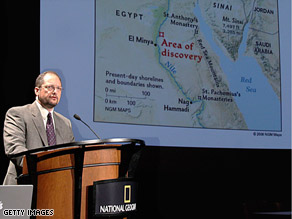
Bart Ehrman delivering the cold hard truth about the Bible.

One reason that I bother with reading these kinds of books at all is because I am fascinated with the authentic contemporary professional educated class--the people who who succeeded where I failed. Having spent a substantial part of his life as an evangelical Christian from the midwest, Bart Ehrman is not a perfect specimen of the type, but he has been adapting well enough to have cultivated a suitably annoying authorial personality. He is a made professor at the University of North Carolina at Chapel Hill, which is a place I have always thought of as attractive (in contrast with nearby Duke, which I have always been equal parts terrified of and repelled by). I even sent off an application there when I was high school--at that time it might even have been free to do so, or was $10 at the most, though I had no idea of actually going there unless I did not get in anywhere else. Of course I didn't get in there either. Everybody loves to write about how devastating it is not to get into Harvard and be deprived of an easy route to world influence and a summer house on the Cape, but it isn't exactly light medicine to be told by a good but not terribly exclusive state school that 10,000 people who were better and more desirable than you applied that year alone, but that they are sure you will find an educational option somewhere that suits your requirements (*cough* loser *cough*). In truth I had completely forgotten about this episode in my biography until this Bart Ehrman guy came up; anyway the juxtaposition of the regard the two of us are held in by the University of North Caroline should give some idea of the intellectual gulf that exists between myself and people of this caliber. Yet for most of his book I could not help wondering what was the quality that enabled him to end up at a full professor at one of the nicest colleges in America, while I can barely imagine myself functioning in any kind of contemporary college level class at this point. While his struggles with angst about whether he deserved the steaks and microbrewed beer and Chateneuf-du Pape with which his refrigerator was bursting while 1.2 billion people in the world lacked clean drinking water made for mildly entertaining reading, it did not impress upon me the presence of an intellect of that degree of superiority. He counts many 'brilliant' people, almost all of them academic colleagues, among his friends. His wife is also a 'brilliant intellectual'. (I don't know if I know a single person whom I would feel comfortable referring to as 'brilliant'--if they really were brilliant, I don't think I would have the qualifications to detect wherein their brilliance lay--but I have known a few people whom even I could see were undoubtedly 'bright). ' Outside of these brilliant professional thinkers, however, his society is mostly a wasteland. Most people he meets either have nothing to say when he tells them what his field is or that he is grappling with the subject of suffering, or they offer some trite observation that he quickly pounces on and fires back with some studied rebuttal or follow up question to which they cannot respond (evidently once people are determined to be stupid beyond hope, trying to set them at ease in conversation and drawing out their thoughts is a waste of one's precious time). When he comes to believe something, he believes in it with great certainty and becomes zealous-perhaps a vestige of his evangelical background--that others should be disabused of their own wrong opinions. Past experience of error does not make him shy to assert himself, as might be the case with others. But I am going to stop here.

Still Alice looks to be an even more intense peek into the exalted world of the lives of the cognitive elite in my generation. The author, Lisa Genova, was born in the same year as I was and graduated from Bates College in Maine (where she may have known some old high school classmates/friends of mine, as at least three of them went to school there), before getting a PhD in neuroscience from Harvard. The book is about a brilliant Harvard professor of cognitive pscyhology who gets afflicted with early onset Alzheimer's disease. Unlike in The Plague or The Magic Mountain I don't think the illness is supposed to be a metaphor for the state of contemporary society or Western Civilization. In the acknowledgements the author names 67 people, including 13 doctors, at least eight of whom appear to medical doctors, most affliated with Harvard, who were instrumental in helping the book to get written. One especially curious (to me) acknowledgement was to a couple of doctors "for role-playing as Alice's general practice physician". Really? You can't just make up the dialogue for a doctor's appointment in a novel? I suppose it's possible Camus interviewed a few doctors to avoid egregious blunders ("so you really do lance the boils, right?"), but his doctor characters speak the way he wants them to speak, that is, like philosophers. I was reminded also of Kurt Vonnegut's line about his recurrent Kilgore Trout character ("Like most science fiction writers, Trout knew almost nothing about science"). Our new creative class really likes to get the details right, however.

I don't know how far I am going to make it in this book--these people are hard core meritocrats and they are very proud of themselves. At the beginning at least there is not much in the way of whimsy or humor, or doubt or dubiousness about anything, with the exception of lesser people's abilities. Here are a few quotes by way of example:

"They used to walk together over to Harvard Yard every morning...She savored the relaxed initmacy of these morning walks with him, before the daily demands of their jobs and ambitions rendered them each stressed and exhausted."

"She also loved the adrenaline rush. The bigger the stakes, the more sophisticated or hostile the audience, the more the whole experience thrilled her."

"Her contributions mattered and propelled future discovery."

 "One of the big memory burdens for anyone with a serious career in the sciences was knowing the years of published studies, the details of the experiments, and who did them...Most of the senior faculty in her department had this skill at their fingertips. In fact, there existed an unspoken competition among them to see who possessed the most complete, readily accessible mental catalog of their discipline's library."


Lisa Genova is kind of something, though in the battle of Harvard Phds/Professional degree holders and Challenge winners who are about my age I think I like Susan Cain by a hair. I'm not really loving either as a writer. Their resumes are both so awe-inspiring as to be far beyond my capacity to judge them.

"They both wore impressive blue suits, his accessorized with a solid gold tie and hers with a single strand of pearls. They'd been working for a couple of years at the third biggest corporate law firm in Massachusetts, Anna practicing in the area of intellectual property and Charlie working in litigation...She'd been trying without success or secrecy to conceive for six months now. Like everything with Anna, the harder it was to obtain, the more she wanted it...she'd just married Charlie last year, and she worked eighty to ninety hours a week. But Anna countered with the point that every professional woman considering children realized eventually: There's never going to be a good time to do this."

"He was smart, intense, the spitting image of his father, in his third year at Harvard Medical School, and planning on a career as a cardiothoracic surgeon."

"Alice watched her husband and son, both biologists, absorbed in analytical conversation, each trying to impress the other with what he knew."

I'm not sure for what purpose my own family can possibly exist going forward.

The Challenge also produced one video and one musical entry, both seemingly worthy. The search engines rooted out from one set of my Challenge keywords the Bronte connection and (spat?) out the 1967 BBC adaptation of Wuthering Heights. I suspect there will be an overemphasis on certain 60s obsessions (such as the repressed sexuality of women and various forms of hysteria), but I can generally deal with those better than the 21st century obsessions (incest/abuse, homosexuality, outrage at archaic attitudes even when fairly mild in the context of the original source, and so on).


The music was a record album of Bach's Cantatas conducted by Karl Richter, which seems to be available only on vinyl. Needless to say, we should listen to more of this.

Monday, November 12, 2012

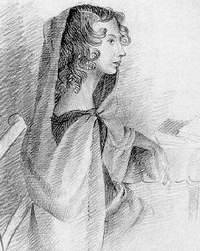
Anne Bronte


"Anne was the least-read and -admired of the remarkable Bronte sisters, but the fact remains that she was one of the remarkable Bronte sisters and her novels are brilliant in spots, competent elsewhere. Agnes Grey...published in 1847 (ed: author age--27)...has a large autobiographical background of course: Anne, like her heroine Agnes, was a poor clergyman's daughter, was docile to a fault, and worked as a governess. But unlike the novel, Anne's life had no happy ending--not even in a literary sense, for Agnes Grey was never well received during her lifetime...Agnes Grey is quite a short novel, under 150,000 words."--I.W.E.

The other novel of Anne Bronte (who died at age 29), The Tenant of Wildfell Hall, was not chosen for the I.W.E. Hall of Fame, though currently it appears to be regarded with at least equal esteem to Agnes Grey.


This is not my copy of the book--I haven't read it--but I have a lot of these 1995-2003 or so era Penguin Classics with which it would be at home.

The Brontes are such central and beloved figures in the popular history of English literature that I feel I have little enough to contribute to the general understanding where they are concerned, and as I also prefer to wait to write about Emily and Charlotte, whom I have read and am thus at least somewhat familiar with, when their turns on the list come up, there seems little to say about Anne. I checked Winnifred Gerin's dusty 1959 biography of her out the State Library (the first person to do so since 1984) looking for any of the interesting anecdotes that are sometimes found in such works, but the book tends to be both idolatrous towards the whole family and completely pre-60s middlebrow in outlook (i.e., no discernible humor or even speculation regarding sensualism) that I could find nothing in it worth using. I don't believe the family could really have been that boring, though maybe Anne was.

One does wonder what possessed these creatures in their isolation and apparently innocent--especially sexually so--youth to set for themselves the task of 'instructing' the nation through the writing of novels; not to mention largely succeeding in doing so. Jane Eyre and Wuthering Heights are both secure among the top 100 most read and probably most esteemed English novels, perhaps among the top 50. Our current society of 300 million people, with its thousand universities and hundreds of graduate level creative writing programs and publishing houses turning out 6,000 novels a year and constant mass traveling to every corner of the earth has little hope of ever producing two such books, which was the work of a single fairly poor and informally educated household in rural Yorkshire in the 1840s. They also of course doubtless encourage the idea that anybody can become an author, however provincial their background or paltry their connections to the literary world, which I guess is bad for society, since most people who aspire to a literary career seem to be very poor at assessing their literary talents, as well as figuring out anything they might actually be able to perform usefully and competently and earn an income from. But let us not forget that mediocrity and failure, the common lot, are dreary and neverending, and achievement and success, even posthumous, are inspiring to those who come after. So I hope the Brontes do not fade into oblivion as irrelevant to the new age of man yet.

Anne Bronte was born in 1820, the youngest of a family of six and the fifth daughter, in the same house as her famous sisters, 74 High Street in Thornton, West Yorkshire. Anne only lived here for a few months before the family moved to nearby Haworth. The building still stands, though altered over the years, and is commemorated by a plaque. The house was actually acquired by devotees of the Brontes and turned into a museum from the late 1990s until 2007, but they were unable to keep it open and it has reverted back to a private residence again. The train station in Thornton closed in 1955. If you are traveling by rail you will have to take the bus the last few miles from Bradford.

The Bronte Parsonage Museum in Haworth, according to the 1996 edition of Lonely Planet Britain (I don't care for their guidebooks since about 2000, but I fear that is because the world has changed and I have not been able to change enough with it), 'rivals Stratford-upon-Avon as the most important literary shrine in England'. They were enthusiastic about the museum and indeed the whole town, which was far from a sure thing with their hip young travelers at the time--this was still kind of back in the young Justine Shapiro era, I believe. Among other things you could, and presumably still can, see "one of (Charlotte's) dresses and a pair of her tiny shoes." I always had something of a crush on Charlotte, among all the Victorian lady writers.

The nearest real train station to Haworth is in Keighley, from which during the week you would have to take the bus. However on the weekends there is a tourist line running trips via steam engine on the hour between the two towns which is at least an option for the non-driver.

While most of the family, including the two more famous sisters, are buried in the churchyard adjacent to Haworth Parsonage, Anne died at the formerly fashionable and now faded North Yorkshire seaside resort of Scarborough, and was buried in the churchyard of St Mary's Church there, near both the ruins of the ancient castle and the sea. The town is the terminus of several train lines and has regular direct service to York, Leeds, Manchester and Liverpool.