Showing posts with label edith Hamilton. Show all posts

Friday, October 27, 2017

Gertrude Stein--The Autobiography of Alice B Toklas (1933)

Perhaps the most celebrated Americans in Paris book of them all, by the middle I was staying up late consuming baguettes and wine by the light of the stub of a candle babbling to my imaginary brilliant friends with even more fervency than usual. I enjoyed it very much, and was very into it. It is written as if it were a more or less true account of the lives of Gertrude Stein and Alice B Toklas. Evidently considerable portions of the book are not "true" or have been greatly embellished or whitewashed, though whether this is done to the point of being problematic I am not convinced. The point of literary and artistic production, which some people in our time seem to have forgotten, is to capture and fuse the all too fleeting highlights into an elevated sense of life, which is certainly accomplished here. Once I happened by accident to acquire an earlier draft of Boswell's Journey to the Hebrides that had been printed for the use of scholars and other curious parties. While it probably gave a more accurate sense of what the journey was really like on a day in, day out basis, it naturally lacked the high spirit and beauty of the published book that is what is of main interest to readers. Naturally a similar magic of time and place and character pervades this book as well.
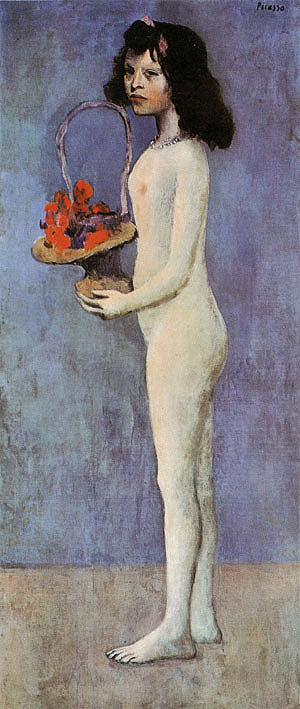


I made a lot of notes on this book. Between the epigrammatic style and the characteristic anecdotes of many of the Notable and Great there is much material of the highest interest to me. So this will be a long posting.


As I moved through this I had occasion to do some internet searches about Gertrude Stein and other personages from the book, and I noted that a lot of the biographical sources pointedly identify her as a "Jewish-American writer". Once I saw that it struck me that of course she was, but I had had no conscience sense of it in reading the book because she never makes any reference to herself, or her parents or siblings or other relatives, as being Jewish or doing anything that might be considered explicitly characteristic of a Jewish identity. The only appearance of the word "Jew" in the book comes when Gertrude Stein remarks that a visitor to the house whose appearance she did not like "looks like a Jew", to which her interlocutor (Alfy Maurer, described as "an old habitué of the house") replies "he is worse than that," after which the matter is dropped.

The famous line(s) about Gertrude Stein conversing with the geniuses while Alice talked to the wives. There don't seem to have been any other women geniuses apart of course from Gertrude Stein.

p. 27 "Van Dongen (a painter) in these days was poor, he had a dutch wife who was a vegetarian and they lived on spinach. Van Dongen frequently escaped from the spinach to a joint in Montmartre
where the girls paid for his dinner and his drinks." I have to admit, I love the idea of this kind of life, absent the poverty. But if one has to be poor, Montmartre circa 1905 seems like the way to go.

p. 27 again, on a woman visitor to the house in these early years (Evelyn Thaw, "the heroine of the moment": "She was so blonde, so pale, so nothing, and Fernande (Picasso's live in companion at the time) would give a heavy sigh of admiration." I love that "so nothing" (!)

I had never heard the story about the infuriated public trying to scratch off the paint at one of Matisse's early exhibitions. That's insane.  
 

p. 35 "In those days (we are still in the 1903-1907 chapter. I will note when we move on in time.) you were always going up stairs and down stairs."

I suppose I should say something about the techniques of a) writing another person's autobiography and/or b) writing your own autobiography in the guise of another person. It is done really well here and works beguilingly. As a class of reader who favors execution over novelty, I would love to read other books after the same pattern if they were done as well.

p. 49 My note--We can skip Picasso on Americans. We won't learn anything.

p. 50 Or maybe not. "There was a type of american art student, male, that used very much to afflict him, he used to say no it is not her who will make the future glory of America."

p. 52 "Baltimore is famous for the delicate sensibilities and conscientiousness of its inhabitants." I had never heard nor noticed this. One's instinct is to take it as dated information, but I am slowly coming around to the belief that if you dig deep enough there is no dated information.

p. 60  Still in the 1903-1907 chapter, but a good observation looking somewhat ahead, to the future death of the poet and bon vivant Guillaume Apollinaire: "It was the moment just after the war when many things had changed and people naturally fell apart." The breakup over time of this great prewar Montmartre-based circle of young artistic people with Picasso at the center is one of the more poignant partts of the book, though the twin (narrative) excitements of World War I followed by the emergence of a second group of youthful artists in the 20s mitigates some of the effect of contemplating the fleetingness of almost all really meaningful social intercourse.  

p. 77 "Because Picasso is a spaniard and life is tragic and bitter and unhappy." 

Now I am in the section "Gertrude Stein Before She Came to Paris". In the part where she talks about having been William James's favorite student in her college years I noted "real genius finds its like." Now I suspect this relationship may perhaps be one of the parts of the book that may been embellished, slightly or otherwise. A little embellishment of this sort does not really bother me if it improves the book.

That chapter was short, and I'm in the 1907-1914 chapter, which is probably the central one in the book.

p. 88 "Gertrude Stein insisted that no one could go to Assisi except on foot." I could still get to Assisi someday I suppose, though it isn't easy to see when that might happen, or what other options might pull me in a different direction if I ever do go anywhere again.

p. 91 "I always remember Picasso saying disgustedly apropos some germans who said they liked bull-fights, they would, he said angrily, they like bloodshed. To a spaniard it is not bloodshed, it is ritual." Ritual is deep and meaningful. People who don't have it are lacking in understanding.

p. 107 A very beautiful passage about the aftermath of a Montmartre party: "It was all very peaceful and about three o'clock in the morning we all went into the atelier where Salmon had been deposited and where we had left our hats and coats to get them to go home. There on the couch lay Salmon peacefully sleeping and surrounding him, half chewed, were a box of matches, a petit bleu and my yellow fantaisie. Imagine my feelings even at three o'clock in the morning. However, Salmon woke up very charming and very polite and we all went out into the street together. All of a sudden with a wild yell Salmon rushed down the hill." For some reason it was this particular memory that inspired me to write "I am dead inside" beside it in the margin.


Great photo of the celebrated duo at home.


p. 111 "I could perfectly understand Fernande's liking for Eve. As I said Fernande's great heroine was Evelyn Thaw, small and negative." I laughed.

p. 112 "And so Picasso left Montmartre never to return." Extremely poignant. The great spirit's time among this scene at least has passed.

p. 125 After the Italian futurists' big Paris show. "Jacques-Emile Blanche was terribly upset by it. We found him wandering tremblingly in the garden of the Tuileries and he said, it looks alright but is it. No it isn't, said Gertrude Stein. You do me good, said Jacques-Emile Blanche."

Now I've advanced to the chapter titled "The War." Whenever the opening scenes in the summer of 1914 appear in a novel written by someone with firsthand reminiscence of the time, whether in Russia, or France, or Austria, or anywhere else, it is always good, and always serves as a jolt to the book. The emotional upheaval of that initial embarking into war was obviously incredible, and one of the defining periods in the lives of everyone who lived through it.

p. 172 More name-dropping, as Picasso is hanging with the young Jean Cocteau! with whom he was heading to Italy. "One day Picasso came in and with him and leaning on his shoulder was a slim elegant youth." Oh yes. "Everybody was at the war, life in Montparnasse was not very gay...he too (Picasso) needed a change." Picasso and Cocteau would spend a lot of time together over the next 50 years, even appearing on celluloid together in Cocteau's 1960 film Orpheus Descending, which I was immediately recalled to when I came on this paragraph.

p. 187 (Driving through the north of France at the end of the war in the service of the American Fund For French Wounded) "Soon we came to the battle-fields and the lines of trenches for both sides. To anyone who did not see it as it was then it is impossible to imagine it. It was not terrifying it was strange." For what it's worth. Stein and Toklas, who lived until 1946 and 1967 respectively, also waited out World War II in France, though they moved out of Paris to the Auvergne-Rhone-Alpes region for the duration. Their friend Bernard Fay, who appears in the latter part of this book, became a high ranking official in the Vichy regime and seems to have arranged for the safety both of their persons and of Stein's art collection. In both written works and interviews that it doesn't seem to have been necessary to have made (she could have returned to America, at least before the occupation set in, for example) Stein made some incredibly naïve, tone-deaf, obtuse statements in praise of the collaborationist government. Considering all of this, her reputation doesn't seem to have taken that much of a hit, in that I think it's still considered O.K. to read about her and her scene in the happier times. Perhaps because she was a woman, and Jewish as well, her conduct during this period has been to some extent excused (on account of) her (being) comparatively powerless and not really understanding what was going on? Though given the resources she had access to, her American citizenship, and her fame in international high culture circles, I can't consider her to be that powerless. Maybe people feel that it doesn't matter, or that she really was a unique sort of genius and cannot be expected to experience moral crises and the like the same way that other people do. Picasso stayed in Paris during the occupation, which I had not realized, though he seems to have lain low and not exhibited any paintings during those years. Anecdotes on Wikipedia indicate that there was antagonism between him and the Germans. Of course everyone is in a different position relative to danger/power, etc in such times of turmoil, yet if we would be good we are expected to hold and behave with more or less the same attitude.

p. 189 "We once more returned to a changed Paris." After the war. I always in books and other art like the theme of how times change, the charm (? I can't read my note) if you are in it, and it is stimulating (and you are thinking?)


Now we are in the postwar (1919-1932) period. Hemingway has shown up. While Hemingway may have been an unbearable jerk later in life when he became famous and was surrounded by sycophants if he was hanging out with anybody at all, he seems to been a very attractive person as a young man, with a charming, life of the party type of energy. I found in this part that I missed him when he wasn't there, and he seems to have been generally popular with the older as well as the younger writers. I even thought he made a pretty good joke (p.200): "(Hemingway) said, when you matriculate at the University of Chicago you write down just what accent you will have and they give it to you when you graduate."  

p. 212 Stein on the Hemingway era: "It became the period of being twenty-six. During the next two or three years all the young men were twenty-six years old. It was the right age apparently for that time and place."

p. 213 "Hemingway had then and has always (had) a very good instinct for finding apartments in strange but pleasing localities and good femmes de ménage and good food."

p. 238 "Gertrude Stein did not like hearing him (Paul Robeson, who was brought to the house) sing spirituals. They do not belong to you any more than anything else, so why claim them, she said. he did not answer...Gertrude Stein concluded that negroes were not suffering from persecution, they were suffering from nothingness. She always contends that the african is not primitive, he has a very ancient but a very narrow culture and there it remains. Consequently nothing does or can happen." I assume these statements were based on some thought process which is not however explored or elaborated on further. So I can't really understand what is meant by them.

p. 246 "(our finnish servant) finds it difficult to understand why we are not more modern (with regard to modern conveniences, electricity, radiators, etc). Gertrude Stein says that if you are way ahead with your head you naturally are old fashioned and regular in your daily life." Of course I am comparatively old fashioned and regular in my daily life, so this appealed to me.

p. 251 "Bowles told Gertrude Stein and it pleased her that Copland said threateningly to him when as usual in the winter he was neither delightful nor sensible, if you do not work now when you are twenty when you are thirty. nobody will love you." I have lived that. It is true. I try very hard to impress the fact upon my children.

I did love this book but seeing as it has taken me almost three weeks to do this report I also am missing the old warhorse books that make up this list and I am looking forward to getting back to it.  


The Challenge

1. Edith Hamilton--Mythology................................................................647
2. Vampyr (movie-1932).........................................................................127
3. Harry Dolan--Very Bad Men...............................................................117
4. The Disappearance of Eleanor Rigby: Him (movie)............................91
5. Laurie R. King--Mary Russell's War....................................................84
6. Gay Talese--The Voyeurs' Motel..........................................................75
7. Stephanie Powell Watts--No One is Coming to Save Us.....................62
8. Robert Sussman--The Myth of Race.....................................................60
9. Luke Timothy Johnson--The New Testamant: A Very Short Introduc.17
10. T. A. Belshaw--Out of Control...........................................................12
11. Glass Animals--Zaba (record)..............................................................5
12. The Good Immigrant (ed. Nikesh Shukla)...........................................5
13. Merry A. Foresta--Artists Unframed....................................................3
14. Al Jolson--"California Here I Come" (record).....................................2
15. The World of Matisse 1869-1954.........................................................2
16. History of Gambling in America..........................................................1


1st Round


#1 Hamilton over #16 History of Gambling

Hamilton is a past champion of the challenge, and I enjoyed her book very much and found it useful. There is no rule banning past champions from competing again if they qualify (only books from the IWE list itself are ineligible), though in general I will probably prevent them from winning unless there is no desirable competition.

#15 Matisse over #2 Vampyr

#3 Dolan over #14 Jolson


#4 Rigby over #13 Foresta


One of those dreaded allotted upsets.


#5 King over #12 Good Immigrant


The Good Immigrant appears to be a British anthology. There aren't any copies of it in any of my libraries.


#11 Glass Animals over #6 Talese


I was actually excited to see Talese qualify for the Challenge. Unfortunately the Glass Animals had a designated upset to burn, and they burned it here.


#7 Watts over #10 Belshaw


#8 Sussman over #9 Johnson


2nd Round


#1 Hamilton over #15 Matisse


I was inclined to choose the Matisse here, but Hamilton comes in with all kinds of backup advantages to push through the early rounds.


#3 Dolan over #11 Glass Animals


#8 Sussman over #4 Rigby


#5 King over #7 Watts


This was a real battle, as these books are similar both in length and date of publication. King has a slight edge in all of the distinguishing categories however--1 year older, 22 more reviews, 71 pages shorter, etc.


Final Four


#1 Hamilton over #8 Sussman


If Hamilton had not already won the championship she would have easily carried off the title here. The Sussman looked interesting, though for some reason I thought it dated from the 50s, which would have made it more interesting. It actually was published in 2014, which causes me to be a little distrustful of it, as it would to be making an argument for a position that all respectable people, and most scientists as well, already seem to accept as fact.


#3 Dolan over #5 King


Dolan seems to be another murder book. I want to minimize those as much as possible since they quickly become repetitive, to me. The King, however, is a similar kind of book, and Dolan comes in with an upset card that he hasn't needed in the first two rounds against musical acts.


Championship


#3 Dolan over #1 Hamilton


I decided to see how the tournament played out and to have Hamilton drop the final unless the opponent was impossible. Dolan is not quite impossible and he is the survivor from the other side of the draw, so he gets an improbable victory.
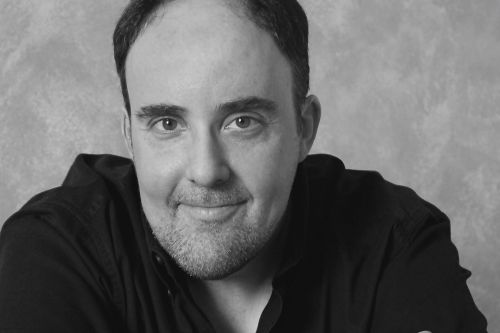
 The Winner. Born: Rome, N.Y. Colgate University. Age uncertain.

Tuesday, April 15, 2014

Brief Notes on Edith Hamilton's Mythology (1942)

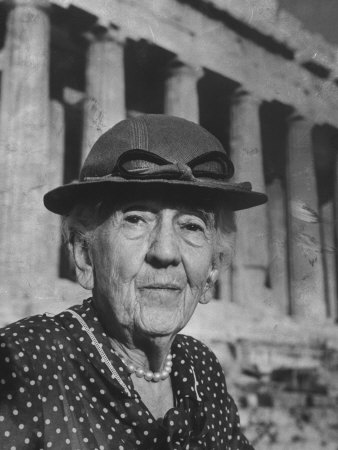
A fine book, from which I derived much pleasure in the reading and looked forward to each daily section. It seems to be considered as an introductory book on the subject for high school students, something I ought to be beyond by this point of my life. However, while most of the figures and stories are familiar to me, I have still failed to commit some of the more important ones to memory, nor have I ever organized the material in my head as neatly as it is done here. I certainly don't think that I would have gotten very much out of this book as a teenager, without any meaningful prior exposure to classical literature. I also appreciated the simple presentations at the beginning of each section regarding the literary sources from which the myths have come down to us. I am weak on Euripides and have never read Ovid, who were major sources, and I was unfamiliar with Appollodorus as well, whom Edith Hamilton disparaged as a dull and inferior writer, though on numerous occasions she opted to base her account of a story on his versions rather than Ovid's, on the basis of their probably being more truthful to the way it was traditionally told.

The book is written in what I kind of think of as the 'conversational learned style' which lasted from the 20s really up to the early 50s. It is a style to which I have always been partial. The tone is not confrontational nor hyperbolic in promoting the breakthrough in human understanding that the author's researches and insights represent, and humorous observations are dropped in (gently) from time to time at some particularly ludicrous or otherwise illogical aspect of a myth. It organizes and conveys information of a high general interest in a concise, understandable way such as it is not usually presented, and that is also pleasant. Our author assumes a mainly northern European-descended audience for her work: in a brief section at the end on the Norse myths, she writes, as a reason for including these in her survey: "By race we are connected with the Norse; our culture goes back to the Greeks." This sense of the homogeneity of the audience probably accounts somewhat for the intimate tone of the book. In the very short forward when she referred to Shakespeare I thought I detected some affectation or self-puffery with regard to her understanding of the greatness of this author and the serious level she occupied in that game; but perhaps I am overly sensitive to any emphasis people make concerning any superiority they possess. I did not find anything off-putting in her writing about the ancients.

  
Looking at some of the online reviews, someone wrote that they had taken a mythology class in college and the first thing the professor said was "I hope you all haven't been reading junk like Edith Hamilton". This sort of thing is always very obnoxious because it is unnecessary, even in the unlikely event that someone teaching an undergraduate mythology course is really that far advanced compared to Edith Hamilton both in his understanding and his pedagogy. If the students really learn what you are teaching them, they will presumably come to a similar understanding to that of the teacher, and if they are too stupid to do this, mocking such learning as they do have probably is no help to them. I know there is the problem that ignorant people who have read Edith Hamilton in high school think they know something and that they need to be knocked down a peg and the professor needs to establish that when you are in his class you are playing with the big boys and are dealing with a level of intellectual firepower that, especially if you are from a middle class background, you have probably never encountered before, but I don't think it is helpful in most instances to the students. I also believe that any professor doing this nowadays is probably a complete poser. When I was a student you still had some old Europeans to deal with who may well have spoken five languages by the age of thirteen and heard no other music than what was of the highest quality before they were thirty, but any baby boomer, let alone someone of my generation, who grew up in this country and tries to act like they were born with a deeper understanding of literature and mythology than Edith Hamilton attained in the whole of her earnest life is almost certainly full of it.

Friday, March 14, 2014

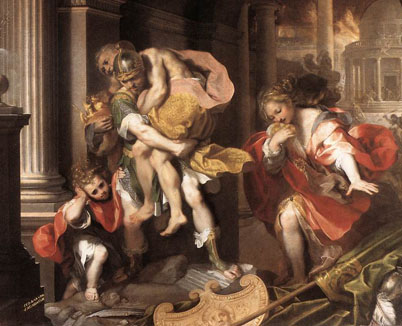
Virgil--Aeneid (29-19 B.C.)

Virgil--Aeneid (29-19 B.C.)

This was my fourth time reading the Aeneid (in English, obvs). I have used a different translation each time. Back in school I read the Rolfe Humphries, the Robert Fitzgerald a couple of years afterwards, the Fairclough (Loeb edition), and on this last occasion, the J.W. Mackail (Modern Library). These last two are prose translations. I own the Britannica Great Books edition of the poem, which has a verse translation by James Rhoades. Maybe I will find a reason to take that up in another ten years. There is also a Dryden translation which emits something of a classic aura, however accurate or poetically good it happens to be. The Robert Fagles seems to be considered the best of the modern efforts, and as in the art of translation consensus seems to be that there has been a steady progression over the centuries that continues into our own time, that would make it de facto the best in existence. As with most artistic or intellectual productions I have a hard time warming up to anything too contemporary, that might be alive in some way that has eluded me and therefore will be threatening to my self-esteem, I find I am not overeager to read it. I always even found Fitzgerald's translations, of Homer as well as Virgil, to be too informed by something I vaguely define as modern academic triumphalism, and he goes all the way back to the 60s. At the same time the prose translations, however old they are, are not wholly satisfying either. My favorite is still Rolfe Humphries's, originally published in 1951 and part of the Scribner Library. I know that the associations from the time that I read it, as well as the freshness of reading classic literature and the crazy but aesthetic attractive hopes that the undertaking represented, is coloring my memory, but after all it is precisely this sort of coloring in the midst of (in my instance blushingly tepid) youthful excitement that informs who most of are. That said, Humphries had something of that spare but forceful mid-century style that seems to suit the style and spirit of this poem--or at least what I want the style and spirit of this poem, and most classic literature--to be. Unfortunately I lost my copy of it some years ago or I would give a sample passage.


(According to Wikipedia, Rolfe Humphries was born in Philadelphia in 1894 and died in California in 1969. He was a graduate of Amherst College. Though he was a poet and published in Harper's and the New Yorker in addition to doing his Aeneid translation, he taught Latin in secondary schools until 1957. It is not uncommon in books published before 1960 to find authors or contributors whose titles are "English Department Chairman, Central High School" or the like (though I suspect Humphries probably taught at more exclusive private schools). W. H. Auden called his Aeneid 'a service for which no public award could be too great".

As with Faulkner and,, I am beginning to sense, many of the Great Books, The Aeneid is more or less impossible to read when you are tired or at all distracted. This is a big problem for me, since I rarely have the opportunity to read when I am not tired, and never when I am not distracted. At night, which is when I do, or was planning to do, most of the reading for this program, I usually could not get through more than two pages before my head would begin lolling, I would completely forget where I was, sentences begun would get lost in the mush of my brain and run on into completely nonsensical strings of words, and the book would fall out of my hands (Such is the sad fate to which the failed scholar comes in the end; but I digress). So it took me much longer to read the poem than would seem reasonable. I was averaging 5-7 pages (or about a third of one Book of poetry) a day. When I could stay awake and concentrate long enough to build some momentum and become immersed in the act of reading the book, I felt some of the old enjoyment and happy associations that come even with reading accounts of ancient bloodbaths; thoughts of Italy and the Mediterranean World, of the saga of Western Civilization, now in our own lifetimes apparently dying, in its handsome boyhood, of the destinies of great nations and men, images of my own youth, of clouds slowly drifting across the blue sky of a sunny day when one had all the time and possibility in the world. Of course the primary content of the book if one pays any attention to it, especially in a prose translation, is war and death, in the service of a glorious cause, or several of them perhaps, but nonetheless life and dignity, where the ordinary individual is concerned, is less than cheap. In youth one always identifies with the writer, and the triumph of his vision and art and the strongest of the creations he has employed in the service of this. Greatness and achievement, we think, are often by necessity messy, but no man worthy of the name would suffer to endure life as a mediocre or inferior person anyway. In middle age however, especially in the state of semi-delirium that is the attempt to read late at night, such passages read like this:

"...Next the great meritocrat levelled his spear full on (Bourgeois Surrender) from far...(Surrender), clasping his knees, speaks thus beseechingly...'I entreat thee, save this life for a child and a parent...The victory of Big Money Enterprises does not turn on this, nor will a single life make so great a difference.' (Surrender) ended...The Global Champion grasps his helmet with his left hand, and bending back his neck, drives his sword up to the hilt in the suppliant..."

or

"...(Surrender), slipping down from the chariot, pitiably outstretched helpless hands: 'Ah, by the parents who gave thee birth, great Investor, spare this life and pity my prayer.' More he was pleading, but the Investor, who was also a cardiac surgeon, an attorney, a best selling author and a former Olympic medalist: 'Not such were the words thou wert uttering (before I was present) Die...' With that his sword's point pierces the breast where the life lies hid."


I had wanted to finish the book before my vacation in Florida in order to have something a little less stodgy (and more practical with children) to read on the beach. My slow pace prevented this from being realized however, as I could only get to the middle of Book Ten by the time of my arrival. This actually would not be a bad beach read if one were left unmolested even for a couple of hours a day. I think I only managed to get through about fourteen pages in a week as it was however, and I did not finally finish the book until I got back to New Hampshire.

I have not talked much about he actual book. It is emotional for me, as all of the undisputed canonical books and authors are, because I felt at point in my life to have some connection to this strain of life, that it was in reach for me. It wasn't, so there is a lot of sadness and feelings of pointlessness as trying to revisit them now, but at the same time it evokes images and thoughts from, if not a happier, at least a period of life when one felt the possibility of someday being alive and playing a serious role somewhere in the world.

The Bourgeois Surrender Challenge

The winner of the last challenge, Kobo Abe's Woman in the Dunes, I am reading now, and am about 2/3rds of the way through. I was hoping to read this at the beach if I had finished Virgil, but seeing as the book is a Kafka/Beckettesque story about a man who is unwittingly entrapped in a hole surrounded by fifty foot sand cliffs from which it is impossible to escape, maybe I am glad I did not. It is supposed to be one of the premier Japanese novels of the 20th century, according to my early 90s era Vintage Press paperback copy (they're on the level, right?) Perhaps the translation is inadequate--I remember reading some complaint recently that English translations of Japanese literature were notably weak--but I find the book to be rather thin. Maybe it has one of those remarkable endings that pulls all the seemingly minor incidents and specified objects of the book together. I suppose there is a sense of fineness and of seemingly small things being more significant than or the essential part of bigger things that I think of as characteristically Japanese. But at the moment, on page 156 of 241, I want more of something, not action necessarily, but personality, or demonstration of brain power. Maybe it is too subtle for me and everything I say I want is there, if you can find it (though if this is the case it is really subtle).

On page 136 Abe did get around to writing about sex. This part I think I am clear on:

"Food exists only in an abstract sense for anybody dying of hunger; there isn't any such thing as the taste of Kobe beef or Hiroshima oysters. But once one's body is full, then one begins to discern differences in taste and textures..."

This part lost me though, I have to admit:

"...sex couldn't be discussed in general; it depended on time and place...sometimes you needed a dose of vitamins...sometimes a bowl of eels and rice. It was a well thought out theory, but regrettably not a single girl friend had offered herself to him in support of it, with a readiness to experience sexual desire in general or even in particular. That was natural. No man or woman is wooed by theory alone. He knew this, but he naively observed the theory of the Mobius circle and kept repeatedly pushing the doorbell of an empty house, only because he did not want to commit spiritual rape."

The book is worth finishing, and I am curious to see where it is going after all. I would like to see the movie of it too. I can see where that might be interesting.


The Bourgeois Surrender Challenge

Many of the magic words used in this challenge were too blatantly Aeneid words, so our searches turned up an inordinate number of books with a classical theme about them somewhere. There were also an impressive number of titles by very celebrated authors (Oliver Wendell Holmes, E. B. Browning,Chesterton, Hazliit) with zero or one ranking.

1. Mythology--Edith Hamilton.............................................................267
2. A Grave Talent--Laurie R. King........................................................69
3. The Rise of Rome--Anthony Everitt....................................................59
4. The Case-Book of Sherlock Holmes--Conan-Doyle...........................46
5. Age of Bronze (The Story of the Trojan War) Betrayal--Shanower...10
    Deadlock--James Reasoner................................................................10
7. Makers of Ancient Strategy--Victor Davis Hanson (ed.).....................9
8. Canadian Adventures of Sherlock Holmes--Stephen Gaspar...............6
    McGuffey's Primary Eclectic Primer...................................................6
10. Cassell's Dictionary of Classical Mythology--Jenny March..............5
      Encyclopedia of Greco-Roman Mythology--Mike Dixon-Kennedy...5
12. Greek and Roman Mythology A to Z--Kathleen N. Daly...................4
      History of Rome--Livy (V. Warrior trans)..........................................4
      Who's Who in Classical Mythology--Michael Grant & John Hobbs...4
15. The Best From Fantasy & Science Fiction (Ace Books 1955)...........2
      Cliff's Notes to Virgil's Aeneid.............................................................2
17. Encyclopedia of Greco-Roman Mythology--Jessie M. Tatlock...........1
      The History of Romulus--Jacob Abbott................................................1
      Justinian and His Age--P. N. Ure........................................................1
      Queen Cleopatra--Talbot Mundy.........................................................1
      The Spirit of the Age--William Hazlitt.................................................1

Those books that had received no reviews are The Holmes Reader--Oliver Wendell Holmes (Oceana), The Battle of Marathon: A Poem--Elizabeth Barrett (pre-Browning), Letters From Turkey--Mary Worley, Scenes From Virgil--Rev. A. J. Church, Beeton's Classical Dictionary, Companion to Roman Religion (J. Ruoke, ed.), Pompeii: Its Life and Art--August Mau, Chaucer--G. K. Chesterton, Schooplearning Guide to the Aeneid, Virgil's Aeneid: Cosmos and Imperium--Philip Hardie, Heroes & Heroines of Greece and Rome (auth?), and Stories of the Old World, by the Rev A. J. Church, who makes a second appearance in this challenge, but suffers the indignity of the shutout on both occasions.

This is a solid winner. I already have a copy of the Edith Hamilton book, which is a bit of a classic of its kind, though I have never read it. I am always embarrassed by how little I know, or can remember,of the Greek myths. I have actually been picking up a little in the last year or so, since my wife has been teaching her Greek classes and has been introducing some of the art and mythology into those. It is the kind of thing that it cannot hurt me to review. I still like art and poetry, or want to like them, and a sizable chunk of the collective body of these pursuits in our civilization is based on these myths. You cannot get very far in understanding these areas without a halfway decent knowledge of them (the myths).


The challenge produced one film contender:

1. Troy.............999


I'll put it at the bottom of my queue.