Showing posts with label world war II. Show all posts

Friday, March 19, 2021

Evelyn Waugh--Brideshead Revisited (1945)


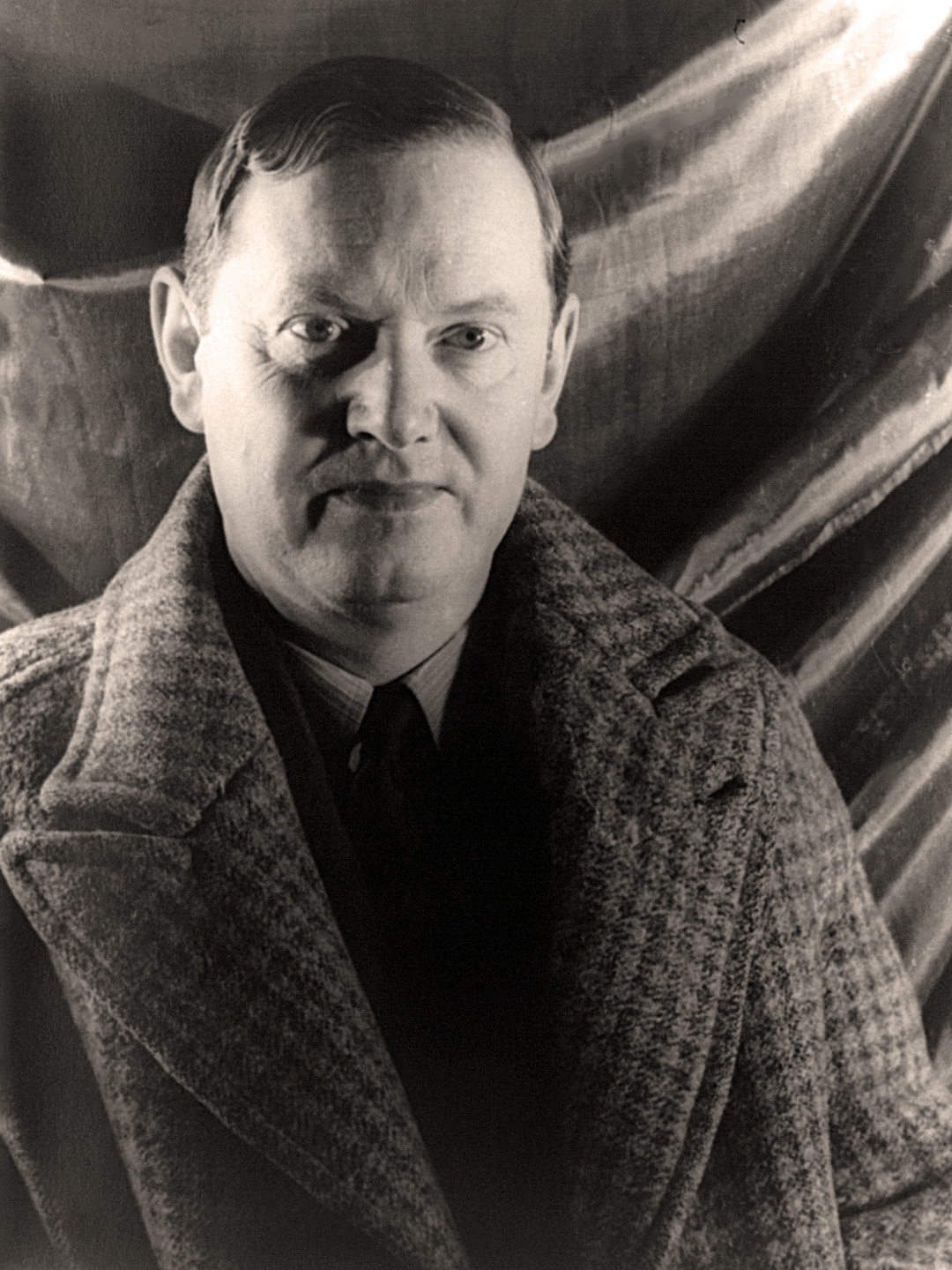
I read this back in 2010 and wrote a number of posts about it on my original blog which can be seen here. At that time I read a newer Everyman edition that used the text of the 1959 revision, in which supposedly a good deal had been altered. While I liked a lot about the book at that time, I had always felt something about it was a little off, considering its reputation and the obvious affection which many people had for it. I determined that the revision must have had something to do with this, and when I knew it was coming up on the IWE list I made a point of getting a copy of the earlier edition, shown above. I cannot say that I noticed any of the supposed differences, but I did feel better having an edition of the book as it first appeared to the public, or at least the American public, in the 1940s. Whatever it is, I am sure that I have it now as much as I am ever going to.

While I was reading this there was a small kerfuffle on the internet for a few days about the academic discipline of Classics with its traditional association as the study of Greek and Latin being essentially a white supremacist field, that it needed not merely to be opened up and equal space and esteem given to the works and languages of other ancient civilizations, but all of the ideas and the mystique that underlay it more or less needed to be blown to smithereens. I made a note in my that "If people the Classics are too white, I hope they don't find out about this. (JOKE)" Then I added, "I know it is the discipline in its current incarnation, not the books themselves, that is being objected to", but I have no idea what I was getting at here, it probably is the books themselves too. Still, the world of Brideshead Revisited represents something of an epitome of what that system of education produces, in the English speaking countries at least. Perhaps Waugh and his characters can (for some people) be described simply as "white supremacists" and left at that, though that designation, applied as it is so universally and on so many occasions, doesn't really begin to do justice to the sense of physical, cultural and intellectual superiority the characters at the inner core of this novel project towards pretty much the entirety of the rest of humanity. And this was so deep that even though their houses and wealth and much of their social position erode and are lost during the course of the book this sense of themselves can never really be crushed out of them--the drive to do which by the way is very strong in the current crusades against white supremacy, which I take to account for much of the anger directed against even fairly nondescript and inoffensive white people by those who in comparative terms would seem to be indisputably more accomplished and successful and recognized as such. It's the internalized feelings of worth people retain that can in any way be attributed to "whiteness"--and these are as prevalent among the educated and enlightened, if not more so, than among the humbler classes--that seemingly cannot be eradicated in the face of all argument and even evidence against them that seems to infuriate people so wildly.
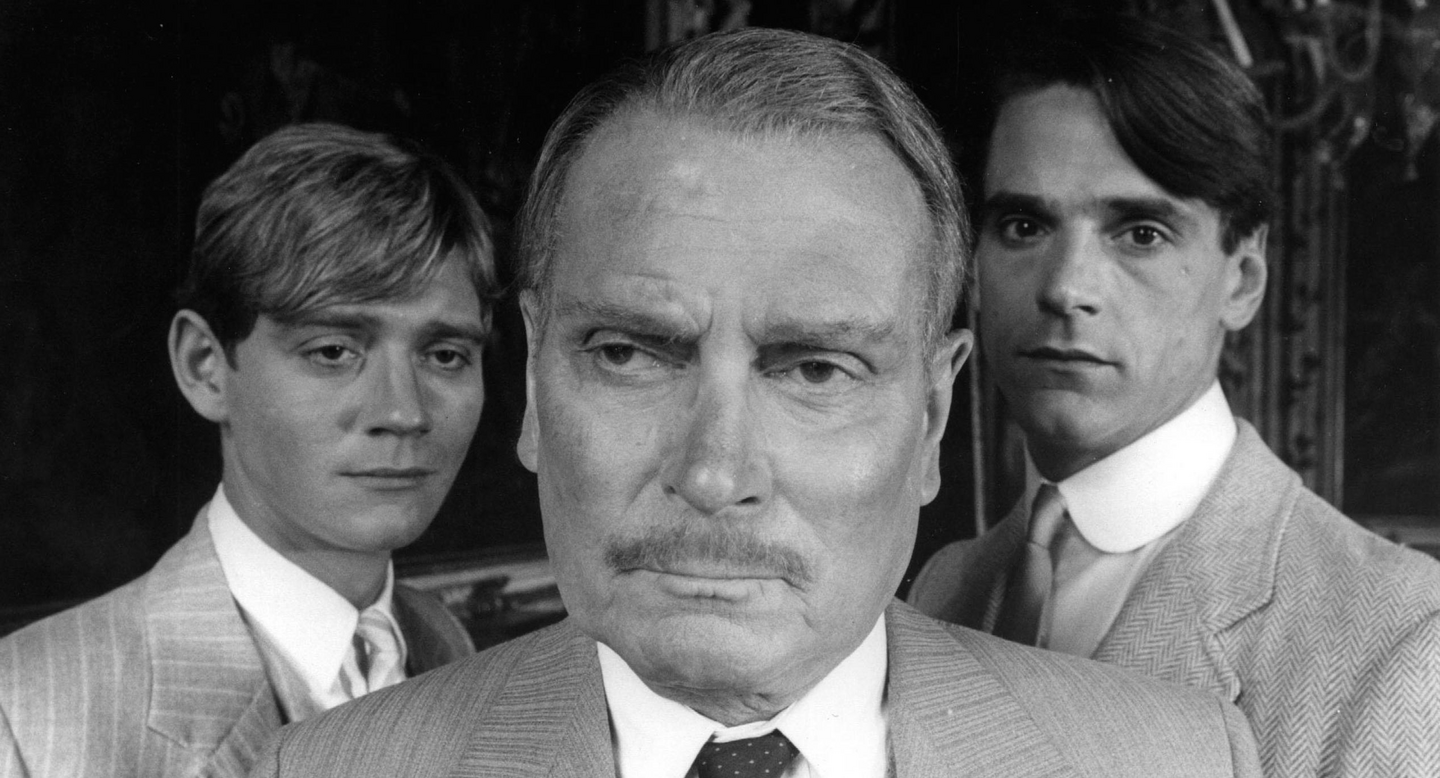
p. 45 "'I like this bad set and I like getting drunk at luncheon'; that was enough then. Is more needed now?"

I'm really going to try to keep the quotes to a minimum--in this book there is something quoteworthy on almost every page--but this might be the last time I read this, so I want to leave a few favorites to remember it by.


p. 59 Very palpable evocation of a lost world here (Oxford on Sunday morning ca. 1923): "None but church-goers seemed abroad that morning; undergraduates and graduates and wives and tradespeople, walking with that unmistakable English church-going pace which eschewed equally both haste and idle sauntering; holding, bound in black lamb-skin and white celluloid, the liturgies of half a dozen conflicting sects; on their way to St. Barnabas, St. Columba, St. Aloysius, St. Mary's, Pusey House, Blackfriars and heaven knows where besides; to restored Norman and revived Gothic, to travesties of Venice and Athens; all in the summer sunshine going to the temples of their race."

p. 225 "...the epochs of history, when a race which for centuries has lived content, unknown, behind its own frontiers, digging, eating, sleeping, begetting, doing what was requisite for survival and nothing else, will, for a generation or two, stupefy the world; commit all manner of crimes, perhaps; follow the wildest chimeras, go down in the end in agony, but leave behind a record of new heights scaled and new rewards won for all mankind; the vision fades, the soul sickens, and the routine of survival starts again." Back to the classics--this take, I think, is what many (white) men at least have traditionally had in mind as what is meant by them much of the time.

p. 227 "Hence my prosperity, far beyond my merits; my work had nothing to recommend it except my growing technical skill, enthusiasm for my subject and independence of popular notions...I did not go to Europe; her treasures were too safe, swaddled in expert care, obscured by reverence (ed--this has only gotten worse since then). Europe could wait. There would be a time for Europe, I thought; all too soon the days would come when I should need a man at my side to put up my easel and carry my paints; when I could not venture more than an hour's journey from a good hotel; when I should need soft breezes and mellow sunshine all day long; then I would take my old eyes to Germany and Italy." 

p. 271-2 "You must remember I am not English; I cannot understand this keen zest to be well-bred. English snobbery is more macabre to me even than English morals...My dear, I could hardly keep still in my chair. I wanted to dash out of the house and leap in a taxi and say, 'Take me to Charles's unhealthy pictures.'" Lol. Anthony Blanche.

p. 299 "'To put it crudely,' said my cousin Jasper, as though he had ever in his life put anything otherwise..." 😄 

While I am very fond of this book--it strikes as very much the kind of book that many writers, perhaps especially those of the would-be variety, would most like to write--the snobbery and pointedness of the exclusivity of this sliver of literary history at least always gets to me a little in the end. It just permeates the book so much. The narrator never really likes anyone outside of his very narrow set (granted, he doesn't even seem to like his own wife and children very much either, so maybe a mere reader should not be so sensitive with regard to it). It can be amusing, but in the end why should the rest of us have to put up with it forever? I think I was overcome by a similar reaction towards the end the first time I read this as well.


p. 231 On New York: "...it was four o'clock, but neither of us was ready to sleep, for in that city there is neurosis in the air which the inhabitants mistake for energy." Mainly interesting because New York people themselves still emphasize "energy" as the defining characteristic of their city, and by extension presumably themselves, 75 years on. 

I didn't note it at the time and I cannot find it right now, but the line about Lady Marchmain's brothers who were killed in World War I--"these men must die to make a world for Hooper"--gets to everybody. And why should it? Because the type of the men who died had something, language, artistic sensibility, a sense of who they were, that we obviously don't. 

I forgot to look at what the IWE had to say about this. They're always good for a unique take, or sometimes a laugh, in these matters:

"Anyone who has known the younger upper classes of London after either World War can testify that Evelyn Waugh did not overpaint their wildness, their excesses, for they could hardly be overpainted. In fact, in Brideshead Revisited Waugh was quite moderate. As a novel it is great. When all the arguments about Waugh's other works are ended, Brideshead Revisited will remain to testify that the man could write. The ambivalence produced by Catholicism in Englishmen, a favorite theme of Waugh's is accented in this novel."

This is the only one of Waugh's books that was chosen for the list. He'll have to get into and win a Challenge at some point. I think he can do it.

I have not written very much about my own thoughts regarding the book. I think that for the kind of people who like novels, in particular old-fashioned ones, this gives them a great deal of the sort of things that make them happy--fashionable London in the 20s, old Oxford, exquisite dialogue, irrepressible humor, feelings of regret about the passing of time and the necessity of change, drinking, sociability among a desirable initiate. One cannot really help oneself in luxuriating in the experience and being a little wistful at its now being past.  


The Bourgeois Surrender Challenge
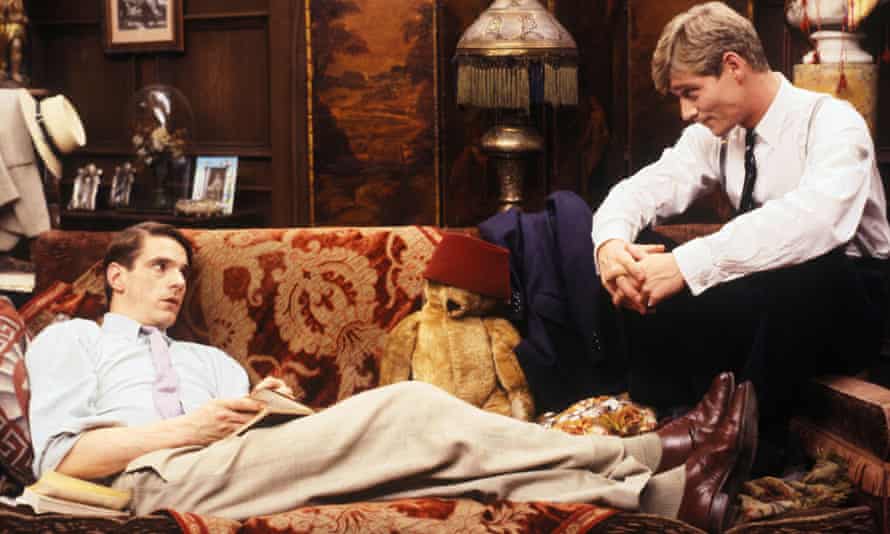
My newly tweaked system generated so many competitors that numerous Waugh-themed books were unable to qualify for the final. But I prefer this system overall.

1. Beverly Daniel Tatum--Why Are All the Black Kids Sitting Together in the Cafeteria?........5,539
2. Eric Metaxas--Bonhoeffer: Pastor, Martyr, Prophet, Spy.......................................................3,858
3. William Zinsser--On Writing Well..........................................................................................2,440
4. Sebastian Barry--Days Without End.......................................................................................1,337
5. Linda J. McDonald--How to Help Your Spouse Heal From Your Affair.................................1,038
6. Jane Smiley--Perestroika in Paris..........................................................................................1,004
7. Brideshead Revisited (TV--1981)..............................................................................................909
8. Alex S. Vitale--The End of Policing..........................................................................................553
9. Brideshead Revisited (movie--2008).........................................................................................499
10. Goold Brown--The Grammar of English Grammars..............................................................482
11. Kazuo Ishiguro--The Unconsoled............................................................................................341
12. Janet Burroway--Writing Fiction.............................................................................................287
13. The Riot Club (movie--2014)...................................................................................................255
14. Keeanga-Yamahtta Taylor--Race for Profit.............................................................................210
15. Eleanor Herman--Mistress of the Vatican................................................................................205
16. Judith Rich Harris--The Nurture Assumption..........................................................................165

Round of 16

#16 Harris over #1 Tatum

A matchup of superficially similar books, both social science-y, both from the late 90s, similar in length, both written by women, I suppose you could add. I gave the Harris book the nod in the end dues to its having been a finalist for the Pulitzer Prize, as well as (probably), being a subject of slightly more interest to me.

#2 Metaxas over #15 Herman

The popularity of the Bonhoeffer biography makes me mildly suspicious of it, but the Herman book, also a biography (by the author of Sex With Kings, among other best-sellers), brings with it somewhat similar objections from one of the opposite corners of the Catholic moral universe, which is enough to carry Bonhoeffer/Metaxas to the victory here. Interesting that the tournament opens with a pair of matchups between books that are mirrors of each other in certain senses.


#14 Taylor over #3 Zinsser

I think I have read the Zinsser book before, though not as a victor in this contest. I don't remember the occasion for my doing that. While I like occasionally reading "How-to-Write-Like-a-Professional" type books, especially the classic ones///(picking up after 10 day interruption) I was evidently really not in the mood to do so on March 2nd, I don't remember why. In any case they probably at this point in my career should not win in most instances if there is any other acceptable option.

#4 Barry over #13 Riot Club
#12 Burroway over #5 McDonald

McDonald does not present a particularly desirable alternative here.

#11 Ishiguro over #6 Smiley

Ishiguro wins a battle of big names. 

#10 Brown over #7 Brideshead Revisited TV
#8 Vitale over #9 Brideshead Revisited movie

Elite 8

#16 Harris over #2 Metaxas

Harris is quite a bit shorter. I already had misgivings about the other book just because its number of reviews seems awfully inflated for its subject matter.
  
#4 Barry over #14 Taylor

Barry is 100 pages shorter while his historical novels seem to be well-received by some semi-intelligent sector of the literary world.

#8 Vitale over #12 Burroway

I'm not all that into either of these books. The End of Policing is shorter, as well as topical, though that carries no great sway with me.

#10 Brown over #11 Ishiguro

Yes, Brown has an upset. 

Final Four

#4 Barry over #16 Harris

Length again, as these books are about even in attractiveness to me.

#10 Brown over #8 Vitale

Brown gets another upset, though I am not heartbroken to see Vitale eliminated.


Championship

#4 Barry over #10 Brown

I don't have time in my life right now to read an exhaustive 170 year old book on English grammar. Maybe someday. 

Thursday, May 2, 2019

John Hersey--A Bell For Adano (1944)

I finished this a couple of weeks ago and then went on vacation before I could get to the article, so the book is not as perfectly fresh in my mind as I might like it to be. That is unfortunate in that this is exactly the sort of book that I took up this particular list for a few years back to be able to read occasionally, and it did not disappoint. The Pulitzer Prize novel of 1945, it is a small, but poignant story about a fishing village in Sicily under the occupation of the American army that was written and published in real time within a few months of the U.S. invasion of the country. While it is true that it depicts the American war effort as the public of the time liked to think of it, a rough-edged but on the whole benevolent force for good, it is not as if there was no truth in that image. It is a luxury that we have now that (most) people did not have at the time to analyze the myriad shortcomings of World War II-era American behaviors. In my admittedly limited experience of Europeans, I found that the age cohorts that had overall the most positive views of Americans were overwhelmingly those that were children and adolescents during the last years of the Second World War and the decade or so following it. One man I knew in the Czech Republic who claimed to have been in Plzen when the U.S. Army entered that city, at which time he would have been around eight years old, said that the Americans were the first happy people he had ever seen. My personal sense is that the writers of that generation tended to give pretty honest accounts of how they perceived the wartime experience to be, and anyone who has read these books knows that they are not as a rule particularly rosy, or gushingly deferential to the military and its leadership, even those (such as this one) which were published while the war was still in progress. And let us not imagine that in our contemporary writings we are not presenting a picture of ourselves and our cleverness and skepticism and fierceness that is any less wishful in its thinking or will be less ridiculous to future generations than the failings, such as they are (though I am obviously partial to the genre), of the literature of World War II.


John Hersey was the son of Protestant missionaries and spent the first ten years of his life in China, though I am guessing his family were well off and of good lineage, since he attended Hotchkiss, Yale, and Cambridge in the teeth of the Depression. He was still publishing articles in the New Yorker when I was in high school in the 80s (he lived until 1993), part of that WASPy segment of cultured society whose presence has declined noticeably even since my early life. He was never, I think, and certainly by the time I was around, considered one of the major authors of his generation, but A Bell For Adano is a worthy book, and a good representative of the brisk, cautiously optimistic style that is one of the appeals of the writing of this period. The IWE introduction is, given the inclusion of the book on the list, one of its more inscrutable ones. "A sentimentalist with a hardboiled style," it begins, "John Hersey wrote a real tearjerker in A Bell for Adano...The hero is an overidealized second-generation American; the villain...is based on the swashbuckling George Patton, who alternated between public disfavor (as when he slapped a soldier from Brooklyn) and favor...At the time Hersey wrote Adano Patton was in disfavor and Hersey may have overpainted him just a bit. Hersey's later novel The Wall"--which did not make the IWE list however--"must be ranked ahead of this one." For all this they do like it, I am quite sure.
Now for my extraneous notes...


On page 57 there is a reference to the Fascist song Giovinezza. Not to give anyone the idea that I was a weirdo as a kid or anything, but in my youth my family had an LP record of the American Heritage history of World War II (we had one for World War I also) which featured snippets of speeches, battle sounds, popular songs of the period, and so forth. I listened to these records quite a lot. In the "build-up to World War II" section of that record we were taken briefly to Mussolini's Italy where "Young Fascists...whipping up the crowds into a frenzy..." and then it began:


p. 77 The Americans' economic policy upon letting the local fisherman go out in their boats once the war situation has settled somewhat:


"It is true that your profit will be limited to fifteen per cent of what you take in. The rest you must spend in wages to your fishermen and upkeep on your boats."


Still, aren't there many businesses, albeit much higher volume ones, that operate at much lower margins than 15%.


Much of the charm of the book consists, 75 years later, in the knowledge that many of the old ways and life of the village depicted in it that have endured for centuries are within a few years about to change dramatically or go away forever. Despite the charges that are sometimes made against Hersey for being patronizing towards the Italians, the characterization of the villagers is not terribly different from what the neo-realistic Italian directors and even Fellini himself would do a few years later. The villagers were very poor people, barely literate, some of them extremely simple-minded. One guy has to brush goat droppings off his bed before he goes to sleep every night. Meanwhile Hersey was a Yale and Cambridge educated New Yorker writer. I won't claim that he did a perfect job of capturing the complexity of the Italians as individuals but the life of the village as a whole I thought was one of the stronger parts of the book.


p.90 "...this kind of situation was meat for Sergeant Borth, who thought the whole war was a joke."


You get these kinds of people when you have a conscript army, even in World War II. I haven't read about anybody who thought the Iraq/Afghanistan war was a joke, or would have been allowed to.


p. 105 Corporal Schultz was not a gold mine of conversation, and pretty soon the two fell silent."


This is unfortunately is how most desirable people would be able to describe me. I wonder if Hersey was a good talker? I can't find any interviews with him on YouTube or elsewhere.


p.115 "The two men now had, besides their mere community of tongue, another thing to draw them together: they both knew the same girls. In a foreign land, that is enough to make Damon and Pythias out of two sworn enemies."


p.147 The deposed Fascist mayor, trying to stir up dissent, for which he would however be arrested.


"The Americans may be friendly, but they are not good fighters...He says that the Americans are timid in battle. he says that our own troops could even beat the Americans...He says that at the place called El Guettar the Americans did not press their attack, he says that they behaved like frightened men and were defeated. The British can fight, perhaps, but not the Americans."


We can't have that kind of talk going on. And I like that "perhaps" with regard to the fighting ability of the British.


p. 172 Typical American serviceman's opinion of the town:


"Boring? Say, if they ever give this old world an enema, this is where they'll put the tube in."


p. 174 "The Colonel named Ham, who was expert at saying Yes to his superiors and No to his inferiors..."


I'll emphasize again that the portrait of this society in snippets and in miniature is nice for what it is.


There was an incident near the end that is revealing of a significant change in public attitude, at least, in our time from this one, and which was rather jarring. Every afternoon in Adano trucks and other American military vehicles would drive through the center of town throwing candies to the children. This inevitably drew a crowd, which eventually prompted a gang of older boys to organize in order to procure more of the candies. This caused a mild panic among the other children, which resulted in one boy getting pushed in front of an oncoming truck and being killed. The American commanding officer, while portrayed as responding humanely to the event by wartime standards, did not hesitate to chastise a group of the children by explaining that the boy had been killed because he was selfish. This struck me even as surprisingly harsh and I suspect most contemporary people of my general socio-economic milieu would find it horrifying. Men especially were not so squeamish about making judgments on children and telling them where they had failed in direct terms even in what we would consider sensitive circumstances, I guess.


I am a little sorry to be leaving this book behind. It belongs to one of the literary and social eras that I particularly like.


The Challenge


This Challenge initially was turning up a bunch of junk but in the end it actually produced a few attractive competitors. Unfortunately only 15 of the entries managed to scrounge up at least one review on Amazon, so the many pretenders coming in with "0" finished in a big tie for 16th place and necessitated the expansion of the tournament.


1. Kurt Vonnegut--Cat's Cradle...……………………………………………...1,192
2. John Hersey--Hiroshima...…………………………………………………….507
3. Peter Zeihan--The Accidental Superpower  …………………………………..451
4. Catherine Gray--The Unexpected Joy of Being Sober...………………………..48
5. Fred David--Strategic Management...………………………………………….45
6. Islamic Art & Architecture 650-1250 (Yale)…………………………………….7
7. A Bell For Adano (1945 Movie)…………………………………………………7
8. H. G Wells--The New Machiavelli...…………………………………………….6
9. Rabbi Marvin S. Antelman--To Eliminate the Opiate, Vol. 1...…………………5
10. Uwe Johnson--Anniversaries: From a Year in the Life of Gesine Cresspahl….3
11. Arnal/Stryker--Bordered Lives: Transgender Portraits From Mexico...………2
12. Horatio Alger, Jr.--Mark Manning's Mission...………………………………...2
13. Carolyn J. Sharp--Irony & Meaning in the Hebrew Bible...…………………....1
14. Horatio Alger, Jr.--Tom Thatcher's Fortune...………………………………….1
15. Elizabeth Robins Pennell--Our House & London Out of Our Windows...……..1
16. Richard Dehan--That Which Hath Wings...……………………………………..0
17. Jacques Roujan--Battles & Bivouacs: A French Soldier's Notebook...…………0
18. Gosling/Villiers--Fictional Leaders...…………………………………………..0
19. A Point of Pride: The University of Portland Story...…………………………..0
20. Lynda Adamson--Thematic Guide to the American Novel...…………………...0
21. John Rentoul--Questions to Which the Answer is "No!"...……………………...0
22. A Bell For Adano (1967 TV Movie)…………………………………………….0
23. "Send in the Crane" (Cheers TV Show, Season 7, Episode 9)…………………..0


1st Round


#10 Johnson over #23 "Send in the Crane"
#11 Arnal/Stryker over #22 A Bell for Adano '67


This 1967 TV version doesn't seem to be available anywhere.


#12 Alger over #21 Rentoul


A seeding victory. Credit for the title on the Rentoul though.


#20 Adamson over #13 Sharp


In a clash of academic books, Adamson wins because her book can be found at the New Hampshire Technical Institute and the Pinkerton Academy, while no one in the state found Sharp's book worth acquiring.


#14 Alger over #19 Portland University
#15 Pennell over #18 Gosling/Villiers


Pennell once wrote an introduction to Washington Irving's The Alhambra, a book I have praised on this site.


#16 Dehan over #17 Roujan


These are both ancient books that have been out of print for close to 100 years. I am guessing Dehan is the more readable story.


Sweet 16


#1 Vonnegut over #20 Adamson
#2 Hersey over #16 Dehan
#3 Zeihan over #15 Pennell
#4 Gray over #14 Alger
#12 Alger over #5 David


I don't want to read a textbook on strategic management even if it has a 45-2 edge in reviews.


#6 Islamic Art over #11 Bordered Lives


Surprisingly, no one has moved to acquire the Bordered Lives book for their collection yet.


#10 Johnson over #7 A Bell For Adano '45


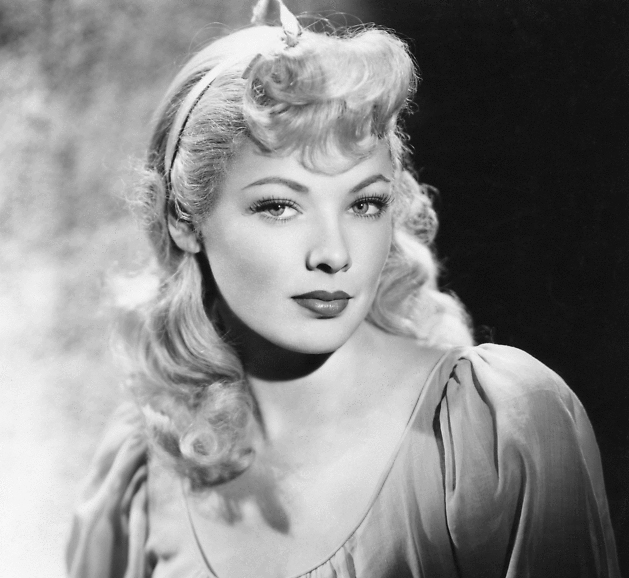
I would like to see this movie, which is from my favorite Hollywood year, is generally considered to be pretty good, was directed by Henry King, who had a distinguished career (the silent Stella Dallas, The Gunfighter, Margie, Carousel) and stars Gene Tierney, which indicates that the wartime romance angle is emphasized more in the film than it was in the book. However it appears to be largely unavailable. The only DVD copies I can find for sale are from Australia, cost $27, and are incompatible with US machines, and it doesn't seem to be streaming on any service that I have. In my late 30s and early 40s when I went through a phase where I was more passionate about tracking down classic films I would resort to buying old VHS tapes, and I still have a VCR that works, though I haven't done this for a few years now. But there don't seem to be any VHS tapes of this movie available either, if that is even still a thing you can do anymore.


This is about all of the 1945 movie I can find anywhere. It was shown on TCM in August 2014, but there do not appear to be any plans to rescreen it at present.


#8 Wells over #9 Antelman


Wells exercises his privilege as an IWE author.


Elite 8


#1 Vonnegut over #12 Alger


Neither of these Alger books was available in any of my qualifying libraries, though numerous of them carried a copy of Ragged Dick, which must be considered Alger's masterpiece.


#2 Hersey over #10 Johnson


Hersey also has IWE author privilege, which I have designated as carrying through to the Final Four except in the event of an upset. This Anniversaries book was published in a multi-volume box set as part of the New York Review of Books series and looks very serious. Hiroshima was famously originally published as an entire issue of the New Yorker in 1945, and while I've never read it, I used to have the paperback copy of it going way back to my teenage years, and perhaps I still do.


#3 Zeihan over #8 Wells


And here we are. Zeihan does have an upset, and therefore is able to knock Wells out of the tournament before he gets to the Final Four.


#6 Islamic Art over #4 Gray


The library community evidently has no interest in the joys of being sober. None of them have bothered to get the book. All of which sets up a pretty good Final Four.


The Final Four


#1 Vonnegut over #6 Islamic Art


The Vonnegut is the sort of short, breezy but still intelligent book that the Challenge was created for, to enable me to keep up somewhat with more modern literature without having to sacrifice too much time from the classics.


#2 Hersey over #3 Zeihan


Honestly, so is the Hersey. The two were on a collision course for the final and here they are.


Championship


#1 Vonnegut over #2 Hersey


I have devised a lot of formulas and possibilities for luck to decide these tournaments, so that I don't have to break down every matchup. However these books were practically identical as far as status, length, age of the authors, nationality. Also I had not read either of them previously. In the end I gave Vonnegut a victory in double overtime because I have just read Hersey and I haven't read anything by Vonnegut since I was in my 20s and who knows, given my systems, when the opportunity would arise again. And he was also the #1 seed.
A Bell for Adano is a missive from a black and white world, but we need some color on this post.


Monday, March 18, 2019

Gerhart Hauptmann--Before Dawn (1889)

So it did not take long to get to another Hauptmann play--apart from Shakespeare with his series of Henry and Richard-titled plays, I believe this is the only time we get standalone works back to back by the same author in the entire IWE list. This was Hauptmann's debut, it premiered when he was 27, which is around the typical age when most of these big time writers achieved their first breakthroughs into the public consciousness. I believed myself to have enjoyed reading it more than The Beaver Coat, though it was a more sprawling, less-tightly constructed play. It was also however less opaque, more indulgent of emotion, and more concerned with the travails of younger people, which in general I guess interest me more even now unless the older protagonist is extremely interesting or amusing. When reading these things, especially if I am under the impression that they are supposed to be good, I mostly concern myself with seeking and trying to understand wherein the quality lies, and do not always (though not never either) trust myself to identify the flaws and failures in such works and declare them as such. I had not read the IWE's introduction to this before reading it and was therefore given something of a jolt when I looked it up after finishing it:


"The reception of Hauptmann's first produced play was 'tumultuous', according to Lewisohn; literary historians agree that it was 'sensational'. Today the play reads like an adolescent effort to be impressive by being shockingly different. It protests a bit too much the grievances of labor, the perils of alcohol, and the righteousness of the Icarians (one of a spate of Utopian colonies in America during the mid-19th century). But it was written by Hauptmann and Hauptmann could already write."


Obviously the IWE editor is revealing some of his own biases here, but his criticisms are all, or mostly, things that did mildly occur to me in the course of reading the play, but that I let pass, and did not put together at all to inform my view of the whole. It was all a little over the top, but Hauptmann was something of a genius, and a German genius to boot, so it must have been in the service of a much grander point. Such was my thought process anyway. I do wonder why the IWE people included this on the program while leaving off The Weavers, which today at least seems to be considered Hauptmann's best and most important play (and also, as it is about textile workers made obsolete by industrial technology, topical). I am pretty sure we are done with him altogether after this.


After being too uncertain of my steps to make any notes on The Beaver Coat, I took a few this time.


Dr. Schimmelpfennig, in Act V, perhaps an early example of what continues to be a defining theme of our own age:


"...humankind is in agony and our sort with our narcotics manage to make things more tolerable."


Both the drunken, newly prosperous peasant woman Frau Krause and the anti-establishment Loth character take swipes at Goethe and Schiller, traditionally thought of by me as the unassailable quasi-divinities of German literature. "Schiller an' Goethe (wildly mispronouncing these names)--a couple of useless ninnies if there ever were away," opined the lady, while later on Loth proclaims to the somewhat dim but nice and earthily alluring farmer's daughter that Werther is "a stupid book...it's a book for weak people." With regard to Zola and Ibsen (whom I said Hauptmann reminded me of in the last post), Loth says "They are not writers but necessary evils...I'm not sick, and what Zola and Ibsen offer is medicine."


The insistent belief in the hereditary nature of alcoholism struck me as strange, not because there is not any truth to it, but because it was presented as an inevitable doom for the inheritor. Thinking back to the introduction, the postwar period out of which this list originated was probably the time, certainly in recent history, when skepticism about anti-alcohol crusaders was at its height, the memory of Prohibition being well within the lifetimes of many adults. I do see signs that these kinds of attitudes may be returning, in tandem with the increase as a percentage of the population of people who come from cultures with strong biases or even prohibitions against drinking.


I thought this was leading to a revelation of some kind of rape which word I cannot make out now (paternal?), incest, or secret pregnancies, and the IWE summary does indicate that we are to understand that Helene was "seduced" by her brother-in-law, but the translation I have (in a 1963 Penguin paperback published in England only of "Three German Plays", including The Threepenny Opera and Woyzeck by Georg Buchner) is unclear to me on this point where Dr Schimmelpfennig says that "Things aren't so far gone that he has actually ruined her, but he has certainly ruined her name by now." I could look up the original online if I wanted to and see if I could make more sense of that statement. I don't know German particularly well, but I know it somewhat, and I had gotten to a point in my 20s where I could read some of Kafka's stories only having to look up a handful of words on the page. But I don't have time to do that now. I barely have any time even to read these books.


Hauptmann died in 1946 at the age of 83, remaining in Germany throughout the Nazi period, so I suppose it is worth looking into how he spent those years. He of course would have been an old man then, and in the introduction to the book in which The Beaver Coat was included, it was claimed that he was "too old" to have relocated to another country. According to Wikipedia he signed a loyalty oath of the German Academy of Literature and applied for membership in the Nazi party (and was rejected). This was not mentioned in the other book. Film versions were made, albeit allegedly heavily censored, of the two plays I have written about here. I put a clip from The Beaver Coat on that post and will see if I can find one for this one. He had a novel rejected for publication during the war on the grounds that it depicted a black character, though a 17 volume edition of his works was printed in 1942 and a tetralogy of novels in 1944, which would seem to indicate that he was in fairly good stead with the regime. He was in Dresden during the firebombing of that city, when he was past 80, and wrote that "I stand at the end of my life and envy my dead comrades, who were spared this experience", which I can certainly believe was a sincere statement. This was noted in the 1950 introduction. He lived in Silesia, the southeastern part of Germany that was incorporated into Poland at the end of World War II. In May of 1946, he was informed that all Germans were to be expelled from Poland, without exception. At this point, he finally became very sick and died on June 6, 1946, before being expelled. The 1950 essay (by a German--I don't have that book in front of me so I cannot remember whether he was personally acquainted with Hauptmann himself) referenced some writings published after the war that were anti-Nazis and everything that happened during these last years, though Wikipedia doesn't list or refer to them. On the whole, one could get the idea that Hauptmann would not have missed much if he had died at age 70, though I don't know whether there is considered to be anything of great value in his later writings. While not as infamous perhaps as Knut Hamsun or Marshal Petain in his end of life Nazi associations, he doesn't appear to have covered himself in much glory, either. Not that I would have either, most likely, if I had been there, but everyone who found himself in that situation is held accountable to some degree, especially if he was a prominent figure such as Hauptmann certainly was.


The Challenge


This draw produced a rather wild Challenge. Matchups will be decisive
.
1. Narrative of the Life of Frederick Douglass...............................................................3,116
2. Howard Zinn--A People's History of the United States..............................................3,019
3. Alice Hoffman--The Marriage of Opposites...............................................................2,115
4. Alice Hoffman--The Dovekeepers: A Novel................................................................1,969
5. Karyl McBride--Will I Ever Be Good Enough............................................................1,042
6. Charles Dickens--Little Dorrit........................................................................................328
7. Michael C. Ruppert--Crossing the Rubicon....................................................................281
8. Karl Rove--Courage & Consequence.............................................................................255
9. Roger Kerin--Marketing, 12th Edition............................................................................177
10. Dr. Joanna McMillan--Get Lean, Stay Lean.....................................................................2
11. Marx & Engels--Collected Works, Vol. 38: Letters 1844-51............................................1
12. Highlights: The Tonight Show Starring Jimmy Kimmel, Season 4 (TV Show)................1
13. Alcoholism: Analysis of a Worldwide Problem (ed. Golding)...........................................0
14. Richard Chizmar--The Girl on the Porch..........................................................................0
15. Susan Chair Imbarro (?)--Declarations of Independency..................................................0


1st Round


Frederick Douglass gets to sit this one out with a much-coveted bye.


#2 Zinn over # 15 Imbarro
#3 Hoffman over #14 Chizmar
#4 Hoffman over #13 Alcoholism
#5 McBride over #12 Kimmel
#6 Dickens over #11 Marx/Engels


Little Dorrit is not one of the nine Dickens books selected for the IWE list, so it is eligible for the Challenge.


#7 Ruppert over #10 McMillan
#9 Kerin over #8 Rove


Kerin is a textbook in a subject I have a limited interest in studying, but he has an upset card to play.


Round of 8
#9 Kerin over #1 Douglass


Kerin had an allotment of 2 upsets in this tournament.


#2 Zinn over #7 Ruppert


A battle of 600+ page books. My library has Zinn, it does not have Ruppert, which is the decisive factor in the contest.


#3 Hoffman over #6 Dickens


Dickens too falls victim to an upset.


#4 Hoffman over #5 McBride


A mild upset. McBride was a shorter book, but Hoffman had upset in hand for this book too.


Final 4
#2 Zinn over #9 Kerin
#3 Hoffman over #4 Hoffman


Championship
#3 Hoffman over #2 Zinn


This Hoffman, whom I've never heard of, appears to be an extremely popular writer of some approximately mid-list fiction. I have dipped into Zinn before and I cannot say that I am a fan. His approach struck me as disingenuous and not respectful of any accomplishment in our national history that could not be attributed to some oppressed party resisting or overcoming the rapacity of the devils making up the dominant elements of society. Perhaps there are truths in his version of events, and if you are familiar with the opposing narratives perhaps there is good to be gotten out of reading Zinn, though I am not wholly persuaded of this. If he is your introduction to or main lens through which to understand American history, I feel sorry for you.


Tuesday, April 10, 2018

April 2018

A List: Jules Verne--20,000 Leagues Under the Sea.....................76/257
B List: Between books
C List: Kathleen Ann Goonan--In War Times.............................341/348


This has been the year (or so) of Jules Verne, whom I had never read all the days of my life before taking on Around the World in 80 Days and Journey to the Center of the Earth, and now this, all in a relatively short space. I have found them all to be entertaining. In this one some of the technical talk, about atmospheric pressure and oxygen pumps and such subjects, seems to be too much for my concentration and/or understanding and my eyes tend to glide over these parts. This cannot be said to be a fault of the book, I suppose.


In War Times I have liked quite a lot, though in terms of strict construction and intellectual power I don't think it holds together very well. There are a number of different strains in it that appeal strongly to me however even if they don't necessarily cohere with each other. The first half of the book takes place during World War II, and the narrative centers around an able young male American engineer who belongs to a company of mostly fellow able young male American engineers and their wartime experiences in New York and England and Germany. I am always taken in by stories of the able young men of the Allied forces in World War II. I wish that there was a way, in the absence of stupendous and overwhelming intellectual or creative ability, to recreate the intensity and energy of experience that the able young men, at least as depicted in books, seemed to get out of the war, and the camaraderie also, without the accompanying horrors of the actual conflict. Of course there probably is not. In any event I like reading stories of smart young men, and I like reading stories of 1940s America, and the victorious part of World War II, and the camaraderie of men who have succeeded together in worthwhile enterprises. The able young white buddies in this are big jazz fans, which they see as related to developments in modern physics, and they even end up playing one night with Dizzy Gillespie and Charlie Parker. This part is admittedly rather corny, but from my point of view I rather liked it too, this music is one of the defining energies of that era, but it isn't always clear if you're someone like me how to find a way into it, but I felt like there was something of that here. After the war ends there is more of a science fiction plot that takes hold. The main character continues to live in the postwar world that we know, the Cold War and Vietnam and so on, but most of his old Army mates, including his best friend whom in his world died in Germany in 1945, live on in an alternative postwar world where Stalin was overthrown, Berlin became a boomtown, the nations work together on space exploration, technology and economic growth progress even faster than they did in the familiar world, Kennedy was not killed, and so on. The guy stuck in our world is able to know this because there are nodes of time where these differing strains of history briefly come together. So he can reunite with his friends from time to time (often near his home in Washington, D.C; They are confused as to why it is so shabby) but then at some point they will get up to go to the bathroom and not come back and the node is lost. This idea made an impression on me for some reason. (This alternative worlds thing is the result of some atomic energy that the protagonist got hold of during the war that has been channeled to work differently from the way the atomic bombs did, or something like that. I am out of time, I have to stop now...)


Thursday, October 17, 2013

Checking In

Finished City of Thieves today. Over the last few days I thought that the extreme implausibility of the climactic scenes detracted from the overall book, but then I considered that maybe the character of the book is in the same tradition as the implausible romances of Scott or Cooper or the tales of the medieval knights, with the bonus that the narrative is more modern and interesting than these other books. All the same, the last third of it was a drop off from the earlier parts, which I was impressed by, and I am pretty good at resisting writers, especially when I have been told in advance how smart they are. It is one of the hard and last tests of literature, for a writer to carry a book all the way through and bring it to a satisfying, conclusive end, but of course if you want to be great you must be able to do it.


I don't know if this is considered a trend yet, or if it was considered a trend but has already come and gone, or if people like Woody Allen and Mel Brooks and Philip Roth are already long considered to have broached the subject, but this story seems to share with the Quentin Tarantino movie Inglorious Basterds which also came out a few years ago (and which I haven't seen) the character of having Jewish characters in World War II stories possessed of agency to combat successfully and heroically against Nazis. I think I have read of other books and stories that have taken this tack as well. It is being largely driven by people, mainly, as far as I can tell, men, from my generation, who were born 20-30 years after the war ended and grew up during a period when sober dramatizations of the Holocaust were a central component of and influence on the culture, popular and otherwise. The, to this point, mild reaction against this represented by the stories referred to here, makes a certain amount of sense when one considers it, but I do not think most observers would have predicted it in the 1970s or 80s. Nonetheless, even though it occurred in a modern age of hyper-documentation and historiography and voice recordings and film footage--I just saw a clip of some of the footage from Buchenwald the other day, mounds of corpses being bulldozed into pits and so on--in modern American life anyway it seems inevitable as time goes on and the world in which these atrocities took place and the commentaries and interpretations that were made of them grows every day less immediate, less remembered, less real by the living, that people will not regard or relate to it in the same way either.

Update 10/21/2021: I had not at the time I wrote this post read any Scott, and I was basing my opinion of him on what I took to be the common contemporary judgment. I underestimated him, he is a great novelist and should still be held in the high regard he was formerly. 

I did like the Benioff book (City of Thieves) at the time, I thought it was skillfully written, though I haven't thought about it very much in the years since. I don't know that my commentary in the second paragraph has either aged terribly or proved especially prescient or insightful, but I don't think there is nothing to it. This trend seems to have faded, at least among reasonably serious or intellectual artists, though I do not pay as much attention to current trends as I used to.   

Thursday, October 10, 2013

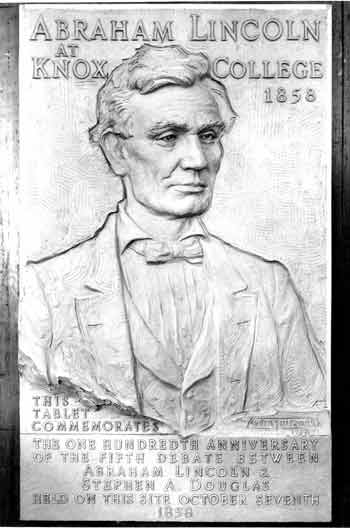
Abraham Lincoln (1918)--John Drinkwater

I didn't like this one quite as much as the Sherwood play, though it held my interest. It is hurt by a couple of weak scenes which will make even a person like me who has a higher tolerance for both archaic attitudes and schmaltz than they ought to cringe. One features a black character who meets Lincoln and unfortunately talks in an Uncle Remus dialect. I suspect that this sort of thing is going to turn up more frequently in the forgotten books on this old list than one would desire to have to cope with. I noted a similar deficiency many years ago when I read Booth Tarkington, an otherwise more than able novelist who is little honored today. And Drinkwater, who was an Englishman, was in theory I suppose trying to celebrate the end of slavery and introduce a human voice into that commemoration; but imagining black characters who possessed any of the admired qualities of the prevailing civilization of the time in any kind of high degree seems to have been beyond the capability of nearly everyone. The other poor scene involved the generals Grant and Meade talking about what a great man and leader Lincoln was on the occasion of imminent end of the war, which was excruciatingly corny; as I alluded to earlier, I don't cringe that easily (at corniness). Otherwise, the play was tolerable as literature of its period, and I enjoyed reading it. It is obvious that my long history of studying, thinking about and playing games with this list, combined with all the confusion and disappointment that has accompanied most of my attempts to do anything requiring the exertion of my mental faculties in the years since this list first attracted me, has made me more excited to finally read some of these books than I had realized, and than they probably intrinsically merit. The next two titles up, Absalom, Absalom and Adam Bede, I have read before for my other list. They are certainly worth reading again, and I am hell-bent to do so. That said however, I cannot neglect this edition's

Bourgeois Surrender Challenge

1. City of Thieves--David Benioff....................4.56
2. The Accidental City--Lawrence N Powell...4.52
3. Fahrenheit 451--Ray Bradbury...................4.17
4. The Handmaid's Tale--Margaret Atwood....4.12
5. Total Recall--Piers Anthony.........................3.50
6. Four titles from this challenge remained unrated: American Eloquence: Studies in American Political History, by Dunston & Woodburn; Julia Ward Howe, by Richards & Elliott; Sword & Pen: Ventures & Adventures, by Willard Glazier; and The Mediterranean,by T.G. Bonney, et al. 


An interesting challenge, with surprise at the Atwood and the Bradbury scoring so low. As in all endeavors that choose to rely on mass approval, this game has its perils. I have read Handmaid's Tale and I admit, it did not do much for me (I did like Lady Oracle, for what it's worth). I've never read Fahrenheit 451 and I was kind of hoping it would win, since it is both short and such an iconic book of postwar America, the literature of which time period I frequently like. City of Thieves is a modern book (2008) by a modern author about which, and whom, I knew nothing. My local library had a copy and it is fairly short (258 pages) so I decided to accept the challenge. In fact, I am already up to page 165 in it. I have endured some mild...chastisement?--I am not sure what exactly to call it, the suggestion is that I am hidebound and overly and perhaps even mindlessly attached to the classics--about my easy dismissal of most modern books, and it is true I don't generally like them. While they are the works of my rivals and would be peers who have succeeded so brilliantly in navigating the intellectual waters of our times, such as they are, whereas I have failed more utterly than once would have seemed possible, I am still confident that most of them are not very good. I have to say, though, that this City of Thieves does seem to me to be very good, and its author is certainly capable enough--contrary to much apparent contemporary belief, a lack of capability is not one of the primary problems afflicting the book world. Although it is a modern book it is set during the siege of Leningrad in 1942, so it has an old and, given the conditions which were in operation at that time, decidedly elemental atmosphere. It does not redefine the possibilities of the novel or exhilarate in and make sense of the most vital trends and movements of our own time. Nonetheless it is smoothly written and especially shows an advanced degree of skill for the telling description or metaphor. I have no idea what a real survivor of that time would make of it--it does have something of the American 'endurance of the human spirit' quality about it that Europeans, especially those in the countries hardest it by the 20th centuries' wars, seem to have moved beyond believing in--but it does a better job at describing the fatigue and hunger, if not the terror, that were endemic in that period than other things I have read. For example, there is a bit where a thoroughly exhausted and starving character is trudging through the snow at night in -20 degree or so cold, with the German army all around the area, and how the only way he is able to cope with this is by making it as far a certain tree that his eye has alighted upon, and then when he reaches this to pick out another one, and so on. I believe I gained a couple of pounds at the beginning of the book because the descriptions of the hunger effected me enough to make me crave food more than I do ordinarily.

I was curious enough to look up some of the big professional reviews of the book. I am almost sorry that I did, as the instinct of most reviewers seems to be to spend as much time working through their issues with the idea of David Benioff the person as to think about the book. There is a lot to chew on there. He is apparently monstrously handsome. His father was the head of Goldman Sachs. He is married to a Ivy-League educated movie actress. He has a highly successful career writing for television and movies--book fiction seems, at least in terms of income, to be kind of a sidelight. Then there is the obvious talent, whatever one thinks of how it is being deployed, for fluid and satisfying plotting and prosifying across genres. As far as I can tell it is not like this guy sells massive numbers of books or generate an inordinate amount of love from the literary community, passionate young intellectuals, and so on, but he makes enough, and is known and connected enough in a lot of desirable circles, to make a lot of people look at themselves in the mirror and wonder where it all went wrong for them.


The edition of Abraham Lincoln I ordered was from the old Riverside Literature Series (1927, in this instance), which is a set of (from what I have seen) scrawny little books with pale blue covers, the series seal imprinted on the front and the book's number on the back (268 for A.L.). The skinny spines are ugly and spare, the title only appearing in boring block capital letters When I was in high school I had copies of Hamlet and Macbeth from this series, but I have long lost those, and this is the first book from the series I have had since then. The series was evidently intended to be used in schools; the texts are accompanied by many pages of notes, study questions, & suggestions for essays and classroom dramatizations. There were fifteen general questions taken from 'College Entrance Board Examinations'. A sample:

"Choose one character from each of five novels or plays and show briefly in each case how this character changes for the better or for the worse because of one or more of the following reasons: a. The influence of another character. b. Circumstances over which the character has no control. c. The character's own strength or weakness."

Another suggested 'topic for investigation' was "Calhoun's Doctrines of Nullification and Secession."

I am aiming to be more positive and likable. I don't know if it is possible to achieve this if one has to make a conscious effort to aim for it, but I think it is worth trying.