Showing posts with label kate bilo. Show all posts

Friday, September 6, 2019

September 2019

A List: R.W. Southern--The Making of the Middle Ages...……………...95/265
B List: Manzoni--I Promessi Sposi……………………………………..652/668
C List: Walter Scott--The Heart of Midlothian...………………………..38/540


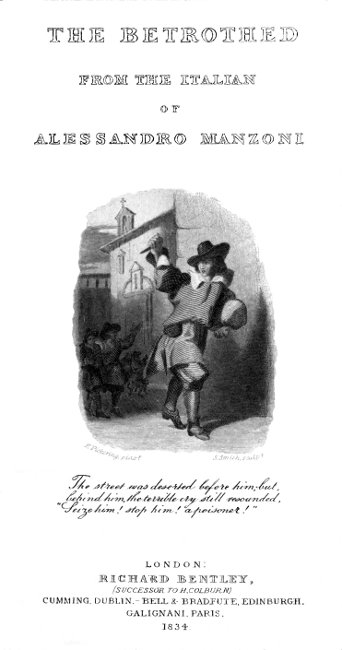
So I wasn't quite able to finish Manzoni in time for this month's report. I have been very busy, especially in the weeks leading up to the beginning of school there were several days where I wasn't able to read it at all. But I am getting back on more of a regular schedule now.


Taking up Scott at the same time one is reading Manzoni is not ideal, as they are kind of similar books, long, romantic, set in the past, and they even were written around the same time. However, I can see already why Scott was popular in his day even if he is a bit long-winded by our standards (as is Manzoni). He is lively, he has more humor thus far than I was expecting, and he seems to know how to roll out a story. I should be able to plow through a decent amount of it during the 1-2 week interval when I am working on the report for the Betrothed.


R.W. Southern (1912-2001), who sounds like an American (perhaps I was getting him confused with the 1970s Texas-raised songwriter J. D. Sothern), was an Oxford institution, and The Making of the Middle Ages is one of the most respected humanities books to emerge from the heady days, such a contrast with the present, of the postwar research university. It is the kind of book that is good for me, because while I have some familiarity with many of the names, places, and events that populate its pages, I didn't have a terribly coherent picture of how they fit both in relation to each other and to other parts of history, and this should at least move me a further along in the formation of one. For a guy writing in the supposedly unenlightened 1950s, Southern frequently could pass for a modern professor. His attitude toward the Islamic world (or at least the medieval Islamic world) is highly respectful, and he is not in thrall to any kind of jingoistic view of Anglo-Saxon or Western European superiority that I can see. Reading him on the Crusades, I am struck by the juvenility with which people in our times will casually cite them as some kind of example of toxic masculinity or Western arrogance or privilege that has some kind of relation to people's behavior in the present. "The First Crusade burst on a world which had long been preparing for it in the recesses of its being, but there had been few outward signs of the work of preparation...The passionate acceptance of the Crusade as an established aim of Latin Christendom, which characterizes the twelfth century, did not come to birth without a struggle, and it is not irrelevant to note that the Eastern Church remained permanently antipathetic to the ideal. The monastic ideals of the eleventh century were in the main hostile to the idea of the Crusade. To a St. Anselm, for instance, or a St. Peter Damian, the Crusade made no appeal. There could be no place for it in the world which St. Anselm pictured as a vast, turbulent, impure river, carrying off to destruction those who became immersed in it: against this destructive flood there stood only one safe refuge with peace within its walls--the Monastery." (p.50)




I hadn't known that the "Heart of Midlothian" was, in one sense anyway, an actual "thing".


Kate gives the dish on the hurricane, the remains of which are coming my way tomorrow.

Wednesday, May 8, 2019

May 2019

A List: Rousseau--Confessions...……………………….628/683
B List: Lew Wallace--Ben-Hur………………………....137/488
C List: Rick Perlstein--The Invisible Bridge...……….....378/810

I am a few days late with this month's post. I tried to rush it through last night but it was such a mess even compared to this that I decided to hold it back another day.

This is the fourth update where I am reading Rousseau. Of course I did go on vacation twice. The Confessions is on the B-list too, though not until Vol. XVII (I'm on Vol. III now, so at my current pace I will be getting to it again in about 28 years). In the later parts of the book I am starting to have trouble keeping all of Rousseau's aristocratic friends, and former friends, straight. Having had some of these issues myself, I felt his pain in the parts where he related his kidney stone and bladder problems, and was especially attentive to his account of having a probe inserted into him in 1760, which I had not realized was already being done at that time, and could not have been pleasant.

Doubtless because of the famously gargantuan film adaptation, I anticipated Ben-Hur being one of those enormous 1,000+ page books, so I was surprised to realize that it is not in fact exceptionally long, though the expository parts of it really are written for an audience whose ideas of entertainment and stimulation would be listening to a two hour sermon in the Midwest in 1880. Ben-Hur does not actually appear in the story as a character until about 90 pages in, and Jesus Christ, who I take to be the other main character, is finally born around page 70 after a long introductory section featuring the wise men trekking across the desert, the journey of Joseph and Mary, a discursion on the shepherd(ic?) life in ancient times, etc. Reading the descriptive passages requires a lot of concentration that even I find hard to summon up in the present year, and needless to say it is impossible for me to read more than a paragraph or two at night without falling asleep straightaway. That said I do still like it. When I have the time and level of alertness to immerse myself in it for thirty minutes or an hour it truly puts me in a state of consciousness reminiscent of my pre-online life, which I miss badly much of the time.

The Perlstein book I took back to the library over my vacation and got it out again when I came home. Nixon is gone now and currently I am in the midst of a long recap of Ronald Reagan's Hollywood career and the beginnings of his shift to politics during the post-war Hollywood blacklist era, which I am not finding all that interesting. I like the parts where I am either reminded or learn something new about either how insane the 70s were or how smart people thought about things like the economy or education or how society should be organized, which in many instances is very different from how smart people think about those things now. The author's weak point is that he is an utterly conventional modern liberal, and therefore invariably takes a condescending attitude whenever the subject involves the white working class or Ronald Reagan's mental capacity, and a respectful one when the subject is minorities or immigrants or feminism. These are doubtless on the whole correct, and certainly they are safe, perspectives to adopt, but only liking/being enthusiastic for the approved parts of American history and culture and uniformly, without any apparent inner conflict, disliking the unapproved parts, do not make for very interesting reading.  I'll still be on this book in June so maybe I will try to go into my thoughts on this more.

This is the time of year when I finally am able to get back out and read on the porch again, but so far I have only managed to do this once. April 14th could have been the first day out, as it was in the 70s, but that was a Sunday and my wife loaded us all up with so many spring cleaning-like tasks that I was not able to slip out with my book on that day. Then from the 23rd to the 27th I was down in Pennsylvania and Maryland, but the 28th after I got home was still warm in New Hampshire and that is the day I sat out. Since then the weather has not been very warm, at least in the mornings when I am home it's still in the 40s and 50s, and most of the days it has rained as well. So I still haven't really gotten into porch-reading mode yet.

When I was in Philadelphia I met a new woman. It had been a few years since I had encountered anyone who stirred these kind of unforced love-like feelings in me, and I thought that maybe that part of my life had finally passed. But I guess it hasn't. Her name is Kate, and she is from Phoenixville, which I guess counts as a suburb of Philadelphia, though it's about 30 miles out of town. I've come across a number of people from this town over the years. I don't remember ever having actually been there, though it isn't far from where I used to live. So far it is true I only know her through television, though thanks to the power of the internet there are years of archival footage of her as well as a new upload nearly every day to keep my passion strong.

By the way, she is like 37 or 38, so she is pretty mature, especially for me, but she retains some girlish qualities while being an overall serious person, which is what I really like. This black outfit is my favorite item from her wardrobe that I have seen so far.


Les Charmettes, home of Jean-Jacques Rousseau


Is Rick Perlstein a soyboy?


Tony Orlando and Betty Ford doing the bump

Warning: I may be closing all my posts for the foreseeable future with a Kate Bilo picture, until my love cools. That might take a while.