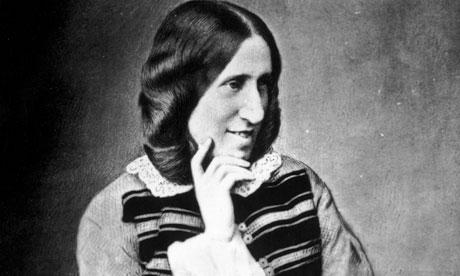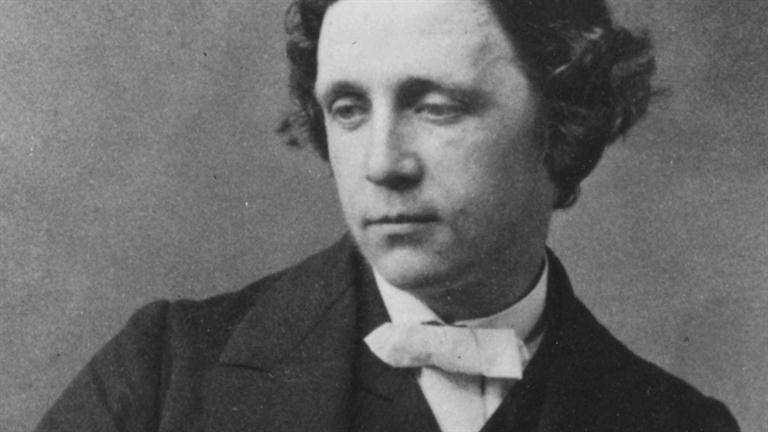
When I first read these through again--I am pretty sure I read them as a teenager at some point, or at least the first book, as I found I did not recall most of the incidents in Through the Looking-Glass--I admit that my initial impression was that they were not as spectacularly brilliant as their reputation would have them be, or even as the sense I had of them in my own memory. From my vantage point as a 44 year old in the year 2014, the story and incidents, while not uncharming, felt too insubstantial, and not epic enough, and that the jokes, heavy as they are on puns and nonsense, were not making me chortle as much as I wanted them to. I wondered whether this sense I had of the book's smallness and datedness was a phenomenon of our current age, especially the enormity of confident and dismissive intellectual life one is exposed to on the internet, where even trivial exchanges offer challenges and demand a level of demonstrable intelligence and worldly competence that even the Alice books as they lay on the page do not, on a surface reading, quite seem to stack up to (though Lew Carroll himself in the discourse and activity that is recorded of him certainly comes off as quick and mentally adroit enough to have made his way somehow in the current social marketplace of intellectual talent).

So, as with almost all of these old books, I had to remove myself psychically from my contemporary mode, in which I don't have much identifiable being anyway, and slip back into an approximation of my onetime self, circa age 25, which to some extent still lies dormant under the modern '-grade', whether up or not I am not willing to commit to an opinion on, much as (I am told), some of the older computer systems at my work are still buried under the programs that we have to use currently. The Alice books, I reminded myself, belong to literary culture and the world of reading in almost every way that I used to hold dear when I thought these things would be at the center of my life. The characters and stories are so well known as to be a shorthand, a part of the language of this pastime of literary study, usually in a way intended to express a variety of delight. It brings into this often morose community welcome exposure to a lively and enthusiastic element of intelligent people with whom I at least otherwise rarely come into contact in my pursuits. In spite of their frequent morbidity, the books are spurred by the author's strange but often captivating passions along with of course a unique and highly interesting talent and intelligence. Still, I had to slow down and allow the experience and the words and the aspects of life that are being emphasized to be absorbed over several days before I could begin to feel a genuine appreciation for the story once again.

After I read the books through in my own lovely copy, with the Tenniel illustrations (MacMillan Children's Classics, 1937), that I bought at a library sale in Pennsylvania in 1986, I took the Annotated Alice by Martin Gardner ('one of the great intellects produced in this country in this century', according to Douglas Hofstadter, who is apparently someone I am supposed to know) out of the library, partly to see what sort of things I had missed, partly to prolong the experience of the book, which one reads through pretty quickly; even though I am at the very beginning of a list of books that I will be lucky to get through before the end of my life, and in theory should welcome any volume I can dust off in a day or two, I really do like to spend some time with them before moving on to the next one, hence movies, notes, blog postings, etc, etc. The annotations I find here to be helpful in providing a clearer sense of the social and intellectual atmosphere and ruling spirit out of which the book arose, which is what I find most interesting about it. I am still not sure how the recurrence of the number 42 enhances the meaning or the greatness of the story, but I do find it of interest that it was a number so especially favored by the author that he felt it desirable to interpose it into the story as often as he could. I liked the information that the drawling-master who was a conger eel was a reference to Ruskin, who gave weekly drawing lessons to the young Alice Liddell (and supposedly did look like a conger eel) and was also an admirer of her, making himself a rival of sorts with Carroll for the child's treasured affections. I like Ruskin's writings, which I have written about quite a bit on my other blog, but he is also the sort one likes to see made fun of a little by other smart people. It was also noted that while Ruskin made numerous references to Alice Liddell in his diaries and so on, his Oxford colleague Carroll was conspicuously never named. As to Alice Liddell, who was evidently about as captivating a young person who has ever existed, as a teenager she had a 'romance', whatever that entailed in 1870, with Prince Leopold, Queen Victoria's son, while he was a student at Oxford. In that time of course it was impossible that the prince should marry anyone other than a princess (though surely Alice Liddell's blood and other endowments were more than vital enough to enhance any royal line, especially the decrepit ones of the late nineteenth century). The prince did name a daughter of his Alice shortly after the other Alice's own wedding had taken place. So there is some good stuff in there.

I find the first book, Alice's Adventures, to be much the superior of the two. Of course I have just begun the annotations to Looking Glass, so maybe my feeling on this will change. However, I do think the first book is warmer, has better and more natural characters and a more interesting progress, and is funnier. The real Alice was twenty by the time the second book came out, and it has in places much of the feeling of trying to recover or grasp hold of something that was lost or in the process of being lost, which gives it a lot of poignancy, but does not have the same sense of immediacy and fun as the first book. My favorite character is the queen of hearts. She reminds me of my wife. The Mad Hatter is probably my second favorite. I like this verse also:
"In my youth', said his father, 'I took to the law,
And argued each case with my wife;
And the muscular strength, which it gave to my jaw
Has lasted the rest of my life."

Do you think she dresses up and acts out scenes from The Magic Mountain?
I was listening to a radio program in the car the other day on which the energetic self-help guru Tony Robbins was briefly a guest. As someone completely devoid of personal dynamism, who has had to live with the consequences of that, I have always thought it might be a nice gesture of the gods if I could be reincarnated, on Earth or in Elysium, with a Tony Robbins-like personality, even if only for a short period, a single human-length year or two. My wife, who has more of the New England skepticism about people who exude positivity, would likely argue that something is off about Robbins, that his persona cannot be real, that no one who acts like him is truly a happy and well-adjusted person and that he is massively overcompensating for some emptiness or perceived deficiency in his life. I find his ability to compensate so effectively to be compelling, though I do not believe, as many people seem to, that I could will myself to be as habitually gregarious as Tony Robbins is all the time if I really wanted to.

My object in introducing Robbins here is that the interviewer asked him at one point if he had observed, among the many high end performers he had worked with over the years, including presidents, billionaires, superstar athletes and entertainment figures, any common quality that set them so far apart even from the mass of ordinary successful people, to which Robbins replied "hunger". This is certainly widely believed and promoted as true, and perhaps it is always so at the extreme right end of the achievement tail, which is what we all should be aiming for, after all. Literature however has an unusually large (number) of notables who are not at that extreme tail, and who do not give off an air of being consumed by Tony Robbins's idea of hunger to any great degree, who nonetheless hold a place of some honor therein. Carroll strikes me as a man of this class. The happiest day of his life, which he kept coming back to for the remaining 35 years of it and which provided the inspiration for producing the two works for which he is remembered, was passed in gliding along a river--I presume it was the Thames--in a rowboat with a group of little girls. This does not sound like a man burning with a relentless ambition to dominate anything, yet he was still able to achieve significant things. Maybe this could not be repeated today however, certainly beneath a very high social level (though Carroll certainly belonged, comparative to the mass of the populace of his time, to a pretty exalted station, though he was not considered well-born by most of the people with whom he associated).
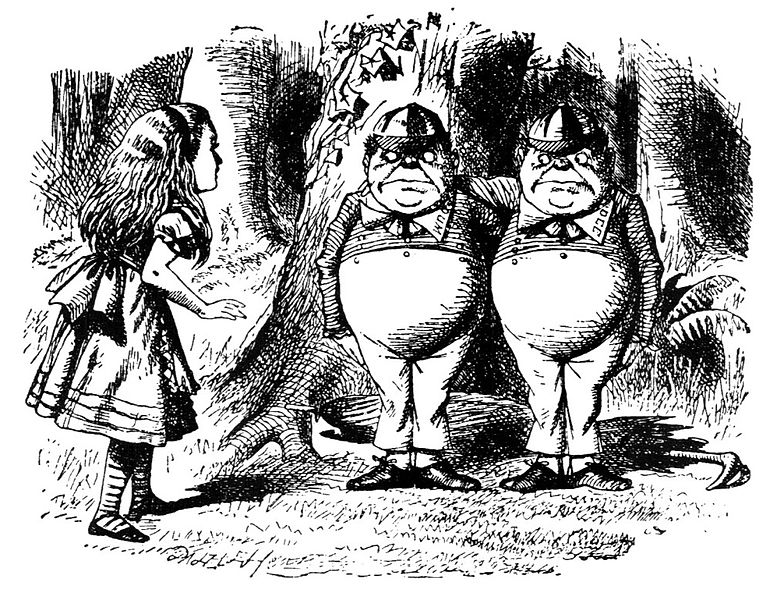
It does not need to be said, but the Tenniel illustrations are a great gift to the world, or at least its students of literature, and never fail to provide me with some delight in the possibilities, however rarely realized in my own self, of existence.
The Challenge
After a very paltry challenge last time out, we were able to attract a huge field for this installment, though almost exclusively of obscure books, most of little interest to me, as well as devoid of much in the way of signs of merit. I wonder if the Google apparatus (I do not flatter myself by saying people) has figured out my game and is feeding me reams of junk for its own amusement. Look at this mess:
1. The Nesting Place--Myquillen Smith............................................................329
2. Barbarians at the Gate: The Fall of RJR Nabisco--Burrough & Helyar......189
3. Beguilement--Lois McMaster Bujold............................................................159
4. Cache a Predator--M. Wiedenbrenner..........................................................148
5. The Queen of Attolia--Megan Whalen Turner...............................................119
6. The Fetch--Laura Whitcomb............................................................................76
7. A Curse Dark as Gold--Elizabeth C. Bunce.....................................................65
8. Alice, the Enigma--Christina Croft...................................................................47
9. A Ruby Christmas.............................................................................................42
10. Hush: An Irish Princess Tale--Donna Jo Napoli............................................38
11. Finding Lost Season 6--Nikki Stafford...........................................................26
The Sly Company of People Who Care--Rahul Bhattacharaya.......................26
13. Stewie Bromstein Starts School--Christine Bronstein.....................................24
14. True Confessions of a Heartless Girl--Martha Brooks...................................18
15. Naked--Michael ian Black...............................................................................13
16. The Spiraling Worm--Conyers & Sunseri.......................................................12
17. Tis the Season--Ellen Emerson White..............................................................9
18. Bartlett's Book of Anecdotes--Fadiman, etc......................................................8
19. The Tempest For Kids--Lois Burdett................................................................6
20. 365 Easy Chicken Recipes................................................................................4
21. Dynamic Chess Strategy--Mihai Suba..............................................................2
Perry Mason Solves the Case of the Haunted Husband--Erle Stanley Gardner.2
Book of the London International Chess Congress 1922..................................2
Book of the New York International Chess Tournament 1924..........................2
Webster's New World Essential Vocabulary.....................................................2
26. Denslow's Humpty Dumpty................................................................................1
Volumes receiving a score of 0: Samovski Zabovnik by Dragoslav Andric, Book of the Hastings International Masters Chess Tournament 1922, The Crime Club by W. Holt White, Dilemmas by A. E. W. Mason (the 2nd time this little known book has appeared in the challenge), The Pig Brother by Laura E. Richards, The Mediterrenean by Bonney, Ball, Traill, etc, Blood of the Zombies by Ian Livingston, Clara in Blunderland by Caroline Lewis, 1,000 Mythological Characters Briefly Described by Edward S. Ellis, and Humorous Readings and Recitations, by the Albion Reciters.
The winner is a frilly, frothy book about home decorating. I think I will pass again.

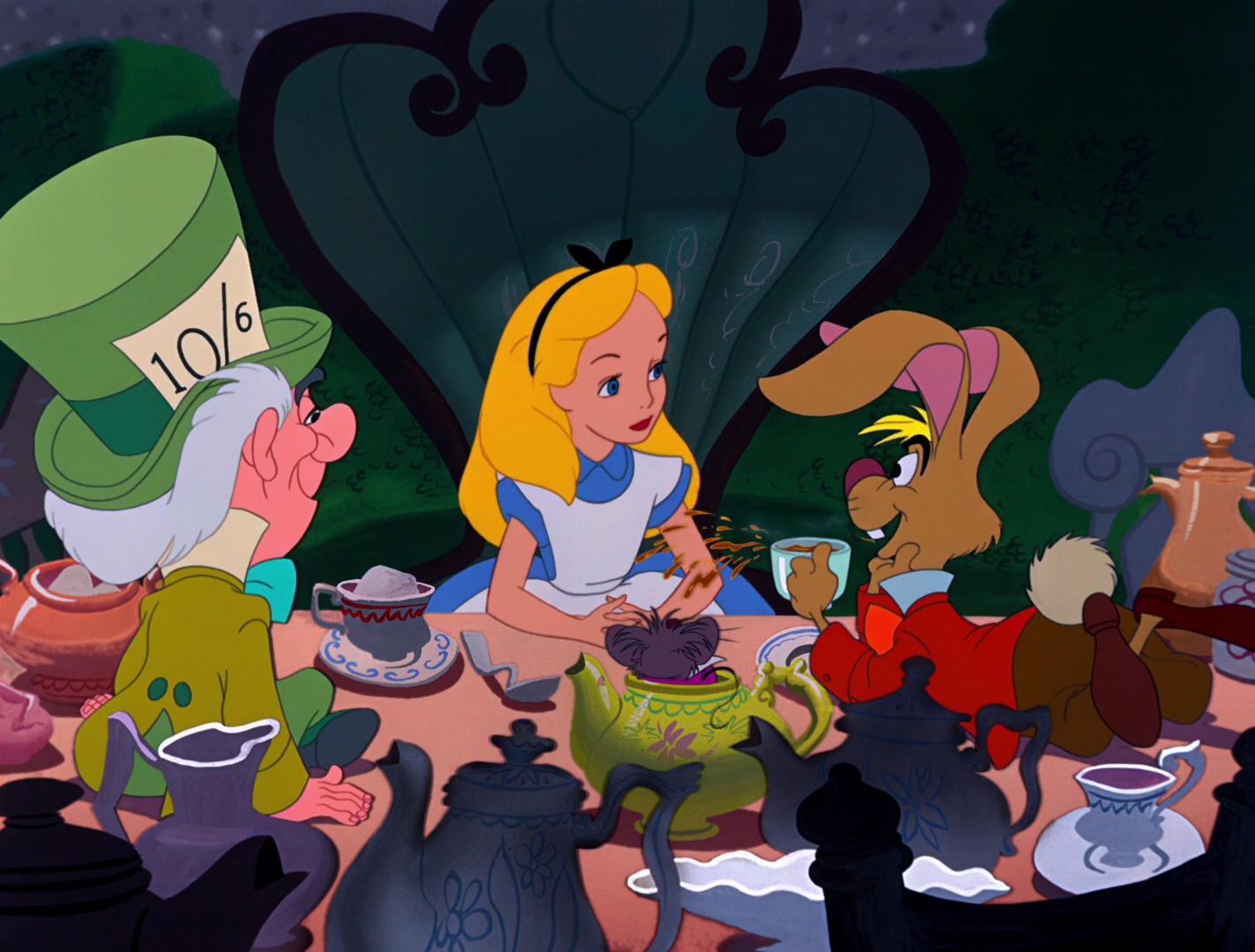
There was an unusually crowded and competitive Film Challenge this time, featuring an extremely close finish and a major upset over the heavily favored entrant that had not only the home post advantage going for it but the backing and imprimatur of the all-powerful Walt Disney Corporation:
1. Dawn of the Dead (1979)......................................742
2. Alice in Wonderland (1951)..................................732
3. Something Wicked.................................................263
4. Denise Austin: Shrink Your Female Fat Zones.....215
5. Queen to Play........................................................143
6. Brooke Burke Body: 30 Day Slimdown...................68
7. Denise Austin: Get Fit Fast.....................................34

The music challenge likewise did not lead us to any rarified pocket of the achievements of that realm:
1. Back to the Future Soundtrack........................................................76
2. Resistance: Rise of the Runaways--Crown the Empire...................24
3. Magic--The Jets.................................................................................4
So after immersing myself in the world of Alice and some of the innumerable exegeses devoted to it for a further week, my belief in its greatness and brilliance (and humility at my own littleness) is almost fully restored. It is not one of the books that is uniquely mine, and that I love intimately, and it never will be, because of limitations on my own part, but it gives me some happiness to reunite with it at intervals of years, to see as much as I can that it holds up as well as I remember it and exchange a jest or good-natured greeting with it, to affirm that some positive connection exists between us. This is what reading mainly is for me now.