Showing posts with label 1600s. Show all posts

Monday, November 2, 2020

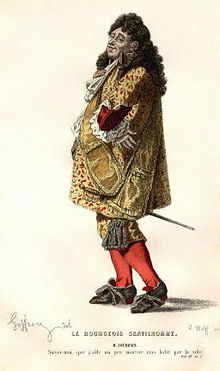
Moliere--The Bourgeois Gentleman (1670)

Periodically in these reviews, I feel the need to revisit the question (mainly to demonstrate that I am aware that it exists) of why I should bother to write a commentary on these works of literature that are already so well known and expertly explained by the greatest and most interesting minds spanning many centuries. Of course I am not really trying to explain anything to anybody, if I ever was doing that, other than my own experience of this as a kind of pilgrimage, and the particular landscapes, or countries, or ages, through which it passes, and the impressions, fleeting thoughts, or even crossing of paths with the occasional fellow traveler I encounter there. It is a class of narrative I have always been fond of and I thought it at least possible that the cumulative effect of noting my reactions and how they intersected with what was going on in my mind over a long period might add up to something of interest. 

Coming to this especially evoked that feeling of having arrived via some fog-shrouded forest path in a remote and strange, if somewhat jolly old hall, perhaps a somewhat more modest version of the castle of Chambord, where the play had its debut before King Lewis XIV to cap off a day of hunting, the entire theatrical company and its sets, costumes, musical instruments, etc, having been brought down on a four day's journey from Paris at great expense. This great cultural epoch of later monarchial France has, I feel, grown especially far away from me in these last years. While it never occupied a central place in my studies or the formation of my worldview, I did have in my youth some basic familiarity with the art and philosophy and history and architecture of that age, but then for many years it seems I did not follow up much on this foundation and I got rather old. But there is considerable charm in revisiting its literature, especially in contrast with the unrelentingly dark and despairing art of our present age, and for most of the entertainment I found it highly pleasing to be back among such spirits.

The I.W.E. introduction contains nothing I find to be of interest so I am skipping over it. 

Act I (p.329) The Music Master: "But you can't live on applause; praise alone won't pay the rent...the best hand people can give us is a hand with cash in it."

Act III (pps. 352-3) Nicole: "I've also heard, madame, that to top it off he took on a philosophy teacher today." M. Jourdain: "Quite right. I want to sharpen my wits, and be able to discuss things among intelligent people." Mme Jourdain: "One of these days you'll be going to school to get yourself whipped, at your age." M. Jourdain: "Why not? I wish to heaven I could be whipped now, in front of everybody, if I could know what one learns in school." 

This sounds eerily like me doing this blog. 


Chambord Castle, where the Bourgeois Gentleman had its debut. When I was searching online for a picture, I was startled that one of the first images to come up was of my old French teacher in Boston from the early 2000s, who has since returned to France, posing in front of the chateau. That had not happened to me before.

I read this in the 1957 Modern Library edition of Eight Plays by Moliere which should be pictured somewhere in here. Readers in the more egalitarian, culturally striving 1950s and 60s found this more personally offensive. The brief introduction for what they translate as The Would-Be Gentleman observes (and then engages in wild-eyed speculation) that: 

"Citizens of a different world, a different time, are likely to feel a certain sour aftertaste on reading the play. The immense mockery of the Bourgeois, whose only offense is that he wants to be a gentleman, seems to us, who are not gentlemen either, excessive, even repellent. Monsieur Jourdain's desire for instruction, for excellence, is admirable rather than ridiculous. We note that the representative of the nobility is a thoroughgoing scoundrel, who belongs in jail and not the king's suite. We sympathize with Madame Jourdain's candor and with Cleante's manly statement of his pride in the bourgeois tradition. Are such reactions due merely to the changed social situation, or did Moliere consciously hint at social criticism? The spectator of the play had no time for such reflections; the reader has a right to say that Moliere's words have taken on a new meaning which he could not have intended. Perhaps; but I think Moliere knew what he was saying."

Sadly, the play is much more socially relevant again today with regard to education, marriage prospects, and so on, which have become more widely segregated by social status again, as well as I suppose great talent in isolated instances. 

Monsieur Jourdain is in the pantheon of iconic characters of the post-Renaissance European theater. I am more sure of this having actually read the play, it is something one feels when the character is before you. He is so thoroughly ridiculous, and so thoroughly earnest and determined in his ridiculousness, that he achieves a singularity of person that goes beyond mere type and makes him inimitable. The play doesn't achieve immortality, I don't think, without this quality. His anger at his parents for not educating him properly, his middle-aged self hatred, his inability to accept himself, his idolatry of his social betters, is genuinely humorous, but in that way that is ultimately heartbreaking at the same time, which is why it has been able to have the effect that it does have and would appear on a surface description to be lacking.  

Act III (p. 363) "I display for a certain person all the ardor and affection conceivable. I love only her in all the world; I have her alone in my thought; she has all my devotion, all my desires, all my joy; I speak only of her, I think only of her, I dream only of her, I breathe only for her, my heart exists only for her..." Cleonte's over the top expression of his love is a fine example of concise theatrical presentation. 


p. 372--Monsieur Jourdain, in response to his wife's intelligent plea on Cleonte's behalf: "Those views reveal a mean and petty mind, that wants to remain forever in its base condition." 

Act IV (p. 378) Dorante (M. Jourdain's noble friend), at the expensive dinner Monsieur has given: "...the wine with a velvet bouquet, somewhat young and saucy, but not to the point of impudence..." "Impudence" lol. 

Madame Jourdain is funny.

Each act in the original performance ended with a song and dance number which one obviously misses in reading. 

The ending does not really work (can you even do it in a performance anymore?--M. Jourdain's friends play at being "Turks" and bestow on him the title of "Mamamouchi"). Mostly it just isn't funny, it goes on too long and in general is not in line with the rest of the play, which is rather pointed and witty.
 

Challenge Time

1. Margaret Atwood--The Testaments...........................................................................11,627

2. Chinua Achebe--Things Fall Apart.............................................................................3,118

3. I Love Lucy (TV Show)...............................................................................................2,157

4. Gentlemen Prefer Blondes (movie-1953)....................................................................1,148

5. The Great Dictator (movie-1940)..................................................................................900

6. Julia Quinn--An Offer From a Gentleman.....................................................................596

7. Mary Shelley--The Last Man.........................................................................................240

8. Viviana Durante--Ballet: The Definitive Illustrated Story.............................................217

9. Sandra Ingerman--The Book of Ceremony.....................................................................201

10. Moliere (movie--2007).................................................................................................166

11. Dorothy Dunnett--The Unicorn Hunt.............................................................................72

12. G. K. Chesterton--Charles Dickens................................................................................18

13. New Order--"Ceremony" (song--1987)...........................................................................16

14. Hesiod--The Homeric Hymns..........................................................................................11

15. Marilyn Manson--"The Fight Song" (song--2001).........................................................10

16. Christopher Durang--The Marriage of Bette and Boo......................................................8
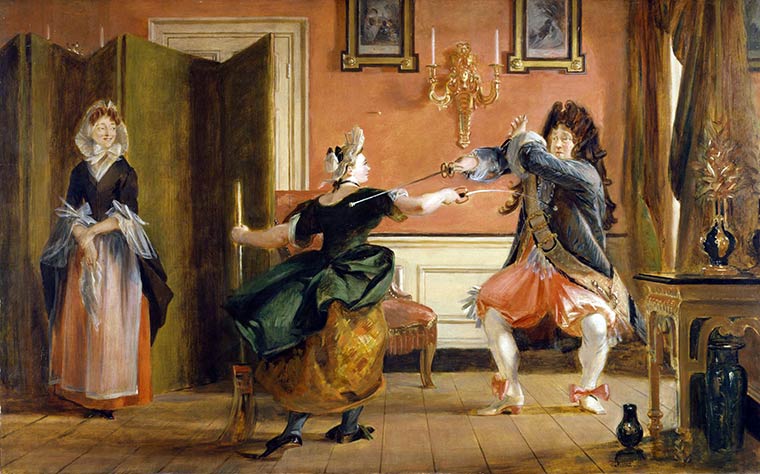
1st Round

#1 Atwood over #16 Durang

Durang is a "troubled marriage" play from 1973, and even though those types of works tend not to have aged well, I was tempted to take it over the sequel to The Handmaid's Tale. However I have kind of made it a rule for the time being to stick with powerhouse authors and overwhelming favorites, especially in the first round, where no mitigating circumstances intervene.

#2 Achebe over #15 Manson

This is quite a matchup. I tried watching the video for this Marilyn Manson song. It's really not my kind of thing.

#14 Hesiod over #3 I Love Lucy

Speaking of stellar matchups.

#4 Gentlemen Prefer Blondes over #13 New Order

While New Order is, or at least was at one time, more in my line of musical taste, this particular song does not do much for me either.

#12 Chesterton over #5 The Great Dictator

I do like that I have a couple of classic movies that I haven't actually seen before to add to that list.

#6 Quinn over #11 Dunnett

In the battle of the genre books, Quinn is shorter.

#7 Shelley over #10 Moliere

#9 Ingerman over #8 Durante

Ingerman wins on length and for appearing to be a more conventionally readable book. Viviana Durante is a well-known real Italian ballerina however, and a lovely specimen of an artistic European person for us, so she merits a picture, as long as it stays up.


Quarterfinals

#1 Atwood over #14 Hesiod

This is another shaky win for Atwood in an unconventional matchup where I am not sure of the form of the Hesiod book and whether I would get anything out of trying to read it.

#2 Achebe over #12 Chesterton

A good matchup here. I would like to get to both of these authors someday. Achebe is probably more essential in contemporary literary culture, especially the mainstream of it.

#9 Ingerman over #4 Gentleman Prefer Blondes

#7 Shelley over #6 Quinn

A pretty strong final four.

Semifinals

#9 Ingerman over #1 Atwood

Ingerman benefited from favorable opponents to get to this point, but her book is just the right length and level of seriousness to take out a #1 seed I was looking for an excuse to defeat

#7 Shelley over #2 Achebe

Everything was set up for Achebe to break through and win the tournament, but going up against another well-regarded book with an upset factor spelled doom in the semifinal game.

Championship

#7 Shelley over #9 Ingerman


Tuesday, October 27, 2015

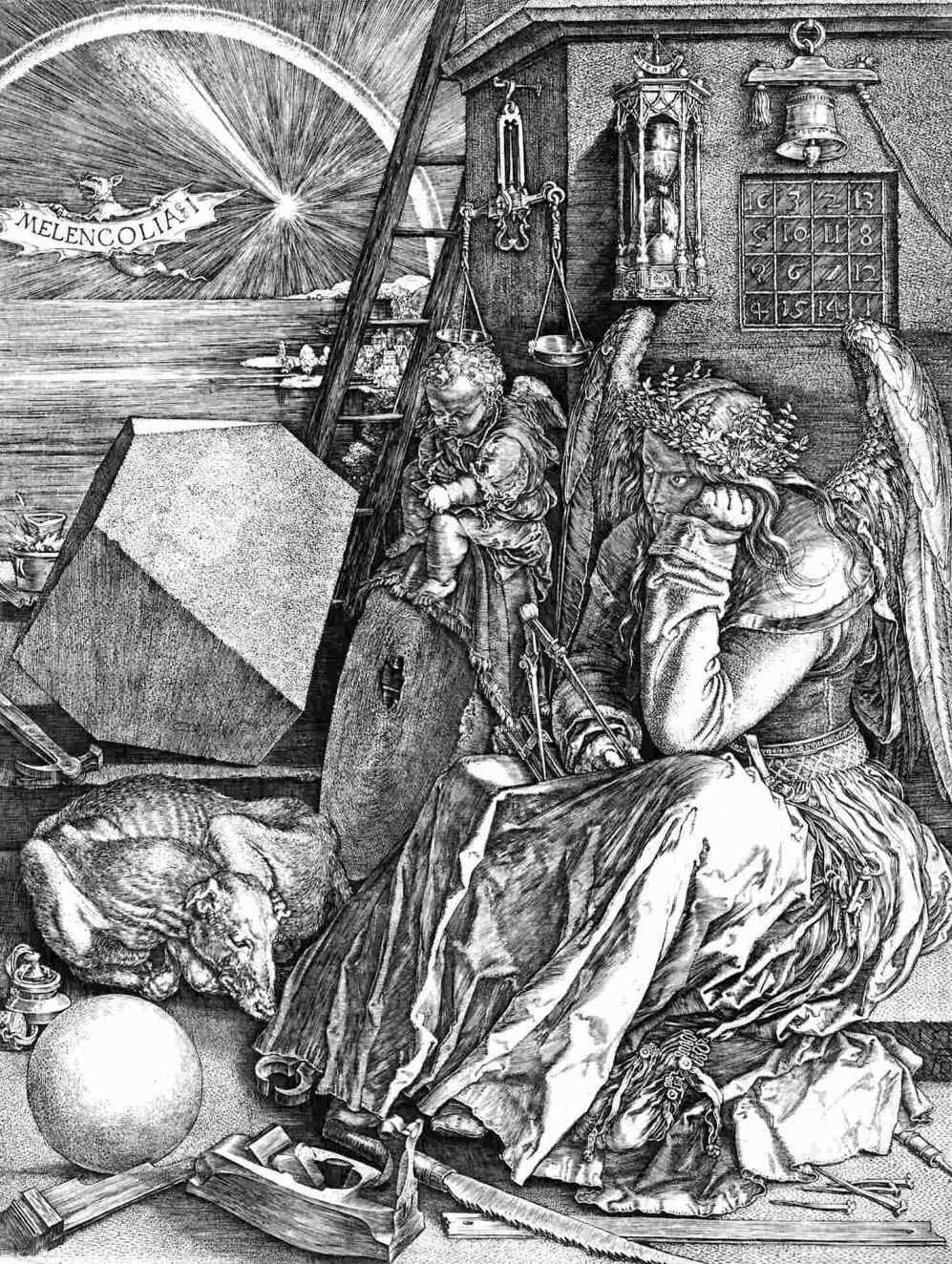
Robert Burton--The Anatomy of Melancholy (1621)

As noted in one of the monthly update posts, this was my second time through the Anatomy. I wrote a long series of posts, mostly of excerpted quotations, about the book on the parent blog. Although I think I had a better sense this time around of the overall form and at times, especially during the sections about love-melancholy, was able a little to get caught up in the prevailing spirit of the work, I regret to say that on the whole I still found it more work to get through most days than the rewards of that reading compensated, and I was not unhappy to see it come to an end. It took about two months to get through, and I can go on with the rest of the list now, in which I am in a stretch of readings that are either very long or do not have precisely defined editions, which requires me to exercise some judgment to determine what my list wants me to read.


I should say a few things about Burton before moving on from him. His basic biographical facts largely present themselves as a set of simple, clearly marked, easily recognizable identities, and as such I, and probably other people after my type, are inclined to like him--being from almost the very beginning of the modern era of European history, his associations, as an upper class Englishman, as an Oxford don, as a cleric in the Church of England, as a literary man, carry an aura of purity and naturalness about them that they can have for no contemporary person. He never married, or in outward action veered very far from the grooves in which his life ran once these were established. His book is memorable as an exhibition of how a brain stuffed with a lifetime of endless variations on a handful of core experiences--in Burton's case namely reading and being depressed--organizes itself. There is genuine humor in his book, though there are fairly long sections that are unrelieved by it. The Anatomy has been described by one notable commentator as one of the greatest assaults on the powers of human concentration ever concocted (or something to that effect--I cannot find the exact quote at this instant), and in our age that is especially true. I find I am more distracted in reading by fatigue and the constraints of time in my life than by electronic devices/internet, which I almost never use at home. Grabbing a half-hour to read in relative un-agitated peace--which in this book means getting through seven or eight pages tops--is a chore in itself, and then 3/4ths of the time I am falling asleep by the second paragraph. It is a joke, really. Still, I am pleased that I stuck to it all the way to the end. I always believe I get something out of doing that with notable books, even if this something is effectively nothing by the standards of the truly literate.


The Challenge

1. Birdman (movie).........................................................................5,377
2. We Need to Talk About Kevin (movie)........................................1,711
3. Melancholia (movie)......................................................................970
4. Love at Any Cost--Julie Lessman...................................................245
5. Destruction--Sharon Bayliss..........................................................148
6. The Man With the X-Ray Eyes (movie)..........................................136
7. Children of Dreams--Lorilyn Roberts............................................134
8. American Violet (movie)..................................................................92
9. Discipline & Punish/The Birth of the Prison-Michel Foucault.......90
10. Law & Disorder--Douglas/Olshaker............................................. 75
11. The Trial (1962 movie)..................................................................69
12. Live From Death Row--Mumia Abu-Jamal...................................52
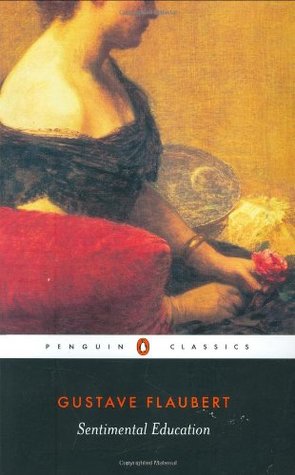
13. Sentimental Education--Gustave Flaubert.....................................42
14. When Rain Hurts--Mary Evelyn Greene........................................38
15. The Sly Company of People Who Care--Rahul Bhattacharya........27
16. White Jacket--Herman Melville......................................................21

We got a few decent books into the challenge this time. Still, older classics tend to limp into qualifying compared with movies and contemporary crime/romance novels, which did not occur to me when I was designing this great competition.

Round of 16

#16 Melville over #1 Birdman. No movie can beat Melville straight-up in this game. This one did win the Best Picture Oscar a few years back, though it seems to have been promptly forgotten.

#15 Bhattacharya over #2 We Need to Talk About Kevin

#14 Greene over #3 Melancholia. This is at least the second time Melancholia has appeared in the Challenge. It advanced fairly deep into the tournament on a previous occasion, and I ended up putting it my list of movies to sent to me, and it is currently sitting in my desk. I haven't watched it yet however.

#13 Flaubert over #4 Lessman

#12 Abu-Jamal over #5 Bayliss. The neighborhood of Cheltenham/Northeast Philadelphia which I am from is full of policemen and firemen and delivery drivers and lots of other people who absolutely and vehemently despise Mumia Abu-Jamal, but I am aware that the rest of the world regards him as a serious person, and a large portion of the legitimate intelligentsia a sympathetic one.

#11 The Trial over #6 The Man With the X-Ray Eyes, When there is a match-up between movies I usually just pick whichever one is older, unless I am convinced one of the films is just absolute garbage. These two were released within 9 months of each other over 50 years ago, which kind of negates the age factor. X-Ray Eyes does have Ray Milland in it, but The Trial is an Orson Welles movie, if not an especially celebrated one, and that is enough to give it the victory here.

#10 Douglas & Olshaker over #7 Roberts.

#9 Foucault over #8 American Violet

A clean sweep for the bottom half of the draw.

Round of 8

#16 Melville over #9 Foucault. I am having these two contend straight up because Foucault is supposed to be serious and important. His book in this instance is also shorter, and he gets points for being foreign as well, though of all the nationalities, I suspect reading French authors probably merits the least credit. However, neither of the libraries I have privileges at has the Foucault book, so he loses here.

#15 Bhattacharya over #10 Douglas/Olshaker. The Bhattacharya is presented as more hipster/literary, while the other looks to be more of the gritty, true facts about the way the world works school, which I admit I tend to be bored by in too frequent doses.

#14 Green over #11 The Trial

#13 Flaubert over #12 Abu-Jamal. I can't take Mumia that seriously.


The elusive truly great book of the competition

Final Four

#16 Melville over #13 Flaubert. Incredibly, neither of my libraries has the Sentimental Education either, a book I am starting to worry that I will never read, even though it is among the favorite books, and easily the favorite Flaubert, among many people whom I consider in some degree to be acceptable models of erudition and worldliness. For some reason it does not come up in either of my official lists. I suppose I should have rammed it through to the victory here--it is my challenge, and I do that--but at the moment I am especially disorganized with regard to my lists, as well as short of cash for any extra purchases, however small, so I am not going to do that.


#15 Bhattacharya over #14 Green.

Championship Round

#15 Bhattacharya over #16 Melville. The higher seed wins for the only time in the tournament. Since I decided to treat Bhattacharya as a legitimate contender based on nothing but the cover of his (her?) book, the circumstance that it is over 100 pages shorter than Melville, as well as available at the library, gives it the victory.


The winning design


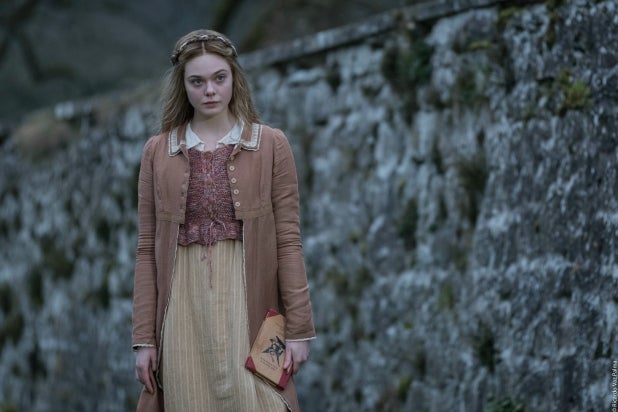
This post needed a girl-I'd-like-to-have-had-intrigue-with-in-my-youth picture.

Monday, February 2, 2015

Shakespeare--All's Well That Ends Well (1602 or 3)

First Shakespeare on the list. As we get deeper into it we are beginning to pick off more and more of these firsts, but there are still a few big areas out there that we have not gotten into. First Dickens, as well as other well-represented authors. First French, Russian, Spanish, modern Italian and Scandinavian books. First work in English of straight poetry (we have had a couple of dramas, namely this and Dryden, that have contained a considerable amount of verse so far). This is also the last of the series of readings, mainly plays and smaller novels, that were relatively short. The next five books on the list, at least--I try not to keep in mind more than five books ahead in doing this--are all on the longer side, at least 450 pages, with a couple even longer than that. I will read those at a somewhat more accelerated pace. I have been somewhat deliberate in reading these shorter ones because I wanted to feel that I had spent a little time with them. They all are become dear to me in some way and I don't want to just blow through them.

I have been finished with All's Well That Ends Well for about two weeks and have found that I have not had the energy in the evening, nor the time during the day, even to write up my little report. I don't want to fall behind on these.

I found with this, as I found with Virgil and Faulkner, the other two inner ring all time great authors we have come across on this list so far, that it was difficult to read late at night, which is by necessity the time when I do most of my reading (and writing), for more than a handful of pages before my concentration would break down and I would dose off to sleep. It is not that the books are completely beyond my reading ability when I am at close to full alertness and strength, as I have been reading these authors, and others in the same vein with a fair degree of familiarity with the style and language, at least, for twenty-five years. But old man fatigue is starting to hinder my ability to go back and take up the real Greats unless I am very fresh, well-rested and relaxed, which is a combination of circumstances I am finding myself hard-pressed to attain.


I haven't said anything about the actual play, which I am pretty sure I had never read before, as I would have recognized when I read Colley Cibber's Love's Last Shift a few years back the plot device of the neglected wife arranging for another woman to make an assignation with her wayward husband and taking the would be mistress's place in bed once darkness fell (which had been done long before Shakespeare as well). I enjoyed reading it, apart from my frustration on the occasions when I was unable to keep my eyes open. Everything with Shakespeare, especially after his first few plays, partakes of the character of the grand manner, and I am always alert to that sense, even if I am not alert enough to follow and make sense of the flow of the particular words on the page. I was surprised when I bothered to look at it at the relatively late date assigned to this play, as I tend to think of the comedies with Italian, or in this instance French-Italian, settings, as belonging to more or less the same period, and that the earlier part of Shakespeare's career before 1600, after which the tragedies became predominant. However I see that I am three or four years off in my calculating and that the 1600-1603 period was more comedy-heavy than I had realized, with Twelfth Night, Measure For Measure, The Merry Wives of Windsor, and other of the maturer ones coming out in these years.

I do not have a sense of what the best order to read Shakespeare would be if one is going to do it across a period of many years and at intervals among many other books. The IWE list does not have all of the plays, either--Pericles and Titus Andronicus at least did not make the cut--but it has most of them, and they will be coming up alphabetically. I think this was a good one to start with, as it is one of the lesser-known plays to the general reader, but it does partake of many of the best-loved qualities of the Shakespearean canon, the wit, the infectiousness and romance aroused by the language, the sense of being present both by the poetry and the setting of the story at the heart of all that defined and ever mattered about European civilization. The recovery, or acquisition, of some of these sensations is the whole raison d'etre for my undertaking this list at my time of life after all.

But I still haven't said anything about the play itself. No thoughts worth recording have come to me about it, nor have I been able to produce any on my own. High literature to someone like me is more a primer for how to try to live a little more nobly, with a little more purpose, with some mitigation of disgrace, than it is a fount for inquiring into serious ideas and human problems.  


Main Square, Rousillon, France

The Challenge

I am going to attempt to revamp the Challenge between now and the next occasion for it, as it has died entirely in its current form. Here are the sorry results for the last exercise of this version of it:

1. The Countess Conspiracy--Courtney Milan.....................191
2. Confessions of Catherine de Medici--C. W. Gortner......127
3. Travels--William Bartram (1739-1823)..............................18
4. Framing the Early Middle Ages--Chris Wickham...............7
5. Romancing Lady Cecily--Ashley March..............................5
6. The Shaping of Southern Culture--Bertram Wyatt Brown...1

There was a movie challenge also:

1. The King's Speech.....................1,465
2. The Merchant of Venice (2004)...186
3. Quai des Orfevres..........................11

The Bartram book apparently is well-regarded. I am thinking in my future version of the game to go to a tournament format in which I choose in one-on-one matchups which book I think likely to appeal to me most through to a final.

I saw The King's Speech a few years back. I thought the subject, and the spirit in which it undertook that subject, to be strange. I wasn't in the mood to revisit it at this time.