Showing posts with label Eurocentric bias. Show all posts

Thursday, May 10, 2018

Felix Salten--Bambi (1923)

Thought of, doubtless due to the Disney cartoon, primarily as a children's book,  the novel Bambi is actually a highly emotional, and in some ways rather brilliant meditation on the arc of life, nothing like I expected. For some reason--probably because I had confused him with Maurice Maeterlinck--I was thinking when I started the book that Felix Salten was Belgian and wrote in French, though in fact he was Jewish and a native of Hapsburg Budapest who wrote in German. Salten was very prominent in intellectual circles in his time as far as activity goes, though most assessments of his raw brainpower in these tough crowds did not accord him a particularly high rank. At least one writer has opined that Bambi can be interpreted as a commentary on the Jewish experience in Europe. I found it to be very sad, though essentially truthful. It really is not a children's book. There is nothing in it of humor or whimsy, despite which I think it is quite good, and well worth the time to read, if you have an intellect and psychological makeup like I do, which admittedly does not seem to be very many people.


p. 20 (I started pretty early with the notes in this book) "These were the earliest days of Bambi's life. He walked behind his mother on a narrow track that ran through the midst of the bushes. How pleasant it was to walk there." The melancholy, wistful tone is established right at the beginning. The English translation by the way was done by Whittaker Chambers, who was a name of some renown in his lifetime, though I don't have a good sense of what specifically he was renowned for.


p. 56 "In a moment Bambi darted after her. Gobo followed him. They flew around in a semi-circle, they turned tail and fell over each other. Then they chased each other up and down. It was glorious."


p. 59 "And Bambi's mother said to him, 'Come, it's time to go.' 'Wait just a little longer,' Faline pleaded eagerly, 'just a little while.' 'Let's stay a little longer, please,' Bambi pleaded, 'it's so nice.' And Gobo repeated timidly, 'It's so nice, just a little longer.'"


See what I mean.


Around this point I made a rather snide note that if a marginalized culture had produced this story, it would probably be held up as so subtly profound and wise as to be inaccessible to us.


pp.70-73 "'It was a bad business', he said, 'a monstrous uproar! You wouldn't believe how scared I was. I hunch myself up as still as a mouse in the corner and hardly dared move. That's the worst of it, having to sit there and move. And all the time you're hoping nothing will happen." This is a squirrel talking. I thought this passage might have been related to the Jewish experience in Europe.


Fall comes for the first time and Chapter VIII is a brief aside featuring the last couple of brown leaves clinging to a branch in complete denial about their future prospects, a real meditation on the reality of death. It hit home with me.


p. 234 I don't know what happened in the middle of the book, I meant to write down some notes but never got around to it. By this time Bambi has come to the point in life where I seem to be: "For his thoughts had grown serious and his heart heavy. He did not know what was happening within him. He did not even think about it. He merely recalled things aimlessly, and his whole life seemed to have become darker."


p. 258 Then he suffers injury and illness: "Not until the fever had entirely left his body did Bambi begin to think over all that had happened to him. Then a great terror awoke in him, and a profound tremor passed through his heart. He could not shake himself free of it. He could not get up and run about as before. He lay still and troubled." Obviously this whole passage would be lost on a child and would have to some extent been lost on the me of ten years ago. The depiction of the emotions of aging, not even out of youth, but really out of the prime years of life is eerily good. Salten, for the record, was 54 when Bambi was published, so he still had a few years on me. Books on these classics lists written by authors older than I am at the time of publication are not quite rare yet, but it has definitely reached the point where the circumstance is worth noting.


p. 268 "But of all his teachings this had been the most important; you must live alone, if you wanted to preserve yourself, if you understood existence, if you wanted to attain wisdom, you had to live alone."


Stolen picture. Since it's getting harder to do this, I'm going to have to start preparing more from my own materials. It shouldn't be hard.


The story meanders a little more in the second half, though it is obviously still an allegory. Though perhaps I should see it again, I think this aspect was completely lost in the Disney adaptation, which Salten apparently liked nonetheless.


I suppose I should at least briefly touch on the question of whether hunting is evil or not. Besides the brutality of humans which are duly noted, many of the animals are obviously predators too. After a heartwarming description of a family of ducks, a fox drags the mother duck out of the water and devours her, the mice live as virtually universal prey, and so forth. While death and inter-species violence are endemic to life, I think Salten would not have us find them lovable or heroic aspects of existence. He has chosen as his hero-animals the deer, who do not attack other animals, after all. I have, of course, never been on a hunt of any kind, unless we count setting mousetraps, the bringing of which latter death I must confess I have never lost any sleep over. I do not avoid hunting for any ideological reason, but merely because I did not grow up among people who ever did those sorts of things. It is a skill, and historically an important one for humans, especially male humans, to have, and I don't have any strong feeling that it was a skill that would better have remained undeveloped, so I have no urge to denounce it. Even the desire to virtue signal in me at this point is not powerful enough to give me any real pause in considering a position.


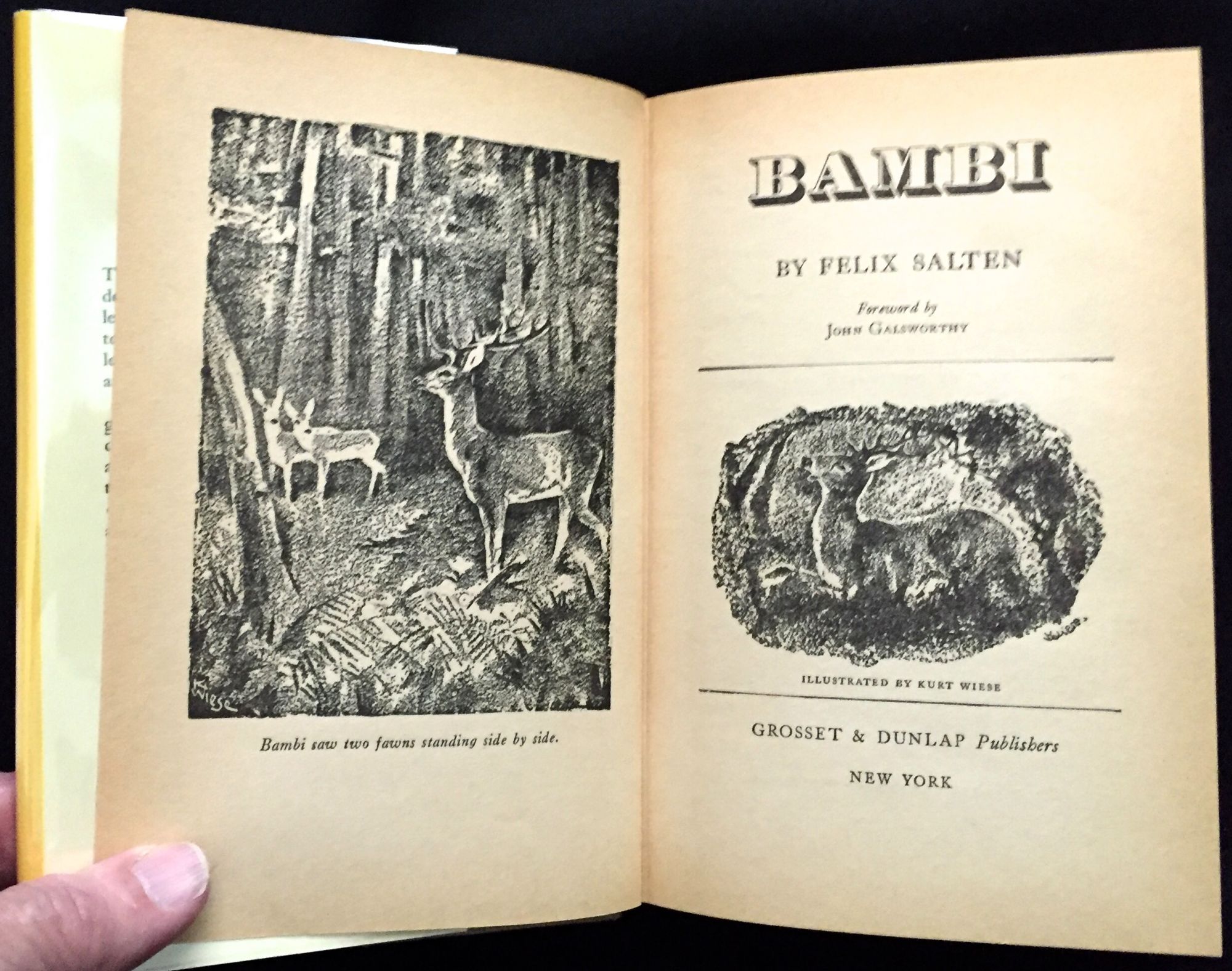
The edition of the book I read I found some years back in my attic (two copies of it in fact) in one of the many boxes of books that had been left up there for many decades by my wife's family. The book was published by Noble and Noble, with a brief forward by John Galsworthy and illustrations by Kurt Wiese. It looks like it dates from the World War II era, since there is an announcement on the copyright page declaring the book to have been made in strict conformity with WPB regulations of essential materials. It is a nice little book, though unfortunately I got something on my hands one day while I was reading it and smudged the cover.


The Bourgeois Surrender Challenge


1. Chicken Soup For the Cat Lover's Soul.......................................2,055
2. Philip Pullman--The Subtle Knife...................................................718
3. Jane Yolen--Owl Moon...................................................................268
4. Emile Zola--Germinal.....................................................................158
5. Bob Grant--Bambi (Golden Book)..................................................134
6. Kenneth Oppel--This Dark Engineer................................................84
7. Mary Eberstadt--It's Dangerous to Believe.......................................57
8. Victor Hugo--The Man Who Laughs.................................................37
9. Pippa Mattinson--Total Recall...........................................................28
10. Victor Digenti--Windrusher............................................................21
11. Velda Brotherton--Once There Were Sad Songs............................21
12. Maxim Gorky--Mother....................................................................20
13. Felix Salten--Bambi's Children........................................................13
14. Susanne Davis--The Appointed Hour................................................7
15. David Zindell--Splendor....................................................................5
16. Jana Richard--Lies and Solace...........................................................5


First Round


#16 Richard over #1 Chicken Soup


This is a pretty excruciating matchup.


#2 Pullman over #15 Zindell


In battles of two genre books, I am going to go chalk until the final four from now on.


#3 Yolen over #14 Davis


The Yolen book is a children's book but it did win the Caldecott medal


#4 Zola over #13 Salten


A rare clash of IWE authors in the Challenge. I am actually curious about the Bambi sequel, but it wasn't enough for me to give it a win here.


#5 Grant over #12 Gorky


Upset card played over another IWE stalwart.


#6 Oppel over #11 Brotherton


#10 Digenti over #7 Eberstadt


Eberstadt's book is about religion and contemporary issues, not a genre novel. Unfortunately Digenti has an upset card.


#8 Hugo over #9 Mattinson


No one really studies like this anymore, but at least someone else wishes they did.


Elite Eight


#2 Pullman over #16 Richard


#3 Yolen over #10 Digenti


#4 Zola over #8 Hugo


Another clash of titans


#6 Oppel over #5 Grant


Oppel uses up his upset card.


Final Four


#2 Pullman over #6 Oppel


#4 Zola over #3 Yolen


Champiuonship


#2 Pullman over #4 Zola


Pullman had a upset coming that he didn't have to use until the final. His books certainly appear to be popular. I have no idea what they are about.



This is that Philip Pullman guy.

Thursday, August 17, 2017

Aucassin and Nicolette (c.1200)


One of the most popular and presumably accessible, as well as one of the greatest of the medieval Provencal romances, this is sometimes referred to as the French "Romeo and Juliet". It is also one of the shortest works on the entire list, so I wonder if I should not try reading it in (old) French sometime. Of course it is on the internet. Here are the first four lines:


"Qui vauroit bons vers oir
del deport du viel antif
de deus biax enfans petis,
Nicholete et Aucassins..."


I can probably make out enough of it to follow the story. Whether I would get it enough to get a much better sense of it as a work of literature, I don't know.


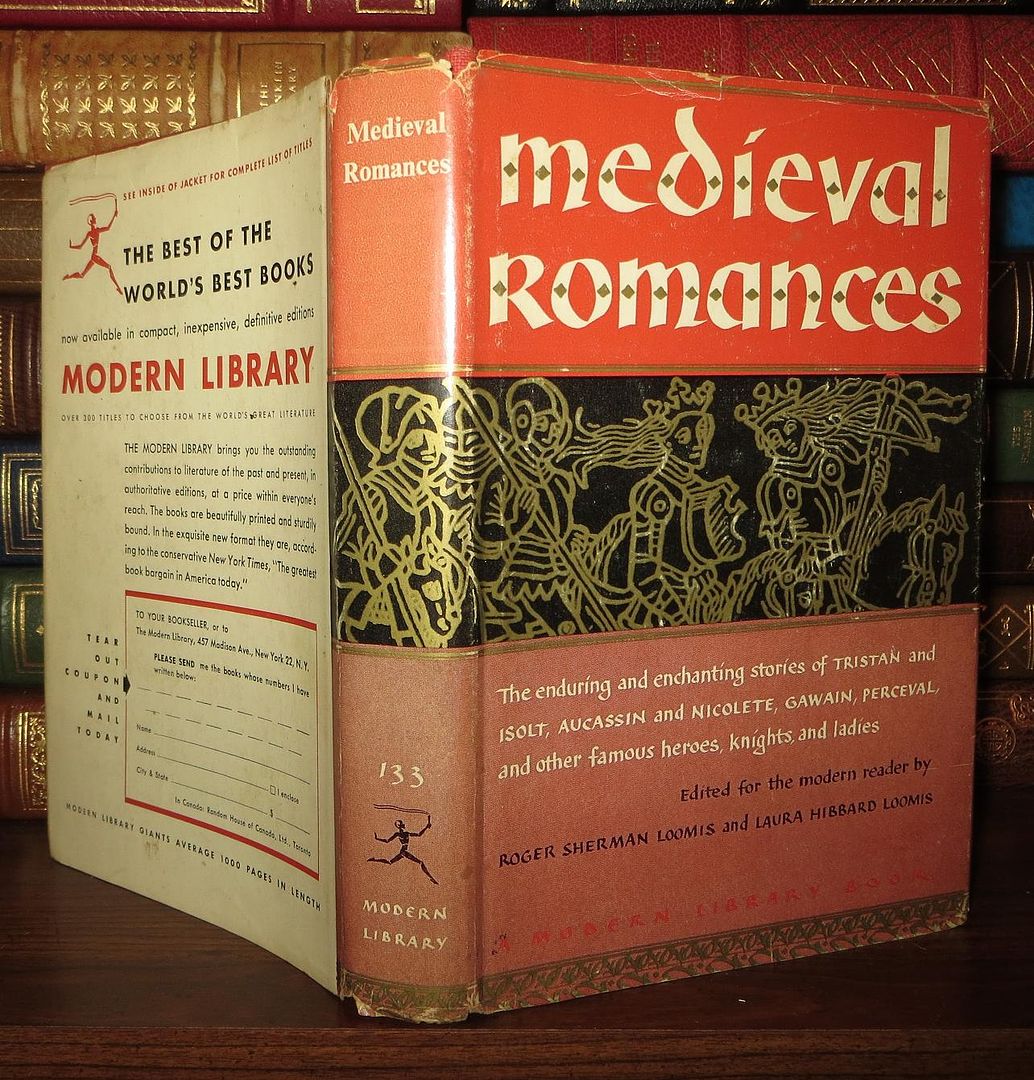
I read the relatively celebrated Andrew Lang translation in the 1957 Modern Library edition of Medieval Romances, which surprisingly does not include anything else that made the IWE list, though it does contain classics like Tristan and Iseult and Sir Gawain and the Green Night. Medieval Romances are evidently underrepresented on the program. I like romances and the ideals of the Middle Ages and old French literature enough that I enjoyed the tale and the nicely translated poetic parts well enough, though I was still more distracted than I would like to be and could not achieve the level of absorption in the book that I like to. Aucassin and Nicolette are, to my perception, a strange pair of lovers. Aucassin comes off as rather whiny and petulant, as opposed to say, angry and fierce, during the parts where his love is denied, refusing even to defend his father's castle from attack, though at other times he demonstrates bravery and martial skill more appropriate to his station. Nicolette, a Saracen who was captured as an infant and sold to a viscount is plucky and keeps her eye on the prize of marrying Aucassin, though I did not get a sense of her having a great romantic passion in the Shakepearean or Villonian sense. Apparently some experts have considered that Aucassin and Nicolette might be a parody of the romantic genre, and there are some decidedly odd episodes in it such as the king being in childbed and the battle fought with hunks of cheese for weapons.


I wish that perhaps I had read this when I was younger and more passionate and more innocent of the world of literature. It probably would have made a stronger impression on me.


I noted on the threadbare Wikipedia page for this book that Walter Pater in the Renaissance and Mortimer Adler somewhere in his writings took up this story. Since I have both of these at home I meant to take them up today and see what they had to say, but of course it slipped my mind because there were multiple things going on at my house today, and now I am not there. I am so scatterbrained nowadays it is comical. I need to try to finish this tonight or who knows how long it will take me.


It is now the next day, as I did not finish the report last night. And I forgot to look at the books again! My excuse is that I am I in the 2-week dog days period where my wife, who is a teacher, has gone back to work but the children haven't gone back to school yet so I have all of them all day. Also there were carpenters in the house today framing walls, so there were a lot of impingements on my intellectual life.


This is the (a?) week where everyone has been riled up politically and morally over Nazis, or wannabe Nazis and the "alt-right", which terms some have declared interchangeable. Of course I have a lot of thoughts about this, which seem to be more coherent when I am not trying to write them down, or maybe I am less tired earlier in the day. These kinds of topics are endlessly fascinating, I suspect because most people, apart from Donald Trump and a small number of others like him, are very attuned to the appearance in the world of people who may hate them, and there has been a considerable amount of hatred expressed in one form or another over our wonderful internet during the past week. Much commentary and denunciation have been passed on the Nazis/alt-righters themselves which I don't have much to add to. I don't deny that they are an embarrassment. I am not convinced how much of a threat they are. Supposedly they constitute a main leg of Trump's support, though there is some dispute about how much of a force they really are. From such footage as I saw there looked to me to be two distinct groups: the tattooed musclebound biker crowd who at least in my lifetime have always been pretty openly racist and offensive and don't really care if everybody knows it. I don't think there is much danger of these guys overthrowing the establishment; and then there were the second, even weaker-looking group, the uncertain, even dorky-looking guys in the torch parade, who it is pretty evident are the products of a socialization and education gone badly wrong and are grasping at any kind of identity that feels vaguely masculine. My guess is that to some extent they perceive that their minority enemies are considered adequately masculine, and that they derive some portion of this strength from it being more socially acceptable, if not encouraged, for them to be aggressively antagonistic towards whites. Whether there are more people turning out like this than people realize, or previously cared about, I don't know, but I suspect that the answer is yes. I also have to wonder if the people who hate them with the most vehemence are subconsciously delighted that the cretins have come out in the open so that they can stomp on them and destroy them in the epic good vs evil confrontation that they have long craved. But now I am going off on a tangent. I had jotted down a few short thoughts this afternoon when I wasn't tired that I thought were reasonable and pertinent. I am going to write those here, hopefully without embellishment:


There are a lot of people of the internet eager to direct my thinking on this issue. Evidently there is only one way to think about it, and perhaps there is, but unfortunately my school training such as it was placed a very heavy emphasis on the idea that it is unlikely there is only one way to think about anything, so these uniform exhortations are not as effective with me as I might like them to be for my own sake.


I saw dozens of reminders that being silent in the face of such evil is basically akin to being complicit in it, that if we ever wondered what we would have done during the Nazi occupation, etc, that what we are doing now corresponds, and so on. Even if we do nothing else about it, I suppose we must at least have it on the record that we have denounced it though since in this instance about 50-100 million people are shouting denunciations in full-throated fury, if Nazis do somehow manage to take over the country, I am assured it will not be because too many people were silent. Also while it may be necessary to suggest that we are currently reliving the Nazi era in real time in order to prevent it from actually happening (though I am skeptical), we in fact are not, not yet. If anything, there are as many calls from the left for stripping people of rights, employment, money that are actually coming from seats of actual power as there are from the right.


Kim Jong Un. Worse or better person than Thomas Jefferson? Robert E Lee? Trump? He certainly doesn't elicit as much passionate fury from the left as any of these guys. I get that he is foreign and not white and most people agree that he is generally bad, while the wickedness of these other guys needs to be taught, perhaps forcefully, to half the U.S. population. Still, if we are to have no tolerance for slavery, murder, homophobia, etc...


I have to admit I increasingly find the left to be unbearably sanctimonious on their pet issues. As much of a debacle as Trump is, I really dread the left getting back into power anytime soon after this, since now there is undoubtedly going to be extra pressure and motivation to "punish" people perceived as being likely Trump supporters, which would be ugly. I don't see a Franklin Roosevelt or Harry Truman type figure on the horizon.


So far the places that have notably taken down confederate statues or have had mobs take them down that I have seen are two big cities with mostly black populations (Baltimore and New Orleans), three cities that are the home of major (i.e. wealthy, largely upper middle class, global-minded) universities (Gainesville, Charlottesville, and Durham, and in the two latter of these the statues did not come down without conflict). In my old haunt of Annapolis they are apparently finally going to remove the statue of Roger B Taney from the state house grounds--there were people talking about doing this when I lived there 25 years ago--but this is in the capital of what is now one of the most reliable Democrat states in the country and one that was not actually part of the Confederacy. In short, places whose spiritual connection to the Old South has grown more tenuous with the passage of time than other old southern towns.


I am planning to do a post on Robert E Lee on the other blog one of these days. I am going to get a computer when school starts so I can write at home. I'm going to put it on a credit card, which I hate doing, but what has it been, two or three years. I still think of myself as a writer in my approach to everything, and I feel left out of everything when I am not trying to do something in that line.


Challenge


1 Fantastic Beasts and Where to Find Them (movie)...............................................9,740
2. Harry Potter and the Prisoner of Azkhaban (movie)............................................2,636
3. Imitation of Life (movie-1959).................................................................................664
4. The Train (movie-1965)...........................................................................................485
5. Chip & Dan Heath--Decisive: How to Make Better Choices in Life and Work.......422
6. Charles Frazier--Nightwoods....................................................................................340
7. Marjorie Bowen--Mary Queen of Scots....................................................................139
8. Theodor Fontane--Effi Briest......................................................................................43
9. Threepenny Opera (movie-1931)...............................................................................32
10. Wilderness (movie--2008)........................................................................................27
11. Andrew Lang--Tales of Troy......................................................................................9
12. Lynne Tillman--Someday This Will be Funny............................................................6
13. Bloom's Critical Modern Views: Tennessee Williams................................................1
14. David Ruffin--"I'm So Glad I Fell For You/I Pray Everyday You Won't Regret Loving Me (record)..............................................................................................................................0
15. E. Jane Burns--Courtly Love Undressed.....................................................................0
16. Jay Ruud--Encyclopedia of Medieval Literature.........................................................0
17. The Violin: A Research and Information Guide..........................................................0
18. Storytelling: An Encyclopedia of Mythology and Folklore (ed. Sherman)..................0


Qualifying Round


#18 Storytelling over #15 Burns
#17 The Violin over #16 Ruud


Incredibly, all of these books except for Courtly Love Undressed have made it into a library somewhere in my state.


Round of 16


#18 Storytelling over #1 Fantastic Beasts


This is at least the 2nd appearance of Fantastic Beasts in the tournament.


#17 The Violin over #2 Harry Potter
#3 Imitation of Life over #14 Ruffin


#13 Bloom over #4 The Train
#12 Tillman over #5 Heath
#11 Lang over #6 Frazier


Lang's book is rarer, and I am intrigued by Frazier a little, but another effort by the once-appreciated translator of Aucassin and Nicolette gets the nod here.


#7 Bowen over #10 Wilderness
#8 Fontane over #9 Threepenny Opera


Theodor Fontane, apparently a quite celebrated author of whom I had never heard, wins the battle of the German productions.


Final 8


#18 Storytelling over #3 Imitation of Life


What a draw for Storytelling.


#17 The Violin over #7 Bowen


The same for The Violin, which beats Bowen because no libraries saw fit to pick up her book.


#8 Fontane over #13 Bloom


Effi Briest is not found outside of academic libraries, though it has been published in English as part of the Penguin classic series.

#12 Tillman over #11 Lang


Final 4


#8 Fontane over #18 Storytelling
#12 Tillman over #17 The Violin


Championship


#8 Fontane over #12 Tillman


"Theodor Fontane (1819-1898)...regarded by many as the most important 19th century German-language realist writer." Given the comparatively paltry extent of my reading in, and even basic knowledge of, German literature, this was a pretty easy choice, though I'll have to scare up a copy of the book.


Wednesday, April 13, 2016

Margaret Landon--Anna and the King of Siam (1944)

Probably best known today as the source material for the famous musical The King and I, Anna and the King of Siam would I suppose belong to the genre of historical fiction, as Anna Leonowens was an actual person who was employed at the court of the King of Siam in the 1860s, and the novel was largely based on her memoirs of that experience. The book was surprising to me, in a positive sense, in a number of ways. Though I had always seen it on the list and knew it was coming I had not paid close attention to it. It was published much later, for example, than I imagined it was. While I knew it was set roughly around the time that it is, I had thought the publication dated from the late Victorian era to 1910 or so at the latest. This is probably on account of the musical; I tend not to think of musicals in general as based on particularly fresh material. though most of the Rogers and Hammerstein shows were actually based on sources, or events, that were only a few years old. I also, again probably because of the musical, which I in fact have never seen, as well as its inclusion in the family-friendly IWE list and the circumstance of its general lack of consideration as serious literature, imagined the book as more oriented towards children, or at least adolescents, with considerable sugar-coating or romantic treatment of its subject, but in fact the routinely sadistic abuses and executions that are inflicted on members of the royal harem and other slaves are depicted quite graphically, to the point really that you find yourself asking, "Why is this English woman staying here and continuing to work in this environment anyway?" The book is genuinely interesting, for the most part--it may be slightly too long in the sense that a couple of episodes perhaps could have been left out. It is in the main episodic, without a tight thread of a central plot or action driving the characters forward and together, which style I don't mind, only that some episodes are more compelling than others. Many of the minor characters, both Siamese and European, will crop up again in a later episode a hundred pages or more after they had previously appeared, and whether this is due to advancing age and declining memory or not I have trouble remembering them when they reappear. I could use one of those lists of characters that often appear after the table of contents in Dickens or Tolstoy novels, in which books, ironically perhaps, I never have trouble keeping the characters straight or remembering who they are.


Not knowing anything about Siam in this time period, even its relation to European colonial aggression, I thought Landon did a good job in sketching a general outline of this through the character of the king's correspondence with Western governments, the introduction to the very small expatriate communities centered around the British and American and French consulates, and the handful of highlighted instances and crises of mainly French agitation against Siamese territory. It attests to some skill in the author that after witnessing King Mongkut having people burned to death and tortured and thrown into dark dungeons for interminable periods of time for trifles mostly related to a lapse of absolute self-effacement in deference to his Majesty that this reader was able to feel sympathy for him when the French representatives are applying pressure to him to accede to various outrageous demands. I am reminded, as I often am in old books written by English speakers, of the brusque arrogance of the French ruling classes in the days when that country was a world power. Of course the French have retained a reputation for hauteur and snootiness into our own time, but it lacks something of the force, as well as the seething visciousness, that this characteristic is depicted as possessing in these old books. I have no doubt that the British in their heyday were no less obnoxious and condescending after their own fashion, though the effect on reading about it is usually not so pronounced, even in the most nationalistic of the Irish writers; and on the whole they don't seem to have inspired quite the thorough degree of visceral hatred in the people they have formerly abused or made to feel inferior as the French (this is not to say that a visceral hatred does not exist, I merely postulate that it does not attain the same intensity as that directed towards the French).


Given that this book is 1) written by a woman; 2) is about a woman, and one who actually existed and was independent and seems to have been possessed of considerable pluck; 3) takes place in a non-Western country and seems to attempt to give an accurate presentation of the nature of life there; and 4) has at the very least some claim to literary distinction as much I think as other books that are considered to be important, my impression is that it is not widely read or remembered today. Is it somehow too racially offensive or insensitive or otherwise politically problematic? Landon, presumably writing through, or guided by the spirit of Anna Leonowens, was at least on the right side of history in thoroughly denouncing slavery and European colonialism, though by the end of World War II when the book was published these views were not terribly out of the mainstream. The Siamese or Thai people are treated I think with seriousness, though the repressive, authoritarian society that predominated in the palace does not show the country in a flattering light; I have no reason however to suspect it was not broadly accurate. Students of White Privilege would have a field day with Anna Leonowens, as she wields this status or aura throughout her stay in Thailand like one of the European gunboat cannons that so terrifies King Mongkut. All of the Siamese people have to spend half their lives in various forms of simpering prostration and submission to the wills of whoever ranks above them and can be tortured or killed on a whim, but Anna is perfectly confident to walk into this brutal environment and declare that none of these customs apply to her (which, as it turns out, is largely correct). Anna also has in her a considerable amount in her of the now notorious but at that time largely unconscious White Woman Savior complex when placed among people whose culture and enlightenment have not yet attained to the level favored by the European upper middle classes. Much is made in the book of her determination, through her teaching the future princes and other ministers of the Siamese state, to impress upon them certain European humanistic ideals the lack of which were especially offensive to her in the Siamese court, which had the result, according to the book, that when her pupil Prince Chulalangkorn ascended the throne, he abolished slavery and the more outrageous customs of prostration throughout his domains, this being credited to the influence of Anna. So this might be too much European righteousness for modern readers to take.


I found a very nice wartime copy of the book, with its lighter paper and increased words per page per the restrictions of that period, at my nearby used book barn. It has charming illustrations at the beginning of each of the forty chapters, as well as a quaint map of Bangkok in the 1860s. This edition must have been the one that sold the most copies, since I see on the internet that this is the one that most of the people who read the book have.


Example (sort of) of the illustrations in the book. I assume there must be a Blogger app I can put on to post pictures from my phone, since I have a phone now. I need to figure out how to do this so I can just out on my own pictures from now on. 

Strictly as a point of curiosity to me, Margaret Landon lived to the age of 90, dying on December 4, 1993 in Alexandria, Virginia (this, incidentally, was the same day that Frank Zappa died). It's curious to me because I would have been a senior at college at that time in Annapolis, only about 40 miles away. This day was a Saturday near the beginning of the Christmas holidays, so it possible that I played a basketball game that afternoon and I almost certainly went to a party that evening. I don't remember exactly what happened on that day but I can surmise that it was probably a pretty good one as far as days in my life go. It's one I would be willing to live over again.


Rex Harrison rocks the role of the king in the 1st film version of Anna.

The Challenge

Among the magic words in the synopsis of Anna and the King of Siam were frequent repetitions of "slave", "ransom" and similarly grim terms, which led to a rather lackluster field for the tournament this time.

1. Exodus: Gods and Kings (movie)........................................................2,837
2. Her (movie)..........................................................................................1,569
3. Anna and the King (movie).....................................................................363
4. Marylu Tyndal--The Ransom..................................................................244
5. Sharon Penman--A King's Ransom.........................................................215
6. Travels of Marco Polo.............................................................................150
7. Shakespeare's Sonnets (Arden Edition, ed. Katherine Duncan-Jones).....86
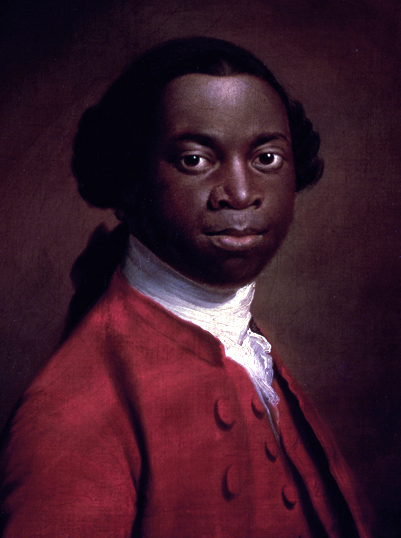
8. The Interesting Narrative of the Life of Olaudah Equiano.......................55
9. People's Almanac #2.................................................................................15
10. Edward D. Johnson--The Handbook of Good English............................13
11. Complete Works of Lord Byron...............................................................11
12. Frances Calderon de la Barca--Life in Mexico.........................................8
13. Grand Funk Hits (record).........................................................................6
14. Sword and Sorcery: The Divine and the Defeated...................................5
15. Deidre Knight--Parallel Fire....................................................................5
16. Evelyn Anthony--The Cardinal and the Queen........................................3

Michael Millner's Fever Reading procured no points and thus failed to qualify for the championship. However it did have a naked woman overwrought from her reading on the cover, so it gets an honorable mention here. 


1st Round

#16 Anthony over #1 Exodus
#15 Knight over #2 Her
#3 Anna and the King over #14 Sword and Sorcery

Breaking my usual rule about movies not being able to beat books because I am not counting the Sword and Sorcery thing as a real book.

#4 Tyndal over #13 Grand Funk

I don't really like any Grand Funk songs.

#5 Penman over #12 Calderon.

Calderon should have won in a cakewalk over this genre book. but Penman had an upset in reserve.

#6 Polo over #11 Byron.

Complete works of poets don't really fit in with the Challenge in the way that I read these books, in Byron's case especially, as a couple of his longer poems are on the regular list in their own right. The Polo book interests me somewhat.

#10 Johnson over #7 Shakespeare.

I am giving it to Johnson by a hair, as my library does not have the Arden edition of the Shakespeare.

#8 Equiano over #9 People's Almanac #2.

Final 8

#16 Anthony over #3 Anna and the King
#4 Tyndal over #15 Knight.

Neither of these books registers anywhere in the New Hampshire State Library database.

#10 Johnson over #5 Penman.
#8 Equiano over #6 Polo.

The Equiano book, which appears to be a slave narrative, is almost 200 pages shorter than the edition of Polo that is available to me.

Final 4

#16 Anthony over #4 Tyndal
#8 Equiano over #10 Johnson

Championship

#8 Equiano over #16 Anthony.


Tuesday, September 8, 2015

Mestember Update

I am a little late with the update this month, because I was celebrating the holiday the past two days.

A List--Thomas Hardy--The Woodlanders 247/379
B--Robert Burton--The Anatomy of Melancholy 320/1,131
C--Gillian Flynn--Gone Girl 139/419
*D*--Paolo Ruiz--The Fault Line: Traveling the Other Europe From Finland to Ukraine 170/253

This current group is a bit too much, mainly because of "B". Even keeping up a very modest pace of 15-20 pages per day in it is wearing me out, given everything else I have to squeeze in in the course of a day.

The A list is in the midst of a run of three Hardy books right now, the first two of which I assume to be considered minor as I had not heard of them before. The Woodlanders, after an intriguing start, is looking like it is going to live up to this designation. It is still not bad, but it is very similar in character with all of the Hardy books as well as many other 19th century English novels. It calls to mind Adam Bede in particular. There is more of a sense in Adam Bede of there being an ultimate purpose in life of what might be considered a spiritual nature that is worth being mindful of that makes it the more successful book, I think. The Eliot characters run into difficulties because they deny or lose sight of this purpose, while the Hardy characters' problems stem from the circumstance that they have no comparable sense of purpose or who they even are in the first place. The professorial editor of the relatively recent Penguin edition I am reading, with the usual pedantic overkill* characteristic of modern authorities on literature, notes that Hardy was influenced by Darwinism and related developments in scientific understanding at the time he was writing this book, and the psychological break of the most sophisticated characters with any spiritual relation to existence stands out.

Burton, whom I have read before but who has come up on this other list I have started late in life and am determined to read all the way through as far as possible, I will deal with in a big posting when I finish him, which probably won't be until November.

Gone Girl was the winner of one of my goofy contests and while I felt obligated to start it I am not sure I am going to read it all the way through. I will give it credit that it is mildly more intelligent than the run of genre books or best sellers, and I suspect that the characters, while shallow and completely uninteresting in themselves as literary creations, are in some way representative of people in my generation, whom I am fascinated by, as stupid and sensually stunted and existentially confused as they are, because I have been judged by most of them to be even less adequate in these areas relative to what an acceptable human being would be than they are, and more or less rejected by them. There are also a number of mildly evil and probably repressed thirty-something MILF characters I am interested in, to see if they will do anything sexual. All of the characters in this are supposed to be well above average in looks, and to have been active and capable participants in the sexual arena during their single youth; the female protagonist is recorded as having had twelve sex partners, and it is implied that if her husband has not had this many, he easily could have. However, as in most instances where my generation is involved, all of this is completely unsexy, all of these experiences add up to little more than so many statistics and detached, almost robotic connections made with people displaying adequate desirability. None even of the married couples evince the slightest hint of feeling actual love for anyone, or even the kind of real respect that in the absence of torrid passion still indicates the presence of some affection.

I picked up the Ruiz book at the library because I was feeling a little uninspired by the combination of things I was reading otherwise, and weighed down by the Burton (though that has begun to pick up in the last few days. For a while there I was finding myself unable to read more than a couple of pages without nodding off in my chair), and I had not read a travel book in a while. Ruiz is a journalist born in 1947, Italian by nationality, though he likes to emphasize that as a native of Trieste, which is famously located at the point where the Slavic, Latin and Germanic cultures of Europe meet, and belonged to the Hapsburg Empire prior to 1918, he is most comfortable in places where multiple peoples and traditions co-exist more or less side by side. He hates nationalism, though his real antagonism is directed towards the EU, which he sees as standardizing and sucking the soul out of the Europe he loves. (and obscenely fixated on money-making, even more[?]) He undertook this trip in 2007, Starting above the Arctic Circle on the border between Norway and Russia, and progressing south, loosely along the border between the EU and that part of Europe that remains outside, which thus far means Russia (he is in Vilnius, Lithuania, at the point of the book that I have reached). While I am interested in the reasons for his sourness towards the new Europe, I think it overly colors his reactions to everything he sees. It is refreshing to experience the kinds of old-fashioned hospitality and cooking and handicrafts and habits and so on that he finds in Russia--I felt something of this when I was in the Czech Republic back before they joined the EU--but whenever this is counteracted by anything he associates with a western influence, such as cell phones, tourism, "androgynous Western women", fast food, and the like, his reaction is uniformly negative, and there is nothing that might be associated with the modern west, other than possibly some aspects of its tendency towards cleanliness, for which he can express any approval. At one point while in an Eastern train station he sees some Polish children reading books and laments that 'one never sees this in the west anymore.' I mostly agree with these sentiments, though I find him a little sententious in his negativity--he has more than a little of the "I am the only Westerner who still possesses a working mind and an identifiably human soul" about him, and I suspect his views of the comparative soulfulness and vitality of people outside of the west are probably a little too rosy, so while I will certainly finish the book, it has already been established for me what kinds of impressions the rest of the trip will likely bring.    

There was a golden quote I forgot to insert in my post about Dreiser, regarding Clyde's early love interest, Hortense Briggs, who played him for the chump that he was:

"As Hortense well knew Clyde was pressing more and more hungrily toward that ultimate condescension on her part, which, though she would never have admitted it to him, was the privilege of two others."

I guess this reads as one of those clunky, unliterary Dreiserian sentences, but the universal truth embodied in the content carries the day, as it often does with him.

*Have I ever told you how much I hate the scholarly footnotes in modern editions of classics? First of all, of course, they have to make a note on every historical or literary factoid that presents itself, the assumption apparently being that the average reader nowadays is a complete moron. Hence we have footnotes for the likes of the writing on the wall, the apple of discord, Baden, and other formerly commonly known references. We also get the obligatory explanation that phrenology is a pseudo-science, with the implication that if our literature professor-guide had been alive in 1886, she would have seen right through its idiocy. She also implies that Hardy thought of it in 1886 in exactly the same way that she is thinking of it in 2010 or whatever, which I doubt. There is also a reading of why Hardy has his rustic characters mangle biblical passages that owes too much, I fear, to contemporary academic loathing both of the rural poor and the Christian religion. But I have to end this post.

Friday, October 10, 2014

Washington Irving--The Alhambra (1832)


Of all of the classes of books that at one time or another have been considered to belong to the realm of Literature, those volumes constituted primarily of tales of a fantastic nature would appear to have suffered the steepest decline in esteem by contemporary readers. This seems almost counterintuitive, given the current immense popularity of modern stories featuring fantasy and magic among all ages and classes of readers; it is evident however that the writing ,and the mindsets of the protagonists and the problems to be overcome in the new stories, despite their superficial resemblances to the older stories featuring knights and ladies and enchantments, have been updated to appeal to modern sensibilities such that they possess a vividness to the present generation of readers that the romantic stories of Scott and Boccaccio and their ilk do not.

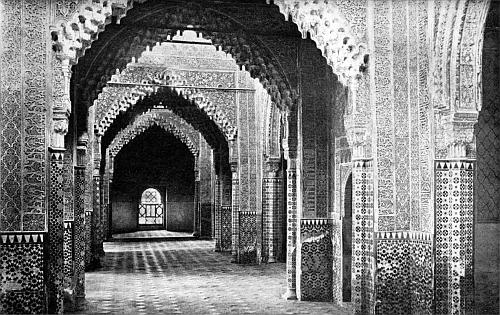
Washington Irving's Alhambra is primarily a book of legends and tales of this romantic sort--that is what it is remembered for, to the extent that it is remembered--though it also partakes of the genres of travelogue and I suppose some light history. I found it a wonderful book, at this particular time of my life anyway, found Washington Irving, whom I had never read before, to be a much more interesting writer than his current stature suggested to me he would be, and found my already fervent (for me) desire to go wandering around Spain re-confirmed and further whetted by the perhaps unrealistically romantic but unabashedly good-natured affection with which the author (infects) his account. The IWE introduction states, with characteristic candor, that the book is a "typical work of North America's first man of letters--good writing but seldom superlative." I suppose this is accurate, but I do want to note that I was struck, more than I usually am, perhaps because the writing was 'seldom superlative' by what a good command Irving had of the language. It is a vigorous kind of writing, always clear and precise in spite of some 19th century tendencies towards effusiveness and hyperbole, and also frequently humorous. I will give a couple of examples from "The Legend of the Moor's Legacy":

""Honest Peregil thus saw himself unexpectedly saddled with an infidel guest, but he was too humane to refuse a night's shelter to a fellow-being in so forlorn a plight."

"Now it so happened that this Alcalde was one of the most overbearing, and at the same time one of the most griping and corrupt curmudgeons in all Granada. It could not be denied, however, that he set a high value upon justice, for he sold it at its weight in gold."

"As ill-luck would have it, there lived opposite to the water-carrier a barber named Pedrillo Pedrugo, one of the most prying, tattling, and mischief-making of his gossip tribe. He was a weasel-faced, spider-legged varlet, supple and insinuating; the famous barber of Seville could not surpass him for universal knowledge of the affairs of others."


My edition is from 1926. It belongs to the 'Academy Classics for Junior High Schools' series, pocket-sized little volumes with nice thick paper, a large number of photographs of the Alhambra and various sites associated with Washington Irving, and about fifty of footnotes, biography, study questions and other supplemental information. The footnotes and appendices of course are unabashedly Eurocentric. (Some favorite footnotes: Allah: God; plains of Tours: Near Tours, in France, in 732, Charles Martel defeated the Mohammedans and thereby saved Europe; Henry III: King of Castile, 1390-1406. He was called "The Weak," because he was by no means inclined to wage war against the Moors.") The editors in their comments about the Moors betray attitudes and thought processes that will properly draw frowns from unignorant moderns, though they are trying, after their paternalistic fashion, to be complimentary:

"(The) Moors, he (Irving) learned, were Caucasians like himself, with the fine strong features of the white race, and of a handsome, dignified, noble appearance. Since they had descended from generations of people who had lived in the hot sun of the desert regions, they had dark-brown complexion, dark eyes, and intensely black hair...They established colleges; encouraged literature, art, and science; the development of mathematics and of medicine, of astronomy and physics, as well as the study of history and geography; and they did wonderful work in the making of silken cloth and of steel. In many ways these dark-faced people benefited Spain, setting slaves free; relieving the oppressed; reducing taxation, and giving wide freedom. They did so much that was remarkable that they thought of themselves as leaders of men, and made all people respect their culture and their intellectual ability."

Irving's own comments on the Moors, it should be noted, had somewhat less of this overt racial condescension. As even the editors of this edition discerned, "Irving wrote about the Moors with enthusiasm because he thought them a great people.":

"As conquerors, their heroism was only equalled by their moderation; and in both, for a time, they excelled the nations with whom they contended."

"The Arab invasion and conquest brought a higher civilization, and a nobler style of thinking, into Gothic Spain. The Arabs were a quick-witted, sagacious, proud-spirited, and poetic people, and were imbued with oriental science and literature."


Washington Irving seems to have led all in all a pretty swell life. Certainly that is the impression given in the biographical sketch of him in my 1926 schoolboy edition, which would have left out all references to the sorts of petty unpleasantnesses with which any life is filled and which tend I think to be overemphasized in modern biography. It did mention that Irving was engaged to be married when he was twenty-six, and that his fiancee died before the wedding. It does not seem that he ever married anyone else, and of course there were no allusions to any kind of illicit romances in the schoolboy book (Wikipedia says that when he was forty, and already long a successful author, he proposed to an eighteen year old who turned him down; it also asserts that Mary Shelley, who was 14 years younger than Irving herself, expressed, through a third party, romantic interest in him, but Irving did not pursue the relationship). He was born in New York in 1783, a great time and place to have done so, certainly by the standards of history up to that point, and acknowledging the favorable circumstances of race, gender, social position, etc that he possessed. For the free Americans my impression, which seems to be corroborated by statistics with regard to things like average height, birth and death rates, etc, those first decades of nationhood after the revolution were a pretty heady time to grow up, full of confidence and purpose, again by comparison to almost any other time and place in history. By his 20s Irving had become the first person in the history of his nation to be recognized primarily as a litterateur in the European tradition. He lived in and traveled all over Europe for seventeen years, including his three month sojourn inside the Alhambra. After the success of that book, he was awarded the post of United States Ambassador to Spain by president Tyler, though he seems to have accepted the post reluctantly. He lived out his middle and old age in his beautiful mansion (which can still be visited, by the way) along the Hudson, reading, writing more books, meandering around the Catskills and heading down to the City when the mood struck him. He died in 1859, just in time to miss the next great national cataclysm, fittingly it seems to me, as he belongs so thoroughly to the epoch of our history that was exploded when the Civil War happened, though perhaps he would have been interested to see it. Really, his life was kind of my ideal, apart from his never having married or any children (which I have to assume he could have afforded and paid/directed someone else to take care of while he wrote and traveled.)

The making of books had attained a very high level by the 1920s. This copy I have is in excellent condition, sturdy, has great paper, no typos or other printing errors, easily readable print, is attractively designed. It's great.

The Bourgeois Surrender Challenge

I read the winner from the last challenge, Bel Canto by Ann Patchett, which came out in 2001, and seems to have been pretty well acclaimed. I suppose it has some qualities of professional literary authorship about it, but overall it doesn't quite achieve anything that that status would suggest. First of all, the book is only 318 pages, but it seems like it goes on forever, which is not a great sign. Secondly, while she does not affect it, the author seeps with a kind of bourgeois snobbery that is not yet wholly earned enough to be tolerable in artistic pursuits. Her characters are too much what she imagines people of their distinction and achievement must be like, and not enough what she knows of the same. I assume Roxane Cox, the opera singing diva from Chicago who possesses an understanding of and intimacy with the higher things of life that are beyond that of almost everyone who has ever lived, is supposed, even if subconsciously, to be a stand-in for our author, which is a identification that the author has not earned, and does not earn by way of a convincing demonstration of the character. The book is most interesting perhaps as a window into the ego of the modern American woman. Roxane Cox, whom I take to be the author's alter ego, is an American from a middle class midwestern Catholic school who somehow has developed into the world's greatest opera singer. She is flown in at exorbitant expense to an unidentified godforsaken country in South America to sing for the CEO of one of the most important corporations in Japan because he loves opera, she is his favorite singer, and the government of the godforsaken country is desperate for him to build a factory or otherwise invest some dough there. During the concert terrorists, expecting the president of the country to be there, burst into the palace and take the assembled international crowd of extremely rich, cultured and important guests hostage. After a couple of days all of the women and unimportant men are allowed to leave, except somehow Roxane is not set free. She is thus the lone woman imprisoned in the among forty or so mostly alpha men, none of whom it should be noted, are Americans--they wouldn't be interesting enough. All of the men fall in love with her, especially after she begins to sing for them all every day. She picks the one she wants out of the bunch, the great Japanese CEO as it turns out, to be her lover during the captivity under the terrorists (don't ask), and the other men--even the Russians!--tamely accept this decision. Of course we are all entitled to our personal fantasy worlds, but at least recognize them when they are delineated so blatantly.

Anyway, onto this week's challenge. I thought with all of the Spanish and Alhambra material producing the magic words that we would have an interesting and high octane contest, but it turned out to be nothing of the sort.

1. Civilization: The West and the Rest--Niall Ferguson.....................................................226
2. Sister Queens--Julia Fox.................................................................................................135
3. Le Freak: An Upside Down History of Family, Disco & Destiny-- Nile Rodgers.........113
4. Enchantments--Kathryn Harrison.....................................................................................99
5. Codex Magica--Texe Marrs..............................................................................................83
6. At Hidden Falls--Barbara Freethy.....................................................................................40
7. The Damascus Cover--Howard Kaplan............................................................................26
8. The Economist Style Guide.................................................................................................7
9. Advanced Language Practice With Key--Michael Vince...................................................2

Lot of zero-scorers this time, mainly among older books: The Dementia of Iyan Igma; A.J. Calvert, Southern Spain (This was actually listed among the recommended supplemental reading in my copy of the Alhambra); Mary F. Nixon-Roulet, Our Little Spanish Cousin; Eyewitness Travel: New York City 2011; Joan Ouellet, The Captive Dove; Happy Days For Boys & Girls; and W.A. Leahy, The Incendiary.

I am glad that the Niall Ferguson book was the winner, because that is the sort of popular non-fiction book that I like to read and have not always taken the time to fit in. Ferguson is, or was a few years ago at least, on the way becoming the new Christopher Hitchens/Andrew Sullivan British expat political and economic commentator for that portion of the educated set that is especially blown away by Oxbridge polish and erudition. I have started his book, and it is entertaining and has some interesting information in it, particularly about medieval era China, though Ferguson is the type of writer who is very emphatic that he is giving us the truth and the assertions of previous authors and sometimes even positions that were widely held among the most prominent scholars in a field for decades were completely off the mark. This kind of thing leads me to suspect that he is oversimplifying the ideas and thought processes that prevailed formerly. However, as I said, I am still enjoying the book.

The Alhambra words produced a very weird movie challenge:

1. Silver Streak......................196
2. Body by Bethenny..............177
3. God's Pocket........................20

Yes, the winner is the 1976 Gene Wilder/Richard Pryor collaboration, and the close runner up is the exercise tape of a divorced reality television personality who is about my age, and unfortunately seems to be a pretty typical specimen of the kinds of women I had to spend my adolescence unsuccessfully trying to figure out how to gain the approval of because they seemed to be the predominant type that was around.