"A" List: Rousseau--Confessions.................................................................421/683
"B" List: John Hersey--A Bell For Adano....................................................132/269
"C" List: Rick Perlstein--The Invisible Bridge...............................................98/810
A trifecta of white male authors this month. That sometimes happens. Perlstein at least is alive and Rousseau is a foreign language author, which I would think rescues the set from absolute irrelevance.
We are up to the point in Rousseau's life where he is continually falling out with his friends and with respectable society in general and one begins to get a sense of where the reputation he had in some quarters as being insane originated. The book gives a very thorough portrait of a true bohemian existence, with its unusual domestic arrangements, deep engagement with, in this case, musical and literary composition, and frankness about sexual matters, including boyhood memories of priests exposing themselves while ejaculating, the five children he fathered with his mistress and (famously in philosophical circles) persuaded her to give up to an orphanage, and, perhaps most peculiarly, a story about an eleven or twelve year old girl that he and a friend "bought" with the idea of nurturing her to become a shared mistress, though he says that when the time came several years later to bring this plan to its fruition, he was unable to follow through with it. I have generally found this book engaging. It has entered a little bit of a lull currently as he has removed himself from Paris to the countryside and is recapping his various disputes with now remote enemies, but there is the possibility it will pick up again.
The very long Perlstein book is concerned with the transition in the Republican party between the downfall of Richard Nixon in the early 1970s and the ascendancy of Ronald Reagan during the 1976 primary campaign, which he very narrowly lost to the sitting president, setting the stage for his epochal triumph four years after that, though the meat of the book appears to leave off after '76. I was a very little child during this period, and have no memory of the Nixon presidency and just a little of the 1976 election, though I do remember people around me talking about how ridiculous it was that anybody thought Ronald Reagan could be president, so that when he was elected in a landslide in 1980 the result was a great shock to my 10 year old self. So far the stuff about Reagan (of whom Perlstein, as a representative, I gather, of the educated urban liberal class, is no admirer), at the point I have reached still the governor of California, is the most interesting part of the book. It sounds like he was a more outwardly genial version of Trump in his ability to say things that were completely nonsensical or outrageous to sophisticates that were great hits with the general public. On one occasion as governor Reagan sent the National Guard to Berkeley or one of the University of California campuses to quell a protest that was getting out of hand, stating that, "If there has to be a bloodbath, let's get it over with. Appeasement is not the answer." The media apparently considered that he had committed political suicide. In truth of course, this sent his poll numbers through the roof.
While the narrative, at least as I understand it, is that Ronald Reagan's policies in the 1980s were the main impetus resulting in the destruction of large swathes of the former American middle class, I do have to wonder in reading this whether that was something he actively wished for, or was an inadvertent result because of changes in the nature of the economy, etc, which precluded bringing back much of the world of his memory/imagination. He was from a very ordinary Midwestern background himself, and it seems that more than any politician I can think of he genuinely loved all of that kitschy Americana stuff--football games, college social life, amateur theatricals, Hollywood, cowboys and Indians. It was reported by his son that when the former leader of the free world descended into dementia, he would (to the incredulity of the author Perlstein), instead of denouncing Brezhnev or even reciting lines from Bedtime for Bonzo, say things like "there's a game today...they're waiting for me" which sounds completely believable to me. Anyway, I do believe his vision of America was one where people who at least shared his vision and positive attitude would infallibly prosper. Maybe he would say that these people actually are still prospering, and all of the failures and junkies and homeless people need to get with the program. Actually he probably would say that.
Running out of time...one more thing...I've always known that conservatives hate "Hanoi" Jane Fonda for her Vietnam era activities, but I didn't realize what she (actually) said on television at the time. Wow. I will say one thing, to be able to say something like that in the environment that existed at the time shows, to me, a level of security in one's citizenship and membership in the polity that I don't see in the same way now, unless, ironically, it is from 1st and 2nd generation immigrants, and black Americans.
No pictures again this month. I ran out of time.
Showing posts with label april. Show all posts
Friday, April 5, 2019
Tuesday, April 10, 2018
April 2018
A List: Jules Verne--20,000 Leagues Under the Sea.....................76/257
B List: Between books
C List: Kathleen Ann Goonan--In War Times.............................341/348
This has been the year (or so) of Jules Verne, whom I had never read all the days of my life before taking on Around the World in 80 Days and Journey to the Center of the Earth, and now this, all in a relatively short space. I have found them all to be entertaining. In this one some of the technical talk, about atmospheric pressure and oxygen pumps and such subjects, seems to be too much for my concentration and/or understanding and my eyes tend to glide over these parts. This cannot be said to be a fault of the book, I suppose.
In War Times I have liked quite a lot, though in terms of strict construction and intellectual power I don't think it holds together very well. There are a number of different strains in it that appeal strongly to me however even if they don't necessarily cohere with each other. The first half of the book takes place during World War II, and the narrative centers around an able young male American engineer who belongs to a company of mostly fellow able young male American engineers and their wartime experiences in New York and England and Germany. I am always taken in by stories of the able young men of the Allied forces in World War II. I wish that there was a way, in the absence of stupendous and overwhelming intellectual or creative ability, to recreate the intensity and energy of experience that the able young men, at least as depicted in books, seemed to get out of the war, and the camaraderie also, without the accompanying horrors of the actual conflict. Of course there probably is not. In any event I like reading stories of smart young men, and I like reading stories of 1940s America, and the victorious part of World War II, and the camaraderie of men who have succeeded together in worthwhile enterprises. The able young white buddies in this are big jazz fans, which they see as related to developments in modern physics, and they even end up playing one night with Dizzy Gillespie and Charlie Parker. This part is admittedly rather corny, but from my point of view I rather liked it too, this music is one of the defining energies of that era, but it isn't always clear if you're someone like me how to find a way into it, but I felt like there was something of that here. After the war ends there is more of a science fiction plot that takes hold. The main character continues to live in the postwar world that we know, the Cold War and Vietnam and so on, but most of his old Army mates, including his best friend whom in his world died in Germany in 1945, live on in an alternative postwar world where Stalin was overthrown, Berlin became a boomtown, the nations work together on space exploration, technology and economic growth progress even faster than they did in the familiar world, Kennedy was not killed, and so on. The guy stuck in our world is able to know this because there are nodes of time where these differing strains of history briefly come together. So he can reunite with his friends from time to time (often near his home in Washington, D.C; They are confused as to why it is so shabby) but then at some point they will get up to go to the bathroom and not come back and the node is lost. This idea made an impression on me for some reason. (This alternative worlds thing is the result of some atomic energy that the protagonist got hold of during the war that has been channeled to work differently from the way the atomic bombs did, or something like that. I am out of time, I have to stop now...)
B List: Between books
C List: Kathleen Ann Goonan--In War Times.............................341/348
This has been the year (or so) of Jules Verne, whom I had never read all the days of my life before taking on Around the World in 80 Days and Journey to the Center of the Earth, and now this, all in a relatively short space. I have found them all to be entertaining. In this one some of the technical talk, about atmospheric pressure and oxygen pumps and such subjects, seems to be too much for my concentration and/or understanding and my eyes tend to glide over these parts. This cannot be said to be a fault of the book, I suppose.
In War Times I have liked quite a lot, though in terms of strict construction and intellectual power I don't think it holds together very well. There are a number of different strains in it that appeal strongly to me however even if they don't necessarily cohere with each other. The first half of the book takes place during World War II, and the narrative centers around an able young male American engineer who belongs to a company of mostly fellow able young male American engineers and their wartime experiences in New York and England and Germany. I am always taken in by stories of the able young men of the Allied forces in World War II. I wish that there was a way, in the absence of stupendous and overwhelming intellectual or creative ability, to recreate the intensity and energy of experience that the able young men, at least as depicted in books, seemed to get out of the war, and the camaraderie also, without the accompanying horrors of the actual conflict. Of course there probably is not. In any event I like reading stories of smart young men, and I like reading stories of 1940s America, and the victorious part of World War II, and the camaraderie of men who have succeeded together in worthwhile enterprises. The able young white buddies in this are big jazz fans, which they see as related to developments in modern physics, and they even end up playing one night with Dizzy Gillespie and Charlie Parker. This part is admittedly rather corny, but from my point of view I rather liked it too, this music is one of the defining energies of that era, but it isn't always clear if you're someone like me how to find a way into it, but I felt like there was something of that here. After the war ends there is more of a science fiction plot that takes hold. The main character continues to live in the postwar world that we know, the Cold War and Vietnam and so on, but most of his old Army mates, including his best friend whom in his world died in Germany in 1945, live on in an alternative postwar world where Stalin was overthrown, Berlin became a boomtown, the nations work together on space exploration, technology and economic growth progress even faster than they did in the familiar world, Kennedy was not killed, and so on. The guy stuck in our world is able to know this because there are nodes of time where these differing strains of history briefly come together. So he can reunite with his friends from time to time (often near his home in Washington, D.C; They are confused as to why it is so shabby) but then at some point they will get up to go to the bathroom and not come back and the node is lost. This idea made an impression on me for some reason. (This alternative worlds thing is the result of some atomic energy that the protagonist got hold of during the war that has been channeled to work differently from the way the atomic bombs did, or something like that. I am out of time, I have to stop now...)
Wednesday, April 6, 2016
April Update
A List: Between books currently.
B List: Anna and the King of Siam--Margaret Landon 360/391
C List: The Age of the Democratic Revolution: The Struggle--R. R. Palmer 136/578
The last thing I read for the "A" list was the poem, or collection of poems, known as "The Passionate Pilgrim", attributed on the original title page to Shakespeare, but which is in fact a compilation of a number of poets of the time, including Shakespeare, and also including some unknown authors. It has the famous lines "Were kisses all the joys of bed/one woman would another wed" which it seems cannot be positively attributed to Shakespeare, but still usually is by the general public. I read it in my clunky Rockwell Kent-illustrated complete Shakespeare, which is the only book I own that contains it. It is printed there as if it were a regular part of the Shakespeare canon, though without any introduction or notes. I was a little confused in reading it by the incoherence between various parts of the poem and the lack of continuation of various characters and motifs throughout the work, as well as the inclusion of some lines that were obviously from Marlowe's "Passionate Shepard to his Love", so I was glad to have some explanation for this.
The Landon book I am almost finished with and will be doing a full report on soon.
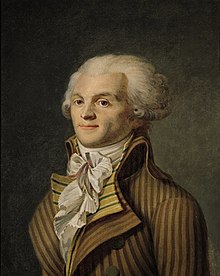
The Palmer, subtitled A Political History of Europe and America, 1760-1800, is the second, and last, volume of the Challenge-winning book I was reading last month. So far I am actually liking this second volume more than the first, in part I suspect because I am used to the style now, and also because the second volume deals directly with the events of the French Revolution and the general European war that accompanied it, which is of course a very dramatic episode of history that I have somewhat shamefully never read even a general history of. Robespierre is best remembered now for overseeing the reign of terror, but he was a compelling political animal, perhaps a genius of that art in some ways, who made some great and memorable speeches. More than a few of his bons mots have a startling resonance today, not least because they are more lucid and succinctly expressed than most prominent contemporary thinkers have been able to manage on similar topics. "Equality of wealth is a chimera...necessary neither to private happiness nor to the public welfare". But "the world hardly needed a revolution to learn that extreme disproportion of wealth is the source of many evils." More: "We want an order of things...in which the arts are an adornment to the liberty that ennobles them, and commerce the source of wealth for the public and not of monstrous opulence for a few families...In our country we desire morality instead of selfishness...the sway of reason rather than the tyranny of fashion, a scorn for vice and not a contempt for the unfortunate...good men instead of good company, merit in place of intrigue, talent in place of mere cleverness...the charm of happiness and not the boredom of pleasure...in short the virtues and miracles of a republic and not the vices and absurdities of a monarchy."
He rather humorously dismissed the spectacle of the Worship of Reason held in the desacralized Notre-Dame Cathedral in 1793 as "a philosophical masquerade".
He also famously said that "Revolutionary government owes good citizens the whole protection of the nation. To enemies of the people it owes nothing but death."
Palmer theorizes that Europe became afflicted with revolutionary fervor at the end of the 1700s rather than at an earlier time because too many people of some degree of capability had come to feel personally humiliated by existing political and social arrangements. I do believe that something like that is occurring now throughout the Western World, where the middle classes, at least, are not suffering from material deprivation or physical insecurity, yet there is a great amount of anxiety and dissatisfaction that I think is rooted in greater-than-ordinary (compared to, for example, 1964 when this book was published) feelings of humiliation, inferiority and powerlessness among the populace. Of course if I continue to believe this to be the case I will eventually have to make a stronger argument for it...
Picture Gallery
B List: Anna and the King of Siam--Margaret Landon 360/391
C List: The Age of the Democratic Revolution: The Struggle--R. R. Palmer 136/578
The last thing I read for the "A" list was the poem, or collection of poems, known as "The Passionate Pilgrim", attributed on the original title page to Shakespeare, but which is in fact a compilation of a number of poets of the time, including Shakespeare, and also including some unknown authors. It has the famous lines "Were kisses all the joys of bed/one woman would another wed" which it seems cannot be positively attributed to Shakespeare, but still usually is by the general public. I read it in my clunky Rockwell Kent-illustrated complete Shakespeare, which is the only book I own that contains it. It is printed there as if it were a regular part of the Shakespeare canon, though without any introduction or notes. I was a little confused in reading it by the incoherence between various parts of the poem and the lack of continuation of various characters and motifs throughout the work, as well as the inclusion of some lines that were obviously from Marlowe's "Passionate Shepard to his Love", so I was glad to have some explanation for this.
The Landon book I am almost finished with and will be doing a full report on soon.
The Palmer, subtitled A Political History of Europe and America, 1760-1800, is the second, and last, volume of the Challenge-winning book I was reading last month. So far I am actually liking this second volume more than the first, in part I suspect because I am used to the style now, and also because the second volume deals directly with the events of the French Revolution and the general European war that accompanied it, which is of course a very dramatic episode of history that I have somewhat shamefully never read even a general history of. Robespierre is best remembered now for overseeing the reign of terror, but he was a compelling political animal, perhaps a genius of that art in some ways, who made some great and memorable speeches. More than a few of his bons mots have a startling resonance today, not least because they are more lucid and succinctly expressed than most prominent contemporary thinkers have been able to manage on similar topics. "Equality of wealth is a chimera...necessary neither to private happiness nor to the public welfare". But "the world hardly needed a revolution to learn that extreme disproportion of wealth is the source of many evils." More: "We want an order of things...in which the arts are an adornment to the liberty that ennobles them, and commerce the source of wealth for the public and not of monstrous opulence for a few families...In our country we desire morality instead of selfishness...the sway of reason rather than the tyranny of fashion, a scorn for vice and not a contempt for the unfortunate...good men instead of good company, merit in place of intrigue, talent in place of mere cleverness...the charm of happiness and not the boredom of pleasure...in short the virtues and miracles of a republic and not the vices and absurdities of a monarchy."
He rather humorously dismissed the spectacle of the Worship of Reason held in the desacralized Notre-Dame Cathedral in 1793 as "a philosophical masquerade".
He also famously said that "Revolutionary government owes good citizens the whole protection of the nation. To enemies of the people it owes nothing but death."
Palmer theorizes that Europe became afflicted with revolutionary fervor at the end of the 1700s rather than at an earlier time because too many people of some degree of capability had come to feel personally humiliated by existing political and social arrangements. I do believe that something like that is occurring now throughout the Western World, where the middle classes, at least, are not suffering from material deprivation or physical insecurity, yet there is a great amount of anxiety and dissatisfaction that I think is rooted in greater-than-ordinary (compared to, for example, 1964 when this book was published) feelings of humiliation, inferiority and powerlessness among the populace. Of course if I continue to believe this to be the case I will eventually have to make a stronger argument for it...
Picture Gallery
Monday, April 6, 2015
New Feature! Monthly Reading Update
Given the haphazard nature of the posting on this site, I thought that maybe putting up a short status on the 6th of every month of where I was at, besides being a good record for myself, would make the blog seem a little more regular or 'alive' especially during long absences.
A List Reading (ca. 1994 GRE Literature Guide): Dostoevsky, The Brothers Karamazov. Progress (pages read) 16 of 940.
B List (1966 Illustrated World Encyclopedia List: Henry Fielding, Amelia. 528/611.
C List (Bourgeois Surrender Challenge books): Betty Smith, A Tree Grows in Brooklyn. 301/493
It is unusual that I have three novels, and all old ones at that, going concurrently. The A List in recent years has trended heavily towards criticism and books about books with the occasional poem rather than prose fiction, and the C List is not set up to be biased towards novels. The Dostoevsky being such a monument of world literature it might seem that it ludicrous to have other books going at the same time so that one can devote all of one's intellectual energy towards trying to get something out of him; however I have finally managed an arrangement when I read the 'A' list books at work (during breaks and other legally sanctioned down times only, of course), and the 'B' books during the alert times of day at home. A little of the 'C' book is the last thing I will do at night before going to bed, which is why there is an emphasis on their being shorter, easier, and more modern than those books in the other two lists. Also the Brothers Karamazov will be coming up again on the B List, which unfolds in alphabetical order, within the next 3-5 years, so I am taking this first reading (though I did get through the first 300 pages at least back in school), which I just started on Friday, in a less intense manner than some might think proper.
A little anecdote regarding my Tree Grows in Brooklyn reading. We had an old wartime copy of this book at home and I started reading that, but one night when I was evidently too exhausted even to get through a chapter of that I must have put the book down in an unusual place or fallen asleep holding it and had it drop out of my hands because for a week afterwards I couldn't find it again, and finally had to take a more recent copy, which had much larger print, page breaks between chapters and so on than the old war-issue copy, so I am on that now. After another week went by I finally found the other copy placed in one of our book cabinets in which it had not been before, lying on its side where it would not have been visible with the door closed. Obviously someone had found it and put it there without telling me.
For the record, the page progression in the wartime copy would be/is 256/420.
The entirety of this post was written with a screaming (though already well-fed and changed) baby in the background. I guess I will have to go attend to her now.
A List Reading (ca. 1994 GRE Literature Guide): Dostoevsky, The Brothers Karamazov. Progress (pages read) 16 of 940.
B List (1966 Illustrated World Encyclopedia List: Henry Fielding, Amelia. 528/611.
C List (Bourgeois Surrender Challenge books): Betty Smith, A Tree Grows in Brooklyn. 301/493
It is unusual that I have three novels, and all old ones at that, going concurrently. The A List in recent years has trended heavily towards criticism and books about books with the occasional poem rather than prose fiction, and the C List is not set up to be biased towards novels. The Dostoevsky being such a monument of world literature it might seem that it ludicrous to have other books going at the same time so that one can devote all of one's intellectual energy towards trying to get something out of him; however I have finally managed an arrangement when I read the 'A' list books at work (during breaks and other legally sanctioned down times only, of course), and the 'B' books during the alert times of day at home. A little of the 'C' book is the last thing I will do at night before going to bed, which is why there is an emphasis on their being shorter, easier, and more modern than those books in the other two lists. Also the Brothers Karamazov will be coming up again on the B List, which unfolds in alphabetical order, within the next 3-5 years, so I am taking this first reading (though I did get through the first 300 pages at least back in school), which I just started on Friday, in a less intense manner than some might think proper.
A little anecdote regarding my Tree Grows in Brooklyn reading. We had an old wartime copy of this book at home and I started reading that, but one night when I was evidently too exhausted even to get through a chapter of that I must have put the book down in an unusual place or fallen asleep holding it and had it drop out of my hands because for a week afterwards I couldn't find it again, and finally had to take a more recent copy, which had much larger print, page breaks between chapters and so on than the old war-issue copy, so I am on that now. After another week went by I finally found the other copy placed in one of our book cabinets in which it had not been before, lying on its side where it would not have been visible with the door closed. Obviously someone had found it and put it there without telling me.
For the record, the page progression in the wartime copy would be/is 256/420.
The entirety of this post was written with a screaming (though already well-fed and changed) baby in the background. I guess I will have to go attend to her now.
Subscribe to:
Posts (Atom)
_-_1.jpg)