Showing posts with label ennui. Show all posts

Tuesday, March 6, 2018

March 2018

A List: Dickens, Martin Chuzzlewit..................606/841
B List: Fannie Hurst, Back Street......................286/464
C List: Harry Dolan, Very Bad Men..................332/412


My reading pace slowed a little this month because I was not feeling that great in the early part of it and then I went on vacation, after which I have been feeling much better. I hope it lasts. Also I have been sluggish since I don't really love any of these books. Dickens is one of my all time favorites and Chuzzlewit is good in parts, but I find some of the subplots either hard to follow or not commanding my attention in the manner of his better work. The minds of the authors of genre books, at least that they reveal, just aren't interesting enough to me. Yet whenever you make inquiries into being a professional author it seems like that style of writing is what is pushed on you to try to cultivate. I suppose one cannot learn by practice to write like Tolstoy or Proust, but you would think there would be more interest in encouraging people to try to develop in something like that direction, since the endless repetitions of these genre books is so insubstantial.


On my way back from Florida I stopped off, as I always do, in Annapolis and Philadelphia, my long-ago stomping grounds. For the first time in many years I thought how pleasant it might be for me at least to live in these places again, at least in February and March, which are relatively warmer and more lively. If I ever had the time and were still in good enough health to do so, I might like to come down to Annapolis for a few weeks during the winter and attend some of the lectures and concerts they have at the college and go to the library and so on. It might help combat the annual depression and fixation on my children growing old and my own death. Strangely I don't have a lot of sad nostalgia with regard to my college, perhaps because it doesn't seem to have changed that much since I was there, certainly compared with just about everything else. Being back there usually makes me feel happier and more optimistic than is usual with me. I was very happy to be back in Philadelphia as well. Since my mother sold her house a few years back and moved into an apartment we have largely stopped going down as there is nowhere for all of us to stay anymore for more than a single night. It seems a great deal must have changed there but almost all of the people I grew up with are still around, albeit they are getting ever older, though the older people still seem to get on fine. The younger generations, the under 40s, who I don't know as well, seem to have more problems, but that may be a matter of perception and the circumstance that the consequences of anything bad that happens today seem to be so exaggerated. Certainly my 50 and 60 something relatives partook of behaviors in the 1970s that would be considered alarming now to say the least, yet they were permitted to recover and progress in their lives...


Thursday, February 15, 2018

Sinclair Lewis--Babbitt (1922)


It seems to have just gotten harder to steal pictures.


From the IWE's introductory comments:


"Main Street was Sinclair Lewis's first and biggest success on the subject of small-town quasi-culture, but Babbitt, which came two years later, was a better book on the same subject. If it is not Lewis's best novel (a rank that is usually accorded to Arrowsmith or Dodsworth), it is not far from it."

I haven't read Main Street (which is also on this program) since I was in high school and I haven't any sense at this point how it compares to Babbitt (or whether it even matters anymore), but I did just read Arrowsmith and wrote about it here within the last year, and while that did strike me as the more accomplished book from the literary standpoint, there was, somewhat to my surprise, much in Babbitt that I found poignant--the trip to Maine with Paul, especially the poker, and then the return trip the next year without him got to me the most, but there were numerous episodes that struck deeper than I would have expected them to throughout the book. While Babbitt's personality and business-oriented outlook on life are decidedly unlike mine, he is the same age that I am or have recently been--46, 47, 48--and a lot of the impulses and disaffections he has upon reaching this stage of life ring true to me (Lewis himself was only 36-37 when this was published). I didn't make as many notes as I wish I had now, in part because I was quite engaged by it, in other part because I have been really more than usually depressed this winter, and while these old books are often a great comfort to me in such times, I still didn't have much energy for writing thoughts down. While certainly Lewis would never have intended his novel to induce nostalgia, it ends up having something of that effect, to me at least, because the world of 1920s America still retains some vividness for me. I suspect even such sense as I have for it must be increasingly lost to younger people though.

I'm tempted to write more about my depression, but I might do something that alludes to it on the other blog after I finish this.

I made my first note on page 164, a sentence about a civic convention that I found funny:

"The pastor of the First Christian Church of Monarch...informed God that the real-estate men were here now."


This was set in, if not the absolute heyday of train travel, still a dynamic period for it. The description of the brand new station at Zenith is clearly intended to be satirical, but from the vantage point of our own era of transportation it sounds rather nice:

"It was a new and enormous waiting-room, with marble pilasters, and frescoes depicting the exploration of the Chaloosa River Valley by Pere Emile Fauthoux in 1740. The benches were shelves of ponderous mahogany; the news-stand a marble kiosk with a brass grill."


There is a suggestive undertone throughout the book as well that electricity, plumbing, appliances and other modern wonders are perhaps not appropriate for the masses, as of course most middle-aged people at least in 1922 would have grown up without them. When this novel first came out and for the fifty-sixty years afterwards when it enjoyed some fame, it was primary noted for its satire, but that is now the most dated, heavy-handed aspect of it. It has other, much more subtle, redeeming qualities though.

Prohibition made forty-five year olds have to act surreptitiously like teenagers. This is at the hotel at the realtors' convention:

"At half-past seven they sat in their room, with Elbert Wing and two up-state delegates. Their coats were off, their vests open, their faces red, their voices emphatic. They were finishing a bottle of corrosive bootlegged whisky and imploring the bell-boy, 'Say, son, can you get us some more of this embalming fluid?'"

The quest for illicit booze did make some of the forty-something women more festive though than perhaps they would otherwise have been inclined to be.

I didn't note what page I was on, but at one point I wrote, 'Still interesting, but hard to see where book is going between Paul (spoiler alert--Paul goes to jail for shooting his wife, non-fatally), Babbitt's midlife crisis, return to Maine, etc. Never clear why Babbitt loves Paul so much, more seemingly even than his own family.'

p. 339 "Their life was dominated by the suburban bacchanalia of alcohol, nicotine, gasoline, and kisses."
I liked this sentence.

p. 391 I'm not really in the right frame of mind to make political pronouncements, but I thought this sentence about The Good Citizens' League, accepting a membership in which marks the end of Babbitt's identity crisis and his firm return to sound business principles and all the rest of it, was too obviously pertinent to the present not to recognize it:

"All of them agreed that the working-classes must be kept in their place; and all of them perceived that American Democracy did not imply any equality of wealth, but did demand a wholesome sameness of thought, dress, painting, morals, and vocabulary."

Absolute equality of wealth will obviously always be problematic given the different natures of people, especially in large societies, though perhaps there could be somewhat more of it than there is at present. And there doesn't seem to be much danger nowadays of the working classes forming any kind of a threat to the established order, so that keeping them in their place is not as much of a labor-intensive-task as it may once have been, but the gist is familiar.  


I have not elaborated much on what I think it is that this book gets right that makes it as affecting to me as it was, but I think it is the way that one's life (often) feels as it is becoming stalled in the 40s, especially the late 40s, when I think it really hits you that if you aren't declining already, or at least not too much, that that might start accelerating noticeably at any time. In some ways of course I stopped going forward a long time ago, but the continuous adding of children over the years kind of masked that and gave me a sense, certainly that I was still relatively young and had a long future ahead of me, but that my experience, life force, or whatever, was still expanding. But all of a sudden I feel disturbingly old and vulnerable, and I'm wondering what I was thinking having another baby at age 45, as beautiful and delightful an addition to the human community as she is. I feel like I'll be lucky to see her get her through high school and college, and making it to her 30th birthday seems like a longshot. For that matter I could really go at almost any time. I know that was always the case but up until two months ago I had no real consciousness of that, it was not real to me. Anyway, a lot of the better part of this book is about this creeping sense of the genuine futility of one's existence and how to keep moving forward. Paul of course was pointedly unable to do this.


No uploadable pictures of the book anywhere. I'll have to get my own camera working again.

For a relatively famous book there aren't a lot of attractive editions of it available on the market. There was an evidently limited run Modern Library edition in the 50s but I couldn't find any copies of this online. There was one advertised that I tried to order but I was sent a 1960s era Signet paperback or something like it instead. I ended up getting a bland gray Harcourt Brace edition from the 50s which matches my copy of Main Street.
The Challenge

1. Rebecca Skloot--The Immortal Life of Henrietta Lacks..............................5,819
2. Kate Turabian--A Manual For Writers of Research Papers, Theses, etc.......752
3. Ruth Rendell--The Girl Next Door.................................................................423
4. Gloria Steinem--Marilyn................................................................................231
5. The Reverend William J. Barber II--The Third Reconstruction.....................110
6. Praxis II Middle Scholl English Language Arts...............................................44
7. Natalie Babbitt--The Eyes of the Amaryllis......................................................33
8. The Wise Owl Guide to...(DSST): Here's to Our Health..................................12
9. DSST Principles of Statistics Exam....................................................................9
10. Girl Gangs, Biker Boys, and Real Cool Cats (eds. McIntyre & Nette)............3
11. Victor Hugo--William Shakespeare..................................................................0
12. Isabel Burton--The Life of Captain Sir Richard Burton....................................0

Once again a complete field of 16 eludes us. The top four seeds--all women, incidentally--receive first round byes.


1st Round

#5 Barber over #12 Burton

While Sir Richard Burton is an interesting subject, the 1893 biography of him by his wife doesn't seem to have earned a reprint anytime in the last 100 years and no one carries a copy of it.

#11 Hugo over #6 Praxis

#7 Babbitt over #10 Girl Gangs, etc

The Girl Gangs book, the subtitle of which is Pulp Fiction and Youth Culture 1950-1980 looks somewhat interesting, but no one has it.

#8 Wise Owl Guide over #9 DSST Principles

Round of 8

#11 Hugo over #1 Skloot

The Hugo book is only available in a couple of academic libraries, but they do have it. As I am currently weary of the kinds of contemporary writers that my game keeps turning up, the 19th century European giant had a decided psychological advantage.

#2 Turabian over #8 Wise Owl Guide

#7 Babbitt over #3 Rendell

Rendell is a straight genre book. I'm not exactly sure what this Babbitt is, but it looks like it might be more soulful. It's also older, dating I believe from 1977.

#4 Steinem over #5 Barber

Kind of a toss-up that the higher seed wins by a hair.


Final Four

#11 Hugo over #2 Turabian

#4 Steinem over #7 Babbitt

The Steinem would probably be something different and more interesting. A ho-hum final four.

Championship

#4 Steinem over #11 Hugo

The Steinem book is in my library, and it's also pretty short. I might have been inclined to go with Hugo anyway because my intellect is in such decay, but I will give this a try.


Thursday, September 21, 2017

Elizabeth Barrett Browning--Aurora Leigh (1856)


A week ago, as I began to try to organize this report, I was overcome, as I frequently am, for several days with one of the stronger instances I have yet had of the futility of all of these pursuits (i.e. reading, though this could be expanded to any area of study or investigation usually thought of as requiring intellect), seeing as, as I have frequently noted, they have long ceased to lead to any noticeable improvement in either my thinking or personality. This aside however, I think the real problem is that I am no longer in regular contact with anyone who lives any kind of intellectual-artistic life even semi-professionally, which turns all of it into something remote and unreal, a sort of play-acting. I was brought somewhat out of this mood by watching several of the extra features on the Criterion Collection DVD of Robert Bresson's 1983 movie, L'Argent, which happened to be his last film. As a side note I had somehow never heard of Bresson until I was out of college, even though I later found out that he was well-loved there and one of the professors gave a lecture or published something serious on the subject of his films. Anyway the special features included a half-hour Q & A session featuring the aged director at the 1983 Cannes Film Festival, as well as a very well done video essay of about 45 minutes titled "Bresson A to Z" which explores some of the recurrent themes in his work, such as "doors", "hands", "ellipsis", etc, in an illuminating manner. The Q & A (with a nearly entirely French audience; the moderator translated all of the questions into English but none of the participants appears to be an English speaker) is notable mainly because Bresson is largely dismissive of the pedestrian questions that are posed to him, either by returning with a question of his own as to what the other person means as if he had said nothing at all, or if a supposition is included in the question ("There is no hope at the end of the film...") he will counter that of course the exact opposite is true. The French audience is comfortable with this sort of thing, indeed they seem to expect and enjoy it, they don't have the expectation that the great man is going to engage with them on their own everyday level, and indeed in the presence of someone like Bresson the great artists, Tolstoy, Dostoevsky, Bach, Mozart, various 18th century painters, etc, come alive and are important again as they were when I was a student, the way they could always be I sense if I had found the right working or social path. But I rarely have the kind of encounters anymore that bring me back to that state of mind.


Despite including the book among its "Library of Literary Treasures" the IWE introduction is fairly lukewarm. "It has been criticized as much too long," they say, "and it is very long; and also the good poetry is often lost between unadorned narrative that should be in prose and is forced into metrical verses." I felt something of this, though given that I am largely out of the practice of reading long stretches of blank verse and often found myself getting tired quickly unless I had just awakened from a nap, I thought it might just be me. The versification and poetic sensibility are legitimately strong for the most part, and easily justify the use of the form. The story is both slight and implausible, and while it is not what one would specifically read the poem for, it does put an unnecessary strain on the verses at times.

I am going to try not to copy too many verses here since they don't make for exciting blog posts, but I always want to note a couple of samples to remember the books by. There were several passages of a feminist nature, decrying the expectations for a woman's life in Victorian England, the regard in which their intellectual and artistic abilities were generally held, etc, but there wasn't any brief set of lines on those topics that I especially liked. I do like her descriptions of the English landscape, indeed I admired these in several places.

(Book I, ll. 1079-84)

"And view the ground's most gentle dimplement,
(As if God's finger did not touch but press
In making England) such an up and down
Of verdure,--nothing too much up or down,
A ripple of land; such little hills, the sky
Can stoop to tenderly and the wheatfields climb;"

(II, 109-114) Aurora, defending her desire to write poetry to a skeptical man (and her eventual husband)

"...I perceive
The headache is too noble for my sex.
You think the heartache would sound decenter,
Since that's the woman's special, proper ache,
And altogether tolerable, except
To a woman."

(II, 218-25) The men in this time were of course pretty scornful of women's claims to any kind of cerebral equality or even pretension. In any event they would always have their say.

"Therefore this same world
Uncomprehended by you, must remain
Uninfluenced by you.--Women as you are,
Mere women, personal and passionate,
You give us doating mothers, and perfect wives,
Sublime Madonnas, and enduring saints!
We get no Christ from you,--and verily
We shall not get a poet, in my mind."


(II, 901-7) Back to some more sublime nature poetry

"The hidden farms among the hills breathed straight
Their smoke toward heaven, the lime-tree scarcely stirred
Beneath the blue weight of the cloudless sky,
Though still the July air came floating through
The woodbine at my window, in and out,
With touches of the outdoor country-news
for a bending forehead."

(II, 991)

"Dear Romney, need we chronicle the pence?"

I regarded this as a humorous example of the author's poetic sensibility.

(III, 161-2)

"Three years I lived and worked. Get leave to work
In this world--'tis the best you get at all."

Evidence of the Carlyle influence. I should note that the poem does engage at some length with the horrible conditions of the working poor and the outright indigent, and with socialistic ideas.

(IV, 434-6)

"How strange his good-night sounded,--like good-night
Beside a deathbed, where the morrow's sun
Is sure to come too late for more good-days:"

I like these three little lines. Only a few more to go.

(VII, 224-7)

"The world's male chivalry has perished out,
But women are knights-errant to the last:
And if Cervantes had been Shakspeare too,
He had made his Don a Donna."

(VII, 1211-14) Sadly this applies all too fittingly to me

"...I marvel, people choose
To stand stock-still like fakirs, till the moss
Grows on them, and they cry out, self-admired,
`How verdant, and how virtuous!'"


I read this modern Norton Critical Edition of the book, since the only older hardback copies of it I could find were from the actual 1800s, which don't make for good reading copies. I do like the layout and the notes in the Norton Books, I have owned both their English and American literature anthologies for 20 years and always go to them first for poems especially if they have what I need. I must confess though when I got to the end I didn't have it in me to read through any of the 200 plus pages of critical essays.

(VIII, 677-79)

"Because the First has proved inadequate,
However we talk bigly of His work,
And piously of His person."

Is the president vindicated by the appearance of a word he was ridiculed for using in the work of a fairly major poet?

(VIII, 829-32) The perception of women having a "talking versus doing" problem when it comes to achieving great accomplishments. Some are insistent that this remains the case today, though I cannot claim to hold this opinion with any confidence.

"By speaking we prove only we can speak,
Which he, the man here, never doubted. What
He doubts is, whether we can do the thing
With decent grace we've not yet done at all."

That is enough, I think. 


The Challenge

After a string of lackluster challenges, the recap of this poem produced a large and varied field of contenders, with the qualifying cutoff at a fairly high 45. Among the interesting and notable books that failed to even make the tournament were Flush by Virginia Woolf (36), Eve's Hollywood by Eve Babitz (23), and Gigi by Colette (a mere 10).

1, Erin Morgenstern--The Night Circus.......................................................................6,120
2. Jim Butcher--Skin Game..........................................................................................3,610
3. Jim Butcher--The Aeronaut's Windlass....................................................................1,604
4. Tan Twan Eng--The Gift of Rain.................................................................................751
5. Jim Butcher--Furies of Calderon.................................................................................659
6. Sinclair Lewis--It Can't Happen Here.........................................................................620
7. Lisa Jacobsen--100 Ways to Love Your Husband........................................................340
8. Karl Rove--Courage and Consequence.......................................................................256
9. Willard (movie--2003).................................................................................................193
10. Charlaine Harris--Bone to Pick..................................................................................174
11. Matthew L. Jacobsen--100 Ways to Love Your Wife...................................................155
12. Charlaine Harris--Last Scene Alive............................................................................119
13. T. S. Eliot--The Love Song of J Alfred Prufrock..........................................................83
14. Elizabeth Barrett Browning--Sonnets From the Portuguese........................................53
15. James Robert Parish--It's Good to be the King.............................................................50
16. Casese Quien Pueda (movie)........................................................................................45

Round of 16

#16 Casese Quien Pueda over #1 Morgenstern

I had missed the publication and apparent success of this runaway #1 seed, which dates to 2010. Normally such a book would easily be able to put away a movie, even a sexy-looking foreign one like Casese Quien Pueda appears to be, but the film had an upset allotted to it, which it takes here.

#15 Parish over #2 Butcher

The Parish book is a biography of Mel Brooks. I don't know who Jim Butcher is, but he appears to be some kind of science fiction/adventure writer, which sort of thing I have not found to my taste.

#14 Barrett Browning over #3 Butcher

While I am not sure I am ready for more Elizabeth Barrett Browning right away, she has to get the win here.

#4 Eng over #13 Eliot


Not that I don't love Prufrock, which I have of course read several times, and even recall a few classic lines from, but the Eng looks something like a worthy book and the challenge is supposed to be to some extent a departure from my comfort zone (though the classics are still allowed to win over books I really don't want to read).

#12 Harris over #5 Butcher

Both genre books. Harris is 200 pages shorter.

#6 Lewis over #11 M. Jacobsen

It Can't Happen Here seems to be the Lewis book that it most read nowadays, due to its popular subject matter, though my impression is that it was not considered one of his major works in his lifetime. I wrote admiringly about Arrowsmith here a few months back. Jacobsen, in addition to tallying less than half as many points as his wife for his mushy self-help book, is not acknowledged as a legitimate author by the library community, as not one of these institutions carries a copy of his book.

#10 Harris over #7 L. Jacobsen

Same story for the other Jacobsen.

#8 Rove over #9 Willard

I know, giving a win to Karl Rove is difficult, but I must try to set personal feelings of a non-literary nature aside in running this competition. Willard is a strange-looking movie starring the famous eccentric Crispin Glover, who since his famous turn as McFly in the original Back to the Future movie, has sworn off taking roles in anything that would be appealing to normal people.


Elite 8

#4 Eng over #16 Casese Quien Pueda

#15 Parish over #6 Lewis

The Lewis book is rather long for a Challenge book (458 pages).

#14 Barrett Browning over #8 Rove

#10 Harris (Bone to Pick) over #12 Harris (Last Scene Alive)

Final Four

#15 Parish over #4 Eng

Eng is also a little longer than is ideal for this competition (435 pages).

#10 Harris over #14 Barrett Browning

While it's another matchup EBB should have handled easily, she falls victim to the upset curse.


Championship

#10 Harris over #15 Parish

Controversial, and a mystery about a female librarian is not my usual fare. However it has a lot of momentum in the tournament, it is pretty short, and I think I am at a spot in the program where it wouldn't hurt to stick in a lighter reading for a couple of weeks to sharpen my concentration on the literature I am still taking on elsewhere.



Friday, August 5, 2016

August Update

It's a day early because the 6th is a Saturday and I am not sure whether I will have any computer time or not.


A List: Between books. Recently "finished" Les Fleurs du Mal.
B List: Allen--Anthony Adverse....................................569/1,224
C List: Rushdie--The Ground Beneath Her Feet.............314/575


I put the quotations around "finished" for Fleurs du Mal because I got lazier as it went on and stopped, first, writing out all of my translations, and then by the end I was not bothering to look up words, or keep looking them up, since some of them kept appearing over and over again and I could not remember/keep straight what they meant. The A list, though it gave me at one time a pretty good foundation in English literature at least, has not been working for me in a long time, and perhaps at some point I will abandon it. I am otherwise so generally dismal and sluggish though in the hours when I do this reading that it is not evident that I will attack whatever replaces it with any more vigor or enthusiasm.


The B List is where I get most of my literary enjoyment these days, even when the books are not Great. However it takes me back to one of the more hopeful and fervid interests of my youth, which has a much-needed positive effect on my overall mood and state of mind. I have to admit that there are a lot of things I like about  Anthony Adverse, though it is still longer than it needs to be and it is definitely a book to read either before age 18 or after 45, and the after 45 only if you have gone as far as you are ever likely to go with real literature. There are also political incorrectness issues. The book features a great diversity of national and racial origin among its characters, though stereotypes and the traditional negation in books written by western men of the sexual potency of their non-western counterparts are the rule, even when the exotic is otherwise portrayed as a good or admirable fellow by European standards (Natty Bumppo syndrome). The hero of course is a fair-haired Anglo-Celtic type. At the point of the narrative that I have reached Anthony is in Africa making good money in the slave trade. He does have a French monk with him who is setting up as potentially being a sort of conscience and who I suspect will turn Anthony away from this perfidious practice, but having already shipped out fourteen cargoes to Havana, the come-to-Jesus moment will be coming a little late to endear him to modern audiences.


I like the more swashbuckling aspects of the book, its generally good-natured admiration of high-spirited and thriving masculinity, albeit often at the expense of others. These old books are at least as judgmental of masculine failure and inferiority as contemporary books are, but the measure one feels to be taken of himself is less personal, due in part to the changing moral circumstances among other things. I also find it interesting to consider the various problems that arise, such as, how to gain control of the ship with various enemies plotting against me. I am not good in coming up with solutions or even sniffing out what bigger actions the various observable little actions portend. It is important to be able to react thus in real time however. (I have more to say about this but I am running out of time).


The C List book I only read a little each day, with the idea of getting a taste of the more current world scene, which is why I favor shorter books for it when possible. The Rushdie book is meandering quite a bit as it goes on. That he has a considerable amount of talent is apparent, at times, and it is worth reading for those times. But the control over the material is not always as tight and focused as you get used to reading classics.


Tuesday, October 27, 2015

Robert Burton--The Anatomy of Melancholy (1621)

As noted in one of the monthly update posts, this was my second time through the Anatomy. I wrote a long series of posts, mostly of excerpted quotations, about the book on the parent blog. Although I think I had a better sense this time around of the overall form and at times, especially during the sections about love-melancholy, was able a little to get caught up in the prevailing spirit of the work, I regret to say that on the whole I still found it more work to get through most days than the rewards of that reading compensated, and I was not unhappy to see it come to an end. It took about two months to get through, and I can go on with the rest of the list now, in which I am in a stretch of readings that are either very long or do not have precisely defined editions, which requires me to exercise some judgment to determine what my list wants me to read.


I should say a few things about Burton before moving on from him. His basic biographical facts largely present themselves as a set of simple, clearly marked, easily recognizable identities, and as such I, and probably other people after my type, are inclined to like him--being from almost the very beginning of the modern era of European history, his associations, as an upper class Englishman, as an Oxford don, as a cleric in the Church of England, as a literary man, carry an aura of purity and naturalness about them that they can have for no contemporary person. He never married, or in outward action veered very far from the grooves in which his life ran once these were established. His book is memorable as an exhibition of how a brain stuffed with a lifetime of endless variations on a handful of core experiences--in Burton's case namely reading and being depressed--organizes itself. There is genuine humor in his book, though there are fairly long sections that are unrelieved by it. The Anatomy has been described by one notable commentator as one of the greatest assaults on the powers of human concentration ever concocted (or something to that effect--I cannot find the exact quote at this instant), and in our age that is especially true. I find I am more distracted in reading by fatigue and the constraints of time in my life than by electronic devices/internet, which I almost never use at home. Grabbing a half-hour to read in relative un-agitated peace--which in this book means getting through seven or eight pages tops--is a chore in itself, and then 3/4ths of the time I am falling asleep by the second paragraph. It is a joke, really. Still, I am pleased that I stuck to it all the way to the end. I always believe I get something out of doing that with notable books, even if this something is effectively nothing by the standards of the truly literate.


The Challenge

1. Birdman (movie).........................................................................5,377
2. We Need to Talk About Kevin (movie)........................................1,711
3. Melancholia (movie)......................................................................970
4. Love at Any Cost--Julie Lessman...................................................245
5. Destruction--Sharon Bayliss..........................................................148
6. The Man With the X-Ray Eyes (movie)..........................................136
7. Children of Dreams--Lorilyn Roberts............................................134
8. American Violet (movie)..................................................................92
9. Discipline & Punish/The Birth of the Prison-Michel Foucault.......90
10. Law & Disorder--Douglas/Olshaker............................................. 75
11. The Trial (1962 movie)..................................................................69
12. Live From Death Row--Mumia Abu-Jamal...................................52
13. Sentimental Education--Gustave Flaubert.....................................42
14. When Rain Hurts--Mary Evelyn Greene........................................38
15. The Sly Company of People Who Care--Rahul Bhattacharya........27
16. White Jacket--Herman Melville......................................................21

We got a few decent books into the challenge this time. Still, older classics tend to limp into qualifying compared with movies and contemporary crime/romance novels, which did not occur to me when I was designing this great competition.

Round of 16

#16 Melville over #1 Birdman. No movie can beat Melville straight-up in this game. This one did win the Best Picture Oscar a few years back, though it seems to have been promptly forgotten.

#15 Bhattacharya over #2 We Need to Talk About Kevin

#14 Greene over #3 Melancholia. This is at least the second time Melancholia has appeared in the Challenge. It advanced fairly deep into the tournament on a previous occasion, and I ended up putting it my list of movies to sent to me, and it is currently sitting in my desk. I haven't watched it yet however.

#13 Flaubert over #4 Lessman

#12 Abu-Jamal over #5 Bayliss. The neighborhood of Cheltenham/Northeast Philadelphia which I am from is full of policemen and firemen and delivery drivers and lots of other people who absolutely and vehemently despise Mumia Abu-Jamal, but I am aware that the rest of the world regards him as a serious person, and a large portion of the legitimate intelligentsia a sympathetic one.

#11 The Trial over #6 The Man With the X-Ray Eyes, When there is a match-up between movies I usually just pick whichever one is older, unless I am convinced one of the films is just absolute garbage. These two were released within 9 months of each other over 50 years ago, which kind of negates the age factor. X-Ray Eyes does have Ray Milland in it, but The Trial is an Orson Welles movie, if not an especially celebrated one, and that is enough to give it the victory here.

#10 Douglas & Olshaker over #7 Roberts.

#9 Foucault over #8 American Violet

A clean sweep for the bottom half of the draw.

Round of 8

#16 Melville over #9 Foucault. I am having these two contend straight up because Foucault is supposed to be serious and important. His book in this instance is also shorter, and he gets points for being foreign as well, though of all the nationalities, I suspect reading French authors probably merits the least credit. However, neither of the libraries I have privileges at has the Foucault book, so he loses here.

#15 Bhattacharya over #10 Douglas/Olshaker. The Bhattacharya is presented as more hipster/literary, while the other looks to be more of the gritty, true facts about the way the world works school, which I admit I tend to be bored by in too frequent doses.

#14 Green over #11 The Trial

#13 Flaubert over #12 Abu-Jamal. I can't take Mumia that seriously.


The elusive truly great book of the competition

Final Four

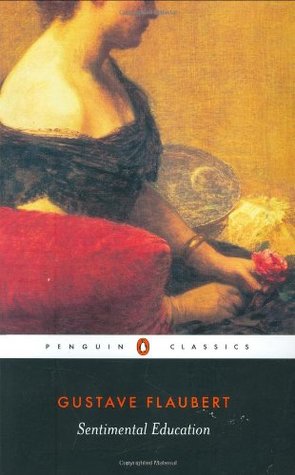
#16 Melville over #13 Flaubert. Incredibly, neither of my libraries has the Sentimental Education either, a book I am starting to worry that I will never read, even though it is among the favorite books, and easily the favorite Flaubert, among many people whom I consider in some degree to be acceptable models of erudition and worldliness. For some reason it does not come up in either of my official lists. I suppose I should have rammed it through to the victory here--it is my challenge, and I do that--but at the moment I am especially disorganized with regard to my lists, as well as short of cash for any extra purchases, however small, so I am not going to do that.


#15 Bhattacharya over #14 Green.

Championship Round

#15 Bhattacharya over #16 Melville. The higher seed wins for the only time in the tournament. Since I decided to treat Bhattacharya as a legitimate contender based on nothing but the cover of his (her?) book, the circumstance that it is over 100 pages shorter than Melville, as well as available at the library, gives it the victory.


The winning design


This post needed a girl-I'd-like-to-have-had-intrigue-with-in-my-youth picture.

Friday, January 24, 2014

George Eliot--Adam Bede (1859)

So it took a little less than two months to re-read this at my necessarily deliberate pace. I was aiming for six weeks, but I had the stomach flu for a while, there was the Christmas season, I had to go camping. There were doubtless other distractions as well. Anyway, I enjoyed the book about as well as I did on the earlier occasion when I read it, in 2000-2001, though I was a little more attentive to its deficiencies this time, and the gap in quality between it and the other two George Eliot books I have read (Middlemarch and The Mill on the Floss) seemed larger than it did thirteen years ago. As I often note, even at age 30-31 I was still much more impressionable than I am now. I recognized on that reading many of the characteristic George Eliot qualities, particularly of detail of description and psychological investigation, that I admired in those other books, and that was good enough for me at the time. I rarely find anything as good now as I did when I was younger. I have also been beaten down over the years by my failure to maintain connections to and friendships with vital and capable people who have a strong literary education, as well as the constant overexposure to the general negativity towards literary study that is predominant in much of the remainder of society, or if not that, the negativity about the ability of people like me to get anything of value out of them, that is predominant among the people presiding over our dying humanities departments and literary magazines. But while my critical guard is perhaps more raised, I still derived no small pleasure from the exercise, except for one night just before Christmas when I was too depressed to read anything and determined to get rid of all of my books once for all. However, the next day I haltingly took up the book  one final time to confirm my determination to break myself of the habit and worked through a chapter. It did not restore my spirits entirely, but I had to confess that I at least felt a little like myself, or what I imagine myself to be (the sort of person who reads Victorian novels as if it were entirely natural and served a real purpose in life), and that there was perhaps value in that. Within a couple of days I was reading more or less in my normal way again, and held off on giving up the project for the time being, though I am still not ruling out taking this step in the future if I can convince myself that it would be beneficial to me to do so. I accept that it will probably never happen however.


The modern criticisms of Adam Bede are I think pretty consistent--the main characters are not compelling, and Adam Bede himself is especially wooden. There are several excellent minor characters whose appearances supply the best parts of the book--Bartle Massey, Mrs Poyser, Reverend Irwine. The young squire (Donnithorne) is about half well drawn--the parts where the laziness of his mind and the non-development of his will and character are depicted are good descriptions of what those states of mind are like in a young man who should have been more attentive to correcting these faults in the course of his education. But there is not much else to him, and he essentially disappears from the last half of the book.

Adam Bede's brother Seth seemed a decent enough fellow who deserved a little better treatment from his creator. I know women--even George Eliot, in some instances, betrays characteristics of the stereotypical feminine mind-- cannot help regarding any man who is not in the front rank of his particular society as pitiful and substantially without sex, but poor Seth not only has to endure his mother's blatant preference for his brother (accompanied with constant assertions of his own inferiority, which is more a matter of his brother's extreme forcefulness of personality rather than his own shortcomings, either moral or in general ability), but is reduced to having to joyfully endorse his brother's marriage to the woman who had previously rejected his own proposals and swore she could never consider marrying anyone, and even when the book wraps up with an update on what everyone is doing eight years later he is still living, presumably as a virgin, with his mother and happily playing the role of the fun-loving uncle to the children of his brother and the woman he was formerly infatuated with. George, you couldn't have managed to throw him a nice and dutiful, if somewhat boring girl from the village to warm his youthful bed and keep house for him? Brutal.


Apparently there is a TV Movie of Adam Bede.

The IWE's introductory box for Adam Bede notes that 'The novel is quite short and partly for that reason has long been a school favorite'. Huh? The edition I read (a modern Everyman's Library) was 613 pages. I have another copy, part of an incomplete set of the collected works of George Eliot from around 1900, that is 544 pages. I guess they really did use to read a lot more in school. Actually, I wonder if whoever it was that submitted this for consideration on the list and wrote the plot summary was not thinking of an abridged edition. I noticed that the plot summary given in the encyclopedia left out a considerable chunk of the middle to three-fourths part of the book, and the summaries of these books in this encyclopedia are usually pretty thorough. Two editions are noted in the introduction--the Pocket Library, which my researches tell me clocked in at 529 pages, and the Rinehart Edition (551). I think somebody was confusing this with Silas Marner, which I believe actually is short and is read (or used to be read) in school in part for that reason. Of course schools used to rather famously make kids read The Mill on the Floss, which is not short either. I have never met anyone who had to read it in school who doesn't consider it the most boring book of all time, though I thought it was quite good, much to my surprise after a lifetime of hearing it trashed by reasonably intelligent people.


The Challenge

I've decided to tweak the challenge, since there was a flaw in the old system which favored books that had achieved a high rating based on a handful of reviews, or even one review. I decided to experiment with just choosing the book that had the most reviews total, which seemed more likely to produce the kind of winners I am looking for, popular books tending towards the more contemporary which I likely had some interest in reading anyway. If this results in a Jodi Picoult book winning, I do still have the option of declining the challenge. If a Jodi Picoult book wins more than 50% of the time, I will have to revamp the system again. Here is the Adam Bede list, with the number being the total of reviews the book has received on Amazon.com:

1. Quiet: The Power of Introverts in a World That Can't Stop Talking--Susan Cain.....1,916
2. Zen & the Art of Motorcycle Maintenance--Robert Pirsig.............................................893
3. The Lowland--Jumpha Lahiri..........................................................................................549
4. Plenty--Yotam Ottolenghi...............................................................................................365
5. Love Amid the Ashes--Mesu Andrews............................................................................151
6. Vegetable Literacy--Deborah Madison...........................................................................111
7. Hotel du Lac--Anita Brookner...........................................................................................83
8. Everyday Food Light--Martha Stewart Living Magazine....................................................54
9. The Geography of Love--Glenda Burgess.........................................................................21
10. Balaboosta--Einat Admony..............................................................................................18
      Salad For Dinner--Jeanne Kelley.....................................................................................18
12. The Common Reader--Virginia Woolf...............................................................................6
      Out of Their League--Dave Meggyesy..............................................................................6
14. World's Best Ciders--Pete Brown & Bill Bradshaw............................................................2


There were no books that received no reviews.

This was a slightly shocking result, as I had never heard of the Cain book, which is apparently quite popular. I had thought for sure that Zen, which I have never read, would be the winner, and I was planning to go ahead and accept. I was going to accept the Cain book as well. It is only 277 pages of text, and looks to me to be one of those pop psychology books you can wolf down in little more than an hour. My library has three copies of it, all of which, however, are currently checked out. I don't want to wait around for two weeks or whatever, so I will move on to the next encyclopedia selection & perhaps I will come back to Quiet at some time in the future. I have not looked too far ahead on the list, but the next six selections at least look to be short (300 pages or less): a play, a poem, a child's book, a political philosophy treatise, and a couple of short novels. So I should be able to made some headway on the list here.


Bestselling Author Susan Cain (1968--    ) Education: Princeton Class of '89, Harvard Law Class of'93. Worked as a Wall Street Lawyer & Negotiations Consultant before becoming a writer.

Since one of the keywords in one of the media generating exercises was "Dinah", there was an LP showdown between Dinah Shore and Dinah Washington. More surprising results:

1. Dinah Sings, Previn Plays--Dinah Shore...............................19
2. Everybody Loves Me--Dinah Shore.......................................10
    For Those in Love--Dinah Washington...................................10
    Unforgettable Dinah Washington.........................................10
5. Mad About the Boy--Dinah Washington...................................7
6. Dinah '62--Dinah Washington...................................................5
7. Dinah Washington Sings Fats Waller......................................1
    In Love--Dinah Washington.......................................................1
    Love Songs--Dinah Shore.........................................................1


Two albums got no reviews, both by Dinah Washington, The Queen, & Somebody Loves Me: The Very Best of Dinah Washington Volume 2. 

I don't know much about Dinah Washington, though I thought she was something of a legend. This status doesn't translate into a lot of commentaries about her records, apparently.

I don't really have a system as far as the records go. I'm curious to see what comes up, if it's anything I would like.