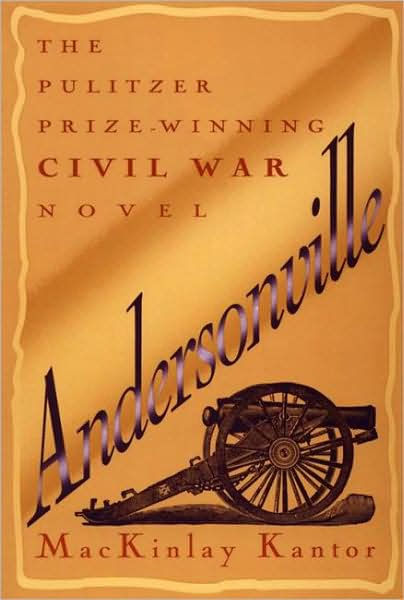
MacKinlay Kantor was a prolific and well-known American writer of mainly Civil War-themed books (mostly novels, to my surprise; my father had a number of his books when I was young and I had always assumed they were popular histories) during the middle decades of the 20th century whose profile has inevitably dropped since his death in 1977, and that of most of his readers in the years since. Andersonville won the Pulitzer Prize for its year, beating out, among other contenders, The Recognitions, A Good Man is Hard to Find, and The Ginger Man. (Lolita was originally published that year in Paris as well, but did not appear in the U.S. until 1958). It is an earnest effort, much in keeping with the fashion of the time, at writing a sprawling, epic-caliber masterwork that would, by way of the cauldron of the Andersonville prison and the fall of the Confederacy, define and celebrate the National Character. And 'celebrate', is not, in this instance, by any means an ill-chosen word. Even though his subject is a horrific prison camp where over 13,000 men died, mainly of starvation, gangrene, scurvy, infections, and the like, the books lacks the moral edge, the shaming effect on the reader that modern books about this subject anyway seem to need to attain important status. Kantor is not an angry writer, looking around for people to condemn and wish some kind of retribution on, or if he does it is more for their incompetence and slipshod management, their deficiency of honor and military professionalism than for their being evil. He views the ordeal of Andersonville as a personal tragedy for the young men, especially those possessed of some promise, who had the misfortune to die there, though with something of the attitude that such unpleasant things will occur in war, and great wars are formative and probably necessary experiences for Great Nations to go through. Certainly at the end of the book the central character, the plantation owner and erstwhile slaveholder Ira Claffey, is reconciled to and almost giddy about the reunification of the states, the abolition of slavery, and the wonderful future that the country had to look forward to.
I gather that my book, while not a first edition, is a fairly early one, since the author blurb in the back refers to Andersonville as if it were Kantor's latest effort, and makes no mention of the Pulitzer Prize. As a book that was a big seller in the 1950s and has kind of been forgotten in the ensuing years, my local used book barn had at least five copies of it moldering away in the stacks. The author blurb is one of the better ones I have read in a while; though I hadn't realized it about him, Kantor's biography was right in tune with those of the to us impossibly self-confident, manly, wide-ranging white male writers of his generation who were supremely convinced of their importance and superiority vis-a-vis everyone than other supremely confident and high-achieving white male men of action:
"MacKinlay Kantor was born in Webster City, Iowa, February 4, 1904. His parents were separated before his birth, divorced soon afterward. The future novelist spent a chaotic childhood and youth in Iowa and in Chicago--years marked by poverty, hard work, and occasional moments of comparative luxury. He started to write seriously at sixteen, became a newspaper reporter at seventeen, and an author devoted exclusively to fiction at the age of twenty-three. Mr Kantor's first novel was published in 1928. Since then thirty of his books in all have been appreciated by readers in America and abroad: novels, verse, collections of short stories and novelettes, juvenile books, and histories. He has come to be regarded as a foremost interpreter of the essentially American flavor and scene. MacKinlay Kantor's accomplishments vary from the Hollywood motion-picture complex (he wrote the original story for the world-famous The Best Years of Our Lives, which won thirteen Academy Awards) to a year and a half spent living the life of a patrolman in the New York City Police Department. He has achieved combat experience in two wars and was personally decorated by the commander of the United States Air Force. Mr Kantor was married in 1926 to Irene Layne, an artist. They are the parents of a daughter and a son (the latter now a flyer in that same Air Force) and the grandparents of two small boys. The Kantors divide their time between Sarasota, Florida, and Spain, where much of Andersonville was written. The author began his intensive study of the Andersonville prison more than twenty-five years ago."
I took a few notes early in the book while I was getting used to Kantor's approach to various subjects, most of which were fairly characteristic of mainstream male writers in the 1950s, though if you have not read anything from this school in a while the initial blasts can knock you off course for a moment or two. Here is the book's main character and moral center, plantation owner Ira Claffey, contemplating his (grown, or nearly grown) daughter on page 10:
"...but Lucy was yawning. He felt a fire as he saw that yawn. Soon, then--To bed, to bed! Incestuous sheets, sweet prince? Nay, my Veronica and I lie within the embrace of a mortal primness known as Holy Wedlock."
On the nobility of war, which as discussed above, is an important, but to most contemporary intellectuals probably an idiotic theme in the book:
"But he did not like their attitude. They seemed to bring a meanness to war. There should be nobility about the business of risking life, even the business of taking it..."
There is a very brief interlude in Paris near the beginning which introduces the character of Henry Wirz, who was an actual historical personage who became the commander of the Andersonville stockade and was hanged after the war for his role in that catastrophe (though Kantor did not explicitly mention the execution in the book, leaving off the character with his arrest, though it is strongly implied as he takes leave of his wife and children that he isn't going to be seeing them again). The Swiss-born Wirz, whose arm was badly injured in battle, is in France to seek medical assistance from an old university classmate who has become a renowned surgeon. The Frenchman provides one of the few comic lines in the 760 page book:
"I don't pay much attention to what goes on over there (i.e., in the war). My dear friend, you'll forgive me when I state a simple if unpleasant professional fact. Between my own patients and what goes on at the hospital and my lectures at the school--Well, my wife tells the children not to run shrieking to their nurse that a strange impostor has forced his way into the house, on those rare occasions when I do appear. As for my mistress--"
Among the many vignettes of the prior lives of various of the prisoners that Kantor drew in the course of the story to illustrate the vastness and variety of the American landscape and nation, there were a couple of buddies who hailed from the village where our Vermont house is, which was probably more populated, and was almost certainly more village-like in character, in 1850 than it is now.
We now return to the aforementioned Lucy, daughter of the plantation owner, and her fantasies while enduring the lonely years of the war, as only a mid-20th century American author with overinflated self-esteem could express them (I jest affectionately here):
"Lucy did not know exactly how the act of love was performed--she had only wicked whispered girlish gossip to go by--but in lonely nights she lay charmed by the contemplation of her own body, excited nearly into fever. Somewhere there might still be a man's body constructed for the express purpose of gratifying her own...waiting the muscular man who would step toward her, smiling and courteous but not to be restrained, out of tapestried shadows."
On a couple of southern gentleman whose close friendship might have appeared in a certain hue to the more vulgar-minded reader:
"They had held that deep love which is disassociated from sex because of the nature of the lovers; they are men made for women, never men made for men. Abhorrent as decay itself was the notion that ever either of them could have loved physically one of his own fashioning, in intimacy."
Just so we're all clear on this.
One of the westerners who ended up in Andersonville had lost his father to Indian torture in Nebraska:
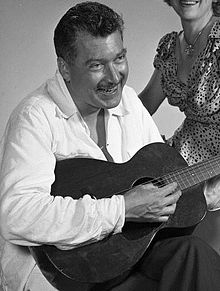
When being a writer was fun
"...one day, ten miles from Fort Cottonwood, he was shot down by a party of Cheyennes who tore off his silver scalp and built a hot fire between his legs so that he might not be able to procreate in the Next World. Had they known that he took pleasure in song, they would also have cut out his tongue, since he was the enemy of the Indians and they did not wish him to have pleasure."
Kantor evidently didn't get the memo reminding him to wonder what business all these white guys had wandering into the ancestral lands of the Native Americans in the first place.
More testimony to the unabashed heterosexual pride coursing through the literary establishment of the time:
"There were a round dozen sluggers, also the cooks and housekeepers--two of these latter were homosexuals whose affection some of his men enjoyed, but Willie himself did not crave such peculiar ecstasies, his laughter burst at the very idea."
Willie by the way is Willie Collins, a real figure from history who was the most violent man in the stockade and leader of, for a while, its most brutal criminal gang.
My sense incidentally is that Kantor probably considered himself to be fairly liberal and progressive by the standard of his day. With regard to the black population, he seemed to have considered the progress made by 1955 in the professions and education just ninety years removed from slavery to have been remarkable, though current popular opinion I think would hold that these attainments were much less than they should have been, or would have been had society been operating under any kind of just system. It is evident that he did not hold acceptably high expectations where black achievement was concerned.
The episode concerning the friendship of Coral Tebbs and the escaped prisoner Naz Stricker in the waning days of the war, one a Georgian and the other a Pennsylvanian, one deprived of a foot and the other of a hand, is emblematic of the corniness that pervades and mars the end of the story.
I have mentioned before in some of my other writings that I have an especial fascination in the end periods of cataclysmic wars where a substantial nation that has fought and carried out the war with great fury over a period of years in brought to the point of total ruin and destruction. Our very own Civil War offers one of the more vivid manifestations of this phenomenon, particularly in modern times, and Kantor, no doubt knowing and feeling the enormity of this event, made an effort to bring it to epic life in his book. While he was pretty strong on the technical aspects of final military collapse--mainly the breakdown of organization that overwhelms any attempt at maintaining a system--he cannot call up the intensity, either moral or emotional, that the great literary depictions of these epoch-marking military defeats convey. For example Faulkner in Absalom, Absalom deals with the defeat and fall of the Old South within a much smaller framework, limited primarily to a handful of families in a single small town, but the meaning and the thoroughness of the defeat is expressed more immediately and powerfully. I cannot think of any other examples from the Civil War offhand. I haven't read Gone With the Wind, and I don't know that I ever will.
Near the end Ira Claffey ponders--about two or three weeks after the war has ended (the news of Lincoln's assassination has reached even rural southwestern Georgia) what I take to be Kantor's personal viewpoint as to the legacy of the war:
"Here was a truth to offer strength and--perhaps, later-courage. This truth: any creed for which men are willing to die achieves an historic dignity and cannot be shamed, no matter how one hated it. I hated the North, said Ira. Hated the National Government. My sons warred against the Nationals, my sons were killed by the Nationals. Yet the youths who suffered within these walls have given the National Government a greatness it did not possess before; and in time that Government may be embraced, welcomed, respected, worshipped by those who once were unwilling to love it without stint."
This was definitely written at the height of U.S. nationalistic feeling. People took it for granted it would last at least into the whole of the foreseeable future.
The IWE blurb for Andersonville is especially howl-inducing: "The forte of MacKinlay Kantor is tender pathos, sentiment such as all men feel and only the Nordics seem to consider shameful." They also note that "The major character, Ira Claffey, who loved his fellow men, has seemed to some critics to be overidealized. He is not. He existed, and he is no less typical because there were and are unfortunately too few of him." Claffey's paternalistic and semi-humane treatment of his slaves, and their loyalty and family feeling for him in return, were emphasized throughout the book. Though he has doubts at the end of the war that the suddenly freed slaves will really be able to survive in their new condition, he comes rather quickly to the revelation that that struggle has now become the necessary element animating their lives going forward. Again, this is about the best that Kantor, an obviously cognitively able and would-be liberal man of his generation, seems to have been able to muster as a vision of the role of America's black population both in its past and looking to its future.
The Bourgeois Surrender Challenge
While Andersonville was a very long book, it had a fairly short summary, resulting in a only a few qualifying rounds for the Challenge, enabling works with as few as 1 internet review to make it into the field.
1. Mary C. Neal--To Heaven and Back.....................2,241
2. Margaret Mitchell--Gone With the Wind...............2,036
3. Sin City: A Dame to Kill For (movie).......................760
4. Rocky Balboa (movie)...............................................508
5. The Loft (movie)........................................................287
6. Luis Alberto Urrea--Devil's Highway........................222
7. Jack and Diane (movie)..............................................86
8. Heaven (movie)...........................................................85
9. Ain't Them Bodies Saints (movie)...............................69
10. Jamesy Boy (movie)..................................................66
11. John Nichol & Tony Rennell--The Last Escape.......20
12. Juri Lina--Architects of Deception............................10
13. Ronald E. Casey--To Fight For My Country, Sir.......9
14. Rebel Wife in Texas: Diary & Letters of Elizabeth
Scott Neblett 1852-1864.............................................4
15. Donna Rembowski--Medieval Law & Punishment....2
16. Filson Young--Christopher Columbus & the New World
of His Discovery, Vol 1...............................................1
17. Charles Shaw--Heaven Knows, Mr Allison.................1
Play-In Round
#16 Young over #17 Shaw--Neither is readily available to me, though both books have some interest about them. The complete (8-volume) Young received 11 reviews, indicating that it still has currency somewhere, and Shaw's post-World War II novel was made into a film in 1957 which, though I have never heard of it, was directed by John Huston and starred Deborah Kerr. I am giving Young the nod because his book seems slightly more interesting to me at the moment.
Round of 16
#1 Neal over #16 Young
As noted above, the Young is not generally available to me for free.
#2 Mitchell over #15 Rembowski
No contest again because of the unavailability of the lower-seeded book.
#14 Neblett over #3 Sin City
#13 Casey over #4 Rocky Balboa
#12 Lina over #5 The Loft
#6 Urrea over #11 Nichol & Rennell
Urrea is 300 pages shorter.
#7 Jack & Diane over #10 Jamesy Boy
Jamesy Boy looks too gratuitously violent for me.
#8 Heaven over #9 Ain't Them Bodies Saints
Ain't Them Bodies Saints is giving off major pretentious/incomprehensibility vibes to me. Heaven looks to be the safe middlebrow choice.
Elite 8
#1 Neal over #14 Neblett
#2 Mitchell over #13 Casey
#6 Urrea over #12 Lina
These are all availability questions
#8 Heaven over #7 Jack & Diane
I don't know, Heaven is a few years older. Also teenage romance type stories are not very satisfying to me anymore, because I never had any in my own life and it still bothers me.
Final Four
#1 Neal over #8 Heaven
#6 Urrea over #2 Mitchell
The Urrea book sounds like it might be interesting and fresh--no suburban whitebread stuff you know--plus I am not in a frame of mind to take on a 1200 page novel that is not on my list.
Championship
#6 Urrea over #1 Neal
A very close decision, given to Urrea on the basis of more enticing subject matter, plus the indication that he might represent one of the neglected literary populations we are all supposed to be getting better acquainted with.
The winner. Obviously no stranger to the lectern.
Showing posts with label MacKinlay Kantor. Show all posts
Friday, January 15, 2016
Wednesday, January 6, 2016
January Update
A List: Robert Byron--The Station: Athos: Treasures and Men...51/256
B List: Kantor--Andersonville...671/760
C List: Atul Gawande--Being Mortal: Medicine and What Matters in the End...223/402
The Byron book is not really a classic, though it is a curiosity of sorts, and is periodically reprinted in modern editions. It has made its way onto the list by being one of a group of four books reviewed by D.H. Lawrence in a 1928 article that has itself attained list status. I am going to attempt to read as many of these four books as I can get my hands on. Byron's book, his second, concerning a year he and three Oxford friends spent at the now somewhat celebrated but then remote and little--known Byzantine monastery in Greece, was published when he was 22 years old. He was a cheeky, cocky sort of youth, upper class, successfully classically educated (i.e., could actually read Greek and Latin and retained the content of his learning the whole of his life), fond of contention, iconoclastic after the manner of his generation. I used to like these kinds of guys when I could sort of imagine myself as being after the same type, but I really don't know how to take them now that it is so obvious that I do not have this sort of mind at all. I becomes tiresome to be forever reading things that one is never going to have a part in, and are not doing one any good. The style of the book is also overwrought and ordinary situations and observations are presented more opaquely than they need to be. Byron wrote nine books by age 31 and then went into politics. He was killed in war action in 1941 at the age of 35.
The Kantor I will be doing a longer essay on. I have mostly enjoyed it but it is laboring to get to the end of the story and has completely lost any sort of tightness it had going over its first half.
We went over Gawande's incredible resume and accomplishments in a previous post. His book (which is not as long as it looks here--the Large Print edition was the only one that came available at my library), despite its apparent popularity, is not particularly compelling. It is an information book rather than a story book--though there are stories in it, they are not really interesting or humorous, and the salient facts that Gawande tends to notice about people, as well as the way that he relates them, have the effect of being depressing more than anything else. The subject of the book is very, very old people, as in, over age 85, and the various ways in which they become impaired and the various ways in which they are cared for at this stage of life, in the end mainly by being put into nursing homes, where people tend to be miserable due to the institutional nature and lack of any personal autonomy which becomes one's fate once you enter one. My impression is that people have very unrealistic ideas about the kind of life you can reasonably expect to have when you are in your 90s, and the baby boomers, who are going to be the worst of all, have not even begun to enter serious old age yet. It is scary, and I would not be looking forward to it if I thought I was going to live that long (people my size rarely seem to make it much past the early 80s at the utmost), and I suppose there are improvements that could be made to nursing home care, make it less impersonal and so on, but of course that would cost even more money than is already spent on elders, at a time when as a society we are doing terribly at developing young people into adults who can govern themselves or contribute meaningfully in any way...
As an honorable mention I got as a kind of stocking stuffer a little volume called The Film Snob's Dictionary. I don't know whether some kind of statement about me was intended but it is a quite funny little book. It was published in 2006 so it is slightly dated--certain notoriously pretentious video stores in places like Los Angeles and Chicago were referenced which I suspect are no longer particularly important for example, but otherwise it makes for good reading. Of the genres which feature most prominently, the only one with which I have any familiarity is that of the self-consciously and usually pretentious art films. Horror/slasher movies, the ultraviolent Asian films much loved by Quentin Tarantino, and sex films attempting to pass themselves off as artistic meditations make up much of the (often hilarious) content. Obvious entries such as Ingmar Bergman and Federico Fellini are omitted because they are "mere name-drops for bourgeois losers wishing to seem cultured. Watching a Bergman movie is so PBS tote-bag, so Mom-and-dad-on-a-date-in-college, so baguettes and Chardonnay." (Of course some of us can only aspire to have moms and dads who went on a date to a Bergman movie in college). From the entry on 1960s Japanese B movie director Seijun Suzuki: '...(his) violent CinemaScope action pictures grew increasingly eccentric as time went on, culminating in 1967's Branded to Kill, about a Yakuza hitman with a fetish for sniffing freshly steamed rice. Fired by his studio, Nikkatsu, for making 'incomprehensible films' (a not entirely unfair charge), Suzuki spent years in the wilderness before being lionized by his burgeoning Snob constituency (which includes Quentin Tarantino and Jim Jarmusch)." There is lots of this throughout. While I mostly agree with their assessments of various movies and the cults that have come to surround I do think L'Atalante, which the authors (David Kamp and Lawrence Levi) single out for ridicule on several occasions, really is a deep and very sad and moving picture.
Picture Gallery
Athos
Memorial at Andersonville
The book
Some art
The closest thing to a hot babe picture that came up. The girl on the left is pretty cute at least.
B List: Kantor--Andersonville...671/760
C List: Atul Gawande--Being Mortal: Medicine and What Matters in the End...223/402
The Byron book is not really a classic, though it is a curiosity of sorts, and is periodically reprinted in modern editions. It has made its way onto the list by being one of a group of four books reviewed by D.H. Lawrence in a 1928 article that has itself attained list status. I am going to attempt to read as many of these four books as I can get my hands on. Byron's book, his second, concerning a year he and three Oxford friends spent at the now somewhat celebrated but then remote and little--known Byzantine monastery in Greece, was published when he was 22 years old. He was a cheeky, cocky sort of youth, upper class, successfully classically educated (i.e., could actually read Greek and Latin and retained the content of his learning the whole of his life), fond of contention, iconoclastic after the manner of his generation. I used to like these kinds of guys when I could sort of imagine myself as being after the same type, but I really don't know how to take them now that it is so obvious that I do not have this sort of mind at all. I becomes tiresome to be forever reading things that one is never going to have a part in, and are not doing one any good. The style of the book is also overwrought and ordinary situations and observations are presented more opaquely than they need to be. Byron wrote nine books by age 31 and then went into politics. He was killed in war action in 1941 at the age of 35.
The Kantor I will be doing a longer essay on. I have mostly enjoyed it but it is laboring to get to the end of the story and has completely lost any sort of tightness it had going over its first half.
We went over Gawande's incredible resume and accomplishments in a previous post. His book (which is not as long as it looks here--the Large Print edition was the only one that came available at my library), despite its apparent popularity, is not particularly compelling. It is an information book rather than a story book--though there are stories in it, they are not really interesting or humorous, and the salient facts that Gawande tends to notice about people, as well as the way that he relates them, have the effect of being depressing more than anything else. The subject of the book is very, very old people, as in, over age 85, and the various ways in which they become impaired and the various ways in which they are cared for at this stage of life, in the end mainly by being put into nursing homes, where people tend to be miserable due to the institutional nature and lack of any personal autonomy which becomes one's fate once you enter one. My impression is that people have very unrealistic ideas about the kind of life you can reasonably expect to have when you are in your 90s, and the baby boomers, who are going to be the worst of all, have not even begun to enter serious old age yet. It is scary, and I would not be looking forward to it if I thought I was going to live that long (people my size rarely seem to make it much past the early 80s at the utmost), and I suppose there are improvements that could be made to nursing home care, make it less impersonal and so on, but of course that would cost even more money than is already spent on elders, at a time when as a society we are doing terribly at developing young people into adults who can govern themselves or contribute meaningfully in any way...
As an honorable mention I got as a kind of stocking stuffer a little volume called The Film Snob's Dictionary. I don't know whether some kind of statement about me was intended but it is a quite funny little book. It was published in 2006 so it is slightly dated--certain notoriously pretentious video stores in places like Los Angeles and Chicago were referenced which I suspect are no longer particularly important for example, but otherwise it makes for good reading. Of the genres which feature most prominently, the only one with which I have any familiarity is that of the self-consciously and usually pretentious art films. Horror/slasher movies, the ultraviolent Asian films much loved by Quentin Tarantino, and sex films attempting to pass themselves off as artistic meditations make up much of the (often hilarious) content. Obvious entries such as Ingmar Bergman and Federico Fellini are omitted because they are "mere name-drops for bourgeois losers wishing to seem cultured. Watching a Bergman movie is so PBS tote-bag, so Mom-and-dad-on-a-date-in-college, so baguettes and Chardonnay." (Of course some of us can only aspire to have moms and dads who went on a date to a Bergman movie in college). From the entry on 1960s Japanese B movie director Seijun Suzuki: '...(his) violent CinemaScope action pictures grew increasingly eccentric as time went on, culminating in 1967's Branded to Kill, about a Yakuza hitman with a fetish for sniffing freshly steamed rice. Fired by his studio, Nikkatsu, for making 'incomprehensible films' (a not entirely unfair charge), Suzuki spent years in the wilderness before being lionized by his burgeoning Snob constituency (which includes Quentin Tarantino and Jim Jarmusch)." There is lots of this throughout. While I mostly agree with their assessments of various movies and the cults that have come to surround I do think L'Atalante, which the authors (David Kamp and Lawrence Levi) single out for ridicule on several occasions, really is a deep and very sad and moving picture.
Picture Gallery
Athos
Memorial at Andersonville
The book
Some art
The closest thing to a hot babe picture that came up. The girl on the left is pretty cute at least.
Saturday, December 5, 2015
December Update
A List: Galsworthy, Forsyte Saga.......522/878 (In Chancery)
B List: MacKinlay Kantor, Andersonville.......179/760
C List: Sun-Mi Hwang, The Hen Who Dreamed She Could Fly.......115/134
I'm still enjoying the Forsytes, even though it could be protested that not much really happens given the number of pages, characters and passing years that make up the story. There is enough good period detail and amusing dialogue, especially now that the version of England that is depicted in these novels, parts of which I feel like still lingered at least psychologically into the time of my youth, is really fading into history, to keep up interest. There was a fourteen year gap between the publication of the first volume of the trilogy (The Man of Property) and the second, In Chancery. The tone and outlook of the two volumes are quite consistent, which is surprising to me given the passage of that much time, not only with regard to the change in age of the writer, but of society as a whole, movements in literature, etc. Perhaps the later volumes were written closer upon the first than the publication dates would indicate, and were held back for some reason, though that does not seem characteristic of this writer. I suppose I must look that up. There is no longer any excuse not to.
Andersonville I am finding to be highly readable and impressive in some ways, in others showing the characteristics of its generation that are not held in high esteem today, though these dated parts for me tend to be almost interludes of comic relief along the way rather than anything that impedes my ability to get into the book. Of course I will do a long report on this when I have finished it.
For the C-list I am supposed to be reading Being Mortal by Dr Arul Gawande, however this book is so popular that all three of my public library's copies are currently checked out, and two of them have already been placed on reserve when they do come in. Since I like to have an easier and somewhat contemporary third book around, especially when I am beginning a book that is going to take me a couple of months to read on my serious list, and the dreaming hen book, which had been in the competition for this spot, was extremely short and available, I decided to break from my protocol and take it up, and do the Gawande afterward if it becomes available, as I will be on Andersonville until probably late January. It's a little too...twee? feminine? the words don't come, they never come, at least not at night...to my taste, though I suppose there is nothing objectionable about it. And look at all of the multicultural writers I am getting in this way. I am on a veritable roll.
Picture Gallery
This is from a movie about Anne Boleyn. It came up in the magic word search for the Forsyte Saga
Andersonville
Irene and Soames from the 1967 Forsyte adaptation. Pictures from the more recent one seem to indicate a lot more sexy stuff going on than I am getting from the book, unless things really begin to pick up.
Andersonville today.
B List: MacKinlay Kantor, Andersonville.......179/760
C List: Sun-Mi Hwang, The Hen Who Dreamed She Could Fly.......115/134
I'm still enjoying the Forsytes, even though it could be protested that not much really happens given the number of pages, characters and passing years that make up the story. There is enough good period detail and amusing dialogue, especially now that the version of England that is depicted in these novels, parts of which I feel like still lingered at least psychologically into the time of my youth, is really fading into history, to keep up interest. There was a fourteen year gap between the publication of the first volume of the trilogy (The Man of Property) and the second, In Chancery. The tone and outlook of the two volumes are quite consistent, which is surprising to me given the passage of that much time, not only with regard to the change in age of the writer, but of society as a whole, movements in literature, etc. Perhaps the later volumes were written closer upon the first than the publication dates would indicate, and were held back for some reason, though that does not seem characteristic of this writer. I suppose I must look that up. There is no longer any excuse not to.
Andersonville I am finding to be highly readable and impressive in some ways, in others showing the characteristics of its generation that are not held in high esteem today, though these dated parts for me tend to be almost interludes of comic relief along the way rather than anything that impedes my ability to get into the book. Of course I will do a long report on this when I have finished it.
For the C-list I am supposed to be reading Being Mortal by Dr Arul Gawande, however this book is so popular that all three of my public library's copies are currently checked out, and two of them have already been placed on reserve when they do come in. Since I like to have an easier and somewhat contemporary third book around, especially when I am beginning a book that is going to take me a couple of months to read on my serious list, and the dreaming hen book, which had been in the competition for this spot, was extremely short and available, I decided to break from my protocol and take it up, and do the Gawande afterward if it becomes available, as I will be on Andersonville until probably late January. It's a little too...twee? feminine? the words don't come, they never come, at least not at night...to my taste, though I suppose there is nothing objectionable about it. And look at all of the multicultural writers I am getting in this way. I am on a veritable roll.
Picture Gallery
This is from a movie about Anne Boleyn. It came up in the magic word search for the Forsyte Saga
Andersonville
Irene and Soames from the 1967 Forsyte adaptation. Pictures from the more recent one seem to indicate a lot more sexy stuff going on than I am getting from the book, unless things really begin to pick up.
Andersonville today.
Subscribe to:
Posts (Atom)