Showing posts with label snobs. Show all posts

Friday, August 14, 2020

William Makepeace Thackeray--The Book of Snobs (1846-7)

This was a bit of a strange choice for the list. While Thackeray was, and still is to some extent, one of the most prominent Victorian novelists (two of his other books are also on this program), this book, a collection of comic pieces written for the legendary Punch magazine, has not, judging by what is available for sale on the used book websites, been reprinted much going back to about 1900. My copy of the book is a 1999 edition put out (in English) by a German publishing house, Konemann, based out of Cologne. The IWE, in its characteristic enigmatic fashion, promotes the selection by observing that "Thackeray enjoyed writing humor and fancied himself as a humorist but was not so good in the field as he supposed. The Book of Snobs is his best humorous writing but is not in a class with his novels." There is some truth in this critique--Thackeray did not have the extreme natural talent for humor of a Dickens or a Fielding and at times he is noticeably straining for an effect more than would be evident in those other writers--but this book really is quite funny, if somewhat repetitive, it has considerable value as an unusually informal portrait by a top rank writer of the society of the time, and it has the benefit as well of being relatively unknown and not beaten to death through being manhandled by everybody in the Western world with a humanities degree. It also calls to mind the great periodical writings of the 18th century, The Spectator (which for better or worse was the impetus for me to start blogging), The Tatler, The Rambler, and so on, which rank among the most enjoyable things I have ever read. So I liked this a lot, though it is not without some problems which must be acknowledged.


Even though he denounces American slavery several times, he uses the "n"-word every time he refers to people who are dark-skinned, whether they are American slaves, or Othello. It's his default word for black people. Perhaps this is one of the reasons why the book is generally always out of print. There is also a brief reference to Disraeli and Sir Robert Peel, the Prime Minister at the time who was of the opposite party, which is innocuous enough to read if you are not aware of the house politics of Punch, but there is a footnote which explains that "there were campaigns at the time to remove disabilities on Jews, but Punch was far from sharing this liberal opinion..." It should also be noted that this book contains illustrations drawn by Thackeray himself, and in the same footnote regarding this Disraeli item, it states that "Thackeray added one of his more regrettable illustrations to this item (not reproduced in the present edition)."

p. 86 One more rather insensitive section to take note of (it is The Book of Snobs after all). From the chapter 'A Little About Irish Snobs": "I think the shams of Ireland are more outrageous than those of any country. A fellow shows you a hill and says, 'That's the highest mountain in all Ireland;" or a gentleman tells you he is descended from Brian Boroo, and has his five-and-thirty hundred a year...or ould Dan rises and says the Irish women are the loveliest (ed--there is a case to be made that this is true), the Irish men the bravest, the Irish land the most fertile in the world: and nobody believes anybody." The shots at Ireland seem a little cruel considering that the country was enduring mass starvation and depopulation at the very time this was being written. But I have noted a similar indifference to this crisis in other famous English writers of this period, Ruskin, etc. 


p. 150 On visiting the country: "Do you suppose that an agreeable young dog, who shall be nameless (ed--he is peaking of himself), would not be made welcome? Don't you know that people are too glad to see anybody in the country?"

p. 155-6 In an interlude characteristic of the Spectator, the author publishes a charming letter which he claims came from a girl in the north of England asking him whether she might be a snob or not. It contains a number of nice details about how the family always got the magazine on Sunday and would tear it open in the carriage on the way home from church and that sort of thing.

p. 162 Referring to an episode in a popular society novel of the era called Ten Thousand a Year, about a gentleman who has experienced a decline in his fortunes: "It is about seven o'clock, carriages are rattling about, knockers are thundering, and tears bedim the fine eyes of Kate and Mrs Aubrey as they think that in happier times at this hour--their Aubrey used formerly to go out to dinner to the houses of the aristocracy his friends. This is the gist of the passage...What can be more sublime than the notion of a great man's relatives in tears about his dinner?"  

p. 163 The great Mr Goldmore, the East India Director, on hearing that a friend had had dinner at the house of a lawyer acquaintance of theirs who was known to have no practice: "'What! Do they give dinners?' He seemed to think it a crime and a wonder that such people should dine at all, and that it was their custom to huddle round their kitchen-fire over a bone and a crust."

"Snob" by the way is not exclusively used in the book in the manner in which we use it, but it refers to everyone who buys into any of these absurd value systems and social customs, even if one is himself is not in a position where he is benefiting from them. 

p. 202 On poor Mr Sackville Maine, who sounds like me: "He agreed in everything everybody said, altering his opinions without the slightest reservation upon the slightest possible contradiction."


Belonging to a "club", is something that, whenever I read anything about them, I always feel like I ought to do. I lack gravity (gravitas?), somehow, which I feel like is one of the things holding me back from qualifying for admittance to a club, but there is no reason why I should to such a socially crippling extent. At the same time the country clubs seem to be begging for members now, so maybe I could get in, but would the quality of the bar and the lounge or the library (assuming they have one?) really be the same (once they started letting people like me in)?

p. 207 "What a deal of vanity that club mirror has reflected, to be sure!" 

The Bourgeois Surrender Challenge

There are a lot of upsets available in the qualifying for this one, so matchups will be everything in the early rounds. 

1. Donna Tartt--The Secret History............................................................................3,592

2. Anthony Bourdain--Kitchen Confidential..............................................................2,952

3. Julia Child--Mastering the Art of French Cooking................................................1,265

4. Phillipa Gregory-Tidelands.......................................................................................883

5. MacColl & Wallace--To Marry an English Lord......................................................687

6. Julian Fellowes--Snobs.............................................................................................653

7. M. C. Beaton--Snobbery With Violence....................................................................208

8. M. C. Beaton--Minerva: The Six Sisters Book I........................................................142

9. Elizabeth Hayley--Sex Snob.......................................................................................120

10. Marion Chesney--Hasty Death..................................................................................81

11. Garry Wills--The Future of the Catholic Church With Pope Francis........................69

12. Jeffrey Steingarten--It Must Have Been Something I Ate...........................................45

13. A. O. Scott--Better Living Through Criticism............................................................37

14. Stephen T. Um--Why Cities Matter.............................................................................35

15. Julian Fellowes--Society Rules: Two Novels: Snobs and Past Imperfect....................24

16. Aeschylus--Four Plays................................................................................................24


Round of 16

#16 Aeschylus over #1 Tartt

Here we go right off the bat with an almost impossible match-up between one of the more acclaimed books of the last thirty years having to square off against, well, Aeschylus. As an IWE author Aeschylus gets a more or less free passage into the semifinals under the rules of this game unless he encounters a book which has any immunity of its own, but Tartt, making her first appearance in the tournament, did not have that here.

#2 Bourdain over #15 Fellowes

The late Bourdain, besides being a celebrity author, also comes in armed with an upset. However, Fellowes is only half-eliminated, since the first volume of the book eliminated here also qualified in its stand-alone version.

#14 Um over #3 Child

Child is a classic as well but I'm probably not going to read a two volume cookbook as part of my program here.

#13 Scott over #4 Gregory

I eliminate genre books, which qualify for this game a lot, whenever I can. Do you what kind of books almost never qualify for this? Popular history and other non-fiction titles from the 1945-1990 era, which is a class of books I am partial to. 

#5 MacColl & Wallace over #12 Steingarten

Obviously this is the result of having an upset card. 

#6 Fellowes over #11 Wills

I am a little concerned that I have too many novels winning in this contest lately (though looking over the recent winners I would say that only about half of them actually are novels), but my interest is piqued by this Snobs book, which is also fairly short.

#10 Chesney over #7 Beaton

So now I am finding out that Marion Chesney and M.C. Beaton are the same person, or rather were, as this author of many names passed on last December 30th at the age of 83. Both of the books in this contest are part of a series of "Edwardian Murder Mysteries". 

#8 Beaton over #9 Hayley

Beaton had a upset to deploy here, maintaining her formidable presence in the tournament.

Super 8

#2 Bourdain over #16 Aeschylus

Bourdain has a second upset to carry him past the goliath Aeschylus into the Final Four. But he has spent them all now.

#5 MacColl & Wallace over #14 Um

To Marry an English Lord came in armed with a double-barrel of upsets as well. Do you think I really want to read this? 

#6 Fellowes over #13 Scott

I was interested in the Scott book--I like the short introductory videos on classic films he used to do on the New York Times website--but Fellowes looks to be the better received book.

#8 Beaton over #10 Chesney

It's a toss-up. Minerva has the better cover.

Final Four

#2 Bourdain over #8 Beaton

Bourdain doesn't need an upset to finally oust the pesky Beaton/Chesney from the tournament.

#6 Fellowes over #5 MacColl & Wallace

Championship

#6 Fellowes over #2 Bourdain

Bourdain triumphed over Fellowes in the first round, but he is not able to overcome him twice and falls in a very competitive final. 



Wednesday, May 24, 2017

Author List Volume XII

Herbert George Wells (1866-1946) The Invisible Man (1897), The War of the Worlds (1898), Mr Britling Sees it Through (1916) Born: 47 High Street, Bromley, London, England. Remains: Old Harry Rocks, Isle of Purbeck, Dorset, England. College: Imperial College, London.


Richard I, Coeur de Lion (1157-1999) Born: Beaumont Palace, Beaumont Street, Oxford, Oxfordshire, England. Buried: Fontevraud Abbey, near Chinon, Anjou, France. Chateau Gaillard, Les Andeleys, Normandie, France. Trifels Castle, Annweiler am Trifels, Rhineland-Palatinate, Germany.


Mazo de la Roche (1879-1961) Jalna (1927) Born: (Plaque Water Street on Fairy Lake), Newmarket, Ontario, Canada. Buried: St George's Anglican Church, Sibbald Point, Sutton, Ontario, Canada.


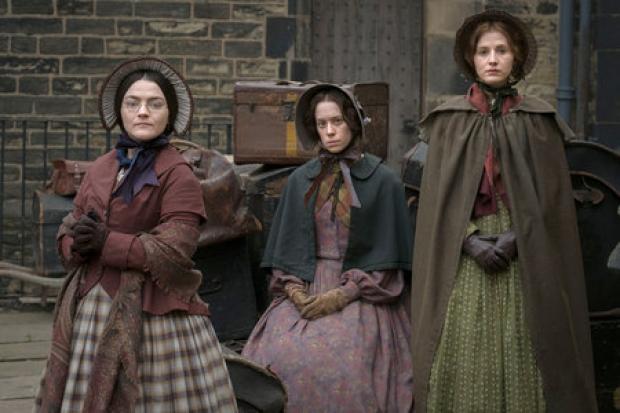
Charlotte Bronte (1816-1855) Jane Eyre (1847) Born: 74 High Street, Thornton, Yorkshire, England. (currently a tea shop) Buried: St Michael and All Angels' Church, Haworth, Yorkshire, England. Bronte Parsonage Museum, Church Street, Haworth, Yorkshire, England. Sir John Soane's Museum, Lincoln's Inn Fields, (Holborn?), London, England.


This was a picture of a pretty girl, but somehow during the course of writing this post it got changed to this.

Romain Rolland (1866-1944) Jean-Christophe (1904-12) Born: Musee d'Art et d'Histoire Romain Rolland, Avenue de la Republique, Clamecy, Burgundy, France. Buried: Cimitiere de Breves, Breves, Burgundy, France. Musee Zervos--Maison Romain Rolland, 14 Rue St Etienne, Vezelay, Burgundy, France. Romain Rolland Library, Main City, Pondicherry, India. Rhine River Boat. College: Ecole Normale Superieure (Paris). 

Pelham Grenville Wodehouse (1881-1975) The Inimitable Jeeves (orig. published as Jeeves) (1923) Born: 7 Vale Place, 50 Epsom Road, Guildford, Surrey, England. Buried: Remsenburg Cemetery, Remsenburg, Southampton, Suffolk, New York.  

Stephen Vincent Benet (1898-1943) John Brown's Body (1927) Born: Ostrom and Bishopthorpe Streets, Fountain Hill, Bethlehem, Pennsylvania. Buried: Evergreen Cemetery, Stonington, Connecticut. Stephen Vincent Benet House, 2500 Walton Way, Augusta State University, Augusta, Georgia. College: Yale

John Brown (1800-1859) Born: John Brown Road, Torrington, Connecticut. Buried: John Brown Farm State Historic Site, 115 John Brown Road, North Elba, Lake Placid, Essex, New York. John Brown Museum, Main and 10th Streets, Osawatomie, Kansas. John Brown Wax Museum, 168 High Street, Harpers Ferry, West Virginia.

Joseph (biblical figure) Born: Canaan, Israel. Buried: Joseph's Tomb, near Nablus, Israel (West Bank).

Potiphar's Wife:
William De Morgan (1839-1917) Joseph Vance (1906) Born: Gower Street, Bloomsbury, London, England. Buried: Brookwood Cemetery, Brookwood, Surrey, England. Birmingham Museum and Art Gallery, Chamberlain Square, Birmingham, Warwickshire, England. College: Royal Academy of Arts (London)

The De Morgan Centre, a museum housing a collection of De Morgan's ceramic work (his primary career before taking up novel writing at the age of 65) in Wandsworth, London, unfortunately closed in 2014. The collection is still seeking a permanent home at the present time.

Thomas Hardy (1840-1928) The Return of the Native (1878), Tess of the D'Urbervilles (1891), Jude the Obscure (1894) Born: Hardy's Cottage, Higher Bockhampton, Dorset, England. Buried: Westminster Abbey, Westminster, London, England (*****9-3-96*****). Heart in St Michael's Churchyard, Stinsford, Dorset, England. Dorset County Museum, West High Street, Dorchester, Dorset, England. Max Gate, Alington Avenue, Dorchester, Dorset, England. College: Kings (London) 

Upton Sinclair (1878-1968) The Jungle (1906) Born: Baltimore, Maryland. Buried: Rock Creek Cemetery, Washington, D.C. College: CCNY.

Sean O'Casey (1880-1964) Juno and the Paycock (1924) Born: 85 Upper Dorset Street, Dublin, Ireland. Buried: Golders Green Crematorium, Golders Green, London, England. Sean O'Casey Bridge, Dublin, Ireland. Sean O'Casey Theatre, St Mary's Road, East Wall, Dublin, Ireland.

Marc Blitzstein (1905-1964) Born: 419 Pine Street, Philadelphia, Pennsylvania. Buried: Chelten Hills Cemetery, Philadelphia, Pennsylvania. National Theatre, South Bank, Waterloo, London, England. College: Curtis Institute of Music.

According to his Wikipedia page, Blitzstein was an "unrepentant artistic snob, who firmly believed that true art was only for the intellectual elite." Having consumed a substantial part of my life in various attempts at becoming a cultivated person without any noticeable success, I suspect that this way of understanding the matter is probably correct.  


James Branch Cabell (1879-1958) Jurgen (1919) Born: 101 East Franklin Street (Now Home of Richmond City Library), Richmond, Virginia. Buried: Hollywood Cemetery, Richmond, Virginia. James Branch Cabell Library, 901 Park Avenue, Richmond, Virginia. College: William & Mary.


Sully Prudhomme (1839-1907) Justice (1878) Born: 34 Rue du Faubourg Poissoniere, 10eme, Paris, France. Buried: Cimitiere du Pere Lachaise, 20eme, Paris, Ile, France.


Elizabeth I of England (1533-1603) Born: Greenwich Palace (now Royal Naval College), Greenwich, London, England. Buried: Westminster Abbey, Westminster, London, England.


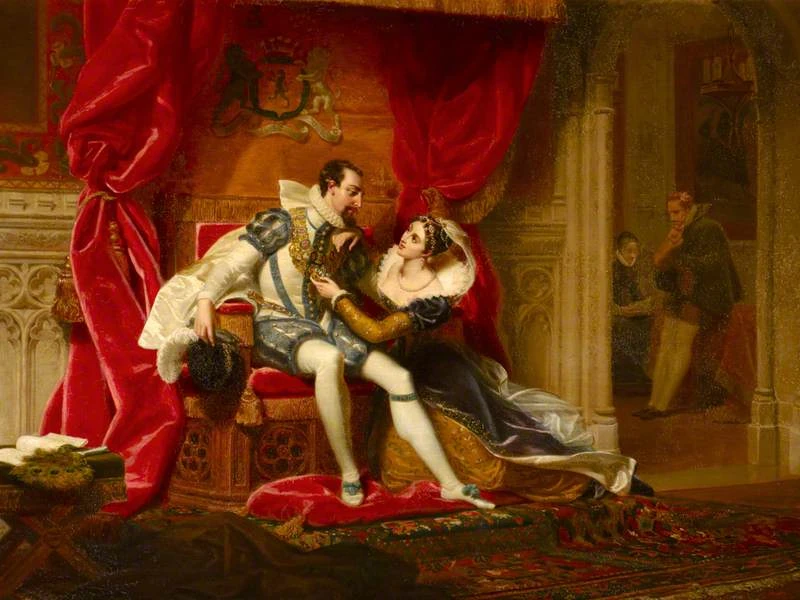
Robert Dudley, Earl of Leicester (1532-1588) Born: London, England. Buried: Collegiate Church of St Mary, Warwick, Warwickshire, England. Kenilworth Castle, Kenilworth, Warwickshire, England.


Amy Robsart (1532-1560) Born: Stanfield Hall, near Wymondham, Norfolk, England. Buried: St Mary's Church, Oxford, Oxfordshire, England.


John Ruskin (1819-1900) The King of the Golden River (1851) Born: 54 Hunter Street, Holborn, London, England. Buried: St Andrew's Church, Coniston, Cumbria, England. Ruskin Museum, Lake District National Park, Coniston, Cumbria, England. Ruskin Library, University of Lancaster, Lancaster, Lancashire, England. Brantwood, Coniston, Cumbria, England. College: Christ Church (Oxford).


Edna St Vincent Millay (1892-1950) The King's Henchman (1927) Born: 198-200 Broadway, Rockland, Maine. Buried: Millay Colony For the Arts, Austerlitz, Columbia, New York. Edna St Vincent Millay Society, 440 East Hill Road, Austerlitz, Columbia, New York. College: Vassar.
Deems Taylor (1885-1966) Born: 152 West 17th Street, New York, New York. Buried: Kensico Cemetery, Valhalla, Westchester, New York. College: New York University.


H Rider Haggard (1856-1925) King Solomon's Mines (1886) Born: Wood Farm, West Bradenham, Norfolk, England. Buried: St Mary Churchyard, Ditchingham, Norfolk, England.


King Solomon (1010-931 B.C.) Born: Jerusalem, Israel.


Sigrid Undset (1882-1949) Kristin Lavransdatter (The Bridal Wreath, 1922, The Mistress of Husaby. 1923, The Cross, 1927) Born: Market Square, Kalundborg, Denmark. Buried: Kirke, Mesnali, Norway. Sigrid Undsets Hjem Bjerkebaek, Sigrid Undsets veg 16, Lillehammer, Norway.
I love Scandinavian tourist attractions.

Wednesday, January 28, 2015

One More Note on All Quiet on the Western Front

Reading in any war book about the food people had to survive on--thin broth with the barest trace of gristle in it, rotting turnips, ditch water, week old bread crusts--arouses in me fantasies of modern day food snobs being subjected to, if not quite this severe a regime, at least wartime era civilian rationing for some extended period of time. The rationed food would not even have to be bad, maybe--just limited in supply, and, most importantly, everybody would have to eat, qualitatively speaking, more or less the same thing. Yes, I am expressing a wormlike desire to see people humbled for at least sensing some aspect of personal superiority in themselves and daring to express it. But I can't endure the archness, pomposity, and judgments upon others' tastes and, by implication, characters and mental capacities, on the subjects of eating and drinking without wanting to see that person driven from whatever level of society he imagines himself to exist on and forced to survive on whatever delicacies he mocked other people for partaking of--forever.

Contrary to what the paragraph above suggests, I have experienced happiness from what I perceived to be superior food and drink in the course of my life, though I am sure I have never felt in doing so the sense of triumph over lesser people or even my former or accustomed lesser self that seems to animate much of the study and experience of heightened eating among the initiated. Most of my happiest memories have had nothing to do with my being superior or in any way more savvy than other people, but were the product of stumbling upon a food culture being so advanced in some area that even the vulgar and socially undeserving could not fail to be exposed to certain delicacies of high quality, because all comparable inferior products had been marginalized or entirely absented from the market--this characterizes things like the beer in the Czech Republic and Germany, bread in France and Italy, coffee and the cafe scene in Austria and elsewhere in the former domains of the Hapsburg empire--you get the idea. The mundaneness, and often fadedness of most of these settings, whose staff and patrons rarely betrayed any consciousness of being inherently above any rivals real or imagined on gustatory grounds, calmed me and put me into the proper mindframe to sense the superior quality of its mundane offerings.

It is clear to me that a major source of the disdain among more cosmopolitan Americans for their less educationally accomplished compatriots is the failure, apart from a few isolated exceptions like the Cajuns in Louisana or maybe some of the more renowned centers of barbeque in the south, of these lower orders to develop, or sustain, a substantial cuisine, especially one in resistance to that pressed upon them by corporate interests. It is hard to overstate the degree of contempt and physical revulsion with which a substantial and socially influential (among the nominally and in some instances certifiedly intelligent) segment of the population has come to regard the ingestion of certain food products, and by extension anyone known or suspected to ingest them on a consistent basis.

I have a rant about the growth of beer snobbery too. First of all, I have drunk a lot of beer in my life. I have had it pretty much every day, and usually a decent amount, for the last twenty-five years. As people know, I lived in the Czech Republic for a couple of years, a country where deciding what beer to drink with breakfast is an important, though not socially deterministic, daily consideration. If one of these little i-phone tapping snots ever tries to tell me to my face to 'get a palate' I may rip the flesh clean off of his skull. Given that beer has traditionally, in the countries where it is most central in the national life, evolved to be consumed in fairly large quantities over a period lasting multiple hours, the most important indicator of quality, and one that correlates strongly with taste, or at least enjoyment of imbibing, because most of my favorite beers do not have a flavor that I identify other than that they taste to me more like beer, that is to say that they give me a perfect sensation of drinking liquid bread and that the pleasure in this will never diminish or grow old, than other varieties do, is in their consistency...

All right, I could go on in that vein for a while, but I will call it a night for (there are some good beer garden scenes and ruminations in AQOTWF by the way...
February 1, 2019--I was really wound up the day I wrote this. I have not gotten this angry for a while. Even at food snobs.

Tuesday, April 15, 2014

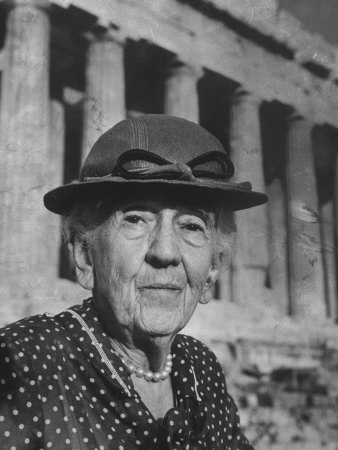
Brief Notes on Edith Hamilton's Mythology (1942)

A fine book, from which I derived much pleasure in the reading and looked forward to each daily section. It seems to be considered as an introductory book on the subject for high school students, something I ought to be beyond by this point of my life. However, while most of the figures and stories are familiar to me, I have still failed to commit some of the more important ones to memory, nor have I ever organized the material in my head as neatly as it is done here. I certainly don't think that I would have gotten very much out of this book as a teenager, without any meaningful prior exposure to classical literature. I also appreciated the simple presentations at the beginning of each section regarding the literary sources from which the myths have come down to us. I am weak on Euripides and have never read Ovid, who were major sources, and I was unfamiliar with Appollodorus as well, whom Edith Hamilton disparaged as a dull and inferior writer, though on numerous occasions she opted to base her account of a story on his versions rather than Ovid's, on the basis of their probably being more truthful to the way it was traditionally told.

The book is written in what I kind of think of as the 'conversational learned style' which lasted from the 20s really up to the early 50s. It is a style to which I have always been partial. The tone is not confrontational nor hyperbolic in promoting the breakthrough in human understanding that the author's researches and insights represent, and humorous observations are dropped in (gently) from time to time at some particularly ludicrous or otherwise illogical aspect of a myth. It organizes and conveys information of a high general interest in a concise, understandable way such as it is not usually presented, and that is also pleasant. Our author assumes a mainly northern European-descended audience for her work: in a brief section at the end on the Norse myths, she writes, as a reason for including these in her survey: "By race we are connected with the Norse; our culture goes back to the Greeks." This sense of the homogeneity of the audience probably accounts somewhat for the intimate tone of the book. In the very short forward when she referred to Shakespeare I thought I detected some affectation or self-puffery with regard to her understanding of the greatness of this author and the serious level she occupied in that game; but perhaps I am overly sensitive to any emphasis people make concerning any superiority they possess. I did not find anything off-putting in her writing about the ancients.

  
Looking at some of the online reviews, someone wrote that they had taken a mythology class in college and the first thing the professor said was "I hope you all haven't been reading junk like Edith Hamilton". This sort of thing is always very obnoxious because it is unnecessary, even in the unlikely event that someone teaching an undergraduate mythology course is really that far advanced compared to Edith Hamilton both in his understanding and his pedagogy. If the students really learn what you are teaching them, they will presumably come to a similar understanding to that of the teacher, and if they are too stupid to do this, mocking such learning as they do have probably is no help to them. I know there is the problem that ignorant people who have read Edith Hamilton in high school think they know something and that they need to be knocked down a peg and the professor needs to establish that when you are in his class you are playing with the big boys and are dealing with a level of intellectual firepower that, especially if you are from a middle class background, you have probably never encountered before, but I don't think it is helpful in most instances to the students. I also believe that any professor doing this nowadays is probably a complete poser. When I was a student you still had some old Europeans to deal with who may well have spoken five languages by the age of thirteen and heard no other music than what was of the highest quality before they were thirty, but any baby boomer, let alone someone of my generation, who grew up in this country and tries to act like they were born with a deeper understanding of literature and mythology than Edith Hamilton attained in the whole of her earnest life is almost certainly full of it.