Showing posts with label Ancient Rome. Show all posts

Thursday, June 13, 2019

Lew Wallace--Ben-Hur (1880)

So we come to Ben-Hur, a book that I bought a copy of (part of the green and gold spined 20 volume 1930s era "World's Greatest Literature" Series) at a barn sale in 1986 and, especially after I went to college, did not think for a long time that I would ever actually read. But having come to the point a few year's back where I had lost much of my enthusiasm for developing any further in a higher or more future-oriented direction, I came back to some of the unfinished business of childhood years which set me on the road, five and a half years later, to today's post.

As I mentioned in one of my monthly reports, even though I had owned this book for thirty years I had not really noticed how long it was, and if I ever had, I probably wondered if my edition was not abridged, because I always imagined it to be a doorstop type of book. But my edition was only 488 pages, and contained the whole book. The IWE introduction avows that "It is not great literature", but also asserts that "it would be hard to imagine anyone's packing more action into a single volume" The first statement is certainly true, the second is misleading, as if the book were fighting and other forms of physical exertion and struggle from one end to the other, when in fact there are long stretches of wandering and searching and decidedly non-violent episodes from the Bible. It does have a manly energy and thrust to it that compensates for some of its deficiencies, its author having been a general in the Civil War and President Arthur's ambassador to Turkey (joining Hawthorne and Irving, at least, as American authors who served as foreign ambassadors). The IWE, in its upbeat postwar way, refers to Wallace as "a successful Union general", which seems to be putting an extremely positive spin on the matter as he was accused of committing a major blunder at Shiloh, the most significant battle in which he took part, which resulted in a high number of casualties, the castigation of Ulysses S. Grant himself, and the removal from command for almost two years. And even when he returned to active command in 1864, his troops were defeated in the main battle (Monocacy) in which he took part, though he was credited with delaying the rebel force enough to prevent it from attacking Washington.

The book is written in a heavy 19th century style that is difficult to read if one's body has any inclination to go to sleep. Nonetheless I am so far gone in my nostalgic fantasies about the blue skies and epic vistas alike about the ancient world and pre-1960 literature and my own youthful ideas that when I can stay awake and concentrate for any amount of time I really do enjoy it. Manly contention as well as camaraderie among equals, or near enough equals, in strength and spirit, especially against the backdrop of great historical scenes, cities, empires, etc, is always inspiring or is at least a reminder of that feeling when one could believe in it.

As is often the case, I did not take any notes until page 377, then took quite a few over the last 100 or so pages. Sometimes it takes going through almost the whole book to figure out what the questions raised are.

1st note, p.337 "To the purely Christian nature the presentation would have brought the weakness of remorse. Not so with Ben-Hur; his spirit had its emotions from the teachings of the first law-giver, not the last and greatest one. He had dealt punishment, not wrong, to Messala."

p. 351 "As the mind is made intelligent, the capacity of the soul for pure enjoyment is proportionally increased...Wherefore repentance must be something more than mere remorse for sins; it comprehends a change of nature befitting heaven."

If a living priest or some other person in real life were to say these things to me in 90% or more of any such instances I would despise them, I have no doubt. Yet coming across them in the dead pages of a book they, and the belief system that they evidently represent, are soothing.

p. 361 "A country of hills changes but little; where the hills are of rock, it changes not at all."

p. 418 "The Egyptian has him in her net...She has the cunning of her race, with beauty to help her--much beauty, great cunning; but, like her race again, no heart. The daughter who despises her father will bring her husband to grief."

The despised father to boot is Balthasar, of the famous group The Magi. Wallace is an extremely pro-Jewish writer, especially in the religious sense, vis-à-vis almost all of the other nationalities that appear in this book.   

p. 419 "A man drowning may be saved; not so a man in love."

p. 424 "In his eyes there were tears which he would not have them see, because he was a man."
 
Maybe my favorite sentence in the book. Upon Ben-Hur's accepting that his mother and sister are dead, though actually they aren't.

p. 442 "He persisted as men do yet every day in measuring the Christ by himself. How much better if we measured ourselves by the Christ!"
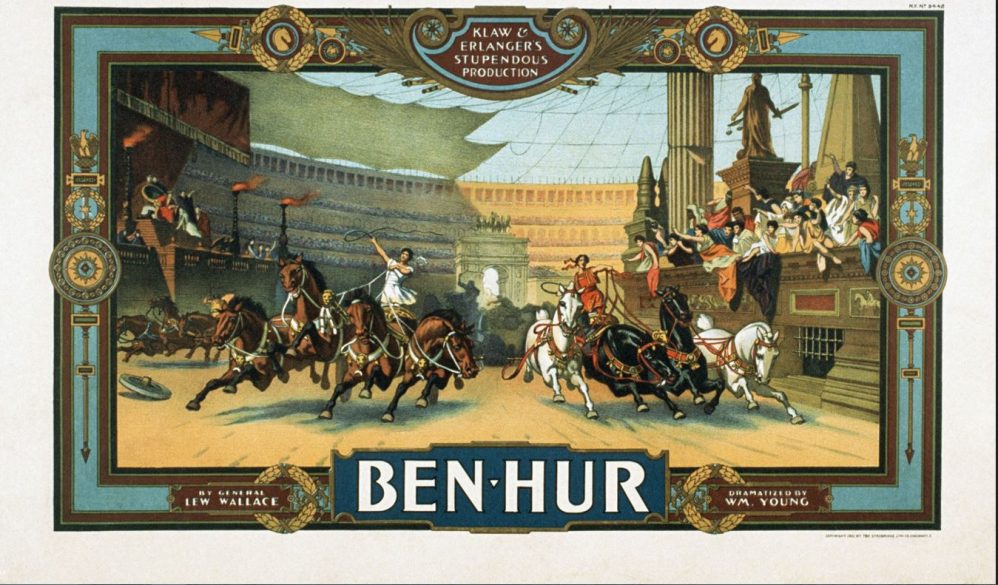
The chariot race is the big action scene in the book as well.

I am about to speak heresy (it is a wicked and godless age), but why do we so easily excuse God/Christ for not immediately overthrowing the Roman power? Modern analytics/efficient practices would suggest that, in the absence of any proof of heaven that would be accepted on Twitter, that would have been a more optimal outcome for humans, though I suppose a worse story. Despite all of the forceful arguments asserting that Jesus Christ, if he ever existed, was the biggest phony in the annals of human history, that belief in supernatural religion is a joke, that spirituality is an invention of the human imagination and has no basis in science and so on, and that this is essentially what almost all genuinely intelligent people in today's world understand to be true, I have never been able to come around to ridiculing the pointless and misguided march of religious, and especially Christian history, which seems to me too important and powerful an--often for good--influence in human culture and psychological makeup to treat so callously. In fact I am admiring and often envious of the truly seriously religious, who seem to me to have a surer sense of who they are than all but the most intellectually invulnerable materialists, whose conception of the nature of the world within which they have found satisfaction is as yet too intricate for me to follow.

According to Wallace's autobiography, he was raised in the Christian tradition but wasn't a devout follower, and he does not appear to have been a member of any church. There are claims on the internet that he was an atheist who wrote Ben-Hur to disprove Christianity, which does not appear to be true, and which I do not believe anyway. Ben-Hur did almost to the last hour cling to the belief that Christ would either lead or inspire in the Jewish people a successful earthly rebellion against the Roman Empire, and he expressed more disappointment about this even after he realized to some extent what Jesus was doing than I would have expected, but the point was not to illustrate that Christianity was wrong so much as that it was difficult to comprehend and to live by.

p. 447 "The idea, old as the oldest of peoples, that beauty is the reward of the hero had never such  realism as she contrived for his pleasure..." The evil, tempting, exotic "other" Egyptian again.

To further comment on my thought above, I wrote "the humbling of Ben-Hur's worldly ambitions something of a surprise ending to me. It is more emphasized than in the film.

p. 477 "The sun was rising rapidly to noon; the hills bared their brown breasts lovingly to it..." At the crucifixion, which I thought was effectively described as a physical ordeal. Perhaps the soldier's sense at work?

The final paragraph of the book is a brief personal note from the author which I found warming. Most of these writers never address the reader so directly.

"If any of my readers visiting Rome, will make the short journey to the Catacomb of San Calixto, which is more ancient than that of San Sebastiano, he will see what became of the fortune of Ben-Hur, and give him thanks. Out of that vast tomb Christianity issued to supersede the Caesars."   



The Challenge

1. David Mitchell--Cloud Atlas..................................................................…..2,317
2. Edward Gibbon--Decline and Fall of the Roman Empire........................…..746
3. Simon Sebag Montefiore--Jerusalem: The Biography...……..................…..422
4. John Julius Norwich--Sicily: An Island at the Crossroads of History...…….111
5. David Graeber--Bullshit Jobs........................................................................…71
6. Margot Lee Shetterly--Hidden Figures (children's book edition)......….……..66
7. Bodie & Brock Thoene--Eighth Shepherd........................................................64
8. Robert Audi--Cambridge Dictionary of Philosophy....................................….36
9. Bill Myers--Devoted Heart...........................................................................….20
10. Teyla Branton--Insight.................................................................................…17
11. G. J. Whyte-Melville--The Gladiators............................................................10
12. Monica Selveira Cyreno--Big Screen Rome...………………………………...7
13. Matthew S. Hedstrom--The Rise of Liberal Religions.................................….5
14. Alexa Person--The Zero Point.....................................................................….5
15. Georg Ebers--Serapis...……………………………………………………….2
16. Works of Lucian of Samosata...……………………………………………….2

Round of 16

#1 Mitchell over #16 Lucian

Lucian is worthy of some respect, his works being part of the Loeb classical series in eight volumes. Eight volumes is lot to overcome against any literary competition in this game, however.

#2 Gibbon over #15 Ebers

Gibbon is one of the last of the inner circle pre-1900 English language classics that I have never read. Its massive length is going to work against it in this format also. I know that I am going to get to it on my "A"-list at some point in the next 10-20 years, so I don't feel the pressure to read it sooner rather than later tightening around me yet.

#3 Montefiore over #14 Person
#4 Norwich over #13 Hedstrom

Hedstrom has no library presence, cannot compete.

#5 Graeber over #12 Cyreno

Big Screen Rome sounds like it might be an interesting book, but no one has it, and the Graeber book, despite its ungenteel and mildly abrasive title, is not one I can eliminate immediately on the basis of near certain dislike.

#6 Shetterly over #11 Whyte-Melville

The Shetterly is a children's picture book edition of the recent adult best-seller and mild sensation--perhaps that would have been a better entry in the tournament, but it was not the one that made it. Whyte-Melville's book, not available in any libraries, looks like another densely written, highly moralized triple decker Victorian novel with a Roman setting, just like Ben-Hur. While I don't mind one of these kinds of books on occasion, there are enough of them sitting on the IWE list that I don't need to add any additional ones for my "free reading".

#7 Thoene over #10 Branton
#8 Audi over #9 Myers

There is not much use for dictionaries on this kind of list, but the Myers book is, for the purposes of this list, a meatball, not being in libraries, being a genre book that does not appear to be published by an outlet with any stature, and thus cannot realistically defeat anything with the Cambridge imprimatur.

All the higher seeds win in the 1st round. The field was lopsided.

Elite 8

#1 Mitchell over #8 Audi
#2 Gibbon over #7 Thoene

If Gibbon keeps drawing red state American Christian novelists, he may triumph in this contest after all.

#3 Montefiore over #6 Shetterly
#4 Norwich over #5 Graeber

Norwich's Sicily book is reasonable in length, and its 29 extra pages over Graeber's are not enough to make us consider the upset.

Final Four

#1 Mitchell over #4 Norwich

Norwich would actually have won this based on shorter length, but Mitchell has the only upset to play in this entire tournament.

#3 Montefiore over #2 Gibbon

Even the Montefiore book is 650 pages. Gibbon proves a tough out in his 1st Challenge appearance.

Championship

#1 Mitchell over #3 Montefiore

Another pretty long book (509 pages) added to the wait list, but the shorter entries need to come through quality-wise. Also Mitchell is about my age and enjoyed the kind of literary success and critical adulation, at that time anyway--maybe he still does, or does any novelist really have that kind of status for life anymore?-- that I used to imagine must be my eventual lot, so looking into his book will be a kind of reckoning for me.


Saturday, December 17, 2016

Sholem Asch--The Apostle (1943)


The Jewish authors who made the pre-1960 IWE reading list are in many instances not those who would seem obvious today. There is no Bellow, no Mailer, no Malamud, no Singer (Roth was obviously too young to have his early works considered), no Kafka, no Dorothy Parker, no Salinger even. Marx and Freud did make it, as did Proust. Kafka's Prague contemporary Franz Werfel, like Asch famous for novels about Biblical and Christian themes (a genre that is itself well-represented on this list) made it, as did Herman Wouk and some of the American playwrights of the 30s such as Kaufman and Hart. Anne Frank is on as well. I suspect that a few of the other late 19th and early 20th century French, German, Austrian or Russian authors on the list who are not as well known today might turn out to be Jewish, but I have not done the research on all of these yet. What immediately strikes one about those included on the list is that they tend more towards the sober and scholarly end of the distribution, whereas the more comic and bombastic/fantastical authors are held in higher regard today. It is a very old WASPy, and more specifically old Yankee list for sure, which however, despite its shortcomings and oddities, such as its fondness for doorstop historical fiction about early American history, I think is a good one. Old Yankees, though they continue to loom somewhat sinisterly in the national imagination, are getting ever harder to find in actual life even on their native ground, and their presence in and influence on American literary culture withers more and more every year. When I was younger I used to frequent numerous antiquated libraries in New England which partook of this old time atmosphere, even the books on the shelves in many instances not having been replenished in decades. These reminiscences date back 30 years now however, and even most of these places have been remodeled and brightened up and made more accommodating to technology, many of the books which formerly furnished the rooms on shelves reaching from floor to ceiling having evidently been discarded or relegated to the off-limits storage area in the basement. But I am getting far off of the subject of The Apostle now.

Sholem Asch was born in 1880 in Kutno, Poland, which was at that time part of the Russian Empire. He lived in Warsaw for a few years as a young man and got married there, then went abroad, eventually making his way in 1910 to the United States, where he remained for the duration of the first World War and beyond, becoming a citizen in 1920. He went back to the newly independent Poland after the war, and then lived in France for a while. returning to the United States in 1938. He seems to have stayed in the U.S. until some time in the 50s, after which he spent two years in Israel, where his house is preserved as a museum, towards the end of his life. He died in London in 1957. I note all of this because the biographies of people impacted by tumultuous historical upheavals are of interest to me. He wrote in Yiddish and was a prolific author no matter where he happened to be living, writing in the neighborhood of thirty books, the majority of which look to be weighty in length, tone, and subject matter. The Apostle, which depicts the life of St Paul, is actually the middle volume of a trilogy of novels about the lives of major early Christian figures, the other two being The Nazarene, about Christ himself, and Mary. The Apostle however is the only one of these, or any other of Asch's books to make the IWE list.


I liked this quite a bit, even if it is perhaps a little overlong. It is distinguished by an earnest seriousness that seems strange to us ("us" referring to that imaginary segment of the contemporary intellectual world that is super smart and well-informed whose sensibilities are remarkably in "sync" with mine) because earnest has become to my thinking something of a derogatory word that implies futility and a certain limitiation of ability when applied to intellectual pursuits. He was thoroughly Jewish, and led a thoroughly Jewish life, socially, culturally, and so on, so I doubt it would have been possible for him to adopt any of the more drastic Christian beliefs under any circumstances, but he was able to grasp the possibility of others' doing so. To be sure there is much more emphasis on Paul's Jewishness, and the Jewish origins of the entire Christian movement, than is usually found in Christian origin literature. There is always a fashion, maybe more prominent nowadays than ever, to be skeptical that the stories and major figures of the New Testament, including Peter, Paul, and Christ himself, have any basis in reality whatever, in some instances to the point of arguing that every aspect of them is entirely fictitious. What Asch believed as far as this goes I suppose I don't know, but he treated the stories and ideas of the gospels and epistles, whoever wrote them and who and whatever they are supposed to be referring to, very seriously, which is an approach most modern Christian debunkers don't see themselves as having to do. He knows that the power of the story is important in any case.


As with other long books I have had for this list recently, I neglected to take any notes until I was about 300 pages in, when I thought I had better jot some things down for the report. And as usual, once I began I ended up with quite a lot.

What prompted me to begin writing notes was a debate between Paul and his faction of Messianists and an opposing one led by some older school Jews regarding the necessity or not of circumcision for initiation into the new covenant ("circumcision a big deal" reads my note).

"He who cannot summon up enough courage to submit to circumcision for the sake of the God of Israel, is not worthy of admission into the congregation of the Messiah. He is a coward who cannot fight the battle of the Lord. For the Messiah is the battle of the Lord. And only those shall be admitted to the ranks who have the strength to give their blood to the covenant: even as it is written: `And in thy blood shalt thou live!'"--p.336

I took a moment to note the general awesomeness of the Jews across history, though perhaps there is some playing up in this author of their centrality and dynamism in the life of the Roman Empire.


The more the book went on and Paul began his travels throughout the Empire, Asch began to emphasize the myriad abusing and tormenting of human beings that underlay its entire operation. The first instance that pushed me to feel the necessity of making some record of my impression was the section on the bronze-working slaves of Corinth who passed away their entire lives in caverns feeding the smelting ovens and never seeing the light of day. I can't quote the whole section, but I will lift some especially pertinent sentences: "The life of these cave-workers was a short one." Regarding the mixers, whose work required a higher degree of skill which afforded them somewhat better treatment than the oven slaves: "Their beds were comfortable, but they were chained to them. For them as for the others, the cavern was a living tomb." "Most of the children taken into this work were such as had some physical defect, or some sickness, for which reason they could not be sold as house servants or prostitutes. These unfortunate discards of humanity were the dregs of the slave markets...When night came their bodies collapsed about the blocks and stalls at which they had worked all day. In the morning the overseers woke them with the lash..." (pps. 429-431) And on and on. I remarked at the time that this part was good, but Asch was just getting started with the depiction of atrocities. They seemingly kept getting worse with each change of scene.

After that I didn't make any more notes until page 654, at which time Asch dropped Sabina Poppea, the ultra-cultured wife of the manchild emperor Nero and diva superbabe of her generation, on my head. "Sabina had dreams of becoming the `Helen of Rome', with a temple of her own, in which worshipers would offer sacrifice after her death." She kept five hundred asses which accompanied her on all of her travels, as she maintained her glorious complexion by bathing regularly in their milk. On being introduced to the concept of resurrection, "Poppea was deeply interested; the possibility that she could arrange to be resurrected in all the beauty and charm which she alone possessed was something to be looked into."--p.656. However, "Any hint that worship of the Jewish God was bound up with duties, penalties, obligations, self-denials, discipline of any sort, she rejected. This was not in her style."--p.657. She capriciously punishes one of her attendants by pinching her breast with a pair of tweezers as hard as she can until the slave collapses.

     
The catalog of atrocities indulged in by the Romans never fails to fascinate. There is a section devoted to the epidemic of dumping bastards and other unwanted babies alive into the Cloaca Maxima, which is depicted here as a stream into which all of the sewage and other refuse of the capital was dumped and sent on its way out to see, Then there was one of Nero's parties, which took place on barges in a lake full of alligators:

"...in any case he (Nero) would enjoy the spectacle of the terrified slaves who, from their small boats, had to bring the dishes to the barges. The reptiles, their appetites awakened by the odor of food, swam after the boats and set them rocking. The girl dancers who had to perform on narrow ledges running round the barges were pale with terror; and the guests, reclining on couches at their tables, laughed drunkenly at the antics of slaves and dancers. The laughter rose into a shout of excited merriment when an unhappy youth or girl, unable to endure the test, fell with a scream into the water. A huge pair of reptilian jaws closed on the white body, and the water was stained red."--p.680

There is no reason not to believe I guess that the Romans really enjoyed watching people get eaten by alligators. Middle American types have always hard time understanding this as a major strain in the human character that their society has largely been able to suppress, at least in this kind of raw form. 

PP 700-701 brings the graphic torture of the character Antonius. It occurred to me rather belatedly, that he must have been supposed to be St Anthony, though I cannot find a St Anthony whose dates and mode of life corresponds with this guy's. Nonetheless, several of the minor characters sneaked up on me as being major biblical personages, Lukas, Marcus, etc, which I did not pick up on until they began to do fairly obvious things that signified who they were. Oh yes, about that torture:


"The bones of his hands and arms and legs had been cracked one by one between the claws of iron pincers. The skin had been torn, strip by strip, from his quivering flesh. One by one the nails of his fingers had been pulled out by the roots. His flayed feet had been held over a slow fire. He lost his human aspect and was reduced to a bundle of raw, blistered flesh."

It is remarkable what these early Christians had (and were willing) to suffer to be near God while Jimmy Swaggert and his ilk (or me, though officially I claim not to really believe in any kind of divinity or afterlife) don't have to suffer anything. It is true, Paul and his early followers were often buoyed by visions of and meetings with Jesus himself. Of course Jimmy Swaggert probably claims that he has talked to Jesus too, so it's really a puzzle why American Christians get to have the easiest of earthly passages.

After Nero had most of Rome burnt down, he famously (assuming the story has not been debunked) and absurdly pinned the blame on the Jews and their Christian adjuncts and held a giant entertainment in which members of these unfortunate groups were to be killed en masse for the delight of the Roman crowds. The show was boring, however: "...the Christians did not fight (in the gladiatorial arena); they only prayed and let themselves be eaten...here and there even the dulled, brutish heart of the Romans were touched by the spectacle of so many women and children fed to the wild beasts." 

Last note, on the conditions at the Tullianum prison, the last destination of saints Peter and Paul prior to their respective executions: 

"They were not starved to death so much as eaten to death. Food of some kind was given them, but they in turn, while still alive, were eaten by monstrous rats and crawling things which bred in countless numbers in the foulness of the cells and corridors. The prisoners were chained, either to rings in the walls or to great, immovable blocks of wood. The floors of the prison were littered with human offal, with moldering bodies and bones gnawed clean, and the poisonous air ate into the lungs and skin. A thick ooze dripped from the walls..." I think you get the picture. At the time I guess I thought this was the worst of all the executions and tortures, but probably the endless parade of them over the last half of the book had softened me up, and when they brought the rats in, I was finished, you know.


The Bourgeois Surrender Challenge

The major words used to produce this Challenge were obviously heavily Rome or Jewish-specific, which could have produced great results, but in this case produced a list of contestants I have no interest in reading. However, I have to try one of them, so I am going to go straight with the shortest of these that I can check out of the library  

1. Acharya S--The Christ Conspiracy: The Greatest Story Ever Sold......................373
2. Peter Heather--The Fall of the Roman Empire......................................................167
3. Elaine Pagels--The Origin of Satan.......................................................................166
4. John MacArthur--One Perfect Life........................................................................148
5. John L Allen, Jr--The Global War on Christians..................................................101
6. Dietrich Bonhoffer--Letters and Papers From Prison............................................85
7. Simon Schama--Landscape and Memory................................................................42
8. Saul: The Journey to Damascus (movie).................................................................33
9. Mark A Gabriel--Journey Into the Mind of an Islamic Terrorist............................19
10. James Wasserman--The Temple of Solomon.........................................................12
11. Copan and Litwak--The Gospel in the Marketplace of Ideas................................12
12. The Real Jesus: A Defense of the Historicity and Divinity of Christ (movie).......11
13. Makers of Ancient Strategy (ed. Hanson)..............................................................11
14. Robert Silverberg--Needle in a Timestack.............................................................10
15. Stuart Munro-Hay--The Quest for the Ark of the Covenant....................................5
16. Mark Gibbs--The Virgin and the Priest...................................................................4

Round of 16

#1 S over #16 Gibbs
#15 Munro-Hay over #2 Heather
#3 Pagels over #14 Silverberg
#4 MacArthur over #13 Makers, etc
#5 Allen over #12 The Real Jesus
#6 Bonhoffer over #11 Copan and Litwak
#10 Wasserman over #7 Schama
#9 Gabriel over #8 Saul....

Elite 8

#15 Munro-Hay over #1 S
#3 Pagels over #10 Wasserman
#4 MacArthur over #9 Gabriel
#5 Allen over #6 Bonhoffer

Final Four

#3 Pagels over #15 Munro-Hay
#4 MacArthur over #5 Allen

Championship

#3 Pagels over #4 MacArthur


Nothing much to be said about these. Pagel's book is 214 pages. She is a professor at Princeton, so the odds that she is a total crackpot are reduced somewhat, I suppose.

Wednesday, October 19, 2016

Shakespeare--Antony and Cleopatra (1606)

I did a series on this for my original blog back in 2009, (Here and Here) to which I do not have anything substantial to add at this time. Antony and Cleopatra still ranks as one of my personal favorites in the Shakespeare ouevre, along with the other Roman plays, mostly because I don't have the sense that too many other people have claimed it as one of theirs. I need some patch of ground in the realm of Shakespeare appreciation on which to stake a foothold. Also its cleanness and formal perfection of composition has always impressed me, though I suppose other writers are able to give us something approaching this, and the most forcefully sentient people are more drawn to the robust protean energy of the most essential works.


This is the second Shakespeare play to come up on the IWE list, and the first tragedy. The alphabetical order is fine for this as I will be reading most of the plays that are on it for the second, third, fourth, etc, time. I have been on a bit of a Shakespeare binge lately--four plays in the last month for my "A" list plus this one and I am evidently overwhelmed as far as being able to pick out any especial insights or mildly interesting thoughts I had in reading it. I seemed to have had more to say directly in 2009. At that time I had not read any Shakespeare in several years, and I also think my mind was in one of those periodic windows in one's life where it is receptive to new impressions of old things. Also the rhythm of how I read now, especially for this IWE list, has seemingly been adjusted to consume the long novels which dominate it, so when plays come up, especially the super classics like Sophocles and Shakespeare, I want to spend some time with them, but my perception is not adjusting to the scale and density of the work. In truth, I am having difficulty in organizing and executing this essay. For one thing, though one of the purposes of this program of reading is to detach myself somewhat from the contemporary mental environment, it still seeps in, and of course I still crave a certain degree of intellectual camaraderie with the living, which I have never been able to obtain to my satisfaction. On this latest occasion I kept noting Shakespeare's attitudes with regard to what men should be like and what women should be like, which seemed to exist within a more or less traditional framework, though of course as with most of the better authors it recognized the existence of outliers, even if he largely maintained that the ideal even for these was ultimately to be constrained within a version of the traditional roles that was acceptable to them. Like a lot of people, the election, and the intense reactions and emotions it is provoking in people, are having effects on me. I was never attracted to Trump, but trying to persuade myself that Hillary Clinton is as wonderful as we are increasingly pressured to concede that she is only causes me to be unhappy and surly. The contempt and lack of respect for men that she projects and legions of her supporters openly revel in is not something I am able to embrace or celebrate. I told people, jokingly as I thought, that as long as Hillary Clinton demonstrated at any point in the campaign anything resembling respect for men who are not potentially large donors that she would have my vote. We are now two weeks from the election and I am still waiting. I am not going to vote for Trump, and I don't understand beyond the most primitive level why his supporters have put their hopes in him, but in my own life it is the increasingly aggressive and obnoxious progressives who loom as the greater problem, because I don't agree with their attitudes where men, particularly of the heterosexual, European descended variety are involved. I do not want a full restoration of 1950s gender roles and attitudes even if that were possible, but men do need to figure how to reassert themselves and play a strong and at least an equal part in life and regain some of the respect they have lost with women as well as among themselves, or I think we will continue to see very ugly politics centered around gender divisions and other various resentments. The current atmosphere is untenable.


But what of Antony and Cleopatra? The political choice wasn't really that appealing in that conflict either, to one of a democratic mindset. It was probably for the best that Augustus Caesar prevailed. He was the more modern man, though symbolically at least, more associated in the mind with despotism and unassailable power, while Antony symbolically represented the last link to the Republic, and a less absolute state. But I guess you should read my older posts on this play, since I really have not come up with any new thoughts since the last time.

The Challenge

Once again the magic words invoke so blatantly the great characters of the play that nearly all of the contestants in the Challenge can claim a Roman theme:

1. Hail, Caesar (movie).................................................................1,055
2. Stacy Schiff--Cleopatra: A Life....................................................731
3. Bernard Cornwell--Death of Kings................................................513
4. Tom Holland--Rubicon: Last Years of the Roman Republic.........259
5. Suetonius--Lives of the Twelve Caesars........................................200
6. Julius Caesar (movie--1953).........................................................194
7. Clay Griffith--The Greyfriar (Vampire Empire #1).......................154
8. Anthony Everitt--Augustus: The Life of Rome's First Emperor....148
9. Barry Strauss--The Death of Caesar..............................................139
10. Colleen McCullough--The October Horse...................................129
11. Joanne DeMaio--Beach Blues........................................................80
12. Isaac Asimov--Asimov's Guide to Shakespeare.............................66
13. Joseph Max Lewis--The Diaries of Pontius Pilate........................66
14. Steven Saylor--The Triumph of Caesar.........................................62
15. Chris Scarre--Chronicle of the Roman Emperors..........................45
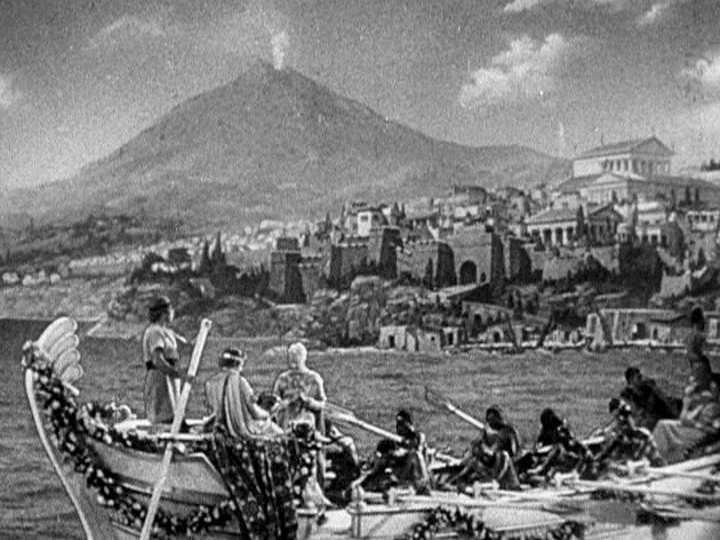
16. The Last Days of Pompeii (movie--1935)......................................40


Round of 16

#16 The Last Days of Pompeii over #1 Hail, Caesar

Hail, Caesar is probably a better movie, but the general custom of the Challenge favors older movies in head-to-head matchups.


#15 Scarre over #2 Schiff


Scarre is shorter by 77 pages.


#14 Saylor over #3 Cornwall


Two basically identical books, genre novels published 2 years apart, both available. Saylor is 9 pages shorter.


#4 Holland over #13 Lewis


History (I think) beats more genre work.


#12 Asimov over #5 Suetonius


Suetonius would have been the choice, especially as Asimov clocks in at over 800 pages, but Asimov has an upset coming in this tournament, and he gets it in the first round.


#11 Demaio over #6 Julius Caesar

#7 Griffith over #10 McCullough

Battle of genre novels. Griffith about 400 pages shorter.

#8 Everitt over #9 Strauss

I can't tell if the Strauss is a serious book or not. Otherwise, they look pretty similar. Strauss is slightly shorter, but Everitt too is entitled to an upset. Which he does not need to get by here however.


Round of 8

#4 Holland over #16 Last Days of Pompeii

#7 Griffith over #15 Scarre

Griffith also had an upset in reserve.

#8 Everitt over #14 Saylor

#12 Asimov over #11 Demaio

The Asimov is 843 pages but I can't have it lose to a literal beach novel.

Final Four

#4 Holland over #12 Asimov

#8 Everitt over #7 Griffith

Championship

#4 Holland over #8 Everitt

The Holland is about 30 pages longer but it looks like a more solid book. Plus Holland also has an upset in reserve, which cancels out Everitt's unused upset in an extremely tight title game.


Wednesday, August 26, 2015

Plautus--Amphitryon (c. 186 B.C.)

A brief interlude in the midst of a series of mostly huge books, Amphitryon is the first, and, I am sad to say, because I rather enjoyed this, the only Roman play on the IWE lifetime reading plan. No Seneca, no Terence, and after this, no more Plautus either. Of course there is the expected portion of Greek plays to look forward to, twelve or thirteen of them, so we will be back again to the ancient theater, but I would have welcomed a few more Roman selections, especially as they are not only brief, but appear to have that rare quality of being briefer than one would like them to be. Naturally I could go ahead and just read them anytime I wanted to, but I find from experience that I read better, have more concentration, retention, enthusiasm and so on when I am following some kind of system. As this site bears evidence, I am not averse to tweaking my various systems from time to time to try to generate more of a certain type of book that I want to read more of, though the results of this tweaking usually turns out mixed at best. There are besides a lot of types of books I am trying to increase my exposure to other than Roman plays, plus I have to figure that they are not very prominent or seen as necessary on most mid-20th century become-intelligent-and-cultured-through-reading programs that appeal to me for some reason that I would probably accept as reasonable; so for the present I am going to continue to stay and work with the systems I have.   


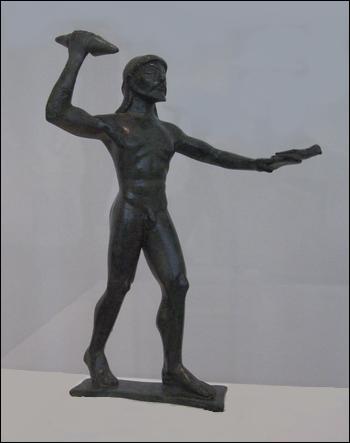
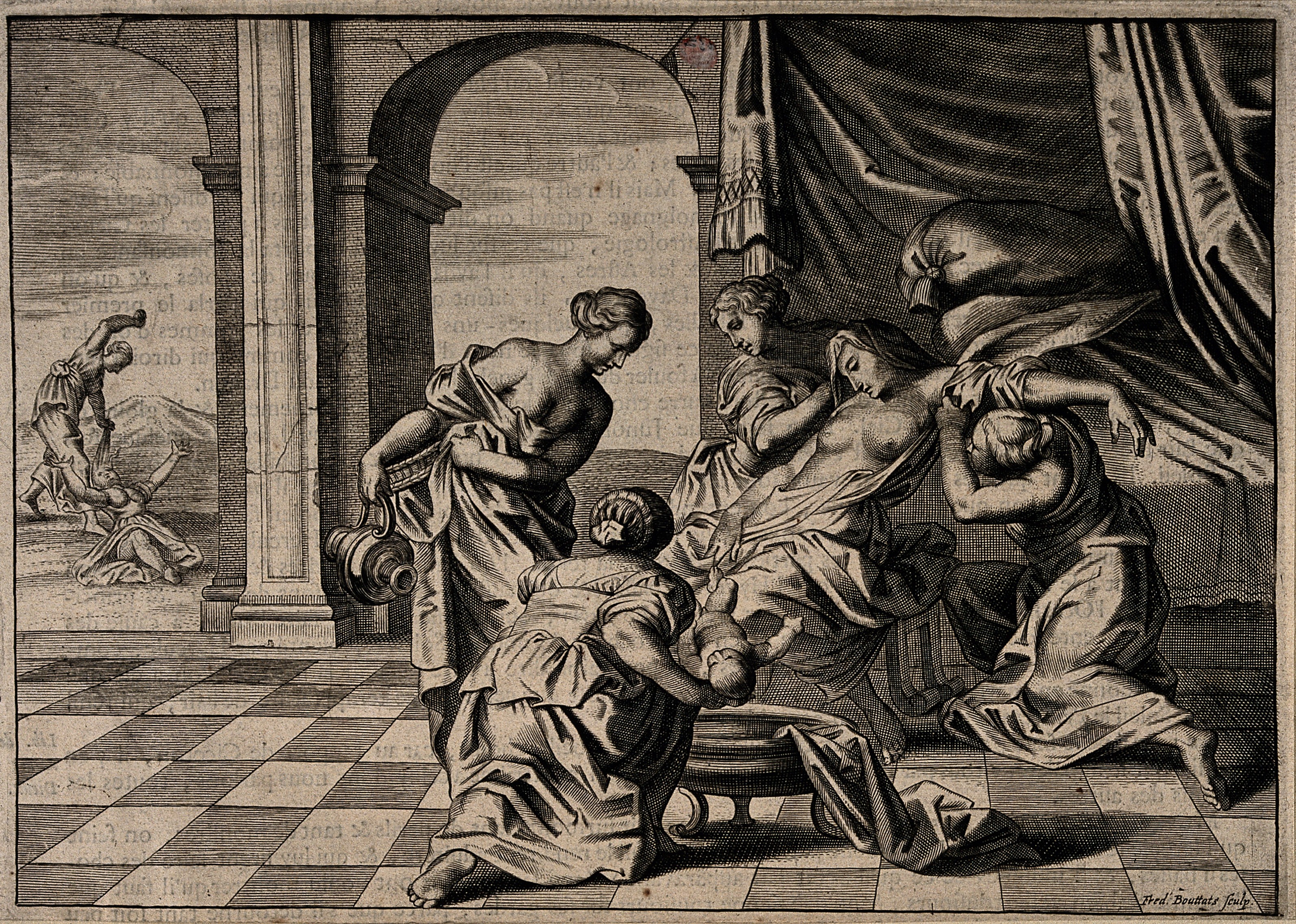
Not having read much specifically about the Roman theater in the course of my life, I needed to be reminded, via the notes and introductions in my book, that, like the sculptures of that people, nearly all of their plays were adaptations from Greek originals, though, especially with the comedies, not from the Greek plays that are most famous now, but the later Greek theater of the late 4th and early 3rd centuries B.C., Menander and those people. Almost none of these Greek works survive except in fragments, and the original of Amphitryon was not known at the time my edition was published (1942) and does not seem to have been discovered in the interval since. To recap the plot, Amphitryon was a Theban general (the Roman versions of these plays generally kept the Greek characters and settings) whose wife, Alcmena, while he was away fighting in a war, was visited by Jupiter (they do use the Roman god-names though) who had taken on the form of Amphitryon. Jupiter was accompanied in this adventure by Mercury, who took on the form of Amphitryon's slave and main attendant Sosia to complete the deception and cause more confusion among the real Amphitryon and Sosia when they return home to find everyone believing they had just been there, Alcmena thinking herself freshly ravished by her legal husband, and so on. This is the source of the comedy. Jupiter's rendezvous with Alcmena resulted in the birth of Hercules, along with a twin brother who was the natural and less godlike son of Amphitryon, and who one imagines must have grown up with the inferiority complex to end all inferiority complexes. The episode in which the baby Hercules strangles the two snakes in his cradle, always a crowd pleaser, is also included in the play.  


The translation I read was by a gentleman named Sir Robert Allison in the Modern Library volume of Roman Comedies (containing four plays by Plautus and three by Terence), bound in matte, which was, as they say, a thing with the Modern Library for a while from the 40s through the early 60s, though this is the first of their matte editions I have acquired. The translation appears to date from around 1910. I don't know whether it is supposed to be a good translation or not, but as is often the case, I like the tone that comes across in this older version. It is fresh, hopeful, brisk, vigorous, and reminds the desiccated modern reader that literature, and life itself even, can be intelligent and serious and a source for deep understanding, while also being enjoyable and lively and not dependent for its pleasures on achieving a oneness with contemporary culture and technology. Did I learn anything or come to any insights with regard to the actual content of this play? Can I even say what it is *about* at the most superficial and obvious level? No; no, I can't seem to. The pleasure is all in the associations, of antiquity, of a certain kind of school, of Europe, of fabulous myths, of having command of language, of ideas, of the possession of significant abilities, of everything that the present workaday world of jobs and money and anomie, for me at least, is not. Sadly, that is all I can say about Amphitryon however.  


The Challenge

1. Gillian Flynn--Gone Girl.......................................................................41,153
2. Transcendence (movie)............................................................................1,589
3. Office Space (movie)................................................................................1,578
4. Final Fantasy VII: Advent Children (movie)...........................................1,059
5. Legend of Hercules (movie)........................................................................856
6. Knocked Up (movie)...................................................................................538
7. Sabotage (movie)........................................................................................286
8. Willow Creek (movie).................................................................................249
9. Human Target (TV show)...........................................................................204
10. Harper's Island (TV show).......................................................................189
11. Thunderbolt & Lightfoot (movie)..............................................................157
12. Beauty & the Beast Broadway Soundtrack (record).................................130
13. Googoo Dolls Greatest Hits Volume 1 (record)........................................129
14. Hawthorne: Season 1 (TV show)..............................................................118
15. Malachi Martin--Windswept House...........................................................117
16. Dream For an Insomniac (movie)............................................................110

The movies really took over this one. That said, my magic words did not generate much that was exciting in terms of books. There was maybe one book that failed to qualify for the tournament that I would have been interested in reading, but it had only seven points and none of the libraries had it. 

Round of 16

#1 Flynn over #16 Dream For an Insomniac

Following the formula.

#15 Martin over #2 Transcendence
#3 Office Space over #14 Hawthorne

Same here, movies generally get the automatic win over TV shows, unless I have a real animosity towards the movie. 

#13 Googoo Dolls over #4 Final Fantasy VII

Music over violent movies aimed at people with two-digit IQs. 

#12 Beauty & the Beast Broadway Album over #5 Legend of Hercules
#6 Knocked Up over #11 Thunderbolt & Lightfoot

I thought I might enjoy a somewhat contemporary relationship movie over guns and tough guys. There is something wrong with me though.

#7 Sabotage over #10 Harper's Island
#8 Willow Creek over #9 Human Target

Round of 8 

#1 Flynn over #15 Martin

The only two books in the Challenge meet in the second round. The Martin book looks like pure formula, which it did not take long for me to weary of and feel that I never needed go back to. The Flynn book was a phenomenal seller, transcending mere genre almost, and the 41,000+ points in qualifying for the tournament is by far the record in my game (The Da Vinci Code, the previous record holder, had only around 5,000+).
There seems to be an attempt in Flynn to create characters who are in some way relevant to/the creatures of the current zeitgeist, which is why I might have the slightest interest in peeking into it. This now leaves Flynn as the only book remaining in the Challenge and pretty much guaranteed to win...unless one of the remaining competitors turns out to be entitled to an upset somewhere... 

#3 Office Space over #13 Googoo Dolls

Any movie I am vaguely interested in seeing will defeat any musical record. I honor my eliminated records though by playing a song from them as they go:


#6 Knocked Up over #12 Beauty & Beast Broadway

Same here:


#8 Willow Creek over #7 Sabotage

I don't know anything about either of these, but the one sounds like it might be about small town life or a vacation, and the other like there might be a lot of gratuitous gunplay and pointless homicide in it. I kind of down on the latter type of movie at the moment.

Final Four

#1 Flynn over #8 Willow Creek
#3 Office Space over #6 Knocked Up

Office Space sounds like it might be slightly more intelligent than Knocked Up (needless to say, I have not seen either one),

Championship

#1 Flynn over # 3 Office Space

Office Space was entitled to no upsets. Flynn rolls to an easy title. I guess I will have to give the book a try. I was going to write here about how I might yet learn something about how to write a book that will sell, that seeing as it is increasingly unlikely that at age 45 and given my completely hopelessness and indifference with regard to computer technology I am ever going to develop the kind of job skills that will allow me to make an upper-middle class salary in the 21st century, writing seems like it might still be my most realistic chance of finding a source of income that is worth the effort needed to obtain it. But I though better of it.  


Perhaps I have been living in the North too long, but she looks pretty cute to me.

Friday, March 14, 2014

Virgil--Aeneid (29-19 B.C.)

Virgil--Aeneid (29-19 B.C.)

This was my fourth time reading the Aeneid (in English, obvs). I have used a different translation each time. Back in school I read the Rolfe Humphries, the Robert Fitzgerald a couple of years afterwards, the Fairclough (Loeb edition), and on this last occasion, the J.W. Mackail (Modern Library). These last two are prose translations. I own the Britannica Great Books edition of the poem, which has a verse translation by James Rhoades. Maybe I will find a reason to take that up in another ten years. There is also a Dryden translation which emits something of a classic aura, however accurate or poetically good it happens to be. The Robert Fagles seems to be considered the best of the modern efforts, and as in the art of translation consensus seems to be that there has been a steady progression over the centuries that continues into our own time, that would make it de facto the best in existence. As with most artistic or intellectual productions I have a hard time warming up to anything too contemporary, that might be alive in some way that has eluded me and therefore will be threatening to my self-esteem, I find I am not overeager to read it. I always even found Fitzgerald's translations, of Homer as well as Virgil, to be too informed by something I vaguely define as modern academic triumphalism, and he goes all the way back to the 60s. At the same time the prose translations, however old they are, are not wholly satisfying either. My favorite is still Rolfe Humphries's, originally published in 1951 and part of the Scribner Library. I know that the associations from the time that I read it, as well as the freshness of reading classic literature and the crazy but aesthetic attractive hopes that the undertaking represented, is coloring my memory, but after all it is precisely this sort of coloring in the midst of (in my instance blushingly tepid) youthful excitement that informs who most of are. That said, Humphries had something of that spare but forceful mid-century style that seems to suit the style and spirit of this poem--or at least what I want the style and spirit of this poem, and most classic literature--to be. Unfortunately I lost my copy of it some years ago or I would give a sample passage.


(According to Wikipedia, Rolfe Humphries was born in Philadelphia in 1894 and died in California in 1969. He was a graduate of Amherst College. Though he was a poet and published in Harper's and the New Yorker in addition to doing his Aeneid translation, he taught Latin in secondary schools until 1957. It is not uncommon in books published before 1960 to find authors or contributors whose titles are "English Department Chairman, Central High School" or the like (though I suspect Humphries probably taught at more exclusive private schools). W. H. Auden called his Aeneid 'a service for which no public award could be too great".

As with Faulkner and,, I am beginning to sense, many of the Great Books, The Aeneid is more or less impossible to read when you are tired or at all distracted. This is a big problem for me, since I rarely have the opportunity to read when I am not tired, and never when I am not distracted. At night, which is when I do, or was planning to do, most of the reading for this program, I usually could not get through more than two pages before my head would begin lolling, I would completely forget where I was, sentences begun would get lost in the mush of my brain and run on into completely nonsensical strings of words, and the book would fall out of my hands (Such is the sad fate to which the failed scholar comes in the end; but I digress). So it took me much longer to read the poem than would seem reasonable. I was averaging 5-7 pages (or about a third of one Book of poetry) a day. When I could stay awake and concentrate long enough to build some momentum and become immersed in the act of reading the book, I felt some of the old enjoyment and happy associations that come even with reading accounts of ancient bloodbaths; thoughts of Italy and the Mediterranean World, of the saga of Western Civilization, now in our own lifetimes apparently dying, in its handsome boyhood, of the destinies of great nations and men, images of my own youth, of clouds slowly drifting across the blue sky of a sunny day when one had all the time and possibility in the world. Of course the primary content of the book if one pays any attention to it, especially in a prose translation, is war and death, in the service of a glorious cause, or several of them perhaps, but nonetheless life and dignity, where the ordinary individual is concerned, is less than cheap. In youth one always identifies with the writer, and the triumph of his vision and art and the strongest of the creations he has employed in the service of this. Greatness and achievement, we think, are often by necessity messy, but no man worthy of the name would suffer to endure life as a mediocre or inferior person anyway. In middle age however, especially in the state of semi-delirium that is the attempt to read late at night, such passages read like this:

"...Next the great meritocrat levelled his spear full on (Bourgeois Surrender) from far...(Surrender), clasping his knees, speaks thus beseechingly...'I entreat thee, save this life for a child and a parent...The victory of Big Money Enterprises does not turn on this, nor will a single life make so great a difference.' (Surrender) ended...The Global Champion grasps his helmet with his left hand, and bending back his neck, drives his sword up to the hilt in the suppliant..."

or

"...(Surrender), slipping down from the chariot, pitiably outstretched helpless hands: 'Ah, by the parents who gave thee birth, great Investor, spare this life and pity my prayer.' More he was pleading, but the Investor, who was also a cardiac surgeon, an attorney, a best selling author and a former Olympic medalist: 'Not such were the words thou wert uttering (before I was present) Die...' With that his sword's point pierces the breast where the life lies hid."


I had wanted to finish the book before my vacation in Florida in order to have something a little less stodgy (and more practical with children) to read on the beach. My slow pace prevented this from being realized however, as I could only get to the middle of Book Ten by the time of my arrival. This actually would not be a bad beach read if one were left unmolested even for a couple of hours a day. I think I only managed to get through about fourteen pages in a week as it was however, and I did not finally finish the book until I got back to New Hampshire.

I have not talked much about he actual book. It is emotional for me, as all of the undisputed canonical books and authors are, because I felt at point in my life to have some connection to this strain of life, that it was in reach for me. It wasn't, so there is a lot of sadness and feelings of pointlessness as trying to revisit them now, but at the same time it evokes images and thoughts from, if not a happier, at least a period of life when one felt the possibility of someday being alive and playing a serious role somewhere in the world.

The Bourgeois Surrender Challenge

The winner of the last challenge, Kobo Abe's Woman in the Dunes, I am reading now, and am about 2/3rds of the way through. I was hoping to read this at the beach if I had finished Virgil, but seeing as the book is a Kafka/Beckettesque story about a man who is unwittingly entrapped in a hole surrounded by fifty foot sand cliffs from which it is impossible to escape, maybe I am glad I did not. It is supposed to be one of the premier Japanese novels of the 20th century, according to my early 90s era Vintage Press paperback copy (they're on the level, right?) Perhaps the translation is inadequate--I remember reading some complaint recently that English translations of Japanese literature were notably weak--but I find the book to be rather thin. Maybe it has one of those remarkable endings that pulls all the seemingly minor incidents and specified objects of the book together. I suppose there is a sense of fineness and of seemingly small things being more significant than or the essential part of bigger things that I think of as characteristically Japanese. But at the moment, on page 156 of 241, I want more of something, not action necessarily, but personality, or demonstration of brain power. Maybe it is too subtle for me and everything I say I want is there, if you can find it (though if this is the case it is really subtle).

On page 136 Abe did get around to writing about sex. This part I think I am clear on:

"Food exists only in an abstract sense for anybody dying of hunger; there isn't any such thing as the taste of Kobe beef or Hiroshima oysters. But once one's body is full, then one begins to discern differences in taste and textures..."

This part lost me though, I have to admit:

"...sex couldn't be discussed in general; it depended on time and place...sometimes you needed a dose of vitamins...sometimes a bowl of eels and rice. It was a well thought out theory, but regrettably not a single girl friend had offered herself to him in support of it, with a readiness to experience sexual desire in general or even in particular. That was natural. No man or woman is wooed by theory alone. He knew this, but he naively observed the theory of the Mobius circle and kept repeatedly pushing the doorbell of an empty house, only because he did not want to commit spiritual rape."

The book is worth finishing, and I am curious to see where it is going after all. I would like to see the movie of it too. I can see where that might be interesting.


The Bourgeois Surrender Challenge

Many of the magic words used in this challenge were too blatantly Aeneid words, so our searches turned up an inordinate number of books with a classical theme about them somewhere. There were also an impressive number of titles by very celebrated authors (Oliver Wendell Holmes, E. B. Browning,Chesterton, Hazliit) with zero or one ranking.

1. Mythology--Edith Hamilton.............................................................267
2. A Grave Talent--Laurie R. King........................................................69
3. The Rise of Rome--Anthony Everitt....................................................59
4. The Case-Book of Sherlock Holmes--Conan-Doyle...........................46
5. Age of Bronze (The Story of the Trojan War) Betrayal--Shanower...10
    Deadlock--James Reasoner................................................................10
7. Makers of Ancient Strategy--Victor Davis Hanson (ed.).....................9
8. Canadian Adventures of Sherlock Holmes--Stephen Gaspar...............6
    McGuffey's Primary Eclectic Primer...................................................6
10. Cassell's Dictionary of Classical Mythology--Jenny March..............5
      Encyclopedia of Greco-Roman Mythology--Mike Dixon-Kennedy...5
12. Greek and Roman Mythology A to Z--Kathleen N. Daly...................4
      History of Rome--Livy (V. Warrior trans)..........................................4
      Who's Who in Classical Mythology--Michael Grant & John Hobbs...4
15. The Best From Fantasy & Science Fiction (Ace Books 1955)...........2
      Cliff's Notes to Virgil's Aeneid.............................................................2
17. Encyclopedia of Greco-Roman Mythology--Jessie M. Tatlock...........1
      The History of Romulus--Jacob Abbott................................................1
      Justinian and His Age--P. N. Ure........................................................1
      Queen Cleopatra--Talbot Mundy.........................................................1
      The Spirit of the Age--William Hazlitt.................................................1

Those books that had received no reviews are The Holmes Reader--Oliver Wendell Holmes (Oceana), The Battle of Marathon: A Poem--Elizabeth Barrett (pre-Browning), Letters From Turkey--Mary Worley, Scenes From Virgil--Rev. A. J. Church, Beeton's Classical Dictionary, Companion to Roman Religion (J. Ruoke, ed.), Pompeii: Its Life and Art--August Mau, Chaucer--G. K. Chesterton, Schooplearning Guide to the Aeneid, Virgil's Aeneid: Cosmos and Imperium--Philip Hardie, Heroes & Heroines of Greece and Rome (auth?), and Stories of the Old World, by the Rev A. J. Church, who makes a second appearance in this challenge, but suffers the indignity of the shutout on both occasions.

This is a solid winner. I already have a copy of the Edith Hamilton book, which is a bit of a classic of its kind, though I have never read it. I am always embarrassed by how little I know, or can remember,of the Greek myths. I have actually been picking up a little in the last year or so, since my wife has been teaching her Greek classes and has been introducing some of the art and mythology into those. It is the kind of thing that it cannot hurt me to review. I still like art and poetry, or want to like them, and a sizable chunk of the collective body of these pursuits in our civilization is based on these myths. You cannot get very far in understanding these areas without a halfway decent knowledge of them (the myths).


The challenge produced one film contender:

1. Troy.............999


I'll put it at the bottom of my queue.