Showing posts with label September. Show all posts

Friday, September 6, 2019

September 2019

A List: R.W. Southern--The Making of the Middle Ages...……………...95/265
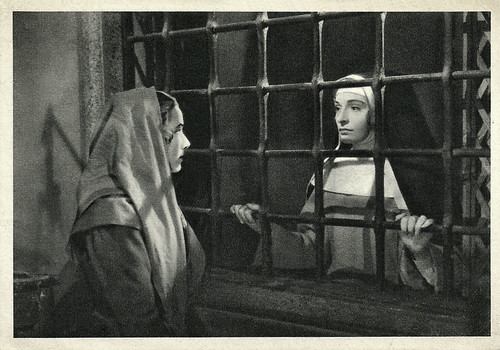
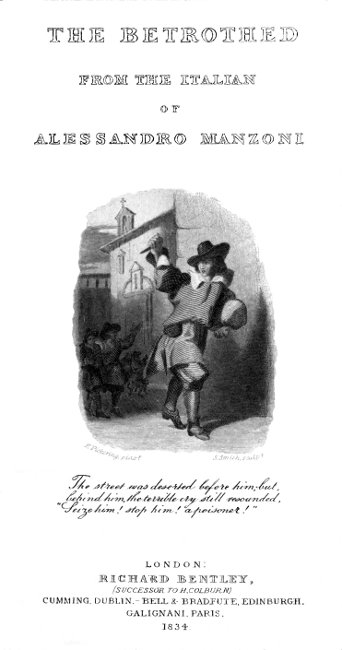
B List: Manzoni--I Promessi Sposi……………………………………..652/668
C List: Walter Scott--The Heart of Midlothian...………………………..38/540


So I wasn't quite able to finish Manzoni in time for this month's report. I have been very busy, especially in the weeks leading up to the beginning of school there were several days where I wasn't able to read it at all. But I am getting back on more of a regular schedule now.


Taking up Scott at the same time one is reading Manzoni is not ideal, as they are kind of similar books, long, romantic, set in the past, and they even were written around the same time. However, I can see already why Scott was popular in his day even if he is a bit long-winded by our standards (as is Manzoni). He is lively, he has more humor thus far than I was expecting, and he seems to know how to roll out a story. I should be able to plow through a decent amount of it during the 1-2 week interval when I am working on the report for the Betrothed.


R.W. Southern (1912-2001), who sounds like an American (perhaps I was getting him confused with the 1970s Texas-raised songwriter J. D. Sothern), was an Oxford institution, and The Making of the Middle Ages is one of the most respected humanities books to emerge from the heady days, such a contrast with the present, of the postwar research university. It is the kind of book that is good for me, because while I have some familiarity with many of the names, places, and events that populate its pages, I didn't have a terribly coherent picture of how they fit both in relation to each other and to other parts of history, and this should at least move me a further along in the formation of one. For a guy writing in the supposedly unenlightened 1950s, Southern frequently could pass for a modern professor. His attitude toward the Islamic world (or at least the medieval Islamic world) is highly respectful, and he is not in thrall to any kind of jingoistic view of Anglo-Saxon or Western European superiority that I can see. Reading him on the Crusades, I am struck by the juvenility with which people in our times will casually cite them as some kind of example of toxic masculinity or Western arrogance or privilege that has some kind of relation to people's behavior in the present. "The First Crusade burst on a world which had long been preparing for it in the recesses of its being, but there had been few outward signs of the work of preparation...The passionate acceptance of the Crusade as an established aim of Latin Christendom, which characterizes the twelfth century, did not come to birth without a struggle, and it is not irrelevant to note that the Eastern Church remained permanently antipathetic to the ideal. The monastic ideals of the eleventh century were in the main hostile to the idea of the Crusade. To a St. Anselm, for instance, or a St. Peter Damian, the Crusade made no appeal. There could be no place for it in the world which St. Anselm pictured as a vast, turbulent, impure river, carrying off to destruction those who became immersed in it: against this destructive flood there stood only one safe refuge with peace within its walls--the Monastery." (p.50)


I hadn't known that the "Heart of Midlothian" was, in one sense anyway, an actual "thing".


Kate gives the dish on the hurricane, the remains of which are coming my way tomorrow.

Thursday, September 6, 2018

September 2018

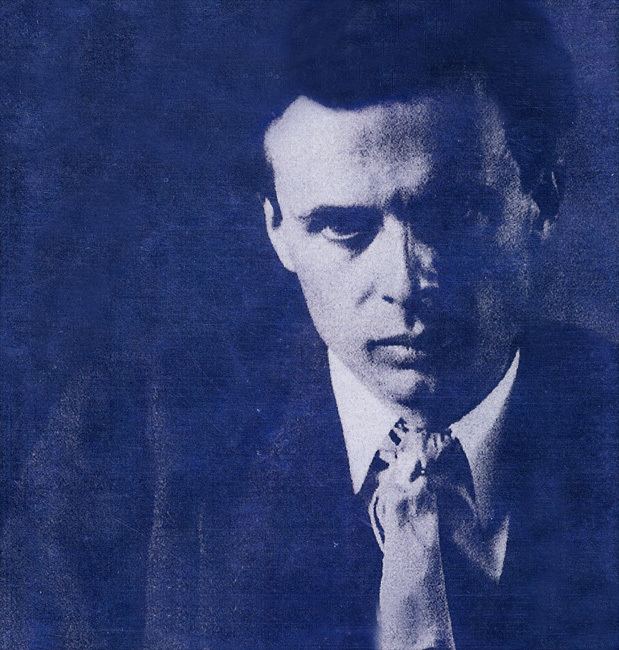
A List: Aldous Huxley--Time Must Have a Stop........................................61/311
B List: Ellen Glasgow--Barren Ground....................................................168/526
C List: H. R. Ellis-Davidson--Gods and Myths of Northern Europe........194/251


New books this month. Time Must Have a Stop was published in 1944, but it is set, thus far at least, in the 20s. I don't have a great sense yet of what it is about, but it features clever, eccentric characters of a certain epoch of English history who have enviable literary educations, so I appreciate that. The big drama in the book at the moment concerns a teenage boy who is unsuccessfully lobbying his brilliant but inattentive father to get him some evening clothes. Just before this I read two noteworthy short stories for the "A" list, "The Bulgarian Poetess" by Updike, which at one time at least was one of his more celebrated and most frequently anthologized stories, and "The Life You Save May Be Your Own", by the incomparable Flannery O'Connor. Updike reminds me of Graham Greene in the sense that he turned out a prodigious volume of professional writing over decades that seems as a rule to be worth reading for its own sake and contains its own interest almost independent of its subject matter. The premise of "The Bulgarian Poetess", in which an American writer briefly meets and is enchanted by the poet of the title at a conference behind the Iron Curtain to promote cultural understanding, which causes him to lament that they are not free to become better acquainted, seems rather quaint today, and is growing quainter by the hour, even though this was the world I grew up in until I was 19. Flannery O'Connor is one of the best writers of dialogue I have ever come across. It is artificial in the sense that almost no one ever talks like her characters do, or is capable of doing so, but the thoughts and conversations of those characters strikes one as what conversation, or writing, could attain if their practitioners always knew exactly what they wanted to say and what their purpose was in saying it. This is really one of the core principles of what literature is and why it is actually important, but I at least tend to lose sight of that.


I was looking forward to the Ellis-Davidson book, which is from 1964, a period whose scholarship in and interpretation of the humanities I have tended to trust for most of my life, though as that era grows ever more remote in time I am more able I think to see where their blind spots were at least even if I cannot wholly buy in yet to the more brashly asserted new developments and interpretations, where these exist. The book is in large part a survey in the style of Edith Hamilton, but less entertaining to read, drier, more academic, etc. I tend to doze off after 4 or 5 pages when I am reading it even though it is not uninteresting. I have largely given up trying to read late at night now because I can't stay awake, so this is happening in the afternoon. I don't fall asleep reading everything (yet), and I find that a good literary prose style is still able to engage me and keep me alert. But I suspect any denser philosophers and novelists are going to increasingly be a challenge for me.


I had been feeling healthier and somewhat more cautiously optimistic lately as the new school year started but I am a little off tonight.


Tuesday, September 6, 2016

September Update

A List: In between books currently


B-List: Allen--Tony Adverse................................1,074/1,224


C-List: Rushdie--The Ground Beneath Her Feet.......564/575


Not much to report. I have been plowing through the two volumes listed here for several months now, finally approaching end of both. A big recap of the Allen awaits in probably 2-3 weeks. I have spent a lot of time with this book and I feel a good deal of affection for it. When the end comes I will be ready to part with it, because I am pretty sure the themes and characters will be fully exhausted, but I don't mind the riding out to that end.


I couldn't quite finish the Rushdie in time for this month's report. It's one of those books that in the end I don't feel is really particularly great but about which I'm still a little worried about having missed something elementary to any understanding of literary greatness, which is often my experience with modern books. As I have been noting all along, it has a certain amount of virtuosity, but compared even to Anthony Adverse, its scenes and characters, with the exception of the early chapters in Bombay, lack for me any sense of solidity, or heaviness, which is a style of book that I guess I like. It moves all over the world, has major historical events as a backdrop anyway, and features a constantly revolving cast of high-flying eccentrics, but it never quite enters into the belly of these various worlds and theaters of action the way that the classics of this type of literature do.


My relationship with the A-List is kind of a mess right now. The last thing in it I read was Shelley's Prometheus Unbound, which I had difficulty getting into, though usually I am a pretty stout admirer of old Bysshe's poems. My head has not been in it.


Picture Gallery
Elvis
Claudette Colbert


Girl; Baton Rouge

Tuesday, September 8, 2015

Mestember Update

I am a little late with the update this month, because I was celebrating the holiday the past two days.

A List--Thomas Hardy--The Woodlanders 247/379
B--Robert Burton--The Anatomy of Melancholy 320/1,131
C--Gillian Flynn--Gone Girl 139/419
*D*--Paolo Ruiz--The Fault Line: Traveling the Other Europe From Finland to Ukraine 170/253

This current group is a bit too much, mainly because of "B". Even keeping up a very modest pace of 15-20 pages per day in it is wearing me out, given everything else I have to squeeze in in the course of a day.

The A list is in the midst of a run of three Hardy books right now, the first two of which I assume to be considered minor as I had not heard of them before. The Woodlanders, after an intriguing start, is looking like it is going to live up to this designation. It is still not bad, but it is very similar in character with all of the Hardy books as well as many other 19th century English novels. It calls to mind Adam Bede in particular. There is more of a sense in Adam Bede of there being an ultimate purpose in life of what might be considered a spiritual nature that is worth being mindful of that makes it the more successful book, I think. The Eliot characters run into difficulties because they deny or lose sight of this purpose, while the Hardy characters' problems stem from the circumstance that they have no comparable sense of purpose or who they even are in the first place. The professorial editor of the relatively recent Penguin edition I am reading, with the usual pedantic overkill* characteristic of modern authorities on literature, notes that Hardy was influenced by Darwinism and related developments in scientific understanding at the time he was writing this book, and the psychological break of the most sophisticated characters with any spiritual relation to existence stands out.

Burton, whom I have read before but who has come up on this other list I have started late in life and am determined to read all the way through as far as possible, I will deal with in a big posting when I finish him, which probably won't be until November.

Gone Girl was the winner of one of my goofy contests and while I felt obligated to start it I am not sure I am going to read it all the way through. I will give it credit that it is mildly more intelligent than the run of genre books or best sellers, and I suspect that the characters, while shallow and completely uninteresting in themselves as literary creations, are in some way representative of people in my generation, whom I am fascinated by, as stupid and sensually stunted and existentially confused as they are, because I have been judged by most of them to be even less adequate in these areas relative to what an acceptable human being would be than they are, and more or less rejected by them. There are also a number of mildly evil and probably repressed thirty-something MILF characters I am interested in, to see if they will do anything sexual. All of the characters in this are supposed to be well above average in looks, and to have been active and capable participants in the sexual arena during their single youth; the female protagonist is recorded as having had twelve sex partners, and it is implied that if her husband has not had this many, he easily could have. However, as in most instances where my generation is involved, all of this is completely unsexy, all of these experiences add up to little more than so many statistics and detached, almost robotic connections made with people displaying adequate desirability. None even of the married couples evince the slightest hint of feeling actual love for anyone, or even the kind of real respect that in the absence of torrid passion still indicates the presence of some affection.

I picked up the Ruiz book at the library because I was feeling a little uninspired by the combination of things I was reading otherwise, and weighed down by the Burton (though that has begun to pick up in the last few days. For a while there I was finding myself unable to read more than a couple of pages without nodding off in my chair), and I had not read a travel book in a while. Ruiz is a journalist born in 1947, Italian by nationality, though he likes to emphasize that as a native of Trieste, which is famously located at the point where the Slavic, Latin and Germanic cultures of Europe meet, and belonged to the Hapsburg Empire prior to 1918, he is most comfortable in places where multiple peoples and traditions co-exist more or less side by side. He hates nationalism, though his real antagonism is directed towards the EU, which he sees as standardizing and sucking the soul out of the Europe he loves. (and obscenely fixated on money-making, even more[?]) He undertook this trip in 2007, Starting above the Arctic Circle on the border between Norway and Russia, and progressing south, loosely along the border between the EU and that part of Europe that remains outside, which thus far means Russia (he is in Vilnius, Lithuania, at the point of the book that I have reached). While I am interested in the reasons for his sourness towards the new Europe, I think it overly colors his reactions to everything he sees. It is refreshing to experience the kinds of old-fashioned hospitality and cooking and handicrafts and habits and so on that he finds in Russia--I felt something of this when I was in the Czech Republic back before they joined the EU--but whenever this is counteracted by anything he associates with a western influence, such as cell phones, tourism, "androgynous Western women", fast food, and the like, his reaction is uniformly negative, and there is nothing that might be associated with the modern west, other than possibly some aspects of its tendency towards cleanliness, for which he can express any approval. At one point while in an Eastern train station he sees some Polish children reading books and laments that 'one never sees this in the west anymore.' I mostly agree with these sentiments, though I find him a little sententious in his negativity--he has more than a little of the "I am the only Westerner who still possesses a working mind and an identifiably human soul" about him, and I suspect his views of the comparative soulfulness and vitality of people outside of the west are probably a little too rosy, so while I will certainly finish the book, it has already been established for me what kinds of impressions the rest of the trip will likely bring.    

There was a golden quote I forgot to insert in my post about Dreiser, regarding Clyde's early love interest, Hortense Briggs, who played him for the chump that he was:

"As Hortense well knew Clyde was pressing more and more hungrily toward that ultimate condescension on her part, which, though she would never have admitted it to him, was the privilege of two others."

I guess this reads as one of those clunky, unliterary Dreiserian sentences, but the universal truth embodied in the content carries the day, as it often does with him.

*Have I ever told you how much I hate the scholarly footnotes in modern editions of classics? First of all, of course, they have to make a note on every historical or literary factoid that presents itself, the assumption apparently being that the average reader nowadays is a complete moron. Hence we have footnotes for the likes of the writing on the wall, the apple of discord, Baden, and other formerly commonly known references. We also get the obligatory explanation that phrenology is a pseudo-science, with the implication that if our literature professor-guide had been alive in 1886, she would have seen right through its idiocy. She also implies that Hardy thought of it in 1886 in exactly the same way that she is thinking of it in 2010 or whatever, which I doubt. There is also a reading of why Hardy has his rustic characters mangle biblical passages that owes too much, I fear, to contemporary academic loathing both of the rural poor and the Christian religion. But I have to end this post.