Showing posts with label Charles dickens. Show all posts

Tuesday, May 5, 2020

Charles Dickens--Bleak House (1853)

With nine entries on the list pretty evenly spread out across the volumes, it is always going to be a major milestone to come upon a Dickens book, and especially when, within that group of nine, it is one of the five or so major ones, which I think Bleak House certainly is. Even though I read it once before (in 2000), as with Anna Karenina and a few of the other titles remarked on here, going through it this second time for this list felt like a bigger life event than the first occasion, even without the beginning of the pandemic shutdown, which began around halfway into the book. I actually started this in late February when I was on vacation in Florida and did not suspect what was coming, in terms of everything being closed and socialization, etc, being interrupted as it has been. But all that aside the book is, for all the flaws that can be, and often are, noted in it, a tour de force of energy and humanity and words and speech and the construction of a living world. It is really a tremendous production. It is my impression that nowadays it is considered by most people of intellectual, if not necessarily literary, stature to be on the whole the greatest Dickens book, and I can see where they would make that claim, as it is, in spite of having its share of Dickensian characteristics, the most modern in its overall approach, characterizations, and sensibility. If forced to offer a judgment I  would probably place it more or less co-equal with David Copperfield and Pickwick, and just ahead of Great Expectations. Which is to say that I think highly of it.


The IWE writers were not as enamored with Bleak House as even modern critics are (I don't have a good sense of how popular it was with the critics or the public comparative to the other books prior to World War II. "As is not unusual with Dickens" they say, "his novel Bleak House is notable chiefly for its minor characterizations. The heroine Esther is neither quite true nor quite sympathetic by modern tastes, and the admirable John Jarndyce leaves today's reader cold. Tulkinghorn the lawyer is a stereotype. But Mrs. Jellyby the overdevoted philanthropist and Mrs. Pardiggle the malevolent one, Miss Flite the fluttery maiden lady and the overproper Turverydrop, and at least half a dozen others, are drawn with consummate skill. The book was popular chiefly because Dickens wrote it. His 'message'--the need for reform in England's courts of chancery (equivalent to courts of equity in the United States)--meant little to the public because too few were affected."

I am not going to take great issue with a 50 year old anonymous account in a forgotten children's encyclopedia, but just to speak for myself, I disagree with most of this. I rather like Esther--while acknowledging the many obstacles that Dickens burdens her with, being overly virtuous and so on, he still manages to kind of write his way over them and bring a more fully realized character to life. While there are again admittedly many strange things about Mr. Jarndyce, some of which I will address later on, I do like him too. His reassuring good-naturedness rescues a lot of scenes and allows at least one side of the story to keep moving forward with some hopefulness. I thought the depiction of Tulkinghorn was impressively methodical and unwavering. He certainly struck me as one of the truer characters in the book. And the whole world of the chancery courts serving as the central reference point around which the story revolves provides an intensity and interest that is a lacking element in many novels, Victorian and otherwise. On the other hand Miss Flite and Turverydrop seemed to me two of the more obviously ridiculous minor characters, out of the many that were quite good, if not perhaps as absurdly memorable, some of which I will hopefully remember to have commented on in my notes.


p. 10. Because of the humor in Dickens I find my note-taking process starts earlier. Most of the first quotations will concern Sir Leicester and Lady Dedlock, with whose lofty station and self-regard the author had great fun throughout the book. "Indeed, he married her for love. A whisper still goes about, that she had not even family; howbeit, Sir Leicester had so much family that perhaps he had enough, and could dispense with any more."

p. 11 Sir Leicester again--"He is of what is called the old school--a phrase generally meaning any school that seems never to have been young."

p. 13 "Sir Leicester has no objection to an interminable Chancery suit. It is a slow, expensive, British, constitutional kind of thing...And he is upon the whole of a fixed opinion, that to give the sanction of his countenance to any complaints respecting it, would be to encourage some person in the lower classes to rise up somewhere--like Wat Tyler."

p. 158 Mrs Rouncewell the old housekeeper of Chesney Wold, to her irreverent grandson: "Sir Leicester and Lady Dedlock, my dear, are not fit subjects for joking." This might be the funniest line in the whole book.


p. 259 During the very good interlude about the area around the Courts during the long vacation. "All the middle-aged clerks think their family too large."

p. 275 The description of the younger Smallweed calls to mind the Boss Baby. "If he ever lay in a cradle, it seems as if he must have lain there in a tail-coat." The dinner with the three young men, Guppy, Weevle, and Smallweed, was another well-done minor scene that gave the book the density that makes it stand out.

p. 278 "That very popular trust in flat things coming round! Not in their being beaten round, or worked round, but in their 'coming' round!" This is me, but also in fact most people, to some extent.

p. 422 "A very contentious gentleman, who said it was his mission to be everybody's brother, but who appeared to be on terms of coolness with the whole of his large family, completed the party." The wedding party (of Caddy Jellyby, who was probably the girl character I would have been most interested in dating) of malcontented altruists was another pretty hilarious and well-conceived little scene.
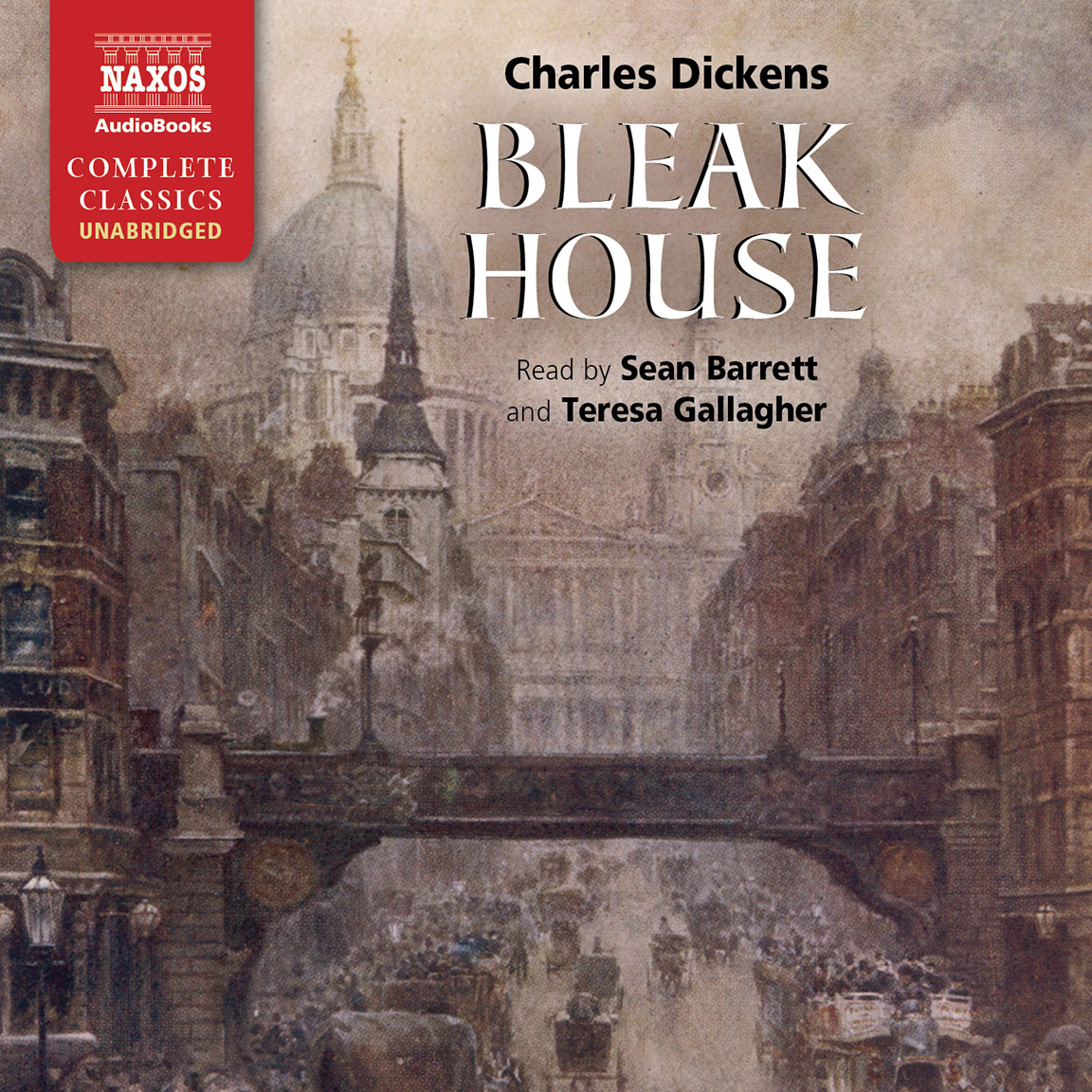

p. 444 "It may be something in the air--there is plenty in it--or it may be something in himself, that is in fault; but Mr Weevle, otherwise Jobling, is very ill at ease." That "plenty in it"--so funny. Jobling is the guy who had the "Galaxy Gallery of British Beauty" set of pictures, including Lady Dedlock, hanging up in his room. Another touch that seems ahead of its time.

p. 532 (Skimpole describing one of the family portraits) "There was a Sir Somebody Dedlock, with a battle, a sprung-mine, volumes of smoke, flashes of lightning, a town on fire, and a stormed fort, all in full action between his horse's two hind legs: showing, he supposed, how little a Dedlock made of such trifles."

p. 552 "Mr Carstone, you are represented by--." "You said just now--a rock." "Yes sir,' says Mr Vholes, gently shaking his head and rapping the hollow desk, with a sound as if ashes were falling on ashes, and dust on dust. 'a rock. That's something." Mr. Vholes is my favorite lawyer in the book. He's like Mr. Brontosaurus Burger from the Flintstones. Great self-control on the part of the author to hold him back until page 500, assuming he did not come up with him until that point, which may have happened.

p. 567 Sir Leicester's superannuated spinster cousin Volumnia, another inspired creation, commenting on local political trends. "Volumnia hastens to express her opinion that the shocking people ought to be tried as traitors, and made to support the Party."


p. 571 "Volumnia thinks it is really high time, you know, for somebody in power to step in and do something strong...'It is worthy of remark,' says Mr. Tulkinghorn, 'however, that these people are, in their way, very proud.' 'Proud?' Sir Leicester doubts his hearing.'"

p. 595 Skimpole, before he is revealed to be less inoffensive than he is at first presented to be. "Time is no object here. We never know what o'clock it is, and we never care. Not the way to get on in life, you'll tell me? Certainly. But we don't get on in life."

I know I am doing a lot of quotes for this one, but it's too amusing, and I would forget most of these if I didn't write up these notes.

p. 628 "The day begins to break now; and in truth it might be better for the national glory even that the sun should sometimes set upon the British dominions, than that it should ever rise upon so vile a wonder as Tom." Tom being here a wretched alley in London in the legal neighborhood, not a singular person.

My thoughts on Jarndyce--Why is he single? Why his excessive benevolence? Not a bad, and maybe a necessary character. Better than Woodcourt, who is just too good, in a way that does not contribute anything valuable to the story.

p. 747 "'It won't do to have truth and justice on his side; he must have law and lawyers,' exclaims the old girl, apparently persuaded that the latter form a separate establishment, and have dissolved partnership with truth and justice for ever and a day." I was hoping I had remembered to put in something from the old girl here. And her daughters Quebec and Malta, which are great names for girls. I would have been tempted to give my own daughters these names if I had read this at that time.


p. 777 (Refer to the photo at the bottom of the page, of an amusing page heading. I added this from my phone after I had typed up the rest of this page, and I couldn't get it to show up in this spot).

The plot felt like it was starting to wrap up with about 200 pages to go. It's a long denouement.

p. 796 "Volumnia, in her room up a retired landing on the staircase...is a prey to horrors of many kinds. Not last nor least among them, possibly, is a horror of what may befall her little income, in the event, as she expresses it, 'of anything happening' to Sir Leicester." Volumnia kills me.

p. 822 "I cannot use the expression that he looked old. There is a ruin of youth which is not like age; and into such a ruin Richard's youth and youthful beauty had all fallen away." Is this passage famous? I have certainly seen the idea expressed elsewhere. I like the image however.

p. 864 I made a note about the farewell when Esther encounters Caddy in the street and how this is always a poignant way to wrap up a book, saying a sort of good-bye to youth and one's youthful friends who were once so important but fade out of one's life, etc, but then Caddy turned up again a few pages later and it was implied that they continued to see each other all the time for the foreseeable future anyway.

Tomorrow is the 6th of the month, which is the day when I usually do my monthly update. I'll give more of a personal pandemic update at that time. I feel like I should have written more about this book, but really, everybody I would hope to be reaching either knows all about it or has at least seen the movie, and there isn't anything I am going to have to tell them. So I will leave it here and move on with the list (and towards the seven other Dickens books still remaining on it).


The Bourgeois Surrender Challenge

1. Bryan Stevenson--Just Mercy...……………………………………5,534
2. Bleak House (TV--2005)…………………………………………..3,351
3. The Village (movie--2004)…………………………………………1,277
4. Andrew Pollack & Max Eden--Why Meadow Died...………………..753
5. Alison Weir--The Princes in the Tower...……………………………321
6. James Canton--The Literature Book (DK)…………………………...186
7. Daniel Pool--What Jane Austen Ate & Charles Dickens Knew...…….183
8. Charles Dickens--Dombey & Son...…………………………………..161
9. Larry Chambers--Death in the A Shan Valley...……………………….81
10. John Seymour--The Complete Book of Self-Sufficiency...……………54
11. Vladimir Nabokov--Lectures on Literature...………………………..46
12. Sue Monk Kidd--The Book of Longings...…………………………...32
13. Madeleine L'Engle--The Moment of Tenderness.................................18
14. Jean Plaidy--A Favorite of the Queen..................................................13
15. Bleak House (TV--1985)......................................................................10
16. William Makepeace Thackeray--The Newcomes.................................10


Because the names (and consequently the keywords for the game) are so singular to Dickens, the searches in these contests land on a lot of books and movies related to him.


Round of 16
#16 Thackeray over #1 Stevenson
Invoking the rule that an IWE author always wins in the first round.


#15 Bleak House '85 over #2 Bleak House '05
Odd that these rival BBC productions, both of which are supposed to be pretty good, ended up battling in the first round. In such instances the tie traditionally goes to the older film.

#14 Plaidy over #3 The Village
#13 L'Engle over #4 Pollack & Eden
Why Meadow Died is about the Parkland School shooting, which I don't feel like reading a book about at present.

#5 Weir over #12 Kidd
These books seem fairly comparable to me. Weir has a little extra push in having an "upset" to use, though I don't know if this really counts as an upset.

#11 Nabokov over #6 Canton
#7 Pool over #10 Seymour
The losers in the last two rounds both present themselves as gimmick books, with a lot of boxed text, busy pages, and the like, which sort of thing I used to like but isn't what I am looking for at this point of my life.

#8 Dickens over #9 Chambers
I'm not really ready to take on another long Dickens book right away, but he's usually going to beat a Vietnam memoir in the first round.


Round of 8
#16 Thackeray over #5 Weir
#7 Pool over #15 Bleak House '85
#8 Dickens over #14 Plaidy
#13 L'Engle over #11 Nabokov
I would like to read the Nabokov lecture on Bleak House, at least. The book as a whole is rather long, however.


Final Four
#7 Pool over #16 Thackeray
I can't take on a (supposedly) 2nd tier Thackeray novel that is the same length as Bleak House.

#13 L'Engle over #8 Dickens
Same principle.


Championship
#13 L'Engle over #7 Pool
L'Engle wins by being the only attractive title in the competition that was also relatively short.


Monday, March 18, 2019

Gerhart Hauptmann--Before Dawn (1889)

So it did not take long to get to another Hauptmann play--apart from Shakespeare with his series of Henry and Richard-titled plays, I believe this is the only time we get standalone works back to back by the same author in the entire IWE list. This was Hauptmann's debut, it premiered when he was 27, which is around the typical age when most of these big time writers achieved their first breakthroughs into the public consciousness. I believed myself to have enjoyed reading it more than The Beaver Coat, though it was a more sprawling, less-tightly constructed play. It was also however less opaque, more indulgent of emotion, and more concerned with the travails of younger people, which in general I guess interest me more even now unless the older protagonist is extremely interesting or amusing. When reading these things, especially if I am under the impression that they are supposed to be good, I mostly concern myself with seeking and trying to understand wherein the quality lies, and do not always (though not never either) trust myself to identify the flaws and failures in such works and declare them as such. I had not read the IWE's introduction to this before reading it and was therefore given something of a jolt when I looked it up after finishing it:


"The reception of Hauptmann's first produced play was 'tumultuous', according to Lewisohn; literary historians agree that it was 'sensational'. Today the play reads like an adolescent effort to be impressive by being shockingly different. It protests a bit too much the grievances of labor, the perils of alcohol, and the righteousness of the Icarians (one of a spate of Utopian colonies in America during the mid-19th century). But it was written by Hauptmann and Hauptmann could already write."


Obviously the IWE editor is revealing some of his own biases here, but his criticisms are all, or mostly, things that did mildly occur to me in the course of reading the play, but that I let pass, and did not put together at all to inform my view of the whole. It was all a little over the top, but Hauptmann was something of a genius, and a German genius to boot, so it must have been in the service of a much grander point. Such was my thought process anyway. I do wonder why the IWE people included this on the program while leaving off The Weavers, which today at least seems to be considered Hauptmann's best and most important play (and also, as it is about textile workers made obsolete by industrial technology, topical). I am pretty sure we are done with him altogether after this.


After being too uncertain of my steps to make any notes on The Beaver Coat, I took a few this time.


Dr. Schimmelpfennig, in Act V, perhaps an early example of what continues to be a defining theme of our own age:


"...humankind is in agony and our sort with our narcotics manage to make things more tolerable."


Both the drunken, newly prosperous peasant woman Frau Krause and the anti-establishment Loth character take swipes at Goethe and Schiller, traditionally thought of by me as the unassailable quasi-divinities of German literature. "Schiller an' Goethe (wildly mispronouncing these names)--a couple of useless ninnies if there ever were away," opined the lady, while later on Loth proclaims to the somewhat dim but nice and earthily alluring farmer's daughter that Werther is "a stupid book...it's a book for weak people." With regard to Zola and Ibsen (whom I said Hauptmann reminded me of in the last post), Loth says "They are not writers but necessary evils...I'm not sick, and what Zola and Ibsen offer is medicine."


The insistent belief in the hereditary nature of alcoholism struck me as strange, not because there is not any truth to it, but because it was presented as an inevitable doom for the inheritor. Thinking back to the introduction, the postwar period out of which this list originated was probably the time, certainly in recent history, when skepticism about anti-alcohol crusaders was at its height, the memory of Prohibition being well within the lifetimes of many adults. I do see signs that these kinds of attitudes may be returning, in tandem with the increase as a percentage of the population of people who come from cultures with strong biases or even prohibitions against drinking.


I thought this was leading to a revelation of some kind of rape which word I cannot make out now (paternal?), incest, or secret pregnancies, and the IWE summary does indicate that we are to understand that Helene was "seduced" by her brother-in-law, but the translation I have (in a 1963 Penguin paperback published in England only of "Three German Plays", including The Threepenny Opera and Woyzeck by Georg Buchner) is unclear to me on this point where Dr Schimmelpfennig says that "Things aren't so far gone that he has actually ruined her, but he has certainly ruined her name by now." I could look up the original online if I wanted to and see if I could make more sense of that statement. I don't know German particularly well, but I know it somewhat, and I had gotten to a point in my 20s where I could read some of Kafka's stories only having to look up a handful of words on the page. But I don't have time to do that now. I barely have any time even to read these books.


Hauptmann died in 1946 at the age of 83, remaining in Germany throughout the Nazi period, so I suppose it is worth looking into how he spent those years. He of course would have been an old man then, and in the introduction to the book in which The Beaver Coat was included, it was claimed that he was "too old" to have relocated to another country. According to Wikipedia he signed a loyalty oath of the German Academy of Literature and applied for membership in the Nazi party (and was rejected). This was not mentioned in the other book. Film versions were made, albeit allegedly heavily censored, of the two plays I have written about here. I put a clip from The Beaver Coat on that post and will see if I can find one for this one. He had a novel rejected for publication during the war on the grounds that it depicted a black character, though a 17 volume edition of his works was printed in 1942 and a tetralogy of novels in 1944, which would seem to indicate that he was in fairly good stead with the regime. He was in Dresden during the firebombing of that city, when he was past 80, and wrote that "I stand at the end of my life and envy my dead comrades, who were spared this experience", which I can certainly believe was a sincere statement. This was noted in the 1950 introduction. He lived in Silesia, the southeastern part of Germany that was incorporated into Poland at the end of World War II. In May of 1946, he was informed that all Germans were to be expelled from Poland, without exception. At this point, he finally became very sick and died on June 6, 1946, before being expelled. The 1950 essay (by a German--I don't have that book in front of me so I cannot remember whether he was personally acquainted with Hauptmann himself) referenced some writings published after the war that were anti-Nazis and everything that happened during these last years, though Wikipedia doesn't list or refer to them. On the whole, one could get the idea that Hauptmann would not have missed much if he had died at age 70, though I don't know whether there is considered to be anything of great value in his later writings. While not as infamous perhaps as Knut Hamsun or Marshal Petain in his end of life Nazi associations, he doesn't appear to have covered himself in much glory, either. Not that I would have either, most likely, if I had been there, but everyone who found himself in that situation is held accountable to some degree, especially if he was a prominent figure such as Hauptmann certainly was.


The Challenge


This draw produced a rather wild Challenge. Matchups will be decisive
.
1. Narrative of the Life of Frederick Douglass...............................................................3,116
2. Howard Zinn--A People's History of the United States..............................................3,019
3. Alice Hoffman--The Marriage of Opposites...............................................................2,115
4. Alice Hoffman--The Dovekeepers: A Novel................................................................1,969
5. Karyl McBride--Will I Ever Be Good Enough............................................................1,042
6. Charles Dickens--Little Dorrit........................................................................................328
7. Michael C. Ruppert--Crossing the Rubicon....................................................................281
8. Karl Rove--Courage & Consequence.............................................................................255
9. Roger Kerin--Marketing, 12th Edition............................................................................177
10. Dr. Joanna McMillan--Get Lean, Stay Lean.....................................................................2
11. Marx & Engels--Collected Works, Vol. 38: Letters 1844-51............................................1
12. Highlights: The Tonight Show Starring Jimmy Kimmel, Season 4 (TV Show)................1
13. Alcoholism: Analysis of a Worldwide Problem (ed. Golding)...........................................0
14. Richard Chizmar--The Girl on the Porch..........................................................................0
15. Susan Chair Imbarro (?)--Declarations of Independency..................................................0


1st Round


Frederick Douglass gets to sit this one out with a much-coveted bye.


#2 Zinn over # 15 Imbarro
#3 Hoffman over #14 Chizmar
#4 Hoffman over #13 Alcoholism
#5 McBride over #12 Kimmel
#6 Dickens over #11 Marx/Engels


Little Dorrit is not one of the nine Dickens books selected for the IWE list, so it is eligible for the Challenge.


#7 Ruppert over #10 McMillan
#9 Kerin over #8 Rove


Kerin is a textbook in a subject I have a limited interest in studying, but he has an upset card to play.


Round of 8
#9 Kerin over #1 Douglass


Kerin had an allotment of 2 upsets in this tournament.


#2 Zinn over #7 Ruppert


A battle of 600+ page books. My library has Zinn, it does not have Ruppert, which is the decisive factor in the contest.


#3 Hoffman over #6 Dickens


Dickens too falls victim to an upset.


#4 Hoffman over #5 McBride


A mild upset. McBride was a shorter book, but Hoffman had upset in hand for this book too.


Final 4
#2 Zinn over #9 Kerin
#3 Hoffman over #4 Hoffman


Championship
#3 Hoffman over #2 Zinn


This Hoffman, whom I've never heard of, appears to be an extremely popular writer of some approximately mid-list fiction. I have dipped into Zinn before and I cannot say that I am a fan. His approach struck me as disingenuous and not respectful of any accomplishment in our national history that could not be attributed to some oppressed party resisting or overcoming the rapacity of the devils making up the dominant elements of society. Perhaps there are truths in his version of events, and if you are familiar with the opposing narratives perhaps there is good to be gotten out of reading Zinn, though I am not wholly persuaded of this. If he is your introduction to or main lens through which to understand American history, I feel sorry for you.


Thursday, August 23, 2018

Charles Dickens--Barnaby Rudge (1841)

First Dickens on the list, of the nine I think that are on it. This was a good one to start with, as it is one of his celebrated efforts, and I had not read it before either. It is evidently not thought highly of by many readers, especially on the internet, but I liked it, as I tend to do with most Dickens books. I had thought that A Tale of Two Cities was his only book with a historical setting, but this one goes back to an even earlier event, the anti-Catholic riots that took place in London in 1780, which episode of history I must cop to being unfamiliar with. I don't even recall its coming up in the life of Johnson, though maybe it did. It's one of the early books, and the beginning especially I found to be very funny, reminiscent of the Pickwick Papers. The later parts were not as consistently humorous, but the accounts of the riots and their aftermath were compelling and full of interest enough, and while the story is not the smoothest flowing and the characters are not among his most renowned (though I thought John Willett and his cronies, Sir John Chester, Grip the Raven, the Maypole Inn, Mrs. Varden in the earlier parts of the book when she was relentlessly contentious, and even the ridiculous servant Miggs to some extent were skillful creations),  the whole was still enviably lively and profuse compared to almost anything else.


The three main complaints about Dickens that I encounter online are that he was paid by the word (which encouraged a general overindulgence in his compositions), that too many plot points are resolved by coincidences, and that his depiction of women is simplistic and generally terrible. I have never found any of these objections to have a marked effect on my ability to enjoy the books, with the possible exception of the last one, as there are times, especially in the earlier books, where even I could wish for the female characters to be a little less insipid and have a more defined character. Barnaby Rudge is not one of his better efforts in this regard, the beautiful romantic interests Dolly Varden and Emma Haredale being little better than mannequins and ciphers, though the Dolly character was apparently very popular with readers at the time. I consider that he improved in this later on--Dora and Agnes in David Copperfield and Esther Summerson in Bleak House have a certain vividness to me years after reading those books. Dora is usually dismissed as being another insipid manic pixie dream girl type, but she was not stupid, only spoiled and overindulged, very much a type one encounters in real life, which cannot be said of most of the young women characters in the earlier books. As to the other criticisms, it appears that the oft-hurled epithet that Dickens was "paid by the word" is not technically true. He was paid to produce a certain amount of copy for the installments of his books, which is what the public in his time was buying, and presumably wanted. As I find his writing and personality amiable for the most part, and am used to the form of the Victorian novel, his alleged wordiness, which is often deployed in the service of some clever or ingenious observation or another, does not put me off. On the matter of his overuse of coincidences, this is a fairly ubiquitous device in literary productions before 1900, and even afterwards, and Dickens seems to me less egregious about it than other older writers, who depend upon it more for their grand effects. Their occurrence in him is usually an afterthought for me.


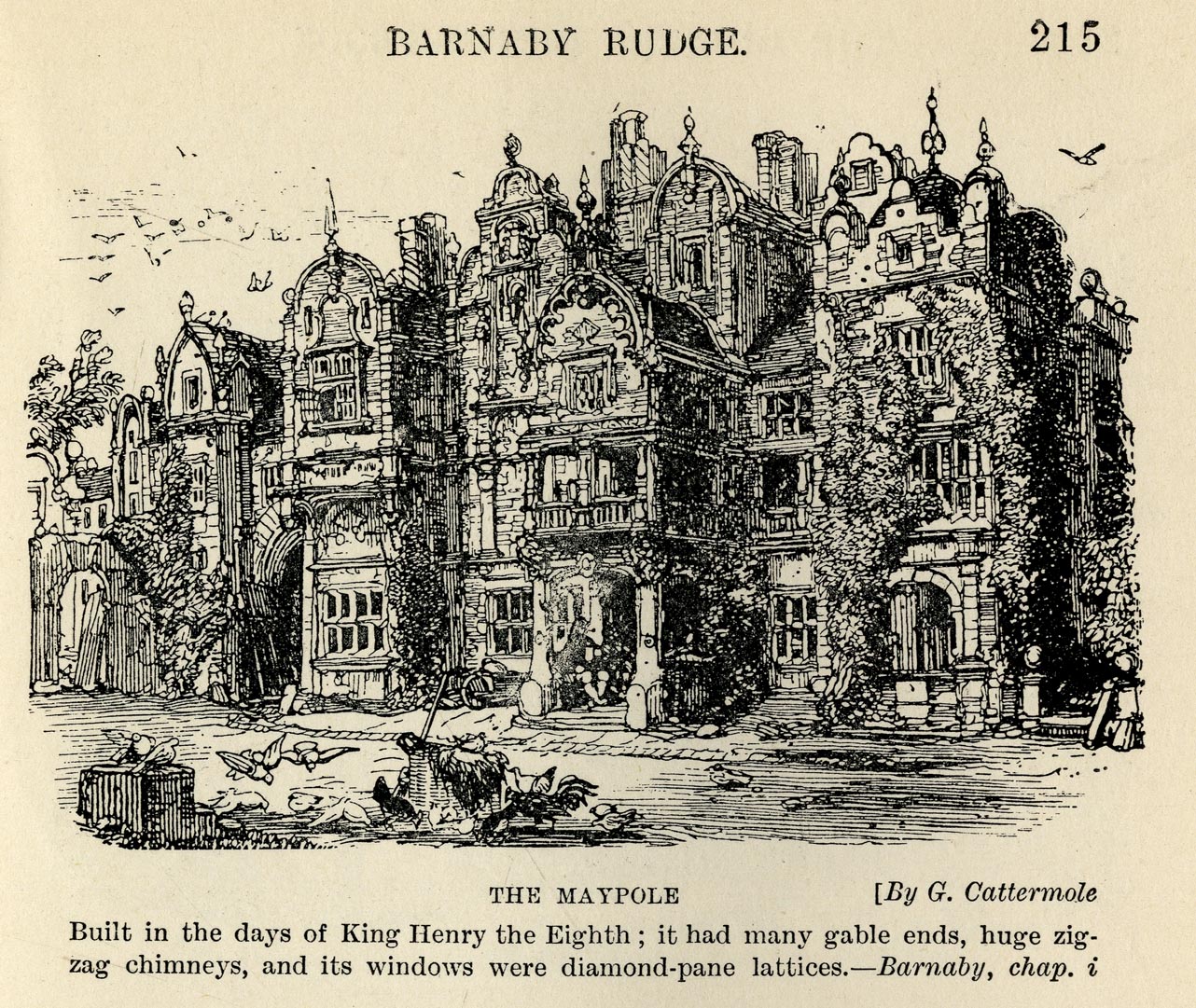
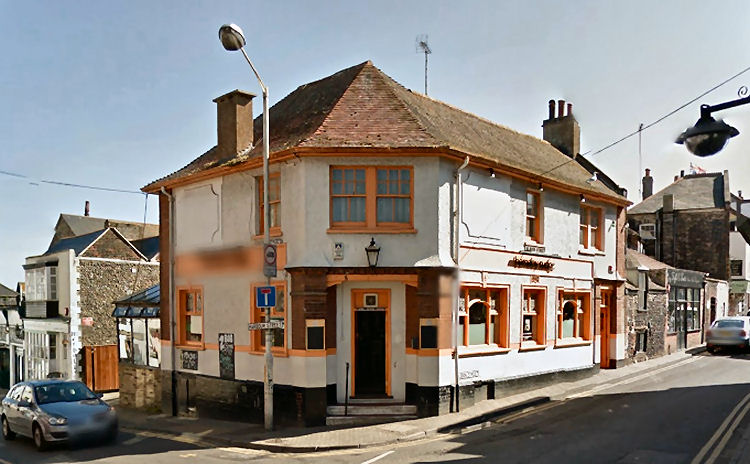
The Maypole was an inspired invention.


The first 200 pages or so of this were, as noted above, extremely funny. Sadly I neglected to take note of any specific examples for my report, though I suspect a good part of the humorous effect comes from having been set up beforehand in the overall flow of the book, episodes such as Sir John Chester's alighting from his coach after much over the top but entertaining demonstration of his gentility and paying the coachmen "something less than they expected from a fare of such gentle speech."


There is an elaborate and fine description in Chapter LI, too long to reproduce in full here, of the hapless Miggs's desperate efforts to stay awake while accompanying her mistress in sitting up late that is precise, funny, absurd, and mildly uncomfortable in its accuracy. A pointed example of the man's gifts as a writer.


Another one (example) is the depiction of the rioters as viewed from the rooftops in Chapter LXVII.
"...the crowd, gathering and clustering round the house: some of the armed men pressing to the front to break down the doors and windows, some bringing brands from the nearest fire, some with lifted faces following their course upon the roof and pointing them out to their companions: all raging and roaring like the flames they lighted up..." and so on. I think this is very good.


Whether intentionally or not, Dickens comes off as rather pro-establishment here, insofar as he is decidedly anti-rioters, these latter being depicted as a rabble of mostly ne'er-do-wells. The nature of the anti-Catholic sentiment supposed to have inspired the disturbance is easy enough to denounce. History as well as legend being famously written by the victors, rioters can reliably be painted or dismissed as being in the wrong, except when they aren't (the various rebellions of the 1960s come to mind, if most of these are even considered to be riots now). One of the disappointing aspects of this book was the rather unabashed class prejudice in it. The depictions of characters such as Miggs and the pathetic apprentice/would be revolutionary Tappertit are uncharacteristically (to my mind) and needlessly cruel. Meanwhile, the middle class characters who flirt with the movement manage to see where it is heading and distance themselves from it in plenty of time to remain untainted, and the conduct of two Catholic lords whose homes were burnt by the rioters and who refused to accept any of the money offered by the government in compensation were singled out for praise.


Dickens gave the estimated cost of the riots as being from 125,000 to 155,000 pounds, which I guess was a notable sum at that time.


Chapter LXXVII, the execution scene, with its description of the slow progress of the morning sun, the gathering of the crowd, their entertainments while waiting, etc. Also good.


Chapter the Last, of John Willett:


"He left a large sum of money behind him; even more than he was supposed to have been worth, although the neighbors, according to the custom of mankind in calculating the wealth that other people ought to have saved, had estimated his property in good round numbers."


I haven't mentioned the title character, Barnaby Rudge himself at all. He was an "idiot", less attuned to what was going on in the story than his pet raven, and my dislike of mentally limited characters, even when they appear in Dickens, is well documented. Neither he nor his mother brought anything to the story as far as I am concerned.


I have been collecting, and subsequently reading, volumes from the Oxford Illustrated Dickens series since the 90s. While these are new(er) books, they have the essential original illustrations as well as a classic readable typeface. Here is a picture of all my Dickens books from this set that I have acquired so far. On the shelf below you can see that I have the complete set of the Oxford Illustrated Jane Austen as well. Oxford also has put out a similar set of Mark Twain's works, but I don't have any of those as yet.


Here is Barnaby Rudge alone. I struggle with the phone camera to take a clear photo, especially in the surreptitious manner with which I take these photos, as I don't particularly care to be caught on a beautiful sunny day snapping pictures of books.


The Bourgeois Surrender Challenge


1. Scent of a Woman (movie)....................................................1,367
2. Mary E. Pearson--The Kiss of Deception.................................679
3. Bill Bryson--I'm a Stranger Here Myself.................................468
4. Rachel Vincent--My Soul to Lose.............................................192
5. Titans East Part I (Teen Titans: S 03 E 12 TV Show).............150
6. Peter Ackroyd--London: The Biography....................................98
7. Dafydd ab Hugh--Endgame (Doom)..........................................49
8. Victor Hugo--The Man Who Lives.............................................38
9. Annelisa Christensen--The Polish Midwife................................37
10. Ron Roy--The Runaway Racehorse..........................................31
11. Lindsay Hunter--Don't Kiss Me................................................31
12. Harold C. Goddard--The Meaning of Shakespeare, Vol. 1.......24
13. E. N. Joy--Lady of the House....................................................22
14. Work of Robert G. Ingersoll, Vol 1: Lectures............................19
15. Carol Marinelli--The Only Woman to Defy Him.......................14
16. Travis Kennedy--True Ghost Stories and Hauntings................14


1st Round


#16 Kennedy over #1 Scent of a Woman


The ghost story book--not my favorite genre--glides through with a shaky win.


#2 Pearson over #15 Marinelli


Battle of the genre books.


#3 Bryson over #14 Ingersoll


A halfway interesting matchup. Bryson's travel books are the kind of thing that the Challenge was created to give me an excuse to read from time to time.


#4 Vincent over #13 Joy


More genre books


#12 Goddard over #5 Titans


#11 Hunter over #6 Ackroyd


The Ackroyd book I have seen lauded, but he is the victim here of one of my dreaded upsets.


#7 Hugh over #10 Roy


Roy's is a children's book, but I would have given it the victory over an offering from the "Doom" series anyway. However, Hugh has an upset coming.


#9 Christensen over #8 Hugo


The Christensen may be a real book. Anyway she has an upset to pull out too. Victor Hugo's lesser known novels have now turned up several times on the Challenge, usually to be the victim of an early upset. I will have to keep watching for this trend.


Round of 8


#2 Pearson over #16 Kennedy


Because of the library factor.


#3 Bryson over #12 Goddard


The Bryson book appeals more to me at the moment. I haven't read a travel book in a while.


#11 Hunter over #4 Vincent


The library, surprisingly, gives the win to Hunter.


#9 Christensen over #7 Hugh


Final Four


#11 Hunter over #2 Pearson


Hunter is 300 pages shorter


#3 Bryson over #9 Christensen


The libraries don't carry Christensen anyway.


Championship


#3 Bryson over #11 Hunter


An anti-climactic final. However given that I am four or five books behind on the Challenge list, I am happy with the result.


Tuesday, March 6, 2018

March 2018

A List: Dickens, Martin Chuzzlewit..................606/841
B List: Fannie Hurst, Back Street......................286/464
C List: Harry Dolan, Very Bad Men..................332/412


My reading pace slowed a little this month because I was not feeling that great in the early part of it and then I went on vacation, after which I have been feeling much better. I hope it lasts. Also I have been sluggish since I don't really love any of these books. Dickens is one of my all time favorites and Chuzzlewit is good in parts, but I find some of the subplots either hard to follow or not commanding my attention in the manner of his better work. The minds of the authors of genre books, at least that they reveal, just aren't interesting enough to me. Yet whenever you make inquiries into being a professional author it seems like that style of writing is what is pushed on you to try to cultivate. I suppose one cannot learn by practice to write like Tolstoy or Proust, but you would think there would be more interest in encouraging people to try to develop in something like that direction, since the endless repetitions of these genre books is so insubstantial.


On my way back from Florida I stopped off, as I always do, in Annapolis and Philadelphia, my long-ago stomping grounds. For the first time in many years I thought how pleasant it might be for me at least to live in these places again, at least in February and March, which are relatively warmer and more lively. If I ever had the time and were still in good enough health to do so, I might like to come down to Annapolis for a few weeks during the winter and attend some of the lectures and concerts they have at the college and go to the library and so on. It might help combat the annual depression and fixation on my children growing old and my own death. Strangely I don't have a lot of sad nostalgia with regard to my college, perhaps because it doesn't seem to have changed that much since I was there, certainly compared with just about everything else. Being back there usually makes me feel happier and more optimistic than is usual with me. I was very happy to be back in Philadelphia as well. Since my mother sold her house a few years back and moved into an apartment we have largely stopped going down as there is nowhere for all of us to stay anymore for more than a single night. It seems a great deal must have changed there but almost all of the people I grew up with are still around, albeit they are getting ever older, though the older people still seem to get on fine. The younger generations, the under 40s, who I don't know as well, seem to have more problems, but that may be a matter of perception and the circumstance that the consequences of anything bad that happens today seem to be so exaggerated. Certainly my 50 and 60 something relatives partook of behaviors in the 1970s that would be considered alarming now to say the least, yet they were permitted to recover and progress in their lives...