Showing posts with label 1850s. Show all posts

Tuesday, May 5, 2020

Charles Dickens--Bleak House (1853)

With nine entries on the list pretty evenly spread out across the volumes, it is always going to be a major milestone to come upon a Dickens book, and especially when, within that group of nine, it is one of the five or so major ones, which I think Bleak House certainly is. Even though I read it once before (in 2000), as with Anna Karenina and a few of the other titles remarked on here, going through it this second time for this list felt like a bigger life event than the first occasion, even without the beginning of the pandemic shutdown, which began around halfway into the book. I actually started this in late February when I was on vacation in Florida and did not suspect what was coming, in terms of everything being closed and socialization, etc, being interrupted as it has been. But all that aside the book is, for all the flaws that can be, and often are, noted in it, a tour de force of energy and humanity and words and speech and the construction of a living world. It is really a tremendous production. It is my impression that nowadays it is considered by most people of intellectual, if not necessarily literary, stature to be on the whole the greatest Dickens book, and I can see where they would make that claim, as it is, in spite of having its share of Dickensian characteristics, the most modern in its overall approach, characterizations, and sensibility. If forced to offer a judgment I  would probably place it more or less co-equal with David Copperfield and Pickwick, and just ahead of Great Expectations. Which is to say that I think highly of it.


The IWE writers were not as enamored with Bleak House as even modern critics are (I don't have a good sense of how popular it was with the critics or the public comparative to the other books prior to World War II. "As is not unusual with Dickens" they say, "his novel Bleak House is notable chiefly for its minor characterizations. The heroine Esther is neither quite true nor quite sympathetic by modern tastes, and the admirable John Jarndyce leaves today's reader cold. Tulkinghorn the lawyer is a stereotype. But Mrs. Jellyby the overdevoted philanthropist and Mrs. Pardiggle the malevolent one, Miss Flite the fluttery maiden lady and the overproper Turverydrop, and at least half a dozen others, are drawn with consummate skill. The book was popular chiefly because Dickens wrote it. His 'message'--the need for reform in England's courts of chancery (equivalent to courts of equity in the United States)--meant little to the public because too few were affected."

I am not going to take great issue with a 50 year old anonymous account in a forgotten children's encyclopedia, but just to speak for myself, I disagree with most of this. I rather like Esther--while acknowledging the many obstacles that Dickens burdens her with, being overly virtuous and so on, he still manages to kind of write his way over them and bring a more fully realized character to life. While there are again admittedly many strange things about Mr. Jarndyce, some of which I will address later on, I do like him too. His reassuring good-naturedness rescues a lot of scenes and allows at least one side of the story to keep moving forward with some hopefulness. I thought the depiction of Tulkinghorn was impressively methodical and unwavering. He certainly struck me as one of the truer characters in the book. And the whole world of the chancery courts serving as the central reference point around which the story revolves provides an intensity and interest that is a lacking element in many novels, Victorian and otherwise. On the other hand Miss Flite and Turverydrop seemed to me two of the more obviously ridiculous minor characters, out of the many that were quite good, if not perhaps as absurdly memorable, some of which I will hopefully remember to have commented on in my notes.


p. 10. Because of the humor in Dickens I find my note-taking process starts earlier. Most of the first quotations will concern Sir Leicester and Lady Dedlock, with whose lofty station and self-regard the author had great fun throughout the book. "Indeed, he married her for love. A whisper still goes about, that she had not even family; howbeit, Sir Leicester had so much family that perhaps he had enough, and could dispense with any more."

p. 11 Sir Leicester again--"He is of what is called the old school--a phrase generally meaning any school that seems never to have been young."

p. 13 "Sir Leicester has no objection to an interminable Chancery suit. It is a slow, expensive, British, constitutional kind of thing...And he is upon the whole of a fixed opinion, that to give the sanction of his countenance to any complaints respecting it, would be to encourage some person in the lower classes to rise up somewhere--like Wat Tyler."

p. 158 Mrs Rouncewell the old housekeeper of Chesney Wold, to her irreverent grandson: "Sir Leicester and Lady Dedlock, my dear, are not fit subjects for joking." This might be the funniest line in the whole book.


p. 259 During the very good interlude about the area around the Courts during the long vacation. "All the middle-aged clerks think their family too large."

p. 275 The description of the younger Smallweed calls to mind the Boss Baby. "If he ever lay in a cradle, it seems as if he must have lain there in a tail-coat." The dinner with the three young men, Guppy, Weevle, and Smallweed, was another well-done minor scene that gave the book the density that makes it stand out.

p. 278 "That very popular trust in flat things coming round! Not in their being beaten round, or worked round, but in their 'coming' round!" This is me, but also in fact most people, to some extent.

p. 422 "A very contentious gentleman, who said it was his mission to be everybody's brother, but who appeared to be on terms of coolness with the whole of his large family, completed the party." The wedding party (of Caddy Jellyby, who was probably the girl character I would have been most interested in dating) of malcontented altruists was another pretty hilarious and well-conceived little scene.
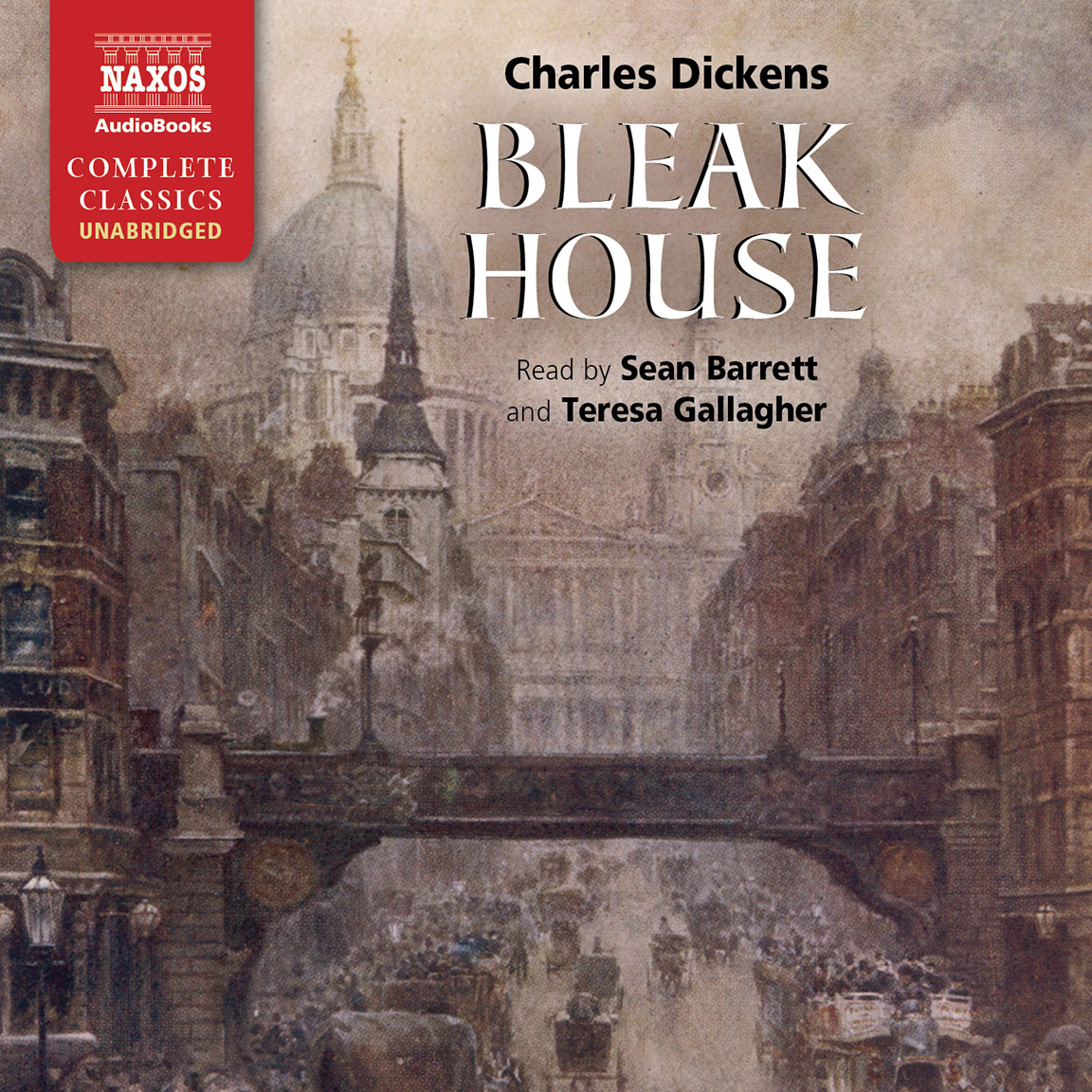

p. 444 "It may be something in the air--there is plenty in it--or it may be something in himself, that is in fault; but Mr Weevle, otherwise Jobling, is very ill at ease." That "plenty in it"--so funny. Jobling is the guy who had the "Galaxy Gallery of British Beauty" set of pictures, including Lady Dedlock, hanging up in his room. Another touch that seems ahead of its time.

p. 532 (Skimpole describing one of the family portraits) "There was a Sir Somebody Dedlock, with a battle, a sprung-mine, volumes of smoke, flashes of lightning, a town on fire, and a stormed fort, all in full action between his horse's two hind legs: showing, he supposed, how little a Dedlock made of such trifles."

p. 552 "Mr Carstone, you are represented by--." "You said just now--a rock." "Yes sir,' says Mr Vholes, gently shaking his head and rapping the hollow desk, with a sound as if ashes were falling on ashes, and dust on dust. 'a rock. That's something." Mr. Vholes is my favorite lawyer in the book. He's like Mr. Brontosaurus Burger from the Flintstones. Great self-control on the part of the author to hold him back until page 500, assuming he did not come up with him until that point, which may have happened.

p. 567 Sir Leicester's superannuated spinster cousin Volumnia, another inspired creation, commenting on local political trends. "Volumnia hastens to express her opinion that the shocking people ought to be tried as traitors, and made to support the Party."


p. 571 "Volumnia thinks it is really high time, you know, for somebody in power to step in and do something strong...'It is worthy of remark,' says Mr. Tulkinghorn, 'however, that these people are, in their way, very proud.' 'Proud?' Sir Leicester doubts his hearing.'"

p. 595 Skimpole, before he is revealed to be less inoffensive than he is at first presented to be. "Time is no object here. We never know what o'clock it is, and we never care. Not the way to get on in life, you'll tell me? Certainly. But we don't get on in life."

I know I am doing a lot of quotes for this one, but it's too amusing, and I would forget most of these if I didn't write up these notes.

p. 628 "The day begins to break now; and in truth it might be better for the national glory even that the sun should sometimes set upon the British dominions, than that it should ever rise upon so vile a wonder as Tom." Tom being here a wretched alley in London in the legal neighborhood, not a singular person.

My thoughts on Jarndyce--Why is he single? Why his excessive benevolence? Not a bad, and maybe a necessary character. Better than Woodcourt, who is just too good, in a way that does not contribute anything valuable to the story.

p. 747 "'It won't do to have truth and justice on his side; he must have law and lawyers,' exclaims the old girl, apparently persuaded that the latter form a separate establishment, and have dissolved partnership with truth and justice for ever and a day." I was hoping I had remembered to put in something from the old girl here. And her daughters Quebec and Malta, which are great names for girls. I would have been tempted to give my own daughters these names if I had read this at that time.
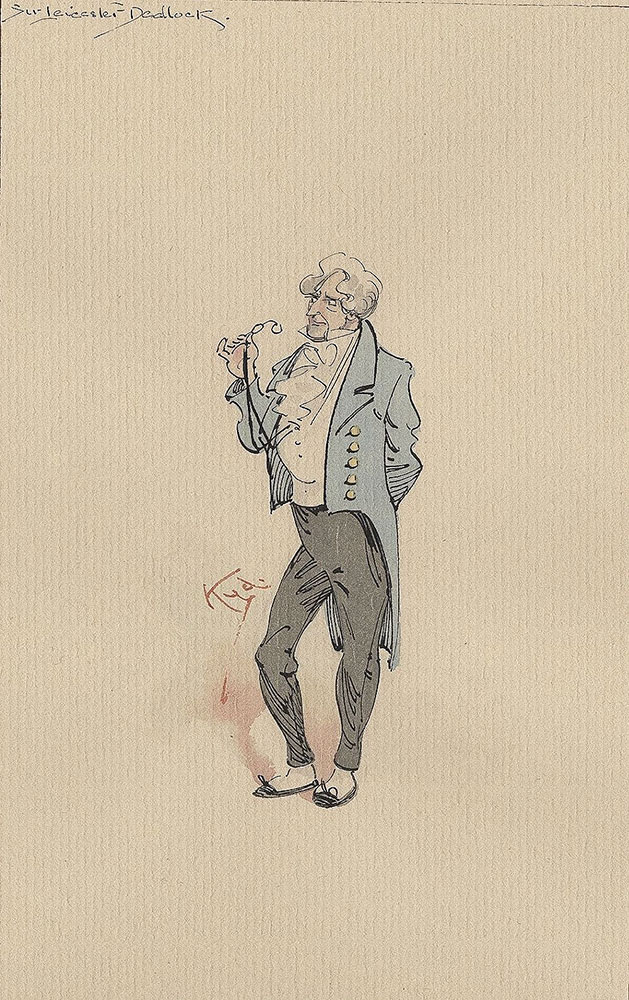


p. 777 (Refer to the photo at the bottom of the page, of an amusing page heading. I added this from my phone after I had typed up the rest of this page, and I couldn't get it to show up in this spot).

The plot felt like it was starting to wrap up with about 200 pages to go. It's a long denouement.

p. 796 "Volumnia, in her room up a retired landing on the staircase...is a prey to horrors of many kinds. Not last nor least among them, possibly, is a horror of what may befall her little income, in the event, as she expresses it, 'of anything happening' to Sir Leicester." Volumnia kills me.

p. 822 "I cannot use the expression that he looked old. There is a ruin of youth which is not like age; and into such a ruin Richard's youth and youthful beauty had all fallen away." Is this passage famous? I have certainly seen the idea expressed elsewhere. I like the image however.

p. 864 I made a note about the farewell when Esther encounters Caddy in the street and how this is always a poignant way to wrap up a book, saying a sort of good-bye to youth and one's youthful friends who were once so important but fade out of one's life, etc, but then Caddy turned up again a few pages later and it was implied that they continued to see each other all the time for the foreseeable future anyway.

Tomorrow is the 6th of the month, which is the day when I usually do my monthly update. I'll give more of a personal pandemic update at that time. I feel like I should have written more about this book, but really, everybody I would hope to be reaching either knows all about it or has at least seen the movie, and there isn't anything I am going to have to tell them. So I will leave it here and move on with the list (and towards the seven other Dickens books still remaining on it).


The Bourgeois Surrender Challenge

1. Bryan Stevenson--Just Mercy...……………………………………5,534
2. Bleak House (TV--2005)…………………………………………..3,351
3. The Village (movie--2004)…………………………………………1,277
4. Andrew Pollack & Max Eden--Why Meadow Died...………………..753
5. Alison Weir--The Princes in the Tower...……………………………321
6. James Canton--The Literature Book (DK)…………………………...186
7. Daniel Pool--What Jane Austen Ate & Charles Dickens Knew...…….183
8. Charles Dickens--Dombey & Son...…………………………………..161
9. Larry Chambers--Death in the A Shan Valley...……………………….81
10. John Seymour--The Complete Book of Self-Sufficiency...……………54
11. Vladimir Nabokov--Lectures on Literature...………………………..46
12. Sue Monk Kidd--The Book of Longings...…………………………...32
13. Madeleine L'Engle--The Moment of Tenderness.................................18
14. Jean Plaidy--A Favorite of the Queen..................................................13
15. Bleak House (TV--1985)......................................................................10
16. William Makepeace Thackeray--The Newcomes.................................10


Because the names (and consequently the keywords for the game) are so singular to Dickens, the searches in these contests land on a lot of books and movies related to him.


Round of 16
#16 Thackeray over #1 Stevenson
Invoking the rule that an IWE author always wins in the first round.


#15 Bleak House '85 over #2 Bleak House '05
Odd that these rival BBC productions, both of which are supposed to be pretty good, ended up battling in the first round. In such instances the tie traditionally goes to the older film.

#14 Plaidy over #3 The Village
#13 L'Engle over #4 Pollack & Eden
Why Meadow Died is about the Parkland School shooting, which I don't feel like reading a book about at present.

#5 Weir over #12 Kidd
These books seem fairly comparable to me. Weir has a little extra push in having an "upset" to use, though I don't know if this really counts as an upset.

#11 Nabokov over #6 Canton
#7 Pool over #10 Seymour
The losers in the last two rounds both present themselves as gimmick books, with a lot of boxed text, busy pages, and the like, which sort of thing I used to like but isn't what I am looking for at this point of my life.

#8 Dickens over #9 Chambers
I'm not really ready to take on another long Dickens book right away, but he's usually going to beat a Vietnam memoir in the first round.


Round of 8
#16 Thackeray over #5 Weir
#7 Pool over #15 Bleak House '85
#8 Dickens over #14 Plaidy
#13 L'Engle over #11 Nabokov
I would like to read the Nabokov lecture on Bleak House, at least. The book as a whole is rather long, however.


Final Four
#7 Pool over #16 Thackeray
I can't take on a (supposedly) 2nd tier Thackeray novel that is the same length as Bleak House.

#13 L'Engle over #8 Dickens
Same principle.


Championship
#13 L'Engle over #7 Pool
L'Engle wins by being the only attractive title in the competition that was also relatively short.


Tuesday, January 1, 2019

Anthony Trollope--Barsetshire Chronicles: The Warden (1855) and Barchester Towers (1857)


Somehow in the course of my more than three decade reading career I had never happened to read anything by Trollope, the favorite Victorian novelist of mildly sardonic middle-aged men throughout the English-speaking world, until now. Of these first two entries in the Barsetshire series, the IWE introduction states that "together they are considered the best work Trollope did." Conventional wisdom seems to further consider Barchester Towers to be the superior of the two, and it is more than twice as long and has naturally many of the same agreeable qualities as its predecessor. However I found that it ran out of steam somewhat in the last one hundred pages, something Trollope himself took two pages out of the narrative to lament at the beginning of Chapter LI:


"These leave-takings in novels are as disagreeable as they are in real life...Promises of two children and superhuman happiness are of no avail, nor assurance of extreme respectability carried to an age far exceeding that usually allotted to mortals...Do I not myself know that I am at this moment in want of a dozen pages, and that I am sick with cudgeling my brains to find them?"


The Warden, in contrast, coming in at just under 200 pages, struck me as a nearly perfectly executed novel. It is humorous and has numerous contrasting and interesting characters, an unusual plot full of constant unexpected twists and ironic turns right up to the very last page. Barchester Towers continues in the same vein for at least its first half, after which it falters somewhat in inventiveness and energy, and becomes on the whole a much more conventional book.


The IWE somewhat oddly singled out Mr. Harding, the 'warden' of the first volume, as "an excellent creation." While a more prominent and rounded character in The Warden than it its sequel, this character's role is really that of the ordinary retiring sort of man who wants to be comfortable and avoid conflict in his life contrasted against a gallery of much more strident and combative personalities. The imperious Dr. Grantly was my personal favorite character, and numerous of the other personages with highly developed egos possessed qualities that contributed to the general merriment of the books (as will be seen in the extensive excerpts below) in a way that Mr. Harding did not.


From the introduction to the Modern Library edition, written by A. Edward Newton of 501 N 19th Street in Philadelphia, the founder of the Trollope Society, on March 1, 1936:


"Men of my age do not laugh much or heartily...they have seen and known too much of the world."


I cannot find now, if it is to be found, the exact age of Mr. A. Edward Newton when he wrote this essay. He does not appear to be less than fifty years of age at least, however. As noted elsewhere the claim made in the quote above is not infrequent among Trollope's contemporary admirers. I myself do not laugh so much, though comparatively I have not seen so much of the world, and seem to know even less. I still like the books, however.


The Warden, Chap. III:


"The bishop did not whistle: we believe that they lose the power of doing so on being consecrated; and that in these days one might as easily meet a corrupt judge as a whistling bishop..."
Looks like Mr. Harding and Eleanor


Chap. V


"Many a man can fight his battle with good courage, but with a doubting conscience. Such was not the case with Dr. Grantly. He did not believe in the Gospel with more assurance than he did in the sacred justice of all ecclesiastical revenues."


Examples of the strain of humor to be found throughout this book.


Chap. VI


"...and Mrs. Goodenough, the red-faced rector's wife, pressing the warden's hand, declared she had never enjoyed herself better; which showed how little pleasure she allowed herself in this world, as she had sat the whole evening through in the same chair without occupation, not speaking, and unspoken to."


Chap. VII


"They say that faint heart never won fair lady; and it is amazing to me how fair ladies are won, so faint are often men's hearts!"


This is England (a romantic country).


Article in the influential newspaper The Jupiter:


"We must express an opinion that nowhere but in the Church of England, and only there among its priests, could such a state of moral indifference be found."


This prompted me to note at this point that "This book is too funny."


Chap. XVIII


"A clergyman generally dislikes to be met in argument by any scriptural quotation; he feels as affronted as a doctor does, when recommended by an old woman to take some favourite dose, or as a lawyer when an unprofessional man attempts to put him down by a quibble."


Mr. Popular Sentiment is a pretty good spoof on Dickens.


Chap. XIX


"If you owe me nothing', and the archdeacon looked as though he thought a great deal were due to him, 'at least you owe so much to my father."


Chap. XX


"And here we must take leave of Archdeacon Grantly. We fear that he is represented in these pages as being worse than he is; but we have had to do with his foibles, and not with his virtues."


Now into the Barchester Towers Chapter II:


"Some few years since, even within the memory of many who are not yet willing to call themselves old, a liberal clergymen was a person not frequently to be met. Sydney Smith was such, and was looked on as little better than an infidel."


Chap. III


"Mrs. Proudie determined that her husband's equipage should not shame her, and things on which Mrs. Proudie resolved, were generally accomplished."
This is the first hit in a search for "anthony trollope sexy"


"It is not my intention to breathe a word against the character of Mrs. Proudie, but still I cannot think that with all her virtues she adds much to her husband's happiness...All hope of defending himself has passed from him; indeed he rarely even attempts self-justification; and is aware that submission produces the nearest approach to peace which his own house can ever attain."


Chap. VI


"There is, perhaps, no greater hardship at present inflicted on mankind in civilised and free countries, than the necessity of listening to sermons...Let a professor of law or physic find his place in a lecture-room and there pour forth jejune words and useless empty phrases and he will pour them forth to empty benches...A member of Parliament can be coughed down or counted out...But no one can rid himself of the preaching clergyman."


Chap. VII


"Doubting himself was Mr. Harding's weakness. It is not, however, the usual fault of his order."
All of these snippets are things I laughed at within the context of the story. I found this book entertaining and a welcome addition to the universe of the Victorian English novel such as it is constructed in my mind, but I do not have very much to say about it.


"Among these Mr. Quiverful, the rector of Puddingdale, whose wife still continued to present him from year to year with fresh pledges of her love, and so to increase his cares and, it is to be hoped, his happiness equally."


Mr. Quiverful had fourteen children. He belonged to that category of men who was overwhelmed by the results of his fecundity rather than a forceful director of it.


Chap. IX


"The Stanhopes would visit you in your sickness (provided it were not contagious), would bring you oranges, French novels, and the last new bit of scandal, and then hear of your death or your recovery with an equally indifferent composure."


I sometimes wonder whether my own children aren't going the way of the Stanhopes in some areas.


Chap. X


"He felt that if he intended to disapprove, it must be now or never; but he also felt that it could not be now."


Chap. XI


"German professors!' groaned out the chancellor, as though his nervous system had received a shock which nothing but a week of Oxford air could cure."


"I was a Jew once myself', began Bertie."


I laughed for five minutes at this line.


Chap. XIII Too fitting for me to let pass by.


"A man is sufficiently condemned if it can only be shown that either in politics or religion he does not belong to some new school established within the last score of years. He may then regard himself as rubbish and expect to be carted away. A man is nothing now unless he has within him a full appreciation of the new era; an era in which it would seem that neither honesty nor truth is very desirable, but in which success is the only touchstone of merit. We must laugh at everything that is established."


"It is very easy to talk of repentance; but a man has to walk over hot ploughshares before he can complete it; to be skinned alive as was St. Bartholomew; to be stuck full of arrows as was St. Sebastian; to lie broiling on a gridiron like St. Lorenzo!"


Chap XIV This is my favorite passage/quote in the whole book.


"Mr. Harding did not like being called lily-livered, and was rather inclined to resent it. 'I doubt there is any true courage,' said he, 'in squabbling for money." "If honest men did not squabble for money, in this wicked world of ours, the dishonest men would get it all; and I do not see that the cause of virtue would be much  improved."


Chap. XIX


"They habitually looked on the sunny side of the wall, if there was a gleam on either side for them to look at; and, if there was none, they endured the shade with an indifference which, if not stoical, answered the end at which the Stoics aimed."


Chap. XXX (trying to move things along a little)


"How easily would she have forgiven and forgotten the archdeacon's suspicions had she but heard the whole truth from Mr. Arabin. But then where would have been my novel?"


Chap. XXXIII


"In truth, Mrs. Proudie was all but invincible; had she married Petruchio, it may be doubted whether that arch wife-tamer would have been able to keep her legs out of those garments which are presumed by men to be peculiarly unfitted for feminine use."


Chap. XXXV


"The quality, as the upper classes in rural districts are designated by the lower with so much true discrimination, were to eat a breakfast, and the non-quality were to eat a dinner...a subsidiary board was to be spread sub dio for the accommodation of the lower class of yokels..."


Chap. XXXVII


"Wise people, when they are in the wrong, always put themselves right by finding fault with the people against whom they have sinned. Lady De Courcy was a wise woman; and therefore, having treated Miss Thorne very badly by staying away till three o'clock, she assumed the offensive and attacked Mr. Thorne's roads."


Chap. XLIII


"People when they get their income doubled usually think that those through whose instrumentality this little ceremony is performed are right at bottom."


All right, that is enough. Thanks for the memories, Trollope. You don't appear again on the IWE list and the GRE test book seems to ignore you altogether, so it is possible our paths will never cross again, though I hope that by some mechanism they shall.


The Bourgeois Surrender Challenge


Some very weird entries in this Challenge.


1. Jennifer Nielsen--A Night Divided...........................................................245
2. Daniel Pool--What Jane Austen Ate and Charles Dickens Knew............163
3. Robert Gates--A Passion For Leadership................................................136
4. F. Scott Fitzgerald--Short Stories...............................................................68
5. Fyodor Dostoevsky--The Possessed...........................................................56
6. Anthony Trollope--The Last Chronicle of Dorset......................................39
7. Eugene Pogany--In My Brother's Image....................................................30
8. Mary Elizabeth Braddon--Run to Earth......................................................14
9. Will Self--Shark..........................................................................................11
10. The Whole Family: A Novel by Twelve Authors.........................................7
11. Ireland & the British Empire (ed. Kenny)..................................................2
12. The Trollope Critics (ed. Hall)....................................................................1
13. Dr Heinrich Graetze--Influence of Judaism on the Protestant Reformation.0
14. Walter Besant--London...............................................................................0
15. James Peebles--Compulsory Vaccination: A Menace to Personal Liberty..0
16. John Keefe--Exploring Careers in the Sun Belt...........................................0
17. R. D. McMaster--Trollope & the Law..........................................................0
18. Harold Bloom--The Victorian Novel............................................................0


Qualifying Round


#18 Bloom over #15 Peebles


The Peebles book, though doubtless spectacular, is not in wide circulation.


#16 Keefe over #17 McMaster


The unavailability of either book and the lackluster interest I have in McMaster's subject matter allows the higher seed to advance here. \


Round of 16


#1 Nielsen over #18 Bloom


Nielsen is a children's book about the Berlin Wall. I changed my mind after initially giving Bloom a close victory.


#2 Pool over #16 Keefe
#3 Gates over #14 Besant


No library representation for Besant.


#4 Fitzgerald over #13 Graetze
#5 Dostoevsky over #12 The Trollope Critics
#6 Trollope over #11 Ireland and the British Empire
#7 Pogany over #10 The Whole Family
#9 Self over #8 Braddon


Final 8
#9 Self over #1 Nielsen
#2 Pool over #7 Pogany


Pogany is a lot shorter, but it isn't available at my library and it's a Holocaust-themed book. I wimped out on it at the last minute.


#6 Trollope over #3 Gates
#4 Fitzgerald over #5 Dostoevsky


My particular mood at the time of the match, nothing more. Fitzgerald has appeared several times in the tournament without winning.


Final 4


#9 Self over #2 Pool


While the Pool deserves a run, it doesn't deserve a run all the way to the final.


#4 Fitzgerald over #6 Trollope


I didn't want to read the 6th and final book of the Barsetshire Chronicles without having read #s 3, 4 and 5 if I can help it.


Championship
#9 Self over #4 Fitzgerald
Self is a contemporary writer of some repute. A specific edition of Fitzgerald's stories was not denoted for the competition, a complete collection runs upwards of 700 pages, and I often have occasion to read some of his stories in my other systems, so I am going to give the Self book a try.


Thursday, September 21, 2017

Elizabeth Barrett Browning--Aurora Leigh (1856)


A week ago, as I began to try to organize this report, I was overcome, as I frequently am, for several days with one of the stronger instances I have yet had of the futility of all of these pursuits (i.e. reading, though this could be expanded to any area of study or investigation usually thought of as requiring intellect), seeing as, as I have frequently noted, they have long ceased to lead to any noticeable improvement in either my thinking or personality. This aside however, I think the real problem is that I am no longer in regular contact with anyone who lives any kind of intellectual-artistic life even semi-professionally, which turns all of it into something remote and unreal, a sort of play-acting. I was brought somewhat out of this mood by watching several of the extra features on the Criterion Collection DVD of Robert Bresson's 1983 movie, L'Argent, which happened to be his last film. As a side note I had somehow never heard of Bresson until I was out of college, even though I later found out that he was well-loved there and one of the professors gave a lecture or published something serious on the subject of his films. Anyway the special features included a half-hour Q & A session featuring the aged director at the 1983 Cannes Film Festival, as well as a very well done video essay of about 45 minutes titled "Bresson A to Z" which explores some of the recurrent themes in his work, such as "doors", "hands", "ellipsis", etc, in an illuminating manner. The Q & A (with a nearly entirely French audience; the moderator translated all of the questions into English but none of the participants appears to be an English speaker) is notable mainly because Bresson is largely dismissive of the pedestrian questions that are posed to him, either by returning with a question of his own as to what the other person means as if he had said nothing at all, or if a supposition is included in the question ("There is no hope at the end of the film...") he will counter that of course the exact opposite is true. The French audience is comfortable with this sort of thing, indeed they seem to expect and enjoy it, they don't have the expectation that the great man is going to engage with them on their own everyday level, and indeed in the presence of someone like Bresson the great artists, Tolstoy, Dostoevsky, Bach, Mozart, various 18th century painters, etc, come alive and are important again as they were when I was a student, the way they could always be I sense if I had found the right working or social path. But I rarely have the kind of encounters anymore that bring me back to that state of mind.


Despite including the book among its "Library of Literary Treasures" the IWE introduction is fairly lukewarm. "It has been criticized as much too long," they say, "and it is very long; and also the good poetry is often lost between unadorned narrative that should be in prose and is forced into metrical verses." I felt something of this, though given that I am largely out of the practice of reading long stretches of blank verse and often found myself getting tired quickly unless I had just awakened from a nap, I thought it might just be me. The versification and poetic sensibility are legitimately strong for the most part, and easily justify the use of the form. The story is both slight and implausible, and while it is not what one would specifically read the poem for, it does put an unnecessary strain on the verses at times.

I am going to try not to copy too many verses here since they don't make for exciting blog posts, but I always want to note a couple of samples to remember the books by. There were several passages of a feminist nature, decrying the expectations for a woman's life in Victorian England, the regard in which their intellectual and artistic abilities were generally held, etc, but there wasn't any brief set of lines on those topics that I especially liked. I do like her descriptions of the English landscape, indeed I admired these in several places.

(Book I, ll. 1079-84)

"And view the ground's most gentle dimplement,
(As if God's finger did not touch but press
In making England) such an up and down
Of verdure,--nothing too much up or down,
A ripple of land; such little hills, the sky
Can stoop to tenderly and the wheatfields climb;"

(II, 109-114) Aurora, defending her desire to write poetry to a skeptical man (and her eventual husband)

"...I perceive
The headache is too noble for my sex.
You think the heartache would sound decenter,
Since that's the woman's special, proper ache,
And altogether tolerable, except
To a woman."

(II, 218-25) The men in this time were of course pretty scornful of women's claims to any kind of cerebral equality or even pretension. In any event they would always have their say.

"Therefore this same world
Uncomprehended by you, must remain
Uninfluenced by you.--Women as you are,
Mere women, personal and passionate,
You give us doating mothers, and perfect wives,
Sublime Madonnas, and enduring saints!
We get no Christ from you,--and verily
We shall not get a poet, in my mind."


(II, 901-7) Back to some more sublime nature poetry

"The hidden farms among the hills breathed straight
Their smoke toward heaven, the lime-tree scarcely stirred
Beneath the blue weight of the cloudless sky,
Though still the July air came floating through
The woodbine at my window, in and out,
With touches of the outdoor country-news
for a bending forehead."

(II, 991)

"Dear Romney, need we chronicle the pence?"

I regarded this as a humorous example of the author's poetic sensibility.

(III, 161-2)

"Three years I lived and worked. Get leave to work
In this world--'tis the best you get at all."

Evidence of the Carlyle influence. I should note that the poem does engage at some length with the horrible conditions of the working poor and the outright indigent, and with socialistic ideas.

(IV, 434-6)

"How strange his good-night sounded,--like good-night
Beside a deathbed, where the morrow's sun
Is sure to come too late for more good-days:"

I like these three little lines. Only a few more to go.

(VII, 224-7)

"The world's male chivalry has perished out,
But women are knights-errant to the last:
And if Cervantes had been Shakspeare too,
He had made his Don a Donna."

(VII, 1211-14) Sadly this applies all too fittingly to me

"...I marvel, people choose
To stand stock-still like fakirs, till the moss
Grows on them, and they cry out, self-admired,
`How verdant, and how virtuous!'"


I read this modern Norton Critical Edition of the book, since the only older hardback copies of it I could find were from the actual 1800s, which don't make for good reading copies. I do like the layout and the notes in the Norton Books, I have owned both their English and American literature anthologies for 20 years and always go to them first for poems especially if they have what I need. I must confess though when I got to the end I didn't have it in me to read through any of the 200 plus pages of critical essays.

(VIII, 677-79)

"Because the First has proved inadequate,
However we talk bigly of His work,
And piously of His person."

Is the president vindicated by the appearance of a word he was ridiculed for using in the work of a fairly major poet?

(VIII, 829-32) The perception of women having a "talking versus doing" problem when it comes to achieving great accomplishments. Some are insistent that this remains the case today, though I cannot claim to hold this opinion with any confidence.

"By speaking we prove only we can speak,
Which he, the man here, never doubted. What
He doubts is, whether we can do the thing
With decent grace we've not yet done at all."

That is enough, I think. 


The Challenge

After a string of lackluster challenges, the recap of this poem produced a large and varied field of contenders, with the qualifying cutoff at a fairly high 45. Among the interesting and notable books that failed to even make the tournament were Flush by Virginia Woolf (36), Eve's Hollywood by Eve Babitz (23), and Gigi by Colette (a mere 10).

1, Erin Morgenstern--The Night Circus.......................................................................6,120
2. Jim Butcher--Skin Game..........................................................................................3,610
3. Jim Butcher--The Aeronaut's Windlass....................................................................1,604
4. Tan Twan Eng--The Gift of Rain.................................................................................751
5. Jim Butcher--Furies of Calderon.................................................................................659
6. Sinclair Lewis--It Can't Happen Here.........................................................................620
7. Lisa Jacobsen--100 Ways to Love Your Husband........................................................340
8. Karl Rove--Courage and Consequence.......................................................................256
9. Willard (movie--2003).................................................................................................193
10. Charlaine Harris--Bone to Pick..................................................................................174
11. Matthew L. Jacobsen--100 Ways to Love Your Wife...................................................155
12. Charlaine Harris--Last Scene Alive............................................................................119
13. T. S. Eliot--The Love Song of J Alfred Prufrock..........................................................83
14. Elizabeth Barrett Browning--Sonnets From the Portuguese........................................53
15. James Robert Parish--It's Good to be the King.............................................................50
16. Casese Quien Pueda (movie)........................................................................................45

Round of 16

#16 Casese Quien Pueda over #1 Morgenstern

I had missed the publication and apparent success of this runaway #1 seed, which dates to 2010. Normally such a book would easily be able to put away a movie, even a sexy-looking foreign one like Casese Quien Pueda appears to be, but the film had an upset allotted to it, which it takes here.

#15 Parish over #2 Butcher

The Parish book is a biography of Mel Brooks. I don't know who Jim Butcher is, but he appears to be some kind of science fiction/adventure writer, which sort of thing I have not found to my taste.

#14 Barrett Browning over #3 Butcher

While I am not sure I am ready for more Elizabeth Barrett Browning right away, she has to get the win here.

#4 Eng over #13 Eliot


Not that I don't love Prufrock, which I have of course read several times, and even recall a few classic lines from, but the Eng looks something like a worthy book and the challenge is supposed to be to some extent a departure from my comfort zone (though the classics are still allowed to win over books I really don't want to read).

#12 Harris over #5 Butcher

Both genre books. Harris is 200 pages shorter.

#6 Lewis over #11 M. Jacobsen

It Can't Happen Here seems to be the Lewis book that it most read nowadays, due to its popular subject matter, though my impression is that it was not considered one of his major works in his lifetime. I wrote admiringly about Arrowsmith here a few months back. Jacobsen, in addition to tallying less than half as many points as his wife for his mushy self-help book, is not acknowledged as a legitimate author by the library community, as not one of these institutions carries a copy of his book.

#10 Harris over #7 L. Jacobsen

Same story for the other Jacobsen.

#8 Rove over #9 Willard

I know, giving a win to Karl Rove is difficult, but I must try to set personal feelings of a non-literary nature aside in running this competition. Willard is a strange-looking movie starring the famous eccentric Crispin Glover, who since his famous turn as McFly in the original Back to the Future movie, has sworn off taking roles in anything that would be appealing to normal people.


Elite 8

#4 Eng over #16 Casese Quien Pueda

#15 Parish over #6 Lewis

The Lewis book is rather long for a Challenge book (458 pages).

#14 Barrett Browning over #8 Rove

#10 Harris (Bone to Pick) over #12 Harris (Last Scene Alive)

Final Four

#15 Parish over #4 Eng

Eng is also a little longer than is ideal for this competition (435 pages).

#10 Harris over #14 Barrett Browning

While it's another matchup EBB should have handled easily, she falls victim to the upset curse.


Championship

#10 Harris over #15 Parish

Controversial, and a mystery about a female librarian is not my usual fare. However it has a lot of momentum in the tournament, it is pretty short, and I think I am at a spot in the program where it wouldn't hurt to stick in a lighter reading for a couple of weeks to sharpen my concentration on the literature I am still taking on elsewhere.


Friday, January 24, 2014

George Eliot--Adam Bede (1859)

So it took a little less than two months to re-read this at my necessarily deliberate pace. I was aiming for six weeks, but I had the stomach flu for a while, there was the Christmas season, I had to go camping. There were doubtless other distractions as well. Anyway, I enjoyed the book about as well as I did on the earlier occasion when I read it, in 2000-2001, though I was a little more attentive to its deficiencies this time, and the gap in quality between it and the other two George Eliot books I have read (Middlemarch and The Mill on the Floss) seemed larger than it did thirteen years ago. As I often note, even at age 30-31 I was still much more impressionable than I am now. I recognized on that reading many of the characteristic George Eliot qualities, particularly of detail of description and psychological investigation, that I admired in those other books, and that was good enough for me at the time. I rarely find anything as good now as I did when I was younger. I have also been beaten down over the years by my failure to maintain connections to and friendships with vital and capable people who have a strong literary education, as well as the constant overexposure to the general negativity towards literary study that is predominant in much of the remainder of society, or if not that, the negativity about the ability of people like me to get anything of value out of them, that is predominant among the people presiding over our dying humanities departments and literary magazines. But while my critical guard is perhaps more raised, I still derived no small pleasure from the exercise, except for one night just before Christmas when I was too depressed to read anything and determined to get rid of all of my books once for all. However, the next day I haltingly took up the book  one final time to confirm my determination to break myself of the habit and worked through a chapter. It did not restore my spirits entirely, but I had to confess that I at least felt a little like myself, or what I imagine myself to be (the sort of person who reads Victorian novels as if it were entirely natural and served a real purpose in life), and that there was perhaps value in that. Within a couple of days I was reading more or less in my normal way again, and held off on giving up the project for the time being, though I am still not ruling out taking this step in the future if I can convince myself that it would be beneficial to me to do so. I accept that it will probably never happen however.


The modern criticisms of Adam Bede are I think pretty consistent--the main characters are not compelling, and Adam Bede himself is especially wooden. There are several excellent minor characters whose appearances supply the best parts of the book--Bartle Massey, Mrs Poyser, Reverend Irwine. The young squire (Donnithorne) is about half well drawn--the parts where the laziness of his mind and the non-development of his will and character are depicted are good descriptions of what those states of mind are like in a young man who should have been more attentive to correcting these faults in the course of his education. But there is not much else to him, and he essentially disappears from the last half of the book.

Adam Bede's brother Seth seemed a decent enough fellow who deserved a little better treatment from his creator. I know women--even George Eliot, in some instances, betrays characteristics of the stereotypical feminine mind-- cannot help regarding any man who is not in the front rank of his particular society as pitiful and substantially without sex, but poor Seth not only has to endure his mother's blatant preference for his brother (accompanied with constant assertions of his own inferiority, which is more a matter of his brother's extreme forcefulness of personality rather than his own shortcomings, either moral or in general ability), but is reduced to having to joyfully endorse his brother's marriage to the woman who had previously rejected his own proposals and swore she could never consider marrying anyone, and even when the book wraps up with an update on what everyone is doing eight years later he is still living, presumably as a virgin, with his mother and happily playing the role of the fun-loving uncle to the children of his brother and the woman he was formerly infatuated with. George, you couldn't have managed to throw him a nice and dutiful, if somewhat boring girl from the village to warm his youthful bed and keep house for him? Brutal.


Apparently there is a TV Movie of Adam Bede.

The IWE's introductory box for Adam Bede notes that 'The novel is quite short and partly for that reason has long been a school favorite'. Huh? The edition I read (a modern Everyman's Library) was 613 pages. I have another copy, part of an incomplete set of the collected works of George Eliot from around 1900, that is 544 pages. I guess they really did use to read a lot more in school. Actually, I wonder if whoever it was that submitted this for consideration on the list and wrote the plot summary was not thinking of an abridged edition. I noticed that the plot summary given in the encyclopedia left out a considerable chunk of the middle to three-fourths part of the book, and the summaries of these books in this encyclopedia are usually pretty thorough. Two editions are noted in the introduction--the Pocket Library, which my researches tell me clocked in at 529 pages, and the Rinehart Edition (551). I think somebody was confusing this with Silas Marner, which I believe actually is short and is read (or used to be read) in school in part for that reason. Of course schools used to rather famously make kids read The Mill on the Floss, which is not short either. I have never met anyone who had to read it in school who doesn't consider it the most boring book of all time, though I thought it was quite good, much to my surprise after a lifetime of hearing it trashed by reasonably intelligent people.


The Challenge

I've decided to tweak the challenge, since there was a flaw in the old system which favored books that had achieved a high rating based on a handful of reviews, or even one review. I decided to experiment with just choosing the book that had the most reviews total, which seemed more likely to produce the kind of winners I am looking for, popular books tending towards the more contemporary which I likely had some interest in reading anyway. If this results in a Jodi Picoult book winning, I do still have the option of declining the challenge. If a Jodi Picoult book wins more than 50% of the time, I will have to revamp the system again. Here is the Adam Bede list, with the number being the total of reviews the book has received on Amazon.com:

1. Quiet: The Power of Introverts in a World That Can't Stop Talking--Susan Cain.....1,916
2. Zen & the Art of Motorcycle Maintenance--Robert Pirsig.............................................893
3. The Lowland--Jumpha Lahiri..........................................................................................549
4. Plenty--Yotam Ottolenghi...............................................................................................365
5. Love Amid the Ashes--Mesu Andrews............................................................................151
6. Vegetable Literacy--Deborah Madison...........................................................................111
7. Hotel du Lac--Anita Brookner...........................................................................................83
8. Everyday Food Light--Martha Stewart Living Magazine....................................................54
9. The Geography of Love--Glenda Burgess.........................................................................21
10. Balaboosta--Einat Admony..............................................................................................18
      Salad For Dinner--Jeanne Kelley.....................................................................................18
12. The Common Reader--Virginia Woolf...............................................................................6
      Out of Their League--Dave Meggyesy..............................................................................6
14. World's Best Ciders--Pete Brown & Bill Bradshaw............................................................2


There were no books that received no reviews.

This was a slightly shocking result, as I had never heard of the Cain book, which is apparently quite popular. I had thought for sure that Zen, which I have never read, would be the winner, and I was planning to go ahead and accept. I was going to accept the Cain book as well. It is only 277 pages of text, and looks to me to be one of those pop psychology books you can wolf down in little more than an hour. My library has three copies of it, all of which, however, are currently checked out. I don't want to wait around for two weeks or whatever, so I will move on to the next encyclopedia selection & perhaps I will come back to Quiet at some time in the future. I have not looked too far ahead on the list, but the next six selections at least look to be short (300 pages or less): a play, a poem, a child's book, a political philosophy treatise, and a couple of short novels. So I should be able to made some headway on the list here.


Bestselling Author Susan Cain (1968--    ) Education: Princeton Class of '89, Harvard Law Class of'93. Worked as a Wall Street Lawyer & Negotiations Consultant before becoming a writer.

Since one of the keywords in one of the media generating exercises was "Dinah", there was an LP showdown between Dinah Shore and Dinah Washington. More surprising results:

1. Dinah Sings, Previn Plays--Dinah Shore...............................19
2. Everybody Loves Me--Dinah Shore.......................................10
    For Those in Love--Dinah Washington...................................10
    Unforgettable Dinah Washington.........................................10
5. Mad About the Boy--Dinah Washington...................................7
6. Dinah '62--Dinah Washington...................................................5
7. Dinah Washington Sings Fats Waller......................................1
    In Love--Dinah Washington.......................................................1
    Love Songs--Dinah Shore.........................................................1


Two albums got no reviews, both by Dinah Washington, The Queen, & Somebody Loves Me: The Very Best of Dinah Washington Volume 2. 

I don't know much about Dinah Washington, though I thought she was something of a legend. This status doesn't translate into a lot of commentaries about her records, apparently.

I don't really have a system as far as the records go. I'm curious to see what comes up, if it's anything I would like.


Tuesday, August 7, 2012

George Eliot


The George Eliot titles selected for the NIE World's Greatest Literature canon were Adam Bede, The Mill on the Floss, and Silas Marner, published in back-to-back-to-back years (1859-60-61) when the author was 40, 41 & 42 years old, right at the peak age for writers I have frequently identified (ed.--and which I am passing through right now, this being of interest to myself as I had long anticipated that the years 2010-2012 would mark the pinnacle both of my mental vitality and my career. This did not prove to be the case).  Middlemarch, which appeared a decade after these books and at present seems to be almost unanimously accepted as George Eliot's masterpiece (including by me) was not chosen for this 1958 list, which was aimed at adolescents (and perhaps literary adolescents of all ages), and maybe the travails of Causabon and Dorothea and Fred Vincy and Will Ladislaw was a little too relentlessly mature and serious; or, as seems more likely to me, the literary world at the time was for various reasons unable to appreciate its outstanding and substantial qualities with an enthusiasm equivalent to ours. Many critical assessments of George Eliot from the 1920-1960 period, while they acknowledge her importance, especially in her own time, express at best a lukewarm affection towards her work. She was frequently tarred by the damning label 'sentimental' which may have been a more distasteful term among the literati at that time than it is today (because I think we affect a repulsion that they really felt) . Apart from some of her endings, which, at least in her earlier efforts, was probably her weakest point as a writer, she does not I think immediately strike the modern reader, who has come of age in a culture nearly drowned in treacle, as particularly given over to sentiment, though I suppose I can see what these of our forebears in reading were getting at.         


My personal, and somewhat spare George Eliot library, consisting of two 90s era Penguins, a 90s Modern Library, and turn-of-the-21st century Everyman's. The hardcover Middlemarch is my wife's. It was a St John's book in our era at least, hence the two copies. These are the only three George Eliot books I have read, though Silas Marner at least is on the reading list I have been following since 1994, assuming I live long enough to get to it. There will have been a long lacuna between George Eliot books, as I read the others within a fairly close time:

Mill on the Floss: started September 16, 1995
Middlemarch: March, 1993, in school, finished about half; started again May 26,1998
Adam Bede: December 30, 2000

George Eliot seems to be obviously one of the greatest novelists of all time, yet traditionally this has not always been acknowledged with what is called real feeling. The Mill on the Floss and Silas Marner especially were required school readings for many years and developed the reputation among nearly everyone who was not an overeager English major as the sine qua non of boring literature. This impression was so ingrained in me that I was really quite surprised when I took up The Mill on the Floss myself that it was not merely readable but one of the most moving and deeply conceived novels, apart from the ending, that I had ever read. It is very much like a mini-Middlemarch, the protagonist and many of the major characters being children and young people, and the limitations of their activities and concerns which that necessitates, but the detail and expansiveness within the confines of the story and the fine rendering of a very precise literary world are in common with the other book. Adam Bede partakes of these same excellencies of literary technique and vision. I would rank it slightly behind the other two because its characters are not as interesting or humorous, though they are drawn with no less care and detail than those in the other books. 19th century rural England must in general rate among the more vivid and familiar of all literary locales, though I am aware that its character differs according to author, time period, region, and so forth, i.e. Hardy, Emily Bronte, D.H. Lawrence and so on; but George Eliot may be the single most important figure in bestowing upon the Victorian Middle England countryside its essential immortal character. I think so at least.

The NIE editor(s), in the very brief introduction to Adam Bede such as accompanies all the plot summaries in the collection, appeared not to have read the book any time recently, as he describes it as "quite short". Say what? The Everyman's edition above runs 613 pages. And it is not big type.

For Silas Marner, our guide advises, "One should not avoid reading it even if his school permits him to."

George Eliot was born in a house called South Farm on the Arbury Estate, two miles SW of Nuneaton in Warwickshire. The house appears to still stand. It is not clear to me whether it is ever open to the public or not. The doors of the main Arbury Hall, or some of them, look as if they are thrown open on bank holiday weekends in summer. Nuneaton, which seems to have been village in George's day, is now a large suburb of 70,000 nine miles from Coventry and twenty from Birmingham. Griff House, where she lived for most of her first 21 years, also still stands. It  now houses a hotel and tavern. The Nuneaton Museum and Art Gallery, if nothing else, has a collection of some George Eliot memorabilia.  


George Eliot was buried in the east section of Highgate Cemetery, somewhat celebrated as a decently-preserved patch of Victoriana, in Highgate, London. These photos and the ticket stub below are from my visit of September 8, 1996.


There is a statue of George Eliot in the center of Nuneaton, and a separate garden and obelisk in the same city. I offered some views on why it is worthwhile to seek out memorial statuary in the William Faulkner article. She is also commemorated by a stone in Westminster Abbey.


The neighborhood of Highgate in 1996 at least still looked recognizably like what a person whose ideas of London are mainly derived from reading novels of the 1920s and 30s would expect it to look like. Brick walls, leafy squares closed in by cast iron fences, long vistas of Edwardian era housefronts, quiet. But it was a long time ago, and my memory may be deceiving me. Probably most people of intellect would have found numerous things about it that repulsed them, but sentiment obviously is too strong in me. Since nothing interesting ever happens to me wherever I go I find a great pleasure in feeling like I could be in the setting of one of the kinds of books I like, where something important at least happened in someone's imagination at one time. This is what life gets reduced to when you lack the capacity to be one of the people pushing it forward.


I don't have any idea what this film version of Mill on the Floss is. It does not appear to be the 1937 British effort whose cast included James Mason as Tom Tulliver. The various modern versions are probably better (I see one of them starred Emily Watson, whom I like, sometimes as maybe more than just a friend, as Maggie) than this, but there is a kind of literate irreverence in these older adaptations that is amusing in small doses.