Showing posts with label Shakespeare. Show all posts

Thursday, December 6, 2018

December 2018

A List: Shakespeare--Richard II............................................................5/32
B List: Trollope--Barsetshire Chronicles: Barchester Towers.......597/746
C List: Bill Bryson--I'm a Stranger Here Myself..............................14/288


Richard II is the 3rd of a run of Shakespeare plays--the other 2 being Henry VI Part 1 and Troilus and Cressida--that had not managed to come up on the A list yet. I have recorded somewhere how many of the Shakespeare plays I have read at one time or another--some of the lesser known ones that I have only read once I have trouble remembering whether I have or not--but I got very busy this week, one of my cars had to go into the shop, etc, so I didn't get around to looking up how many of them I have marked down. I think around 2/3rds of the 37, or is it 38? As with most things, even great ones, I have periods in my life where the greatness of Shakespeare reveals itself more readily and is more important to my daily life and the firing of my imaginative faculties than it is at other times. I am not in one of those special times currently. I hope I have a couple more such epochs left in me.


I am probably in close to the ideal frame of mind for taking on Trollope, but I will expand on this in the big essay that I'll do when I finish the book.


Obviously I have just started the Bryson book, which was published in 1999 and seems to be a series of humorous vignettes around his return to the United States (actually Hanover, New Hampshire, which is a fine town but about as unrepresentative of the real United States as you can get) after 20 years abroad. Some of my impressions 14 pages in are as follows:


1. Though the book is less than 20 years old the world depicted in it is so dated as to be almost comical. We've already been treated to five pages on the wonders of the postal service, and a letter from England that made it to his house despite being addressed merely "New Hampshire, somewhere in America". Then there was a reminiscence about coming home from the pub in England and watching 90 minute science programs on television before going to bed. Basically this looks like it is going to be chock full of activities, jobs, cultural habits, that died within about five years of this book's publication.


2. It is unbelievable that within living memory--heck, my own early adulthood--people could apparently make upper middle class incomes writing, well, I don't know, stuff like what I've just described, and have fabulous overall careers. This guy Bryson in his heyday sold voluminous numbers of books (5.9 million in the 2000s alone!), made many TV appearances, gave lecture tours, was the chancellor of Durham University. I know people will say a person like me has no idea how difficult it is to be a professional writer who has to turn out regular work on a deadline and how serious this is and all right, fine. Even so, this guy has to get up every day and think, whew, I lucked out in the timing of my career. But maybe he doesn't.


3. I feel like this "I left America for x number of years and boy did things change a lot" theme was a popular one in the late 90s that has kind of gone away. Does anybody at the educated level of society really leave anywhere and not return for years on end anymore? Is it really possible to "get away" the way it used to be in the modern overconnected world?


...I too am on a deadline for this one monthly post and my time is up now.


This guy will not be stopped.

Thursday, July 6, 2017

William Shakespeare--As You Like It (1599)


The journey of the List returns, as it will periodically throughout its wending, to Shakespeare, by far the most frequently appearing author on it, and his universally well-known but perhaps only sporadically well-understood plays. I find as a middle-aged man of no particular distinction or status that it is hard to make a claim on Shakespeare and his art as anything having much to do with me. If it did, after all, shouldn't I be better? Much better? Wittier, more economically productive, more energetic, more generally competent, more able to at least contend with the government and corporations among a million other things? That is the world in which Shakespeare moves, or would seem to lead to if he is all that he is said to be. Yet I have reached a point where I can barely read him. I mean I can still read him, but not at leisure, often not without being so tired that I dose off or lose the thread of where I am, not so that I can become so immersed in the stories that ideas about them occur to me. I am reduced in such cases to simply reporting on my emotions as I revisited the play for what must be in this case the third or fourth time. 


One thought that kept recurring to me, and that I have often had recur to me when I try to think about Shakespeare, was a memory of my junior high school locker room. The most perfectly developed athlete in the class for some reason which I forget had a beef with some hapless nerd (not in fact me, but I could easily imagine the dynamic repeating itself with me in this other gentleman's stead) which required rectification and the reminder to certain individuals of their various places in the social order. The athlete, clad only in a white towel, his taut muscles gleaming under the 1960s era lamps, reprimanded the other for his impudence calmly but firmly and unsmilingly. The humorous aspect, if it can be called that, of this spectacle was all of the backup that the athlete had. A substantial crowd had formed behind him, posing and glowering in varying degrees of seriousness, while no one was directly behind the nerd, including me. I was somewhat off to the side at an oblique angle, though with a more or less head-on view of the athlete, behind whom stood a skinny, weaselly boy who was about as substantial as the unfortunate victim himself, gloweringly ferociously at the offender while massaging the neck of the hero in anticipation of the violence that it was threatened could ensue. Often when some man arrogantly asserts a personal understanding of or affinity with Shakespeare's greatness that is lacked by just about everyone else who attempts to read him, which always includes me, I think of the sneerer as this neck-stroking fellow, only the neck being massaged is that of Shakespeare, who is relaxed and smirking with his earring and his long hair, holding over your head the threat of instant evisceration via language at any moment of course, not likely to carry it through all the way, but he doesn't have to, since the manifest nature of the threat alone has already crushed you in the eyes of the public and finished off your pretentions to being any kind of full man, which fate they themselves to this point have avoided.


I have said thus far very little about the play itself because what is there to say? It has been to this point and still is one of my favorites among the comedies/romances, the sensibility in it is so fine and soothing. The genius, much admired by me, in melding the evocative, proto-modern European aspects of the setting and characters and convincingly presenting their expressed thoughts as representative of the general universal mindset is prominent here. One feels it is a vision of life as it should be more often, not in the sense of social organization or other macro-structures, but of being alert to and engaged with the world and other people around one and the power which speech and thought give to that end, which I daresay most people rarely experience. Are the characters, particularly the female characters, your Rosalind, acceptably deep depictions of female personhood for our age? I'm sure an argument can easily be produced that they are, or at least are deeper and more interesting than either most comparable artistic depictions of women or of the majority of living specimens themselves, though that wherein lies their supposed depth would perhaps be dismissed as either not realistic or not concerned with the right qualities. I suppose I am confused on these matters myself now. There is still clearly a great deal of relevant meaning in the highest caliber literary and other artistic works and what they have to say about men and women and being human and so forth and even if most people are not interested in them or reject them there are still many who do not but I don't have any sense anymore of what these stories mean to them or what they take from them or how they influence their beliefs or how they live their lives. I am really at sea on this, perhaps especially with Shakespeare, since as a force in the world his writing is kind of a repudiation of my entire approach to life yet I still really do love him after my own fashion.


To our modern sensibility I suspect Jaques and Touchstone the clown are the most realized and immediately acceptable characters. They certainly are to me at least.

I had thought of something else to say about this the other day but I forgot to write it down and now I don't remember what it was.

The Tournament
1. William Shakespeare--Much Ado About Nothing.............................................688
2. Dava Sobel--The Glass Universe........................................................................57
3. Cynthia Greenwood--The Complete Idiot's Guide to Shakespeare's Plays........10
4. Poul Anderson--The Snows of Ganymede.............................................................5
5. Charles Boyce--Critical Companion to William Shakespeare, Volume I.............0
6. Christopher Berry-Dee--Talking With Psychopaths and Savages.........................0

The qualifying did not give us much for this renewal of our celebration of the arts.

Preliminary Round

#3 Greenwood over #6 Berry-Dee

No libraries in my state carry the Berry-Dee book. One carries Greenwood.

#5 Boyce over #4 Anderson

Boyce uses a similar formula to overcome Anderson, at one time evidently a moderately successful science fiction author now neglected by librarians. Boyce has published other Shakespeare-related books as well and would appear to be accepted as an Expert on the man's work.


Final Four

#1 Shakespeare over #5 Boyce

In general I think the master beats his scholar in these kinds of matchups. Most of Shakespeare's plays are not eligible for the Challenge here, being already on the IWE list, but Much Ado is for whatever reason one of the handful that got left out. It hasn't got much competition for the title.

#2 Sobel over #3 Greenwood

The subtitle of the Sobel book is How the Ladies of the Harvard Observatory Took the Measure of the Stars. This makes it sound like one of those breezy modern books that doesn't necessarily imply that history has exactly lied to you, but that its emphases and choices of where to shine its lamps have been regrettably narrow and benighted enough that it is not clear how fully we can trust any of its claims. Dava Sobel is however a best-selling author of historical science books for a popular audience--Longitude and Galileo's Daughter are two titles recognizable even to me--which indicates that she must be at the least a highly readable author--and this is her latest book.

Championship

#2 Sobel over #1 Shakespeare

This was a very close final game, and according to the formula Shakespeare should have won, and indeed I am not even familiar enough with Much Ado About Nothing as a play (I think I've read it once but don't recall it well) that I feel comfortable about letting it slide. My reasoning went something like this: 1. With Shakespeare and Shakespearian-related words scheduled to recur repeatedly throughout these challenges there is a good possibility it will come up again. 2. I am going to be on vacation in a couple of weeks and in the event that I go somewhere I want a somewhat longer book so that I don't have to carry a bunch of little books around with me. So Sobel wins over The G.O.A.T.


Wednesday, October 19, 2016

Shakespeare--Antony and Cleopatra (1606)

I did a series on this for my original blog back in 2009, (Here and Here) to which I do not have anything substantial to add at this time. Antony and Cleopatra still ranks as one of my personal favorites in the Shakespeare ouevre, along with the other Roman plays, mostly because I don't have the sense that too many other people have claimed it as one of theirs. I need some patch of ground in the realm of Shakespeare appreciation on which to stake a foothold. Also its cleanness and formal perfection of composition has always impressed me, though I suppose other writers are able to give us something approaching this, and the most forcefully sentient people are more drawn to the robust protean energy of the most essential works.


This is the second Shakespeare play to come up on the IWE list, and the first tragedy. The alphabetical order is fine for this as I will be reading most of the plays that are on it for the second, third, fourth, etc, time. I have been on a bit of a Shakespeare binge lately--four plays in the last month for my "A" list plus this one and I am evidently overwhelmed as far as being able to pick out any especial insights or mildly interesting thoughts I had in reading it. I seemed to have had more to say directly in 2009. At that time I had not read any Shakespeare in several years, and I also think my mind was in one of those periodic windows in one's life where it is receptive to new impressions of old things. Also the rhythm of how I read now, especially for this IWE list, has seemingly been adjusted to consume the long novels which dominate it, so when plays come up, especially the super classics like Sophocles and Shakespeare, I want to spend some time with them, but my perception is not adjusting to the scale and density of the work. In truth, I am having difficulty in organizing and executing this essay. For one thing, though one of the purposes of this program of reading is to detach myself somewhat from the contemporary mental environment, it still seeps in, and of course I still crave a certain degree of intellectual camaraderie with the living, which I have never been able to obtain to my satisfaction. On this latest occasion I kept noting Shakespeare's attitudes with regard to what men should be like and what women should be like, which seemed to exist within a more or less traditional framework, though of course as with most of the better authors it recognized the existence of outliers, even if he largely maintained that the ideal even for these was ultimately to be constrained within a version of the traditional roles that was acceptable to them. Like a lot of people, the election, and the intense reactions and emotions it is provoking in people, are having effects on me. I was never attracted to Trump, but trying to persuade myself that Hillary Clinton is as wonderful as we are increasingly pressured to concede that she is only causes me to be unhappy and surly. The contempt and lack of respect for men that she projects and legions of her supporters openly revel in is not something I am able to embrace or celebrate. I told people, jokingly as I thought, that as long as Hillary Clinton demonstrated at any point in the campaign anything resembling respect for men who are not potentially large donors that she would have my vote. We are now two weeks from the election and I am still waiting. I am not going to vote for Trump, and I don't understand beyond the most primitive level why his supporters have put their hopes in him, but in my own life it is the increasingly aggressive and obnoxious progressives who loom as the greater problem, because I don't agree with their attitudes where men, particularly of the heterosexual, European descended variety are involved. I do not want a full restoration of 1950s gender roles and attitudes even if that were possible, but men do need to figure how to reassert themselves and play a strong and at least an equal part in life and regain some of the respect they have lost with women as well as among themselves, or I think we will continue to see very ugly politics centered around gender divisions and other various resentments. The current atmosphere is untenable.


But what of Antony and Cleopatra? The political choice wasn't really that appealing in that conflict either, to one of a democratic mindset. It was probably for the best that Augustus Caesar prevailed. He was the more modern man, though symbolically at least, more associated in the mind with despotism and unassailable power, while Antony symbolically represented the last link to the Republic, and a less absolute state. But I guess you should read my older posts on this play, since I really have not come up with any new thoughts since the last time.

The Challenge

Once again the magic words invoke so blatantly the great characters of the play that nearly all of the contestants in the Challenge can claim a Roman theme:

1. Hail, Caesar (movie).................................................................1,055
2. Stacy Schiff--Cleopatra: A Life....................................................731
3. Bernard Cornwell--Death of Kings................................................513
4. Tom Holland--Rubicon: Last Years of the Roman Republic.........259
5. Suetonius--Lives of the Twelve Caesars........................................200
6. Julius Caesar (movie--1953).........................................................194
7. Clay Griffith--The Greyfriar (Vampire Empire #1).......................154
8. Anthony Everitt--Augustus: The Life of Rome's First Emperor....148
9. Barry Strauss--The Death of Caesar..............................................139
10. Colleen McCullough--The October Horse...................................129
11. Joanne DeMaio--Beach Blues........................................................80
12. Isaac Asimov--Asimov's Guide to Shakespeare.............................66
13. Joseph Max Lewis--The Diaries of Pontius Pilate........................66
14. Steven Saylor--The Triumph of Caesar.........................................62
15. Chris Scarre--Chronicle of the Roman Emperors..........................45
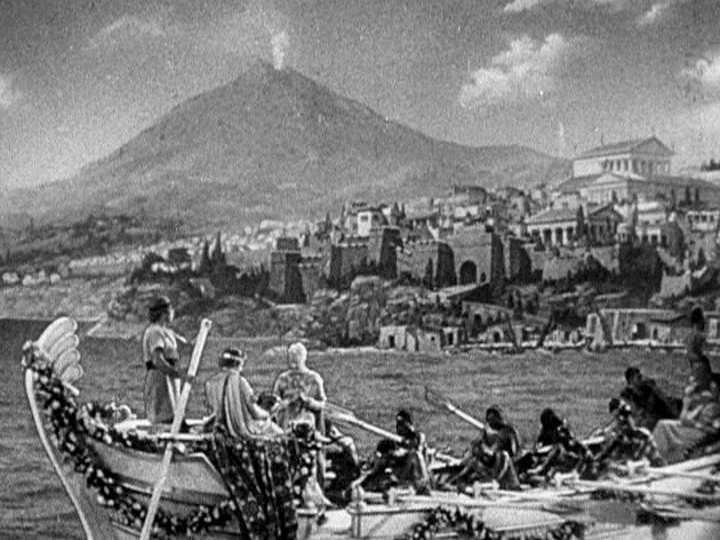
16. The Last Days of Pompeii (movie--1935)......................................40


Round of 16

#16 The Last Days of Pompeii over #1 Hail, Caesar

Hail, Caesar is probably a better movie, but the general custom of the Challenge favors older movies in head-to-head matchups.


#15 Scarre over #2 Schiff


Scarre is shorter by 77 pages.


#14 Saylor over #3 Cornwall


Two basically identical books, genre novels published 2 years apart, both available. Saylor is 9 pages shorter.


#4 Holland over #13 Lewis


History (I think) beats more genre work.


#12 Asimov over #5 Suetonius


Suetonius would have been the choice, especially as Asimov clocks in at over 800 pages, but Asimov has an upset coming in this tournament, and he gets it in the first round.


#11 Demaio over #6 Julius Caesar

#7 Griffith over #10 McCullough

Battle of genre novels. Griffith about 400 pages shorter.

#8 Everitt over #9 Strauss

I can't tell if the Strauss is a serious book or not. Otherwise, they look pretty similar. Strauss is slightly shorter, but Everitt too is entitled to an upset. Which he does not need to get by here however.


Round of 8

#4 Holland over #16 Last Days of Pompeii

#7 Griffith over #15 Scarre

Griffith also had an upset in reserve.

#8 Everitt over #14 Saylor

#12 Asimov over #11 Demaio

The Asimov is 843 pages but I can't have it lose to a literal beach novel.

Final Four

#4 Holland over #12 Asimov

#8 Everitt over #7 Griffith

Championship

#4 Holland over #8 Everitt

The Holland is about 30 pages longer but it looks like a more solid book. Plus Holland also has an upset in reserve, which cancels out Everitt's unused upset in an extremely tight title game.


Thursday, October 6, 2016

October Update

A List: Between books currently

B List: Between books currently

C List: Karl Ove Knausgaard--My Struggle: Book 1........196/441

For the A-List I have just finished a trio of Shakespeare plays--Measure For Measure, Cymbeline, and Henry V--that I had not managed to read before. I decided to tally up the overall number of Shakespeare plays I have read through via these lists, and to my surprise this recent batch just put me over the halfway point, at 20 out of 37. I thought I must have read more by this point. But it is legitimate, I have missed thus far most of the early comedies and histories, as well as the five or so plays that are generally obscure, Pericles, King John, Henry VIII and so on. Measure for Measure and Cymbeline were better than I was anticipating. Henry V was mildly disappointing in that I was expecting it might join the ranks of my all-time favorites, and parts of it certainly have that quality, but I was not positively enthralled by it all the way through on this first reading anyway as I thought it possible I might be. At this point of my life, expectation plays an outsize part in my response to literature and other works of art encountered for the first time after having only read about them, in some instances over the course of decades.

I am working on an essay for a book I have just finished for the B-list. I have made a rule that I cannot move on to the next book on this list until the posting for the previous book is published, otherwise I would never complete them, Hopefully that will be up in the next day or two.

The Knausgaard is also a deviation from my usual strict system. An old classmate had a copy mailed to me because he wanted me to read it, the first volume anyway, and the series has received effusive praise among the intelligentsia here so I decided to take it up. To this point it is largely a record of memories of ordinary life as experienced by a Norwegian teenager--and a heterosexual male at that--in the 1980s. Knausgaard is only about a year older than I am and I also went to high school in a cold northern place that was not unpleasantly a couple of decades behind the times in certain aspects. So his experiences are very similar to mine, with the exception that he was, if not a full-blown stud, a little less hopeless with the ladies during his high school years. There was at least some mild kissing and breast touching going on, and this with Scandinavian girls too, it must be borne in mind. I have to admit, the enthusiasm for this writer among many normally jaded and scornful critics and intellectuals, the kind of people who understand everything new and move with it and are bored by anything that is at all informed by the past we have left behind, is puzzling to me. I do not yet see the genius and brilliance that these other very exacting people are evidently seeing. I am not persuaded that it is not coming, because I am quite fascinated by the attraction it has for this self-consciously smart and superior class of readers, and I really want to know what they are finding in it. I don't dislike it, and I am curious to finish the first volume at least--maybe I will continue on to the other books down the line, one a year or something like that--but it does not strike me as being particularly funny (maybe this is because, as the argument was made against Bob Hope, Knausgaard is not Jewish, and Americans are conditioned now to understand humor as existing in the form in which it has been presented by Jewish comedians for the last 80 years). I also do not think the writing itself is that special. He constantly records very plain and seemingly unimportant exchanges of conversation verbatim, but then when a brash and confident boy comes into a room at school where the author is sitting with a girl he is in love with and the intruder proceeds to cast a spell over her and prompts her to (unconsciously?) open her legs when he takes a step near her (this was a good observation) he does not actually transcribe what this rival said that was so mesmerizing and effective, which I was dying to know. But perhaps this is consistent with the overall plan of the book...

No pictures this month. Too late in the evening.  

Wednesday, April 6, 2016

April Update

A List: Between books currently.

B List: Anna and the King of Siam--Margaret Landon 360/391

C List: The Age of the Democratic Revolution: The Struggle--R. R. Palmer 136/578

The last thing I read for the "A" list was the poem, or collection of poems, known as "The Passionate Pilgrim", attributed on the original title page to Shakespeare, but which is in fact a compilation of a number of poets of the time, including Shakespeare, and also including some unknown authors. It has the famous lines "Were kisses all the joys of bed/one woman would another wed" which it seems cannot be positively attributed to Shakespeare, but still usually is by the general public. I read it in my clunky Rockwell Kent-illustrated complete Shakespeare, which is the only book I own that contains it. It is printed there as if it were a regular part of the Shakespeare canon, though without any introduction or notes. I was a little confused in reading it by the incoherence between various parts of the poem and the lack of continuation of various characters and motifs throughout the work, as well as the inclusion of some lines that were obviously from Marlowe's "Passionate Shepard to his Love", so I was glad to have some explanation for this.

The Landon book I am almost finished with and will be doing a full report on soon.

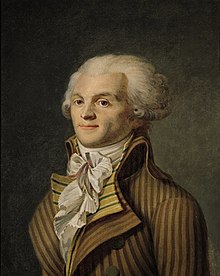
The Palmer, subtitled A Political History of Europe and America, 1760-1800, is the second, and last, volume of the Challenge-winning book I was reading last month. So far I am actually liking this second volume more than the first, in part I suspect because I am used to the style now, and also because the second volume deals directly with the events of the French Revolution and the general European war that accompanied it, which is of course a very dramatic episode of history that I have somewhat shamefully never read even a general history of. Robespierre is best remembered now for overseeing the reign of terror, but he was a compelling political animal, perhaps a genius of that art in some ways, who made some great and memorable speeches. More than a few of his bons mots have a startling resonance today, not least because they are more lucid and succinctly expressed than most prominent contemporary thinkers have been able to manage on similar topics. "Equality of wealth is a chimera...necessary neither to private happiness nor to the public welfare". But "the world hardly needed a revolution to learn that extreme disproportion of wealth is the source of many evils." More: "We want an order of things...in which the arts are an adornment to the liberty that ennobles them, and commerce the source of wealth for the public and not of monstrous opulence for a few families...In our country we desire morality instead of selfishness...the sway of reason rather than the tyranny of fashion, a scorn for vice and not a contempt for the unfortunate...good men instead of good company, merit in place of intrigue, talent in place of mere cleverness...the charm of happiness and not the boredom of pleasure...in short the virtues and miracles of a republic and not the vices and absurdities of a monarchy."

He rather humorously dismissed the spectacle of the Worship of Reason held in the desacralized Notre-Dame Cathedral in 1793 as "a philosophical masquerade".

He also famously said that "Revolutionary government owes good citizens the whole protection of the nation. To enemies of the people it owes nothing but death."

Palmer theorizes that Europe became afflicted with revolutionary fervor at the end of the 1700s rather than at an earlier time because too many people of some degree of capability had come to feel personally humiliated by existing political and social arrangements. I do believe that something like that is occurring now throughout the Western World, where the middle classes, at least, are not suffering from material deprivation or physical insecurity, yet there is a great amount of anxiety and dissatisfaction that I think is rooted in greater-than-ordinary (compared to, for example, 1964 when this book was published) feelings of humiliation, inferiority and powerlessness among the populace. Of course if I continue to believe this to be the case I will eventually have to make a stronger argument for it...

Picture Gallery


Monday, February 2, 2015

Shakespeare--All's Well That Ends Well (1602 or 3)

First Shakespeare on the list. As we get deeper into it we are beginning to pick off more and more of these firsts, but there are still a few big areas out there that we have not gotten into. First Dickens, as well as other well-represented authors. First French, Russian, Spanish, modern Italian and Scandinavian books. First work in English of straight poetry (we have had a couple of dramas, namely this and Dryden, that have contained a considerable amount of verse so far). This is also the last of the series of readings, mainly plays and smaller novels, that were relatively short. The next five books on the list, at least--I try not to keep in mind more than five books ahead in doing this--are all on the longer side, at least 450 pages, with a couple even longer than that. I will read those at a somewhat more accelerated pace. I have been somewhat deliberate in reading these shorter ones because I wanted to feel that I had spent a little time with them. They all are become dear to me in some way and I don't want to just blow through them.

I have been finished with All's Well That Ends Well for about two weeks and have found that I have not had the energy in the evening, nor the time during the day, even to write up my little report. I don't want to fall behind on these.

I found with this, as I found with Virgil and Faulkner, the other two inner ring all time great authors we have come across on this list so far, that it was difficult to read late at night, which is by necessity the time when I do most of my reading (and writing), for more than a handful of pages before my concentration would break down and I would dose off to sleep. It is not that the books are completely beyond my reading ability when I am at close to full alertness and strength, as I have been reading these authors, and others in the same vein with a fair degree of familiarity with the style and language, at least, for twenty-five years. But old man fatigue is starting to hinder my ability to go back and take up the real Greats unless I am very fresh, well-rested and relaxed, which is a combination of circumstances I am finding myself hard-pressed to attain.


I haven't said anything about the actual play, which I am pretty sure I had never read before, as I would have recognized when I read Colley Cibber's Love's Last Shift a few years back the plot device of the neglected wife arranging for another woman to make an assignation with her wayward husband and taking the would be mistress's place in bed once darkness fell (which had been done long before Shakespeare as well). I enjoyed reading it, apart from my frustration on the occasions when I was unable to keep my eyes open. Everything with Shakespeare, especially after his first few plays, partakes of the character of the grand manner, and I am always alert to that sense, even if I am not alert enough to follow and make sense of the flow of the particular words on the page. I was surprised when I bothered to look at it at the relatively late date assigned to this play, as I tend to think of the comedies with Italian, or in this instance French-Italian, settings, as belonging to more or less the same period, and that the earlier part of Shakespeare's career before 1600, after which the tragedies became predominant. However I see that I am three or four years off in my calculating and that the 1600-1603 period was more comedy-heavy than I had realized, with Twelfth Night, Measure For Measure, The Merry Wives of Windsor, and other of the maturer ones coming out in these years.

I do not have a sense of what the best order to read Shakespeare would be if one is going to do it across a period of many years and at intervals among many other books. The IWE list does not have all of the plays, either--Pericles and Titus Andronicus at least did not make the cut--but it has most of them, and they will be coming up alphabetically. I think this was a good one to start with, as it is one of the lesser-known plays to the general reader, but it does partake of many of the best-loved qualities of the Shakespearean canon, the wit, the infectiousness and romance aroused by the language, the sense of being present both by the poetry and the setting of the story at the heart of all that defined and ever mattered about European civilization. The recovery, or acquisition, of some of these sensations is the whole raison d'etre for my undertaking this list at my time of life after all.

But I still haven't said anything about the play itself. No thoughts worth recording have come to me about it, nor have I been able to produce any on my own. High literature to someone like me is more a primer for how to try to live a little more nobly, with a little more purpose, with some mitigation of disgrace, than it is a fount for inquiring into serious ideas and human problems.  


Main Square, Rousillon, France

The Challenge

I am going to attempt to revamp the Challenge between now and the next occasion for it, as it has died entirely in its current form. Here are the sorry results for the last exercise of this version of it:

1. The Countess Conspiracy--Courtney Milan.....................191
2. Confessions of Catherine de Medici--C. W. Gortner......127
3. Travels--William Bartram (1739-1823)..............................18
4. Framing the Early Middle Ages--Chris Wickham...............7
5. Romancing Lady Cecily--Ashley March..............................5
6. The Shaping of Southern Culture--Bertram Wyatt Brown...1

There was a movie challenge also:

1. The King's Speech.....................1,465
2. The Merchant of Venice (2004)...186
3. Quai des Orfevres..........................11

The Bartram book apparently is well-regarded. I am thinking in my future version of the game to go to a tournament format in which I choose in one-on-one matchups which book I think likely to appeal to me most through to a final.

I saw The King's Speech a few years back. I thought the subject, and the spirit in which it undertook that subject, to be strange. I wasn't in the mood to revisit it at this time.