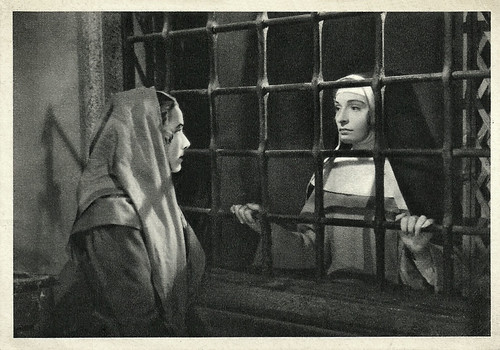
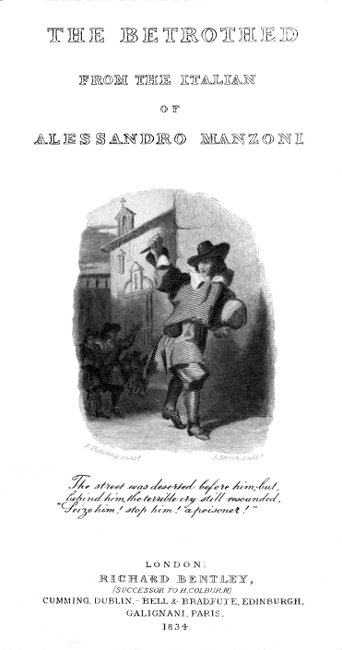
A List: R.W. Southern--The Making of the Middle Ages...……………...95/265 B List: Manzoni--I Promessi Sposi……………………………………..652/668 C List: Walter Scott--The Heart of Midlothian...………………………..38/540
So I wasn't quite able to finish Manzoni in time for this month's report. I have been very busy, especially in the weeks leading up to the beginning of school there were several days where I wasn't able to read it at all. But I am getting back on more of a regular schedule now.
Taking up Scott at the same time one is reading Manzoni is not ideal, as they are kind of similar books, long, romantic, set in the past, and they even were written around the same time. However, I can see already why Scott was popular in his day even if he is a bit long-winded by our standards (as is Manzoni). He is lively, he has more humor thus far than I was expecting, and he seems to know how to roll out a story. I should be able to plow through a decent amount of it during the 1-2 week interval when I am working on the report for the Betrothed.
R.W. Southern (1912-2001), who sounds like an American (perhaps I was getting him confused with the 1970s Texas-raised songwriter J. D. Sothern), was an Oxford institution, and TheMakingoftheMiddleAges is one of the most respected humanities books to emerge from the heady days, such a contrast with the present, of the postwar research university. It is the kind of book that is good for me, because while I have some familiarity with many of the names, places, and events that populate its pages, I didn't have a terribly coherent picture of how they fit both in relation to each other and to other parts of history, and this should at least move me a further along in the formation of one. For a guy writing in the supposedly unenlightened 1950s, Southern frequently could pass for a modern professor. His attitude toward the Islamic world (or at least the medieval Islamic world) is highly respectful, and he is not in thrall to any kind of jingoistic view of Anglo-Saxon or Western European superiority that I can see. Reading him on the Crusades, I am struck by the juvenility with which people in our times will casually cite them as some kind of example of toxic masculinity or Western arrogance or privilege that has some kind of relation to people's behavior in the present. "The First Crusade burst on a world which had long been preparing for it in the recesses of its being, but there had been few outward signs of the work of preparation...The passionate acceptance of the Crusade as an established aim of Latin Christendom, which characterizes the twelfth century, did not come to birth without a struggle, and it is not irrelevant to note that the Eastern Church remained permanently antipathetic to the ideal. The monastic ideals of the eleventh century were in the main hostile to the idea of the Crusade. To a St. Anselm, for instance, or a St. Peter Damian, the Crusade made no appeal. There could be no place for it in the world which St. Anselm pictured as a vast, turbulent, impure river, carrying off to destruction those who became immersed in it: against this destructive flood there stood only one safe refuge with peace within its walls--the Monastery." (p.50)
I hadn't known that the "Heart of Midlothian" was, in one sense anyway, an actual "thing".
Kate gives the dish on the hurricane, the remains of which are coming my way tomorrow.
The night that I finished this reading of Beowulf--I think this is the 4th translation/version of it I have gone through--I had a dream which I am certain was influenced by the poem, albeit translated into the slightly less dramatic environment in which I have passed my life. In the dream I was once again back at my college--while I used to have this dream quite frequently I had not had it in several years and thought maybe that experience had become too remote--it was at lunch on Friday (the mead-hall) and I could not remember my schedule, whether I had one class in the afternoon, or even two. In these dreams I always believe that I have a copy of the schedule somewhere up in my room, which I don't seem to have been in, or organized, or done any work in, the entire year. So I went into the dormitory building (the various caves housing the monsters of the story) and walked up the steps to the third floor, at the landing of which I was blocked by two attractive girls in bathing suits (the terrifying enemies?) who had their backs turned to me as they were engaged in conversation with a studly man who was seated on the top step. While I was hardly annoyed by this holdup, a lifetime of social conditioning compelled me to pretend that I would like nothing more than to remove myself from the presence of all of these beautiful people as quickly as possible, so I murmured an "excuse me" and took great care to maneuver my way around the girls in that narrow space without coming close to touching them, which took some doing. As I passed the cool guy he snapped my underwear--I had not been aware up to that point that I was not wearing pants--and then he took off scampering across a large open shower area in the hallway across to wear the rooms were. I was not loath to chase after him as I was bigger than he was--a change since the dreams of my youth, when I was always physically far inferior to my antagonists--but, perhaps due to subconscious awareness of my true age, I was wary of running across the wet floor (the underwater lair of the serpent?) and slipping, and by the time I got across it my tormentor was out of my reach.
The IWE introduction to Beowulf falls among the ranks of its least enthusiastic entries. "The literary value of Beowulf can be known only to students of Old English; to the modern reader this aspect depends on the translation. But Beowulf is important as folklore and the educated man is supposed to have read it." The IWE frequently recommends books under the premise that the "educated man" is supposed to have read it. As one of the great unfulfilled social goals of my life has been to be generally accepted as belonging to the class of educated people I have always taken especial notice whenever these kinds of assertions are made. Of course as you advance through life you eventually realize there is a lot more to it than checking off a list of books read or earning a high score on some examination of learning. The purpose of education when spoken of in this way is to contribute to the overall mental solidity, or gravitas, of the mature person, and if you don't have this then your education has failed you, or perhaps you have failed it, in its most important point.
This is all apart from the circumstance that of the ideas and cultural touchstones that the Educated Man or Woman or Other of 2019 is supposed to be familiar with, Beowulf is at least not very close, I don't think, to the top of the list, though I can imagine a scenario where you are at a party trying to break in with a crowd of educated people, and you have demonstrated an acceptable familiarity with whatever it exactly is that marks one as potentially a member of this class, and you drop in a sly Beowulf reference and it touches something buried miles deep within then and they like it--well, maybe I can't imagine it exactly.
Going back to the dream, it is remarkable how I still have dreams of being of school, which I attended for 4 fast years more than a quarter of a century ago, yet I have worked now in the same place for 22 years (as of next week) and I don't recall ever having a dream about it, or about any of the people there. Does everyone's mind more or less stop being stimulated and receptive to new impressions after age 25 or so, or just mine?
I am not writing very much about Beowulf itself, I know. As I said, I have read now I think four different versions of it. This particular reading came up at a bad time of year, with everyone, including my wife, being out of school, which necessitated my having to set my alarm for 7:30 am just to try to read a few pages before I had people swarming over me and taking over my day. It usually didn't work. On other occasions I was more able to enter into a more Beowulf mindset, appreciative of its status as the oldest surviving major literary work with a direct relation to the later English nation, feeling a more visceral connection with the fierce, cold, dark, watery lives of the medieval tribes of ancient Scandinavia. One's instinct is to think that Beowulf is a strange story, but it really isn't. Our own time is full of stories like this, of singularly courageous and manly heroes possessed of superhuman abilities battling and defeating monsters of vague origin and motivations. The monsters in Beowulf are in a sense easier to understand, actually, given the relative primitiveness of the times and the tiny populations, short lives, vast distances across inhospitable terrain and ocean to get anywhere, endless dark and frigid winters, regular invasions by violent armies. Making anything out of one's life under such conditions required qualities and fortitude that would be considered heroic were anyone to display them today. We, one would think, should be more culturally sophisticated, and perhaps at the highest levels of science and other places where the smartest people in our times congregate, the law and finance and so on, the intellectual dynamic approaches or even surpasses the Athenian or Roman or 17th century Parisian or 18th century London standard--some infer that it does, though not through art, I would not think--but what do our monsters represent (technology? the increasingly impregnable overclass?) and how is the consumer/intended audience (who presumably identifies with the hero rising up to slay these monsters) supposed to respond/understand his relationship to the story?
The Bourgeois Surrender Challenge
The evolution over the six years that I have hosted this challenge of the Google search algorithms that I use to find the contestants for it has become more antagonistic to my purposes, which was to plug in a bunch of random words and see what random things it turned up. But increasingly it is only giving me a small number of "the most relevant" results, which lean heavily to dry academic papers. Perhaps more of this kind of scholarship has been uploaded to the Internet since I devised this game, and its numbers are now overwhelming the possibilities of quirkier "hits" but I think it more likely that the formulas are trying to guess what I "want" to find, but I don't want to find anything specific, I want to find randomness, which was one of the appealing features of the early days of the internet. I may give Google one more Challenge, as Beowulf-like works generate search words that are especially prone to produce gloomy sword and dragon type results, but if I continue to be disappointed I may try a different search engine and see if I can recapture some of the old magic.
1. Jessica Day George--Dragon Slippers #1...………………………………………………...226
2. M. L. Wang--The Sword of Kaigen…………………………………………………………..55
3. James Canton--The Literature Book: Big Ideas Simply Explained...………………………...44
4. Jorge Luis Borges--A Course on English Literature...……………………………………….20
5. Richard A. Knaak--Legends of the Dragonrealm Volume II...……………………………….18
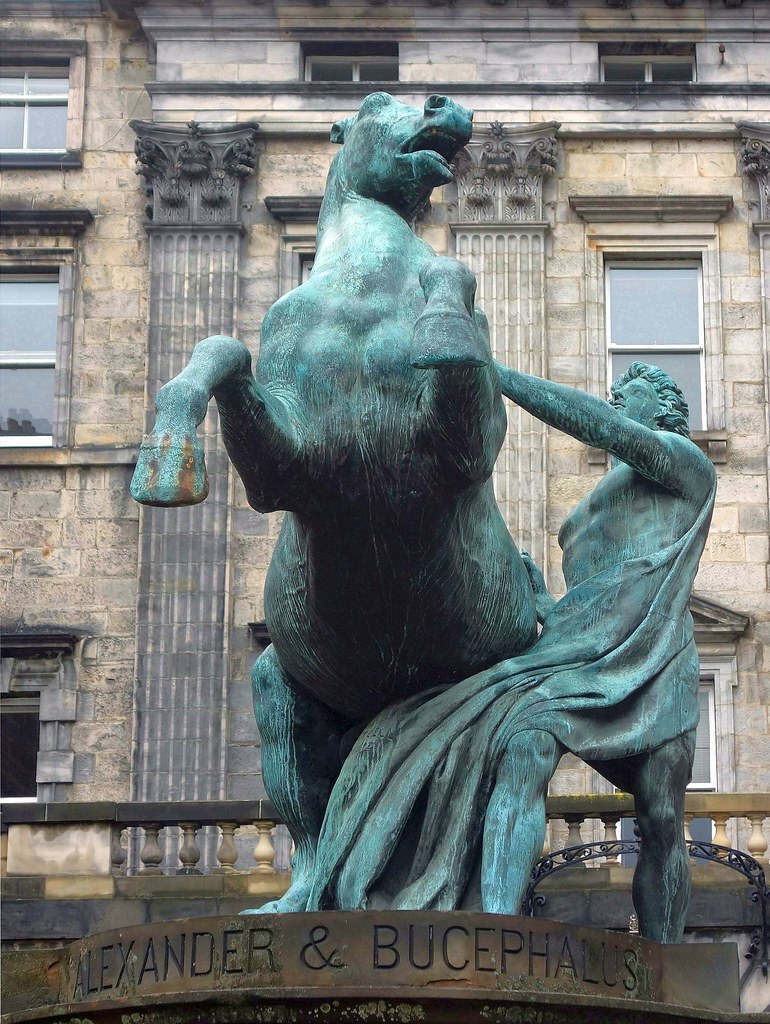
6. Plutarch--The Age of Alexander...…………………………………………………………….13
7. Muammar Al Gathafi--The Green Book...……………………………………………………12
8. Dana Diehl--Our Dreams Might Align...………………………………………………………6
9. H. A. Guerber--Legends of the Middle Ages...………………………………………………...4
10. Patricia Briggs--Dragon Blood...……………………………………………………………..3
11. The Cambridge Companion to Medieval Romance (ed. Krueger)…………………………...2
12. R. Scot Johns--The Saga of Beowulf Book 1: Land of Death and Shadow...………………...1
13. C. Washington Ives--West Indies...…………………………………………………………..0
14. Richard North--The Origins of Beowulf...……………………………………………………0
15. Linda K. Richter--The Politics of Tourism in Asia...…………………………………………0
16. Beamond Authority--Myths and Legends...….……………………………………………….0
17. John Byrns--Spiritual Fire Starters...……….………………………………………………..0
18. The Reunification of Europe: Anti-Totalitarianism, Courage & Political Renewal...……….0
Qualifying Round
I am going to have the 6 entries scoring zero face off against each other to get a field of 15, with top seed Jessica Day George getting a bye through to the round of 8.
#13 Ives over #18 Reunification of Europe
Neither of these books is readily available. The Reunification of Europe book is a multi-author collaboration, and may even be a textbook.
#14 North over #17 Byrns
#15 Richter over #16 Beamond Authority
I'm not sure that the Beamond Authority thing is even an actual book.
Second Round
#2 Wang over #15 Richter
#3 Canton over #14 North
#4 Borges over #13 Ives
#5 Knaak over #12 Johns
#6 Plutarch over #11 Cambridge
#10 Briggs over #7 Gathafi
There is no way I wanted the former strongman of Libya bowing out in his first match, but he was the victim of an upset.
#9 Guerber over #8 Diehl
The H.A. stands for Helene Adeline. Her book is an oldie (1929) but some of the reference libraries in the state still have a copy of it.
Non-Elite 8
#1 George over #10 Briggs
#2 Wang over #9 Guerber
Wang has an upset to use as well.
#6 Plutarch over #3 Canton
Canton looks to be one of those modern Big Ideas kinds of guys--there is another book that appears to be by him called The Extreme Future: Top Trends That Will Shape the World, etc. The books are fairly similar in size. I have read all of Plutarch's Lives, albeit some years ago now, already, but I went with him anyway because it is easier for me to get a free copy of that book than of the other.
#4 Borges over #5 Knaak
Final Four
#6 Plutarch over #1 George
#4 Borges over #2 Wang
Two of the all time greats versus a couple of (probably) formulaic contemporary children's books? Please.
Championship
#6 Plutarch over #4 Borges
I probably would have picked Borges if any of the libraries I use had had a copy of his book. But none of them do.
One of the most popular and presumably accessible, as well as one of the greatest of the medieval Provencal romances, this is sometimes referred to as the French "Romeo and Juliet". It is also one of the shortest works on the entire list, so I wonder if I should not try reading it in (old) French sometime. Of course it is on the internet. Here are the first four lines:
"Qui vauroit bons vers oir
del deport du viel antif
de deus biax enfans petis,
Nicholete et Aucassins..."
I can probably make out enough of it to follow the story. Whether I would get it enough to get a much better sense of it as a work of literature, I don't know.
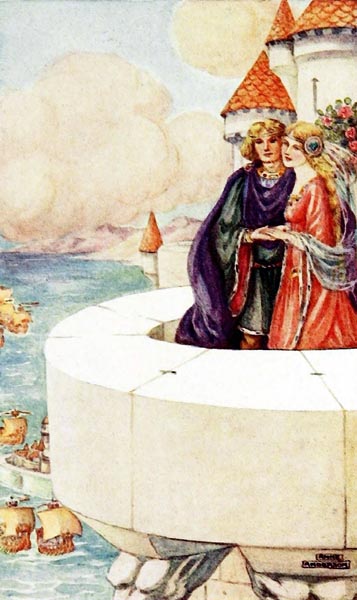
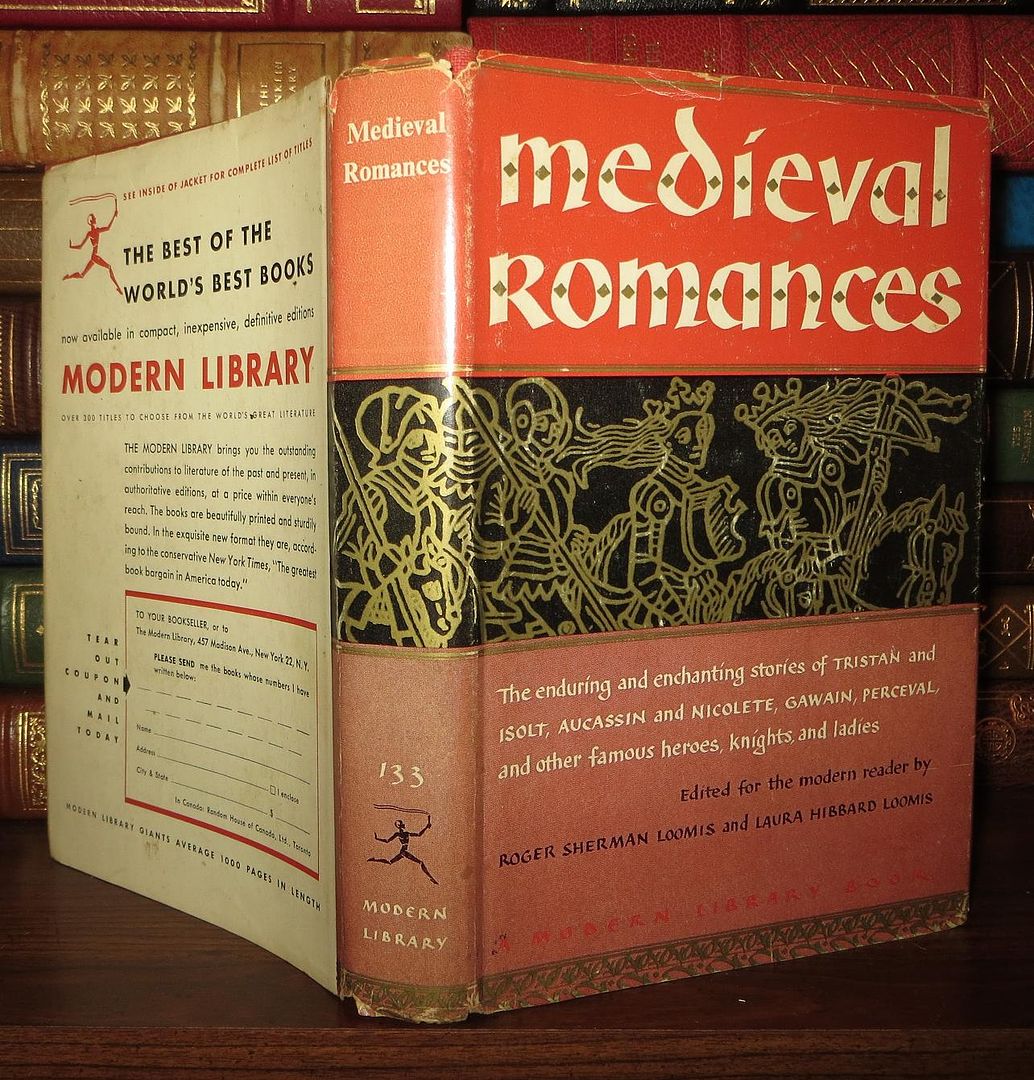
I read the relatively celebrated Andrew Lang translation in the 1957 Modern Library edition of Medieval Romances, which surprisingly does not include anything else that made the IWE list, though it does contain classics like Tristan and Iseult and Sir Gawain and the Green Night. Medieval Romances are evidently underrepresented on the program. I like romances and the ideals of the Middle Ages and old French literature enough that I enjoyed the tale and the nicely translated poetic parts well enough, though I was still more distracted than I would like to be and could not achieve the level of absorption in the book that I like to. Aucassin and Nicolette are, to my perception, a strange pair of lovers. Aucassin comes off as rather whiny and petulant, as opposed to say, angry and fierce, during the parts where his love is denied, refusing even to defend his father's castle from attack, though at other times he demonstrates bravery and martial skill more appropriate to his station. Nicolette, a Saracen who was captured as an infant and sold to a viscount is plucky and keeps her eye on the prize of marrying Aucassin, though I did not get a sense of her having a great romantic passion in the Shakepearean or Villonian sense. Apparently some experts have considered that Aucassin and Nicolette might be a parody of the romantic genre, and there are some decidedly odd episodes in it such as the king being in childbed and the battle fought with hunks of cheese for weapons.
I wish that perhaps I had read this when I was younger and more passionate and more innocent of the world of literature. It probably would have made a stronger impression on me.
I noted on the threadbare Wikipedia page for this book that Walter Pater in the Renaissance and Mortimer Adler somewhere in his writings took up this story. Since I have both of these at home I meant to take them up today and see what they had to say, but of course it slipped my mind because there were multiple things going on at my house today, and now I am not there. I am so scatterbrained nowadays it is comical. I need to try to finish this tonight or who knows how long it will take me.
It is now the next day, as I did not finish the report last night. And I forgot to look at the books again! My excuse is that I am I in the 2-week dog days period where my wife, who is a teacher, has gone back to work but the children haven't gone back to school yet so I have all of them all day. Also there were carpenters in the house today framing walls, so there were a lot of impingements on my intellectual life.
This is the (a?) week where everyone has been riled up politically and morally over Nazis, or wannabe Nazis and the "alt-right", which terms some have declared interchangeable. Of course I have a lot of thoughts about this, which seem to be more coherent when I am not trying to write them down, or maybe I am less tired earlier in the day. These kinds of topics are endlessly fascinating, I suspect because most people, apart from Donald Trump and a small number of others like him, are very attuned to the appearance in the world of people who may hate them, and there has been a considerable amount of hatred expressed in one form or another over our wonderful internet during the past week. Much commentary and denunciation have been passed on the Nazis/alt-righters themselves which I don't have much to add to. I don't deny that they are an embarrassment. I am not convinced how much of a threat they are. Supposedly they constitute a main leg of Trump's support, though there is some dispute about how much of a force they really are. From such footage as I saw there looked to me to be two distinct groups: the tattooed musclebound biker crowd who at least in my lifetime have always been pretty openly racist and offensive and don't really care if everybody knows it. I don't think there is much danger of these guys overthrowing the establishment; and then there were the second, even weaker-looking group, the uncertain, even dorky-looking guys in the torch parade, who it is pretty evident are the products of a socialization and education gone badly wrong and are grasping at any kind of identity that feels vaguely masculine. My guess is that to some extent they perceive that their minority enemies are considered adequately masculine, and that they derive some portion of this strength from it being more socially acceptable, if not encouraged, for them to be aggressively antagonistic towards whites. Whether there are more people turning out like this than people realize, or previously cared about, I don't know, but I suspect that the answer is yes. I also have to wonder if the people who hate them with the most vehemence are subconsciously delighted that the cretins have come out in the open so that they can stomp on them and destroy them in the epic good vs evil confrontation that they have long craved. But now I am going off on a tangent. I had jotted down a few short thoughts this afternoon when I wasn't tired that I thought were reasonable and pertinent. I am going to write those here, hopefully without embellishment:
There are a lot of people of the internet eager to direct my thinking on this issue. Evidently there is only one way to think about it, and perhaps there is, but unfortunately my school training such as it was placed a very heavy emphasis on the idea that it is unlikely there is only one way to think about anything, so these uniform exhortations are not as effective with me as I might like them to be for my own sake.
I saw dozens of reminders that being silent in the face of such evil is basically akin to being complicit in it, that if we ever wondered what we would have done during the Nazi occupation, etc, that what we are doing now corresponds, and so on. Even if we do nothing else about it, I suppose we must at least have it on the record that we have denounced it though since in this instance about 50-100 million people are shouting denunciations in full-throated fury, if Nazis do somehow manage to take over the country, I am assured it will not be because too many people were silent. Also while it may be necessary to suggest that we are currently reliving the Nazi era in real time in order to prevent it from actually happening (though I am skeptical), we in fact are not, not yet. If anything, there are as many calls from the left for stripping people of rights, employment, money that are actually coming from seats of actual power as there are from the right.
Kim Jong Un. Worse or better person than Thomas Jefferson? Robert E Lee? Trump? He certainly doesn't elicit as much passionate fury from the left as any of these guys. I get that he is foreign and not white and most people agree that he is generally bad, while the wickedness of these other guys needs to be taught, perhaps forcefully, to half the U.S. population. Still, if we are to have no tolerance for slavery, murder, homophobia, etc...
I have to admit I increasingly find the left to be unbearably sanctimonious on their pet issues. As much of a debacle as Trump is, I really dread the left getting back into power anytime soon after this, since now there is undoubtedly going to be extra pressure and motivation to "punish" people perceived as being likely Trump supporters, which would be ugly. I don't see a Franklin Roosevelt or Harry Truman type figure on the horizon.
So far the places that have notably taken down confederate statues or have had mobs take them down that I have seen are two big cities with mostly black populations (Baltimore and New Orleans), three cities that are the home of major (i.e. wealthy, largely upper middle class, global-minded) universities (Gainesville, Charlottesville, and Durham, and in the two latter of these the statues did not come down without conflict). In my old haunt of Annapolis they are apparently finally going to remove the statue of Roger B Taney from the state house grounds--there were people talking about doing this when I lived there 25 years ago--but this is in the capital of what is now one of the most reliable Democrat states in the country and one that was not actually part of the Confederacy. In short, places whose spiritual connection to the Old South has grown more tenuous with the passage of time than other old southern towns.
I am planning to do a post on Robert E Lee on the other blog one of these days. I am going to get a computer when school starts so I can write at home. I'm going to put it on a credit card, which I hate doing, but what has it been, two or three years. I still think of myself as a writer in my approach to everything, and I feel left out of everything when I am not trying to do something in that line.
Challenge
1 Fantastic Beasts and Where to Find Them (movie)...............................................9,740
2. Harry Potter and the Prisoner of Azkhaban (movie)............................................2,636
3. Imitation of Life (movie-1959).................................................................................664
4. The Train (movie-1965)...........................................................................................485
5. Chip & Dan Heath--Decisive: How to Make Better Choices in Life and Work.......422
6. Charles Frazier--Nightwoods....................................................................................340
7. Marjorie Bowen--Mary Queen of Scots....................................................................139
8. Theodor Fontane--Effi Briest......................................................................................43
9. Threepenny Opera (movie-1931)...............................................................................32
10. Wilderness (movie--2008)........................................................................................27
11. Andrew Lang--Tales of Troy......................................................................................9
12. Lynne Tillman--Someday This Will be Funny............................................................6
13. Bloom's Critical Modern Views: Tennessee Williams................................................1
14. David Ruffin--"I'm So Glad I Fell For You/I Pray Everyday You Won't Regret Loving Me (record)..............................................................................................................................0
15. E. Jane Burns--Courtly Love Undressed.....................................................................0
16. Jay Ruud--Encyclopedia of Medieval Literature.........................................................0
17. The Violin: A Research and Information Guide..........................................................0
18. Storytelling: An Encyclopedia of Mythology and Folklore (ed. Sherman)..................0
Qualifying Round
#18 Storytelling over #15 Burns
#17 The Violin over #16 Ruud
Incredibly, all of these books except for Courtly Love Undressed have made it into a library somewhere in my state.
Round of 16
#18 Storytelling over #1 Fantastic Beasts
This is at least the 2nd appearance of Fantastic Beasts in the tournament.
#17 The Violin over #2 Harry Potter
#3 Imitation of Life over #14 Ruffin
#13 Bloom over #4 The Train
#12 Tillman over #5 Heath
#11 Lang over #6 Frazier
Lang's book is rarer, and I am intrigued by Frazier a little, but another effort by the once-appreciated translator of Aucassin and Nicolette gets the nod here.
#7 Bowen over #10 Wilderness
#8 Fontane over #9 Threepenny Opera
Theodor Fontane, apparently a quite celebrated author of whom I had never heard, wins the battle of the German productions.
Final 8
#18 Storytelling over #3 Imitation of Life
What a draw for Storytelling.
#17 The Violin over #7 Bowen
The same for The Violin, which beats Bowen because no libraries saw fit to pick up her book.
#8 Fontane over #13 Bloom
Effi Briest is not found outside of academic libraries, though it has been published in English as part of the Penguin classic series.
#12 Tillman over #11 Lang
Final 4
#8 Fontane over #18 Storytelling
#12 Tillman over #17 The Violin
Championship
#8 Fontane over #12 Tillman
"Theodor Fontane (1819-1898)...regarded by many as the most important 19th century German-language realist writer." Given the comparatively paltry extent of my reading in, and even basic knowledge of, German literature, this was a pretty easy choice, though I'll have to scare up a copy of the book.