So it took me two months, because of all the projects and distractions of the summer, but I finally finished The Betrothed, the traditional great novel of 19th-century Italy, though I am sure the more advanced modern readers have found numerous greater ones. It is considered to be a landmark in the development of Italian literary prose, a quality which obviously was lost on me, but aside from this it has many other characteristics associated with national or other widely loved types of books. It is set 200 years prior (around 1630) to the time when it was written, during the time of the Thirty Years' War, so that not merely the protagonists but the entire society are put through an exhausting series of ordeals, including famine, war and the plague. Some parts of it are much better than others, and while the book is interlarded throughout with sentimental descriptions of nature and the rituals of village life this is often done, admirably I think, as background amongst the more realistic conflicts and unpleasantnesses which give the story its thrust. As it approached its end, especially during the description of the overgrown orchard after the years neglect due to the war, plague, etc, I got that wistful, mildly sad feeling at the thought of passing away once and for all out of another grand, noble, old kind of story, not that there aren't more to look forward to, of course. If I could have gotten away this fall I might seriously have considered taking a trip to Milan, Lake Como and that area for a week or so, which seems particularly appealing to me at this time.

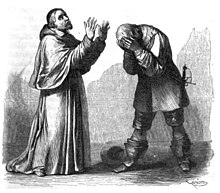
I took my first note for this pretty early on, regarding the episode at pages 59-61 where Don Cristoforo recounts the fight to the death he had had as a young man with an imperious nobleman over who would walk closest to the wall, which was the prerogative of the higher ranking individual. I remarked that it was a powerful scene.
p. 95 "...(he will) flee like the devil from holy water." An oft-repeated phrase, but for good reason, as it is funny.
p. 95 again "It is said that trouble sharpens the wit; and Renzo, who...had never had occasion to sharpen his in any great degree, planned a design that would have done honour to a lawyer."
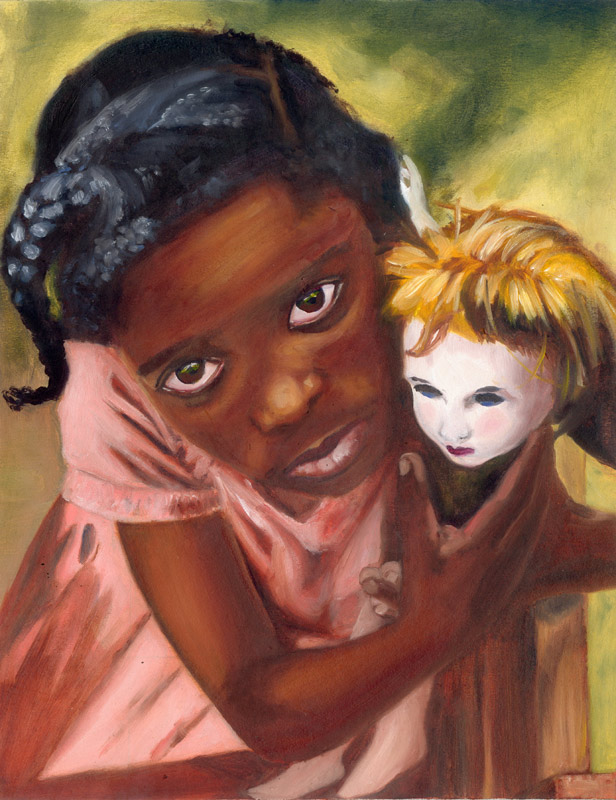
p. 150 "Dolls dressed like nuns were the first playthings put into her hands" The strange, sad case of the Signora who was designated from birth by her father to go into the nunnery, very much against her will, though she could never bring herself to say as much publicly, and who became in her bitterness a rather cruel and soul-dead person. She was the most alluring female character in the book, however.
pp. 202-5 The emoting of the mob with regard to solving the bread shortage is eerily akin to a certain, not insubstantial, portion of our current electorate:
"And besides, not being a man superior to his age, he entertained the common opinion, or prejudice, that the scarcity of bread was produced by monopolists and bakers; and readily did he esteem every method justifiable of rescuing from their grasp the food, which they, according to this opinion, so cruelly denied to the hunger of a whole people...But when the price of food reaches a certain point, there always arises (at least, hitherto it has always arisen; and if it is so still, after all that has been written by so many learned men, what must it have been in those days!)--there always arises an opinion among the many that it is not the effect of scarcity...The multitude attributed such an effect to the scarcity and feebleness of the remedies, and loudly solicited some more spirited and decisive measures."
p. 245 "...the reader must know that, amongst the lower orders in Milan, and still more in the country, the term poet did not signify, as among all educated people, a sacred genius..."
pp. 323-4 "...if it does not come to this, and quickly too, I foresee a mountain of disorders--an Iliad of woes."

p. 434 My favorite character, the cowardly village priest Don Abbondio, trying to explain his behavior to the unflappable, saintlike Cardinal:
"Perhaps I have not sufficiently myself...I was prohibited, under pain of death, to perform this marriage."
"And does this appear to you a sufficient reason for omitting a positive duty?"
p. 435 "Don Abbondio hung his head. His mind during these arguments was like a chicken in the talons of a hawk, which holds its prey elevated to an unknown region, to an atmosphere it has never before breathed."
The whole discourse between the Cardinal and Don Abbondio is very good, I have rarely seen the tenets of Christianity laid out so clearly and forcefully.
p. 540 "...for anger burns to execute its revenge, and...would rather attribute evils to human wickedness, upon which it might vent its tormenting energies, than acknowledge them from a source which leaves no other remedy than resignation."
This is just like all the current politics, the global warming argument. There is so clearly an element of the latter that slavers to place the blame squarely on their personal enemies and inflict lifestyle punishments on them. But of course no one will own that this is the case.
p. 641 "It was still early when he arrived there; for he was no less willing and in a hurry to bring matters to an end, than the reader probably is." This was near the end, though there were still 27 pages before the story could finally wind down, though in this particular book I liked the long denouement.
p. 647 Poor Don Ferrante's dilettantism, and absurd cogitations about the nature of the plague. This aspect of life is sad, a minor sadness compared to famines, wars, and plagues, but very sad in its way.
pp. 661-2 "I have said that he was humble, but not that he was a prodigy of humility."
p. 662 "To have seen the different projects that passed through that mind,--the fancies--the debates...it was as if two academies of the last century had there met together." Manzoni carried through with some humor all the way to the final pages of the book, at which point most authors--Dickens comes to mind--falter in that regard.

If I took that trip to Milan I could see this painting in one of the Pinotecas there.
p. 664 The gossip of the villagers in the new town where Renzo and Lucia settle at the end about how Lucia is not so great looking as they were expecting based on Renzo's long years of pining after her when he first came there alone was an unexpected and twist on the romantic tradition: "Is this she?After such a time, after so much talk, one expected something better! What is she, after all? A peasant, like hundreds more..." But on the other hand, this doesn't seem quite fair, the powerful Don Rodrigo after all wanted her badly enough to go to the trouble of preventing her marriage, having her kidnapped, etc, so she clearly must have had some greater than ordinary appeal.
The role of the church in this book is quite profound. It is a flawed institution populated by regular people with the expected human qualities, but even with all its faults it holds this entire world together and provides all of the nobler characters in the story with a basis from which to become their best selves at the very least, and in some cases to perform near-heroic work. One comes away with a respect for it.
There haven't been a lot of editions of this book published in English. The only older hardcover one I could find in any quantity was from the Harvard Classics set. This copy is from the 20s(?) maybe, and has a kind of flimsy cover that is good for carrying around and reading. Here it is, in fact.

Like many older copies of foreign classics, this edition doesn't indicate anywhere who the translator is, which is too bad, because I think whoever it was did a good job, the book reads very smoothly and pleasantly in English.
This is the view from the front porch that I talk about so much where I sit and read during the few warm months of the year. I've got about a month left before I'll have to bring it inside for the winter. This day here was somewhat overcast.

And here it is, the big finish, with my trusty bookmark.

The Bourgeois Surrender Challenge
As so often happens, only fifteen of the thirty aspirants to the tournament could manage to score a review, so we have a 30-team field for this one.
1. Solomon Northrup--Thirty Years a Slave.........................................................6.694
2. Shayne Parkinson--Sentence of Marriage................................................……2,423
3. Chimamanda Ngozi Adichie--Half of a Yellow Sun...………………………..1,068
4. Anne Bronte--The Tenant of Wildfell Hall...…………………………………...151
5. Karl Marlantes--Deep River...…………………………………………………...61
6. Arthur Conan Doyle--The Return of Sherlock Holmes...………………………..59
7. Kevin Lucia--Devourer of Souls...………………………………………………42
8. Garet Garrett--The Driver...…….………………………………………………..16
9. Charles Leland--Gypsy Sorcery and Story Telling...…………………………….14
10. Laurens Van der Post--Jung and the Story of Our Time...………………………9
11. The Cambridge Illustrated History of Medicine...……………………………….6
12. Eric Hill--Time for Bed, Spot...…………………………………………………..1
13. The Poems of Heine (Bowring, ed)………………………………………………1
14. Bayard Taylor--Joseph and His Friend: A Story of Pennsylvania...……………..1
15. Agnes Strickland--Queens of England, vol. 2...………………………………….1
16. Promissory Notes on the Treasury of Merits (ed. Swanson)………………………..0
17. T. W. J. Connolly--History of the Royal Sappers and Miners, vol 1...…………...0
18. Jane Campbell Hutchinson--Albrecht Durer...…………………………………...0
19. Work in the Colonies (Church of England 1865)…………………………………0
20. Louis Baudin--A Socialist Empire: The Incas of Peru...…………………………0
21. Meredith Gaston--Your Bed Loves You...………………………………………...0
22. Malatesta & Monte..?--A Journey Through the Hills of Rimini...………………..0
23. Charles Killinger--Culture and Customs of Italy...……………………………….0
24. D. Medina Lasansky--Hidden Mysteries: The Alternative Guide to Florence...….0
25. A. F. Holmes--Dictionary of Neutral Language...………………………………..0
26. Deslandes--Treatise on Diseases Produced by Onanism, et al...…………………0
27. The Works of William Robertson, Vol. VII...………………………………………0
28. Greek Romances of Heliodorus, Longus and Achilles Tatius……………………..0
29. Leonardo dopo Milano--La Madonna dei Fusi……………………………………0
30. Rome Italy Renaissance: Essays in Art History (ed. Lavin)………………………0

1st Round
#3 Adichie over #30 Rome Italy Renaissance
#29 Milano over #4 Bronte
Upset time
#5 Marlantes over #28 Greek Romances
#6 Doyle over #27 Robertson
#7 Lucia over #26 Deslandes
#8 Garrett over #25 Holmes
#24 Lasansky over #9 Leland
#10 Van der Post over #23 Killinger
This was a close call though.
#11 Cambridge over #22 Malatesta
#12 Hill over #21 Gaston
Time For Bed, Spot has a stronger library presence.
#20 Baudin over #13 Heine
This isn't much Heine available at all, and this edition nowhere.
#14 Taylor over #19 Work
This Taylor book is referred to in one place on the internet as "America's first gay novel", which would seem to make it more noteworthy than it is.
#15 Strickland over #18 Hutchinson
#17 Connolly over #16 Promissory Notes
Not much to choose from here
Round of 16
#29 Milano over #1 Northrup
The upset factor is strong here.
#2 Parkinson over #24 Lasansky
#3 Adichie over #20 Baudin
This one was really close too.
#5 Marlantes over #17 Connolly
#6 Doyle over #15 Strickland
#7 Lucia over #14 Taylor
One library carries the Lucia book.
#12 Hill over #8 Garrett
#10 Van der Post over #11 Cambridge
Considerably shorter. I need to get some short books on the list.
Elite 8
#2 Parkinson over #29 Milano
#12 Hill over #3 Adichie
After scooting through 2 rounds on his library prowess, Hill also has an upset to play
#10 Van der Post over #5 Marlantes
Van der Post clocks in at over 400 fewer pages.
#6 Doyle over #7 Lucia
Final Four
#12 Hill over #2 Parkinson
Libraries do not carry the Parkinson book. Any of them.
#10 Van der Post over #6 Doyle
This was a very tough game. I went back and forth on this one. I decided I needed a (slightly) more modern, non-fiction title in the queue.
Championship
#10 Van der Post over #12 Hill