Showing posts with label greece. Show all posts

Monday, October 3, 2016

Author List Volume XI

Henry IV of England (1367-1413) Born: Bolingbroke Castle, Lincolnshire, England. Buried: Cathedral, Canterbury, Kent, England.


Henry V of England (1386-1422)  Born: Monmouth Castle, Monmouth, Wales. Buried: Westminster Abbey, Westminster, London, England. Cradle, Museum of London, 150 London Wall, City, London, England. College: Queen's (Oxford)


Henry VI of England (1421-1471) Born: Windsor Castle, Windsor, Berkshire, England. Buried: Windsor Castle, Windsor, Berkshire, England.


Laurence Olivier (1907-1989) Born: 26 Wathen Road, Dorking, Surrey, England. Buried: Westminster Abbey, Westminster, London, England. Riad Laurence Olivier (Hotel), Marrakech, Morocco. College: Central School of Speech and Drama


Catherine of Valois (1401-1437) Born: Hotel Saint-Pol, St Paul Church, 4eme, Paris, France. Buried: Westminster Abbey, Westminster, London, England.


Henry VIII of England (1491-1547): Born: Old Royal Naval College, Greenwich, London, England. Buried: St George's Chapel, Windsor Castle, Windsor, Berkshire, England. Hampton Court Palace, Richmond-upon-Thames, London, England.


Margaret of Anjou (1430-1482) Born: Pont-a-Mousson, Lorraine, France. Buried: Angers Cathedral, Angers, Anjou, France.


Lady Grey (Elizabeth Woodville) (1437-1492) Born: Grafton Regis, Northamptonshire, England. Buried: St George's Chapel, Windsor Castle, Windsor, Berkshire, England.


James II of England (1633-1701) Born: St James's Palace, Westminster, London, England. Buried: Church of the English Benedictines, Rue St Jacques, 5eme, Paris, France.

Cecil Scott Forester (1899-1966) Beat to Quarters (1937), Ships of the Line (1938), Flying Colours (1939) Born: Cairo, Egypt. Buried: Loma Vista Memorial Park, Fullerton, Orange, California.

Arthur Joyce Cary (1888-1957) The Horse's Mouth (1944) Born: Bank Place, Derry (Londonderry), Northern Ireland. Buried: (?) College: Trinity (Oxford)

Nathaniel Hawthorne (1804-1864) The Scarlet Letter (1850), The House of the Seven Gables (1851), The Marble Faun (1860) Born: Nathaniel Hawthorne Birthplace, 54 Turner Street, Salem, Essex, Massachusetts.(*****3-4-01*****) Buried: Sleepy Hollow Cemetery, Concord, Middlesex, Massachusetts.(*****7-20-97*****) House of the Seven Gables, 115 Derby Street, Salem, Essex, Massachusetts.(*****3-4-01*****) The Wayside, 455 Lexington Road, Concord, Middlesex, Massachusetts (*****7-20-97*****). The Old Manse, 269 Monument Street, Concord, Middlesex, Massachusetts. College: Bowdoin.

Samuel Butler (1612-1680) Hudibras (1663-78) Born: Strensham, Worcestershire, England. Buried: St Paul's, Covent Garden, London, England (*****6-21-99*****)

Tobias Smollett (1721-1771) Humphrey Clinker (1771) Born: Dalquhurn, Renton, Strathclyde, Scotland. Buried: Old English Cemetery, Livorno, Tuscany, Italy. Cameron House, Loch Lomond, Alexandria, Dunbartonshire, Scotland. College: Glasgow.

In my old literary tourism guides from the 1970s and 80s the Cameron House, which was home to the Smollett family for many generations, was apparently open for regular tours and contained a small museum dedicated to the writer in one of its rooms. It looks as if now it has been transformed into a five star luxury resort, however.

Pierre Loti (1850-1923) An Iceland Fisherman (1888) Born: La Maison Pierre Loti, 141 Rue Pierre Loti, Rochefort, Poitou, France. Buried: Saint Pierre d'Oleron, L'Ile d'Oleron, Poitou, France. Pierre Loti Hill, Istanbul, Turkey. Pierre Loti Tepesi (CafĂ©), Idris Koeskue Cad, Eyup, Istanbul, Turkey. Pierre Loti Hotel, Sultanahmet, Istanbul, Turkey. College: Brest Naval College.

Robert Graves (1895-1985) I, Claudius (1934) Born: 1 Lauriston Road, Wimbledon, London, England. Buried: Deia Cemetery, Deia, Mallorca, Islas Baleares, Spain.  La Casa de Robert Graves, Carretera Deia a Soller, Deia, Mallorca, Islas Baleares, Spain. College: St John's (Oxford).  

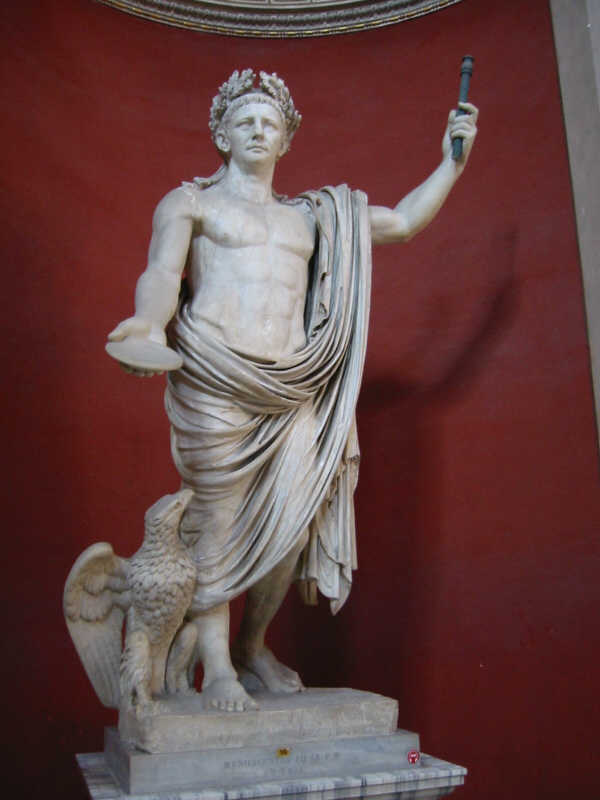
Claudius (10 B.C.-54) Born: Lyon, Rhone-Alpes, France. Buried: Mausoleum of Augustus, Campus Martius, Rome, Lazio, Italy. Claudius Therme, Sachsenbergstrasse 1, Cologne, North Rhine-Westphalia, Germany.


Livia (58 B.C.-29) Born: (Rome?) Buried: Mausoleum of Augustus, Campus Martius, Rome, Lazio, Italy. Painted Garden of the Villa of Livia, National Roman Museum, Palazzo, Massimo, largo di via Perretti 1, Rome, Lazio, Italy.

Tiberias (42 B.C.-37) Born: Rome, Lazio, Italy. Buried: Mausoleum of Augustus, Campus Martius, Rome, Lazio, Italy. Villa of Tiberius, Sperlonga, Lazio, Italy.

Lancelot

Guinevere Born: Old Oswestry Hill Fort, Oswestry, Shropshire, England. Buried: Glastonbury Abbey, Somerset, England.

Pelleas

Ettarre

A.S.M. Hutchinson (1879-1971) If Winter Comes (1921) Birthplace: India.

For whatever reason there is a real dearth of biographical information available about Hutchinson compared to just about every other author on this list. I can find nothing with regard to a gravesite or scattering of ashes, whether he attended a university or not, or any more precise birth location than "British India".

Homer (before 700 B.C.) The Iliad (c.800 B.C.) The Odyssey (c.800 B.C.) Born: Smyrna, Turkey. Buried: Tomb of Homer, Plakoto, Ios, South Aegean, Greece.

I am aware that there is no hard historical evidence that any particular poet named "Homer" ever lived, or that either of these places has a definite connection with anyone with a claim to be the author of the Homeric poems. I am not a scholar, however, and in the absence of any positive evidence of anything, I happily revert back to these traditional memes, which have their origins in antiquity itself. While numerous cities and islands have also staked claims to being the birthplace of the legendary poet, the Smyrna (Izmir) claim is the one I have seen the most and in the most affable sources, so it is the city I have settled on to honor the poet pending further evidence.

George Chapman (1559-1634) Born: 35 Tilehouse Street, Hitchin, Hertfordshire, England. Buried: St Giles in the Fields, Camden, London, England.

Nestor: Nestor's Palace, Chora, Peloponnese, Greece.

Machaon Born: Trikala, Thessaly, Greece. Buried: Gerenia, Messenia, Peloponnese, Greece.

Oscar Wilde (1854-1900) The Picture of Dorian Gray (1891), Lady Windermere's Fan (1892), The Importance of Being Earnest (1895) Born: Oscar Wilde Centre, 21 Westland Row, Dublin Ireland. Buried: Cimitiere du Pere-Lachaise, 20eme, Paris, France. Oscar Wilde House, 1 Merrion Square, Dublin, Ireland. College: Trinity (Dublin); Magdalen (Oxford).

Halldor Kiljan Laxness (1902-1998) Independent People (1945) Born: Reykjavik, Iceland. Buried: Fossvogskirkjugardur, Reyjavik (Hofudborgarsvaedi), Iceland. Gljufrasteinn, Posthof 250, Mosfellsbaer, Iceland.


Liam O'Flaherty (1896-1984) The Informer (1925) Born: Gort na gCapall, Inis Mor, Galway, Ireland. Buried: Haven't found this yet. College: University (Dublin).


Victor McLaglen (1886-1959) Born: Stepney (Tower Hamlets), London, England. Buried: Forest Lawn Memorial Park, Glendale, Los Angeles, California. Quiet Man Cottage Museum, Circular Road, Cong, Mayo, Ireland. Danagher's Restaurant, Cong, Mayo, Ireland.


Charles Sheldon (1857-1946) In His Steps (1896) Born: Wellsville, Allegany, New York. Buried: Mount Hope Cemetery, Topeka, Kansas. Charles Sheldon Museum, 1248 SW Buchanan Street, Topeka, Kansas. (maybe). College: Brown.

Wednesday, January 6, 2016

January Update

A List: Robert Byron--The Station: Athos: Treasures and Men...51/256

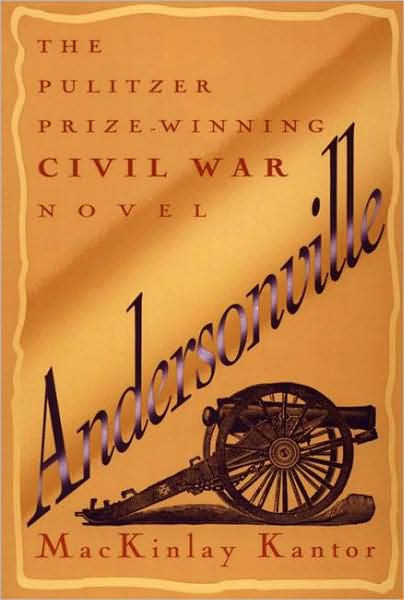
B List: Kantor--Andersonville...671/760

C List: Atul Gawande--Being Mortal: Medicine and What Matters in the End...223/402

The Byron book is not really a classic, though it is a curiosity of sorts, and is periodically reprinted in modern editions. It has made its way onto the list by being one of a group of four books reviewed by D.H. Lawrence in a 1928 article that has itself attained list status. I am going to attempt to read as many of these four books as I can get my hands on. Byron's book, his second, concerning a year he and three Oxford friends spent at the now somewhat celebrated but then remote and little--known Byzantine monastery in Greece, was published when he was 22 years old. He was a cheeky, cocky sort of youth, upper class, successfully classically educated (i.e., could actually read Greek and Latin and retained the content of his learning the whole of his life), fond of contention, iconoclastic after the manner of his generation. I used to like these kinds of guys when I could sort of imagine myself as being after the same type, but I really don't know how to take them now that it is so obvious that I do not have this sort of mind at all. I becomes tiresome to be forever reading things that one is never going to have a part in, and are not doing one any good. The style of the book is also overwrought and ordinary situations and observations are presented more opaquely than they need to be. Byron wrote nine books by age 31 and then went into politics. He was killed in war action in 1941 at the age of 35.

The Kantor I will be doing a longer essay on. I have mostly enjoyed it but it is laboring to get to the end of the story and has completely lost any sort of tightness it had going over its first half.

We went over Gawande's incredible resume and accomplishments in a previous post. His book (which is not as long as it looks here--the Large Print edition was the only one that came available at my library), despite its apparent popularity, is not particularly compelling. It is an information book rather than a story book--though there are stories in it, they are not really interesting or humorous, and the salient facts that Gawande tends to notice about people, as well as the way that he relates them, have the effect of being depressing more than anything else. The subject of the book is very, very old people, as in, over age 85, and the various ways in which they become impaired and the various ways in which they are cared for at this stage of life, in the end mainly by being put into nursing homes, where people tend to be miserable due to the institutional nature and lack of any personal autonomy which becomes one's fate once you enter one. My impression is that people have very unrealistic ideas about the kind of life you can reasonably expect to have when you are in your 90s, and the baby boomers, who are going to be the worst of all, have not even begun to enter serious old age yet. It is scary, and I would not be looking forward to it if I thought I was going to live that long (people my size rarely seem to make it much past the early 80s at the utmost), and I suppose there are improvements that could be made to nursing home care, make it less impersonal and so on, but of course that would cost even more money than is already spent on elders, at a time when as a society we are doing terribly at developing young people into adults who can govern themselves or contribute meaningfully in any way...

As an honorable mention I got as a kind of stocking stuffer a little volume called The Film Snob's Dictionary. I don't know whether some kind of statement about me was intended but it is a quite funny little book. It was published in 2006 so it is slightly dated--certain notoriously pretentious video stores in places like Los Angeles and Chicago were referenced which I suspect are no longer particularly important for example, but otherwise it makes for good reading. Of the genres which feature most prominently, the only one with which I have any familiarity is that of the self-consciously and usually pretentious art films. Horror/slasher movies, the ultraviolent Asian films much loved by Quentin Tarantino, and sex films attempting to pass themselves off as artistic meditations make up much of the (often hilarious) content. Obvious entries such as Ingmar Bergman and Federico Fellini are omitted because they are "mere name-drops for bourgeois losers wishing to seem cultured. Watching a Bergman movie is so PBS tote-bag, so Mom-and-dad-on-a-date-in-college, so baguettes and Chardonnay." (Of course some of us can only aspire to have moms and dads who went on a date to a Bergman movie in college). From the entry on 1960s Japanese B movie director Seijun Suzuki: '...(his) violent CinemaScope action pictures grew increasingly eccentric as time went on, culminating in 1967's Branded to Kill, about a Yakuza hitman with a fetish for sniffing freshly steamed rice. Fired by his studio, Nikkatsu, for making 'incomprehensible films' (a not entirely unfair charge), Suzuki spent years in the wilderness before being lionized by his burgeoning Snob constituency (which includes Quentin Tarantino and Jim Jarmusch)." There is lots of this throughout. While I mostly agree with their assessments of various movies and the cults that have come to surround I do think L'Atalante, which the authors (David Kamp and Lawrence Levi) single out for ridicule on several occasions, really is a deep and very sad and moving picture.

Picture Gallery


Athos


Memorial at Andersonville


The book

Some art


 The closest thing to a hot babe picture that came up. The girl on the left is pretty cute at least.

Sunday, September 16, 2012

Aesop

"For so many years all fables were called 'Aesop's Fables' that none can be definitely attributed to Aesop himself, who lived early in the 6th century B.C. For literary purposes Aesopian is a better word than Aesop's and two criteria should be applied to the fables: Each must have sentient animals as characters and must lead to a 'moral' as a conclusion; and each must have been included in the collection made by Phaedrus, first-century Latin poet. This is not to say that all or even any of the fables in Phaedrus's collection were necessarily written by Aesop."--IWE World's Greatest Literature Supplement, 1958.

Main encyclopedia article on subject from the same source:

"Aesop was a writer (1) who lived 2,600 years ago in ancient Greece. His stories, called fables, were so clever and amusing that they are still read today...

...Aesop lived on Samos (2), a Greek Island in the Aegean Sea. He is said to have been a slave (2) who was freed by his master (3). The exact time or reason for his death is not known (4), but some writers of history say that he angered a mob of people in the Greek city of Delphi and they threw him over a cliff."

Here, a more up-to-date quotation from the English classical scholar Martin Litchfield West:

"The name of Aesop is as widely known as any that has come down from Graeco-Roman antiquity [yet] it is far from certain whether a historical Aesop ever existed...in the latter part of the fifth century [BC] something like a coherent Aesop legend appears, and Samos seems to be its home."


(Not my personal copy of the book. I don't have one.)

Some additional notes on the second passage above:

1. Seeing as there is considerable uncertainty as to whether "Aesop" refers to an actual person, stating that he was a writer of some kind when neither original writings attributed to him nor specific, creditable references to the existence of such writings in literary, or book, form survive, is obviously taking a bit of a liberty.

2. Most ancient sources appear to agree that the supposed Aesop lived in Samos and was a slave at some point. His place of birth on the other hand was much disputed among these same sources: claims were made more Mesembria in Thrace, the city of Sardis in Lydia (Western Asia Minor), and the country of Phrygia, which was east of Lydia, in present-day west-central Anatolia. None of these places appear to have a stronger claim than any of the others. There does seem to be some consensus, tentatively approved by modern scholarship as at least the most likely dates if there are to any at all, that Aesop would have been born around 620 B.C. and died around 564. More on this in a later note.

3. Plutarch, supposedly in the Life of Solon (I don't remember this), relates the story of Aesop's death in Delphi (more below), in which he states that Aesop was in Delphi on a diplomatic mission from King Croesus in Lydia. This is the primary source of the speculation that Aesop was at one point freed from slavery.

4. I am going to quote from the Wikipedia article re this one: "[Aesop scholar Ben Edwin] Perry...dismissed Aesop's death in Delphi as legendary; but subsequent research has established that a possible diplomatic mission for Croesus and a visit to Periander are consistent with the year of Aesop's death."

There is also a long tradition of speculation that Aesop may have been of black African origin or descent, based on descriptions and depictions of him as swarthy and of otherwise unusual appearance.


So I have never read through one of the serious compilations of Aesop's Fables. Aesop may also be the only ancient Greek content originator on this new list that was not read, and maybe even not talked about, at SJC Annapolis, though it is possible sentences or fragments from him were used as exercises in our Greek manual/textbook Still, now that we have our first ancient Greek on board the site, as well as an Italy-based ancient Roman, it is starting to really feel like the monument to lost ambitions and lost possibilities I have hoped to build up here. We still need to get some of the French in here especially, and the Germans and Russians as well, for the mausoleum of my mind to attain something like its full form, but I am beginning to see it coming into shape.

I am going to include Samos and Delphi, as the places most associated with the life and death of Aesop, on the travel list. They are places one would want to see anyway, and the excuse for giving them the official imprimatur of being on the List and therefore priority destinations, is too convenient.


1947 short film of "The Tortoise and the Hare". The matter of interest to me in this is that the movie is a Encyclopedia Britannica/University of Chicago production. I did not know that they dabbled in filmmaking at this time, and of course this is right during the period when they were cranking up all the Great Books stuff. The film has its charm, though I am surprised at how gratingly Middle American the voice of the narrator was. I was anticipating maybe one of the myriad genius European professors that were on campus at the time, or at least a top-shelf graduate student.