Thursday, October 28, 2021

Florida

This list predates the era of theme parks and other modern attractions, and may (I would never say "will" in anticipating the satisfaction of other people) especially appeal to those in search of the "old-time" Florida experience. 

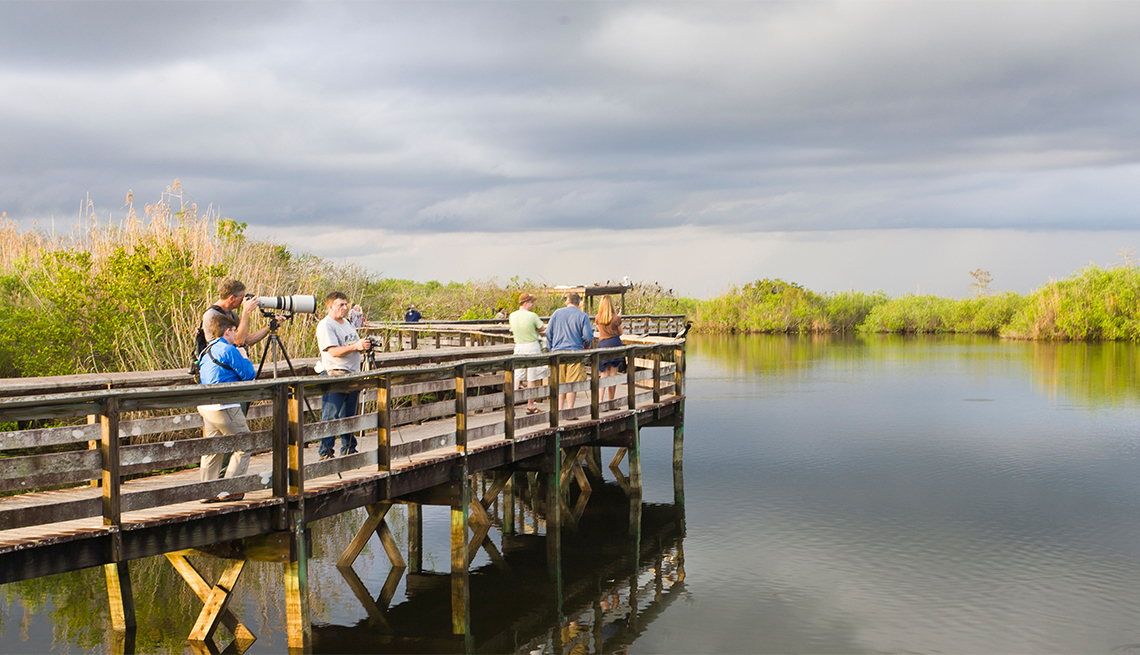
1. Everglades National Park, in Southern Florida, on U.S. Route 41. "Largest remaining subtropical wilderness in the United States; open Everglades prairies, mangrove forests; abundant wildlife including rare and colorful birds."


Around 1,000,000,000 annual visitors. I  have driven on the Tamiami Trail (U.S. 41) which goes along the edge of the park and we even stopped at a couple of roadside areas to take in the scene, so compared to most of these places I have kind of been there, but not really. It's pretty famous, I don't think I need to say too much about it. 

2. Fort Matanzas National Monument, 10 miles south of St. Augustine, on U.S. Route 1. "Spanish fort built in 1737 to protect back door to St. Augustine. Near this site, Menendez massacred two parties of French Huguenots in 1565, thus determining that Florida should remain Spanish rather than French territory."


This is another place I intended to visit once but was unsuccessful in my efforts. I did drive past it on the highway at least. I made the mistake (I think I was still in my 30s at the time, and overambitious) of trying to pack in too much in one day. I thought we could drop in to St Augustine for a couple of hours first and see that. My 1950s and 60s travel books, which before I got a smart phone I used to consult a lot, had given me an idea of St Augustine as a sleepy, old Florida kind of place where I would be able to pull up my car on the main strip in the town and walk around pretty much on my own taking in the sites for a few hours. It was in fact overrun with traffic and tourists. The pictures we got from the day still look nice but there was no personal space to be found anywhere. After this nobody besides me was in the mood to visit the 18th century fort (1742 according the official web site) where the Huguenots had met their unfortunate fate so we ploughed on through to grandma's condo. 

Pedro Menendez de Aviles: 1st governor of Florida. Appears to have been a capable military commander, definitely a conquistador type. There are some substantial monuments dedicated to him back in Spain. 


3. Fort Jefferson National Monument, at Dry Tortugas, 60 miles west of Key West, on U.S. Route 1 (Key West, I presume). "Largest all-masonry fortification in western world; built in 1846 for control of Florida Straits. Federal military prison during and after the Civil War. Outstanding bird refuge; extraordinary marine life." 
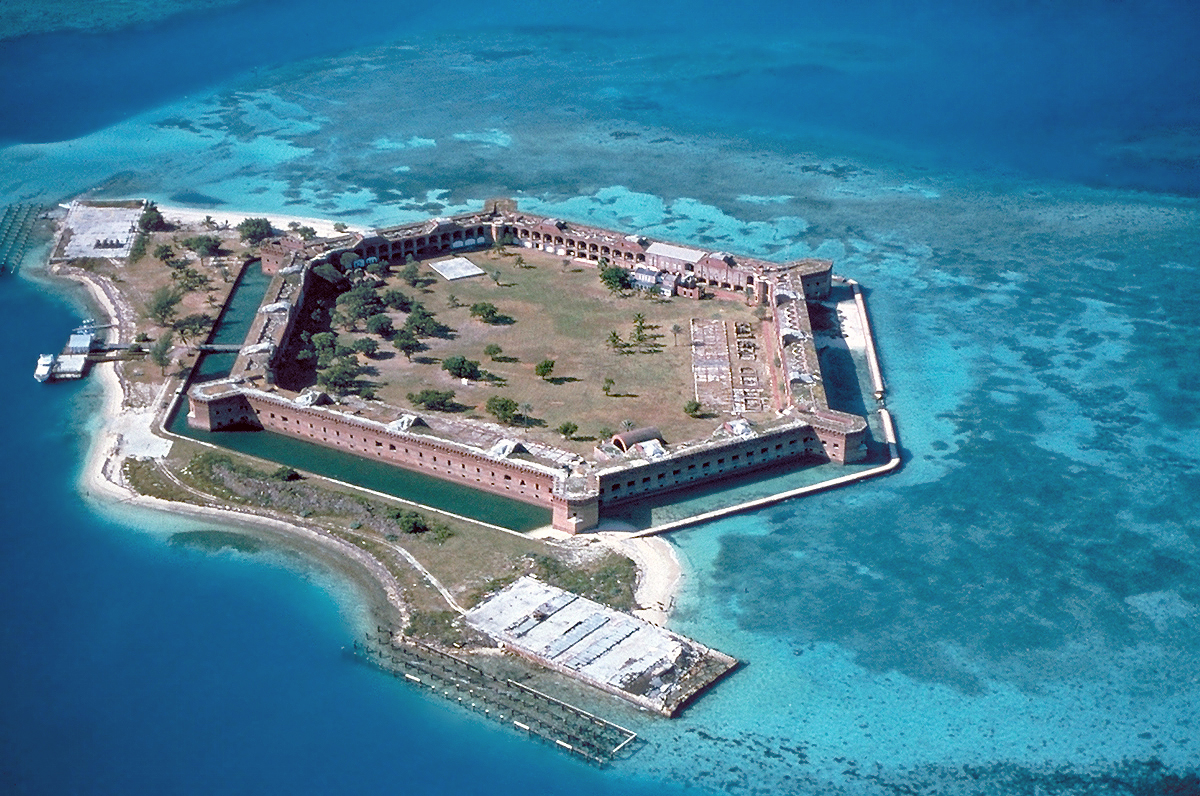

This looks like it would be a lovely spot to visit, but if you have a regular income it looks like it is quite expensive to get there. The ferry is almost $200 a person, and if you want to take the seaplane it'll cost you $634 for a full day excursion (the half day outing is only $341, but I don't like to be rushed). You can camp on the island(!), but you would have to bring everything with you on the ferry, food, ice, tent, drinking water. I think it would be worth doing once if you had the time and money. I can't find any more inexpensive way of getting there, unless you are able to go by private boat.  


4. Mountain Lake Sanctuary, in central Florida, 12 miles east of Winter Haven, on U.S. Route 60. "Established by Edward Bok as a sanctuary for birds; overlooks some thirty lakes; on Iron Mountain, the highest point in Florida*. More than a hundred varieties of birds; beautiful plants, shrubs, and trees. Contains the Singing Tower, where Edward Bok is buried. High up in the tower is a magnificent set of 71 bells." 
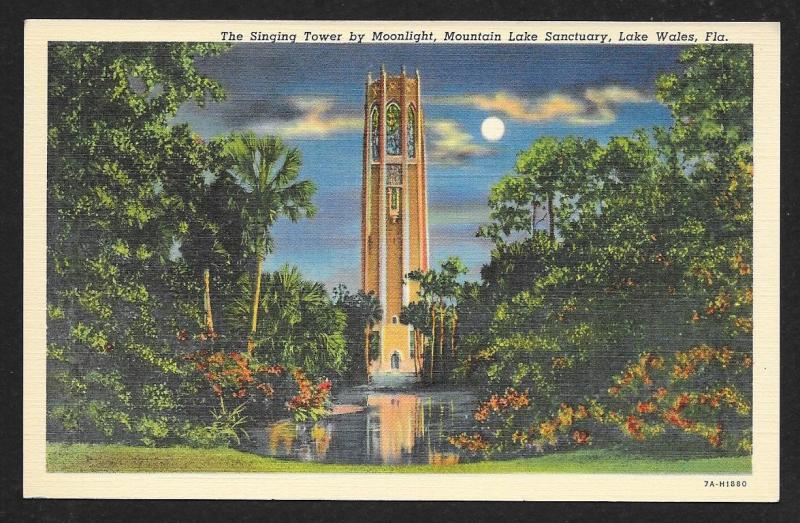

This is another site that I have almost been to. One year--a while ago now--when we were on our winter vacation in Sarasota I tried to squeeze in a visit on the way home. As often happens in such instances, we got off to a later start than I had planned, then hit terrible traffic getting out of Sarasota and up towards central Florida where the sanctuary is, though the sanctuary itself is in a less crowded area away from the highways that still maintains something of the old Florida look that I find in my guidebooks from the 50s and 60s. We pulled up at the gate of the place 5 minutes before they closed, so we didn't go in, though at least I was able to espy the top of the tower in the distance. At the time of course we planned to come back, but we have not to this point. It is relatively inexpensive ($15 for adults, $5 for children), and it looks like it is kind of grand and beautiful, Florida vegetation stretching over the flat land in all directions, a kind of vista we don't see the like of in the north. Edward Bok is not too famous anymore, but I have read his autobiography, which I enjoyed, so the place holds an interest for me. 

*According to Wikipedia, Iron Mountain is only tied for the 13th highest point in Florida, though at 295 feet, it is just 60 feet lower than the highest point (Britton Hill, in the far northwest panhandle, near Alabama). 


After a blissful day visiting the Sanctuary, Central Florida nightlife awaits to slap you back to reality. 

5. Highlands Hammock State Park, in south central Florida, 6 miles west of Sebring, on U.S. Route 27. "One of the most remarkable scenic spots in the state, it adjoins the huge Florida Botanical Garden and Arboretum. A wilderness of dense jungle and swamps, it abounds with wild animals and birds." 
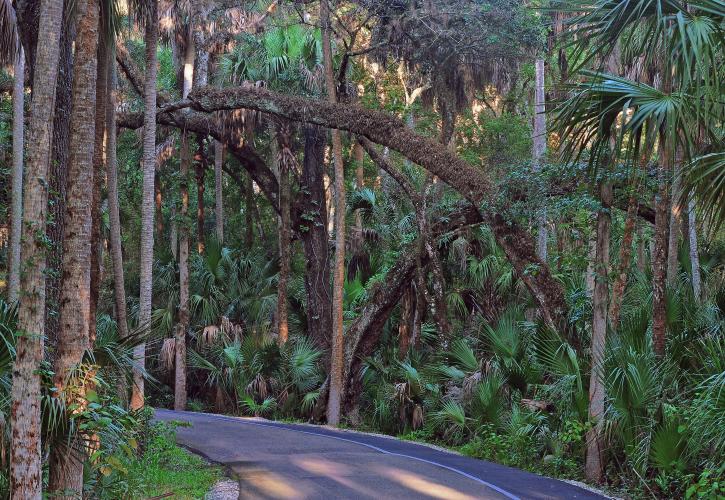

This is another place that I have contemplated going to over the years, but as with the Bok Tower, it's about an hour and 40 minutes from where we stay in Sarasota when go down there, and there hasn't been enough enthusiasm from the crowd to commit to taking one of our precious Florida days to make it over there. But as people get older...maybe one of these years. This is one of four original Florida state parks, and appears to offer a pretty comprehensive Florida nature experience--cypresses, palmettoes, alligators, ibises, etc. The entry fee per vehicle is $6--$4 if you drive in by yourself, making this a serious bargain for a quality day out in this part of the world. You can camp there as well, and even the campground gets mostly very positive online reviews, which is rare. 

The botanical garden and arboretum mentioned in the article was part of the original plan for the park, but this seems to have been abandoned as far back as 1939, and the area set aside for the garden incorporated into the main body of the park. This does not seem to exist as a separately cultivated area today. 
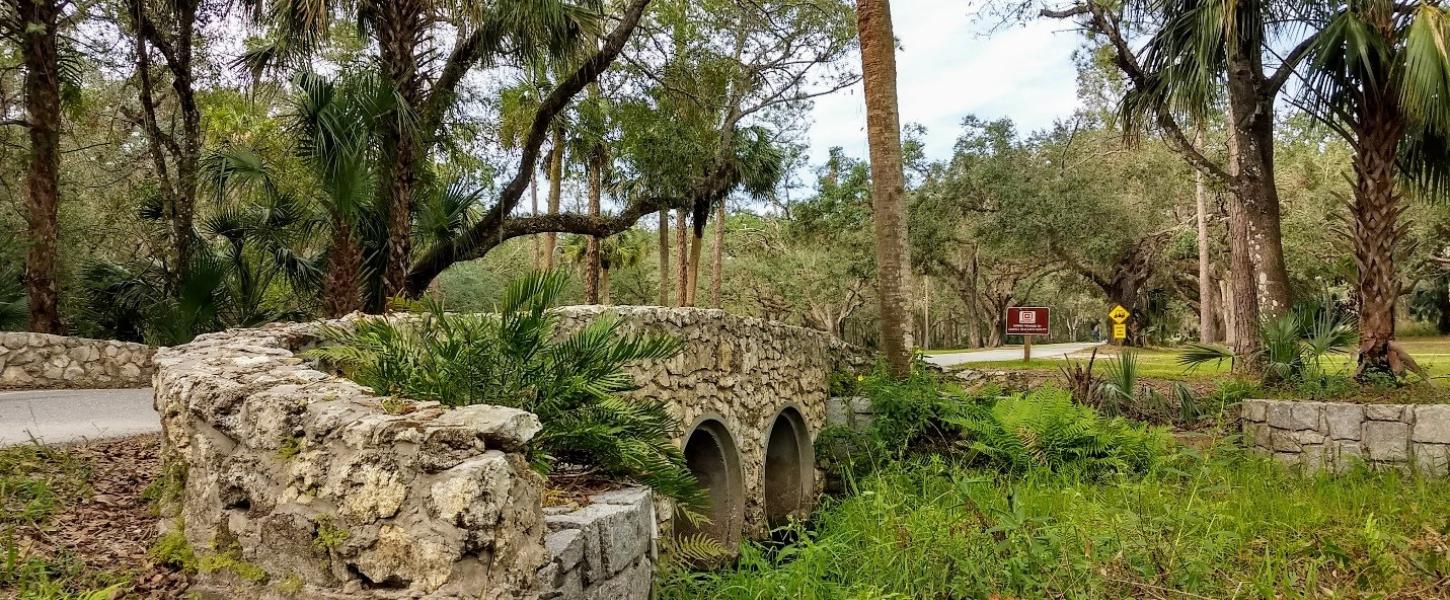

6. Silver Springs, in central Florida, 6 miles east of Ocala, on U.S. Route 27. "One of the largest springs in the world. Strange underwater plants, turtles, and fish may be seen from special boats." 
 

I have often seen advertisements for this place, either on road signs or tourist brochures, promoting it as a genuine, even classic "old-time Florida" attraction, especially famous for its glass bottom boat tours, which date back to the 1870s. I remember looking into this some years back and thinking it was fairly expensive, $30 or $40 a person, though obviously much cheaper than the likes of Disney World would be. In 2013 the state of Florida took it over and turned it into a state park, which has made it much cheaper to get onto the grounds at least, though the boat tours are a separate fee, the pricing system for which seems a little convoluted, in the sense that it is not easily obvious to me how much a family outing say would cost. The park was "whites only" until 1967, as were presumably most of the IWE recommended sites in the southern states, as these seem to have been written around 1960. The writers never remark or otherwise comment on this in these travel sections.

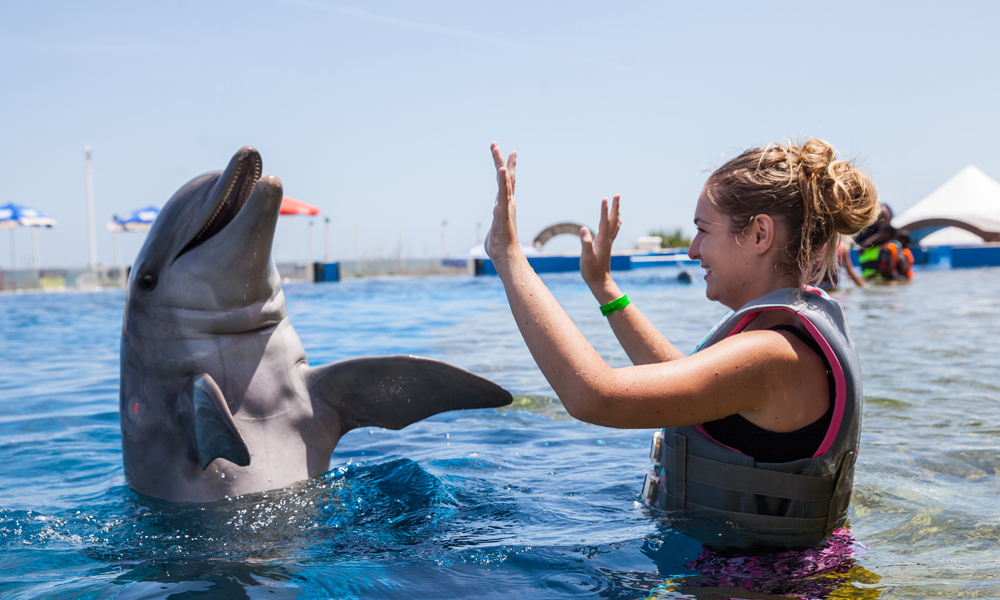
7. Marine Studios at Marineland,
near St. Augustine "have thousands of salt water fish of all sizes, including large sharks, on exhibit. Visitors can see them below the water surface through 300 windows." 


Originally opened in 1938, Marineland has a rather complicated history. During its heyday in the 1950s, the complex included three motels, a restaurant, and a bar called the Moby Dick Lounge which was frequented by a number of literary celebrities, including Hemingway, Marjorie Kinnan Rawlings, John Dos Passos, and Leo Tolstoy's grandson. The Wikipedia article on the site also notes that the park was famous for its employee Christmas parties, "a tradition starting in the early days lasting into the 1990s". (Hey, I could have gone to one of those!)* Starting around 1987, the attraction began a period of sustained decline. Layoffs came in the late 90s, and a series of hurricanes between 1999 & 2004, combined with ongoing deterioration of the facilities and decline in attendance already in progress, caused the closing of the park in 2004, with a declaration of bankruptcy and the selling off of such assets as remained. Remarkably, some serious scientific entities, such as the Dolphin Conservation Center Center and the Georgia Aquarium, took an interest in rehabilitating the site, and renovations were undertaken to bring the marine facilities especially up to date. The park reopened in 2006, the Dolphin show and other pure entertainments of old having been reinvented as more of a hands on learning and conservation experience. After reading through all of this history I feel like I really do need to drop in on this place if I ever get the opportunity (though alas, the bar, restaurant and motels are gone. It sounds like the original gift shop building at least has been preserved). 


*I did a quick search looking for more information about these legendary Christmas parties, but I didn't find anything. 

Thursday, October 7, 2021

October 2021

A List: St Augustine--City of God........................................................................762/867

B List: Bulfinch--Mythology................................................................................674/773

C List: Scott--Rob Roy.........................................................................................301/501

I think by next month we should be into some new books. I think I've gotten as much out of this reading of Augustine as I am going to get, but I'm this close to the end so I might as well go all the way. I am still enjoying Rob Roy for the high-spirited dialogue and Scottish/Glaswegian atmosphere. The story, which was hurtling along in such a lively manner in the beginning, slowed down somewhat between pages 200 & 300, though I think it may be about to pick up again. 

We're approaching that time of year when I have to pack up and move my reading time inside for the winter. I was able to take breakfast on the porch every day up to September 26th, but now pretty much every morning is too cold to sit out. However there should be a few weeks left for me to get out in the afternoon, when I am home. Sadly, my fear of ever increasing heating prices has made me come to dread the coming of winter over the past few years, a season I used to enjoy with more equanimity, at least until the latter part of March.  

Another month without many distinctive pictures, though I suppose we did a few things. I'm not one of these people who constantly takes photos, usually only if someone asks me to, or if I see something that interests me, which apparently is a rare occurrence.


We had one last beach day in early September. I had conceived the idea of going to a sports bar and watching a late football game at the end of the day, but all of the places at the beach were too crowded, so we ended up going to Applebee's in unglamorous Biddeford, which, to be honest, was fine.


My six year old's chalkboard drawing. 


The first weekend in October we went to a fair. I actually love these fairs for the same reason I like going to baseball games (at least in the cheap seats). Lots of younger people who are at least trying to have a good time and are not in the moment focused on grievances or political anger. Grievances and political anger are all good and well, but since I seem to be generally identified in most instances in my circles as at least as much as part of the problem as part of the solution, it is nice for me to have a break from it.


Another Sunday afternoon drive, this time to the Basin in the White Mountains. Thoreau was here. 


Breaking out the Halloween decorations (and seasonal attire).


She really wanted this almost incriminating photo. 


Twilight at the fair. 


Friday, September 10, 2021

September 2021

A List: St. Augustine--City of God....................................................................636/867

B List: Thomas Bulfinch--Bulfinch's Mythology..............................................306/773

C List: Walter Scott--Rob Roy...........................................................................135/501

It was a busy month, and all of these books are long and dense, though Scott is more of a rolling than a dense writer I suppose. In any case I didn't made much progress. It takes me about a half-hour to get through seven pages of both Augustine and Bulfinch (which have some superficial similarities in the way they are constructed, the way they synopsize the foundational stories with which they are concerned, the overall size and pace, and so on), and most days, thirty minutes is about all I've got. I also went on vacation for a week in August. School started last week for three days, and then there was a covid outbreak, so everyone is home again. I have an excessive number of pictures though.

Bulfinch is the third long book in a row on the B list (following The Brothers Karamazov and Buddenbrooks) my progress on which seems to grow ever slower as somehow the amount of other things I have to do in the course of a day grows ever larger. I fear I am becoming trained not to sit too long at a time reading without becoming agitated that I ought to be doing some work for other people. I hope someday I will be able to slough off this unwelcome reflex and revert back to the way I used to be, but I am worried I will not be able to do this. 

Walter Scott seems to me to be a really good novelist, he should definitely be thought of in the group with Dickens and Jane Austen and Fielding and the Brontes and all of those people, which I feel like he is not regarded as being in by literary people nowadays. He is absolutely first rate at plotting and building an atmosphere, and he has much more humor than I had been led to believe. His characters are perhaps not as adept at critiquing society's and other people's imperfections and probing the psychological sources of their dark motivations as modern readers have become accustomed to, but they at least have personalities and they have great language. All in all, I would say this is not a set of trifling strengths.

I have to pull these pictures off of my phone, which I cannot see very well, especially when I have to try to differentiate between four or five or ten pictures of essentially the same thing. I guess this is an all right (half) family picture. 


My son tried out for a travel baseball team. He didn't make it, though he was not (to me) obviously outclassed by the competition. His not being on it will save me some money, but I was willing to pay for it if he could play since he wants to and he has kind of been robbed of these last two seasons when he was 11 and 12 (there was a season this year but no all-star tournament).  


This same baseball-playing son is very proud of this picture of his hair. He keeps making it the screensaver on my phone. This picture by the way is at Brattleboro Books, which I found open for the first time in several years, though reduced to about half the store space it used to have.


My 19 year old finally had his long delayed Eagle Scout ceremony. Then the next day we left on a trip to go to college. 


The first stop on our little college trip was Cooperstown, New York. I did not take many pictures there, as among other reasons my phone was frequently dead on account of the children's playing games on them. I have no pictures of the Fenimore Art Museum, for example, which we went to, or of Otsego Lake, which I found to be particularly beautiful. My youngest daughter loves dogs. This dog was in a pretty good used book store (meaning that they had a solid stock of the kind of 50+ year old hardcovers that I would be likely to buy) on the Main Street of Cooperstown that also sold baseball memorabilia. 


This was at our hotel in Herkimer, New York, about 30 miles from Cooperstown. Staying in Cooperstown itself was a bit too expensive. We were actually planning to camp there, but there was heavy rain forecasted for the first day and a half of our two day visit, so we scrapped that plan. 


Now we are back at the Eagle Scout celebration. This is my nineteen year old who is going to college now.


The sign for our hotel is Herkimer, which is right next to the New York State Thruway. The hotel has an 80s--early 90s vibe about it. It had a no frills, but clean outdoor swimming pool surrounded by a fence fringed with pine trees and the roar of tractor trailers from the highway, which I found atmospheric, especially at night. We also found a restaurant nearby where we had our best meal of the trip. The food was nice enough, but they had a children's menu AND $2 beers (on Thursdays, though I think there was one other night during the week that they had this offer), which is like a dream come true for me.   


Cooperstown is also the hometown of course of James Fenimore Cooper, so we had to acknowledge some of the memorials to him. I've read some of his books in years past. If you are me, and you live in the northeast and you want to get a sense for the literary history of the country, in which he is an important figure, I think it is worth having some familiarity with his books. The Pioneers, I remember, struck me as halfway decent and engaging, though I do not recall much specific about it now. 


Current standings and daily scores displayed outside the Hall of Fame.


Cooper's grave. This reminds me that I need to record the date of this visit in my "Author's List" posts. Such occasions are few these days. The church which this graveyard belongs to was lovely--Cooperstown and that entire area are famously beautiful, a circumstance always remarked upon by visitors--but my phone hit 0% just as I got this picture, and I could get nothing more. 

From Cooperstown we advanced to Gettysburg and did the obligatory tour of the battlefield and monuments. This is on the rampart of the impressive Pennsylvania Memorial.


This one was from the 30s (75th anniversary of the battle memorial) and overall suggests some Fascist influence, complete with an eternal flame, which still burns as of my visit, on the top. I don't exactly dislike it though. The entire place is a hodgepodge of monuments from different times and places that are for the most part out of sync with the way intelligent people think about history or war in the present. In that sense it is not as out of place as it might otherwise seem.


The view from the famous Little Round Top, a high ground occupied by the northern forces where an assault from the rebs was repelled.


Lincoln is everywhere in Gettysburg, we had to get in one picture of him. 


Monument donated by the New York City Fire Department. I took pictures of a few of the Confederate monuments as well, though I left them out of this post. I think I posted a picture of the Lee monument (along with the warning sign not to vandalize, deface it, etc, or suffer a fine) on my Twitter page.

  
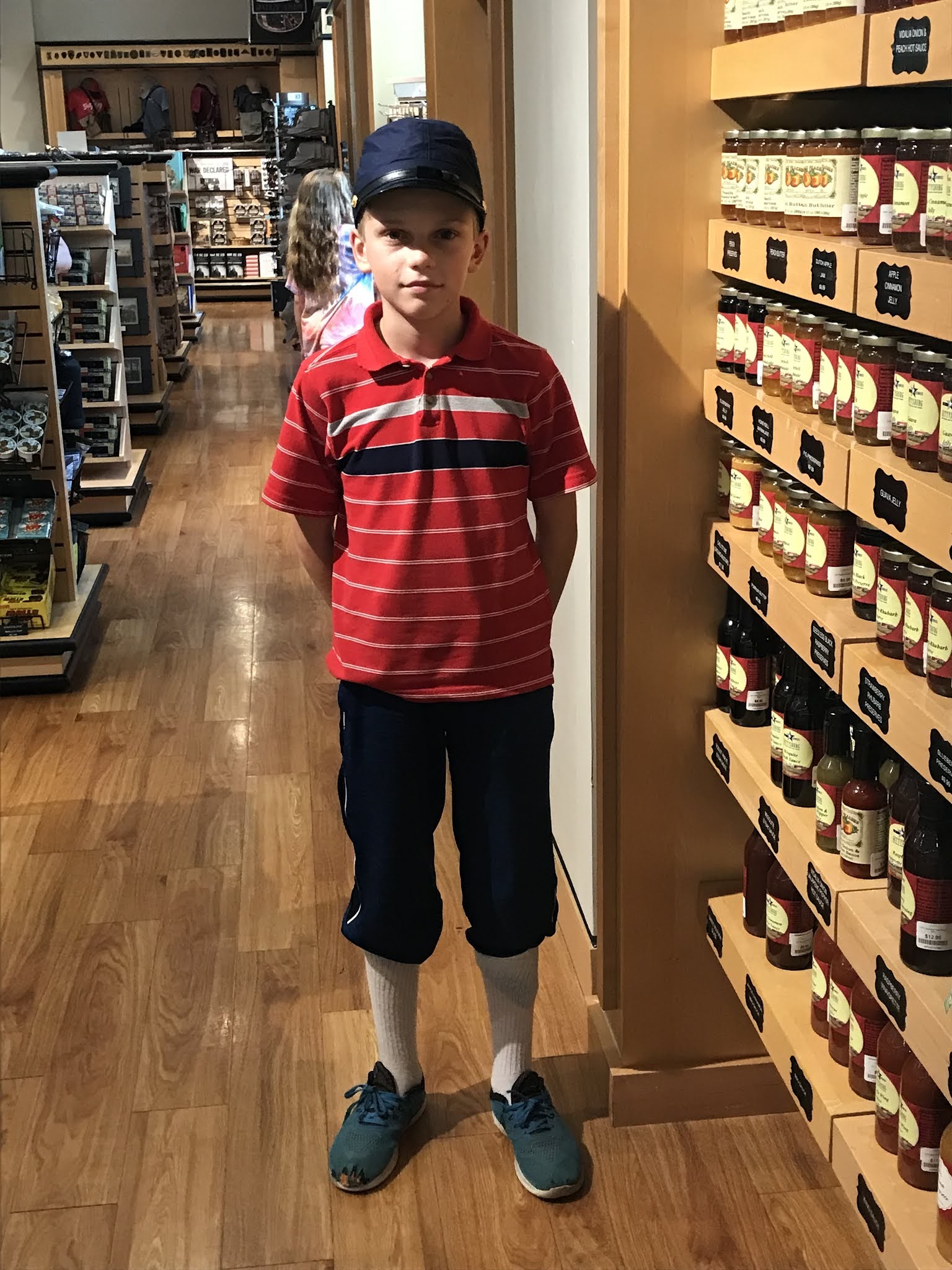
Trying on Civil War hats in the gift shop. Realizing that baseball uniforms are basically modestly evolved Civil War era attire. 


Me painting a church.


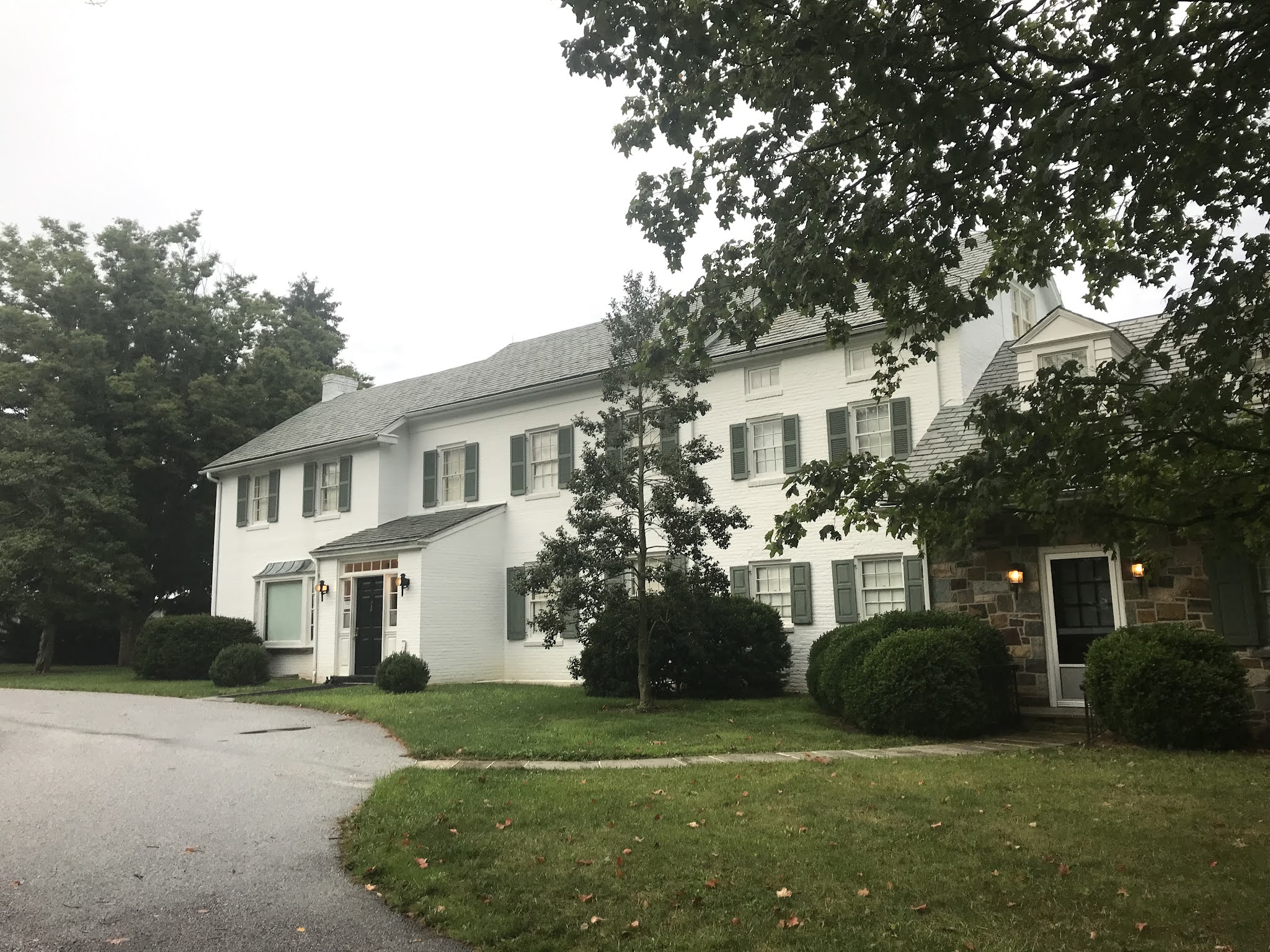
Back in Gettysburg. This is Eisenhower's farm where he lived after he was President. It was closed because of covid, but you could still walk around the grounds. It's a nice house with a lot of land, but all in all pretty modest for a major world leader by present standards.


Finally we made to Annapolis to drop my son off at SJC. This is the only picture from the school on my phone (my wife took a lot of pictures). This is a faculty lounge/meeting area behind the pendulum pit that I don't think was there in my era.  


More church painting. This is my second son's Eagle Scout project. Really the parents aren't supposed to be doing this--the Scout is supposed to be leading the project with the other scouts in the troop. But no one showed up and we were up against the deadline, so there we were.


After this day of painting, one of my children who is somewhat on the spectrum informed me that he had wanted to go with me on a hike. I was kind of tired and hungry and it was about to get dark so I was inclined to not do this but I ended up going to make everyone happy and had a late dinner. This is a hill right in Concord with a fire tower on the top of it, about 45 minutes each way. It was mostly light enough to see on the way up, but when I got up there I rested for about 15 minutes, by which time it was completely dark. This is the view from the ground where I was outstretched after the ascent. I did make it back down in the dark, with the aid of my cell phone flashlight (after taking this photo reduced my charge by about ten percentage points). I was very tired. 


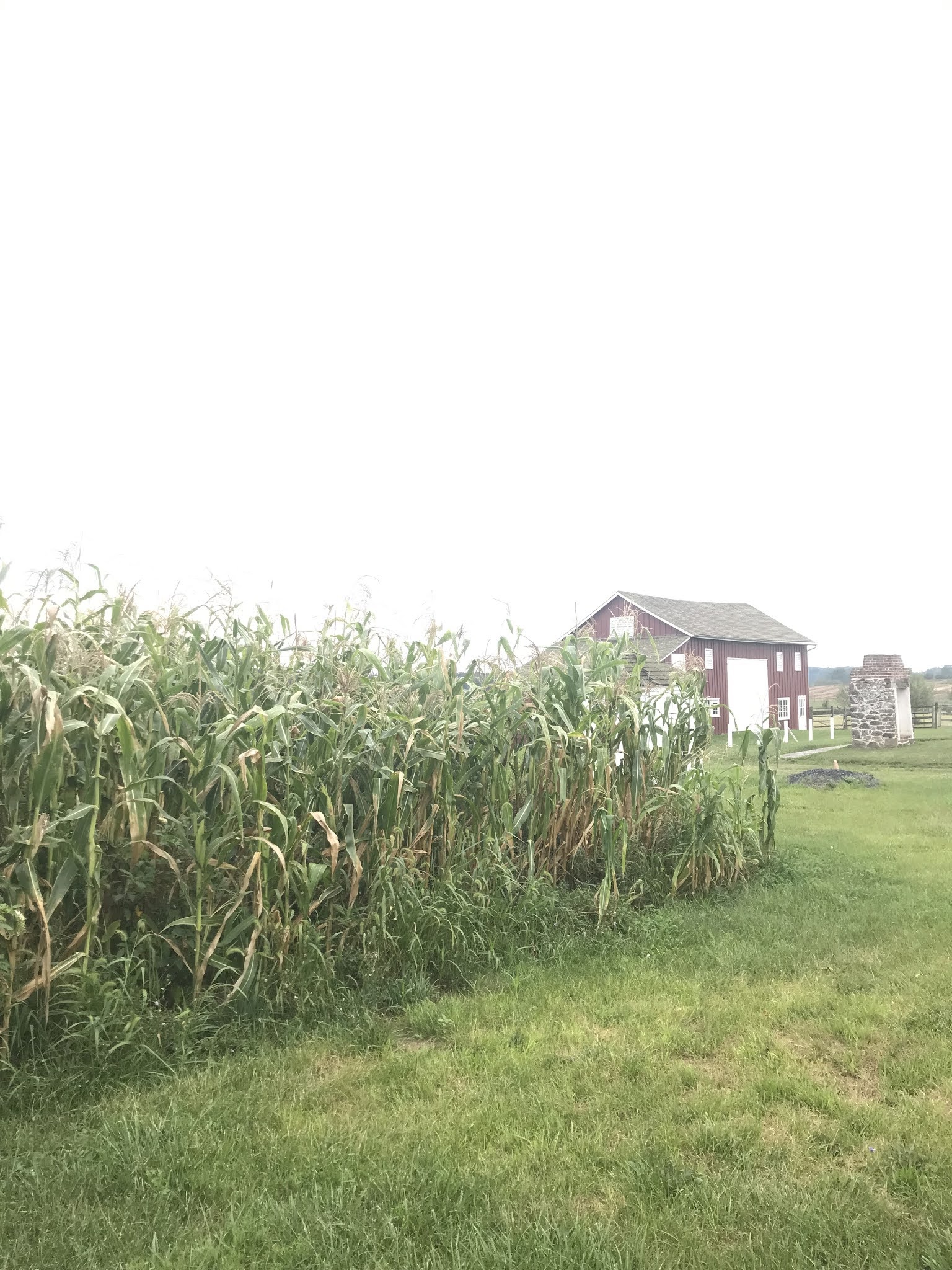
One last view of Gettysburg. I probably won't go back there again, and you could say I've seen pretty much everything there is to see there apart from a few of the smaller houses associated with the battle/and or Lincoln (we did see the famous cyclorama painting), but I think I would like to go again sometime, it's pretty there and all of the memorials are rather moving. 

Wednesday, September 1, 2021

Thomas Mann--Buddenbrooks (1901)

I don't have a grand introduction for Buddenbrooks, the first of Thomas Mann's novels, and there are three or four of them on the list, to come up. We finally get into a long book from the German-speaking world, among people (in this book at least) I find to be quite temperamentally familiar in their emotional drives, romantic pursuits and so on, to the sorts of people I have mostly lived among in the United States, more than the English really, and certainly more than the French and Italians. Even Thomas Buddenbrook's obvious attraction to Catholicism and preference for calling for those in its service to his aid without joining the faith etc////////////

O.K, so I started this post 16 days ago and then I had to do many things and I went on vacation and I forget where I was going with this opening paragraph so I am going to start over. Buddenbrooks seems  to be an exceptionally well respected novel--I can find very little snark or condescension directed at it even on the internet--and it is still on the cusp at least of being modern, perhaps because its author remained a prominent literary figure well into the middle of the last century, yet it is a book that any regular (non-scholarly) person could read easily and maybe even get something out of it, insight or advanced understanding beyond what they were limited to before. It has numerous of the elements that are common in classic European novels, and which I presume are central to their having been a predominant art form over the past 400 years--a long arc of time either literal or implied, families of enough solidity and standing that they are sort of extra-representative of the society being depicted, venerable schools and rituals. Of course not all of the great novels involve these exact themes, but most of them work more or less within these basic parameters. 

Here's the IWE introduction: "Mann's first novel is still ranked among his best. It pictures the high-bourgeois business family of which Germany's commercial cities have had a superabundance for at least a century and it portrays the problems of the monster or mutant of artistic soul born into such a family. The novel is wholly authentic because Thomas Mann was such a person born into such a family."

I'm not sure whether the mutant referred to here is supposed to be Christian or little Johann Buddenbrook--I am assuming it is the boy, since Christian comes off as rather pathetic and Hanno really is the endpoint of the family. Even while he is alive, it is obvious that the continuation of the firm and the family's position is hopeless. I cannot quite believe either of these hapless characters are stand-ins for the vigorous, focused and preternaturally mature author.

I took many notes on this book. I won't use them all but I can't begin to organize them, especially after this lapse of time, so it will just be the snippets again.

p. 70 The grandfather's dying words: "And to Christian: 'Be something worth while!'" At this point in the book Christian was still a young man, so the admonition was humorous.

p. 84 "Contempt was a weakness of Sesemi's--perhaps a pardonable one."

p. 206 "Her strongly developed family sense was instinctively hostile to conceptions of free will and self-development...She had, unconsciously, the feeling that any trait of hers, no matter of what kind, was a family tradition and therefore worthy of respect."

I feel like we are not supposed to think too highly of Tony Buddenbrook, that she is too emotional and shallow and personally undisciplined and thus emblematic of the general rot that has set into the family, but I found her spirit to be attractive. The misfortune of her first marriage, into which she was forced for the sake of the family, was not her fault, but of course it colored the way everyone regarded her forever afterwards.  

p. 264 Christian "'I have gone a great deal to watch concerts,' he said. 'I like to watch how the people behave with their instruments. It is really beautiful to be an artist.'"

There follow two paragraphs about Christian's self-absorption. Pertinent to modern condition, expresses what was formerly considered appropriate mental development in a man.

p. 270 More Christian: "He silently took for granted the pre-eminence of his elder (Thomas), his superior capacity, earnestness, and respectability. But precisely this casual, indiscriminate acknowledgment irritated Thomas, for it had the appearance of setting no value upon superior capacity, earnestness, or respectability."

p. 338 Tony: "And when I am his wife, you'll see...I will take care that he has ambition and gets ahead and makes an effort and is a credit to me and all of us." 

I always note passages like this. The idea holds a fascination for me. 

p. 341 Gerda. "She had a real distaste for expeditions like to-day's especially in summer and most especially on Sunday. She lived in the twilight of her curtained living-rooms, and dreaded the sun, the dust, the crowds of townsfolk in their holiday clothes, the smell of coffee, beer, and tobacco; and above everything else in the world she hated getting hot and upset."

The contrast between "morbid beauty" and "healthy prettiness" (represented by Antonie/Tony, who enjoyed such outings and even drinking beer). The latter is always a little undervalued, even in our time. The frigid, impeccably well-presented Gerda, whose only apparent interest is music, is admired by numerous men in the book as a superior, goddess-like being.  
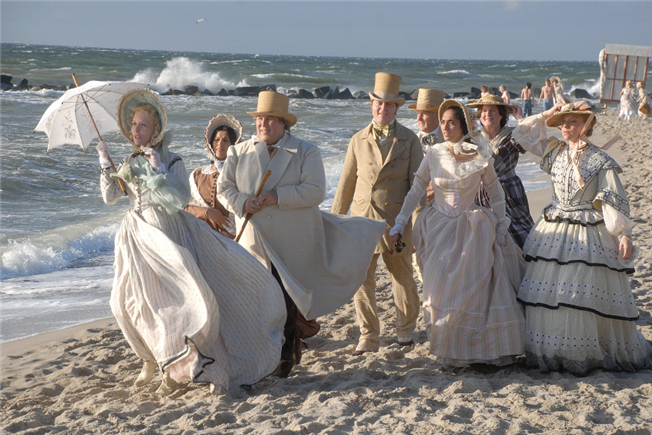
p. 364 Antonie in Munich during her equally unsuccessful second marriage: "...she breathed the Munich air, the air of a great city, full of artists and citizens who habitually did nothing."

Munich comes off in this book as having a reputation in the German speaking world for being a comparatively lazy city. I wonder whether this is still true. 

I found the style of this book interesting in the use of long passages describing appearances, clothes, furniture in some instances, while entire years, marriages, and other significant life passages are passed over in a couple of paragraphs punctuated with rapid bursts of scenes that settle matters decisively and move the story along.  It works here, but I think it would harder to write in this manner than it looks.

p. 428 Thomas Buddenbrook's "What is success?" speech. Whether or not it is itself central to the theme of the book as the author wishes us to understand it, it is central to the ethos of the society which the book is depicting, and is close to that which prevails in our own, so it seems worth examining.

"What is success? It is an inner, an indescribable force, resourcefulness, power of vision; a consciousness that I am, by my mere existence, exerting pressure on the movement of life around me. It is my belief in the adaptability of life to my own ends. Fortune and success lie with ourselves. We must hold them firmly--deep within us. For as soon as something begins to slip, to relax, to get tired, within us, then everything about us will rebel and struggle to withdraw from our influence. One thing follows another, blow after blow--and the man is finished." 

pp. 447-8. Tony at her daughter's wedding: "...Frau Permaneder, overpowered by the past, the present, and the future, burst into audible sobs: just the unthinking, unembarrassed tears of her childhood."

I was moved by this scene. Best character, I wrote, shrewdest acumen, tightly wound. Yes, I have a soft spot for her, though she certainly would have found me disappointing (though personality-wise I was more like the medical student boyfriend she had that her parents wouldn't let her marry when she was young than any of the other characters. He did work his way to a successful career in adulthood, however). 

p. 485 The torment of Hanno (Thomas's weakling son) when he struggles to recite a hymn in his father's presence, remarks on manliness. Is this how you need to raise boys to be capable adults? Because we don't know. (ed--evidently these methods were not foolproof, since they did not work with Hanno. But my impression is still that discipline and strict, even severe expectations have been essential in many instances of successful development). 

"It was cruel. The Senator (Thomas) was probably aware that he was robbing the boy of the last remnant of his self-control But the boy should not let himself be robbed. He should have more manliness by now." 

 p.498. The great Wagner debate of 1868. We are rather insensitive to its depth and importance now, but at the time it was a matter of world-historical seriousness. 

p. 571 Thomas to Christian during their final blow up: "I have more serious things to think about than your illnesses." My comment was 'I love it when people get real'.

p. 615 More worries about Hanno's inferiority. "Somehow or other a boy must know from the beginning how to gain the confidence and respect of his comrades, upon whose good opinion of him he will be dependent for the rest of his life! There were, on the other hand, the two sons of Consul Hagenstrom (the Hagenstroms were an ascendant rival family), two fine strapping boys, twelve and fourteen years old, strong and full of spirits, who instituted prize-fights in the neighbouring woods, were the best gymnasts in the school, swam like otters, smoked cigars, and were ready for any deviltry. They were popular, feared, and respected." 

These truths cut deep with me. 

p. 616 "But--not to speak of his masters--what must his fellow pupils think of Hanno, who was not only a very mediocre scholar, but a weakling into the bargain; who tried to get out of everything for which a scrap of courage, strength, skill, and energy were needed?"

My comment--'Truly such important concepts that are not impressed upon weak boys forcefully enough. They go to any length to justify their pathetic existences.' I don't think I would joke about this matter, but perhaps I was. 

p. 647 Thomas Buddenbrook's revelation regarding the nature of death as a release, a freeing from the body which prevents one from "being something other and better." I haven't made this leap of consciousness yet. Also it is impressive how well the youthful Mann (age 26 at the time of the book's publication) grasped the sense of impending death, the emotions, etc, that grip a 48 year old. I had no conception of this in my 20s. 

p. 658 "Siegismund Gosch ordered another grog in a tone of voice that was as good as saying, 'What's the use of living?'" Lol.

p. 664 "Among the crowd were settled, grey-bearded, highly respectable citizens, wearing the most irreproachable national-liberal expression on their faces." I think this must have reminded me of the respectable liberals of our own day who are always able without appearing to have any trouble about it to hold the correct position on every litmus test of moral worth that comes, and indeed to have always done so, more or less. 

I wrote a note which says, 'There is a manly way to criticize and contend with the great works of civilizational history bequeathed to us. We aren't adequately doing this.' I think the "We" here refers to people like me who aren't doing anything particularly well or providing much societal leadership, but still think of ourselves as the sort of people who ought to be doing that. 

p. 710 "The ideals of the victorious, united fatherland (we are at about 1875 now) were those of a somewhat rude masculinity."

When 19th century Germans talk about music...

Perhaps I should post all of these little notes and observations as individual Twitter tweets. It would get my post numbers up there and perhaps in the more immediate moment the thoughts would take a fresher and livelier form. What would come of this long project of the book list then? I would have to write in a more essay like format on the blog, which would be desirable, and I hope to do more of that somewhere down the line anyway. But now I scarcely have time to do this. 

I read an old translation of course, by H. T. Lowe-Porter, who upon further research, and admittedly to my surprise, was not only a woman but an American to boot. She was the first English translator of most of Mann's works. Indeed she had the exclusive rights to do so for publication for about 20 years. The new ones all claim naturally to be much better and more accurate, and even to retain more of the original humor, though this last I usually find to be especially debatable, as there seem to be few classes of people with less of a feel for humor than modern scholars and intellectuals.     

The Bourgeois Surrender Challenge

1. Robert T. Kiyosaki--Rich Dad, Poor Dad..................................................................57,450

2. The Devil Wears Prada (movie--2006)......................................................................19,618

3. C. S. Lewis--The Great Divorce..................................................................................3,797

4. Michelle Magorian--Goodnight, Mister Tom..............................................................3,446

5. Richard Thaler & Cass Sunstein--Nudge....................................................................2,233

6. Richard Thaler--Misbehaving......................................................................................1,723

7. Emily Giffin--Heart of the Matter...............................................................................1,136

8. The Egyptian (movie--1954)...........................................................................................353

9. Erica Bauermeister--House Lessons...............................................................................291

10. Erica Ridley--Dawn With a Duke.................................................................................266

11. Eli J. Finkel--The All or Nothing Marriage...................................................................197

12. Buddenbrooks (movie--2008)..........................................................................................96

13. Hector Abad--Oblivion....................................................................................................82

14. Albert O. Hirschman--The Passions and the Interests....................................................47

15. Jordan Reeves & Jen Lee Reeves--Born Just Right........................................................44

16. Thomas Mann--Royal Highness......................................................................................34

A decent field.


Round of 16

#16 Mann over #1 Kiyosaki

I assume Kiyosaki is the rich dad. But he goes down in the first round against Thomas Mann.

#15 Reeves & Reeves over #2 The Devil Wears Prada

#3 Lewis over #14 Hirschman

I feel like Lewis has appeared in the tournament on several previous occasions, without winning. I could look this up, and maybe I will at some point. 

#4 Magorian over #13 Abad

The first somewhat close game. I feel like the Mister Tom book is a minor classic while the Abad concerns politically motivated murders in Colombia. Someday a book like that will probably get through and win, but it isn't going to happen a lot..

#5 Thaler & Sunstein over #12 Buddenbrooks the movie.

I would still like to see the movie, though I am picking up signals that it is not always easy to watch in the United States.

#11 Finkel over #6 Thaler

I would probably rather read Thaler, who is a University of Chicago professor who manages to write popular economics books, which is a class of person I am interested in, but Finkel's book had an upset.

#7 Giffin over #10 Ridley

Romance novel alert.

#9 Bauermeister over #8 The Egyptian

Elite 8

#16 Mann over #3 Lewis

A tough loss for Lewis, who fell victim to the old "IWE authors get advantages in the first two rounds unless there is an upset rule." He's another one who will get another crack at the title someday.

#4 Magorian over #15 Reeves & Reeves

#5 Thaler & Sunstein over #11 Finkel

A competitive game between two books that kind of deal with the similar subject of How to Thrive in Today's Cognitively Demanding Social Environment. I thought Thaler & Sunstein looked more cognitively stimulating overall.

#7 Giffin over #9 Bauermeister

Griffin had an upset. It is a fairly mild one.

Final Four

#4 Magorian over #16 Mann

Mann's second novel (after Buddenbrooks), though not one of his more celebrated efforts. It probably would still have won over a children's book but Magorian has an upset to use.

#5 Thaler & Sunstein over #7 Giffin

I can't quite figure out what kind of book the Giffin is, but it doesn't sound like anything I particularly want to read.

Champonship

#4 Magorian over #5 Thaler & Sunstein

I have a mild curiosity to read both of these books. The Magorian more or less wins on a coin flip and because it seems to be genuinely esteemed by serious book readers.