Thursday, May 10, 2018

Felix Salten--Bambi (1923)

Thought of, doubtless due to the Disney cartoon, primarily as a children's book,  the novel Bambi is actually a highly emotional, and in some ways rather brilliant meditation on the arc of life, nothing like I expected. For some reason--probably because I had confused him with Maurice Maeterlinck--I was thinking when I started the book that Felix Salten was Belgian and wrote in French, though in fact he was Jewish and a native of Hapsburg Budapest who wrote in German. Salten was very prominent in intellectual circles in his time as far as activity goes, though most assessments of his raw brainpower in these tough crowds did not accord him a particularly high rank. At least one writer has opined that Bambi can be interpreted as a commentary on the Jewish experience in Europe. I found it to be very sad, though essentially truthful. It really is not a children's book. There is nothing in it of humor or whimsy, despite which I think it is quite good, and well worth the time to read, if you have an intellect and psychological makeup like I do, which admittedly does not seem to be very many people.


p. 20 (I started pretty early with the notes in this book) "These were the earliest days of Bambi's life. He walked behind his mother on a narrow track that ran through the midst of the bushes. How pleasant it was to walk there." The melancholy, wistful tone is established right at the beginning. The English translation by the way was done by Whittaker Chambers, who was a name of some renown in his lifetime, though I don't have a good sense of what specifically he was renowned for.


p. 56 "In a moment Bambi darted after her. Gobo followed him. They flew around in a semi-circle, they turned tail and fell over each other. Then they chased each other up and down. It was glorious."


p. 59 "And Bambi's mother said to him, 'Come, it's time to go.' 'Wait just a little longer,' Faline pleaded eagerly, 'just a little while.' 'Let's stay a little longer, please,' Bambi pleaded, 'it's so nice.' And Gobo repeated timidly, 'It's so nice, just a little longer.'"


See what I mean.


Around this point I made a rather snide note that if a marginalized culture had produced this story, it would probably be held up as so subtly profound and wise as to be inaccessible to us.


pp.70-73 "'It was a bad business', he said, 'a monstrous uproar! You wouldn't believe how scared I was. I hunch myself up as still as a mouse in the corner and hardly dared move. That's the worst of it, having to sit there and move. And all the time you're hoping nothing will happen." This is a squirrel talking. I thought this passage might have been related to the Jewish experience in Europe.


Fall comes for the first time and Chapter VIII is a brief aside featuring the last couple of brown leaves clinging to a branch in complete denial about their future prospects, a real meditation on the reality of death. It hit home with me.


p. 234 I don't know what happened in the middle of the book, I meant to write down some notes but never got around to it. By this time Bambi has come to the point in life where I seem to be: "For his thoughts had grown serious and his heart heavy. He did not know what was happening within him. He did not even think about it. He merely recalled things aimlessly, and his whole life seemed to have become darker."


p. 258 Then he suffers injury and illness: "Not until the fever had entirely left his body did Bambi begin to think over all that had happened to him. Then a great terror awoke in him, and a profound tremor passed through his heart. He could not shake himself free of it. He could not get up and run about as before. He lay still and troubled." Obviously this whole passage would be lost on a child and would have to some extent been lost on the me of ten years ago. The depiction of the emotions of aging, not even out of youth, but really out of the prime years of life is eerily good. Salten, for the record, was 54 when Bambi was published, so he still had a few years on me. Books on these classics lists written by authors older than I am at the time of publication are not quite rare yet, but it has definitely reached the point where the circumstance is worth noting.


p. 268 "But of all his teachings this had been the most important; you must live alone, if you wanted to preserve yourself, if you understood existence, if you wanted to attain wisdom, you had to live alone."
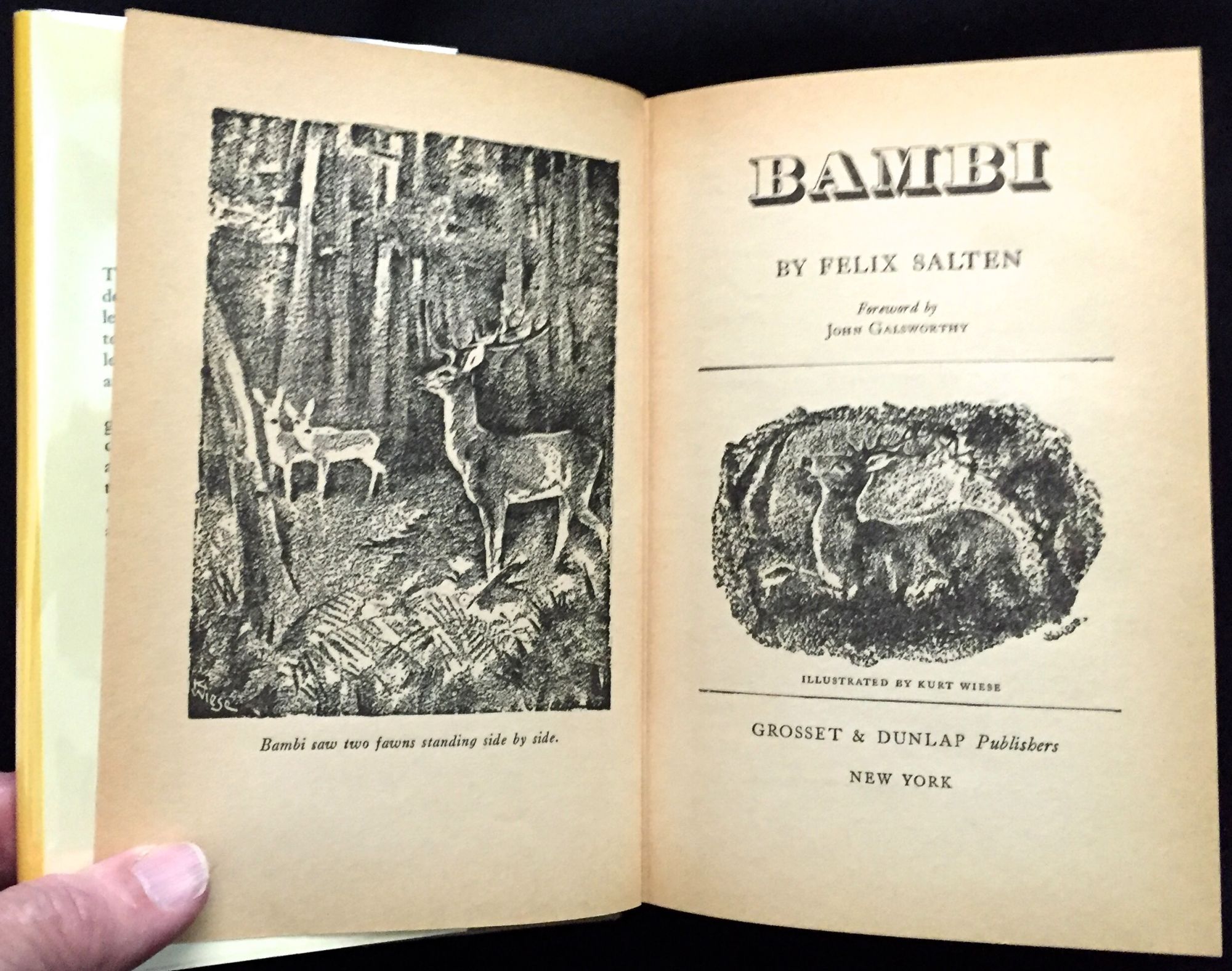


Stolen picture. Since it's getting harder to do this, I'm going to have to start preparing more from my own materials. It shouldn't be hard.


The story meanders a little more in the second half, though it is obviously still an allegory. Though perhaps I should see it again, I think this aspect was completely lost in the Disney adaptation, which Salten apparently liked nonetheless.


I suppose I should at least briefly touch on the question of whether hunting is evil or not. Besides the brutality of humans which are duly noted, many of the animals are obviously predators too. After a heartwarming description of a family of ducks, a fox drags the mother duck out of the water and devours her, the mice live as virtually universal prey, and so forth. While death and inter-species violence are endemic to life, I think Salten would not have us find them lovable or heroic aspects of existence. He has chosen as his hero-animals the deer, who do not attack other animals, after all. I have, of course, never been on a hunt of any kind, unless we count setting mousetraps, the bringing of which latter death I must confess I have never lost any sleep over. I do not avoid hunting for any ideological reason, but merely because I did not grow up among people who ever did those sorts of things. It is a skill, and historically an important one for humans, especially male humans, to have, and I don't have any strong feeling that it was a skill that would better have remained undeveloped, so I have no urge to denounce it. Even the desire to virtue signal in me at this point is not powerful enough to give me any real pause in considering a position.


The edition of the book I read I found some years back in my attic (two copies of it in fact) in one of the many boxes of books that had been left up there for many decades by my wife's family. The book was published by Noble and Noble, with a brief forward by John Galsworthy and illustrations by Kurt Wiese. It looks like it dates from the World War II era, since there is an announcement on the copyright page declaring the book to have been made in strict conformity with WPB regulations of essential materials. It is a nice little book, though unfortunately I got something on my hands one day while I was reading it and smudged the cover.


The Bourgeois Surrender Challenge


1. Chicken Soup For the Cat Lover's Soul.......................................2,055
2. Philip Pullman--The Subtle Knife...................................................718
3. Jane Yolen--Owl Moon...................................................................268
4. Emile Zola--Germinal.....................................................................158
5. Bob Grant--Bambi (Golden Book)..................................................134
6. Kenneth Oppel--This Dark Engineer................................................84
7. Mary Eberstadt--It's Dangerous to Believe.......................................57
8. Victor Hugo--The Man Who Laughs.................................................37
9. Pippa Mattinson--Total Recall...........................................................28
10. Victor Digenti--Windrusher............................................................21
11. Velda Brotherton--Once There Were Sad Songs............................21
12. Maxim Gorky--Mother....................................................................20
13. Felix Salten--Bambi's Children........................................................13
14. Susanne Davis--The Appointed Hour................................................7
15. David Zindell--Splendor....................................................................5
16. Jana Richard--Lies and Solace...........................................................5


First Round


#16 Richard over #1 Chicken Soup


This is a pretty excruciating matchup.


#2 Pullman over #15 Zindell


In battles of two genre books, I am going to go chalk until the final four from now on.


#3 Yolen over #14 Davis


The Yolen book is a children's book but it did win the Caldecott medal


#4 Zola over #13 Salten


A rare clash of IWE authors in the Challenge. I am actually curious about the Bambi sequel, but it wasn't enough for me to give it a win here.


#5 Grant over #12 Gorky


Upset card played over another IWE stalwart.


#6 Oppel over #11 Brotherton


#10 Digenti over #7 Eberstadt


Eberstadt's book is about religion and contemporary issues, not a genre novel. Unfortunately Digenti has an upset card.


#8 Hugo over #9 Mattinson


No one really studies like this anymore, but at least someone else wishes they did.


Elite Eight


#2 Pullman over #16 Richard


#3 Yolen over #10 Digenti


#4 Zola over #8 Hugo


Another clash of titans


#6 Oppel over #5 Grant


Oppel uses up his upset card.


Final Four


#2 Pullman over #6 Oppel


#4 Zola over #3 Yolen


Champiuonship


#2 Pullman over #4 Zola


Pullman had a upset coming that he didn't have to use until the final. His books certainly appear to be popular. I have no idea what they are about.



This is that Philip Pullman guy.

Wednesday, May 9, 2018

May 2018

A List: E. M. Forster--"The Road From Colonus"................4/10
B List: Between Books
C List: Gloria Steinem--Marilyn.....................................117/182


When I started working on this month's update I had just finished 20,000 Leagues Under the Sea. I have enjoyed all of Jules Verne's tales of masculine adventure during this strangely anomic period I have been going through. He had a true storyteller's gift, as well as a gusto for the idea of inventions and scientific breakthroughs that seem more appealing and less off-putting in its attitude and triumphalism than I find in contemporary champions of technological progress, though this is doubtful. I'm sure if I had lived in the 1860s I would found every new innovation as terrifying and threatening as I do the ones today. But having finished this run of books by Jules Verne I will miss him until he comes up again, if I live that long.


The C entry is a half-coffee table size book of photographs of Marilyn Monroe published in 1986 with an accompanying text. Amazingly my library retains a copy of it in their basement storage, but for how much longer will anyone keep this sort of thing around? Who besides me would ever take this book out again? This kind of book is like taking a holiday from my usual reading. I have never been particularly fascinated by Marilyn Monroe, who was a very sad person and does not appear to have been particularly bright, although she was so unsophisticated compared to almost everyone in the modern media world that her manner of expressing herself was at least unique at times. (for example, from an interview excerpt. Marilyn is discussing one of her more intellectual ex-lovers: "'You cry too easily,' he'd say. 'That's because your mind isn't developed. Compared to your breasts it's embryonic.' I couldn't contradict him because I had to look up that word in a dictionary.") If nothing else this book reinforces the idea that it's a benefit to children to have their parents around even if the parents are mediocre or in some instances decidedly below average. Lots of men had sex with Marilyn Monroe. There isn't much of a record of her turning anyone down who applied any amount of aggression, which in those days of course everyone did under the delusion that it was healthy masculine behavior. She did refuse to meet, or at least avoided having to meet, Norman Mailer when he expressed an interest in meeting her. He famously developed a bit of an obsession with her that lasted well after her death. It is suggested in the text that short-lived husband and onetime American hero Joe DiMaggio gave her bruises on several occasions during their brief marriage, which is disappointing. Needless to say many of the successful men especially at this time were by today's standards near perpetual sexual harassment machines, and proud of the virility it revealed. It's no wonder some of the older men who have recently been punished for what was once expected behavior (Mailer ridiculed rival Arthur Miller's failure to make a pass at Monroe when they first met in 1950 in a play about her that he later wrote) don't seem to think they have done anything especially wrong.


Gloria Steinem is of course a famous feminist and, yes, that informs her writing, though compared to more contemporary feminists, she seems, if not exactly mild, more restrained in her vision and far less inclined to take a contemptuous attitude towards (men?). She seems very much to be concerned with things like women's being able to achieve respect (when deserved) in male-dominated fields. The idea that women would ever threaten to become numerically a majority in a number of these fields, as seems to be happening in today's younger cohorts, does not seem to have been something that was on her radar as having any likelihood as late as the 1980s.


"The Road From Colonus" looks like it is about an old guy dying. Not a subject dear to my heart these days.


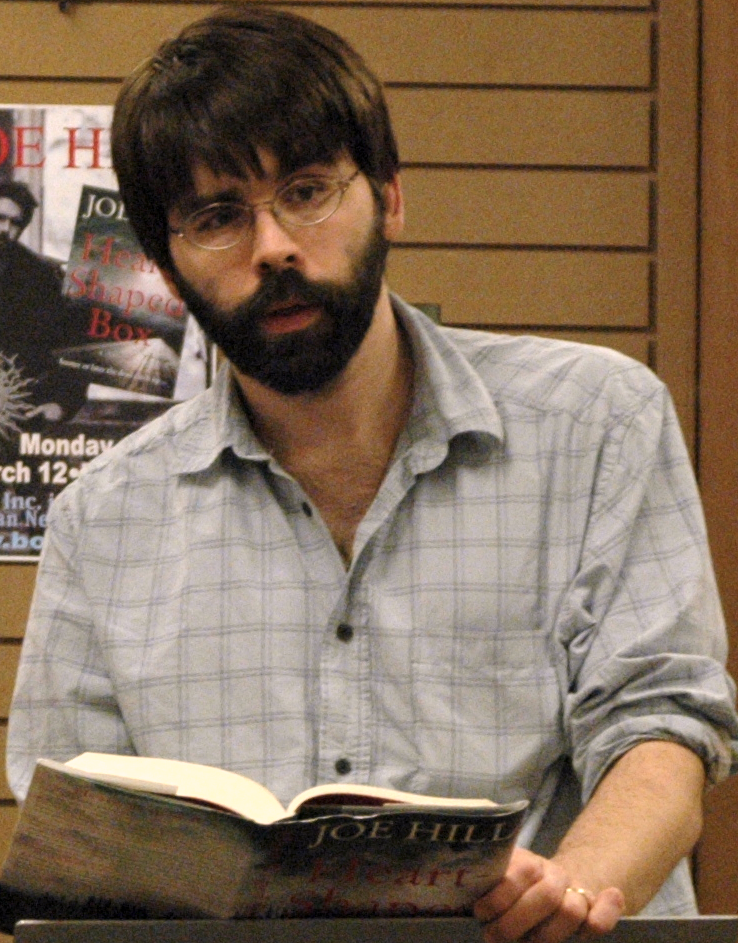
Also during this month I read a book of stories for the C List called 20th Century Ghosts by a writer named Joe Hill, who is actually Stephen King's son. Both because of this and because the book was advertised as vaguely horror-y, I was not too excited about reading it, but I have to say I liked it quite a lot. Much better than anything by his father, actually, whose books I have never been able to get into. While the stories do turn on horror or supernatural effects, the overall tone is literary and nostalgic, with the grotesqueries insinuating themselves into an ordinary story that has an interest of its own rather than overwhelming it. The stories here were first published between 1999 and 2005. They all are set in the kinds of New England or upstate New York faded towns and small cities such as the one where I live, and take place among a (somewhat scarily) already fading world of video store employees. movie theaters, tenured academics with "heartbreaking dreams of someday having a poem published in the New Yorker"), low circulation magazines that print fiction, and the like. I was very impressed and even moved by it, which doesn't happen with me very often.


I have some other poignant anecdotes I wanted to write about, but maybe I will save them for another post. I have to get this out tonight.


Monday, April 16, 2018

Mathew Arnold--Balder Dead (1855)


I suppose I could make the claim that Matthew Arnold is one of my favorite poets, based on the circumstance that "Dover Beach" and "Thyrsis" are two of my favorite poems. I was not however familiar with any of this author's other poetic productions, though I have read several of his famous critical essays over the years, and I generally liked those too (he is a staunch Great Books kind of guy after all). I felt that my readings of the last two longer form Victorian poets that came up on this list, Swinburne and Elizabeth Barrett Browning, were not as satisfactory as might have been hoped. It is possible that the poems in question were not especially great (I don't think that they were, in fact), or that the style in which they are written has become too difficult for my aging 21st century brain to follow (I hope not), but I also made the mistake when reading these of trying to keep on a schedule, even if it meant reading later at night when I was tired, or was otherwise distracted. It was after the Browning book I believe that I decided not to be so ironclad about following the schedule going forward, at least where poems or other more, I don't want to say difficult, books, but books requiring more time or concentration, were concerned. So I determined to take my time with Balder Dead, though my pre-existing affinity for Arnold's poetry also led me to hope that I would be able to get into it more easily.


As is not infrequently the case with the IWE list, this particular poem is something of an eccentric selection, not because it is not a decent poem, but because I feel like it is not very well known, and it is even difficult to find a copy of the full poem in a bound book put out by a major publishing house within the last 100 years. I ended up ordering a 1942 Oxford edition of Arnold's poems from somewhere in Wales, which was the only place I could find selling a copy of this book. I discovered when it arrived that the poem is only 31 pages. The IWE doesn't say anything about Arnold, and only notes that "the story of Balder is a favorite in Norse mythology" and then goes on to relate some of the basic elements of the story. Why Arnold chose this particular story to be the subject of a poem of some ambition and length (in terms of lines) none of the materials I have at hand has anything to say about at all.


As is usual with me, I did not mark any passages until I was a good way into the reading.


II ll. 166-8: "And old men, known to Glory, but their star
Betray'd them, and of wasting age they died,
Not wounds..."


I thought it interesting that even the brave and glorious don't make it to Valhalla if they don't die in battle.


III ll. 162-72. Almost the whole third section of the poem is given over to Balder's funeral.


"...then the corpse
Of Balder on the highest top they laid,
With Nanna on his right, and on his left
Hoder, his brother, whom his own hand slew...
And slew the dogs which at his table fed,
And his horse, Balder's horse, whom most he lov'd,
And threw them on the pyre..."


A lot of living creatures needed to be slain to be tossed on Balder's pyre, including his wife, who had already been taken care of in these lines.


III ll. 190-215. The description of the burning ship is good. Appropriately grim, especially the references to the northern forests, the sound of fires in winter, and the like.


As noted earlier, I had a difficult time discerning Arnold's particular motivation for choosing this story. Obviously he had one. And it is a good poem after his style, I am just not sure what he is so taken by in it. Is it the dramatic and serious manner in which this culture addressed death?


III ll. 509-14. Perhaps this is it? The ghost of Balder is speaking:


"For I am long since weary of your storm
Of carnage, and find, Hermod, in your life
Something too much of war and broils, which make
Life one perpetual fight, a bath of blood.
Mine eyes are dizzy with the arrowy hail;
Mine ears are stunn'd with blows, and sick for calm."


III ll. 565-70. I like this image. It also revisits the theme of storks which is prevalent in a lot of European stories.


"And as a stork which idle boys have trapp'd,
And tied him in a yard, at autumn sees
Flocks of his kind pass o'er his head
To warmer lands, and coasts that keep the sun;
He strains to join their flight, and from his shed,
Follows them with a long complaining cry--"


Is Balder referring to Christianity at the end, from his ghostly perch (of perception)? It is not clear to me.


The Bourgeois Surrender Challenge


The keywords in this one were too source specific to bring up many titles outside the realm of Norse mythology.


1. D'Aulaire's Book of Norse Myths..........................................................237
2. H. R. Ellis Davidson--Gods and Myths of Northern Europe...................58
3. Graham Masterson--The House That Jack Built.....................................45
4. Dan McCoy--The Love of Destiny, etc....................................................41
5. Robert J. Mrazek--Valhalla.....................................................................34
6. Snorri Kristjansson--Swords of Good Men..............................................20
7. Urdu to English Dictionary......................................................................19
8. Allen Mawer--The Vikings.........................................................................3
9. A Guide to the Common Epiphytes and Mistletoes of Singapore..............0


This subject does not appear to attract a lot of women authors. I thought Snorri Kristjansson might be one, but he too is a man.


Play-In Game


#8 Mawer over #9 Guide to Epiphytes


Round of 8


#1 D'Aulaires over #8 Mawer
#2 Davidson over #7 Urdu to English Dictionary
#3 Masterson over #6 Kristjansson


These are both genre books, though I would have been inclined to give Kristjansson the edge based on his being from a foreign literary culture, being a native of Iceland, though it looks like he may write and publish primarily in English anyway. Masterson was entitled to an upset however.


#4 McCoy over #5 Mrazek


Because I dread genre fiction so much I always try to make sure it loses when I have a chance.


Final Four


#1 D'Aulaires over #4 McCoy
#2 Davidson over #3 Masterson


Championship


#2 Davidson over #1 D'Aulaires


Published in 1964, which is in the heart of the era wherein I actually trust the intent of much academic scholarship, H (for Hilda!) R. Ellis Davidson's study might be difficult to procure a copy of, but I think it is the clear choice here. I have many of the D'Aulaires' books at home, and I have always been a fan of theirs, but they are essentially children's writers. I'll have to see if I can make this happen.


Tuesday, April 10, 2018

April 2018

A List: Jules Verne--20,000 Leagues Under the Sea.....................76/257
B List: Between books
C List: Kathleen Ann Goonan--In War Times.............................341/348


This has been the year (or so) of Jules Verne, whom I had never read all the days of my life before taking on Around the World in 80 Days and Journey to the Center of the Earth, and now this, all in a relatively short space. I have found them all to be entertaining. In this one some of the technical talk, about atmospheric pressure and oxygen pumps and such subjects, seems to be too much for my concentration and/or understanding and my eyes tend to glide over these parts. This cannot be said to be a fault of the book, I suppose.


In War Times I have liked quite a lot, though in terms of strict construction and intellectual power I don't think it holds together very well. There are a number of different strains in it that appeal strongly to me however even if they don't necessarily cohere with each other. The first half of the book takes place during World War II, and the narrative centers around an able young male American engineer who belongs to a company of mostly fellow able young male American engineers and their wartime experiences in New York and England and Germany. I am always taken in by stories of the able young men of the Allied forces in World War II. I wish that there was a way, in the absence of stupendous and overwhelming intellectual or creative ability, to recreate the intensity and energy of experience that the able young men, at least as depicted in books, seemed to get out of the war, and the camaraderie also, without the accompanying horrors of the actual conflict. Of course there probably is not. In any event I like reading stories of smart young men, and I like reading stories of 1940s America, and the victorious part of World War II, and the camaraderie of men who have succeeded together in worthwhile enterprises. The able young white buddies in this are big jazz fans, which they see as related to developments in modern physics, and they even end up playing one night with Dizzy Gillespie and Charlie Parker. This part is admittedly rather corny, but from my point of view I rather liked it too, this music is one of the defining energies of that era, but it isn't always clear if you're someone like me how to find a way into it, but I felt like there was something of that here. After the war ends there is more of a science fiction plot that takes hold. The main character continues to live in the postwar world that we know, the Cold War and Vietnam and so on, but most of his old Army mates, including his best friend whom in his world died in Germany in 1945, live on in an alternative postwar world where Stalin was overthrown, Berlin became a boomtown, the nations work together on space exploration, technology and economic growth progress even faster than they did in the familiar world, Kennedy was not killed, and so on. The guy stuck in our world is able to know this because there are nodes of time where these differing strains of history briefly come together. So he can reunite with his friends from time to time (often near his home in Washington, D.C; They are confused as to why it is so shabby) but then at some point they will get up to go to the bathroom and not come back and the node is lost. This idea made an impression on me for some reason. (This alternative worlds thing is the result of some atomic energy that the protagonist got hold of during the war that has been channeled to work differently from the way the atomic bombs did, or something like that. I am out of time, I have to stop now...)


Friday, March 30, 2018

Fannie Hurst--Back Street (1931)

Another American book--it seems like about the fourth or fifth in a row--from that 1900-1940 period that thus far dominates this list. While I do love much of the literature of this period, after this one, I am ready for a little break from it, which it looks like I am going to get (towards of this, perhaps because it coincided with St Patrick's Day, I felt a craving for an Irish novel of the old kind, which sort of thing I have not read in a long time. I don't have any coming up however). Back Street is not a terrible book, and the premise of the story seems to me a good enough one, but it isn't great, it's quite a bit longer than it needs to be, it's depressing, and, compared to the best books of the period, it's rather drab and colorless.


I noted during the Sholem Asch post that the IWE list did not feature a lot of Jewish writers, and many of the ones it did seem to be rather obscure now. As with Gertrude Stein previously, I had not realized that Fannie Hurst was Jewish. Unlike in the Gertrude Stein book, there is an emphasis in Hurst on the distinction and line between Jews and gentiles, though in contrast to the what some might expect, this works decidedly to the advantage of the Jewish characters in her book, who mostly become wealthy and powerful, while the main ethnic German characters mostly stagnate or decline into shabbiness.


The IWE said of Back Street that it was "the only one (of Hurst's novels) that critics have treated as significant literature", though I don't think many do anymore. The only other title by this author that is recognizable even to me is Imitation of Life, which like Back Street, was adapted several times into notable movies, in particular the 1959 Douglas Sirk version (which I have seen recently but have not gotten around to writing up on the other blog yet). It also notes that "Fannie Hurst, born of a Jewish family in St. Louis, wrote Back Street with peculiar (sic) knowledge of the wholly similar German and upper-class Jewish communities of Cincinnati at the turn of the century". Kind of a peculiar sentence.


The first note I took was on page 48, when the young Kurt Shendler, who would later go on to become an automobile tycoon, unsuccessfully attempts to woo the heroine Ray:


"There's not a doubt in my mind that, let alone, you'll go down in the history of this town as one of its first crack business girls. But you're going to quit it and go down in the history of my life instead." The last part of this prophecy did not come to fruition. My comment was "male arrogance even among betas". Shendler's character was a little odd in that even after coming a millionaire many times over he remained fixated on Ray and never seems to have any other love interest, which I think is implausible.


On page 50 I wrote, "(The depiction of) melancholy nostalgia brought about by change is good (well-done). Refers to Ray's life after her father's death and the sale of his business to new ownership. I was experiencing a lot of similar emotions at the time.


I'm not going to gratuitously recount all of the social observations about marginalized groups in these books anymore. We all know what they are. Judging by this and the Imitation of Life movie that I saw alone without consulting her biography, this author was quite progressive for her era, if tame by present standards.


p. 252, a reference to the "One-Hoss Shay", a recent favorite from my reading of Holmes
.
As noted above, another between the wars look at the Midwest, following Lewis, Dreiser, Tarkington, et al, Cincinnati and Youngstown especially making rare appearances in literature, or at least literary-like books such as I read. I feel like this region's former strong presence in the national reading life has become underappreciated.


Note around 2/3rds of the way through: "Pace little slow, repetitive. Depressing, without Tolstoy quality mind to carry book (acknowledging that Anna Karenina or The Death of Ivan Ilych could be considered to be depressing). Lead character ultimately lacks agency of a kind (though she regards Hugo, Freda, etc, as hopeless in this regard).


Since I think this book is no longer well known, the plot involves a beautiful, rather languid young woman who ends up falling in love with and becoming the mistress of the eventual head of a major international bank, giving up everything else in her life. The title comes from the idea that she inhabits the "back streets" of her lover's life. He sets her up in a relatively shabby apartment in New York for example, in contrast with his Park Avenue mansion, and when he brings her to Europe she is relegated to a nondescript pension while the magnate and his family stay in the most lavish hotels. The mistress seems to be comparatively independent and resourceful in most situations apart from the banker but she has barely any ability to protest the most constricting and insensitive decisions he repeatedly makes for her, so it is difficult for me to develop any real feel for what she is supposed to be as a character.


p. 348 "She found herself committing the cardinal sin of wishing the passing of time."


p. 350 "He waved her back to her position on her knees on the floor. 'Stay that way. I like it.'"


Isolated like this it sounds like innuendo, and maybe it is, but in fact they are just talking, and I assume this is meant to illustrate the attitude of Saxel rather than to be titillating.


One area where I did feel the book to resonate a little was in its generational relation to me, especially when I thought Fannie Hurst was born in 1889, as printed in the IWE, though everything on the internet places her in 1885. The difference is not that great, though 1889 would put her right in the middle of the Lost Generation, which corresponds exactly with my birth position (1970) in the middle of the so-called Generation X, and these two generations are of course supposed to be correlated in the cycle. This is a long way of saying that this strikes me as being Generation-X like in its character, being rather gloomy, pessimistic, resigned, not much given to genuine indignation in the way that the neighboring generations on either side seem to be. I still don't think it's a great book, but I can feel the mood that infuses it.


Towards the end after Saxel dies basically from overindulgence in unhealthy food and the now-abandoned Ray is aging: "God this book is depressing." Excerpt from pages 403-4:


"Dentistry had become so terribly expensive...One dentist in Louisville diagnosed her trouble as pyorrhea and advised a period of three months treatment before estimating the amount of salvaging work that might then be done...the price of even the preliminary treatments mounted into the hundreds...At first this was repelling and not to be considered, but after months of the considerable odds and ends of dentists' bills, for just temporary reliefs...she surrendered, and two weeks later, with a temporary 'set' in her mouth, began the long period of attempting to adjust the rigid plates to her healing gums...It was horrible."


I worry about my own situation endlessly, but in this world people in old age are selling off possessions to buy chicken feet and cabbage. Maybe it would not take much to get me there without my wife and family, but I hope I have assembled a capable enough support group to stave off such an ugly fate.


I was unable to find an older hardcover edition of this online that appealed to me, so I ended up reading it in a "Vintage Movie Classics" paperback, which series actually includes a few other books on this list (Alice Adams, Cimarron).


The Challenge


1. John Steinbeck--East of Eden...........................................................1,719
2. Jeffrey Eugenides--The Marriage Plot................................................737
3. The Young Pope (TV show).................................................................525
4. Death Race (movie-2008)....................................................................354
5. Guy de Maupassant--Bel Ami.................................................................53
6. Ken Ham & A. Charles Ware--One Race, One Blood...........................31
7. Dave Donelson--Heart of Diamonds......................................................17
8. Cheryl Mendelson--Love, Work, Children.............................................12
9. Alexandre Dumas--The War of Women...................................................4
10. Thalia Field--Experimental Animals......................................................4
11. Richard Crockatt--Einstein & Twentieth-Century Politics....................1
12. James Bell Pettigrew--Design in Nature, etc.........................................0
13. Litteratura Norteamericana...................................................................0


The field features three IWE list authors (Steinbeck, de Maupassant, and Dumas) with books that did not make the cut for the master list.


1st Round


#13 Litteratura Norteamericana over #4 Death Race
#5 de Maupassant over #12 Pettigrew
#11 Crockatt over #6 Ham & Ware


A lot of Einstein books seem to pop up on this list. I read one of them last year. Ham and Ware appear to be pop Christian writers of some kind. At first glance I would have to say their book is unfortunately titled. Even if they are advancing the idea that we are all one in Jesus, it immediately conjures up images of white supremacists and other undesirable elements.


#10 Field over #7 Donelson


Donelson looks like a dreaded genre book.


#8 Mendelson over #9 Dumas


Mendelson gets an upset.


2nd Round

#1 Steinbeck over #13 Litteratura Norteamericana
#2 Eugenides over #11 Crockatt


The Eugenides here is a Pulitzer Prize winner.


#10 Field over #3 The Young Pope
#5 de Maupassant over #8 Mendelson


Mendelson comes up short in a bid to take down two 19th century titans of French literature back to back.


Final Four


#1 Steinbeck over #10 Field
#5 de Maupassant over #2 Eugenides


I gave Eugenides a chance to go toe to toe here, but de Maupassant's book is older, shorter, and foreign, if we count French classics as foreign, and Eugenides has no upset cards to play so he loses in a good game.


Championship


#1 Steinbeck over #5 de Maupassant


Steinbeck does have an upset card to play, and he needed it here, since East of Eden is even longer than The Marriage Plot. Believe it or not, I have never read Steinbeck before. His most famous books are on all my lists, but none of them have come up yet.


Tuesday, March 6, 2018

March 2018

A List: Dickens, Martin Chuzzlewit..................606/841
B List: Fannie Hurst, Back Street......................286/464
C List: Harry Dolan, Very Bad Men..................332/412


My reading pace slowed a little this month because I was not feeling that great in the early part of it and then I went on vacation, after which I have been feeling much better. I hope it lasts. Also I have been sluggish since I don't really love any of these books. Dickens is one of my all time favorites and Chuzzlewit is good in parts, but I find some of the subplots either hard to follow or not commanding my attention in the manner of his better work. The minds of the authors of genre books, at least that they reveal, just aren't interesting enough to me. Yet whenever you make inquiries into being a professional author it seems like that style of writing is what is pushed on you to try to cultivate. I suppose one cannot learn by practice to write like Tolstoy or Proust, but you would think there would be more interest in encouraging people to try to develop in something like that direction, since the endless repetitions of these genre books is so insubstantial.


On my way back from Florida I stopped off, as I always do, in Annapolis and Philadelphia, my long-ago stomping grounds. For the first time in many years I thought how pleasant it might be for me at least to live in these places again, at least in February and March, which are relatively warmer and more lively. If I ever had the time and were still in good enough health to do so, I might like to come down to Annapolis for a few weeks during the winter and attend some of the lectures and concerts they have at the college and go to the library and so on. It might help combat the annual depression and fixation on my children growing old and my own death. Strangely I don't have a lot of sad nostalgia with regard to my college, perhaps because it doesn't seem to have changed that much since I was there, certainly compared with just about everything else. Being back there usually makes me feel happier and more optimistic than is usual with me. I was very happy to be back in Philadelphia as well. Since my mother sold her house a few years back and moved into an apartment we have largely stopped going down as there is nowhere for all of us to stay anymore for more than a single night. It seems a great deal must have changed there but almost all of the people I grew up with are still around, albeit they are getting ever older, though the older people still seem to get on fine. The younger generations, the under 40s, who I don't know as well, seem to have more problems, but that may be a matter of perception and the circumstance that the consequences of anything bad that happens today seem to be so exaggerated. Certainly my 50 and 60 something relatives partook of behaviors in the 1970s that would be considered alarming now to say the least, yet they were permitted to recover and progress in their lives...


Thursday, February 15, 2018

Sinclair Lewis--Babbitt (1922)


It seems to have just gotten harder to steal pictures.


From the IWE's introductory comments:


"Main Street was Sinclair Lewis's first and biggest success on the subject of small-town quasi-culture, but Babbitt, which came two years later, was a better book on the same subject. If it is not Lewis's best novel (a rank that is usually accorded to Arrowsmith or Dodsworth), it is not far from it."

I haven't read Main Street (which is also on this program) since I was in high school and I haven't any sense at this point how it compares to Babbitt (or whether it even matters anymore), but I did just read Arrowsmith and wrote about it here within the last year, and while that did strike me as the more accomplished book from the literary standpoint, there was, somewhat to my surprise, much in Babbitt that I found poignant--the trip to Maine with Paul, especially the poker, and then the return trip the next year without him got to me the most, but there were numerous episodes that struck deeper than I would have expected them to throughout the book. While Babbitt's personality and business-oriented outlook on life are decidedly unlike mine, he is the same age that I am or have recently been--46, 47, 48--and a lot of the impulses and disaffections he has upon reaching this stage of life ring true to me (Lewis himself was only 36-37 when this was published). I didn't make as many notes as I wish I had now, in part because I was quite engaged by it, in other part because I have been really more than usually depressed this winter, and while these old books are often a great comfort to me in such times, I still didn't have much energy for writing thoughts down. While certainly Lewis would never have intended his novel to induce nostalgia, it ends up having something of that effect, to me at least, because the world of 1920s America still retains some vividness for me. I suspect even such sense as I have for it must be increasingly lost to younger people though.

I'm tempted to write more about my depression, but I might do something that alludes to it on the other blog after I finish this.

I made my first note on page 164, a sentence about a civic convention that I found funny:

"The pastor of the First Christian Church of Monarch...informed God that the real-estate men were here now."


This was set in, if not the absolute heyday of train travel, still a dynamic period for it. The description of the brand new station at Zenith is clearly intended to be satirical, but from the vantage point of our own era of transportation it sounds rather nice:

"It was a new and enormous waiting-room, with marble pilasters, and frescoes depicting the exploration of the Chaloosa River Valley by Pere Emile Fauthoux in 1740. The benches were shelves of ponderous mahogany; the news-stand a marble kiosk with a brass grill."


There is a suggestive undertone throughout the book as well that electricity, plumbing, appliances and other modern wonders are perhaps not appropriate for the masses, as of course most middle-aged people at least in 1922 would have grown up without them. When this novel first came out and for the fifty-sixty years afterwards when it enjoyed some fame, it was primary noted for its satire, but that is now the most dated, heavy-handed aspect of it. It has other, much more subtle, redeeming qualities though.

Prohibition made forty-five year olds have to act surreptitiously like teenagers. This is at the hotel at the realtors' convention:

"At half-past seven they sat in their room, with Elbert Wing and two up-state delegates. Their coats were off, their vests open, their faces red, their voices emphatic. They were finishing a bottle of corrosive bootlegged whisky and imploring the bell-boy, 'Say, son, can you get us some more of this embalming fluid?'"

The quest for illicit booze did make some of the forty-something women more festive though than perhaps they would otherwise have been inclined to be.

I didn't note what page I was on, but at one point I wrote, 'Still interesting, but hard to see where book is going between Paul (spoiler alert--Paul goes to jail for shooting his wife, non-fatally), Babbitt's midlife crisis, return to Maine, etc. Never clear why Babbitt loves Paul so much, more seemingly even than his own family.'

p. 339 "Their life was dominated by the suburban bacchanalia of alcohol, nicotine, gasoline, and kisses."
I liked this sentence.

p. 391 I'm not really in the right frame of mind to make political pronouncements, but I thought this sentence about The Good Citizens' League, accepting a membership in which marks the end of Babbitt's identity crisis and his firm return to sound business principles and all the rest of it, was too obviously pertinent to the present not to recognize it:

"All of them agreed that the working-classes must be kept in their place; and all of them perceived that American Democracy did not imply any equality of wealth, but did demand a wholesome sameness of thought, dress, painting, morals, and vocabulary."

Absolute equality of wealth will obviously always be problematic given the different natures of people, especially in large societies, though perhaps there could be somewhat more of it than there is at present. And there doesn't seem to be much danger nowadays of the working classes forming any kind of a threat to the established order, so that keeping them in their place is not as much of a labor-intensive-task as it may once have been, but the gist is familiar.  


I have not elaborated much on what I think it is that this book gets right that makes it as affecting to me as it was, but I think it is the way that one's life (often) feels as it is becoming stalled in the 40s, especially the late 40s, when I think it really hits you that if you aren't declining already, or at least not too much, that that might start accelerating noticeably at any time. In some ways of course I stopped going forward a long time ago, but the continuous adding of children over the years kind of masked that and gave me a sense, certainly that I was still relatively young and had a long future ahead of me, but that my experience, life force, or whatever, was still expanding. But all of a sudden I feel disturbingly old and vulnerable, and I'm wondering what I was thinking having another baby at age 45, as beautiful and delightful an addition to the human community as she is. I feel like I'll be lucky to see her get her through high school and college, and making it to her 30th birthday seems like a longshot. For that matter I could really go at almost any time. I know that was always the case but up until two months ago I had no real consciousness of that, it was not real to me. Anyway, a lot of the better part of this book is about this creeping sense of the genuine futility of one's existence and how to keep moving forward. Paul of course was pointedly unable to do this.


No uploadable pictures of the book anywhere. I'll have to get my own camera working again.

For a relatively famous book there aren't a lot of attractive editions of it available on the market. There was an evidently limited run Modern Library edition in the 50s but I couldn't find any copies of this online. There was one advertised that I tried to order but I was sent a 1960s era Signet paperback or something like it instead. I ended up getting a bland gray Harcourt Brace edition from the 50s which matches my copy of Main Street.
The Challenge

1. Rebecca Skloot--The Immortal Life of Henrietta Lacks..............................5,819
2. Kate Turabian--A Manual For Writers of Research Papers, Theses, etc.......752
3. Ruth Rendell--The Girl Next Door.................................................................423
4. Gloria Steinem--Marilyn................................................................................231
5. The Reverend William J. Barber II--The Third Reconstruction.....................110
6. Praxis II Middle Scholl English Language Arts...............................................44
7. Natalie Babbitt--The Eyes of the Amaryllis......................................................33
8. The Wise Owl Guide to...(DSST): Here's to Our Health..................................12
9. DSST Principles of Statistics Exam....................................................................9
10. Girl Gangs, Biker Boys, and Real Cool Cats (eds. McIntyre & Nette)............3
11. Victor Hugo--William Shakespeare..................................................................0
12. Isabel Burton--The Life of Captain Sir Richard Burton....................................0

Once again a complete field of 16 eludes us. The top four seeds--all women, incidentally--receive first round byes.


1st Round

#5 Barber over #12 Burton

While Sir Richard Burton is an interesting subject, the 1893 biography of him by his wife doesn't seem to have earned a reprint anytime in the last 100 years and no one carries a copy of it.

#11 Hugo over #6 Praxis

#7 Babbitt over #10 Girl Gangs, etc

The Girl Gangs book, the subtitle of which is Pulp Fiction and Youth Culture 1950-1980 looks somewhat interesting, but no one has it.

#8 Wise Owl Guide over #9 DSST Principles

Round of 8

#11 Hugo over #1 Skloot

The Hugo book is only available in a couple of academic libraries, but they do have it. As I am currently weary of the kinds of contemporary writers that my game keeps turning up, the 19th century European giant had a decided psychological advantage.

#2 Turabian over #8 Wise Owl Guide

#7 Babbitt over #3 Rendell

Rendell is a straight genre book. I'm not exactly sure what this Babbitt is, but it looks like it might be more soulful. It's also older, dating I believe from 1977.

#4 Steinem over #5 Barber

Kind of a toss-up that the higher seed wins by a hair.


Final Four

#11 Hugo over #2 Turabian

#4 Steinem over #7 Babbitt

The Steinem would probably be something different and more interesting. A ho-hum final four.

Championship

#4 Steinem over #11 Hugo

The Steinem book is in my library, and it's also pretty short. I might have been inclined to go with Hugo anyway because my intellect is in such decay, but I will give this a try.