Another American book--it seems like about the fourth or fifth in a row--from that 1900-1940 period that thus far dominates this list. While I do love much of the literature of this period, after this one, I am ready for a little break from it, which it looks like I am going to get (towards of this, perhaps because it coincided with St Patrick's Day, I felt a craving for an Irish novel of the old kind, which sort of thing I have not read in a long time. I don't have any coming up however).
Back Street is not a terrible book, and the premise of the story seems to me a good enough one, but it isn't great, it's quite a bit longer than it needs to be, it's depressing, and, compared to the best books of the period, it's rather drab and colorless.
I noted during the Sholem Asch post that the
IWE list did not feature a lot of Jewish writers, and many of the ones it did seem to be rather obscure now. As with Gertrude Stein previously, I had not realized that Fannie Hurst was Jewish. Unlike in the Gertrude Stein book, there is an emphasis in Hurst on the distinction and line between Jews and gentiles, though in contrast to the what some might expect, this works decidedly to the advantage of the Jewish characters in her book, who mostly become wealthy and powerful, while the main ethnic German characters mostly stagnate or decline into shabbiness.
The
IWE said of
Back Street that it was "the only one (of Hurst's novels) that critics have treated as significant literature", though I don't think many do anymore. The only other title by this author that is recognizable even to me is
Imitation of Life, which like
Back Street, was adapted several times into notable movies, in particular the 1959 Douglas Sirk version (which I have seen recently but have not gotten around to writing up on the other blog yet). It also notes that "Fannie Hurst, born of a Jewish family in St. Louis, wrote
Back Street with peculiar (sic) knowledge of the wholly similar German and upper-class Jewish communities of Cincinnati at the turn of the century". Kind of a peculiar sentence.
The first note I took was on page 48, when the young Kurt Shendler, who would later go on to become an automobile tycoon, unsuccessfully attempts to woo the heroine Ray:
"There's not a doubt in my mind that, let alone, you'll go down in the history of this town as one of its first crack business girls. But you're going to quit it and go down in the history of my life instead." The last part of this prophecy did not come to fruition. My comment was "male arrogance even among betas". Shendler's character was a little odd in that even after coming a millionaire many times over he remained fixated on Ray and never seems to have any other love interest, which I think is implausible.
On page 50 I wrote, "(The depiction of) melancholy nostalgia brought about by change is good (well-done). Refers to Ray's life after her father's death and the sale of his business to new ownership. I was experiencing a lot of similar emotions at the time.
I'm not going to gratuitously recount all of the social observations about marginalized groups in these books anymore. We all know what they are. Judging by this and the
Imitation of Life movie that I saw alone without consulting her biography, this author was quite progressive for her era, if tame by present standards.
p. 252, a reference to the "One-Hoss Shay", a recent favorite from my reading of Holmes
.
As noted above, another between the wars look at the Midwest, following Lewis, Dreiser, Tarkington, et al, Cincinnati and Youngstown especially making rare appearances in literature, or at least literary-like books such as I read. I feel like this region's former strong presence in the national reading life has become underappreciated.
Note around 2/3rds of the way through: "Pace little slow, repetitive. Depressing, without Tolstoy quality mind to carry book (acknowledging that
Anna Karenina or
The Death of Ivan Ilych could be considered to be depressing). Lead character ultimately lacks agency of a kind (though she regards Hugo, Freda, etc, as hopeless in this regard).
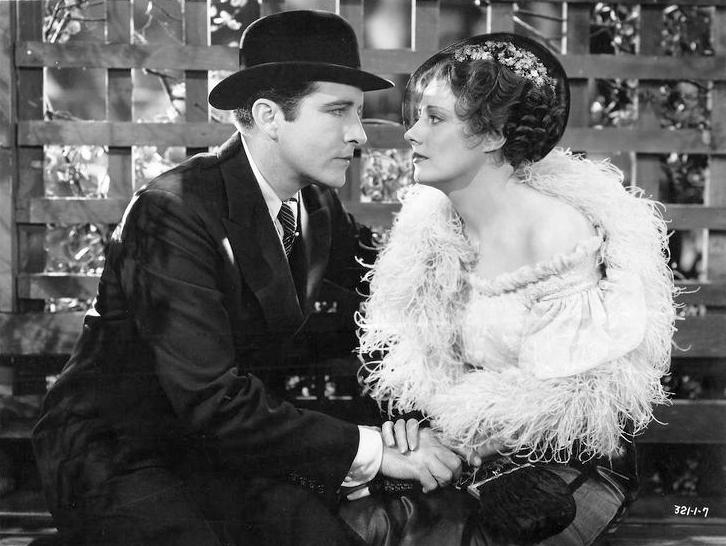
Since I think this book is no longer well known, the plot involves a beautiful, rather languid young woman who ends up falling in love with and becoming the mistress of the eventual head of a major international bank, giving up everything else in her life. The title comes from the idea that she inhabits the "back streets" of her lover's life. He sets her up in a relatively shabby apartment in New York for example, in contrast with his Park Avenue mansion, and when he brings her to Europe she is relegated to a nondescript pension while the magnate and his family stay in the most lavish hotels. The mistress seems to be comparatively independent and resourceful in most situations apart from the banker but she has barely any ability to protest the most constricting and insensitive decisions he repeatedly makes for her, so it is difficult for me to develop any real feel for what she is supposed to be as a character.
p. 348 "She found herself committing the cardinal sin of wishing the passing of time."
p. 350 "He waved her back to her position on her knees on the floor. 'Stay that way. I like it.'"
Isolated like this it sounds like innuendo, and maybe it is, but in fact they are just talking, and I assume this is meant to illustrate the attitude of Saxel rather than to be titillating.
One area where I did feel the book to resonate a little was in its generational relation to me, especially when I thought Fannie Hurst was born in 1889, as printed in the
IWE, though everything on the internet places her in 1885. The difference is not that great, though 1889 would put her right in the middle of the Lost Generation, which corresponds exactly with my birth position (1970) in the middle of the so-called Generation X, and these two generations are of course supposed to be correlated in the cycle. This is a long way of saying that this strikes me as being Generation-X like in its character, being rather gloomy, pessimistic, resigned, not much given to genuine indignation in the way that the neighboring generations on either side seem to be. I still don't think it's a great book, but I can feel the mood that infuses it.
Towards the end after Saxel dies basically from overindulgence in unhealthy food and the now-abandoned Ray is aging: "God this book is depressing." Excerpt from pages 403-4:
"Dentistry had become so terribly expensive...One dentist in Louisville diagnosed her trouble as pyorrhea and advised a period of three months treatment before estimating the amount of salvaging work that might then be done...the price of even the preliminary treatments mounted into the hundreds...At first this was repelling and not to be considered, but after months of the considerable odds and ends of dentists' bills, for just temporary reliefs...she surrendered, and two weeks later, with a temporary 'set' in her mouth, began the long period of attempting to adjust the rigid plates to her healing gums...It was horrible."
I worry about my own situation endlessly, but in this world people in old age are selling off possessions to buy chicken feet and cabbage. Maybe it would not take much to get me there without my wife and family, but I hope I have assembled a capable enough support group to stave off such an ugly fate.
I was unable to find an older hardcover edition of this online that appealed to me, so I ended up reading it in a "Vintage Movie Classics" paperback, which series actually includes a few other books on this list (
Alice Adams, Cimarron).
The Challenge
1. John Steinbeck--
East of Eden...........................................................1,719
2. Jeffrey Eugenides--
The Marriage Plot................................................737
3.
The Young Pope (TV show).................................................................525
4.
Death Race (movie-2008)....................................................................354
5. Guy de Maupassant--
Bel Ami.................................................................53
6. Ken Ham & A. Charles Ware--
One Race, One Blood...........................31
7. Dave Donelson--
Heart of Diamonds......................................................17
8. Cheryl Mendelson--
Love, Work, Children.............................................12
9. Alexandre Dumas--
The War of Women...................................................4
10. Thalia Field--
Experimental Animals......................................................4
11. Richard Crockatt--
Einstein & Twentieth-Century Politics....................1
12. James Bell Pettigrew--
Design in Nature, etc.........................................0
13.
Litteratura Norteamericana...................................................................0
The field features three
IWE list authors (Steinbeck, de Maupassant, and Dumas) with books that did not make the cut for the master list.
1st Round
#13
Litteratura Norteamericana over #4
Death Race
#5 de Maupassant over #12 Pettigrew
#11 Crockatt over #6 Ham & Ware
A lot of Einstein books seem to pop up on this list. I read one of them last year. Ham and Ware appear to be pop Christian writers of some kind. At first glance I would have to say their book is unfortunately titled. Even if they are advancing the idea that we are all one in Jesus, it immediately conjures up images of white supremacists and other undesirable elements.
#10 Field over #7 Donelson
Donelson looks like a dreaded genre book.
#8 Mendelson over #9 Dumas
Mendelson gets an upset.
2nd Round
#1 Steinbeck over #13
Litteratura Norteamericana
#2 Eugenides over #11 Crockatt
The Eugenides here is a Pulitzer Prize winner.
#10 Field over #3
The Young Pope
#5 de Maupassant over #8 Mendelson
Mendelson comes up short in a bid to take down two 19th century titans of French literature back to back.
Final Four
#1 Steinbeck over #10 Field
#5 de Maupassant over #2 Eugenides
I gave Eugenides a chance to go toe to toe here, but de Maupassant's book is older, shorter, and foreign, if we count French classics as foreign, and Eugenides has no upset cards to play so he loses in a good game.
Championship
#1 Steinbeck over #5 de Maupassant
Steinbeck does have an upset card to play, and he needed it here, since
East of Eden is even longer than
The Marriage Plot. Believe it or not, I have never read Steinbeck before. His most famous books are on all my lists, but none of them have come up yet.