Showing posts with label World War I. Show all posts

Thursday, February 20, 2020

Gertrude Atherton--Black Oxen (1923)


Uploading pictures from the phone. I'm not expert at it yet.

This is, I'm thinking, one of the more currently obscure titles we've had come up on this list to date. It's yet another in the parade of American novels of the (19)20s, but it belongs to that part of the 20s that is perhaps especially forgotten now. Gertrude Atherton seems to have been a pretty popular author at the time, but she pre-dated the Lost Generation with whom that decade is largely associated now by 30-40 years. She was the same age as Theodore Roosevelt, four years older than Edith Wharton (whose old New York aristocrats appear to be the same crowd Atherton is writing about at an even later point of their development), she had thirteen years on Theodore Dreiser, who was practically considered a fossil himself at the time, 27 on Sinclair Lewis, and 41 on Hemingway. While I found a lot in this worth taking notes/commenting on, it's probably one of my least favorite so far of these IWE books. I didn't dislike it, but the main characters, who are supposed to be so brilliant, as well as the more distinguished of their companions, I found rather flat, and their dialogue tedious, which brought down the book as a whole. The IWE intro states that it "is no work of art but its characters are interesting." The premise of the story is that a 58 year old woman who had been a great beauty in her youth as well as one of the most sophisticated women in Europe gets some kind of endocrine treatment which rejuvenates her and makes her physically 28 years old again (though she is sterile), but still with her 58 year old mind, and what results when this circumstance is discovered by the New York society that she has returned to for a brief sojourn to attend to some financial interests. The idea is kind of clever but as often happens the execution does not follow through on the potential with equal cleverness.

I took so many notes on this that I'll need to prune some, but some of the passages from this seemingly lost world, once so prominent in the cultural imagination, are fascinating to me.

p.7 "All New York men of the old regime, no matter what their individuality may have been twenty years earlier, look so much alike as they approach sixty, and more particularly after they have passed it...Their moustaches and what little hair they have left turns the same shade of well-bred white. Their fine old Nordic faces are generally lean and flat of cheek, their expression calm, assured, not always smug."

This author employs the kind of extensive physiological and sartorial description, with very specific class or racial connotations (people have Norman or Saxon or Tyrolean, etc, characteristics rather than "English" or "German") that modern authors have largely dispensed with.

p. 37 "My one temptation to enter Society here would be the hope of forming a relief organization--drive, do you call it?--for the starving children of Austria. Russian children are not the only pitiable objects in Europe, and after all, the children of civilized countries are of more value to the future of the world."

This is not the last direct assertion assuming the superiority of the peoples of Northern European descent.

p. 44 "The whole country has gone crazy over youth. The most astonishingly bad books create a furore because from end-to-end they glorify post-war youth at its worst, and the stage is almost as bad"..."Yes, but they are still behind the European novelists, who find women interesting at any  age, and their intelligent readers agree with them." Clavering, the 34 year old newspaper critic/budding playwright, is supposed to be the bright coming man, most eligible bachelor in New York Society character. He is in fact more than a bit of a stuffed shirt.

One does get a nice dose of the charm of old New York, especially early in the book, such as the Madison Square scene (pp. 31-33), the leafy, lamplit, almost clean (by the standards of my lifetime) streets. "A light fall of snow lay on the grass and benches, the statues and trees of the Square. Motors were flashing and honking below and over on Fifth Avenue...Black masses were pouring toward the subways. Life!...The arcade of Madison Square Garden was already packed with men and he knew that a triple line reached down  Twenty-Sixth Street to Fourth Avenue. There was to be a prize fight tonight and the men had stood there since noon, buying apples and peanuts from peddlers." and etc.
   
Antique book barns and large multilevel stores that didn't do a lot of curating used to have walls of forgotten books from the 20s with covers like these. I think this is the first one of the type I have actually owned and read.

p. 65 Still rattling on about the rival post World War I/Lost Generation novels. "More clichés. The world was rotten to the core and the human race so filthy the wonder was that any writer would handle it with tongs. But they plunged to their necks...There had been reactions after the Civil war, but on a higher plane. The population had not been maculated by inferior races."

p.78 "After all, it had been a middle-aged man's war. Not a single military reputation had been made by any one of the millions of young fighters, despite promotions, citations, and medals. Statesmen and military men long past their youth would alone be mentioned in history."

p. 89 "Otherwise he was one of the 'black Claverings.' Northumbrian in origin and claiming descent from the Bretwaldes, overlords of Britain, the Claverings were almost as fair as their Anglian ancestors, but once in every two or three generations a completely dark member appeared, resurgence of the ancient Briton; sometimes associated with the high stature of the stronger Nordic race, occasionally--particularly among the women--almost squat." OK. Do the most respectable kinds of white Americans, especially women, still have this mentality for fine, esoteric racial consciousness? I feel like we are supposed to think there is at least some important class of them who do, but if that is the case, it seems like they would find modern society to be completely unendurable, and there is no evidence that this is a common complaint among anyone respectable or well-bred.

p. 91 "Do you think that romance is impossible in New York?' she asked irresistibly." New York has always seemed to me to be one of the few places left where romance is possible at all.

The style of writing is antiquated for its time, and does not feel "of" it. This is a problem that I think has always afflicted me as well. But since the better exemplars of the modernist style have proven so enduring, it was especially noticeable in a writer of the 1920s.

p. 124 "If the flapper should adopt a coat of arms no doubt it would be a cocktail rampant with three cigarettes argent on a field de rouge."

The flapper character is supposed to be a satire and is presented as ridiculous, but the most bearable interludes of the story were when she showed up. I thought the plot was being set up for her to marry the stiff Clavering at the end, or at least clean up her behavior a little, but after one last naughty appearance with about 100 pages left in the book, she never came back.

p. 128 Talking about the "Sophisticates" now--I'm not sure if they are supposed to be based on the Algonquin Round Table crowd or not, but I liked them too. "But their most solemn causeries were upon the vital theme of The American Reputation in Letters." I feel like this was still a big deal in my youth in the 80s. I have the sense that most of the younger generation, not having been brought up or persuaded by anyone to treat the great literatures of Europe with the degree of reverence that once prevailed here, do not view this as a pressing question in the same manner.

p. 132 Comparison of c.1920 New York with, of all places, Vienna. "...this marvelously wealthy and prosperous city where the poor were kept out of sight, at least, where all the men were whole and where one never saw a gaunt woman's appealing eyes, or emaciated ragged children." Really? What would Howard Zinn and his acolytes say to this?

I truly was not anticipating the twist explaining the mystery of the Madame Zattiany character (that she had undergone rejuvenation).


These illustrations are stills from the 1924 silent film of the book, about which I will write more later.

Chapter 28, New York intellectual/arts/theater party, circa 1920. Pretty ridiculous--a lot of self-conscious eccentricity and zany antics, though the women I found kind of appealing. Suzan Forbes?

"Miss Forbes was a tiny creature, wholly feminine in appearance...her really brilliant and initiative mind...Miss Forbes was not pretty, but she had an expressive original little face and her manners were charming...It was doubtful if she had ever been aggressive in manner or rude in her life; although she never hesitated to give utterance to the extremest of her opinions or to maintain them to the bitter end...She lit a cigarette as the music finished and pinched it into a holder nearly as long as her face. But even smoking never interfered with her pleasant, rather deprecatory, smile"...etc.

This arts scene of course is entirely white, but it's also (seemingly) entirely gentile white, which besides being unfathomable in any era pretty much after this one probably accounts for the un-self-conscious goofiness, which I don't think characters in circles like this have anymore.

p. 167 "I was very beautiful, I entertained magnificently, I was called the best-dressed woman in Paris, I was besieged by men--men who were a good deal more difficult to manage than chivalrous Americans, particularly as I was now married and the natural prey of the hunter...I learned to play the subtle and absorbing game of men and women as it is played to perfection in the older civilizations." Madame Zattiany. I admit I find people like this a little hard to take.

p. 174 Madame Zattiany again: "I thought that...I had lived too much and too hard, that my memory was overburdened and my sense of the futility and meaninglessness of life too overwhelming. (LOL emoji here)

p. 180 If rejuvenation such as Madame Zattiany's were to become widespread: "The threat of overpopulation--for man's architectonic powers were restored if not women's; to say nothing of his prolonged sojourn--would at last rouse the law-makers to the imperious necessity of eugenics, birth control, sterilization of the unfit, and the expulsion of undesirable races." The thought of eugenics frequently burst through the surface of many an WASP upper class mind in this era.

p. 213 "...he wondered if any woman, save in brief moments, could rival the ecstasy of mental creation. That rotten spot in the brain, dislocation of particles, whatever it was that enabled a few men to do what the countless millions never dreamed of attempting, or attempt only to fail, was, through its very abnormality, productive of a higher and more sustained delight, a more complete annihilation of prosaic life, than any mere function bestowed on all men alike." My God Clavering. What a stiff you are.

The literary world as depicted in this book would indicate that women were quite prominent in it at this time as writers, as I have noted before on this site, looking at the awarding of major prizes, best-seller lists and the like. There was a major shift in the 1940s and 1950s coinciding, in my opinion, with the arrival in the United States from Europe of so many deeply, almost severely learned intellectual refugees who exerted such a great influence, particularly through the universities, over what was to be considered worthwhile literature over the ensuing half-century, that had as one effect the downgrading or sidelining of much of the kind of women's writing that had garnered some recognition in the 20s. Having read some of those books for this list I wouldn't say that in most instances this downgrading or forgetting was not to some extent merited in individual cases, but I think a lot of people have the idea that women were entirely excluded from major writing and publishing opportunities before very recent times, and that does not appear to be quite true, especially during the 1910-1940 or so period, at least in the United States.

p. 230 "The world is equally astonished--and resentful--at every new discovery, but in a short time accepts it as a commonplace. The layman resents all new ideas, but the adjustment of the human mind to the inevitable is common even among savages." Is it so? I have the impression that many primitive (so-called) societies withered and died when exposed to modernity.


p. 299 "...I am not a victim of that ancient myth that two people who love each other can be happy anywhere. Environment is half the battle--for the super-civilized, at all events."

p. 301 "And there was no doubt that if you were on top, a personality, New York was the most enchanting place in the world to live in, just as it must be the most unsatisfactory for the poor and insignificant." L.O.L.

p. 315 Prince Hohenhauer, Madame Zattiany's longtime old lover, turns up in America. "He was as straight and thin as ever, his fine head erect, without haughtiness; his dark eyes under their heavy lids had the same eagle glance. he was still, she concluded dispassionately, the handsomest man she had ever seen, even for an Austrian, the handsomest race on earth..." I went on a bit of a rant as this point--I've had enough of this superior prince who is going to rule Austria, save it, make it a great and powerful republic, etc. Hasn't this guy's class just overseen the most disastrous war in human history that killed millions and brought down most of the ancient governments and ruling families in Europe? It was when they started complaining about/ridiculing the décor in a hotel in a small town in the Adirondacks that I lost it.

p. 346 "If we had met in Vienna it would never have claimed me at all. In New York one may be serious in the romantic manner when one is temporarily free from care, but seriousness is of another and a portentous quality over there." O.K., but we can concede that New York is in fact a highly romantic city after all. It is one tangible regret of mine to have never had a New York romance. I can imagine it so vividly. 


As noted above, this book almost immediately inspired a movie version, 58 minutes of which can be seen on various channels on YouTube, the Eastman restoration (which is only the first 22 minutes though) being the highest quality one I have found. The final reel of the movie is apparently missing, and no one alive that we know of--not Martin Scorcese, not Peter Bogdanovich, not anyone--has seen it. The most recognizable star of this movie to most people today would be, I assume, Clara Bow, who played Janet the flapper--like me, the filmmakers recognized that this was the liveliest character in the story, and she really is pretty sexy, her eyes especially are more than usually expressive and kind of mesmerizing. Madame Zattiany was played by Corinne Griffith, whom I had never heard of, though she was really beautiful and had a substantial career in the silent era, though only around 10 of the 58 films she made have survived--she strikes me as having been somewhat comparable to Gene Tierney in the way she is written about. She was later married to Washington Redskins owner George Preston Marshall, now notorious for his racism, and is credited with writing the lyrics to the team's celebrated fight song, "Hail to the Redskins" which is still played by the team band after every touchdown. Conway Tearle is an appropriately stiff Clavering. Alan Hale, Sr, who played Little John in the 1938 classic Robin Hood (and was the father of the skipper on Gilligan's Island) played Hohenhauer, but I assume most of his screen time comes in the lost final reel, for in the extant part he is only shown for about 5 seconds embarking from his ship onto American soil. The photo at the top of the page as well as the one directly above this paragraph at Dinwiddie's mountain lodge also evidently depict some of the lost parts of the movie, since I did not see these in the sections available online. The part of the film that I could see I thought was pretty good, even though it is difficult to watch a silent movie without music and the quality of the non-restored portion was not great. I'm always quite fascinated by film versions of books I have read that came out almost contemporaneously with the books (though this one was never remade later), I feel that they are always much closer to the spirit of the original story. The sets in this were not as lavish as I imagined the rooms and houses in the book to be, but we are still in the infancy of film history.    


The New and Improved Bourgeois Surrender Challenge

I did finally those long-contemplated tweaks to the system, and they did produce quite a few more competitors that are somewhat mass market, though the quality of the finalists does not look incredible. We will see how the tournament plays out however.

1. Robert Munsch--I Love You Forever.....................................................................10,060
2. The Ghost & Mrs Muir (movie-1947)...............................................................…..1,916
3. Philippa Gregory--The Last Tudor..........................................................................1,222
4. Dream Theater--The Astonishing (music album)................................................….1,221
5. Bill Bryson--The Body.............................................................................................1,184
6. Yangsze Choo--The Ghost Bride...........................................................................….798
7. Danielle Steel--A Good Woman...........................................................................…...633
8. Dream Theater--Distance Over Time (music album)..........................................…...620
9. Elizabeth Lev--The Tigress of Forli...........................................................................286
10. W. Michael Gear--People of the Wolf..................................................................….244
11. Linda Yellin--What Nora Knew............................................................................…130
12. W. Michael & Kathleen Gear--Sun Born...............................................................….93
13. Joanna Shupe--The Harlot Countess.....................................................................…..93
14. Maroon 5--"Memories" (song)...........................................................................…….65
15. Catherine the Great (TV-2019)..............................................................................….64
16. Catherine Chung--The Tenth Muse.....................................................................…….51
17. Lauren Slater--Lying: A Metaphorical Memoir...........................................................51

Play-in game still needed with the tie for 16th place.

#17 Slater over #16 Chung

Probably would have chosen Slater here anyway, but she is a bonus competitor here.

1st Round

#17 Slater over #1 Munsch

The Munsch book is a children's book.

#2 Ghost & Mrs Muir over #15 Catherine the Great
#3 Gregory over #14 Maroon 5
#13 Shupe over #4 Dream Theater
#5 Bryson over #12 Gears
Bryson is a past winner of the contest and while the extent of his success is puzzling to me, he is tolerably light reading late at night. Also I really do not like modern genre books at all.
#11 Yellin over #6 Choo
A tight call. Yellin is listed in the category of "Women's Divorce Fiction", which still appeal to me more than "Ghost Fiction", all else being equal.
#10 Gear over #7 Steele
#9 Lev over #8 Dream Theater
Clara Bow, you are a fox.


Quarterfinals
#17 Slater over #2 Ghost & Mrs Muir
Because books have to win. I am going to watch this movie though.
#13 Shupe over #3 Gregory
Shupe has an upset to use.
#11 Yellin over #5 Bryson
So does Yellin.
#10 Gear over #9 Lev
All of the upsets have been used up. But are there any decent books left?

Semifinals
#17 Slater over #10 Gear
It's a lot shorter.
#11 Yellin over #13 Shupe
Shupe looks basically to be almost a Harlequin romance.

Championship
#17 Slater over #11 Yellin
Either would have been OK I guess. Slater's book has the Penguin imprimatur, which makes it look more serious, though the Yellin looks a little more fun. I'm so far behind on the Challenge books, who knows when I will get there anyway.
Gertrude Atherton in her younger days.


Wednesday, March 9, 2016

Mikhail Sholokhov-And Quiet Flows the Don (1928)

Middling long Soviet-era--really Stalin-era--novel, the major work of Mikhail Sholokhov, who was awarded the Nobel Prize in Literature in 1965. Sholokhov is a figure not unattended with some controversy. At numerous points in his life he was accused of either plagiarizing or not having written most of his most famous book, though it appears that modern scholarship with regard to the surviving manuscripts as well as computer analysis of his authorial style across all of his extant works has acquitted him of this charge. Without knowing anything else about him, he also arouses a sense of suspicion at first consideration, deservedly or not, by the circumstance of his being a working writer through the teeth of the Stalin reign of terror in the U.S.S.R. without ever having to go into exile, or be imprisoned, or shot, as our conditioning tells would have been the case with any writer of that time or place who was at all good, or honest, or courageous. Sholokhov, however, survived the entirety of this period in apparent good standing, and on several occasions is reported at least to have written fairly bold missives to Stalin himself regarding the dire conditions in his home region (The Rostov--Don River area in the South of European Russia, roughly northeast of Ukraine). He met the dictator on at least two occasions and was summoned (well, according to his Wikipedia page he was 'invited') to the Kremlin for a personal meeting in 1937. Whatever his character or position with regard to the regime I imagine it would certainly have required a degree of fortitude lacking in most western middle class men to endure a face to face meeting with Stalin in 1937. No one was so 'in' as to be certain nothing very bad wasn't going to happen to them at any given time. Sholokhov, born of a generation of men who between war, revolution, famine, and political violence died young in large numbers, lived until 1984 and was awarded many titles and honors in the Soviet Union.


An interesting thing about the IFE list is that while it is more or less a family-friendly set of titles for middle America, and includes a fair number of specifically children's or adolescent's books, it also has a decent share of books like this which deal with grimmer material. And Quiet Flows the Don is concerned with the lives of various members of a Cossack village, mostly male, from the years just before World War I and continuing through that conflict, the Revolution of 1917, and ending in the midst of the Civil War, in the book as yet unresolved, which followed upon the revolution, the closing episodes involving the capture and executions of various troops of "reds", though these episodes follow upon others in which it is the "reds" who are administering the executions. I think it is a good book, the style in keeping with the grand tradition of Russian novels, though the main characters are drawn from a much rougher and less polite segment of society than one usually finds in the classics of the 19th century. The descriptions of the country and the working and social life of the Cossacks were presented unobtrusively, woven into the narrative and all of that, but gave a vivid picture of the setting of the book nonetheless. The physical intimacy with the earth, and with animals of all sorts, though common to many older novels, made a more than usually strong impression in this. Against this background swept the drama and intensity of rape, adultery, casual violence between men, class exploitation of all kinds, war, political executions. Much of this, especially towards the end of the book, was in the service of Communist agitprop, which weakened the impact of certain episodes, though others had the quality of seeming to be authentic accounts of real situation, regardless of the politics involved. The politically motivated violence from the sections about the Revolution and the Civil War strike me as possibly honestly observed accounts of what went on at the time. It is not implied that the communist side was pristine or at all times just in its carrying out of executions and the like, though in the service of a necessary end.


The section on World War I I thought contained some good material. I have always found books about this war to be in general more interesting than books about World War II, because the old, classical Europe that is in the process of being blown apart is almost always still present in some degree both in the consciousness of the protagonists of the books and in the geography and manner of life of whatever country we are in. The descriptions of the initial skirmishes, and the last days, and hours, just before them, along the borderlands of Austria and Russia in August 1914 partake of this haunting quality that I find so attractive and central to my perception of so much about the nature of the world.

"The silence howled stupefyingly. From the open window of one house came the naive striking of a clock."

"1916. October. Night. Rain and wind. The trenches in the alder-grown marshes of Polesie. Barbed-wire entanglements in front. A freezing slush in the trenches. The wet sheet-iron of an observation post gleams faintly. Lights here and there in the dugouts."


The first world war is famous for its atrocious weather. Mainly rain, wind, cold and mud.

In the book at least, it took some time and build-up before someone took the decisive step of putting quick bullets into the heads of captured or otherwise defenseless members of the higher social classes during the revolution. One wonders about something like this coming to pass here, especially based on what one reads on the internet, the degree of utter contempt in which so many people seem to hold their fellow countrymen, and the desire to deprive their enemies of all pretension to to dignity and human worth, well beyond the point, as far as I can see, of any reconciliation.


The Bourgeois Surrender Challenge

Due to the 14-way tie for 9th place, we had to have an expanded tournament this time.

1. Top Gun (movie)...........................................................................................1,499
2. The New England Primer.................................................................................159
3. Orlando Figes--A People's Tragedy: A History of the Russian Revolution.....117
4. Jose Saramago--Raised From the Ground.......................................................38
5. Alina Bronsky--The Hottest Dishes of the Tartar Cuisine................................23
6. Victor Serge--From Lenin to Stalin.....................................................................5
7. R.R. Palmer-The Age of the Democratic Revolution...........................................3
8. Narratives of the Sufferings of Lewis and Milton Clarke....................................1
9. William Masselink--I and the Children Thou Hast Given Me.............................0
10. William Masselink--Sermons on the Commandments.......................................0
11. William Masselink--J. Gresham Macken-.........................................................0
12. Ben Masselink--General Revelation and Common Grace.................................0
13. William Masselink--Why Thousand Years?.......................................................0
14. Ben Masselink--The Cracker Jack Marines.......................................................0
15. Edward Masselink--The Heidelberg Story.........................................................0
16. Ben Masselink--The Deadliest Weapon..............................................................0
17. Ben Masselink--The Danger Islands..................................................................0
18. Ben Masselink--Green........................................................................................0
19. Ethel Mannin--Young in the Twenties.................................................................0
20. Ethel Mannin--Stories From My Life..................................................................0
21. Ethel Mannin--Sunset Over Dartmoor................................................................0
22. Burbank and Ransel (eds.)--Imperial Russia: New Histories for the Empire.....0

1st Round

#22 Burbank and Ransel over #11 Masselink. The New Hampshire library database does have an entry for the winning book in its system, though there don't seem to currently be any copies of it available anywhere in the state.

#12 Masselink over #21 Mannin. With one exception, none of the other books in the first round have any presence in the New Hampshire State library system.

#13 Masselink over #20 Mannin.

The Masselinks are all related, There are some web pages devoted to the extensive genealogy of this moderately distinguished family, but I don't have the time to do more extensive researches into their respective scholarly and literary careers.

#14 Masselink over #19 Mannin

Ethel Mannin was a very prolific and long-lived British author (active 1923-1977) who probably wrote seventy or eighty books. She doesn't seem to be read much anymore.

#18 Ben Masselink over #15 Edward Masselink. This is the exception. Green: the Story of a Caribbean Turtle's Struggle for Survival is available at three locations, these being, for the record, the University of New Hampshire, the Finch Museum (?), and Lilac Public (?).

#16 The Deadliest Weapon over #17 The Danger Islands


The Sweet 16. 

#22 Burbank & Ransel over #1 Top Gun

#2 New England Primer over #18 Masselink. Kind of a grind it out victory for the #2 seed, which does not have a much stronger library presence than the Masselink champion.

#3 Figes over #16 Masselink.

#4 Saramago over #14 Masselink

#5 Bronsky over #13 Masselink

#6 Serge over #12 Masselink

#7 Palmer over #10 Masselink

#8 Clarkes over #9 Masselink

Elite 8

#2 New England Primer over #22 Burbank and Ransel

#3 Figes over #8 the Clarkes

#7 Palmer over #4 Saramago. Despite winning the Nobel Prize the Saramago book is not available at libraries easily accessible to me while Palmer's antediluvian historical tome is.

#5 Bronsky over #6 Serge

Final Four

#7 Palmer over #2 New England Primer. On a technicality. The New England Primer in the collection of the New Hampshire State library is non-circulating.

#3 Figes over #5 Bronsky. Figes's book is not available at my local libraries, while Bronsky's is, but due to multiple recurrences during the qualifying round, Figes is entitled to one upset, and he gets that here.

Championship

#7 Palmer over #3 Figes. Figes is not entitled to two upsets, giving Palmer a most improbable victory.


Thursday, June 25, 2015

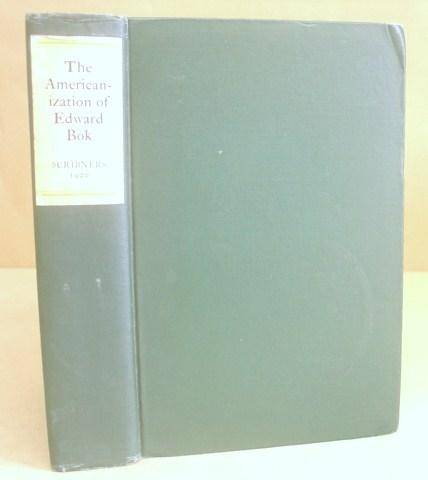
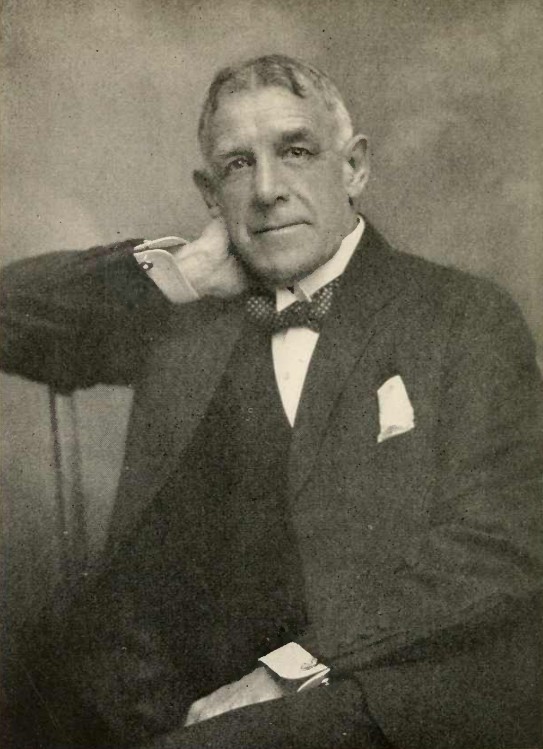
Edward Bok--The Americanization of Edward Bok (1921)

Another early Pulitzer Prize winner, this time in the category of Biography/Autobiography. This is the kind of book I enjoyed a great deal as a teenager, and then got away from for twenty-five years while I was striving to be admitted into the ranks of the truly intelligent and knowledgeable, in literary matters anyway. But eventually, as I have indicated elsewhere, finding this to be an increasingly hopeless aim and becoming ever more anomic, I thought that perhaps returning to some of the kind of reading I had liked in my youth might help me to feel more engaged with life again. While as yet this has not effected much change in my relations with the greater social world, I have found some daily pleasure in most of these books, in particular the numerous American titles from 1865-1945 period that have inevitably begun to fall somewhat into obscurity.


Edward Bok was a native of Holland whose impoverished family moved to Brooklyn in 1870 when he was seven years old. From this humble origin the extraordinarily enterprising young immigrant rose from selling ice water on trolley-cars, to lemonade, to contributing reports of birthday parties to newspapers, to doing stenography for Western Union and earning the attention and trust of legendary Wall Street tycoon Jay Gould (of whom Bok seems to been slightly wary, however, enough to turn him off pursuing a career on Wall Street, in which one must assume he would have made at least as great a success financially as he made in publishing), to founding his own newspaper, to inventing the modern theater program, and the newspaper syndicate, and coming up with the idea of printing biographical information on the back of collectible picture-cards found in cigarette packages, to a position in the advertising department at Scribner's to, at age 26, being named editor of The Ladies' Home Journal, in which position he would remain from 1889 to 1919, during much of which time the magazine seems to have had the largest circulation of any periodical in the country, featured the work of many famous and outstanding writers as well as contributions from numerous current and former presidents, most of whom were good friends with Bok, was at the forefront of journalistic innovation and the influence of mass taste (which I must say I often like in this time period). He had also played a prominent leadership role during the American participation in World War I, both through the magazine and by virtue of his involvement in various committees contributing to the direction of the war effort, especially the Y.M.C.A's National War Work Council. So at the time that his autobiography appeared he was a prominent figure in American society.

While never acclaimed as a literary masterpiece, even by me, this was a highly interesting and entertaining book, mainly for its anecdotes about the many famous people of the time whom Bok knew, most of whose names remain known to us but whose personalities have never been vivid, as well as its depiction of an older America that bears an almost unsettling resemblance to the present in many ways, with its teeming immigrant population, ferocious competition and hyper-capitalism at the top, Wall Street mega-tycoons, a rowdy and not always responsible media environment. On the other hand in contrast to our time the tone of the book is almost unfailingly enthusiastic and optimistic about America's political and cultural leadership, its unique qualities, and its prospects going forward (there is one 12 page chapter near the end titled "Where America Fell Short With Me"). It does not have very much in the way of satisfaction to offer current progressives, which is why it will probably remain a work relegated to those interested in the ethos of its particular time and place, though there are a couple of things I thought possibly redeeming in it that I will expand on below. Rather than spend a month or two to hammer this into a coherent essay, I am just going to make (hopefully) brief comments on certain topics in the book that I found of interest.

The Bok Family. The book has been sold and praised over the years primarily as being the true story of an impoverished clever immigrant boy who worked like a dog to become a big success in America (Bok died in 1930 with an estimated worth of over 14 million dollars). It is true that the family was very poor during Bok's childhood; his father had been ruined by bad investments in the Netherlands and was never able to attain even a middle class living after moving the family to America. However, his extended family in Holland was quite distinguished. One of his grandfathers had sat on the Dutch Supreme Court, and among his uncles there were numerous commissioners, civil servants, clergymen, and the like, nearly all of the men being university-educated. Bok was not exactly the scion of endless generations of peasants, as the general description of the book might sway one to believe. The family has continued to be prominent and successful in the United States down to our own time. Bok's grandson Derek Bok was the president of Harvard University from 1971-1991, and again briefly in 2006 on an interim basis (Bok himself had to leave school for good at age thirteen). Though I have been familiar with the names of both Edward and Derek Bok since the 1980s I had not made the connection of their being related until it was noted in my book. There is a another branch of the family based in Maine that includes a grandson (of Edward) who is a prominent folk singer, and a great grandson who is an artist of some renown. With the exception of Edward Bok's father, there are obviously very strong genes influencing general intellect and a propensity for accomplishment in worldly affairs running through this family. These are the people I see, or the influence of whose presence I detect anyway, on the increasingly rare occasions when I visit one of the really pleasant, long-established old places in New England, and wonder, why doesn't every dumpy old town, or more of them anyway, make itself like this? Why can't they? Why can't I?

Bok on Success. There are a number of damning observations about the laziness and lack of drive most people display, such that Bok never perceived there to be much competition for all of the achievements and honors he attained. This was to me the most pertinent:


"Eventually, then, Bok learned that the path that led to success was wide open: the competition was negligible. There was no jostling. In fact, travel on it was just a trifle lonely."

I have the sense that most people who have achieved success almost exclusively as a result of their relentless work ethic have a similar view of the world's affairs. It has been the interest of many successful societies to inculcate this virtue in all of their younger people, but even where this ethos permeates the air and dictates activity to a large degree there are clearly a small number of people whose hearts are in their working far more than they are in that of the rest of the group. It is not merely the exercising of a habit but the actualization of the will in such individuals, and has the effect almost of being a talent in itself.

"Smoking was not permitted in the Scribner offices, and, of course, Mark Twain was always smoking."

Among the things this book is known for is Bok's relentless name-dropping of famous people of the time, but I found his vignettes interesting, as I did not have much of a sense of what many of these people were like on a personal basis at all. We have a tendency in our age to be suspicious of anyone who was able to achieve popularity in such debased and wicked times as the past was, and to assume that they were openly morally repugnant at best and God only knows how evil secretly. Bok relates his youthful meetings and interactions with these old American celebrities as almost uniformly positive experiences, however. Ulysses S Grant and Rutherford B Hayes were almost unbelievably unburdened by other business and considerate in their meetings with the teenaged Bok. Oliver Wendell Holmes and especially Longfellow were equally accommodating towards the boy when he sought them out in Boston (It was a more relaxed age. Longfellow, probably the most famous poet in the country at the time, was able to respond to his daily haul of five fan letters while chatting with Bok over lunch. As an adult, Bok became, according to himself, close friends both of Theodore Roosevelt and Rudyard Kipling (and by extension Kipling's father, who was an artist and an interesting man in his own right), all of these being depicted as lively and generous hearted people. The famous Americans in general were at that time more accessible and less haughty than their counterparts would be today. Bok had more trouble ingratiating his way into this level of company when he went to Europe. Attempting to coax Lewis Carroll to come out of retirement and write some stories for his magazine, Bok had a very pleasant tea and walking tour of Oxford with the Professor Charles Dodgson, who however, refused to acknowledge the existence of Lewis Carroll and affected not to recognize the game. Florence Nightingale would not see him at all, and his attempt to enlist some popular French authors to produce stories for The Ladies' Home Journal resulted in his getting screamed at by Jules Verne and the younger Alexandre Dumas, author of Camille, about American publishers' bad habit at that time of printing and selling their books without obtaining permission, paying royalties, and so on.

Another friend of Bok's was the poet Eugene Field ("Wee Willie Winkie"). Field was into unbelievably elaborate practical jokes. For example, asking Bok to travel to New Orleans to introduce him at a dinner where he was to receive some honor, only of course the dinner did not exist (Bok actually did his research on this one and did not fall for the joke). There was another episode where Bok was visiting Field at his house in Chicago on a Sunday and Field claimed he had nothing to eat in the house and that he had dismissed his servants for the evening, leaving Bok and another guest to go roaming all over Chicago for four hours or so in search of food. When they returned to Field's house, the poet and his other guests were in the middle of an elaborate multi-course field and having a good laugh at Bok's expense. I don't know if people could take quite this level of pranking anymore, in good humor.

New York Provincialism. When Bok took the Ladies' Home Journal job, he had to relocate from New York, where he had lived from age 7 to 26, to Philadelphia, which is where the Curtis publishing company, which owned the Journal as well as the Saturday Evening Post and some other magazines, was headquartered in those days. His friends and associates in New York were against the move: "...to cap the climax, they each argued in turn, he would be buried in Philadelphia, New York was the center, etc, etc...Bok now consulted his business associates, and, to a man, they discouraged the step, but almost invariably upon the argument that it was suicidal to leave New York. He had now a glimpse of the truth that there is no man so provincially narrow as the untravelled New Yorker who believes in his heart that the sun rises in the East River and sets in the North (Hudson) River." Bok continues: "He (speaking of himself; the book is written in the third person) had had experience enough to realize that a man could not be buried in any city, provided he had the ability to stand out from his fellow men. It all depended on whether the cream was there: it was up to the man."

Bok does not write a lot about his social life in Philadelphia, unfortunately, since there are not many well known books that get into this. The Curtis Building, which housed the corporation, built in 1910 when Bok was at the peak of his career, is still there, at the corner of sixth and Walnut Street. I must have walked by it dozens of times without realizing what it was. Indeed, I have almost certainly been there, as my grandparents took me to see an exhibit on Norman Rockwell around 1982 in what they called 'the old Saturday Evening Post building',  which undoubtedly is this building where Bok worked. I remember going to the exhibit, but I recall nothing about the building from that day. The old Curtis estate on Church Road in Cheltenham Township, now a park, arboretum and so on, is literally down the road from where I grew up (the street I lived on connected with Church Road. I must have been there, though I don't have any memory of it, and I certainly never had any sense of who Curtis was (Cyrus H.K. Curtis, the publishing magnate). Bok lived in Merion, which is a suburb at the other end of the city. There was an Edward Bok High School (public) in South Philadelphia, which I see was closed after the 2013 school year. I don't think the school had an especially good reputation at any point in my lifetime, though pictures on the internet reveal it to have been a beautiful art deco (1938) building. The names of Bok and Curtis, which once thundered across the entire land, will thus continue to fade further in the memory of the Philadelphians who follow them, if they can be brought to feel any kinship of place with them at all.


Bok's House (unfortunately named Swastika, by his good pal Rudyard Kipling, with whom the symbol was also associated) in Merion.

One of Bok's many crusades during his years of editorship was the general improvement in the architecture of the average American house, which led to, among other things, the once-famous Ladies' Home Journal houses, which were built from plans developed by well-known architects and sold by the magazine. I have had on several occasions in my life had a house pointed out to me as being one of these catalog houses, though this did not make a great impression on me at these times. My point is, however, I have always liked houses and other buildings put up in this time period, so if Bok really had the influence in this area that he claims for himself (and the average pre-1890 American house as hideous as he claims it to have been), I have to give him some credit for good work there.

Bok and Modern Social Justice. I usually try to account for this with these old white guys now, especially if they have fallen somewhat into obscurity, lest I unwittingly appear in liking them too much to be condoning some especially atrocious attitude that even I would find unacceptable. Bok essentially ignores the question of race entirely, at least in this book, with the exception of one sentence recounting a discussion he had with Theodore Roosevelt in which he insinuated that he considered Roosevelt's arguments about the impending peril of (white) race-suicide to be important and merit thinking about. So he appears at the very least guilty of pro-white racialism and paranoia, as well as completely not seeing or acknowledging the existence of people of color in his work. He took up numerous crusades in his magazine over the years, against patent medicines, the aforementioned architecture, against French fashion, in favor of prophylactics, and many others, but things like lynching and other extreme racist practices seem not to have gripped his attention. He did not offer any unfortunate opinions or suffer any slips with regard to Jews as were not uncommon at this time either. A few persons with Jewish-sounding names, usually connected with the publishing industry, found  their way into the narrative, though on the whole the modern reader is struck by how comparatively few Jews there were in the upper reaches of this world in the early 1900s, and what a different dynamic the American literary scene had as a result. The nature of that dynamic strikes me as something like this, that as the standards of literary importance, excellence, intellectualism, humor, taste/acceptability have increasingly been set and driven in this country over the last century by Jewish writers, critics and professors, something of the energy and originality which people like Mark Twain or Jack London or Ring Lardner or Theodore Roosevelt brought to the national culture in the first years of the 1900s appears, if not to have died, to have been somewhat stifled; the type of formally untutored, but in its own way still formidable spirit I am thinking of here being neither as prominent nor as seemingly widespread throughout the culture as it was formally, the development of this particular type of character not being well-served by the kinds of institutions and educational systems we have currently. Then of course the decline of the old brahmin wasp establishment is well-documented, and the Roman Catholic community and tradition as one of the major forces in American cultural life seems to have imploded entirely, certainly in the arts and universities. I would like to see some of that vitality re-emerge and re-assert itself, not at the expense of Jews or what might be called Jewish intellectual culture, but because I believe it contains qualities which, directed appropriately, will improve the life of the nation. It also might inspire a few more people to feel excitement about the possibilities of their own lives, to allow themselves to feel they can aspire to something higher than a bland, careful, inoffensive uselessness. Needless to say, this theory is in its infancy, but clearly the dynamic of the 1910s and 1920s in terms of individual personality and projection of force is noticeably different, particularly for gentile whites, than what it is now.

Bok had a lot more to say about women, some of it inevitably not up to our standards of respectfulness, but not completely reprehensible. He was in favor of women's suffrage for example, though he expressed reservations that in the mass they were not knowledgeable enough, presumably compared to men, to wield the vote with the sacred responsibility that the immigrant Bok considered as one's civic duty, and devoted much space in the magazine to addressing this problem. I was struck by the number of professional women who contributed to the magazine over the years, and Bok's attitude regarding them. The popular image that I have absorbed anyway is that women's voices were completely silenced and their talents completely suppressed until the tiny progressive steps that have occurred in our own time, but Bok at least employed, and sought out, many women writers whom he regarded as superior, as well as women doctors, fashion designers, leaders of the temperance and suffragette movements, and so on. There was even some controversy when he assumed the editorship of the magazine that a man should be editing the Ladies' Home Journal, which indicates that the idea that a woman was capable of being and even properly should be the editor of a major mass market publication was not something completely alien to a part of the American public even in 1889. I know there are other issues--I don't know what Bok paid his women writers for example compared to what he was paying Rudyard Kipling and his stable of ex-presidents, and the overwhelming majority of women obviously were expected to devote themselves to domestic duties--but on the whole the presence of and level of respect given to professional women was more than I would have anticipated in this time. I was also reading about the muckraker movement recently and was surprised at how prominent women were in that as well.  

There are multiple chapters devoted to Theodore Roosevelt, with whom Bok was good friends (Bok also was on good personal terms at various times in his life with presidents or former presidents Grant, Hayes, Garfield, Harrison & Cleveland). Among Roosevelt's influences recorded in these chapters Bok notes that one of the President's arguments which "made a deep impression on him was that no man had a right to devote his life to the making of money."

As noted earlier, when the United States entered World War I Bok was named to and interacted with a lot of committees. Something that interested me at least, he let drop that when he went to Washington in January of 1917, the authorities he consulted with informed him that the country entering the war had been a practical certainty for some time, and the Government was pretty much waiting for the most opportune moment to make it official. I should have known this was true, but I guess I had some idea that the American leadership at that time really wanted to avoid getting into the war if it had been possible, but either that was not the case or they determined that it was not really possible. Being a middle-aged man in a position of leadership, Bok's account of that dreadful, death-drenched period was a little more chipper and jingoistic than we are used to (His close friend and co-generationist Kipling endured a loss of prestige due to a similar apparent obtuseness of tone on the subject of the calamity that most men who fought in the war experienced it as). He was not all terrible. He appears to have been genuinely sobered by seeing first hand some of the obliterated cities and blasted landscapes, as well as abandoned trenches full of "German" bodies--I am guessing that he was either not shown, or would have considered it inappropriate to his readership to describe a similar display of corpses on the allied side--but his insistence on promoting the saccharine caricature of the grinning, high-spirited, simple-minded, game for anything American doughboy is almost offensive even to me. However I try to keep in mind that Bok, an important and successful man in the life of his time, viewed the war in terms of being an unavoidable fact of life that he bore, in his various organizational roles, no small amount of personal responsibility for winning. That was his task, not to engage in a lot of hand-wringing about its inanity, or that of the various national governments, especially one's own, or what the possible purpose of the entire catastrophe could be. He respected American institutions, and believed that working tirelessly to strengthen them if they appeared to be functioning in a lackluster manner was the productive way to address problems, and not adopt the stances of nihilism and negativity.                  


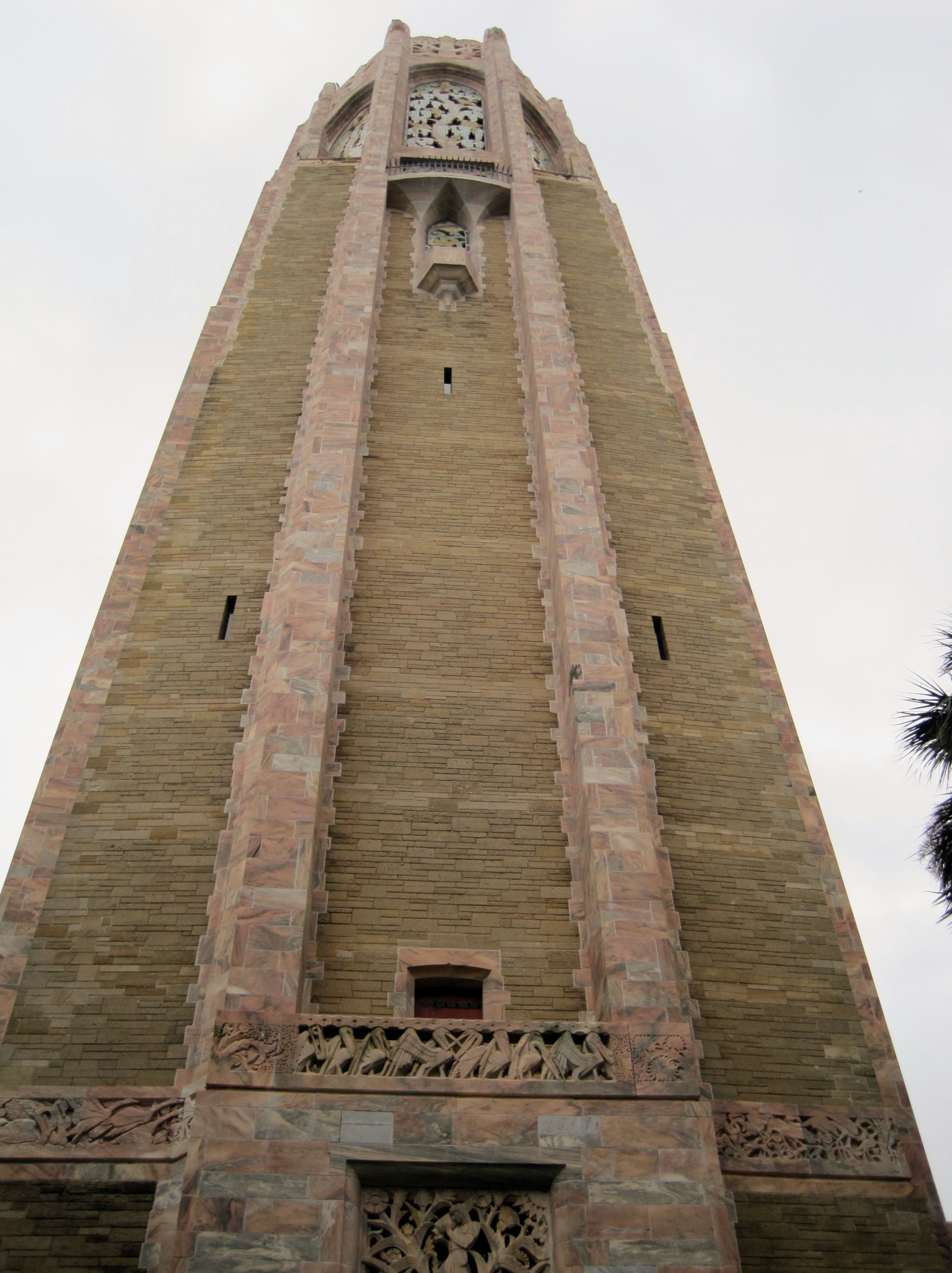
Bok Tower in Florida, Site of Gardens built by Bok, and his Burial

The Challenge

1. Andrew Solomon--Far From the Tree: Parents, Children & the Search For Identity.......630
2. Marjorie Kinnan Rawlings--The Yearling.............................................................................207
3. All That Heaven Allows (movie)..........................................................................................126
4. Wendy Ruderman & Barbara Laker--Busted: A Tale of Corruption & Betrayal in the City of
    Brotherly Love......................................................................................................................111
5. Meta Given's Modern Encyclopedia of Cooking....................................................................37
6. Lloyd Lofthouse--Crazy is Normal: a Classroom Expose.....................................................27
7. Leslie Barringer--Gerfalcon.....................................................................................................7
8. Anne Stibbs Kerr--Crossword Lists & Crossword Solver.......................................................6
9. Leland Stone--They Shall Not Sleep.........................................................................................3
10. Scott Joplin--"Maple Leaf Rag"..............................................................................................1
11. E. Alexander Powell--Where the Strange Trails Go Down (1921)........................................0
12. Ezra Pound--If This Be Treason (1948)..................................................................................0
13. The Organic Directory (1971)................................................................................................0
14. Long Island Sound: Prospects For the Urban Sea (2013).....................................................0

(For seeding purposes, ties are broken by the date of publication)

Not a great tournament this time, though not an atrocious one either. We could not even fill the whole field this, allowing the top two seeds byes into the Elite 8.

Round of 16

Top 2 seeds receive byes

#3 All That Heaven Allows over #14 Long Island Sound

A movie that is supposed to be pretty good over a book that is essentially unavailable & sounds boring.

#4 Laker & Ruderman over #13 Organic Directory

Plus the intriguiging bonus of being a Philadelphia book.

#12 Pound over #5 Meta Given

#11 Powell over #6 Lofthouse

Surprisingly, the Lofthouse book is not available in a single New Hampshire library, while there is one copy of Powell at the University of New Hampshire.

#10 Joplin over #7 Barringer

A rare song getting into the competition (and a good one), beats a book that is completely unavailable.

#9 Stone over #8 Kerr

The Stone book is from 1944, and there are copies of it in 3 libraries, including the State Library in Concord, where I have an account.

Elite 8

#1 Solomon over #12 Pound

Because this work of Pound's seems to be a rarity.

#2 Rawlings over #11 Powell

#3 All That Heaven Allows over #11 Joplin

The toughest call of this round. The nature of the competition makes it hard for a song to win if I have any interest in its opponent. But there is no reason not to listen to it on its way out:


#4 Laker/Ruderman over #9 Stone

The greater ubiquity and shorter length of the Philadelphia book overwhelm the antiquated Stone. And for the first time in the history of the Challenge, the top 4 seeds advance to the Final Four.

Final Four

#1 Solomon over #4 Laker/Ruderman

A close call. I kind of decided the winner on an impulse in a matter of seconds due to a hunch I had about which book had truly the smarter readers, and I feel obligated to stick to it.

#2 Rawlings over #3 All That Heaven Allows

Championship

#2 Rawlings over #1 Solomon 

The Rawlings book has some status as a classic, and somehow it has never made it onto any of my other lists. It has a reputation as a children's book, and it is in content, though it won the Pulitzer Prize* in 1939 and it is written in a way that I think most children would find rough going nowadays--slow-paced, long descriptive passages of nature, pretty long in general (400 pages). So we'll see how that goes.

*Related to the earlier point about the regard in which women authors were held, in this country anyway, it should be noted that during the 1920s 5 of the 9 Pulitzer Prizes for fiction went to women, and 6 of 10 in the 30s. Again, I was surprised by this, given that the award has a certain amount of prestige, and probably more in the 1930s than now. These numbers dropped to 1 of 9 in the 40s, 0 of 8 in the dark days of the 50s (actually no women were awarded the prize from between 1942 and 1961), 3 of 9 in the 60s, and 2 of 8 in 70s before rising to a fairly consistent 4 of 10 in the decades since then. I have a theory that part of this evident decline in the perception of the quality and importance of women authors is a direct result of the emigration to this country of the many brilliant and formidable continental European intellectuals and musicians and writers fleeing totalitarianism during the 1930s and 40s, who came to dominate, certainly in spirit, many important colleges and universities, including my own, and heavily influenced the tone of most highbrow criticism and other writing during this era, emphasizing the far greater depth and seriousness of the (heavily male-dominated and oriented) continental European tradition while dismissing American (and even much of British) culture, seemingly more female-friendly on the surface, as wholly trivial and juvenile. This theory of course is not fully worked through yet...

Monday, January 12, 2015

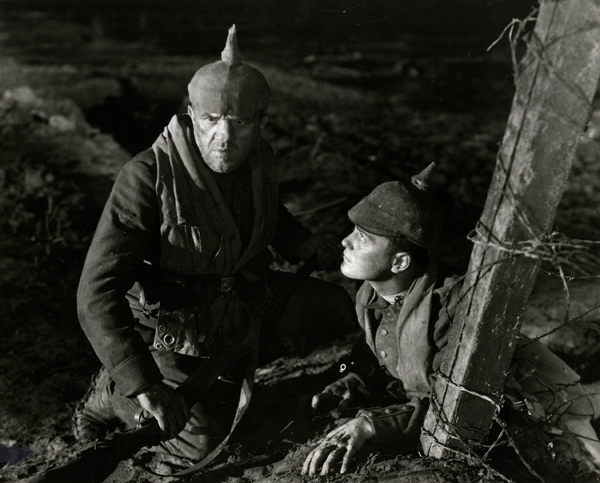
Erich Maria Remarque--All Quiet on the Western Front (1929)

One would think that there must have been many efforts made at writing books taking up the same general theme as this one in the years following the first world war. But out of all of those efforts, this is one of the handful that made the greatest impact on the popular imagination of the Western nations in its time, and has come down to our own day, as far as I can make out, as the novel most closely associated with the 'experience', as it were, of that watershed catastrophe of modern history, particularly with regard to the trench warfare of the western front. I had never read it until now, though I had always been interested in doing so, and I was not disappointed. While there is some nitpicking on literary grounds that could be made, it is a good book, moving, it has a soul to it. It is to my mind short (299 pages of standard print--under 180 or so I barely consider to be a novel), and is written in the to me agreeable modern style that arose between the wars, which was unexpected, even though the IWE introduction itself noted that it had 'the clipped sentences, brief paragraphs, and unadorned descriptive language that have proved so effective in the novels of James M. Cain(!).' This makes the book a rather quick read; I actually would not have minded a little more incident and character development, though I appreciate that it is really difficult to produce a book that is successful and resonant to any degree, and that the tone and briefly recounted characters and incidents--which does give them, probably intentionally, a rather ghostly effect in the reader's imagination--are what makes this particular story work.   
  

I did not read this in high school, but I think in the past it was often read in high school, and it does seem like it would still be a good book for the earlier high school years, 9th or 10th grade, for particular kinds of students anyway, who, however, make up an ever-dwindling percentage of the school-age population and whom the education authorities are ever obsessed about not being perceived to favor in the organization of school curriculums (curricula?). But I think in certain instances it could be a valuable part of a literary education.

Fifteen or twenty years ago when I was recently out of school and more of a closer reader than I am now, I don't know that I would have thought as much of this book, or been as moved by it as I am again now (I probably would have felt a fondness for it in high school). This even though its literary flaws, with which one would think I of all people would have been sympathetic, are primarily the result of a young man (Remarque was 32 when the book was published) who has lived through an apocalypse and is unloading his memories of that experience with at times a mild excess of emotion and rage that is not focused with perfect precision. It is probably not full of deep intellectual insights--I doubt the Straussians would have much interest in it--but the emotional despair of this shattered generation has always resonated with me, and this was as affecting as anything else I have read about this war in that regard.


I will only include one quote, which I think conveys the spirit of the book pretty well. It is during the part when the narrator, Baumer, is home on leave and has to pay a visit to the mother of one of his old schoolmates and fellow soldiers who has died. Predictably, the mother carries on hysterically, to the irritation of Baumer:

"I console her, but she strikes me as rather stupid all the same. Why doesn't she stop worrying? Kemmerich will stay dead whether she knows about it or not. When a man has seen so many dead he cannot understand any longer why there should be so much anguish over a single individual."

The descriptions of death, and especially of corpses, in this are more than usually striking. Shell blasts and shrapnel blew bodies (and frequently the clothes on them) apart, so that the naked lower half of a man could be seen dangling from a tree while his dismembered arms and torso were strewn elsewhere on the battlefield. Even this did not seem as horrible to me as the picture given of the victims of gassing, who sat upright in their holes, their faces turned blue. The poison gas used in World War I seems to be the one development in modern warfare that even military people found to be so universally horrifying that concerted efforts have been made to curtail its use in ensuing conflicts, my impression is successfully. Even reading about it one is instinctively repulsed by the idea of it more than all the other awful things going on, none of which I am going to pretend I would have been equal to standing up to at any age, let alone as an eighteen or nineteen year old. The only reasons I can come with for this repulsion are absurd, but I think part of it is the sense that poison is not really fair, that it is not even a test of military prowess. Also it seems to eviscerate the body from the inside out, especially the lungs, the pain of which seems to be more disturbing to contemplate than suffering even fatal battle-wounds.


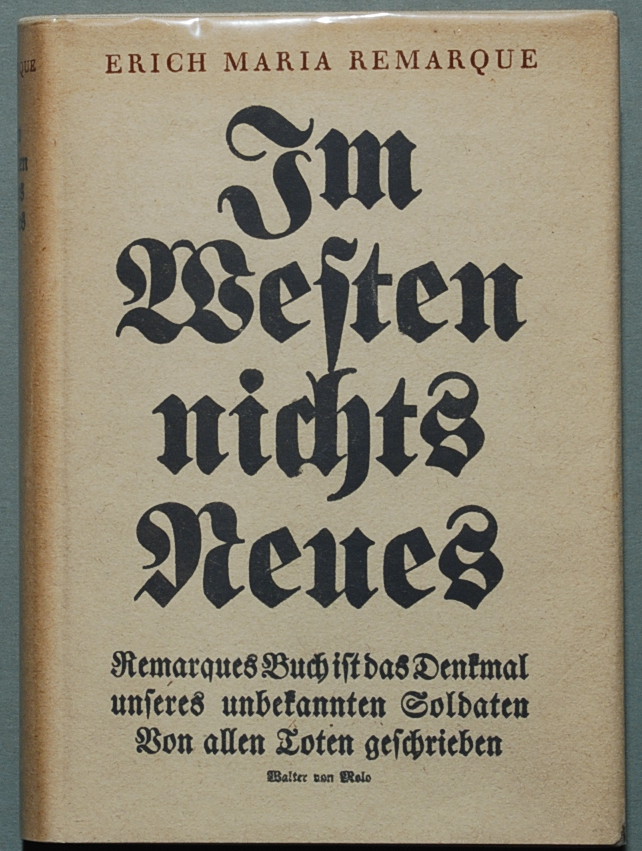
The edition of the book I have. I got it for free in an incredible haul a few years ago when one of the local high school libraries had a massive book purge of books high school students have no interest in anymore, presumably to make more room for more multimedia/computer space.

The other reading list that I have been working through for the last twenty years, taken from the GRE literature test prep book, is overwhelmingly concentrated, to a surprising extent to my mind, on English language works, with continental European works very sparsely represented. This is one of the main reasons I came back to the IWE list, as it does have more of a presence of the non-English European literatures, especially novels, though this has not shown up in my reports thus far, the "As" being more heavily weighted towards English and American books than most of the rest of the letters. I have hardly read anything from the German countries especially since I was in school, and I wanted to correct that. I don't know that All Quiet on the Western Front is considered to be a great example of German literature, but some of the scenes at least, especially those that are away from the front or even reminiscences on the world away from the front, give one something of an atmosphere that is different from the standard scenes of the English and American literary worlds, that gives a flavor of the landscape and tone of life in Germany and old Europe generally that makes for some enjoyment in the reading, even though these are not described for the most part with a nostalgic aspect, and of course the abomination of the war is exposing the emptiness of much of the rituals of society and traditional life and rendering them obsolete. Still, for those of us who live such mental life as we have through the templates given us by the classic literature and art of the past, what else do we have?

In a strange coincidence, this is the second author in a row in this record with a personal connection to one of Charlie Chaplin's wives. Remarque was married to the at one time extremely gorgeous movie actress Paulette Goddard, who had previously been married to Chaplin (and Burgess Meredith as well) from 1958 until his death in 1970. Remarque, all of whose books sold well, though other than All Quiet none of them seem to be well remembered today, had evidently amassed quite a lot of wealth, as well as a serious art collection, by the time of this marriage, much of which his widow (who was his second wife) inherited upon his death, in addition to her own evidently already substantial wealth.


The Challenge

1. Jon Krakauer--Into Thin Air..........................................................2,266
2. Dennis McNally--A Long, Strange Trip..............................................65
3. New Webster's American Handy College Dictionary (4th Edition)...52
4. Vittorio Arrigoni--Gaza Stay Human....................................................8
5. Paul Dowswell--Eleven Eleven.............................................................1
    Michael Marshall--Gallant Creoles.......................................................1

The extensive Zero list for this challenge includes War Classics: The Remarkable Life of Scottish Scholar Christina Keith on the Western Front, R.E. Foster, Wellington & Waterloo, Mike Brooke, Follow Me Through, Schmoop Literature's Guide to All Quiet on the Western Front, and Gaston Maspero's History of Egypt, Volume I. Maspero, a Frenchman, was actually an Egypt scholar of some renown. There are twelve volumes in the History all told, but like the Cambridge History of English Literature, the different volumes are often sold separately and it seems can be profitably read as stand alone books. I was considering taking it up if I could have procured a copy easily. I have actually read the Krakauer book before. It had some interest for me in a journalistic, zeitgeisty kind of way, but it is not something anyone needs to read twice.


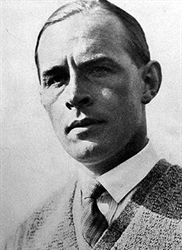
Remarque

The movie challenge produced a pair of old classics, including the most famous one based on this post's book. I have seen both of these landmark films recently enough that I will probably pass on them for now:

1. On the Waterfront...................................315
2. All Quiet on the Western Front (1930)...229

I am curious to see All Quiet again and see how it compares with the book, though the film, and maybe the book too, are unusual in that they are more about the war as a whole than in the specific incidents and characters that it is made up of.